BRAINWAVZ HM5  Headphones Review

Reviewed May 08, 2018 at 11:17am
Tested using Methodology v1.3.1 
BRAINWAVZ HM5
6.0
Mixed Usage 
7.6
Neutral Sound 
5.8
Commute/Travel 
5.6
Sports/Fitness 
6.2
Office 
4.6
Wireless Gaming 
6.4
Wired Gaming 
2.2
Phone Call 
 0

The BRAINWAVZ HM5 are good headphones for audiophiles with a bulky but comfortable design. They're well padded with spacious ear cups, and their balanced sound profile is suitable for most music genres and even movies. Unfortunately, since they're fairly large and cumbersome headphones, they won't be portable or stable enough for outdoor use, and they don't block enough noise for commuting. Their build quality also feels a bit cheap compared to other audiophile headphones in their price range.

Our Verdict

6.0
Mixed Usage 

Average for mixed usage. The BRAINWAVZ HM5 are ideal for neutral sound and may be a bit too bulky for commuting or sports. They also don't block a lot of noise, so they aren't ideal to use in loud environments. On the upside, they have a well-balanced sound profile and a comfortable design that makes them a great choice for listening to music. They also have low latency for watching movies since they're wired.

Pros
  • Good audio reproduction.
  • Very comfortable fit.
Cons
  • Poor noise isolation.
  • Bulky design.
  • Treble delivery varies significantly across users. Sensitive to positioning.
7.6
Neutral Sound 

Good for neutral listening. The BRAINWAVZ HM5 are comfortable headphones you can wear for long listening sessions with a balanced sound profile that caters well to all genres. They have a good amount of bass that doesn't overpower instruments and vocals in the mid-range, and their treble doesn't sound overly sharp. Unfortunately, despite their large ear cups, they're closed-back headphones that can't create a soundstage as spacious as the open-back neutral listening models.

5.8
Commute/Travel 

The BRAINWAVZ HM5 are below average for commuting. They're bulky and don't block enough noise for the loud environments involved in commuting. They also have no additional features, like noise cancelling or inline controls, to make commuting easier.

5.6
Sports/Fitness 

The BRAINWAVZ HM5 are sub-par for sports. These headphones aren't stable enough to wear during your workouts. They also have a bulky design that can hinder your movements during more strenuous physical activity.

6.2
Office 

Average for office use. The BRAINWAVZ HM5 are comfortable to wear for hours but don't block a lot of noise. They're also a bit leaky at higher volumes but should be fine at regular volume levels.

6.4
Wired Gaming 

Average for gaming. The BRAINWAVZ HM5 have a balanced sound profile and a low latency wired connection. They don't have app support for customization options typical for gaming, and they aren't the most breathable headphones. They also don't have a microphone, so you can't really communicate with teammates.

2.2
Phone Call 
  • 6.0
    Mixed Usage
  • 7.6
    Neutral Sound
  • 5.8
    Commute/Travel
  • 5.6
    Sports/Fitness
  • 6.2
    Office
  • 4.6
    Wireless Gaming
  • 6.4
    Wired Gaming
  • 2.2
    Phone Call
  • Changelog

    1.  Updated Nov 21, 2019: Converted to Test Bench 1.3.1.
    2.  Updated Nov 21, 2019: Converted to Test Bench 1.3.
    3.  Updated May 08, 2018: Review published.
    4.  Updated May 06, 2018: Early access published.

    Popular Headphones Comparisons

    Comparison picture

    The BRAINWAVZ HM5 are comfortable audiophile headphones with a slightly bulkier design than most. They're one of the more comfortable over-ears we've tested, and they deliver a balanced sound profile on par with much pricier headphones. Unfortunately, since they're closed-back headphones, they won't have the soundstage of some of the other critical listening models we've measured, and their oversized design is a bit more cumbersome to use outdoors than some of the competing closed-back models below.
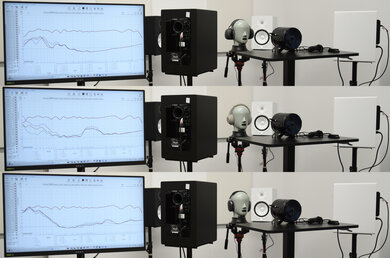
    Overhauling Our Audio Measurements And A New Multi-Curve Graphing Tool

    We've upgraded our Headphones Test Bench to 2.0! This update brings several key changes to our tests and usages, making it easier than ever to interpret our sound results based on your personal preferences. You'll also find a brand-new interactive graph tool featuring multiple targets (including our own!) for you to explore and compare.

    For a full breakdown, check out our changelog, which includes detailed commentary from our test designer explaining the rationale behind our update.

    We'd also love to hear your thoughts: your feedback helps us keep improving, so join us in the comments!

    Test Results

    Sort:
    RATINGS
    Category:
    All
    Design
    Style
    TypeOver-ear
    EnclosureClosed-Back
    WirelessNo
    TransducerDynamic

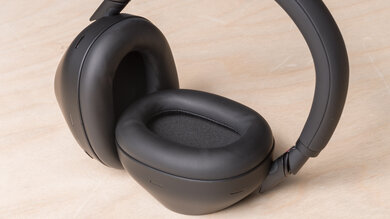
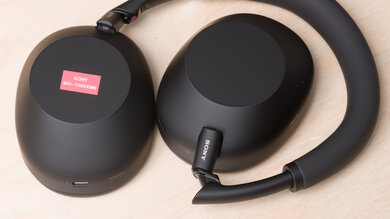
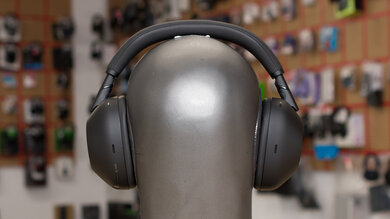
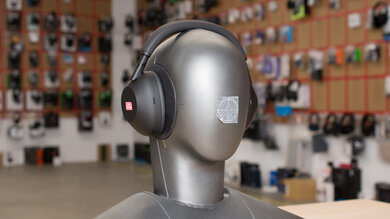
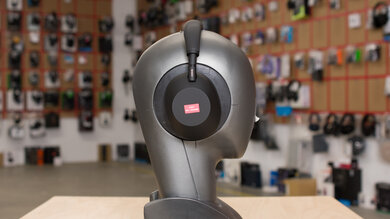
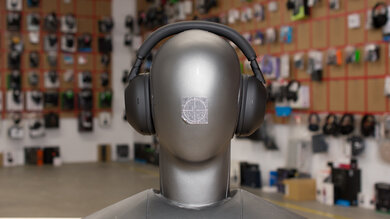
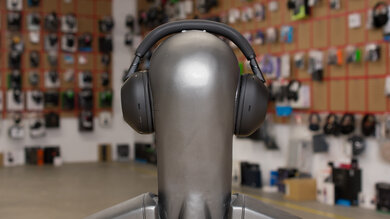
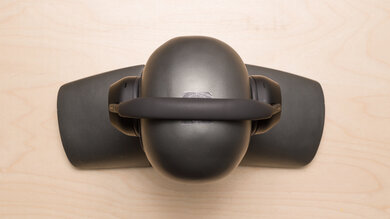
    The BRAINWAVZ HM5 have a bulky over-ear design that won't be ideal to use outdoors but looks decent enough for most listeners. They have a straightforward build quality that's mostly plastic with a metal frame that supports the headband. The large oval ear cups are well padded with a two-tone color scheme that stands out without being too flashy. Unfortunately, their size might be a deal-breaker for some, especially if you're looking for critical listening headphones to use while commuting and traveling. However, if you mostly listen to your music at work or home, then they should be fine.

    8.0
    Comfort
    Weight0.7 lbs
    Clamping Force
    0.9 lbs

    The BRAINWAVZ HM5 are very comfortable. They have large, deep, and spacious cups that are well padded. They're also fairly lightweight for their size and not too tight on the head, so you can wear them for hours without feeling any fatigue. The headband isn't as well padded as the cups, but it's a minor issue that only slightly reduces the overall comfort level of these headphones.

    0.0
    Controls
    OS Compatibility
    Not OS specific
    Ease Of UseN/A
    FeedbackN/A
    Call/Music ControlNo
    Volume ControlNo
    Microphone ControlN/A
    Channel Mixing
    N/A
    Noise Cancelling ControlN/A
    Talk-Through
    N/A
    Additional ButtonsN/A

    These headphones don't have any controls.

    6.3
    Breathability
    Avg.Temp.Difference6.2 °C

    The BRAINWAVZ HM5 will make your ears fairly warm, even during casual listening sessions. They seal the ear fairly well within the large ear cups, which prevents a good amount of airflow. The ear cup pads are also not particularly breathable. On the upside, since the cups are rather spacious, they won't as bad as some of the other over-ear, closed-back designs that we've tested.

    5.8
    Portability
    L6.9"
    W5.4"
    H3.5"
    Volume130 in³
    Transmitter RequiredN/A

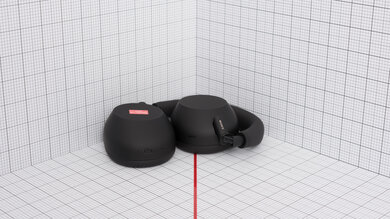
    The BRAINWAVZ HM5 are bulky headphones. The ear cups don't fold or lay flat to make them a bit more portable, so they will be quite cumbersome to carry around on your person if you don't have a bag. On the upside, they come with a good, hard case so they will be protected if you put them in your backpack.

    7.5
    Case
    TypeHard case
    L7.8"
    W5.5"
    H3.9"
    Volume167 in³

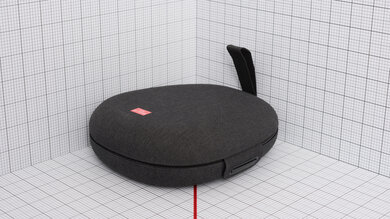
    The BRAINWAVZ HM5 come with a pretty sturdy hard case not typical for critical listening headphones, especially considering their size. The case has a nice two-tone color scheme and is sturdy enough to protect the headphones from impacts, drops, and scratches while they're in your bag.

    6.5
    Build Quality

    The BRAINWAVZ HM5 have a decent build quality but feel a bit cheap and plasticky. They have a metal frame that makes their headband sturdy yet decently flexible. The ear cups are also dense enough that they won't get damaged from a couple of accidental drops. Unfortunately, the plastic hinges/yokes are not the most durable and are more likely to break under moderate stress than the rest of the build. The plastic used for the ear cups also feels a bit cheap, especially when compared to other critical listening headphones around their price range. On the upside, their cable is detachable and replaceable in case it gets damaged by wear and tear.

    6.5
    Stability

    The BRAINWAVZ HM5 aren't very stable headphones. They should be fine for casual listening, but if you run with them, they may fall off your head. They're not made for sports and aren't stable enough for physical activity, but on the upside, they're not as heavy as they look, so the big protruding ear cups don't sway as much as some of the other critical listening headphones we've tested for stability. They also have a detachable cable that will disconnect it gets hooked on something.

    Headshots 1
    Headshots 2
    Top
    In The Box

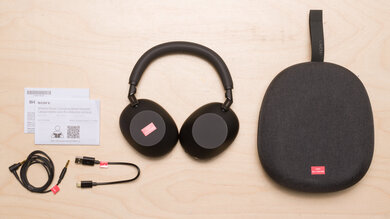
    • BRAINWAVZ HM5 headphones
    • Carrying case
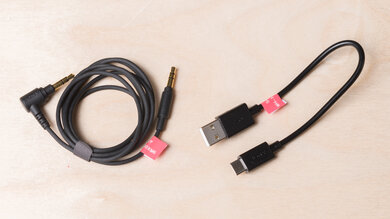
    • Audio cables (x2)
    • 1/8" to 1/4" adapter
    • Additional ear cup pads
    Sound
    Sound Profile
    See details on graph tool
    Bass Amount
    -2.96 dB
    Treble Amount
    -0.87 dB
    6.3
    Frequency Response Consistency
    See details on graph tool
    See details on graph tool
    Avg. Std. Deviation
    0.83 dB

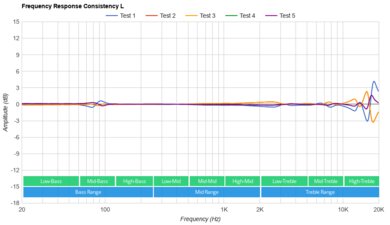
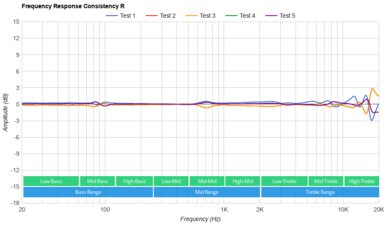
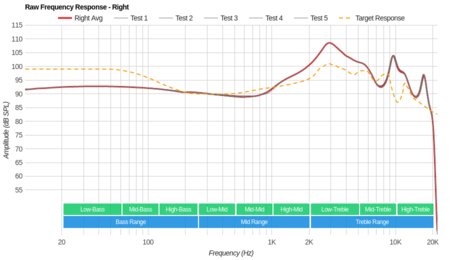
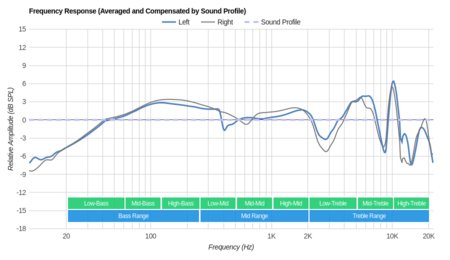
    The BRAINWAVZ HM5 have a below-average frequency response consistency. In the bass range, the maximum deviation across our five human subjects is about 4dB, but happening across a wide region, which makes it more noticeable. We also noticed that the biggest deviation was measured on the subject wearing glasses. The maximum deviation in the treble range is about 5dB around 3kHz, which is significant, suggesting that their treble delivery is sensitive to placement and positioning.

    Raw Frequency Response
    See details on graph tool
    See details on graph tool
    8.7
    Bass Accuracy
    See details on graph tool
    Std. Err.
    1.83 dB
    Low-Frequency Extension
    10 Hz
    Low-Bass
    -2.4 dB
    Mid-Bass
    -0.38 dB
    High-Bass
    2.33 dB

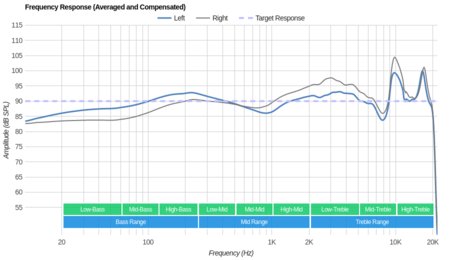
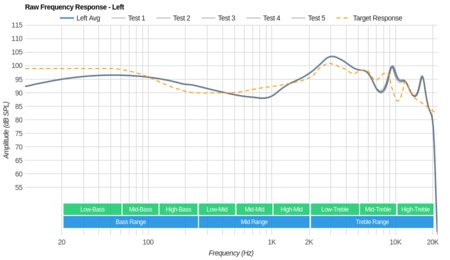
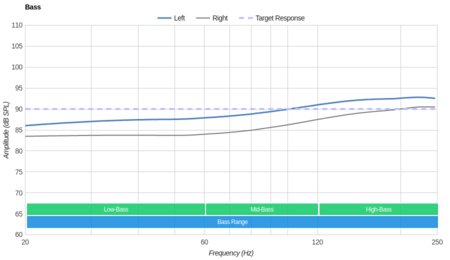
    The BRAINWAVZ HM5's bass accuracy is great. LFE (low-frequency extension) is 10Hz, which is excellent. Low-bass, responsible for the thump and rumble common to bass-heavy genres, is lacking by 2dB, which is subtle. Mid-bass, responsible for the body of bass guitars and punch of kick drums, is within 0.4dB of our neutral target. High-bass, however, is overemphasized by about 2dB, which adds a bit of muddiness to bass.

    8.6
    Mid Accuracy
    See details on graph tool
    Std. Err.
    1.87 dB
    Low-Mid
    -1.28 dB
    Mid-Mid
    1.17 dB
    High-Mid
    2.06 dB

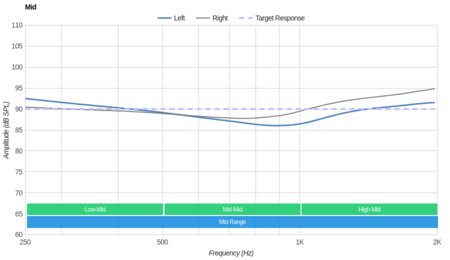
    The BRAINWAVZ HM5 have very good mid accuracy. The dip in low-bass thins out vocals a little bit but also creates more space for the punch of the bass range. Mid-mid and high-mid are quite flat and within 2dB of our neutral, resulting in a clear and well-balanced reproduction of vocals and lead instruments.

    8.0
    Treble Accuracy
    See details on graph tool
    Std. Err.
    3.46 dB
    Low-Treble
    2.84 dB
    Mid-Treble
    -2.11 dB
    High-Treble
    -1.83 dB

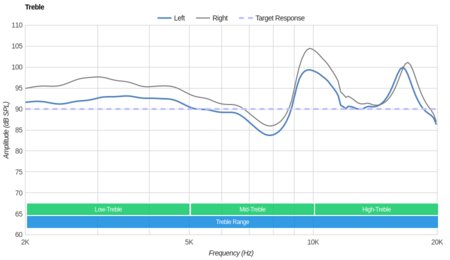
    The treble accuracy is very good. Low-treble is relatively flat but overemphasized by about 3dB. This brings a bit of excess brightness and projection to vocals and leads. Mid-treble shows a dip around 7kHz, which negatively affects the presence of the vocals and cymbals, especially on sibilances (S and Ts).

    Also, their treble delivery varies noticeably across users. The response here represents the average response, and your experience may vary.

    7.7
    Peaks/Dips
    See details on graph tool
    Peaks
    1.3 dB
    Dips
    1.71 dB
    8.2
    Imaging
    See details on graph tool
    See details on graph tool
    Weighted Group Delay
    0.21
    Weighted Amplitude Mismatch
    0.88
    Weighted Frequency Mismatch
    1.89
    Weighted Phase Mismatch
    10.31

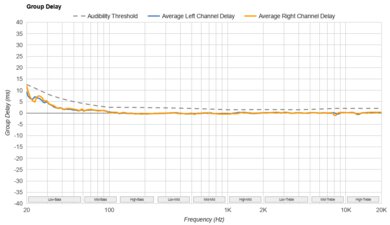
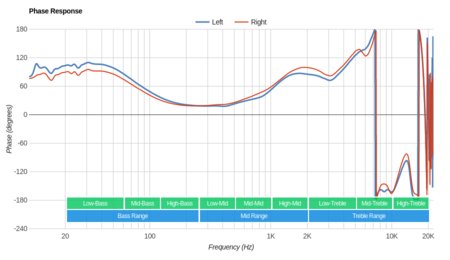
    The imaging is great. Weighted group delay is at 0.21, which is within very good limits. The GD graph also shows that the entire group delay response is below the audibility threshold. This ensures a tight bass and a transparent treble reproduction. Additionally, the L/R drivers of our test unit were very well-matched. This is important for the accurate localization and placement of objects (voices, instruments, video game effects) in the stereo image.

    6.0
    Soundstage
    See details on graph tool
    PRTF Accuracy (Std. Dev.)
    2.23 dB
    PRTF Size (Avg.)
    2.92 dB
    PRTF Distance
    13.21 dB
    Openness
    4.6
    Acoustic Space Excitation
    4.2

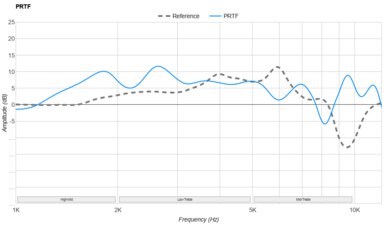
    The BRAINWAVZ HM5 have a below-average soundstage. The PRTF graph shows decent accuracy in the response and a decent 10kHz notch either, but not a lot of activation overall. Also, their closed-back design results in a soundstage that is perceived as relatively natural-sounding but not large, open, or spacious.

    8.2
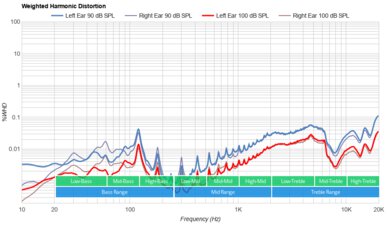
    Weighted Harmonic Distortion
    See details on graph tool
    WHD @ 90
    0.175
    WHD @ 100
    0.084
    Isolation
    5.2
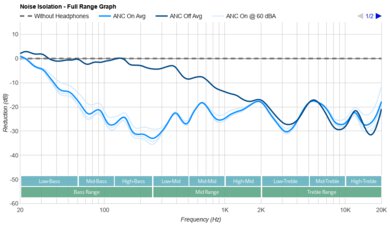
    Noise Isolation
    See details on graph tool
    Isolation Audio
    Overall Attenuation
    -13.66 dB
    Noise CancellingNo
    Bass
    0.6 dB
    Mid
    -9.19 dB
    Treble
    -33.12 dB

    The BRAINWAVZ HM5's isolation performance is sub-par. These over-ear headphones don't have ANC (active noise cancellation) and isolate passively. Therefore, they don't achieve any isolation in the bass range. This means they will let in all the rumble of airplane and bus engines. In mid-range, important for blocking out speech, they achieve 9dB of isolation, which is about average. In the treble range, occupied by sharp sounds like S and Ts, they isolate by more than 33dB, which is good.

    6.7
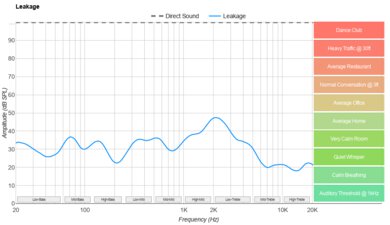
    Leakage
    See details on graph tool
    Leakage Audio
    Overall Leakage @ 1ft
    41.46 dB

    The BRAINWAVZ HM5's leakage performance is about average. A significant portion of their leakage is spread between 400Hz and 2kHz, which is a relatively broad range. The overall level of the leakage isn't loud either. With the music 100dB SPL, the leakage at one foot away averages at around 41dB SPL and peaks at 53dB SPL, which is about the same as the noise floor of an average office.

    Microphone
    Microphone Style
    Integrated
    N/A
    In-line
    N/A
    Boom
    N/A
    Detachable Boom
    N/A
    MicNo

    The BRAINWAVZ HM5 don't come with a microphone. For a wired headphone with a good in-line microphone, check out the Bose SoundTrue Around-Ear II, the QuietComfort 25, or the Apple EarPods.

    0.0
    Recording Quality
    Recorded Speech
    N/A
    LFE
    N/A
    FR Std. Dev.
    N/A
    HFE
    N/A
    Weighted THD
    N/A
    Gain
    N/A

    These headphones don't have a microphone, and therefore, the recording quality has not been tested.

    0.0
    Noise Handling
    Speech + Pink NoiseN/A
    Speech + Subway NoiseN/A
    SpNR
    N/A

    These headphones don't have a microphone and therefore, the noise handling has not been tested.

    Active Features
    0.0
    Battery
    Battery Type
    N/A
    Continuous Battery Life
    N/A
    Additional Charges
    N/A
    Total Battery Life
    N/A
    Charge Time
    N/A
    Power Saving Feature
    N/A
    Audio While Charging
    N/A
    Passive Playback
    N/A
    Charging PortN/A

    These are passive headphones with no active components and no battery.

    0.0
    App Support
    App NameN/A
    iOSN/A
    AndroidN/A
    macOSN/A
    WindowsN/A
    Equalizer
    N/A
    ANC Control
    N/A
    Mic ControlN/A
    Room effects
    N/A
    Playback Control
    N/A
    Button MappingN/A
    Surround SoundN/A

    The BRAINWAVZ HM5 don't have a companion app.

    Connectivity
    0.0
    Bluetooth
    Bluetooth Version
    N/A
    Multi-Device Pairing
    N/A
    NFC Pairing
    N/A
    Line of Sight Range
    N/A
    Default Latency
    N/A
    aptX Latency
    N/A
    aptX(LL) Latency
    N/A

    These headphones are wired and don't have a Bluetooth connection. If you want a good Bluetooth headset for more casual use, check out the Plantronics BackBeat Pro 2 Wireless 2016.

    The BRAINWAVZ HM5 have practically no latency since they have a wired design. Unfortunately, this also means that they're limited by the range of the audio cable.

    0.0
    Non-Bluetooth Wireless
    Non-BT Line of Sight Range
    N/A
    Non-BT Latency
    N/A
    9.5
    Wired
    Analog Audio
    Yes
    USB Audio
    No
    DetachableYes
    Length4.5 ft
    Connection1/8" TRS
    Wired Latency
    0 ms

    These headphones come with two cables, but both audio cables don't have in-line remotes or microphones.

    PC / PS4 Compatibility
    PC / PS4 Analog
    Audio Only
    PC / PS4 Wired USB
    No
    PC / PS4 Non-BT Wireless
    No
    Xbox One Compatibility
    Xbox One Analog
    Audio Only
    Xbox One Wired USB
    No
    Xbox One Wireless
    No
    0.0
    Base/Dock
    Type
    N/A
    USB Input
    N/A
    Line In
    N/A
    Line Out
    N/A
    Optical Input
    N/A
    RCA Input
    N/A
    Dock Charging
    N/A
    Power Supply
    N/A

    These headphones don't have a dock. If you need a headset with a dock that also has a wired connection for gaming or watching movies, then consider the SteelSeries Arctis 7 Wireless 2017.