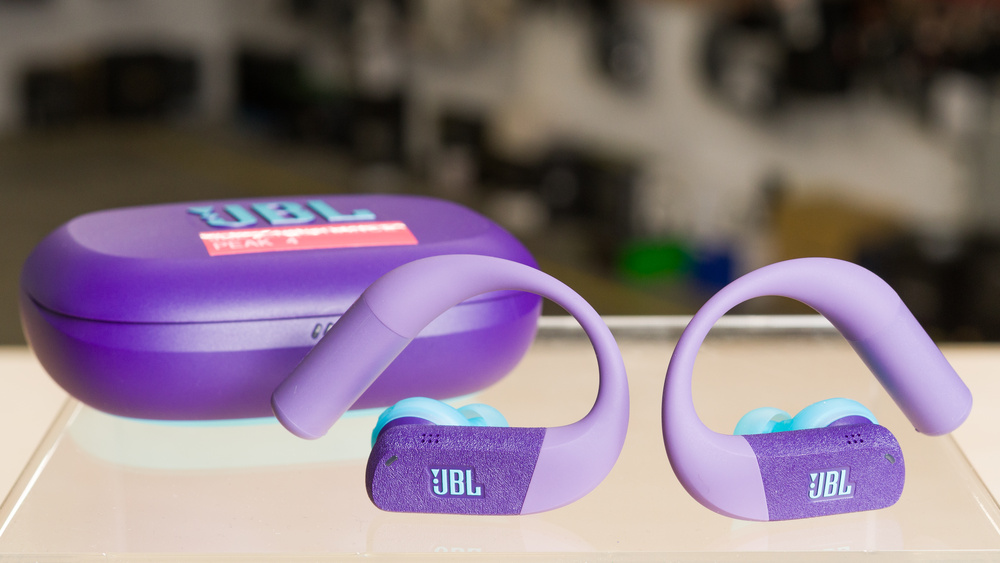
The JBL Endurance Peak 4 are the follow-up to the JBL Endurance Peak 3 and sit in JBL's sport-focused earbud lineup. They keep the series' secure ear hook design, but add features like active noise cancelling (ANC), Bluetooth multi-device pairing, and deeper app customization. JBL advertises up to 32 hours of total battery life with ANC on, with eight hours from the earbuds and 24 hours from the case. They also raised the earbuds water and dust resistance to IP68, ensuring they'll stay safe even on rainy runs.
Our Verdict
The JBL Endurance Peak 4 are great for sports and fitness. Their TwistLock design keeps the buds from moving around in your ears, and their comfortable fit doesn't need much readjustment during use. Their boosted bass sound profile injects some punch into your workout playlists, helping keep your blood flowing. Their case is on the large side, though, so you probably won’t want to take it with you on runs.
Excellent stability.
Very comfortable fit.
Earbuds are IP68-rated for water and dust protection.
Great battery performance, with almost 10 hours of continuous playback.
Poor ANC and noise isolation.
Bulky charging case.
Touch controls require trade-offs if you want volume control.
The JBL Endurance Peak 4 True Wireless are mediocre for travel. Their secure fit is comfortable enough for long periods, and their large ear hooks ensure they stay in your ears as you dash around train stations during your morning commute. However, their noise isolation is poor. Their ANC doesn't make much difference when turned on, and they struggle to block out much noise at all. On the plus side, with almost 10 hours of battery life, they'll last through long travel trips. But you may find yourself turning them up to try to block out the noise around you.
Very comfortable fit.
Earbuds are IP68-rated for water and dust protection.
Great battery performance, with almost 10 hours of continuous playback.
Poor ANC and noise isolation.
Bulky charging case.
Touch controls require trade-offs if you want volume control.
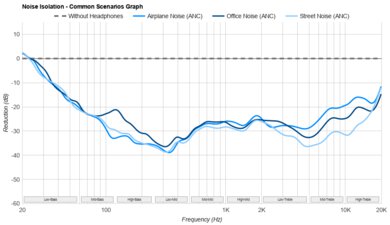
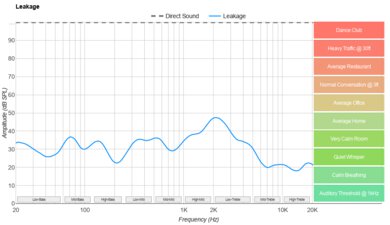
The JBL Endurance Peak 4 are passable for office work. They're very comfortable and don't leak much sound, so you can blast your favorite tunes without disturbing nearby coworkers. However, they do a bad job blocking out typical office noise like people chatting or tapping away on keyboards, so you may easily get distracted by environmental noise. Their integrated mic is adequate for the occasional phone call, but it makes your voice sound thin and slightly muffled, so if you take many calls, you may prefer a different pair of earbuds or a standalone mic.
Very comfortable fit.
Great battery performance, with almost 10 hours of continuous playback.
Poor ANC and noise isolation.
Touch controls require trade-offs if you want volume control.
The JBL Endurance Peak 4 aren't suitable for wireless gaming. They don't support non-Bluetooth wireless connections. That said, you can connect them to PCs via Bluetooth for full audio and mic support, but latency is fairly high, even when connected via their Video Mode. Still, latency varies by device and app.
The JBL Endurance Peak 4 aren't suitable for wired gaming because you can't use them wired.
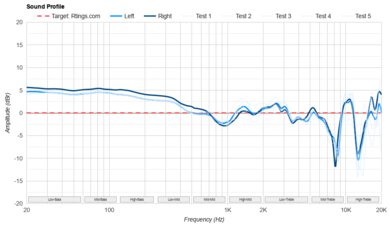
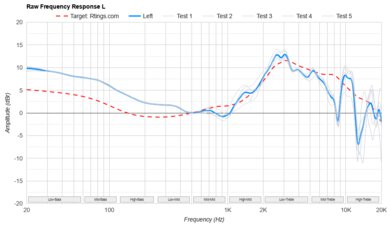
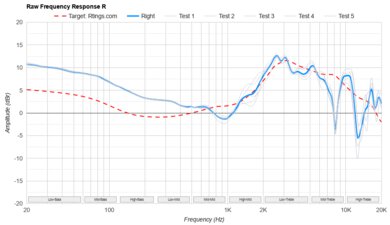
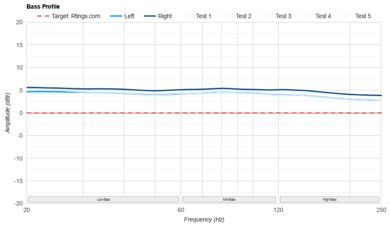
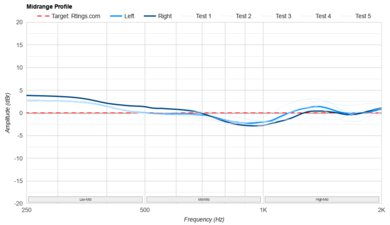
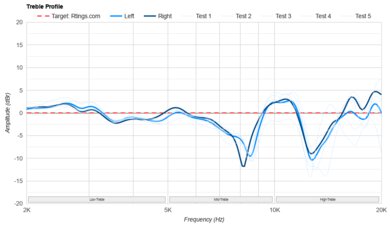
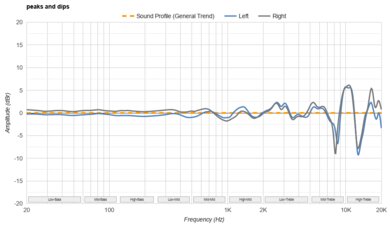
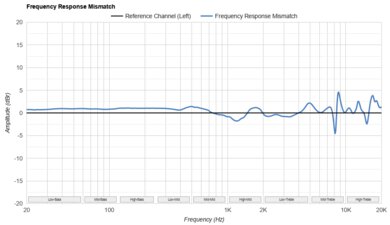
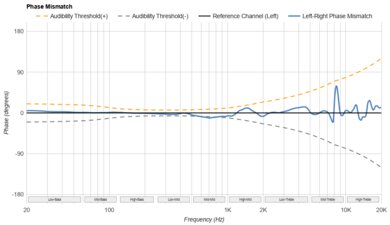
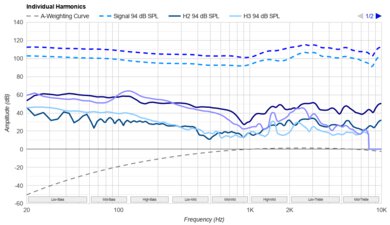
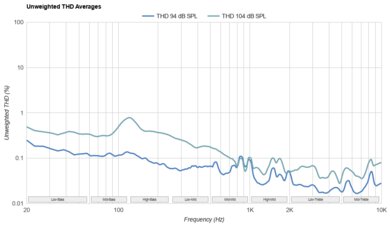
The JBL Endurance Peak 4 have good audio reproduction accuracy. Their boosted bass sound profile is heavy on the thump and punch, so kick drums sound exciting and immersive. However, it can also make your audio sound overly boomy. If that's the case, the EQ in the companion app lets you customize their sound to your liking. On the plus side, the mid-range and treble are mostly well-controlled, so sounds like voices are reproduced smoothly. They have low harmonic distortion, and their left and right drivers are amazingly well-matched, ensuring objects are correctly located in the stereo field.
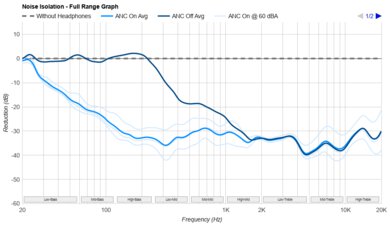
The JBL Endurance Peak 4 have poor noise isolation. Their ANC system doesn't make much of a difference when turned on, and they don't reduce bass-range noise like engine rumble at all. You'll hear plenty of the sounds in your environment with these in. On the plus side, they don't leak much audio.
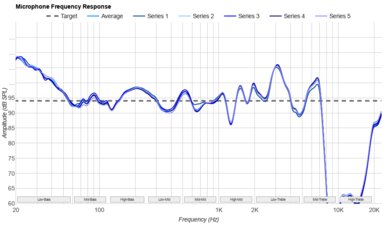
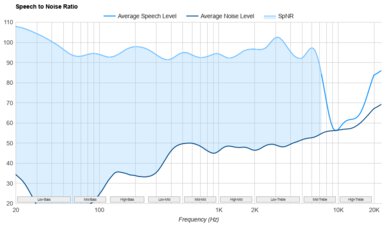
The JBL Endurance Peak 4 have an okay microphone. Their integrated mic does a good job separating your voice from moderate background noise, so speech stays understandable so long as you're not trying to take calls in places like a busy subway station. However, the mic does make your voice sound a bit thin and muffled.
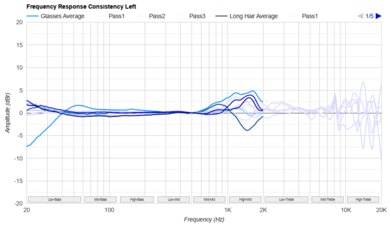
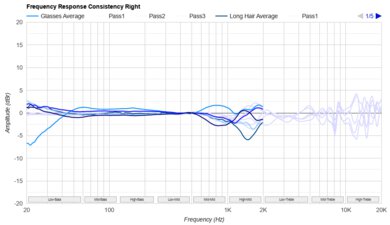
The JBL Endurance Peak 4 have excellent frequency response consistency. Once you get a proper fit with the included ear tips, they deliver audio very consistently across different reseats.
Performance Usages
Changelog
-
Updated Jul 28, 2026:
We added a reference to the Anker Soundcore Liberty 5 Pro in the Stability box.
- Updated Jun 23, 2026: This review has been updated to Test Bench 2.3, which removes the Virtual Soundstage, Base/Dock, and some comparisons from Bluetooth Connection. Have a look at our changelog for more info.
- Updated May 11, 2026: Review published.
- Updated May 04, 2026: Early access published.
Check Price
Differences Between Sizes And Variants
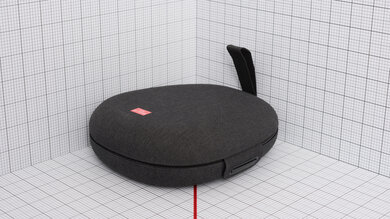
The JBL Endurance Peak 4 are available in three color variants: 'Black / Grey,' 'Purple,' and 'White / Orange.' We bought and tested a 'Purple' pair and took a photo of the case lid.
If you encounter another variant of these earbuds, let us know in the comments, and we'll update our review.
Popular Headphone Comparisons
The JBL Endurance Peak 4 are sport-focused earbuds that improve on the JBL Endurance Peak 3 True Wireless in a few key ways. They keep the secure ear hook design and IP68-rated earbuds, but add ANC, Bluetooth multi-device pairing, and a more useful app. However, the ANC performs poorly, so their biggest improvements are app customization and battery life. In the wider workout earbud market, the Beats Powerbeats Pro 2 are the more premium option, with superb ANC, wireless case charging, and Apple-friendly features, though they cost more and lack a proper EQ. If you want a cheaper ear hook alternative, the Skullcandy Push Active True Wireless are still a solid workout pick with physical buttons and voice controls, but they lack multi-device pairing, and their IP55 rating isn't as high as the JBL's IP68 rating. Finally, some runners prefer an open-ear fit. The Shokz OpenRun Pro 2 Bone Conduction are a great pick if outdoor awareness matters most, since they leave your ears open, but as a result, they can't deliver punchy bass like the JBL.
Check out our recommendations for the best headphones and earbuds for running, the best over-ear headphones for working out, and the best open-ear and bone conduction headphones.
The Beats Powerbeats Pro 2 are better (and more expensive) sport earbuds than the JBL Endurance Peak 4, especially if you care about ANC. Both have secure over-ear hooks and very comfortable fits, but the Beats block out far more environmental noise and offer stronger physical controls along with nice-to-haves like heart rate monitoring, wireless case charging, and better integration with Apple devices. But the JBL have some advantages: their earbuds are rated IP68, compared to the Beats' IPX4 rating, and their app includes a graphic EQ and presets, which the Beats lack. The JBL also support conventional multi-device pairing, unlike the Beats, though pairing to a second device can be clunky.
The JBL Endurance Peak 4 are a clear step up from the JBL Endurance Peak 3 True Wireless for most users. They keep the same sport-focused ear hook design and IP68-rated earbuds, but they're much more comfortable, since their thinner hooks don't press on your ears as much and no longer power the buds off while you're adjusting them. The Peak 4 also add ANC, Bluetooth multi-device pairing, and a more feature-packed app. That said, their ANC is poor and doesn't make much difference in practice, and the Peak 3 actually isolate more noise passively. The Peak 4 also have a better mic.
The JBL Endurance Peak 4 and the Shokz OpenRun Pro 2 Bone Conduction are both workout-friendly headphones, but they're built for fitness fans with different priorities. The JBL are closed in-ear earbuds with a very stable ear hook design, strong app support, and a bass-heavy sound that gives workout playlists plenty of punch. They also have an ANC system, though it performs poorly. The Shokz use an open-ear bone conduction design, so they're the better choice if outdoor awareness is your main concern, since they intentionally let you hear your surroundings. They're also very stable and comfortable, but their open-fit means they can't offer anything close to the same bass impact the JBL can. The Shokz have a better mic, while the JBL have a longer total battery life with the extra charges in their case.
The Anker Soundcore Liberty 5 Pro are better all-rounder than the JBL Endurance Peak 4, but the JBL are the stronger choice for demanding outdoor workouts. The JBL's larger ear hooks and IP68 rating provide excellent stability and greater protection from dust and water, while their nearly 10-hour continuous battery lasts longer, which is handy for the ultra-marathon runners out there. However, their bulky case and ineffective ANC make them less useful in everyday situations. The Anker offer much stronger ANC and their removable fins mean they're still secure enough for most workouts. Their smaller design is also more discreet during the day.
Our How We Test Headphones article takes you behind the scenes in our lab. You'll learn how we choose and purchase products and dive into the details of our review philosophy, from testing and scoring to writing and editing.
You can also discover how we produce recommendations like this one so that you can find the best headphones (or earbuds!) for your needs.
Test Results
for pictures & test results
for pictures & test results
for pictures & test results

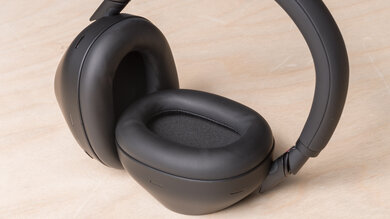
for pictures & test results

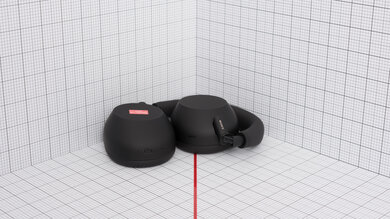

for pictures & test results