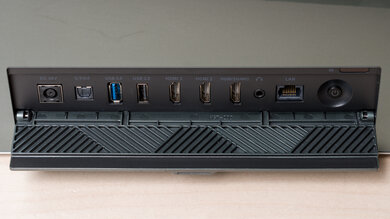
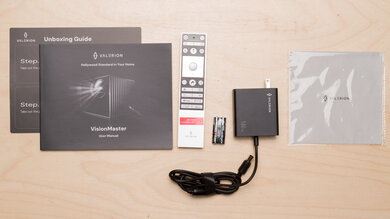
The VANKYO Leisure 470 is a portable entry-level projector with a 720p native resolution. You can use it to mirror videos from your phone, play media from a USB flash drive or SD card, or connect various devices via HDMI, VGA, or a 3.5mm AV input. It can project images from 30 to 110 inches and has a built-in 3W speaker.
Our Verdict
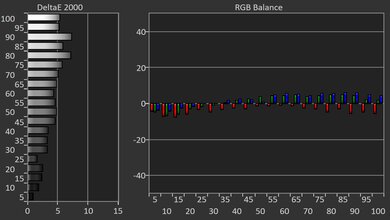
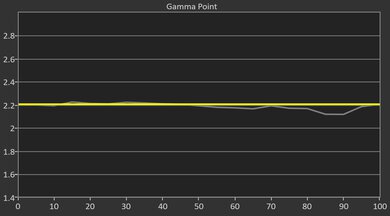
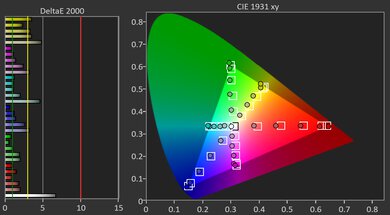
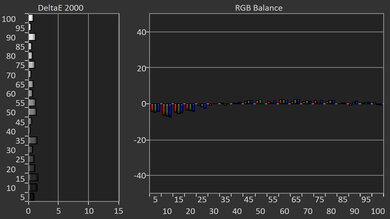
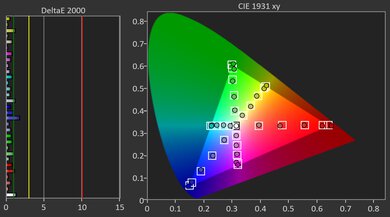
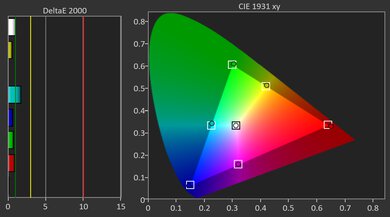
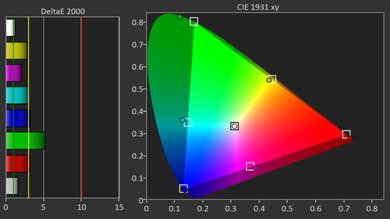
The VANKYO Leisure 470 projector is poor for watching movies in a dark room. It has terrible color accuracy that can't be corrected by calibration, and limited coverage of the Rec. 709 color space used with SDR content, so colors aren't displayed properly. There's noticeable vignetting in the corner of the screen, and it's so dim that you can't use it in a room with any ambient light. Fortunately, it has very good contrast, so blacks are deep in darker scenes.
- Decent portability due to its size and weight.
Excellent contrast delivers deep blacks in most scenes.
Not usable in a room with lights due to its awful peak brightness.
- Inadequate coverage of the Rec. 709 color space used in SDR content and terrible color accuracy.
Too dim to deliver truly impressive contrast.
The VANKYO Leisure 470 projector is a poor choice for gaming. It uses a 720p panel and only accepts up to a 1080p@60Hz signal, which it has to scale, so most games look soft and a bit fuzzy. Brightness is limited, so games look dim, though it offers very good contrast. Input lag is on the high side, so controls feel sluggish in all titles. There are no gaming extras like 120Hz support, VRR, or ALLM, and since there's no audio passthrough, you also have to rely on the built-in speakers or route sound from your console or PC separately.
- Decent portability due to its size and weight.
Excellent contrast delivers deep blacks in most scenes.
Not usable in a room with lights due to its awful peak brightness.
- Inadequate coverage of the Rec. 709 color space used in SDR content and terrible color accuracy.
High input lag at all resolutions.
Limited resolution support with its native 720p lens.
Too dim to deliver truly impressive contrast.
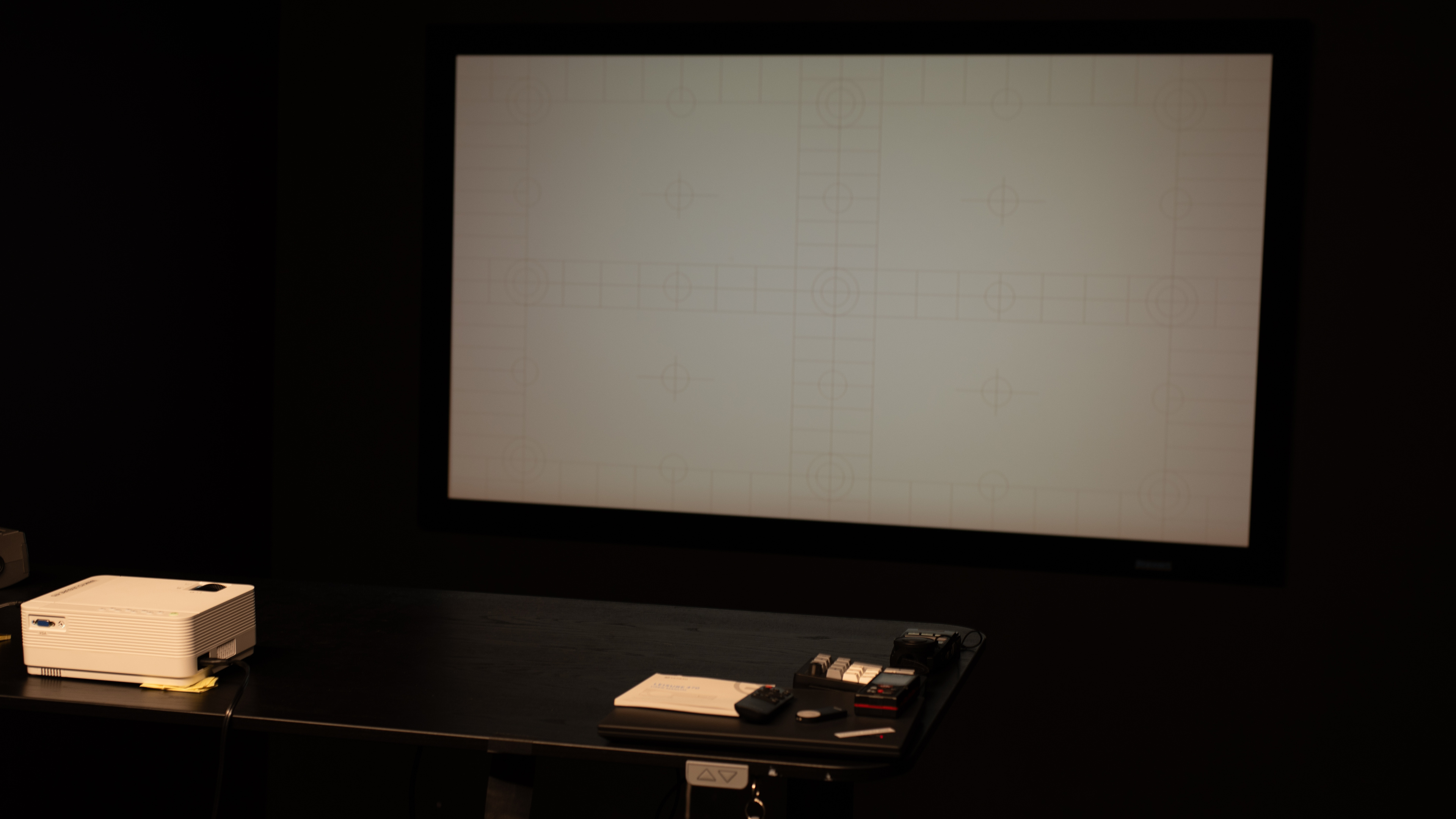
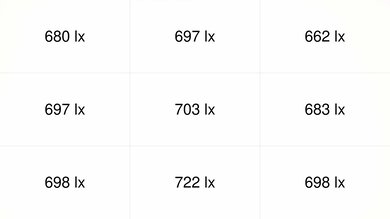
The VANKYO Leisure 470's brightness is quite poor. This unit is dim even when used in completely dark rooms. Its brightness uniformity is good, but there's some noticeable vignetting.
Good brightness uniformity, even if there's some vignetting.
Not usable in a room with lights due to its awful peak brightness.
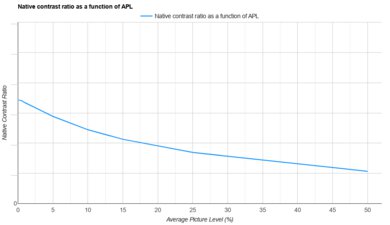
The VANKYO Leisure 470's contrast is excellent, thanks to its very low brightness. It performs very well in very bright scenes, and it's even decent in near-dark content. It still won't deliver an impressive visual experience due to its brightness, but it performs better than many of its peers when it comes to black levels.
Excellent contrast delivers deep blacks in most scenes.
Too dim to deliver truly impressive contrast.
Changelog
-
Updated May 29, 2026:
We've added text to some test boxes as a result of our latest test bench.
- Updated May 13, 2026: We've converted the review to Test Bench 0.12, which adds new Judder, Screen Adaptation, Battery, Maximum Volume, Size, Mobility Features, and Physical Setup Features test boxes. We also updated Inputs & Connectivity to verify Bluetooth support with wireless speakers or headphones. See the 0.12 changelog.
-
Updated Feb 06, 2026:
We've modified the text in our Brightness and Native Contrast text boxes as a result of our latest test bench. We've also added Brightness and Contrast performance usages in the Verdict section.
- Updated Feb 03, 2026: We've converted the review to Test Bench 0.11, which renames our Contrast test to Native Contrast, and adds a Sequential Contrast test box. We also added new Brightness and Contrast performance usages in Our Verdict. See the 0.11 changelog.
Check Price
Differences Between Sizes And Variants
We bought and tested the VANKYO Leisure 470 projector, but VANKYO also sells two closely related versions. The Leisure 470 Neo keeps the same 720p LCD engine as the base model but adds built-in wireless/smart features and is rated slightly brighter. The Leisure 470 Pro is a more substantial step up, with a native 1080p panel and a higher claimed brightness, making it the better choice if you care more about sharpness and punch than price.
| Model | Native resolution | Light source / tech | Claimed brightness* |
|---|---|---|---|
| Leisure 470 | 720p (1280×720) | Single-LCD, LED | 110 Lumens |
| Leisure 470 Neo | 720p | Single-LCD, LED | 140 Lumens |
| Leisure 470 Pro | 1080p (1920×1080) | Single-LCD, LED | 170 Lumens |
*Manufacturer-claimed ANSI-lumen values; actual measured brightness can differ.
Popular Projector Comparisons
The VANKYO Leisure 470 is a bad projector, and we don't recommend buying it. Despite having excellent contrast, it's so dim that it's unusable in a room with any lighting, and the colors are dull and severely inaccurate. There's also the cheaper VANKYO Leisure 3, but that model is even dimmer and has a much worse contrast. If you need something much brighter with better overall colors and are willing to spend a bit more, the Epson EpiqVision Flex CO-W01 has great value for the price, although it's bulkier and heavier. If portability is your main concern and you don't care too much about picture quality, the KODAK LUMA 150 is much smaller and is powered by an internal battery.
Check out our recommendations for the best cheap projectors and the best projectors under $500. If you'd prefer to shop for more expensive products with better image quality, look up the best 4k projectors instead.
The VANKYO Leisure 470 is better than the VANKYO Leisure 3. Neither projector is bright enough for use in a room with any lighting and produces dull, inaccurate colors, but the Leisure 470 has deeper blacks thanks to its much better contrast, so it looks better in a dark room. The Leisure 470 is also more versatile, as it has two HDMI ports, whereas the Leisure 3 has only one.
The VANKYO Leisure 470 and the KODAK LUMA 150 are similar projectors. Both are very dim and have dull and inaccurate colors, but there are some differences. The KODAK is the better choice if you're after portability, since it's much smaller and lighter and powered by an internal battery. On the other hand, the VANKYO has deeper blacks, thanks to its higher contrast ratio, so it looks better in a dark room. The VANKYO also has a higher native resolution, so its image is sharper than the KODAK's.
The Epson EpiqVision Flex CO-W01 is better than the VANKYO Leisure 470 in most ways. The Epson gets significantly brighter than the VANKYO, so colors pop more, and you can use it in a room with some lights on. Colors look better on the Epson thanks to its better colors, and you have calibration options to improve accuracy even further. However, the VANKYO is smaller and lighter and comes with a carrying case, so it's a bit easier to bring around with you, and it has better contrast for deeper blacks during dark scenes.
The WiMiUS P63 is better than the VANKYO Leisure 470. The VANKYO is even less accurate than the already terribly inaccurate WiMiUS, and it lacks an integrated smart OS, whereas the WiMiUS comes with Android TV built in. They're both dim projectors, but the WiMiUS is slightly brighter than the VANKYO. They're equally portable; the VANKYO is smaller than the WiMiUS. However, the latter compensates with automatic vertical keystone correction and a nifty digital focus, making it easier to adjust the projector from a distance.
We've independently bought and tested over 80 projectors and published detailed results for each, so you can decide which one to buy. These have all been tested under the same standardized methodology, allowing you to compare them side by side. We still have all these projects in our lab, so we can continually go back and compare them to ensure our reviews are still accurate. All our test methodologies are also public on our website, so you can validate the results yourself.
Throw Calculator
Global Controls
Test Results
for pictures & test results
for pictures & test results


for pictures & test results
for pictures & test results

for pictures & test results