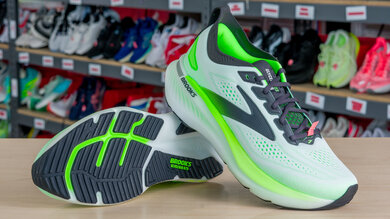
The Brooks Glycerin GTS 23 is a premium stability trainer designed for overpronators who want a firm, secure shoe for relaxed miles. Its broad base and internal sidewalls make the ride impressively stable, while the midsole provides decent impact protection, especially for a shoe in its class. However, the shoe is very heavy and doesn’t roll very smoothly through the stride, and its lack of rebound makes it unsuited to racing or progressive efforts.
| ✅ Buy If: | ❌ Skip If: |
|
|
Our Verdict
The Brooks Glycerin GTS 23 isn't a good pick for marathon racing. Even though it's impressively stable, remaining secure as fatigue builds, and its midsole won't bottom out, it's much too heavy for a racer. It's cumbersome to turn over, and it lacks the rebound and geometry to make maintaining race pace smooth and efficient.
Impressive stability keeps the ride secure when fatigued.
Enough protection underfoot without bottoming out.
Very heavy build makes turnover cumbersome.
Poor rebound and geometry make maintaining pace inefficient.
The Brooks Glycerin GTS 23 is an inadequate option for 5K/10K racing. Its exceptionally firm forefoot provides a secure base through toe-off, but almost everything else works against faster running. The shoe is very heavy, the rocker is too compliant to provide much assistance, and its rebound is poor. As a result, turnover feels cumbersome, and the ride lacks propulsion.
Very heavy build makes quick turnover hard.
Compliant rocker provides little assistance through the stride.
Poor rebound leaves the ride flat and unpropulsive at race pace.
The Brooks Glycerin GTS 23 isn't a bad choice for long runs. It's very trustworthy when fatigued, and the cushioning provides enough protection for the legs without bottoming out. However, there's no escaping its heft on foot, which, combined with its poor energy return and lack of fluidity through stride make it hard to settle into a rhythm and cruise.
Impressive stability keeps the ride secure when fatigued.
Enough protection underfoot without bottoming out.
Heavy build becomes tiring over longer efforts.
Hard to settle into a rhythm due to poor rebound and inefficient geometry.
The Brooks Glycerin GTS 23 is a decent daily trainer overall. Its an impressively secure and reliable shoe for regular miles, and the cushioning provides enough protection for day-to-day running. However, it's very heavy, and its poor heel rocker geometry makes transitions to midstance quite cumbersome. There's also very little rebound underfoot, so it feels much better at relaxed paces than progressive efforts
Impressively stable ride keeps daily miles secure.
Cushioning provides enough protection for regular training.
Very heavy build makes turnover cumbersome.
Ride isn't very smooth thanks to poor rebound and heel geometry.
Changelog
-
Updated Sep 17, 2026:
We've updated this review to add a link to the newly reviewed Topo Aura 2 to the Heel Compression Energy Return box.
- Updated Aug 21, 2026: Review published.
- Updated Aug 20, 2026: Early access published.
- Updated Jul 02, 2026: Our testers have started testing this product.
- Updated Jun 29, 2026: The product has arrived in our lab, and our testers will start evaluating it soon.
- Updated Jun 22, 2026: We've purchased the product and are waiting for it to arrive in our lab.

We've bought and tested more than 250 running shoes. Every pair purchased with our own money, never supplied or sponsored by brands. Our data-driven tests are designed to go beyond marketing claims, and since every shoe goes through the exact same methodology, you can directly compare results to find the right pair for your needs.
Test Results
Energy Return
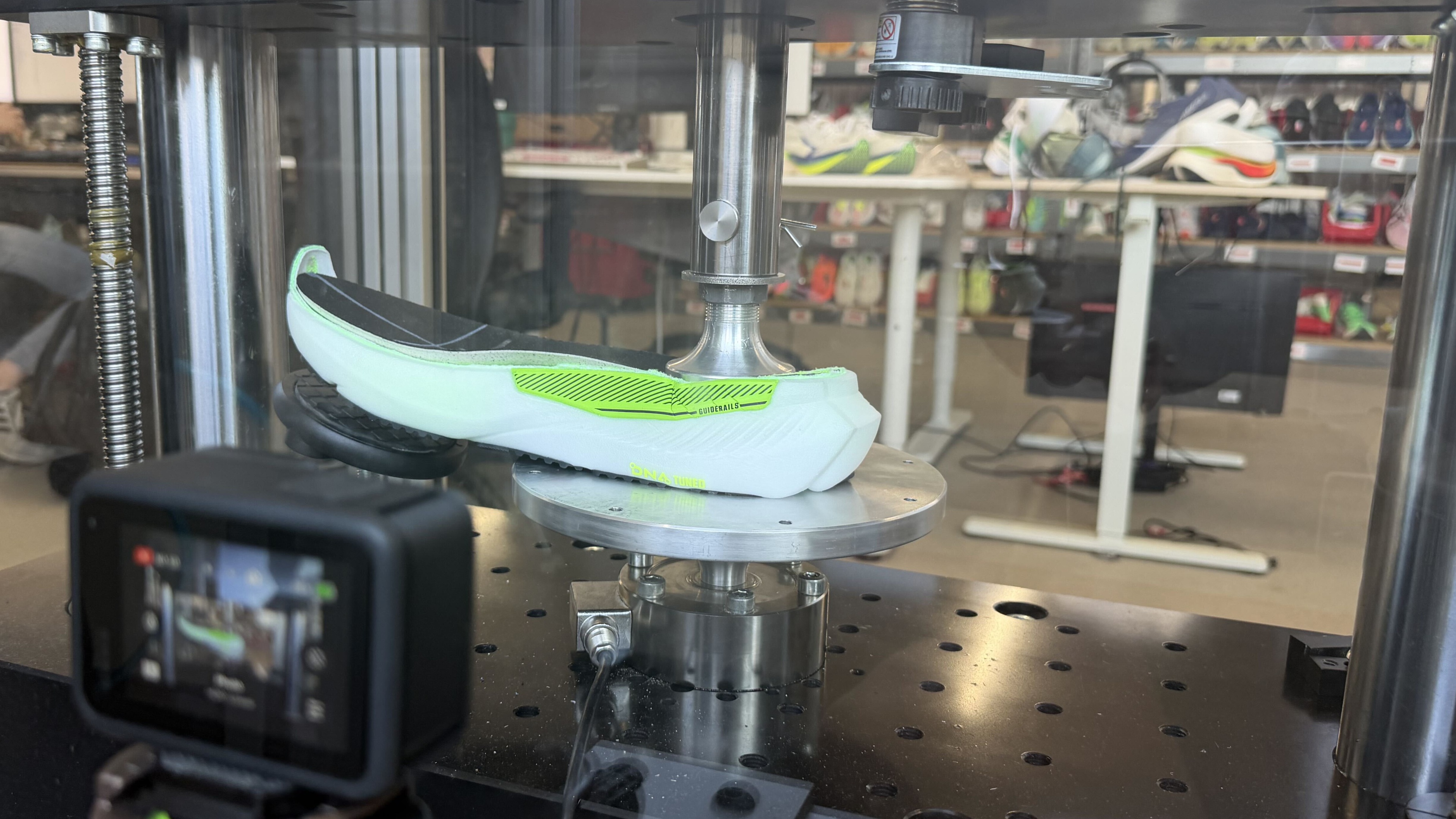
The Brooks Glycerin GTS 23 has poor energy return overall. The forefoot gives back very little energy, while the heel is even worse, so the ride feels flat rather than lively. It's a shoe that focuses on stability and dependability rather than excitement. Runners who want help picking up the pace won't find it in this shoe.
Forefoot provides very little rebound through toe-off.
Heel feels especially flat and unresponsive.

The energy return in the forefoot of the Brooks Glycerin GTS 23 is poor overall. The shoe lacks pep, though that's to be expected for a shoe of its character.
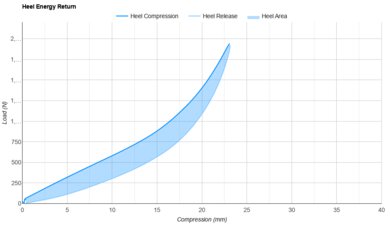
The heel of this shoe returns energy terribly, so landings feel flat with very little rebound. It’s still better than some stability shoes like the Topo Aura 2, but the difference is negligible and very much in line with the intent of this type of shoe, prioritizing relaxed, reliable mileage over the livelier ride of support shoes like the Saucony Hurricane 26.
Stability
The Brooks Glycerin GTS 23 is impressively stable. Its very firm heel and forefoot keep landings and toe-off planted, while the broad heel and arch provide a secure base underfoot. Internal sidewalls also help guide the foot back toward a more neutral position if you overpronate, making it very secure through the stride.
Firm heel and forefoot keep the ride planted.
Broad heel and arch provide a secure base underfoot.
Internal sidewalls help guide overpronators through the stride.
Runners without dedicated support needs may find the guidance too heavy-handed.


This shoe has a very firm heel overall, so heel strikers get a secure base for landings, though it also means it can feel harsh underfoot, especially at lighter forces where it's the firmest and least cushioned.


Cushioning
The Brooks Glycerin GTS 23 has decent cushioning overall, but the protection depends on how hard you load the shoe. The heel becomes much more protective as force increases, making it best suited to heavier or faster heel strikers. The forefoot works best for lighter runners at easier paces before offering comparatively less protection as more force is applied. The cushioning holds up adequately over extended efforts without bottoming out.
Heel comparatively more protective as force increases.
Forefoot good for lighter runners well at easier paces.
Heavier or faster forefoot strikers may find the shoe harsh.


The Brooks Glycerin GTS 23 has decent heel cushioning overall, but it's tuned to runners who load the shoe harder. Lighter heel strikers at easy paces get less protection from the road, while moderate or heavier heel strikers get good impact protection as force increases. Heavy heel strikers running faster get the most protection from the rearfoot relative to force and energy absorbed.


The Brooks Glycerin GTS 23 has decent forefoot cushioning overall. Lighter runners at easy paces get good protection from the road, but the forefoot compares less favorably as force increases. Midweight runners at moderate paces will find it harsher, while heavier or faster runners will find it the harshest of all.

The midsole of this shoe can handle longer runs acceptably without bottoming out. It helps dampen road impact better than its cheaper counterpart, the Brooks Adrenaline GTS 25, though it isn't as protective as the ASICS GEL-KAYANO 33.
Bounciness
The Brooks Glycerin GTS 23 isn't a bouncy shoe. Neither end of the midsole compresses much, and both return little energy, so the ride feels firm and controlled rather than springy. It's every much in keeping with the shoe's focus on stability and dependability rather than excitement, though runners looking for a more playful ride will certainly find it dull.
Limited compression keeps landings firm rather than springy.
Poor rebound gives little help carrying momentum through the stride.


Snappiness
The Brooks Glycerin GTS 23 isn't a great pick if you're looking for a snappy ride. Its exceptionally firm forefoot takes a lot of force to bend, providing a secure base and some leverage through toe-off. However, it returns little of the energy stored through that bend, while the rocker angle provides limited assistance getting you onto the toes. The result is a controlled push-off that suits relaxed running better than faster efforts.
Forefoot provides some leverage when pushing off.
Little stored energy comes back through toe-off.
Rocker geometry provides limited help driving you forward.

This shoe does a bad job returning the energy it stores when bent as it unbends. As a result, the shoe is far better suited to relaxed miles than faster, explosive efforts.


The forefoot of this shoe is very soft, which doesn't help it feel snappy. However, it takes a lot of force to bend, so it provides great leverage through toe-off.

The toe spring of the Brooks Glycerin GTS 23 is quite low, so it doesn’t roll you through late stance particularly well. The late apex also keeps more of the forefoot in contact with the ground before push-off, and the rocker angle isn’t steep enough to transfer load onto the toes quickly, so propulsion is limited when you pick up the pace.
Roll
The Brooks Glycerin GTS 23 doesn’t roll very smoothly at all. Though the forefoot rocker geometry provides some assistance through late stance, the rocker itself is too compliant to hold its shape well under load. The forefoot also bends too easily to provide much assistance, and the poor heel rocker geometry does little to smooth the transition from heel strike into midstance
Forefoot rocker geometry provides some help through late stance.
Forefoot bends too easily for a direct rollover.
Heel rocker provides little assistance moving into midstance.
Complaint rocker doesn't help moving forward through toe-off much.


True To Size
The Brooks Glycerin GTS 23 fits true to size overall. The length is spot on, while the forefoot and arch are roomy enough for most runners. The toe box sits a little low, so runners with taller toes may find the front slightly snug. However, it isn’t enough of an issue to size up, so we recommend going with your usual size. That said, wide and extra-wide versions are also available if you prefer more room.
Length is spot-on.
Forefoot and arch provide enough room for most runners.
Wide and extra-wide versions are available.
Low toe box may feel snug if you have taller toes.


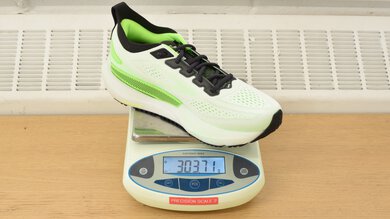
The Brooks Glycerin GTS 23 is a heavy shoe, even for a daily trainer. Its support features and reinforced build add noticeable heft, making it poorly suited to faster running. It’s a bit heavier than the standard Brooks Glycerin 23 and much heavier than more modern support shoes like the Saucony Hurricane 26.


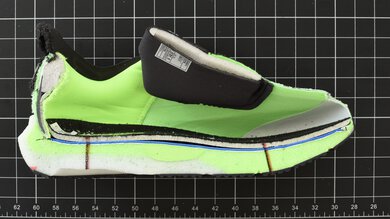
The Brooks Glycerin GTS 23 uses DNA TUNED, a supercritical foam that Brooks says uses two densities: small cells and large cells, split into different zones. The heel has larger cells than the forefoot, is less dense, and provides a softer landing. On our pair, the foam is both white and green, with the smaller, denser cells more prominent in the forefoot. You can see the green foam under our microscope here. This is the same philosophy as in the Brooks Glycerin 23 and Brooks Glycerin Max 2. Youtuber HUI has a more in-depth breakdown of how Brooks achieves their translucent midsole.


Popular Running Shoe Comparisons
The Brooks Glycerin GTS 23 is the support-focused sibling of the Brooks Glycerin 23, bringing a similar comfort-first ride in a package designed for overpronators. In the broader market, it sits alongside traditional stability shoes like the ASICS GEL-KAYANO 33. Both use sidewalls to guide the ride, but the ASICS is a touch lighter and much more cushioned across runner weights, strike patterns, and longer efforts. Since the Brooks also costs more, the ASICS is the better traditional support shoe unless you prefer the firmer ride of the Brooks. If you still want very good support in a lighter and much more energetic package, get the Saucony Hurricane 26. It gives up a little stability compared with the Brooks, but it combines deeper cushioning with a much livelier ride, making it the better pick if you want a more modern and fun support shoe.
For more shoes from the brand, check out our top Brooks picks. If you're a very heavy overpronator, or just want to check out more supportive shoes, take a look at our recommendations for the best stability shoes.
The Brooks Glycerin 23 is a better choice than the Brooks Glycerin GTS 23 unless you overpronate. It's slightly lighter, still impressively stable, and better suited to runners who land on their heels. The GTS 23 adds raised sides and support features, making it more stable, though its guidance is more heavy-handed.
The Brooks Glycerin GTS 23 is a better support shoe than the Brooks Adrenaline GTS 25. It's more protective for daily miles and more capable over long runs. The Adrenaline is lighter and firmer, and its higher heel better suits runners who land on their heels.
The ASICS GEL-KAYANO 33 is a better support shoe than the Brooks Glycerin GTS 23. Though both use sidewalls to offer impressive stability for overpronators, the ASICS is lighter and much more protective across runner weights, strike patterns, and distances, with a plusher feel underfoot. It also retails for less. The Brooks only makes sense if you prefer the classic, firmer Brooks ride.
Differences Between Sizes And Variants
We tested the Brooks Glycerin GTS 23 in men's U.S. size 9 with Medium (1D) width, as noted on the label for our pair. The Medium width for women is a 1B. The color shown here is White/Phantom/Green Gecko. This model is also available in other colorways depending on your region. Wide and Extra-Wide versions are available for both men (2E, 4E) and women (1D, 2E). The design section applies only to the exact model we tested, but we expect other size and gender variants to perform similarly.