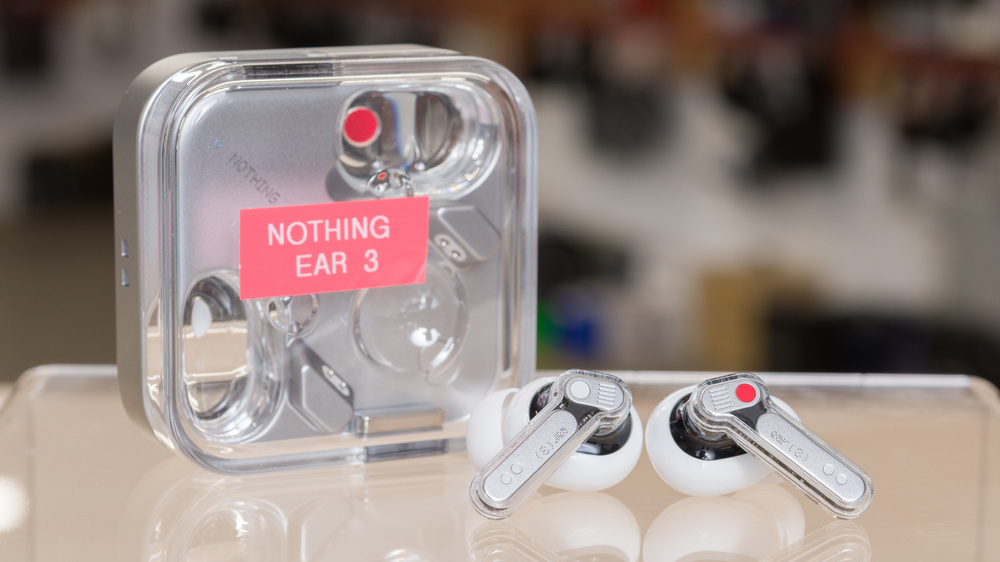
The Nothing Ear (3) are an update to the successful line of stylish see-through stemmed buds, replacing the Nothing Ear, though you'd be forgiven for assuming that the Nothing Ear (2) would be more recent than the Ear. In a departure from the previous Ear models, the Ear (3) boast a far more bass-boosted and excited top-end sound compared to the Harman curve-inspired tunings of their siblings. They also feature a built-in MEMS 'Super Mic' in the charging case, which can be used for transcription. Their active noise cancellation (ANC) is updated, too. Some things haven't changed much, though, like the general design and fit.
Our Verdict
The Nothing Ear (3) are impressive for sports and fitness use, as long as they fit your ears well. They don't have stabilizers or ear hooks to keep them in place if you're super active, and since they won't fit deeply in-ears, they can fall out occasionally. All that aside, there's plenty that makes them a solid choice, starting with the IP54 rating for the buds and the case against dust and water exposure. Their bass-rich sound gives a hefty thump to kick drums to motivate you, and you can play around with the EQ, too. Optional ANC and Transparency modes are available for different exercise scenarios.
Lots of EQ tuning available.
IP54-rated buds.
Continuous battery life is pretty short.
Some settings and controls benefit from configuring in the app.
The Nothing Ear (3) are very good for travel use. They're small and comfortable to wear for extended periods. Their control scheme and app features are comprehensive. For isolating out your environment, they include multiple ANC strengths and an adaptive mode, and they do a great job, even if more powerful ANC buds are available. Their bass-heavy and bright top-end tuning can be modified via the parametric EQ (or one of the other EQ tools). If you take many calls while traveling, like contacting airlines, the mics capture your voice well, and handle background noise deftly. All that said, their 5.3-hour battery (with ANC enabled) on a single charge is a possible hindrance, so for longer trips, they'll need a recharge.
Good mic system.
Lots of EQ tuning available.
IP54-rated buds.
Continuous battery life is pretty short.
Some settings and controls benefit from configuring in the app.
The Nothing Ear (3) are very good for office work. In particular, if you take many calls and online meetings, the mic performance is one of the standout features. The mics are excellent at rejecting background noise while preserving your voice. They're comfortable to wear for long periods with excellent noise isolation, thanks to the adjustable ANC feature. Similarly, you can make plenty of alterations to the bassy and bright sound profile via the app's extensive EQ. However, the continuous 5.3-hour battery life won't make it through a full day of work, so you'll need to pop them in their case to recharge at some point.
Good mic system.
Lots of EQ tuning available.
IP54-rated buds.
Continuous battery life is pretty short.
Some settings and controls benefit from configuring in the app.
The Nothing Ear (3) aren't meant for wireless gaming. As Bluetooth-only buds, you're limited to compatible devices (no consoles), and more to the point, their latency is too high, even with Low Lag mode enabled.
The Nothing Ear (3) can only connect via Bluetooth, so you can't use them for wired gaming purposes.
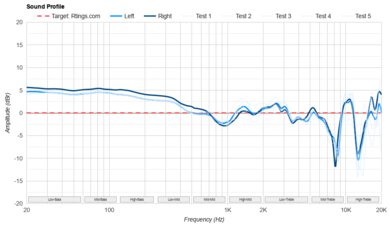
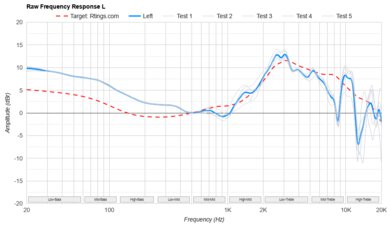
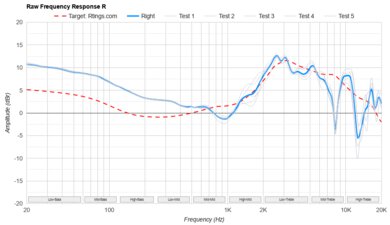
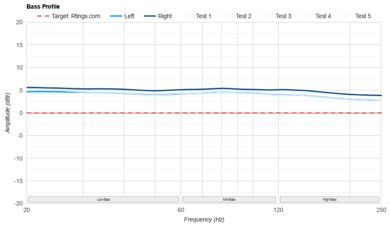
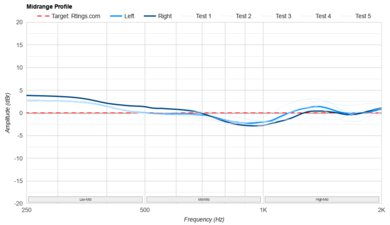
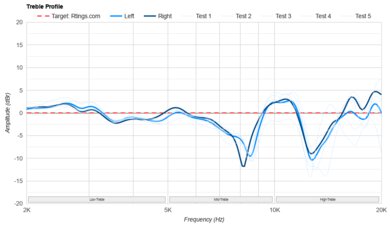
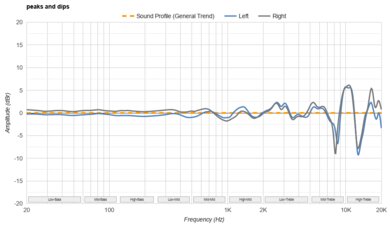
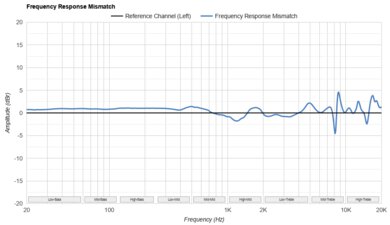
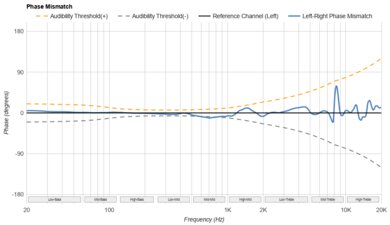
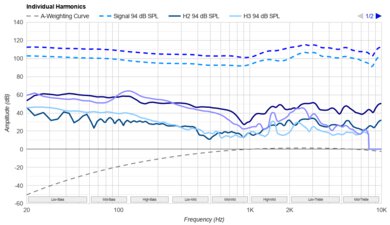
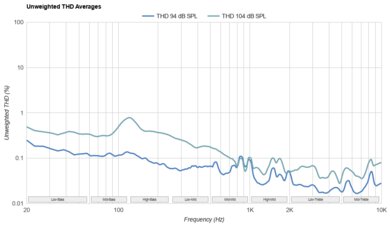
The Nothing Ear (3) are very good for audio reproduction accuracy. Their peaks and dips performance is also very good; it's mostly smooth throughout the response, except in the treble where there are a few valleys and sharp inclines that change the sound depending on the pitch. The buds' L/R drivers are amazingly well-matched, too. Compared to our target, their default settings are very bass-rich with an exaggerated rumble and punch. They're somewhat V-shaped sounding, with a little mid-range de-emphasis relative to the bass, and the treble matches our target well overall. The app provides you with plenty of tools for equalizing the sound, including a parametric EQ and EQ presets you can import. There's no audible coloration of your audio from harmonic distortion either, both at regular and elevated listening levels.
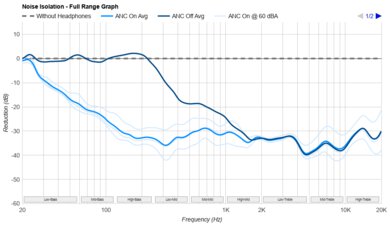
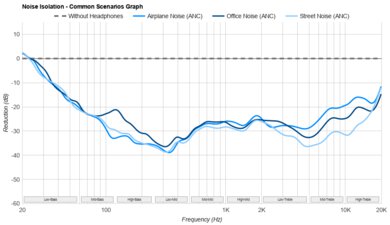
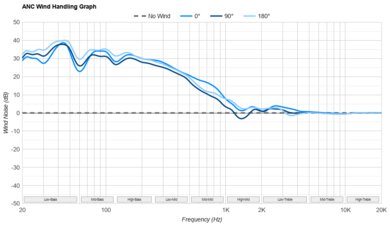
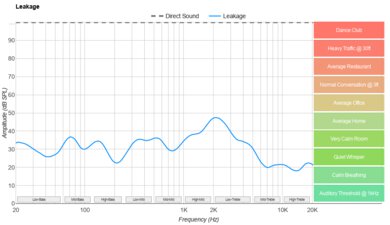
The Nothing Ear (3) are excellent for noise isolation use. They filter out bassy noises well and isolate high-pitched noises handily, too. You get adjustable strengths and adaptive modes via the app to customize your level of noise cancellation, for example, if you want to monitor conversations or transit announcements. That said, the ANC in the mid-range isn't especially powerful, so if you want to monitor chit-chat at a lower level, you can still do so.
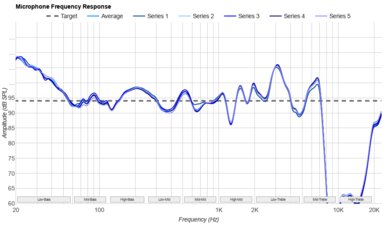
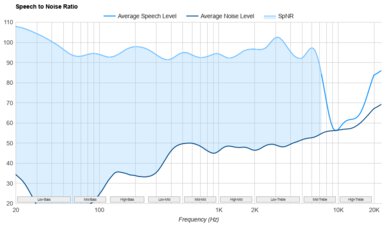
The Nothing Ear (3) wireless earbuds have a good microphone system. Your voice sounds intelligible, if a little congested, and they do a great job of filtering out a wide range of background noises that many mics struggle to reject. Their case also features a built-in 'Super Mic,' which captures higher-fidelity audio, but it's really only as convenient as holding up a square case like a handheld microphone. Still, you can use the 'Super Mic' for transcription and voice memos, for example.
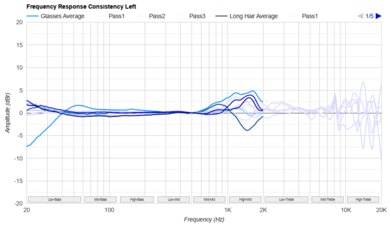
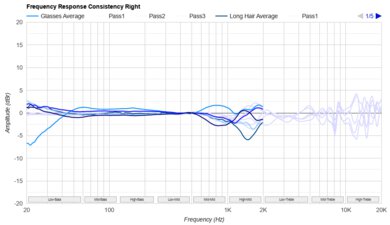
The Nothing Ear (3) have excellent frequency response consistency. Once you've found the correctly fitting ear tips (out of the four sets), the earbuds provide a predictable and consistent sound between sessions.
Performance Usages
Changelog
-
Updated Jul 30, 2026:
We added a reference to the Nothing Ear (3a) in the App Support box.
- Updated Jun 23, 2026: This review has been updated to Test Bench 2.3, which removes the Virtual Soundstage, Base/Dock, and some comparisons from Bluetooth Connection. Have a look at our changelog for more info.
-
Updated May 29, 2026:
We mentioned the Nothing Headphone (a) in the Style section of this review.
- Updated Apr 20, 2026: This review has been updated to Test Bench 2.2, which removes the Cumulative Spectral Decay (CSD) test, retiring its waterfall plot visualization from our reviews. You can read more about this change in the changelog.
Check Price
Differences Between Sizes And Variants
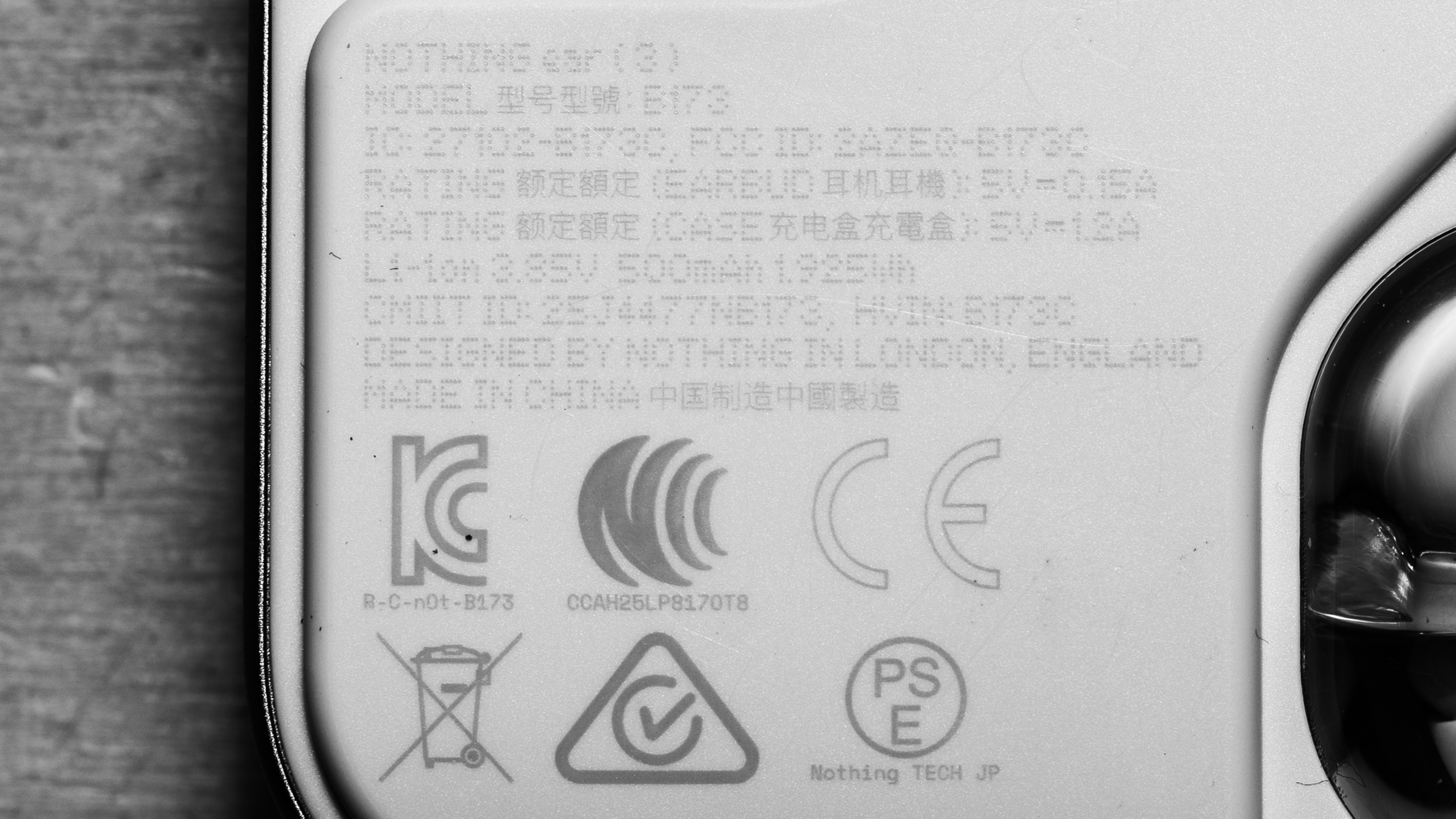
The Nothing Ear (3) are available in 'White' (here's the label for our unit) and 'Black.' We expect both colorways to perform similarly.
If you encounter another variant of these headphones, please let us know in the comments, and we'll update our review.
Popular Headphone Comparisons
While on the outside the Nothing Ear (3) look rather similar to their siblings, the previous Nothing Ear, the Nothing Ear (2), and the slightly stripped-back Nothing Ear (a), the Ear (3) deliver far more bass by default (which is a matter of taste) and improve the microphone system (not to mention the case's 'Super Mic'). Noise isolation performance also received a welcomed upgrade, even though it's not leaps and bounds better. Still, battery life is a weak point, and actually shorter on the Ear (3) than the Ear. While not as aesthetically impactful, the Anker Soundcore Liberty 4 NC Truly Wireless are another bass-heavy contender with better ANC and hours more battery life, but if you take a lot of calls, their mic isn't in the same league as the Ear (3). Perhaps you'd prefer the Sennheiser MOMENTUM True Wireless 4 for the longer battery life, EQ tools, and decent (though not as good-sounding) microphone. Meanwhile, if you don't care about custom EQ, the Apple AirPods Pro 3 (with an Apple device) have a really solid mic, too. All this to say, the Ear (3) are poised to give you most of what you want, if what you want are bassier Nothing earbuds, but that depends on your priorities.
Check out the best sounding wireless earbuds, the best earbuds for phone calls, and the best noise cancelling earbuds.
The Nothing Ear (3) are a somewhat more feature-full set of earbuds compared to the Nothing Ear (a), but they're very alike overall. The Ear (3) have a better mic system, noise isolation performance, and a higher IP54 rating (for the buds and case) compared to the IP54 for the buds and IPX2 rating for the Ear (a). That said, the bassy sound profile may be polarizing on the Ear (3), and it differs from the Ear (a)'s more balanced frequency response, which is a matter of taste. You can EQ either model, but only the Ear (3) have a spatial audio DSP, too.
Choosing between the Nothing Ear and their successor, the Nothing Ear (3) depends on your priorities. They have more in common than not, but the Ear have a longer continuous battery life at 7.5 hours and a more reserved bass response that matches our target better overall. In contrast, the Ear (3)'s mic system is better (and there's a secondary mic system in the case). They're tuned with far more low-end and a brighter treble, which is polarizing. You can EQ either model, though. Their ANC is improved, too. They also come with a spatial audio feature. All that said, if you need a long-lasting set of buds, the 5.3-hour continuous battery life is a step backwards from the previous Ear.
The CMF Buds Pro 2 are a more budget-oriented ANC model than the higher-end Nothing Ear (3). Although the CMF punch above their price point, thanks to the impressive ANC that goes toe-to-toe with the Nothing, they're less comfortable with a larger bud and slightly cheaper feel. Nevertheless, their touch controls are more conventional, and they're tuned very similarly to the Nothing, only with a warmer treble. They even last a little longer, 6.5 hours, instead of the Nothing's 5.3 hours. On the other hand, the Nothing are more premium-built and comfortable with a better microphone. They're also more tightly stereo-matched, so your choice depends on your budget and priorities.
The Nothing Ear (3) are the flagship alternative to the more affordable Nothing Ear (3a). But the differences are smaller than you might think, and if mic quality isn't important for you, the Ear (3a) offer better value. The main reason to get the flagship Ear (3) model is the improved microphone, which captures your voice more accurately than the Ear (3a)'s. The Ear (3)'s case also supports wireless charging, and they come with Quick Pair for iOS, which is handy if you're enmeshed in Apple's ecosystem. That said, the Ear (3a) offer a longer continuous battery life, comparable ANC, and a similar suite of EQ tools in the companion app.
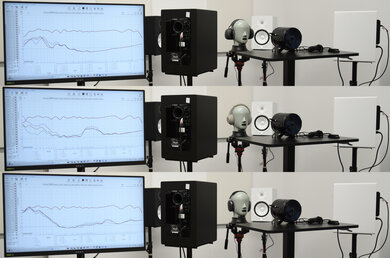
Our How We Test Headphones article takes you behind the scenes in our lab. You'll learn how we choose and purchase products and dive into the details of our review philosophy, from testing and scoring to writing and editing.
You can also discover how we produce recommendations like this one so that you can find the best headphones (or earbuds!) for your needs.
Test Results
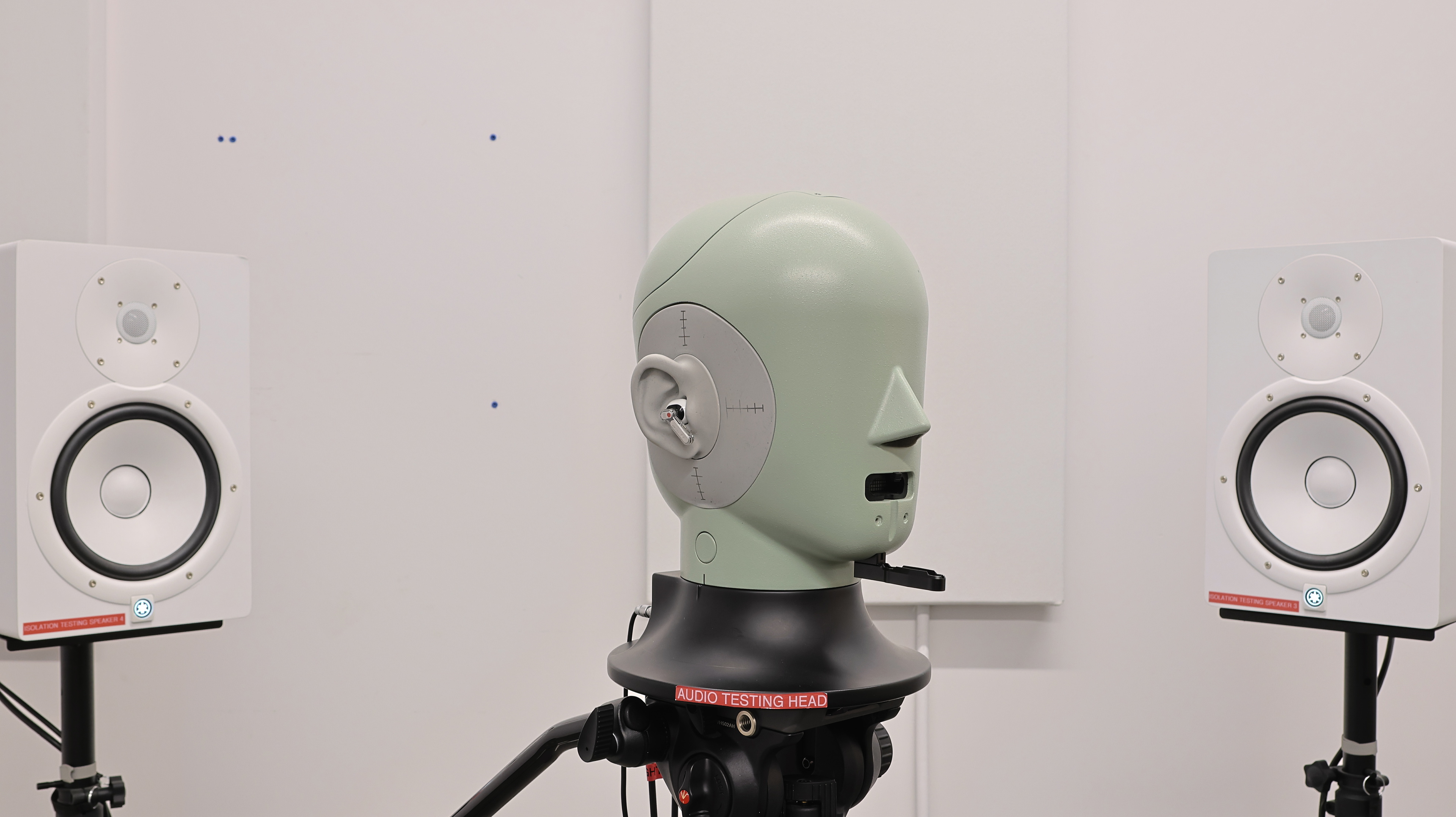
for pictures & test results
for pictures & test results
for pictures & test results

for pictures & test results



for pictures & test results
for pictures & test results
for pictures & test results