Nothing Ear (2)  Headphones Review

Reviewed May 03, 2023 at 10:11am
Tested using Methodology v1.5 
Nothing Ear (2)
7.5
Neutral Sound 
7.7
Commute/Travel 
8.2
Sports/Fitness 
7.3
Office 
5.9
Wireless Gaming 
5.8
Wired Gaming 
7.2
Phone Calls 
 9

The Nothing Ear (2) are the successor to the Nothing Ear (1) Truly Wireless. These updated earbuds have a very similar build to their predecessor, with the most noticeable visual change being the case, which looks more square. They also come with new features focused on delivering an individualized listening experience, like a personalized adaptive active noise cancellation (ANC) and a graphic EQ in the companion app. They also have an improved IP54 rating for protection against dust and water splashes.

Our Verdict

7.5
Neutral Sound 

The Nothing Ear (2) are good for neutral sound. They're comfortable enough for long listening sessions, and their 'Balanced' EQ preset is relatively flat, ensuring bass that feels thumpy, punchy, and full without overpowering the rest of the track. An underemphasized mid-mid makes vocals and lead instruments sound pushed to the back of the mix. Fortunately, they sound detailed and clear, thanks to a well-balanced treble range. Sibilants, like cymbals, also sound bright and crisp. If you want to change the sound profile, the companion app's graphic EQ and presets let you fine-tune the mix.

Pros
  • Comfortable and well-built.
  • 3-band graphic EQ and presets let you customize their sound.
Cons
  • Bad passive soundstage.
7.7
Commute/Travel 

The Nothing Ear (2) are good for commuting and travel. Their comfortable and lightweight build makes them well-suited for long trips. Their ANC also does a decent job of isolating you from background noise, like bus engines and passenger chatter. While their battery lasts long enough on a single charge to get you through a bus ride to and from work, they can't get you through a longer international flight without needing recharging.

Pros
  • Comfortable and well-built.
  • IP54 rating for protection against dust and water splashes.
  • Low leakage at high volumes.
Cons
  • Mediocre overall battery performance.
  • Mic makes your voice sound thin.
8.2
Sports/Fitness 

The Nothing Ear (2) are great for sports and fitness. Their comfort, stable in-ear fit and IP54 rating for protection against water and dust exposure make these buds well-suited for light runs outdoors and sweaty workouts at the gym. Their ANC also does a decent job isolating you from heavy traffic or chatter from nearby gymgoers. However, their battery can't last through an all-day excursion without needing a recharge, and they can still fall out with intense head shakes.

Pros
  • IP54 rating for protection against dust and water splashes.
  • Low leakage at high volumes.
Cons
  • Mic makes your voice sound thin.
7.3
Office 

The Nothing Ear (2) are decent for use in an office. They're comfortable enough for long shifts, but their relatively short battery life can't last through a whole 9-5 without needing a recharge. Fortunately, a ten-minute charge gives you two hours of playback with ANC off and 1.5 hours with it on. Their ANC does a decent job of cutting out ambient chatter but struggles to isolate you from whiny PC fans and AC units. Fortunately, they have multi-device pairing, meaning you can switch between your phone and laptop with ease.

Pros
  • Comfortable and well-built.
  • Low leakage at high volumes.
Cons
  • Mediocre overall battery performance.
  • Mic makes your voice sound thin.
5.9
Wireless Gaming 

The Nothing Ear (2) are Bluetooth-only earbuds. While they have a 'Low Latency' feature, audio lag still falls out of good values across most platforms, which may be prohibitive for some users.

5.8
Wired Gaming 

The Nothing Ear (2) are Bluetooth-only earbuds, and you can't use them for wired gaming.

7.2
Phone Calls 

The Nothing Ear (2) are decent for phone calls. Your voice sounds present and understandable but thin and distorted. Fortunately, they do a good job of separating your voice from both moderate and loud background noise. Their ANC also does a decent job of isolating you from ambient noise to focus on your call.

Pros
  • Good noise handling performance.
Cons
  • Mic makes your voice sound thin.
  • 7.5
    Neutral Sound
  • 7.7
    Commute/Travel
  • 8.2
    Sports/Fitness
  • 7.3
    Office
  • 5.9
    Wireless Gaming
  • 5.8
    Wired Gaming
  • 7.2
    Phone Calls
  • Changelog

    1.  Updated Apr 09, 2025: 

      This review's Compared To Other Headphones and Bluetooth boxes were updated to mention the CMF Buds Pro 2.

    2.  Updated Jul 15, 2024: The Battery section has been updated to compare the Nothing Ear Truly Wireless.
    3.  Updated Apr 22, 2024: We've added a comparison between these buds and the OnePlus Buds 3 Truly Wireless in Bluetooth.
    4.  Updated Apr 10, 2024: Firmware 1.0.1.102 has added an Advanced EQ in the companion app. We have updated App Support with these results.

    Check Price

    Differences Between Sizes And Variants

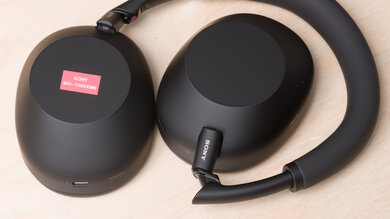
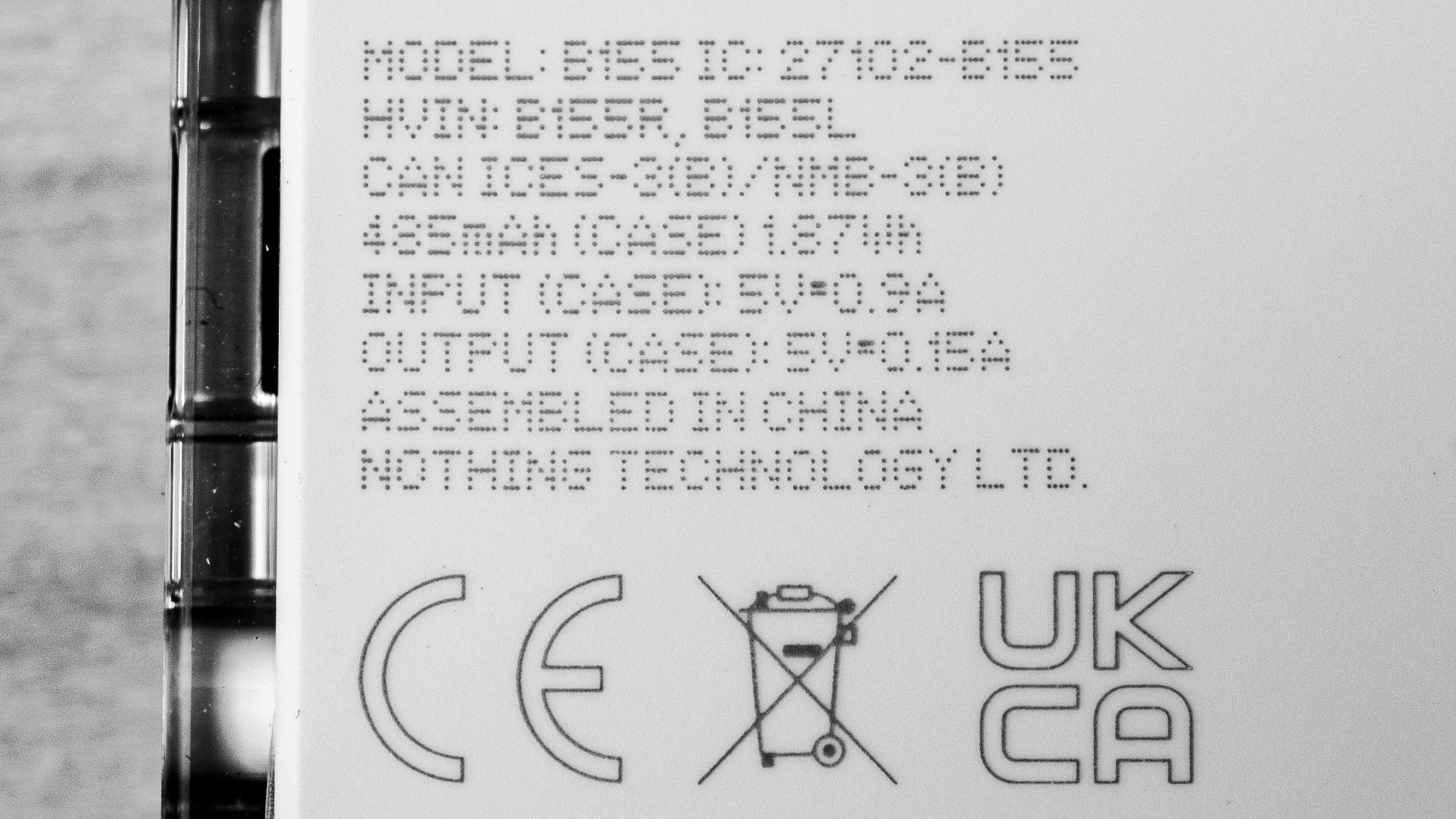
    These earbuds come in one variant: 'Black/White', and you can see our model's label here. If you come across another variant, let us know in the forums, and we'll update our review.

    Popular Headphones Comparisons

    The Nothing Ear (2) are the next generation of the Nothing Ear (1) Truly Wireless. They come with some upgraded features, like Adaptive ANC, ANC presets, and a graphic EQ and presets to help you fine-tune their sound to your liking. They're comfortable, well-built, and have an IP54 rating for resistance against dust and water splashes. Unfortunately, their battery life won't get you through a typical work shift or long trip without needing a recharge, unlike the Sennheiser MOMENTUM True Wireless 3, which have a longer continuous battery life with ANC on. Overall, the Nothing Ear (2)'s ANC doesn't block out as much background noise as their predecessor. In comparison, the Anker Soundcore Space A40 Truly Wireless can isolate you from a substantial amount more ambient noise, from bus engines to ambient chatter and noisy AC units. Meanwhile, subsequent incremental improvements to ANC in the time since the Ear (2) were released mean that affordable options like the CMF Buds Pro 2 outdo the Ear (2) when it comes to isolation and battery life.

    Check out our recommendations for the best wireless Bluetooth earbuds, the best noise cancelling earbuds, and the best sounding wireless earbuds.

    Nothing Ear

    The Nothing Ear are very similar to the Nothing Ear (2) with some small improvements. They both fit about the same with almost identical cases and they sound fairly similar. Both have plenty of the same app features, such as EQ and multi-device pairing. The Ear also have slightly better noise isolation and a better battery life. Still, the Ear (2) have enough similarities that you don't necessarily need to upgrade immediately.

    CMF Buds Pro 2

    The Nothing Ear (2) belong to a previous generation of earbuds with less powerful ANC than the CMF Buds Pro 2. That said, the Nothing have a more comprehensive equalizer and a flatter sound profile. They're better made and use pinch controls. Still, the CMF use the same app as the Nothing, albeit with a slightly pared-back version with a simpler EQ. They're bassier by default and have a slightly longer continuous battery life. However, their touch controls are a bit less reliable than the Nothing.

    OnePlus Buds 3

    The OnePlus Buds 3 and the Nothing Ear (2) have slightly different strengths, so either could be right for you, depending on your needs. While both buds are similarly comfortable and support LHDC codec for streaming Hi-Res audio, the OnePlus have better overall noise isolation and battery performance, which is particularly handy if you're always on the go. That said, the Nothing have a flatter, more neutral sound, which some users may prefer, and their mic offers a better overall performance. They're also better-built and their carrying case also supports wireless charging.

    Beats Studio Buds + True Wireless

    The Nothing Ear (2) have the edge over the Beats Studio Buds + True Wireless. While both buds have a comfortable fit, the Nothing are better built, have a more neutral sound profile that renders vocals less harsh, which some users may prefer, and their companion app offers a graphic EQ and presets to help you finetune their sound to your liking. They also support multi-device pairing. However, the Beats have a superior noise isolation performance and have a longer continuous battery life.

    Nothing Ear (1)

    The Nothing Ear (2) are very similar to their predecessor, the Nothing Ear (1). Both have similar designs, build quality, stability, and comfort. While the Ear (2) have slightly worse-performing ANC than the Ear (1), their mic has improved significantly, making your voice sound more natural and better isolated from background noise during a call. While the Ear (2) now feature multi-device pairing, you can't use the buds to control the volume by default, which isn't ideal for quick inputs while on the go. We used different methods for activating 'on-ear' detection with the Ear (1) and Ear (2), which affected our frequency response consistency measurements. You can find more info in each product's test text. Although the graphs differ, both buds deliver consistent bass and treble as they both have the same in-ear fit.

    Sony LinkBuds S Truly Wireless

    The Sony Linkbuds S Truly Wireless have the edge over the Nothing Ear (2). The Sony have better-performing ANC and lower audio leakage at high volumes. They also last longer on a single charge than the Nothing, meaning you can use them for longer trips and commutes without needing a recharge. However, the Nothing have a better mic that can better separate your voice from louder background noise. Their case also supports wireless charging.

    Nothing Ear (a)

    The Nothing Ear (a) and the Nothing Ear (2) are so similar that you may prefer whichever you can find at a better price. That said, the Ear (2) have a better mic and a higher IP-rated case.

    Apple AirPods Pro 2

    The Nothing Ear (2) are better in-ear headphones than the Apple AirPods Pro 2. While both buds have similar comfort, battery life, and build quality, the Nothing come with more features for a lower price than the Apple, like multi-device pairing, ANC presets, and a graphic EQ with presets. However, the Apple have a better-functioning ANC that isolates you from more ambient noise, making them ideal for commutes and working in loud offices. They also have better compatibility with Apple's product ecosystem thanks to their H2 chip, which allows for seamless pairing with other Apple devices.

    OnePlus Buds Pro 2

    The Nothing Ear (2) are better earbuds than the OnePlus Buds Pro 2. They have a slight advantage in build quality, controls, and mic performance. However, the OnePlus can isolate you from more high-frequency noise, like a whiny PC fan, and has a longer battery life. Each device has better integration within their manufacturer's respective ecosystem, so you should consider the Nothing buds if you already own Nothing's phone, and likewise with the OnePlus buds.

    Nothing Ear (stick)

    The Nothing Ear (2) are better earbuds than the Nothing Ear (stick). The Ear (2) are a more premium offering from Nothing and have more features than the Ear (stick), like ANC and multi-device pairing. Their build quality is also better, and their silicone ear tips are more comfortable over long durations than the Ear (stick)'s tipless earbud design. Sound-wise, the Ear (2) have a deeper bass extension, giving hip-hop and EDM more thump and punch by default. However, the Ear (stick) have a longer battery life, and their minimal feature set results in a lower price that won't put as big a hole in your wallet as the Ear (2).

    Overhauling Our Audio Measurements And A New Multi-Curve Graphing Tool

    We've upgraded our Headphones Test Bench to 2.0! This update brings several key changes to our tests and usages, making it easier than ever to interpret our sound results based on your personal preferences. You'll also find a brand-new interactive graph tool featuring multiple targets (including our own!) for you to explore and compare.

    For a full breakdown, check out our changelog, which includes detailed commentary from our test designer explaining the rationale behind our update.

    We'd also love to hear your thoughts: your feedback helps us keep improving, so join us in the comments!

    Test Results

    perceptual testing image
    Sort:
    RATINGS
    Category:
    All
    Design
    Style
    TypeIn-ear
    EnclosureClosed-Back
    WirelessTruly Wireless
    TransducerDynamic

    The design is nearly identical to the Nothing Ear (1) Truly Wireless. The body is made of transparent plastic that lets you see all the inner components. The part of the buds that goes in and on your ear is covered in white silicone. They only come in one variant: 'Black/White'.

    7.5
    Comfort
    Weight0.02 lbs
    Clamping Force
    0 lbs

    These are comfortable earbuds. They don't fit too deep or put pressure on your ear. Their lightweight build won't cause fatigue over time either, and the three sizes of included ear tips will help you get the best fit.

    7.7
    Controls
    OS Compatibility
    Not OS specific
    Ease Of UseGood
    FeedbackGood
    Call/Music ControlYes
    Volume ControlYes
    Microphone ControlNo
    Channel Mixing
    No
    Noise Cancelling ControlOn/Off
    Talk-Through
    On/Off
    Additional ControlsVoice Assistant

    These in-ears have a good control scheme. The sensor is touch-based and found on the bottom of the stem. The buds produce a chime each time you squeeze the stem, as well as when you reach the lowest/max volume settings. One drawback is that the buds don't have volume controls by default, but you can change this in the companion app.

    On either stem:

    • Single pinch: Plays and pauses audio. Also answers and ends calls.
    • Double pinch: Declines calls and plays the next track.
    • Triple pinch: Plays the previous track.
    • Pinch and hold: Cycles between ANC on and transparency mode. You can also add the 'off' control via the companion app.
    • Double pinch and hold: No action by default, but you can set this to activate the voice assistant via the companion app.
    9.5
    Portability
    L1.4" (3.5 cm)
    W1.2" (3.0 cm)
    H0.8" (2.1 cm)
    Volume1.34 in³ (22.00 cm³)
    Transmitter RequiredNo

    These earbuds are superbly portable. They don't take up much space in your pocket or bag.

    8.0
    Case
    TypeHard case
    L2.4" (6.0 cm)
    W2.4" (6.0 cm)
    H0.8" (2.0 cm)
    Volume4.09 in³ (67.00 cm³)

    The carrying case is great. Like that of its predecessor, the Nothing Ear (1) Truly Wireless, the case supports Qi Wireless charging. However, while it otherwise still has mostly the same look, this model's case has a more premium feel and an upgraded plastic construction. It's certified IP55 for resistance against dust as well as water splashes, and there's a slight difference in the case's dimensions compared to their predecessor, which you can see here and here.

    8.0
    Build Quality

    These earbuds have great build quality. The plastic quality on the buds and case feel like an upgrade from their previous iteration. The case is rated IP55, and the buds are rated IP54 for protection against dust and water splashes. Their ANC mic has also changed placement, as you can see here.

    7.5
    Stability

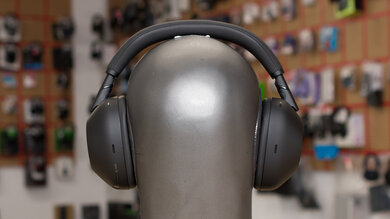
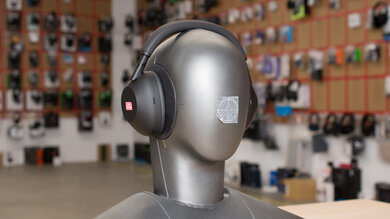
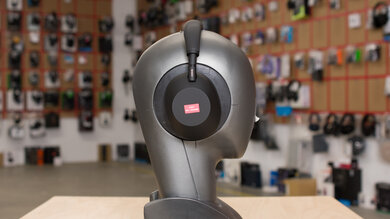
    These earbuds have good stability. They stay in place during both moderate and intense exercise, making them a good option for the gym. If you're shaking your head a lot during a run or while dancing in your apartment, they'll likely fall out.

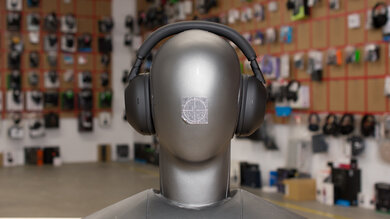
    Headshots 1
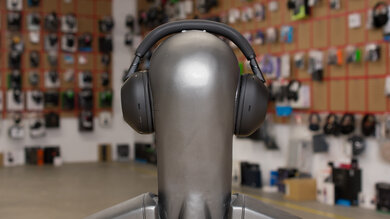
    Headshots 2
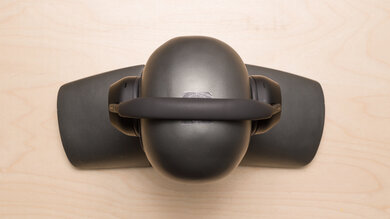
    Top
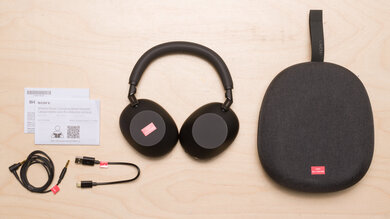
    In The Box

    • Nothing Ear (2) earbuds
    • Charging case
    • USB-C to USB-C charging cable
    • 3x ear tips
    • Manuals
    Sound
    Sound Profile
    See details on graph tool
    Bass Amount
    -0.43 dB
    Treble Amount
    0.01 dB

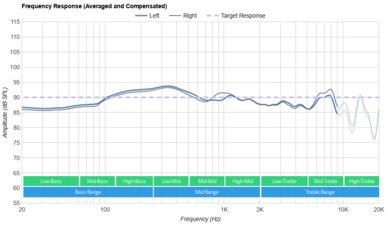
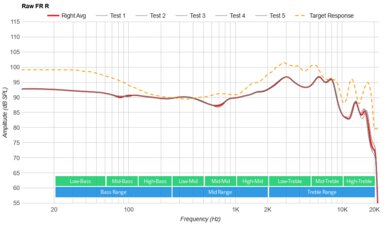
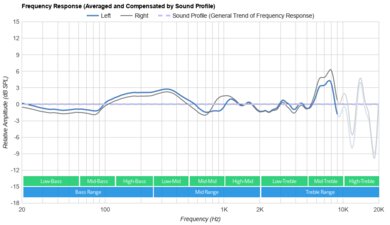
    The Nothing Ear (2) have a fairly neutral sound profile. We tested the 'Balanced' EQ preset, which is well-suited for most kinds of audio content. You can see how each EQ preset performs here.

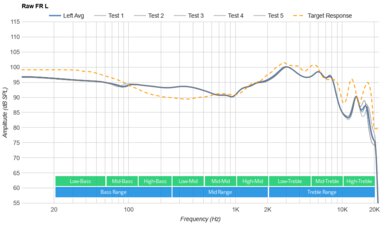
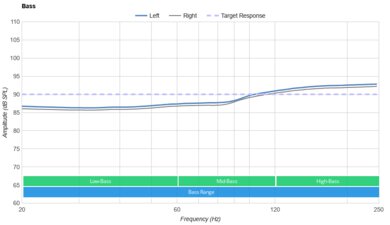
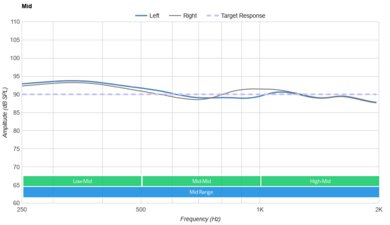
    Due to a fitting issue when testing these earbuds, the graph shows less bass than is audible. In reality, there's plenty of thump, punch, and boom to suit genres like hip-hop and EDM. However, the mid-mid suffers from an underemphasis, making vocals and instruments sound pushed to the back of the mix. Fortunately, sibilants, like cymbals, sound bright and clear. We noticed a difference in the frequency response with ANC turned on/off, which you can see here. Most noticeable is a difference in the dip between the high-bass and mid-mid. With ANC off, it's a deeper underemphasis, meaning vocals and instruments sound pushed further back and thin. With ANC on, the dip's much flatter, so audio in this range is a bit fuller and better balanced. If you'd like to adjust the mix, their companion app has a graphic EQ and presets to help personalize your listening experience.

    9.3
    Frequency Response Consistency
    See details on graph tool
    See details on graph tool
    Avg. Std. Deviation
    0.14 dB

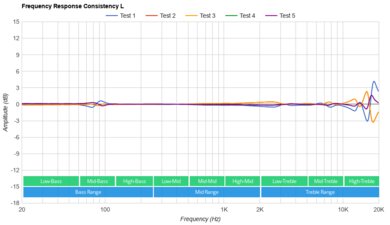
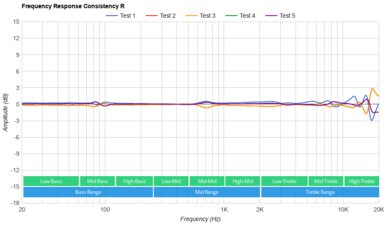
    The frequency response consistency is outstanding. Our method of activating the "wear" sensor on headphones has improved from the Nothing Ear (1) Truly Wireless, now using a silicone cover instead of a copper wire to trick the buds into thinking they're sensing real skin. This has resulted in a much more accurate reading this time around, and, despite their different scores, it also more accurately represents the frequency response consistency of their predecessor. If you get the right fit with the included ear tips, you'll experience consistent bass and treble delivery.

    Raw Frequency Response
    See details on graph tool
    See details on graph tool
    9.1
    Bass Accuracy
    See details on graph tool
    Std. Err.
    1.31 dB
    Low-Frequency Extension
    10 Hz
    Low-Bass
    -2.62 dB
    Mid-Bass
    -0.36 dB
    High-Bass
    -0.51 dB

    The bass accuracy is fantastic. Due to a fitting issue on our test rig, the graph shows less low bass than there is. Rest assured that the range is well-balanced and ensures tracks have plenty of thump, punch, and boom without overwhelming the rest of the mix.

    8.1
    Mid Accuracy
    See details on graph tool
    Std. Err.
    2.59 dB
    Low-Mid
    -1.48 dB
    Mid-Mid
    -3.38 dB
    High-Mid
    -0.01 dB

    The mid accuracy is great. In tracks like Music Sounds Better With You by Stardust, the mellow synths and vocals in the chorus sound clear and full. However, an underemphasis in the mid-mid pushes them to the back of the mix.

    8.9
    Treble Accuracy
    See details on graph tool
    Std. Err.
    1.61 dB
    Low-Treble
    -0.42 dB
    Mid-Treble
    -1.2 dB
    High-Treble
    -4.17 dB

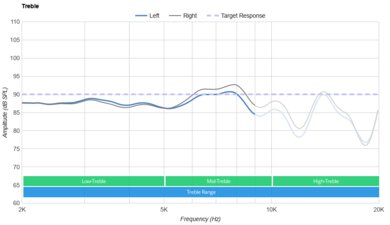
    The treble accuracy is excellent. Instruments and vocals, like the piano and guitar in After the Cosmic Rain by Chick Corea, sound detailed and present. Sibilants, like cymbals, sound a little dull due to a slight underemphasis in the mid-treble.

    8.4
    Peaks/Dips
    See details on graph tool
    Peaks
    1 dB
    Dips
    0.99 dB

    The peaks and dips performance is great. The slight dip in the low-bass is due to a fitting issue during testing and isn't audible with real-life content. What is audible, however, is a wide dip in the mid-mid that pushes vocals and instruments further to the back of the mix. A tall peak in the mid-treble also makes sibilants, like cymbals, piercing.

    7.6
    Imaging
    See details on graph tool
    See details on graph tool
    Weighted Group Delay
    0.28
    Weighted Phase Mismatch
    5.23
    Weighted Amplitude Mismatch
    2.56
    Weighted Frequency Mismatch
    1.94

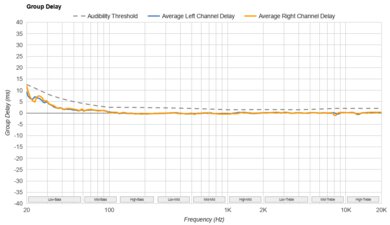
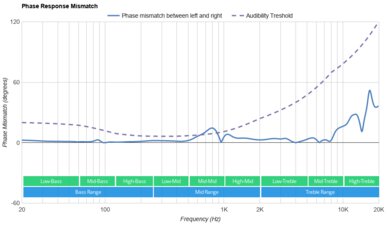
    These earbuds have good imaging performance. While this manufacturer only has a couple of products on the market, they tend to have good ergonomics and quality control. Group delay falls below the audibility threshold, resulting in tight bass and transparent treble reproduction. However, our unit's L/R drivers have some noticeable mismatches in their phase response. The mid-mid range has a minor, yet audible, imbalance in the phase response that makes voices sound somewhat unnatural. While the peak in the low-treble is hard to spot with real-life content, the imbalance in the mid-treble makes sound feel like it's shifted to the left side. Keep in mind that imaging can vary between units.

    1.2
    Passive Soundstage
    PRTF Accuracy (Std. Dev.)
    N/A
    PRTF Size (Avg.)
    N/A
    PRTF Distance
    N/A
    Openness
    2.8
    Acoustic Space Excitation
    2.1

    Being in-ear headphones, they have a bad passive soundstage. Sound is delivered directly into your ear canal and doesn't interact with the outer ear, which is necessary to create an immersive soundstage. The result is audio that feels like it's coming from inside your head rather than all around you.

    0.0
    Virtual Soundstage
    Head Modeling
    No
    Speaker Modeling
    No
    Room Ambience
    No
    Head Tracking
    No
    Virtual Surround
    No
    8.1
    Weighted Harmonic Distortion
    See details on graph tool
    WHD @ 90
    0.222
    WHD @ 100
    0.086

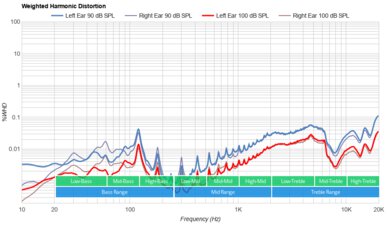
    The weighted harmonic distortion is great. All frequencies fall within good levels, ensuring clear and pure audio reproduction.

    Test Settings
    Firmware
    1.0.1.85
    Power
    On
    Connection
    Bluetooth 5.0
    Codec
    SBC, 16-bit, 44.1kHz
    EQ
    Balanced
    ANC
    High
    Tip/Pad
    Silicone (small)
    Microphone
    Integrated

    These are the settings used to test these earbuds. Our results are only valid when using them in this configuration.

    Isolation
    7.2
    Noise Isolation
    See details on graph tool
    Isolation Audio
    Overall Attenuation
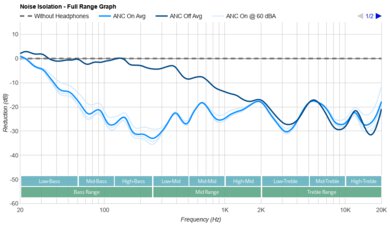
    -17.77 dB
    Noise CancellingYes
    Bass
    -13.72 dB
    Mid
    -18.79 dB
    Treble
    -21.35 dB

    Noise isolation performance is decent. You can set the ANC to 'High/Mid/Low' or 'Adaptive'. We took measurements for 'High' as well as 'Adaptive', and found they perform about the same. We also tried lengthening our sweep to see if this made the 'Adaptive' mode work better but didn't find any significant changes.

    While the 'High' setting is successful at isolating you from some background noise, these earbuds don't perform as well as the Nothing Ear (1) Truly Wireless or Beats Studio Buds + True Wireless. They can't block out as much bass-range noise like a rumbly bus engine. They do a better job of blocking out noise in the mid-range, like nearby conversations. Their treble performance is just okay, so you're likely to still hear residual noise from a whiny PC fan.

    8.2
    Leakage
    See details on graph tool
    Leakage Audio
    Overall Leakage @ 1ft
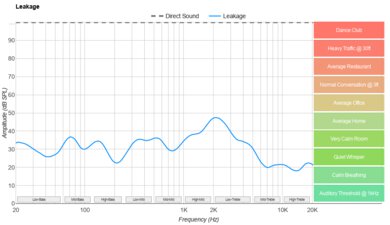
    32.23 dB

    The leakage performance is great. If you work in a moderately noisy office, coworkers are likely to hear escaping audio when played at high volumes. However, since it's mostly concentrated in the treble range, it sounds thin and isn't as noticeable.

    Microphone
    Microphone Style
    Integrated
    Yes
    In-Line
    No
    Boom
    No
    Detachable Boom
    No
    MicYes
    6.6
    Recording Quality
    See details on graph tool
    Recorded Speech
    LFE
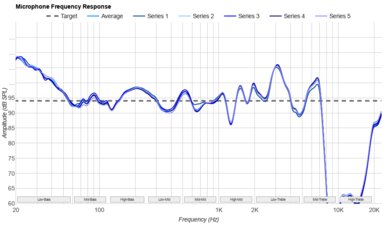
    93.77 Hz
    FR Std. Dev.
    6.01 dB
    HFE
    7,561.35 Hz
    Weighted THD
    4.806
    Gain
    -15.75 dB

    The mic's recording quality is reasonable. The integrated microphone makes your voice sound present and understandable but very thin and distorted.

    7.7
    Noise Handling
    See details on graph tool
    SpNR
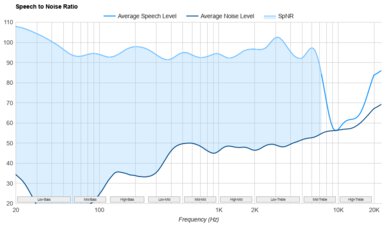
    27.6 dB
    Noise Gate
    Always On
    Speech + Pink Noise Handling
    7.5
    Speech + Pink Noise Audio Sample
    Speech + Subway Noise Handling
    8.0
    Speech + Subway Noise Audio Sample

    The mic has a good noise handling performance. Your voice is well-separated from the background in moderately noisy environments like a busy office, but vocal quality is slightly affected by loud noises, like a car horn or passing subway. Thankfully, your voice is never completely drowned out by background noise.

    Active Features
    6.2
    Battery
    Battery Type
    Rechargable
    Continuous Battery Life
    5.6 hrs
    Additional Charges
    4.0
    Total Battery Life
    28 hrs
    Charge Time
    1 hrs
    Power-Saving Feature
    No
    Audio While Charging
    Yes
    Passive Playback
    No
    Charging PortUSB-C

    The battery performs passably. While the manufacturer advertises them to last 6.3 hours continuously with ANC on, we only measured 5.6 hours, which won't get you through a long workday or flight without needing a top-up. Fortunately, they have four extra charges in the case, maxing the total battery life out to nearly 30 hours. They also have a fast charge feature that gives you two hours of power without ANC after ten minutes, which is about 1.5 hours with ANC on. Unfortunately, they don't have any power-saving features like auto-off. For a longer-lasting battery, consider the Nothing Ear Truly Wireless, which have a longer continuous battery life.

    7.5
    App Support
    App NameNothing X
    iOSYes
    AndroidYes
    macOSNo
    WindowsNo
    Equalizer
    Graphic + Presets
    ANC Control
    Presets
    Mic ControlNo
    Room Effects
    No
    Playback Control
    No
    Button MappingYes
    Surround Support
    No

    Their companion app is good. It's not the same app as the Nothing Ear (1) Truly Wireless, so you'll need to download the new app if you're upgrading. You can customize the control scheme, adjust the ANC settings, and turn on/off some of the buds' unique features like 'Low Latency' mode, in-ear detection, and a custom ANC setting. Thanks to firmware update 1.0.1.102, you'll also get access to an 'Advanced EQ' in addition to the default 3-band graphic EQ. This advanced EQ is a combination graphic/parametric EQ, giving you much more control over their sound. They also have a feature that personalizes the sound profile based on the shape of your ear. Lastly, they have a 'Find my Earbuds' feature to help you locate them when lost. You can see the app in action here. Additionally, if you own a phone made by Nothing, you don't need to download an app, as all these features are built into the phone's OS.

    Connectivity
    8.3
    Bluetooth
    Bluetooth Version
    5.3
    Multi-Device Pairing
    2 Devices
    NFC Pairing
    No
    Line Of Sight Range
    334.65 ft (102.00 m)
    PC Latency (SBC)
    278 ms
    PC Latency (aptX)
    N/A
    PC Latency (aptX HD)
    N/A
    PC Latency (aptX-LL)
    N/A
    iOS Latency
    111 ms
    Android Latency
    196 ms

    These earbuds have a great Bluetooth performance. While they support multi-device pairing, audio can't play simultaneously between devices. You must turn the audio off on your first device before the other can play. They have high latency on PCs and mobile devices on their default setting but, fortunately, have a 'Low Latency' mode advertised to reduce audio lag. While this setting drastically lowers latency on iOS devices, PCs and Android devices still suffer from too much audio lag to game or watch videos comfortably.

    Like the OnePlus Buds 3, these buds feature a different audio codec called LHDC. When used with compatible devices, it can stream high-resolution audio with lower latency over Bluetooth. However, we can't test its latency performance. If you'd rather have similar earbuds that use the LDAC codec instead, try the CMF Buds Pro 2.

    0.0
    Non-Bluetooth Wireless
    Non-BT Line Of Sight Range
    N/A
    Non-BT Latency
    N/A
    0.0
    Wired
    Analog Audio
    No
    USB Audio
    No
    DetachableNo
    LengthN/A
    Connection
    No Wired Option
    Analog/USB Audio Latency
    N/A

    These earbuds come with a USB-C to USB-C charging cable to charge their carrying case. You can't use them wired.

    PC Compatibility
    Analog
    No
    Wired USB
    No
    Non-BT Wireless
    No

    These earbuds only have full mic and audio compatibility with PCs via Bluetooth.

    PlayStation Compatibility
    PS4 Analog
    No
    PS4 Wired USB
    No
    PS4 Non-BT Wireless
    No
    PS5 Analog
    No
    PS5 Wired USB
    No
    PS5 Non-BT Wireless
    No
    Xbox Compatibility
    Xbox One Analog
    No
    Xbox One Wired USB
    No
    Xbox One Non-BT Wireless
    No
    Xbox Series X|S Analog
    No
    Xbox Series X|S Wired USB
    No
    Xbox Series X|S Non-BT Wireless
    No
    2.2
    Base/Dock
    Type
    Charging Case
    USB Input
    No
    Line In
    No
    Line Out
    No
    Optical Input
    No
    RCA Input
    No
    Dock Charging
    Yes
    Power Supply
    USB-C

    The earbuds' case comes with four extra full charges. The case itself can be charged either wirelessly or via USB-C cable.