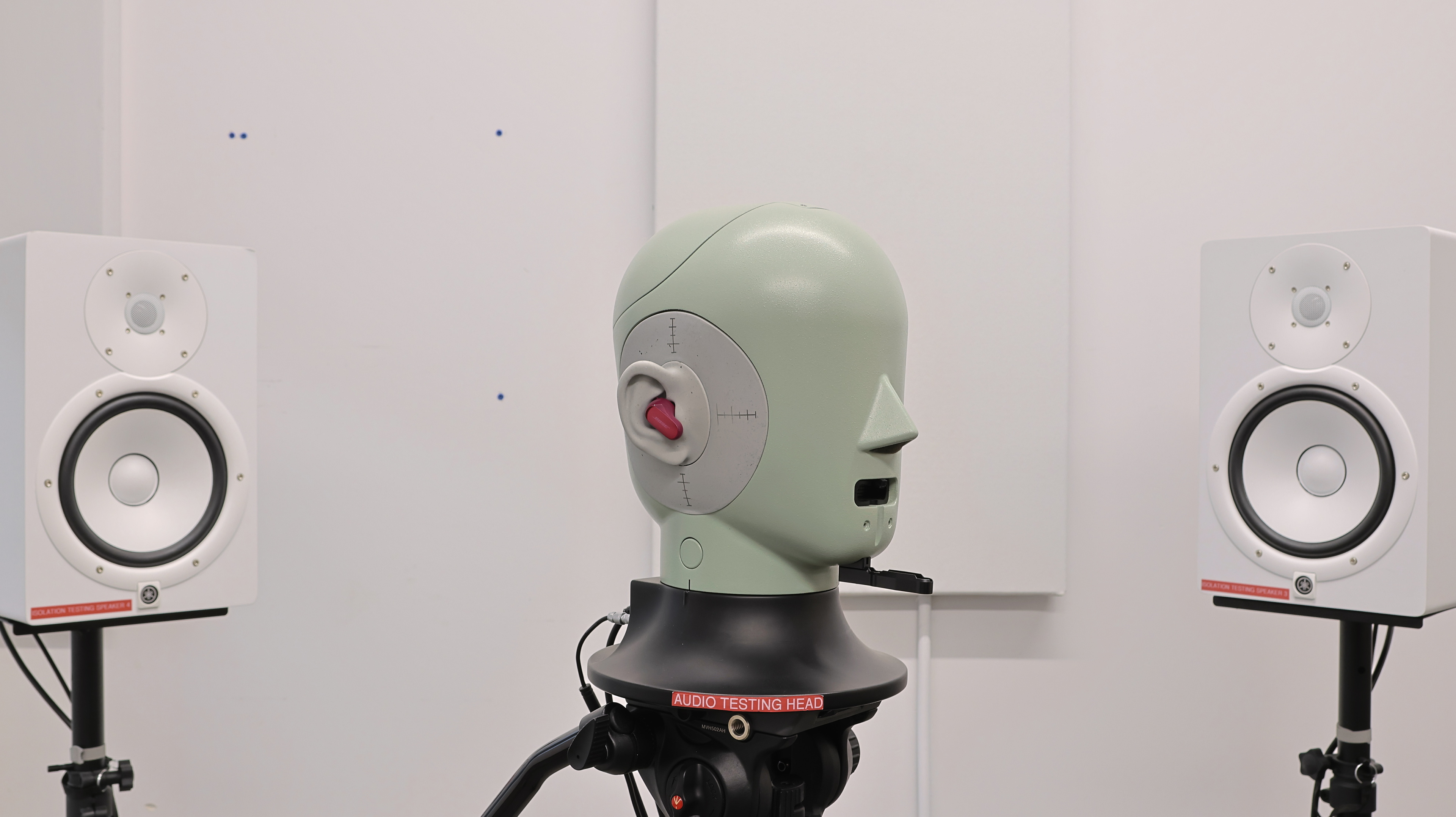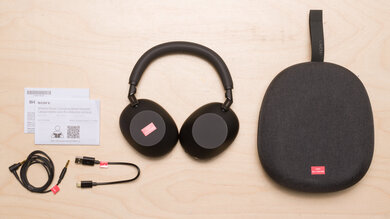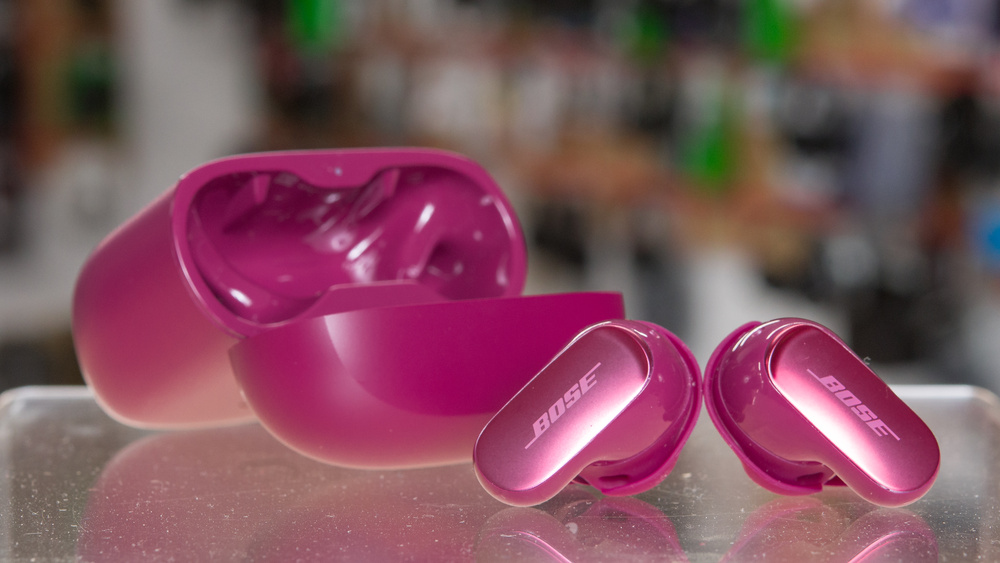
The Bose QuietComfort Ultra Earbuds (2nd Gen) are the refreshed version of the original Bose QuietComfort Ultra Earbuds Truly Wireless. Bose advertises several improvements, including more responsive noise cancellation and improved noise suppression. The 2nd Gen are still one of the top contenders in active noise cancellation (ANC) technology and an excellent pickup for most people with comfort at the top of their mind. The buds also support Bose-exclusive features like CustomTune, which customizes your audio based on the shape and depth of your ear canals. That said, some of the software improvements that were once exclusive to the 2nd Gen are coming to the original earbuds, so the extra cost over the now-discounted 1st Gen may leave some on the fence regarding which iteration to purchase, at least while supplies of the first generation last.
Our Verdict
The Bose QuietComfort Ultra Earbuds 2nd Gen are great for sports and fitness. They include three types of stabilizers and have a shallower fit than similarly stable earbuds. This makes them a comfortable option for a variety of people and a perfect companion for working out or taking a jog. They also have an IPX4 rating, so it's fine if you splash them with water from a fountain or get them wet from a run in the rain.
Exceptional ANC.
Great comfort and stability with three stabilizer sizes.
Shorter 6.5-hour continuous battery life.
The Bose QuietComfort Ultra Earbuds 2 are great for travel. The earbuds come with three sets of ear tips and stabilizers, ensuring a comfortable and snug fit for long-haul flights. Plus, they attenuate noise exceptionally well, so you won't be woken up on a long train ride by a wailing child in the same car. On the downside, their battery life is limited to 6.5 hours of continuous playback, so they won't last you through an entire transcontinental flight. That said, their carrying case comes with an additional three charges, while also being a convenient way to safely store the earbuds.
Exceptional ANC.
Great comfort and stability with three stabilizer sizes.
Shorter 6.5-hour continuous battery life.
The Bose QuietComfort Ultra Earbuds 2nd Gen are very good for office work. They sport outstanding noise isolation, handily attenuating distractions on site from noisy construction to chatty coworkers. If you're in a more collaborative workspace, you can also switch them to full transparency mode in case someone calls your name. The earbuds are very comfortable to wear and have a microphone with an adjustable sidetone for any meetings you might have. You can also keep the earbuds connected to your personal phone and work laptop thanks to their Bluetooth multi-device pairing. That said, their battery life is limited to 6.5 hours, so you'll likely have to charge them in their carrying case at some point during your workday.
Exceptional ANC.
Multi-device Bluetooth pairing.
Shorter 6.5-hour continuous battery life.
The Bose QuietComfort Ultra Earbuds 2nd Gen are sub-par for wireless gaming. While their warm sound signature renders explosions and cinematics with an adequate helping of bass, the earbuds have a wireless latency above 100 ms. Although this isn't an issue in video playback, you may notice audio/visual desync in action or rhythm games. On the upside, the earbuds have a microphone, so you can use them while chatting with friends on Discord. However, this would switch them to the SBC codec to support bi-directional audio (input and output), increasing latency even more.
The Bose QuietComfort Ultra Earbuds 2 can't be used while wired.
The Bose QuietComfort Ultra Earbuds 2nd Gen have good audio reproduction accuracy. Their frequency response deviates minimally from their warm sound signature for most of the measured frequency range. Though peaks and dips in the treble can render certain vocals slightly harsh or hissy, depending on the frequency band and your preferences. In terms of fidelity, the headphones have excellent group delay and remarkable harmonic distortion performance, so your audio will be reproduced cleanly. The same is true for stereo matching; both the L/R drivers are well matched in phase and frequency response, though there is a slight but likely inaudible bias toward the left driver in narrow bands of the treble. As expected from in-ears, they don't engage with the pinna, so they won't produce any localization cues from filtering effects.
The Bose QuietComfort Ultra Earbuds 2nd Gen have outstanding noise isolation performance. Whether you're looking to block out the ambient rumble of an airplane, isolate yourself from busy traffic on your daily bus commute, or shut out whirring PC fans and background conversations in the office, the earbuds' ANC system handily attenuates most noise. They also don't leak much audio, so you can crank up your favorite tunes without worrying about disturbing someone sitting next to you.
The Bose QuietComfort Ultra Earbuds 2nd Gen have an okay microphone. Your voice is reproduced cleanly and naturally on calls, though voices in higher registers may lack some airiness. The microphone also performs adequately against most background noise, though it struggles against overwhelming and sustained loud sounds like the arrival of a subway.
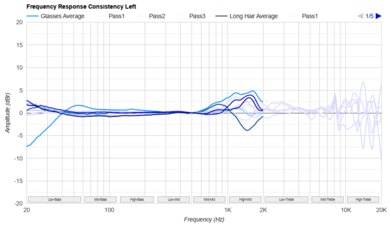
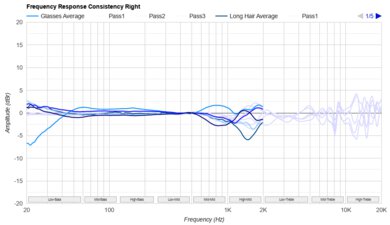
The Bose QuietComfort Ultra Earbuds 2nd Gen have great frequency response consistency. That said, the headphones use Bose's proprietary CustomTune feature, which adjusts their sound based on your ear canal shape. As a result, your listening experience may differ slightly from our measured frequency response.
Performance Usages
Changelog
-
Updated Oct 09, 2025:
We've included a phone call recording of a human speaking into the earbuds' microphone in the Recording Quality section.
- Updated Sep 08, 2025: Review published.
- Updated Sep 01, 2025: Early access published.
- Updated Aug 20, 2025: Our testers have started testing this product.
Check Price
Differences Between Sizes And Variants
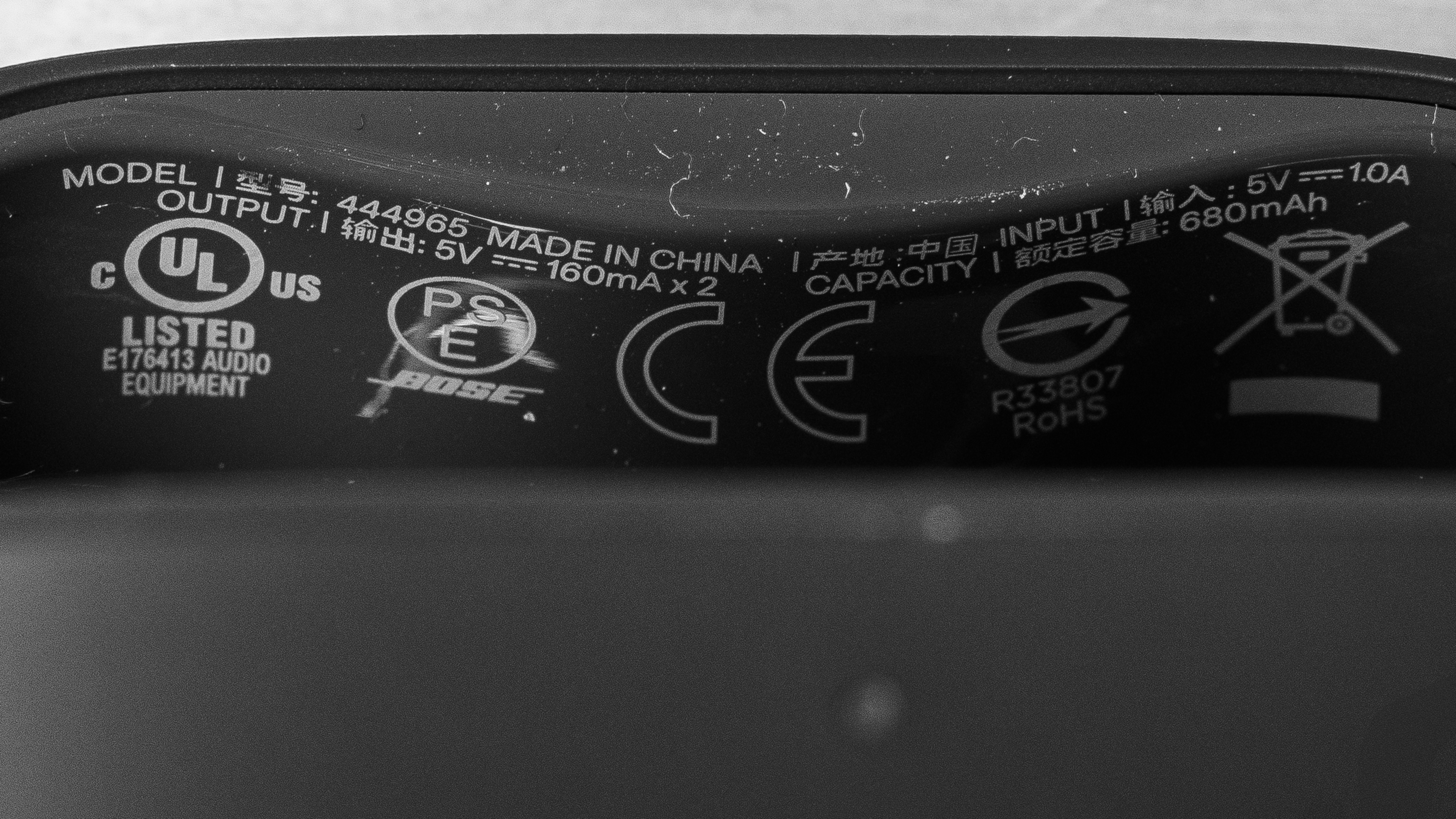
The Bose QuietComfort Ultra Earbuds (2nd Gen) ship with three different colorways: 'Black,' 'White Smoke,' and 'Deep Plum.' We tested the 'Deep Plum' variant (see our model's label).
If you encounter another variant, please let us know in the comments, and we'll update the review.
Popular Headphones Comparisons
The Bose QuietComfort Ultra Earbuds (2nd Gen) are wireless earbuds targeted at the wider consumer market. They're slightly updated from the Bose QuietComfort Ultra Earbuds Truly Wireless, with software improvements like 'ActiveSense,' which attenuates sudden, loud noises. While the 2nd Gen also makes large gains in microphone noise handling, Bose's staged update to the 1st Gen may significantly shrink the gap.
Bose isn't the only brand competing for your attention with their flagship earbuds, either: Sony, Apple, and Technics are all gunning for a bigger market share, each offering specialized features or brand-specific compatibility to get you on board. The Apple AirPods Pro 2 integrate with other Apple devices, supporting features like platform-specific seamless device switching. Meanwhile, the Sony WF-1000XM5 Truly Wireless have competitive noise cancellation that you can control based on location or activity. For people who want the latest and greatest features in connectivity, the Technics EAH-AZ100 feature three-way Bluetooth multipoint and Bluetooth LE's LC3 codec. Compared to the competition, the Bose boast the best in comfort while remaining stable, making them a great companion for those with an active lifestyle.
If you're looking for other options, check out our picks for the best noise cancelling headphones, the best wireless Bluetooth earbuds, and the best wireless earbuds for running and working out.
The Bose QuietComfort Ultra Earbuds (2nd Gen) and the Sony WF-1000XM5 Truly Wireless are similarly positioned flagship earbuds. The Bose are more comfortable and don't have as deep an in-ear fit. That said, they also protrude more from your ears and can get in the way if you have piercings. Both earbuds support Bluetooth multi-device pairing, but the Sony supports Bluetooth LE and the LC3 codec, which can potentially achieve lower latency than the Bose's supported aptX Adaptive (Low Latency). Regardless, both products have top-of-the-line noise cancellation, making them suitable for travel or chilling out in your own bubble.
The Technics EAH-AZ100 and the Bose QuietComfort Ultra Earbuds (2nd Gen) are similar flagship earbuds. Both have a warm sound signature, but they differ in their upper-frequency reproduction. The Technics have an underemphasized treble relative to the Bose, with softer articulation and more understated brightness. In terms of noise isolation, both earbuds perform exceptionally, easily attenuating anything from a semi's engine to the clattering of dishes. That said, the Technics can sustain this attenuation for longer, as their continuous battery life is nearly double that of the Bose.
If you own an Android device, you might prefer the Bose QuietComfort Ultra Earbuds (2nd Gen) over the Apple AirPods Pro 3 because the Bose have an app that works with Android/iOS. Their tuning is boosted in the bass with a flat mid-range and a bright top-end, and you can EQ it to taste. Their noise isolation performance is remarkable, but slightly trails behind the Apple's. The Bose's mic sounds a bit better with Android and PCs, but the Apple's mic system is optimized for iOS, making them device-dependent. Still, the Apple have a better IP rating, a longer continuous battery life, and iOS-specific features alongside a bit better ANC. That said, they lack an equalizer, so if you prioritize fine-tuning, the Bose might be better even with an iPhone.
The Bose QuietComfort Ultra Earbuds (2nd Gen) are the next generation of the Bose QuietComfort Ultra Earbuds Truly Wireless. While the 2nd Gen have marginally improved noise cancellation performance, they also have a shorter battery life than the original version. Additionally, with firmware 4.9.30, the 1st Gen have software improvements which bring their microphone recording quality and noise handling close to neck and neck with the 2nd Gen. As their performance and features are close to identical, you should opt for whichever you can find at a cheaper price (likely the 1st Gen, while supplies last).

We've upgraded our Headphones Test Bench to 2.0! This update brings several key changes to our tests and usages, making it easier than ever to interpret our sound results based on your personal preferences. You'll also find a brand-new interactive graph tool featuring multiple targets (including our own!) for you to explore and compare.
For a full breakdown, check out our changelog, which includes detailed commentary from our test designer explaining the rationale behind our update.
We'd also love to hear your thoughts: your feedback helps us keep improving, so join us in the comments!
Test Results
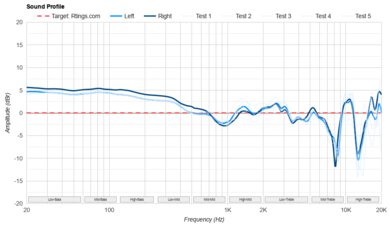
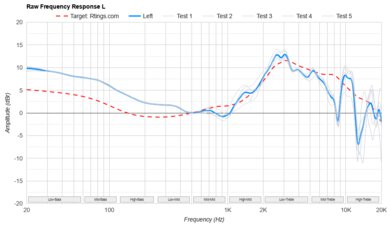
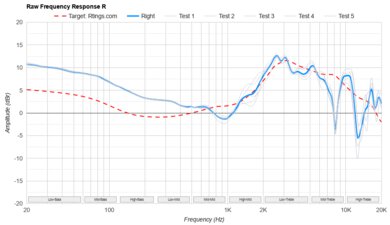
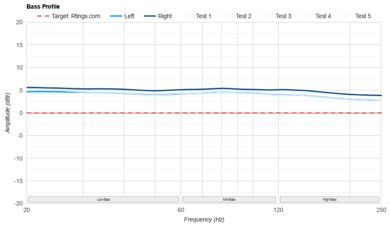
The Bose QuietComfort Ultra Earbuds 2 have a warm sound signature in line with previous generations of their wireless earbuds. They have a prominent bass that starts very emphasized in the sub-bass and gradually tapers off into the mids. Overall, their sound signature resembles the Harman IEM target, but if you prefer a different sound, you can choose from a few presets. You can also tweak their sound manually with the app's graphic EQ, but it only supports 3-band adjustments. The earbuds' frequency response doesn't change much in 'Aware' mode (transparent) compared to 'Quiet' mode (max ANC).
The earbuds use CustomTune, which plays a tone and personalizes frequency response based on ear canal shape (according to Bose's advertising). As a result, the earbuds' sound can vary from person to person based on their physical characteristics.
The Bose QuietComfort Ultra Earbuds 2nd Gen have great frequency response consistency. The earbuds use CustomTune technology, which adjusts the earbuds' sound between each use based on ear canal shape. If the feature performs as advertised, some variation in consistency is expected due to slight differences in earbud seating between passes. In practice, you can expect consistent sound between reseats or listening sessions.
The bass target compliance relative to our target is very good. The earbuds emphasize the entire range, so the lower registers of cellos and double basses have plenty of warmth. In tracks like Lace from Hollow Knight: Silksong, accented bow strokes on the double bass are reproduced as full-bodied and warm, providing a foundation that underscores the rest of the track's instrumentation.
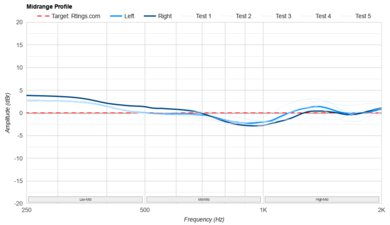
The mid-range target compliance is outstanding. The range is mostly balanced relative to our in-house curve, so vocals and instruments are rendered naturally and intelligibly. That said, slight emphasis in the low-mids can cause more heavily orchestrated tracks to sound a bit muddy. Meanwhile, upper-mid emphasis can render voices and instruments mildly honky, depending on your tastes.
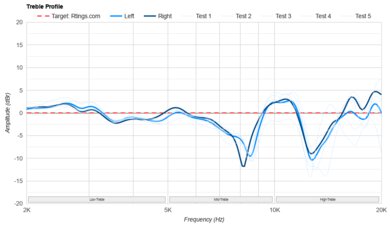
The treble target compliance is superb through most of the region. The region has a downward tilt, starting from an elevated low-treble position. Vocals and instruments are well articulated, but can come off as harsh in a limited section, due to a raised band at around 2.5kHz. That said, a gentle taper into and across the mid-treble reduces the harshness of sibilants. There's also a mismatch between the L/R drivers in the mid-treble, which can affect both the perception of positioning and the coloration of sibilants.
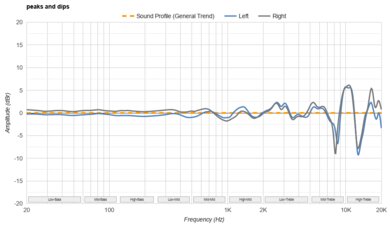
The Bose QuietComfort Ultra Earbuds 2nd Gen have decent peaks and dips performance. The frequency response rarely deviates from their warm sound profile. That said, a peak in the low-treble can enhance detail in vocals and instruments at the risk of reproducing them as harsh, depending on the listener's preferences. Meanwhile, fluctuations in the mid- and high-treble can soften piercing sibilants or enhance airiness in female vocals to the point of being hissy. That said, individual perception and frequency response in the treble range can vary quite a bit from person to person.
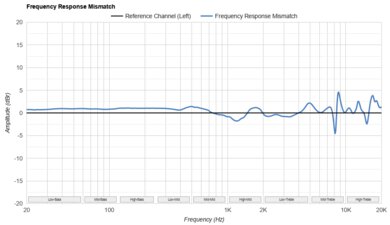
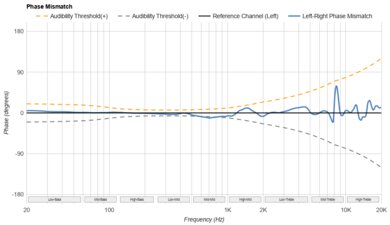
The Bose QuietComfort Ultra Earbuds 2nd Gen are impressively well matched throughout most of the frequency range. However, some treble bands are biased toward the left driver in frequency and phase response. Discerning users may notice the shimmer of hi-hats skewed slightly to the left, but most people won't notice any significant positioning biases or gaps in the stereo image.
The Bose QuietComfort Ultra Earbuds 2 have excellent group delay. There aren't any notable shifts in the frequency response caused by wave interactions of neighboring frequencies in the sub-bass. In complex audio tracks (not test tones), most listeners won't notice audible coloration originating from group delay in complex audio like your favorite reference track.
The Bose QuietComfort Ultra Earbuds 2nd Gen bypass your pinna, so they don't provide any spatial cues this way.
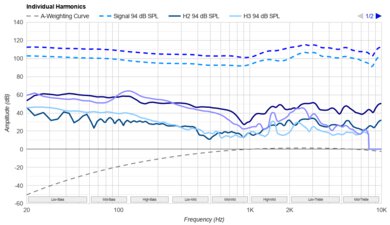
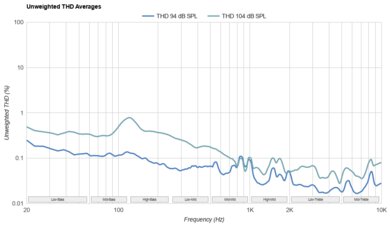
The Bose QuietComfort Ultra Earbuds 2nd Gen have outstanding distortion performance. You won't notice audible coloration caused by distortion even at high listening levels.
The Bose aren't wired and don't need an amp to drive them.
The earbuds have a virtualization feature that you can apply to all content. 'Immersive Audio' simulates a stereo speaker setup. You can fix the speakers in place with 'Still' mode, and your audio will pan as you rotate your head to the left or right. 'Motion' mode instead locks the speakers to your head so the speakers stay in front of you, regardless of your orientation. However, the buds don't virtualize multi-channel surround content in formats like Dolby Atmos.
These are the test settings used to test the earbuds. Our results are only valid when used in this configuration.
The Bose QuietComfort Ultra Earbuds 2 don't deviate in their look from the original Bose QuietComfort Ultra Earbuds Truly Wireless. The earbuds have a wide but short stem design that features the brand's logo, morphing into cylindrical housing with an offset nozzle that fits your concha. The different stabilizer options fit into a dedicated groove running along the earbuds' housing, allowing you to adjust the geometry of the earbuds to fit your ears better. The earbuds are available in three colorways: 'Black,' 'White Smoke,' and 'Deep Plum.'
The Bose QuietComfort Ultra Earbuds 2nd Gen are very comfortable. Their design and fit haven't changed from the previous generation. The buds come with three sizes of soft silicone ear tips and stabilizers, making it easy to find a configuration that works for you. Once seated, the buds have a shallow in-ear fit that remains comfortable and snug for extended periods. However, their wide 'half-stem' protrudes from your ears, which can be uncomfortable if you have ear piercings or lie on your side while listening to music.
The Bose QuietComfort Ultra Earbuds (2nd Gen) have good touch controls. You can use the capacitive surface on either earbud to control the earbuds:
On either bud (Controls Diagram 1, 2, 3):
- Single tap: Plays and pauses audio. Also accepts calls.
- Double-tap: Skips to the next track. Also declines/ends calls.
- Triple tap: Skips to the previous track.
- Touch and hold: By default, this cycles between ANC modes: 'Quiet,' which is ANC on, and 'Aware,' which is a talk-through mode, so you can hear your environment without taking your earbuds out. You can also remap the controls on either bud, giving you two customizable shortcuts.
- Swipe up: Raises the volume.
- Swipe down: Lowers the volume.
The controls are fairly intuitive and have solid feedback; the earbuds chime with a min/max volume warning and have voice prompts on startup. They don't give you an additional chime when adjusting volume or playing/pausing your track, which can be a negative depending on your preferences. As with most touch-controlled earbuds, the Bose are prone to accidental or misread inputs.
These small, lightweight buds are easy to store in a pant or a bag pocket. That said, they're more susceptible to debris or damage when stored this way, so we'd recommend using their included carrying case to keep them safe and clean.
The Bose QuietComfort Ultra Earbuds 2 have a great case. The carrying case is made of hard plastic, with strong magnets to keep the earbuds secure when stored. That said, the lid isn't that sturdy and has a bit of play when squeezed or pushed. On the upside, the case has LED indicators for earbud and case power, and supports wireless charging (unlike the 1st Gen).
The Bose QuietComfort Ultra Earbuds (2nd Gen) have a good build quality. Their soft silicone ear tips have a perforated filter. This helps protect the earbuds from debris buildup in the nozzle more compared to the filter-less ear tips included with the 1st Gen. The buds themselves are made from solid plastic and feel sturdy. You can also expose the buds to rain, as they feature an IPX4 rating. This rating doesn't extend to the earbuds' case, but the case is solidly constructed nonetheless. However, the case lid has a bit of give and feels slightly flimsier than the rest of the body.
The Bose QuietComfort Ultra Earbuds 2nd Gen are very stable. They aren't excessively bulky and come with a variety of silicone ear tips and stabilizers to help you find a snug and secure fit. Whether you're working out or headbanging to your favorite tunes, the earbuds will stay secure in your ears.
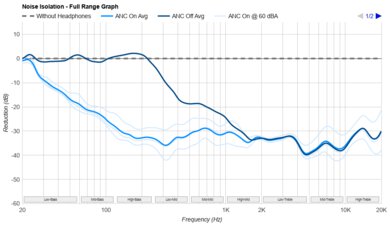
The Bose QuietComfort Ultra Earbuds 2 have outstanding full-range noise isolation. The earbuds attenuate both bass and treble noise exceptionally well, preventing you from being distracted by whirring laptop fans and the thud of footsteps from your upstairs neighbors.
The earbuds also have a toggle for 'ActiveSense,' a feature advertised to adapt quickly to loud and sudden noises like doors slamming shut. We tested the feature in 'Aware' (full transparency) and found that the system adapts faster to snapping and clapping nearby. That said, this could be attributed to improvements to the earbuds' ANC system overall, rather than the dedicated feature. Our subjective assessment of the fully transparent mode found mids and highs slightly muted and not as natural-sounding as the Apple AirPods Pro 2.
It's also worth noting that your experience may vary due to 'CustomTune,' as Bose advertises that the feature affects ANC performance as well. You also can't disable 'CustomTune' or ANC/transparency.
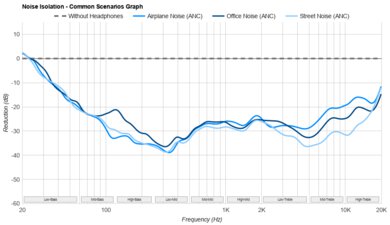
These earbuds have outstanding noise isolation performance in common scenarios. Their ANC system easily handles rumbling plane and semi truck engines, along with screeching brakes at busy intersections and squeaky doors in the office. They're a bit less effective against the mid-range, so you might notice faint voices creep through the earbuds' attenuation.
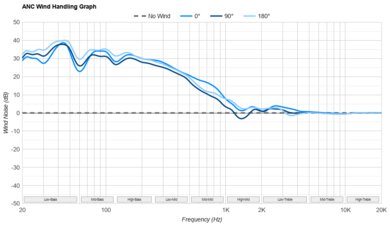
These earbuds don't have a dedicated wind noise mode. The microphones pick up pressure changes caused by turbulent airflow as noise, and the ANC system generates noise in an attempt to cancel 'phantom' noise.
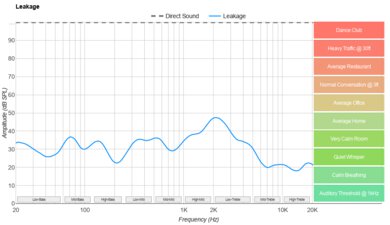
The Bose QuietComfort Ultra Earbuds 2 have excellent leakage performance. Most people won't notice a thin version of your audio leaking from the earbuds unless they're close by and you're in a quiet room.
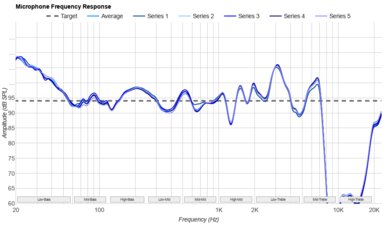
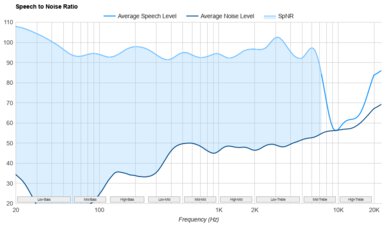
Despite what's shown on the graphs, the integrated microphone performs well. Due to the mic system's noise processing, our test signal (pink noise) was identified as noise, causing the microphone to deactivate before we could obtain the required measurements. In this case, the recording is a better metric for the mic system's performance, rendering your voice cleanly and adequately full-bodied. We also took a recording of a call between two iPhones using the earbuds' microphone.
These earbuds do an okay job separating your voice from background noise. With the brand's new SpeechClarity processing, the microphone system cuts out most pink noise, but gets overwhelmed by loud sustained noises like the train arrival in the subway noise audio sample: at 0:25, the earbuds cut out both background noise and your voice, so you won't remain intelligible in a phone call.
The Bose QuietComfort Ultra Earbuds 2nd Gen have a decent battery. Their continuous battery life is a mediocre 6.5 hours, a reduction from the previous generation's seven hours. However, their overall performance improves thanks to the case providing an additional three charges and a relatively fast charging time. Our measurements with the SBC codec and ANC enabled roughly align with Bose's advertised specifications. However, it's important to note that battery life depends on use (including factors like microphone, codec, and playback volume).
The Bose Music app is great. This iOS- and Android-compatible software has plenty of functionality and many avenues to customize the earbuds in a way that suits your requirements.
You can control playback, volume, check battery levels (including the case battery), and individually enable/disable Bluetooth connections to specific devices. The app also lets you configure two dedicated user touch controls (or disable touch controls entirely), perform a seal test to check if your selected ear tips fit, and toggle voice prompts (for battery monitoring or reading out call details). You also have access to less common customizations, including in-ear detection that auto answers phone calls when you put the earbuds in. The earbuds also feature 'modes': presets that combine noise cancellation and 'Immersive Audio,' which simulates stereo speaker listening with toggleable head tracking functionality. The app provides a mix of locked presets, partial customization, and the option to create your own presets.
While you can customize their sound with the included graphic EQ, it only supports 3-bands, which is somewhat disappointing compared to other flagship earbuds like the Technics EAH-AZ100. That said, you can always fiddle around with third-party EQs.
The Bose QuietComfort Ultra Earbuds 2nd Gen have good Bluetooth connectivity. In line with other modern earbuds, they support multi-device pairing with up to two devices, and extra codecs for lower latency or higher audio quality. Aside from the standard SBC and AAC codecs, the Bose support aptX Adaptive. This allows for low latencies of 104 ms, and support for aptX Lossless (part of the aptX Adaptive family), which has a higher bitrate limit of around 1 Mbit/s. In this case, our aptX Adaptive (High Quality) results are with aptX Lossless. That said, while the high audio latency these earbuds have can result in audio/visual desync during playback, apps and devices can compensate for latency in different ways, so your exposure to the issue may vary.
The previous generation Bose QuietComfort Ultra Earbuds Truly Wireless had frequent reports of connectivity issues, so we conducted a detailed investigation with the 2nd Gen. We didn't encounter any glaring and consistent issues with connectivity after consistent use over a week, and when pairing the device with a wide variety of devices, including Android and iOS phones, laptops, and our testing rig. That said, we encountered one bug where the app wouldn't recognize the device on an Android phone despite the earbuds being listed as a connected device in the phone's settings. This issue was resolved with a factory reset on the buds (and deletion of the earbuds from any paired device list).
You can use the earbuds with Bluetooth-enabled PCs with both microphone and audio functionality. However, Bluetooth is your only connection option.