
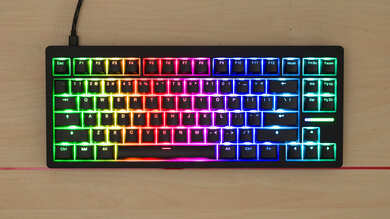
The Corsair K100 RGB is a fantastic gaming keyboard. It's very well-built and feels comfortable to use, plus it comes with a detachable padded wrist rest. It's compatible with the Corsair iCUE software, which lets you customize the RGB backlighting and set macros to any key you want. It has many extra features like dedicated media keys, a volume control wheel, a multi-function iCUE wheel, and six dedicated macro keys. The Cherry MX Speed switches on our unit feel light and responsive to type on, and it's also available in the new Corsair OPX linear switches, which may provide a different typing experience from our unit's switches. It also has a maximum polling rate of 8000Hz and an effective update rate of 4000Hz, resulting in remarkably low latency for a responsive gaming experience.
Our Verdict
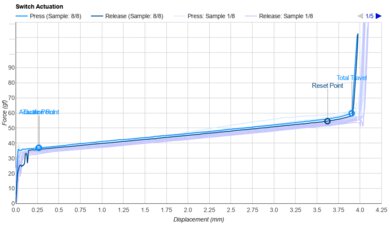
The Corsair K100 is excellent for gaming. This very well-built keyboard is comfortable to use, and it has customizable RGB backlighting. The Cherry MX Speed switches have very short pre-travel distance, and the latency is remarkably low. It's also available in Corsair OPX switches, which are optical switches advertised as having a slightly shorter pre-travel distance and will feel a bit more responsive. All the keys are macro-programmable, and six dedicated macro keys are on the left side.
- Customizable RGB backlighting.
- Dedicated macro keys.
- Includes a wrist rest.
- Remarkably low latency.
- Switches provide no tactile feedback.
The Corsair K100 is great for office use. It's a comfortable, well-built keyboard that comes with a padded wrist rest and two incline settings. The Cherry MX Speed switches provide a light typing experience that shouldn't cause fatigue when typing for a long time, although typos might be more common due to the short pre-travel distance. They're quiet to type on, so it shouldn't be bothersome in an office setting.
- Excellent build quality.
- Includes a wrist rest.
- Quiet to type on.
- Short pre-travel distance might cause more typos.
The Corsair K100 isn't designed to be used with mobile devices or tablets.
The Corsair K100 is great for programming. It has excellent build quality with a padded wrist rest. Also, it has full RGB lighting that can be customized to your liking, all of its keys are macro-programmable, and it has six dedicated macro keys on the left side of the board. The Cherry MX Speed switches feel light to type on, and it's also available in Corsair OPX switches which are advertised as having a shorter pre-travel distance and should feel even more responsive.
- Customizable RGB backlighting.
- Excellent build quality.
- Dedicated macro keys.
- Includes a wrist rest.
- Short pre-travel distance might cause more typos.
- Switches provide no tactile feedback.
The Corsair K100 is disappointing for HTPC use. It's wired-only, so you'll need to sit close to your TV to use it. It also lacks a trackpad, meaning you may need a mouse to navigate the on-screen menu. On the plus side, it has full RGB backlighting and dedicated media keys, making it easy to skip tracks or play/pause content.
- Customizable RGB backlighting.
- Wired-only.
- No trackpad.
- Rather large for a HTPC keyboard.
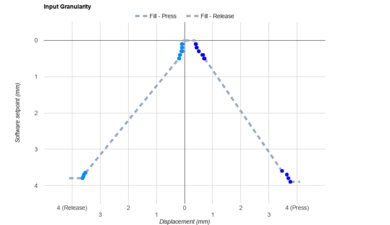
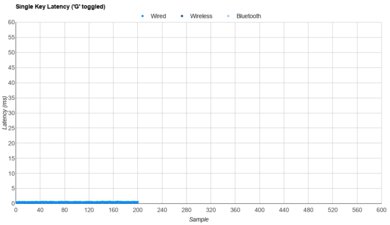
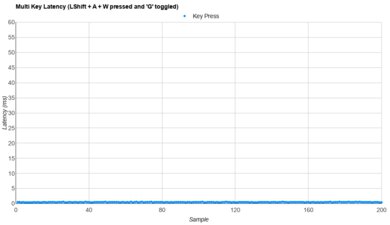
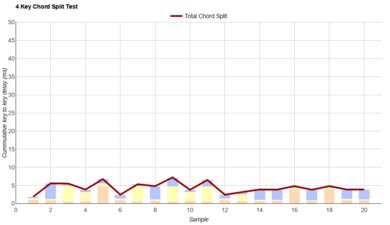
The Corsair K100 RGB has excellent raw performance. The Cherry MX Speed switches on the unit we tested have minimal pre-travel and release-travel, producing remarkable single- and multi-key latency. While it has a maximum polling rate of 8000Hz, its effective update rate is only 4000Hz. That said, this doesn't bottleneck performance in a significant way.
- Remarkably low latency.
Changelog
-
Updated May 08, 2026:
We've added a link to the Corsair VANGUARD 96 in the Dimensions section.
- Updated Mar 17, 2026: Our Test Bench 1.4.3 update adds clearer terminology and new measurements to our Keystrokes test group. For more details, see the full changelog.
- Updated Nov 29, 2023: We've converted this review to Test Bench 1.3.1, which adds a new estimated PCB latency test to the Single-Key Latency section and a new Analog test to the Switches section of this review. You can see the full changelog here.
- Updated Nov 15, 2023: We've found that latency results are impacted by the placement of the testing solenoid, so we retested this keyboard for consistency with other reviews. This review has been updated, and you can find more information regarding this retest here.
Check Price
Differences Between Sizes And Variants
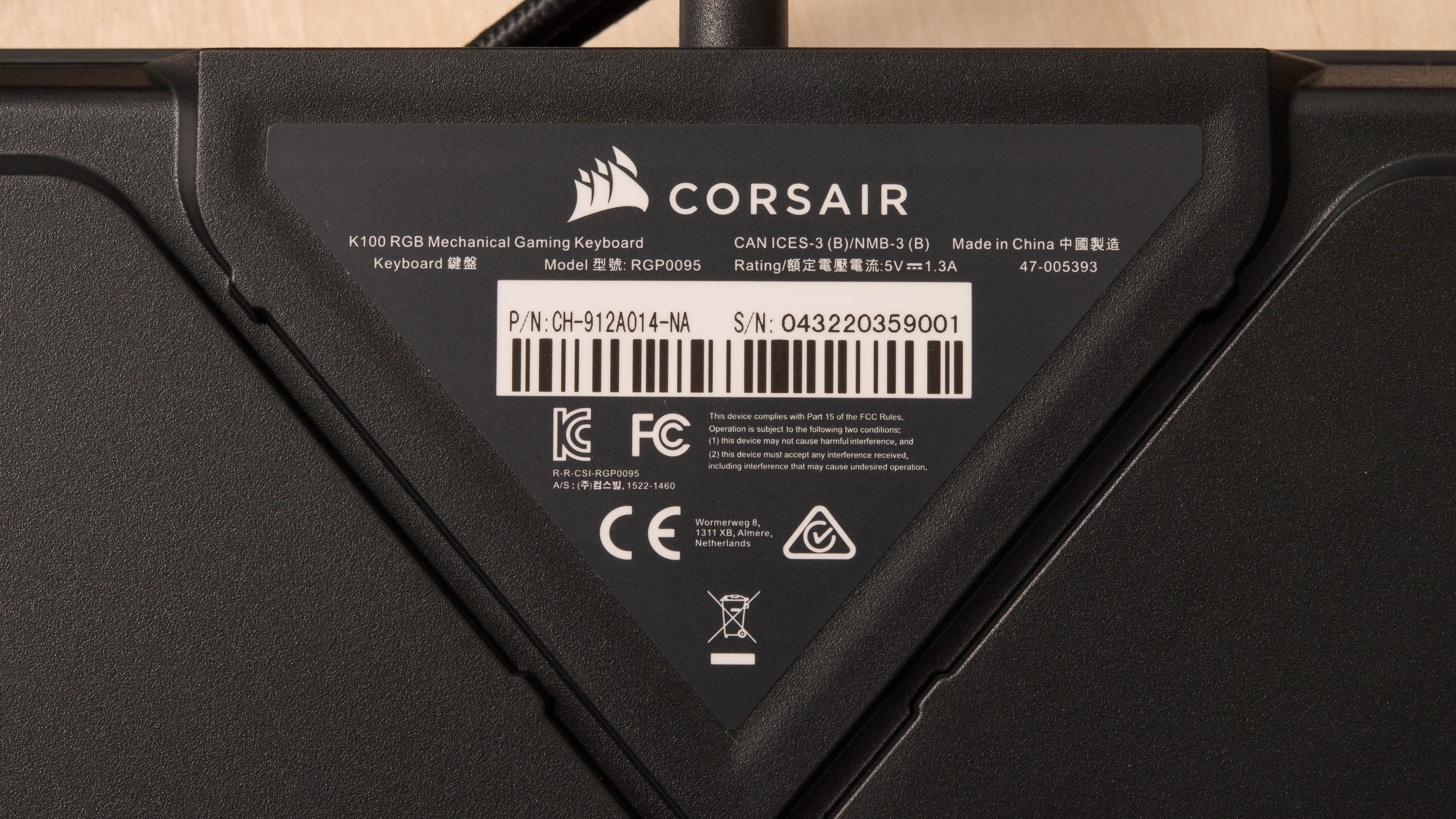
The Corsair K100 is available in two different switch types. Although we tested the Cherry MX Speed switches, this keyboard has a Corsair OPX variant called the Corsair K100 RGB Optical-Mechanical Gaming Keyboard, which features Corsair's new optical switches. The Corsair OPX switches are also linear, but they're advertised as having a shorter pre-travel distance than the Cherry MX Speed switches on our unit, resulting in an even more responsive feel. You can see the label of our unit here.
Popular Keyboard Comparisons
The Corsair K100 RGB is a fantastic full-sized mechanical gaming keyboard. However, some people may not like its linear switches due to the lack of tactile feedback, and unfortunately, it isn't available in this switch type.
For more options, check out our recommendations for the best gaming keyboards, the best mechanical keyboards, and the best keyboards for programming.
The Corsair K100 RGB and the Corsair K70 MAX are full-size gaming keyboards that both offer exceptional raw gaming performance. The K100 RGB is available with Cherry MX Speed switches or Corsair OPX optical switches. While it has a polling rate of 8000hz, it only has an effective update rate of 4000Hz. On the other hand, the Corsair K70 MAX has an effective update rate of 8000Hz. It uses Corsair's analog OPX switches, allowing you to adjust pre-travel and reset points of individual switches.
The Corsair K95 PLATINUM and the Corsair K100 RGB are both outstanding gaming keyboards with similar features. They're both full-size models with extra macro keys on the left side. The K100 feels better built because it has PBT keycaps as opposed to ABS, and the wrist rest is plushier, and typing also feels better. The units we tested use the same Cherry MX Speed switches, but you can get the K95 with Cherry MX Browns and the K100 with linear optical switches instead.
The Corsair K100 RGB and the Logitech G915 LIGHTSPEED are both fantastic gaming keyboards with different features. The Corsair is a wired keyboard with a USB passthrough, and the Logitech is a wireless option with multi-device pairing. They each have dedicated macro keys, but you can reprogram every key on the Corsair, which you can't do with the Logitech. The Corsair is available with two types of linear switches, while the Logitech is available with either tactile, clicky, or linear low profile switches.
The Corsair K100 RGB is better than the Corsair K70 RGB MK.2 for gaming, mainly due to its lower latency. Also, the K100 has dedicated macro keys, making it a great option for MMOs. The K100 is available with two types of linear switches, while the K70 is available in a variety of Cherry MX switches, so you can get the ones you prefer. The K100 has a multi-function wheel, and the included wrist rest is more comfortable.
Test Results
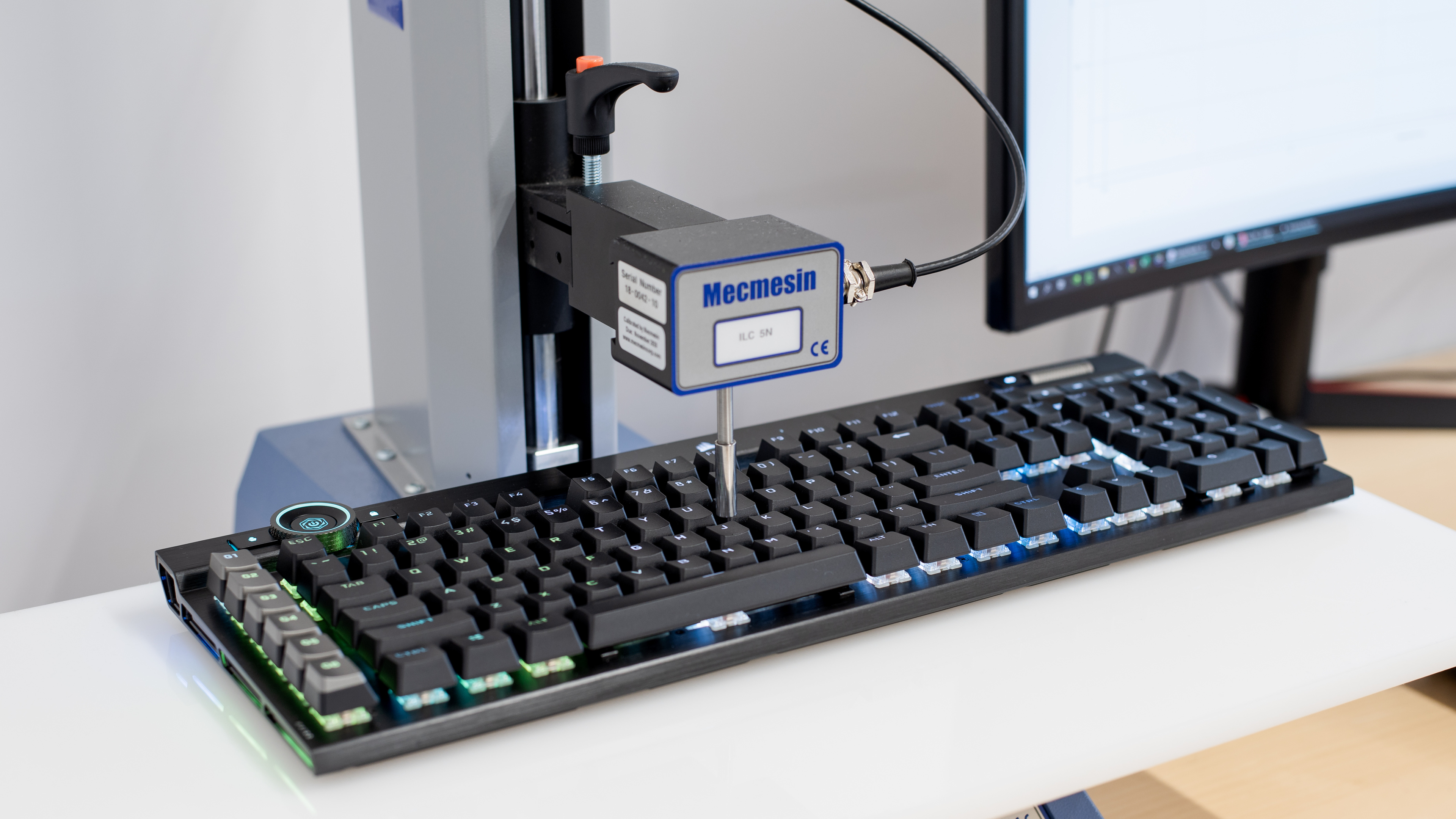
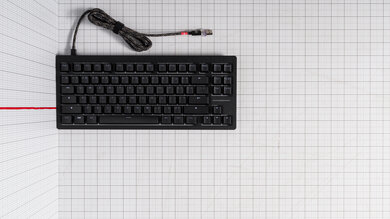
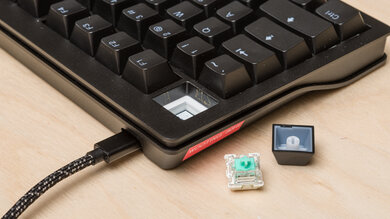

for pictures & test results
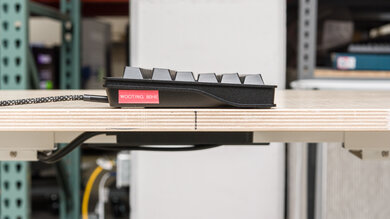
for pictures & test results




for pictures & test results

for pictures & test results
for pictures & test results

for pictures & test results
for pictures & test results

for videos & test results
