
The Finalmouse UltralightX Competition is a lightweight wireless gaming mouse and a limited-edition version in the wider Finalmouse UltralightX family. Internally, these mice all share virtually the same components, but this version has an upgraded scroll wheel encoder and has solid instead of honeycomb sides. It supports a new 'Tournament Scroll' software option which allows you to filter out your first scroll wheel up/down inputs. This is helpful if you have your mouse wheel bound to common inputs like jump and often experience accidental inputs. However, this software feature is also now supported on other versions in the UltralightX family and isn't exclusive to this version. For more details about this feature, see the Configuration Software section.
You can buy this mouse in three sizes: small, medium, and classic (large). These are the same sizes and shapes as other models in the UltralightX family. We bought and tested the medium-size variant. For more details, see the Differences Between Variants section.
Our Verdict
The Finalmouse UltralightX Competition is acceptable for work but isn't designed explicitly for this usage. That said, it's very lightweight and has a comfortable symmetrical shape. Unfortunately, its carbon fiber body design feels a bit flimsy, and it pops and creaks if you apply enough pressure into the honeycomb surfaces. It connects wirelessly with its USB receiver, but it doesn't support Bluetooth or multi-device pairing. And while it has a web-based configurator, you can't remap buttons without third-party software. Lastly, the scroll lacks helpful productivity features like L/R tilt inputs and free scrolling.
Connects wirelessly with its 2.4GHz receiver.
Remarkably lightweight; less fatiguing to use for long stretches compared to heavier productivity mice.
Carbon fiber body creaks, pops, and flexes noticeably.
Can't reprogram buttons without third party software.
Doesn't support Bluetooth; no multi-device pairing.
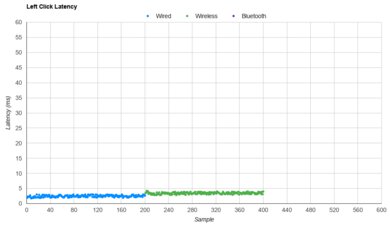
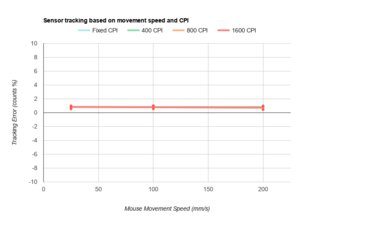
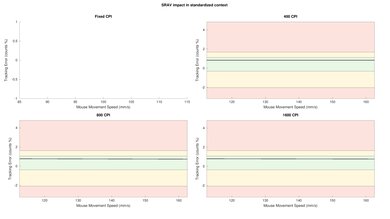
The Finalmouse UltralightX Competition is a remarkable FPS gaming mouse. Its extremely lightweight design makes it easy to move quickly and accurately. It also has incredibly low and consistent click latency and outstanding all-around sensor performance that's more than suitable for gaming at any competitive level. Unfortunately, its carbon fiber composite body suffers from build quality problems, and it pops and creaks noticeably if you apply a moderate amount of pressure into areas of the body with honeycomb cutouts.
Extremely lightweight.
Maximum wireless polling rate of 8000Hz.
Incredibly low and consistent click latency.
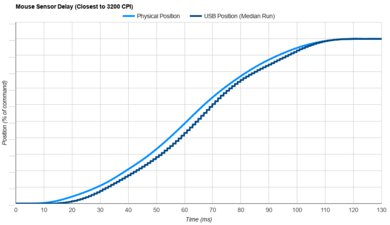
Outstanding sensor latency performance.
Carbon fiber body creaks, pops, and flexes noticeably.
The Finalmouse UltralightX Competition is okay for MMO gaming but has fewer side buttons than a dedicated MMO gaming mouse, and you can't remap buttons without third-party software. That said, it's exceptionally lightweight, has incredibly low and consistent click latency, and has outstanding sensor performance, providing an exceptionally responsive-feeling in-game experience. Unfortunately, it also suffers from build quality issues like popping and noticeable creaking when you apply moderate pressure into the sides.
Incredibly low and consistent click latency.
Outstanding sensor latency performance.
Carbon fiber body creaks, pops, and flexes noticeably.
Can't reprogram buttons without third party software.
Significantly fewer side buttons compared to dedicated MMO gaming mice.
The Finalmouse UltralightX Competition delivers superb raw performance. Its click latency is incredibly low, and the sensor latency and accuracy are outstanding. This mouse also supports a maximum wireless polling rate of 8000Hz, delivering slightly better and more consistent overall performance over a standard 1000Hz polling rate. However, using higher polling rates also requires considerable CPU resources and consumes battery power much more quickly.
Incredibly low and consistent click latency.
Outstanding sensor latency performance.
Changelog
-
Updated Apr 17, 2026:
We've added a link to the Finalmouse ULX Frostlord in the Style section.
- Updated Mar 10, 2026: We've converted this review to Test Bench 1.5.2. This update removes the Delay To Start Of Movement and Delay To End Of Movement measurements from the Sensor Latency test. See our full 1.5.2 changelog for details.
- Updated Aug 19, 2025: We've converted this review to Test Bench 1.5.1. This update removes less relevant or redundant elements, including several videos. We've also adjusted our Sensor Latency testing, resulting in minor score changes. See our full 1.5.1 changelog for details.
-
Updated Apr 16, 2025:
We've added a link to the recently reviewed Pwnage Trinity CF in the Build Quality section of this review.
Check Price
Differences Between Sizes And Variants
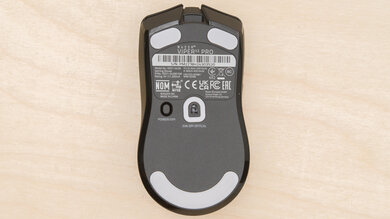
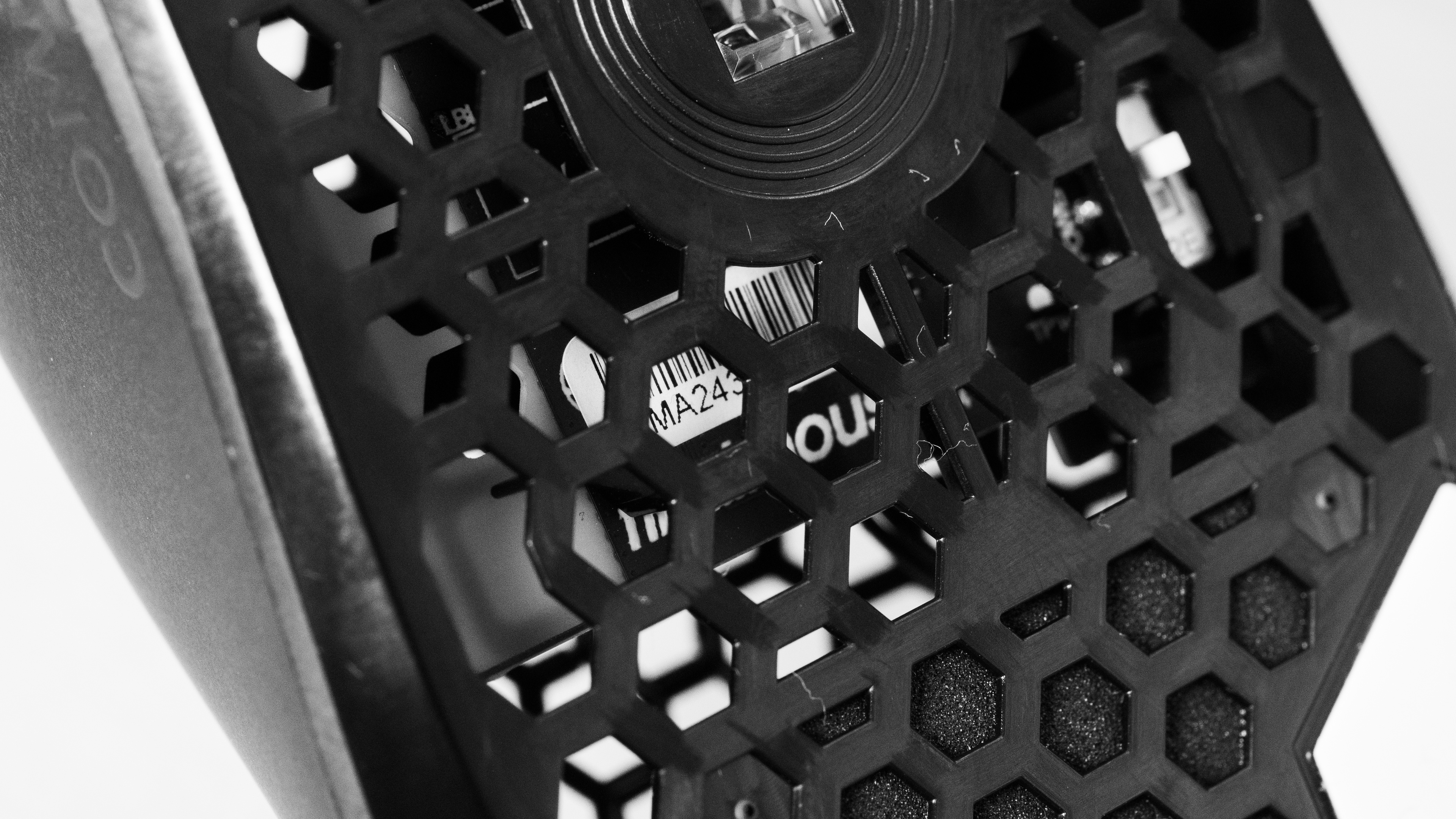
The Finalmouse UltralightX Competition is available in three sizes and only in a dark gray colorway. We bought and tested the medium-size variant. You can see an image of our unit's label here. The label is mostly obscured because it's on the inside of the mouse and partially blocked by the honeycomb body. The serial number indicated on the PCB is MA243502060. Our unit's model number is 02727 / 10,000.
| Name | Advertised Weight | Advertised Dimensions |
|---|---|---|
| UltralightX Competition (Small) | 33g | 115.6 mm Length x 54.1mm Grip Width x 35.2mm Height |
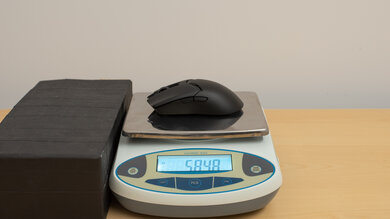
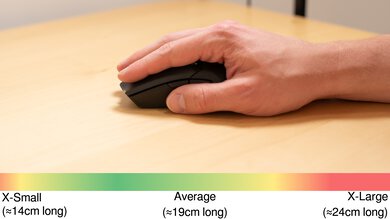
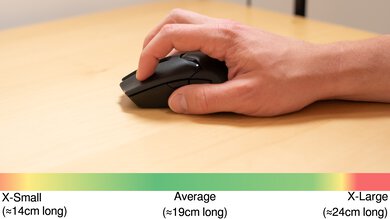
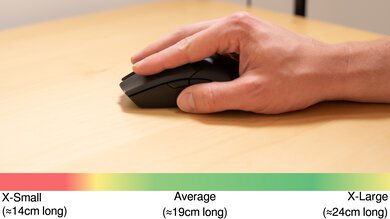
| UltralightX Competition (Medium) | 37g | 121.3 mm Length x 56.8 mm Grip Width x 37 mm Height |
| UltralightX Competition (Classic/Large) | 38g | 126 mm Length x 59 mm Grip Width x 38.4 mm Height |
We expect our test results to apply to all variants, with the obvious exception of shape- or weight-related tests.
Popular Mouse Comparisons
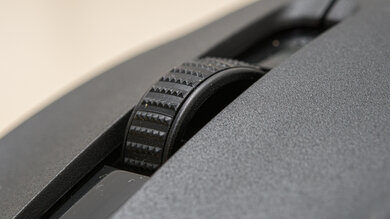
The Finalmouse UltralightX Competition is a limited-edition model in the Finalmouse UltralightX family. It shares the same shape, dimensions, and lightweight carbon fiber composite body as earlier models but now features solid sides instead of honeycomb cutouts, which improves comfort somewhat. It has the same internal components as the Finalmouse ULX Pro Series but now uses a TTC Gold 'dustproof' scroll wheel encoder, generally known for better tactility and reliability compared to the unspecified Kailh encoders in previous versions. This new release also supports the 'Tournament Scroll' software feature, though this feature is also now supported by earlier UltralightX versions. This feature allows you to add a small delay to filter out early scroll wheel inputs, which can reduce the chance of accidental inputs.
Unfortunately, while the UltralightX Competition delivers exceptional performance in a lightweight design, it suffers from persistent build quality issues between units. It was also released as a single-batch drop, so it's no longer available to buy—except through third-party resellers at inflated prices. Ultimately, this mouse doesn't offer a significant improvement over the base model Finalmouse UltralightX unless you're particularly interested in the new solid sides or its minor scroll wheel improvement. It doesn't offer meaningfully better performance or build quality over less expensive and much more readily available ultralight models like the WLmouse Beast X Max or even cheaper models like the Scyrox V8 or the Ninjutso Sora V2.
For more recommendations, see our picks for the best gaming mice, the best wireless mice, or the best lightweight mouse.
The WLmouse Beast X Max and the Finalmouse UltralightX Competition are lightweight wireless gaming mice with comparable raw gaming performance. The WLmouse has better build quality with a magnesium alloy exoskeleton shell, but it has large cutouts on the top and sides that some may find make it less comfortable. On the other hand, the Finalmouse has a carbon fiber composite top shell and only has small honeycomb cutouts on the top and underside, making it more comfortable to hold for most people. Unfortunately, the build quality is inconsistent, and we experienced noticeable flexibility, creaking, and popping on the body of the unit we tested. The WLmouse is also available in a wide range of expressive colorways, while the Finalmouse is only available in a monotone dark gray colorway.
The Finalmouse UltralightX Competition and the Finalmouse UltralightX are wireless gaming mice in the same family. Both mice are extremely lightweight and have nearly identical performance. The UltralightX Competition is newer and has minor changes including solid side panels instead of honeycomb side panels and a higher-quality scroll wheel encoder. Unfortunately, both mice suffer from inconsistent quality control and potential build quality issues. We experienced a mushy and inconsistent button feel on the baseline UltralightX and flexibility, creaking, and popping in the body of the UltralightX Competition.
The Finalmouse UltralightX Competition and the Logitech G PRO X SUPERLIGHT 2 are high-end wireless gaming mice. The Finalmouse has a carbon fiber composite body design with honeycomb cutouts and is significantly lighter. Unfortunately, it also suffers from inconsistent quality control, and we experienced noticeable creaking, popping, and flexibility on our unit. Comparatively, the Logitech isn't quite as lightweight and has a relatively more ordinary solid plastic body. Its build quality is also better and much more consistent.
The Finalmouse UltralightX Competition and the Finalmouse ULX Pro Series are very similar, limited edition versions in the same lineup. Both versions have a composite carbon fiber body with weight-saving honeycomb cutouts on the top and bottom. The UltralightX Competition has solid sides while the ULX Pro Series has cutouts on its sides. The UltralightX Competition has a slightly higher-quality scroll wheel encoder and only comes in a dark gray colorway, while the ULX Pro Series has several two-tone colorway options. Unfortunately, both have somewhat inconsistent build quality. We experienced a mushy button feel on the ULX Pro Series we tested and noticeable flexibility, popping, and creaking in the body of the UltralightX Competition we tested.
Test Results
for pictures & test results
for pictures & test results
for pictures & test results

for videos & test results
