
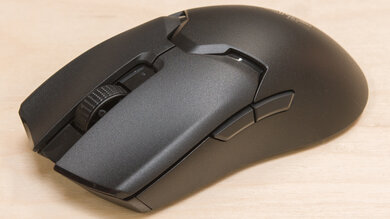
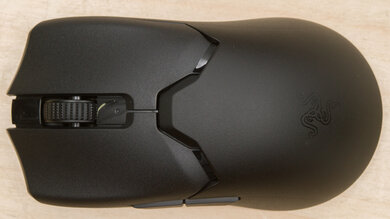
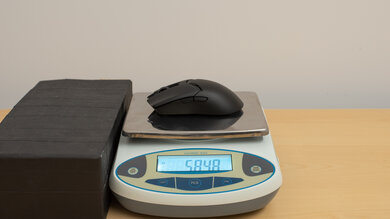
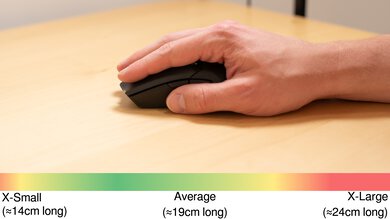
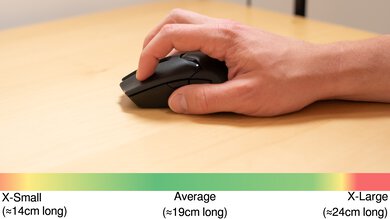
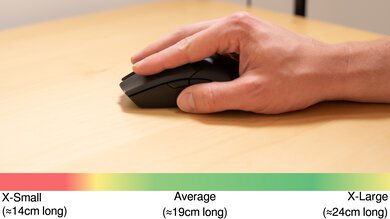
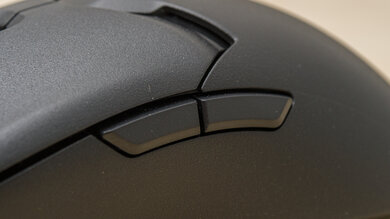
The Razer Pro Click Mini is a small, wireless-only mouse designed for portability and productivity. It feels well-built and solid, and it has an ambidextrous shape and low profile that easily fits into most laptop bags. It features two buttons on the left side, a scroll wheel that unlocks for free scrolling, and L/R tilts for navigating spreadsheets or documents horizontally. It connects wirelessly with a USB receiver or via Bluetooth, and you can pair it with up to four devices. There's also a storage compartment for its USB receiver under the palm rest panel. Despite its small size, it's on the heavier side because it uses disposable batteries for power. Unfortunately, it's too small for users with larger hands to use comfortably with any grip type.
Our Verdict
The Razer Pro Click Mini is a great mouse for office use. It feels well-built, and its ambidextrous shape is comfortable to use. You can reprogram nearly all its buttons using the companion software and even assign a Hypershift button for more programmable inputs. It connects wirelessly with a USB receiver or via a Bluetooth connection. Unfortunately, due to its small size, it's not suitable to use with a palm grip, and those with larger hands may have difficulty using it.
- Scroll wheel unlocks for free scrolling.
- Silent switches produce very little noise.
- Feels well-built and comfortable to use.
- Can pair with up to four devices simultaneous via Bluetooth.
- Too small for extra-large hands to use.
- Uses AA batteries, which may not be an advantage if you only use your mouse with a desktop computer.
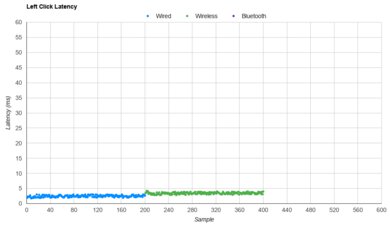
The Razer Pro Click Mini is an impressive mouse for FPS gaming. Although marketed as a productivity mouse, it still has great gaming features. It has excellently low click latency and a moderately wide CPI range, within which you can adjust the CPI in increments of 100. It also has PTFE feet that glide very smoothly across desks and mousepads. It can be on the heavier side if you opt to use two AA batteries for power; however, you can use the mouse with only one battery to reduce the weight. It's also too small for extra-large hands to use comfortably with any grip type.
- Remarkably low click latency.
- Feels well-built and comfortable to use.
- Feet provide smooth gliding experience.
- Too small for extra-large hands to use.
- Uses AA batteries, which may not be an advantage if you only use your mouse with a desktop computer.
The Razer Pro Click Mini is a very good mouse for MMO gaming. While it doesn't have as many buttons as dedicated MMO mice, it feels well-built and comfortable to use with a fingertip grip. It has excellently low click latency, a wide CPI range, within which you can adjust the set CPI by increments of 100, and a low minimum lift-off distance. You can also assign a Hypershift button using the companion software to enable a second layer of commands for more programmable inputs. Unfortunately, it's too small for users with larger hands to use comfortably with any grip type.
- Remarkably low click latency.
- Feels well-built and comfortable to use.
- Feet provide smooth gliding experience.
- Too small for extra-large hands to use.
- Uses AA batteries, which may not be an advantage if you only use your mouse with a desktop computer.
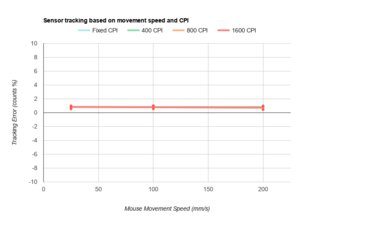
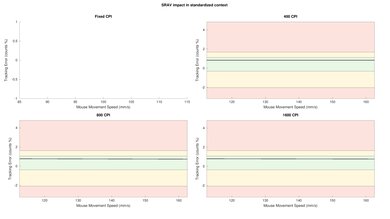
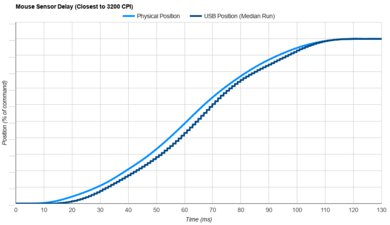
The Razer Pro Click Mini has outstanding Raw Performance. Despite being a mouse designed for productivity, both its sensor and click latency are low. It also has a maximum polling rate of 1000Hz when connected with its USB receiver, providing a visibly smoother and more consistent feeling of cursor movements and better gaming performance than most productivity-focused mice that typically have polling rates of only 125Hz.
- Remarkably low click latency.
- Excellent sensor accuracy.
Changelog
- Updated Mar 10, 2026: We've converted this review to Test Bench 1.5.2. This update removes the Delay To Start Of Movement and Delay To End Of Movement measurements from the Sensor Latency test. See our full 1.5.2 changelog for details.
- Updated Aug 19, 2025: We've converted this review to Test Bench 1.5.1. This update removes less relevant or redundant elements, including several videos. We've also adjusted our Sensor Latency testing, resulting in minor score changes. See our full 1.5.1 changelog for details.
- Updated Jan 05, 2024: We've updated the CPI graph displayed in the Sensor Latency section of this review. Our results remain the same, but these graphs have two new columns with results from the Delay At Half Movement and Delay To End Of Movement tests.
- Updated Nov 08, 2023: We've updated this review to improve clarity and readability and ensure all text is accurate and up-to-date.
Check Price
Differences Between Sizes And Variants
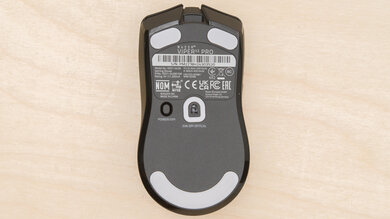
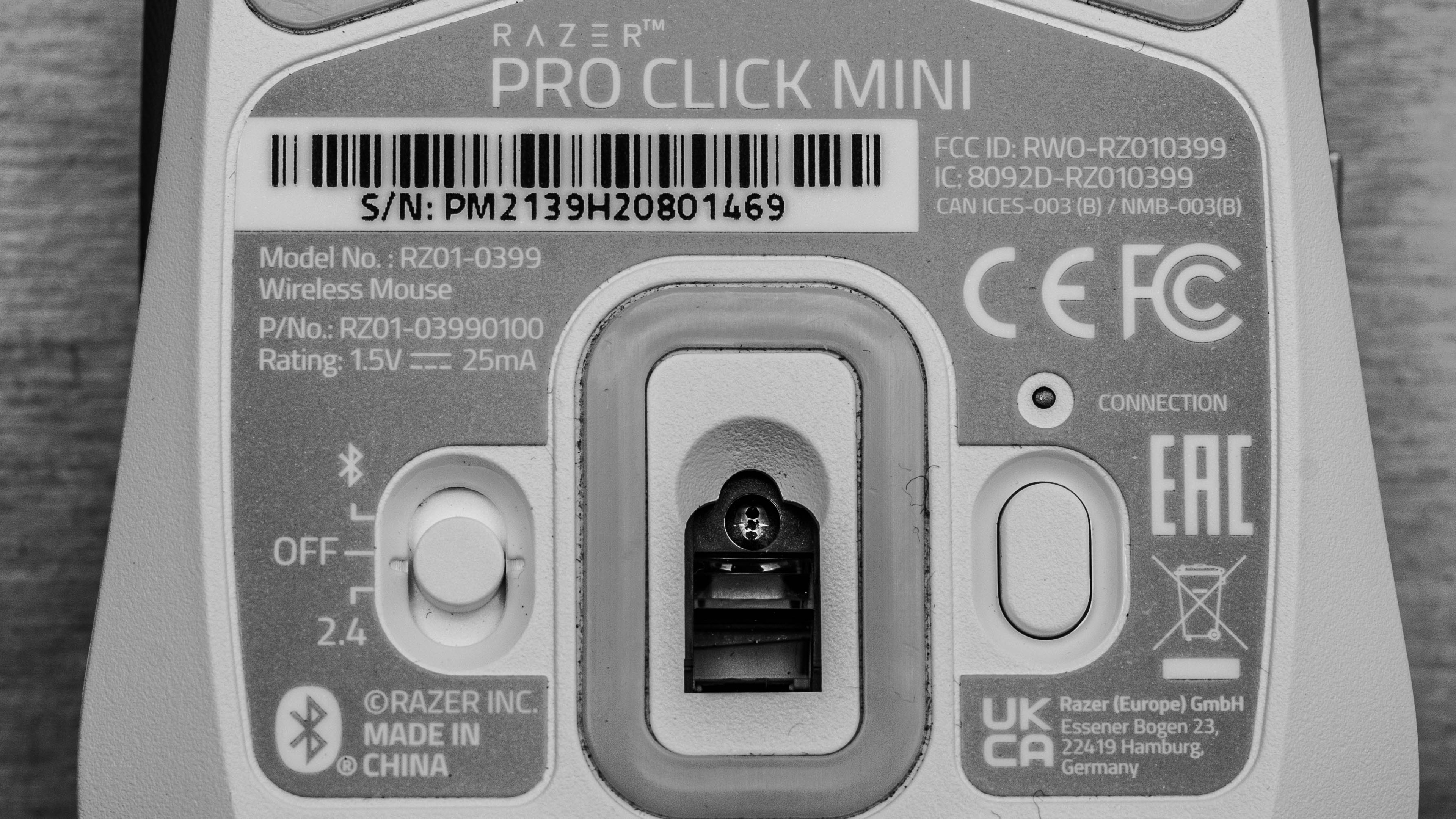
The Razer Pro Click Mini we tested is matte white. It has no other variants. You can see the label of our unit here.
Popular Mouse Comparisons
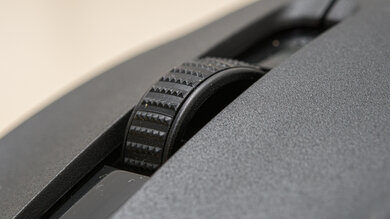
The Razer Pro Click Mini is the latest entry into Razer's Pro lineup designed for office and productivity purposes rather than gaming. It has a similar design and build to the Razer Pro Click, but it's much smaller for portability. Unlike the Razer Pro Click, it doesn't have rechargeable batteries and uses up to two AA batteries instead. It's very similar to other small-sized productivity mice, like the Logitech MX Anywhere 3, but the Pro Click Mini has L/R tilt scrolling, and a manual switch behind the scroll wheel allows you to switch from notched scroll to free scroll.
For more options, see our recommendations for the best wireless mouse, the best ergonomic mouse, and the best mouse for MacBook Pro.
The Razer Orochi V2 and the Razer Pro Click Mini are similarly performing mice, but the Orochi V2 is better suited for gaming, while the Pro Click Mini is designed for productivity and office tasks. That said, the Pro Click Mini has a scroll wheel with L/R tilts and a switch to use in free scroll mode. It also has more programmable inputs and silent switches that won't disrupt your neighbors if you're working at an office. On the other hand, the Orochi V2 is lighter and suitable for smaller hands with a palm or claw grip. It also has a lower minimum lift-off distance and better PTFE feet.
The Razer Pro Click Mini and the Logitech MX Anywhere 3S are compact wireless productivity mice designed with portability in mind. The Razer is more lightweight and has quieter click buttons. It also has higher-quality mouse feet, better overall sensor performance and click latency, and its scroll wheel supports left and right tilt inputs, a feature the MX Anywhere 3S lacks.
The Razer Pro Click and the Razer Pro Click Mini are both mice designed for productivity uses. The Pro Click Mini is a smaller version of the Pro Click that uses two AA batteries for power rather than a rechargeable one. It has an ambidextrous design and better feet. Also, it has a free scroll mode, which the Pro Click lacks. On the other hand, the Pro Click has a right-handed ergonomic shape with a thumb rest for extra support, and it's suitable for use with a palm or claw grip for small to large hands. Both mice connect wirelessly using a USB receiver or a Bluetooth connection.
The Cooler Master MM720 and the Razer Pro Click Mini are mice designed for different uses. The Cooler Master performs better as a gaming mouse thanks to its lower click latency, lower lift-off distance, wider CPI range, and better quality PTFE feet. It also has a unique ergonomic shape with a ring finger rest. However, it's wired-only. On the other hand, the Razer is designed for office use. It has a scroll wheel that you can unlock for free scrolling, and its solid, plastic body feels better built. Also, it's heavier and wireless-only.
Test Results
for pictures & test results
for pictures & test results
for pictures & test results

for videos & test results
