See the previous 1.5.1 changelog.
What's Changed?
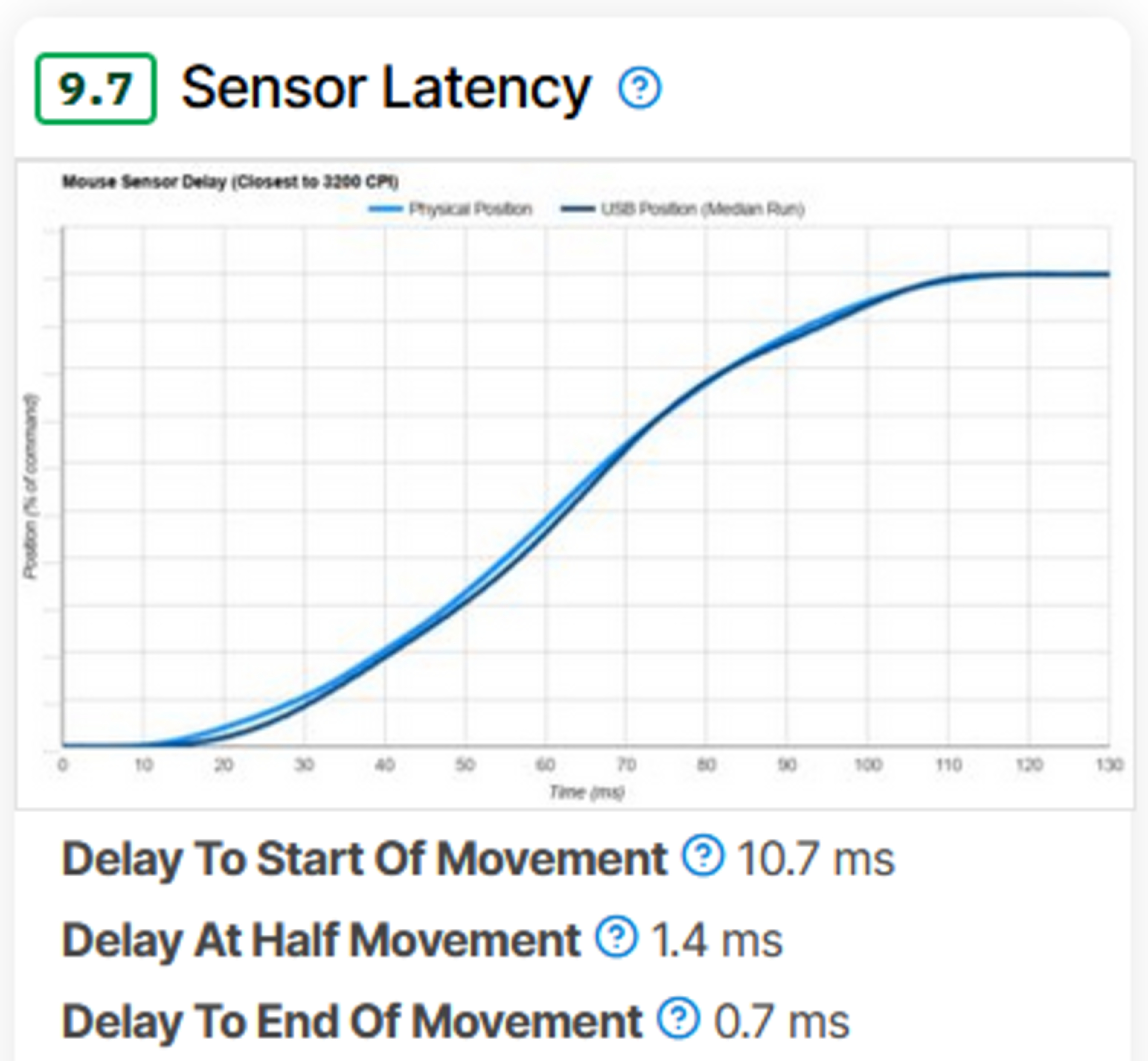
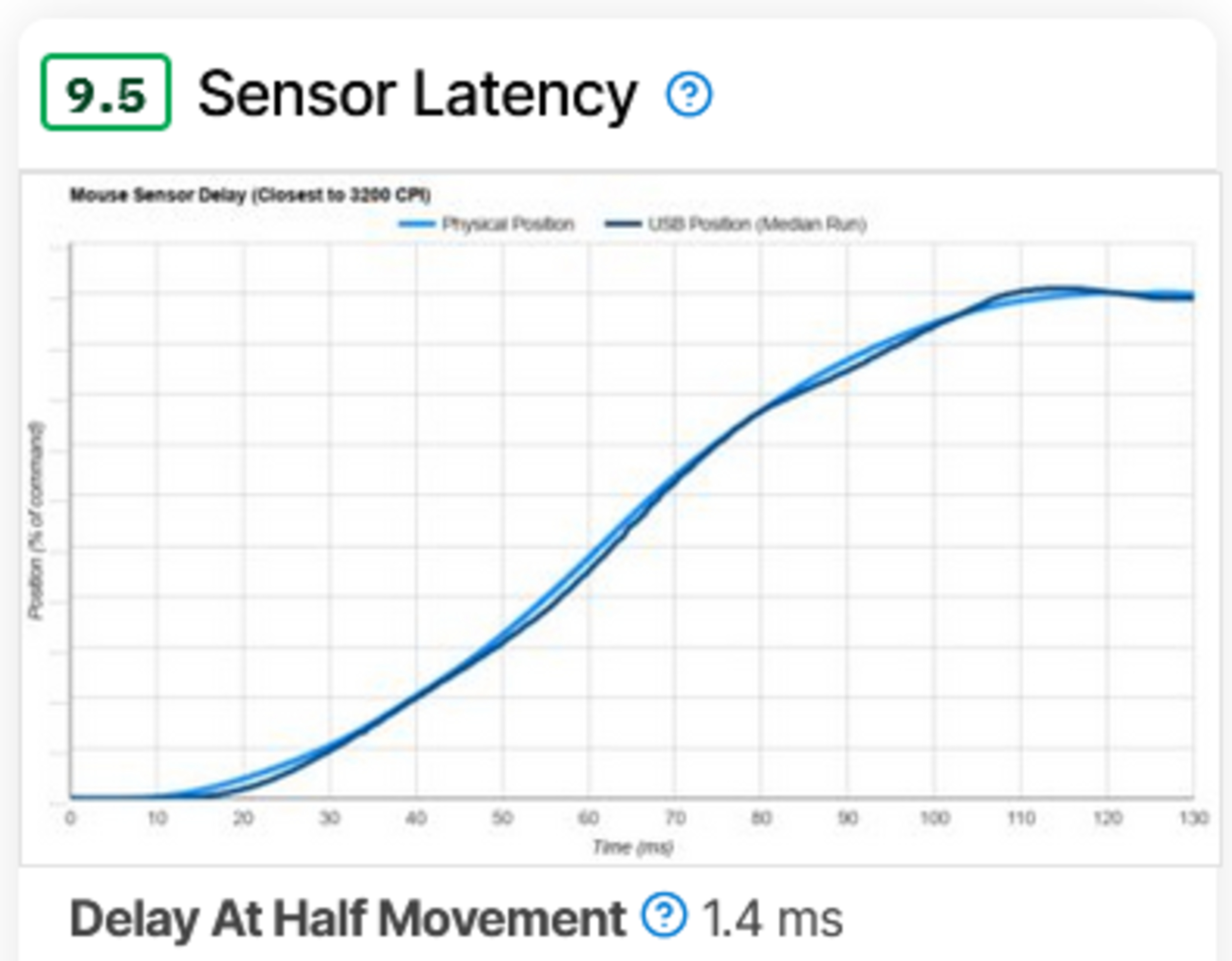
Our 1.5.2 changelog removes two comparison measurements from the Sensor Latency test box.
| Test Group | Changes |
|---|---|
| Sensor Latency |
Removed Delay To Start Of Movement measurement Removed Delay To End Of Movement measurement |
Below is an example of this change in our reviews:
| BEFORE | AFTER |
 |
 |
Why Are We Making This Change?
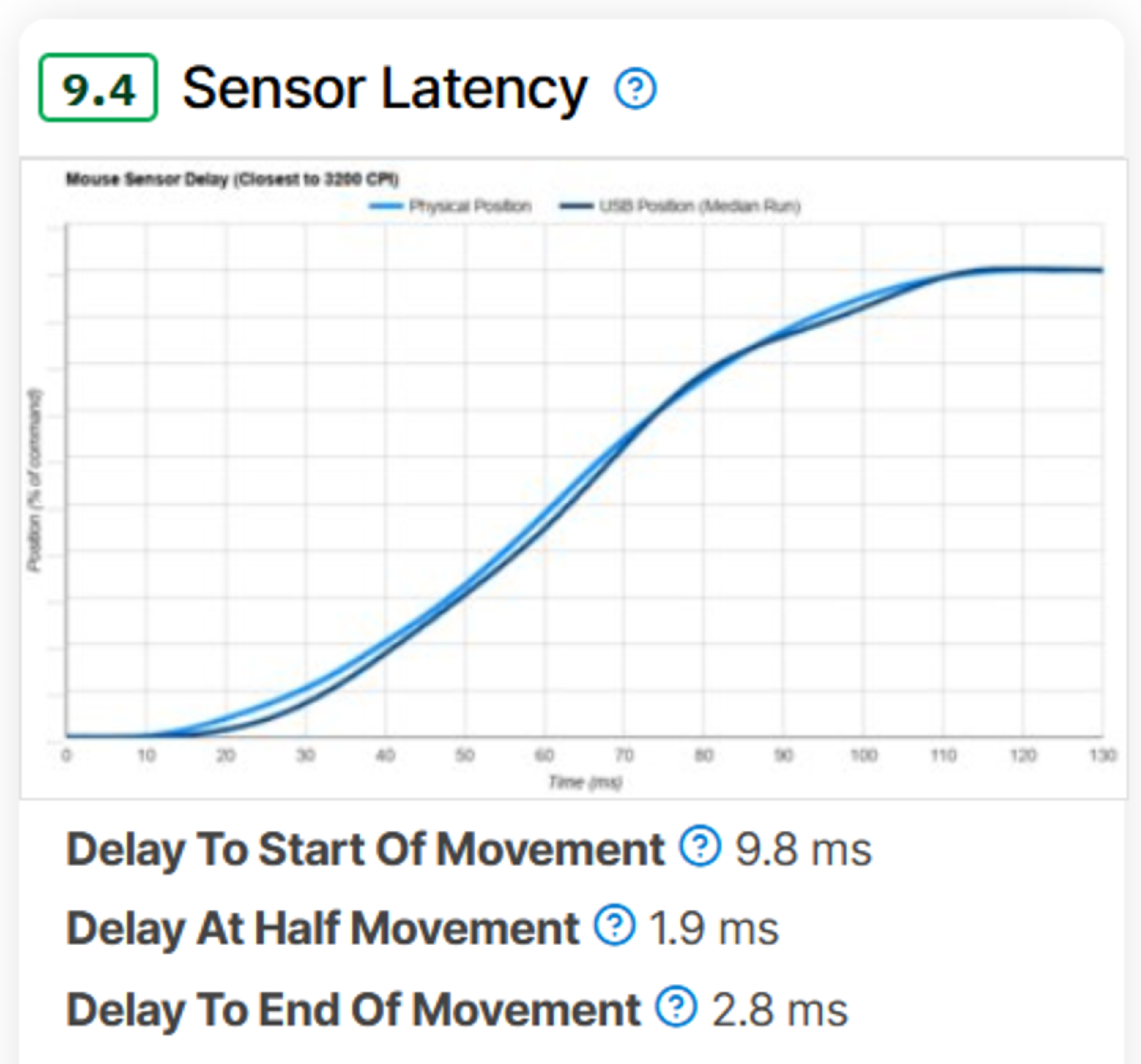
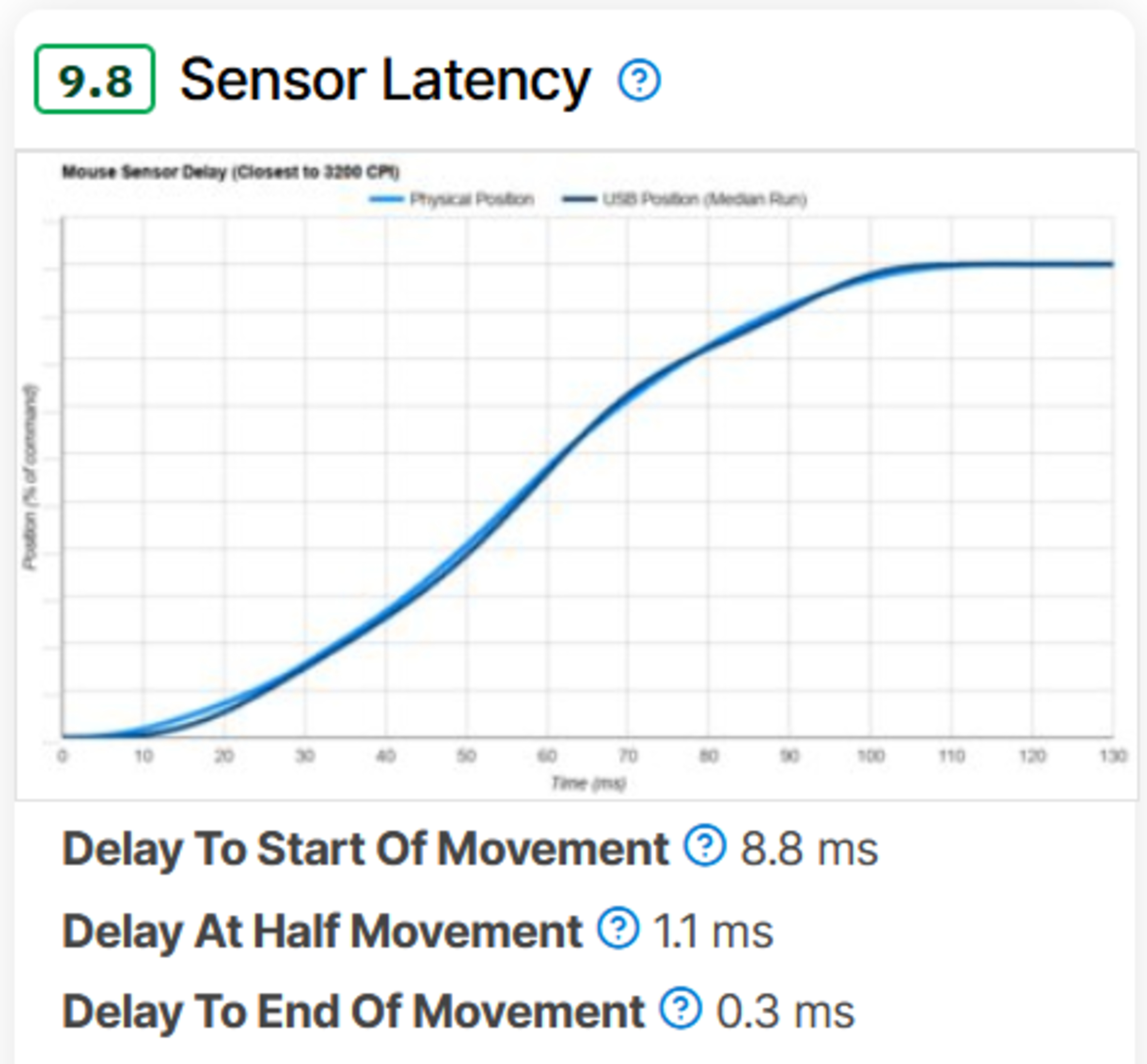
We've received ongoing feedback from the community and manufacturers identifying inconsistencies and occasionally unexpected results in our sensor latency measurements. In particular, we were concerned that mice from the same manufacturer, using the same sensor model and reportedly using the same firmware versions, could still produce higher-than-expected performance variation. The comparison below between the Endgame Gear OP1 8k and the Endgame Gear XM2 8k is a frequently cited example.
 |
 |
After internal audits on our Sensor Latency testing rig, we discovered the following:
- The Delay To Start Of Movement measurement was inconsistent between measurement sets. We weren't able to reliably get reproducible results to a satisfactory degree. Despite our best efforts, we also weren't able to conclusively determine the cause of these irregularities.
- The Delay To End Of Movement results also suffered from inconsistency. We determined this measurement was highly dependent on mechanical factors in our testing rig, including inertia, cradle rigidity, and mousepad friction. Each of these was prone to small variations and could have an outsized effect on our measurements. Furthermore, due to the improvement in the quality of modern sensors, these differences are increasingly on the order of sub-microsecond variation.
- Our Delay at Half Movement measurement remained highly consistent and reproducible throughout our audit. It isn't affected by the unknown irregularities at Start Of Movement or by the variable mechanical factors present at End of Movement.
Based on these findings, we made the difficult decision to discard our Delay To Start Of Movement and Delay To End Of Movement measurements, while retaining Delay At Half Movement. We've also implemented new validation processes to help ensure measurements remain consistent over time, with regular checks against a baseline.
This change means that new results are less granular and provide less insight into the specific characteristics of individual sensor implementations, which we understand will be frustrating, especially for those who have long relied on them for comparisons.
However, we're confident this change will improve long-term measurement reliability while continuing to provide the information necessary for informed buying decisions. Sensor performance has improved significantly in recent years, and most modern gaming mice now perform at a very high level. At this point, mice scoring above 7.0 offer performance that most users are unlikely to distinguish in practice. As scores exceed 8.0, differences in perceived sensor performance become increasingly marginal, reducing the practical value of fine-grained measurement distinctions.
Does This Affect Our Scores?
What Will Happen To Supplementary Results?
Many of the mice we've tested over the last several years include supplementary text and results demonstrating sensor performance across multiple polling rates and other latency-affecting options, such as Motion Sync and competitive modes.
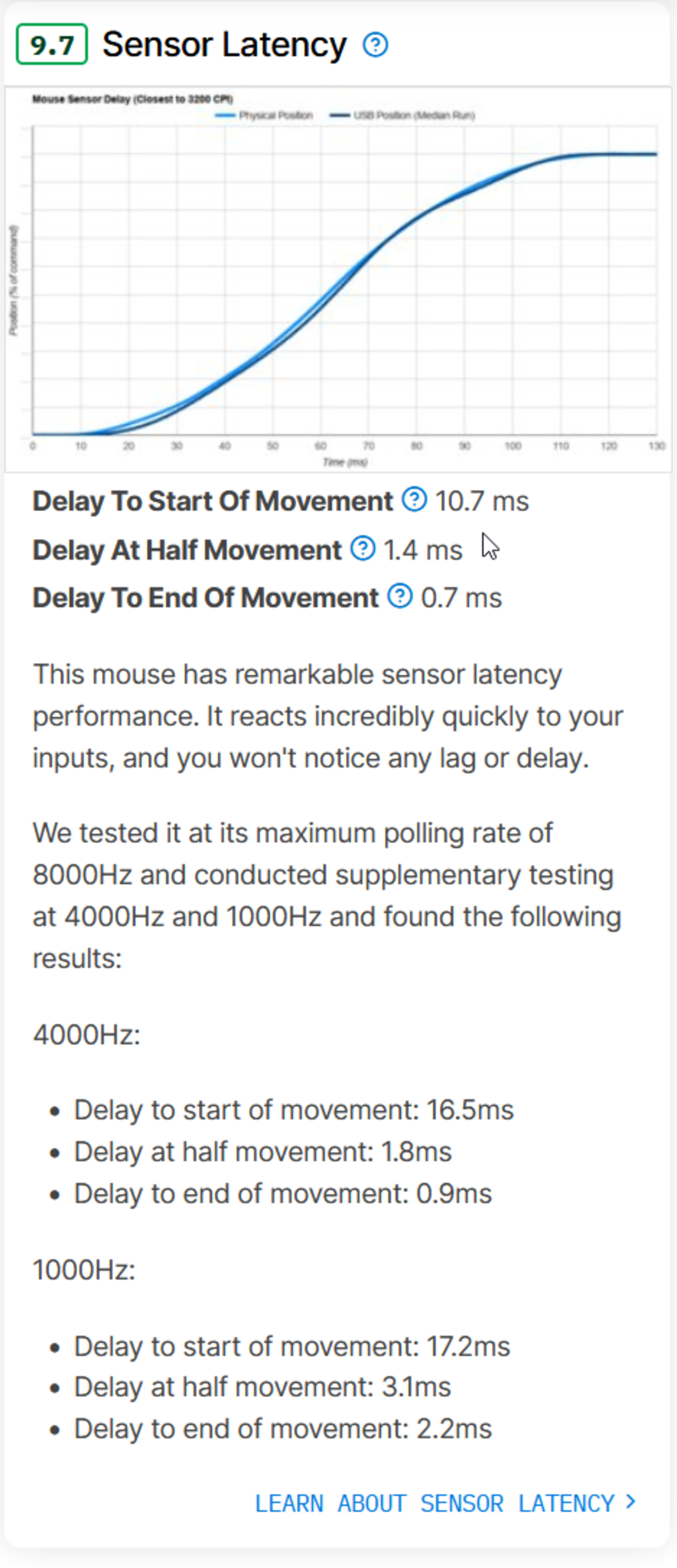
To preserve transparency and comparability, we plan to keep many of these supplementary results in place, particularly where our testing rig was performing as expected, and the data remains sound. As a result, some older sections will continue to include the now-deprecated Delay To Start Of Movement and Delay To End Of Movement measurements. Going forward, new supplementary results won't include these measurements.
Let Us Know What You Think
Your feedback is instrumental in improving our testing. If you have comments, questions, or suggestions about this or any future updates, reach out to us in the comments, on our Discord server, or email us at feedback@rtings.com.
92 Mice Updated
We have retested popular models. The test results for the following models have been converted to the new testing methodology. However, the text might be inconsistent with the new results.
- Apple Magic Mouse 2
- ASUS ROG Keris II Ace
- ATK Blazing Sky U2 Ultimate
- ATTACK SHARK X3
- Corsair DARKSTAR WIRELESS
- Corsair SCIMITAR ELITE WIRELESS
- Corsair SCIMITAR RGB ELITE
- Endgame Gear OP1 8k
- Endgame Gear OP1 8k v2
- Endgame Gear XM2 8k
- Finalmouse UltralightX
- Finalmouse UltralightX Competition
- Finalmouse ULX Pro Series
- G-Wolves Fenrir Max
- G-Wolves HSK Pro 4K
- GLORIOUS Model O3 Wireless
- Hitscan Hyperlight
- HyperX Pulsefire Saga Pro
- Keychron M3 Mini
- Keychron M5
- Keychron M6
- Keychron M7
- LAMZU MAYA X
- Lofree Hypace
- Logitech G PRO 2 LIGHTSPEED
- Logitech G Pro Wireless
- Logitech G PRO X SUPERLIGHT
- Logitech G PRO X SUPERLIGHT 2
- Logitech G PRO X SUPERLIGHT 2 DEX
- Logitech G PRO X SUPERLIGHT 2 SE
- Logitech G PRO X SUPERLIGHT 2c
- Logitech G PRO X2 SUPERSTRIKE
- Logitech G305 LIGHTSPEED
- Logitech G309 LIGHTSPEED
- Logitech G502 HERO
- Logitech G502 LIGHTSPEED
- Logitech G502 X
- Logitech G502 X PLUS
- Logitech G600 MMO Gaming
- Logitech G604 LIGHTSPEED
- Logitech Lift
- Logitech M720 Triathlon
- Logitech MX Anywhere 3S
- Logitech MX ERGO
- Logitech MX Master 2S
- Logitech MX Master 3
- Logitech MX Master 3S
- Logitech MX Master 4
- Logitech Pebble Mouse 2 M350s
- Logitech Signature M650
- MCHOSE L7 Pro
- MCHOSE L7 Ultra
- Ninjutso Sora V2
- Orbital Pathfinder
- Ploopy Adept Trackball
- Ploopy Thumb Trackball
- Pulsar TenZ Signature Edition
- Pulsar X2 CrazyLight
- Pwnage StormBreaker
- Razer Basilisk V3
- Razer Basilisk V3 Pro
- Razer Basilisk V3 Pro 35K
- Razer Basilisk V3 X HyperSpeed
- Razer Cobra
- Razer Cobra HyperSpeed
- Razer Cobra Pro
- Razer DeathAdder V3
- Razer DeathAdder V3 HyperSpeed
- Razer DeathAdder V3 Pro
- Razer DeathAdder V4 Pro
- Razer Naga Pro
- Razer Naga V2 HyperSpeed
- Razer Naga V2 Pro
- Razer Pro Click Mini
- Razer Pro Click V2
- Razer Pro Click V2 Vertical
- Razer Viper 8KHz
- Razer Viper Mini Signature Edition
- Razer Viper V2 Pro
- Razer Viper V3 HyperSpeed
- Razer Viper V3 Pro
- Scyrox V6
- Scyrox V8
- Sony INZONE Mouse-A
- SteelSeries Aerox 9 Wireless
- SteelSeries Rival 3 Gen 2
- SteelSeries Rival 3 Wireless Gen 2
- Vaxee XE v2 Wireless (4K)
- VXE R1 Pro
- WLmouse Beast X
- WLmouse Beast X Max
- Zaunkoenig M2K