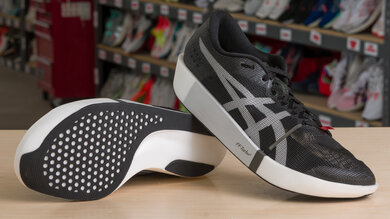
The ASICS METASLEEK is a highly specialized speed-training shoe designed for experienced runners who want a direct, natural ride. Its lightweight, low-stack platform feels energetic and nimble while making your feet and lower legs work harder, helping develop strength and natural mechanics. It excels during track intervals and hill repeats and works well for short races, but its limited cushioning feels harsh over longer efforts, and its flexible ride isn’t as snappy as a plated racer.
| ✅ Buy If: | ❌ Skip If: |
|
|
Our Verdict
The ASICS METASLEEK is a mediocre choice for half and full marathons. You could technically complete the distance in it, but its low-stack platform provides too little cushioning and would feel extremely harsh and demanding on your legs over that much mileage.
Remarkably lightweight build is ideal for faster running.
Great energy return makes the ride feel responsive.
Firm foam helps steady the platform.
Cushioning is inadequate for long sessions.
Highly flexible forefoot doesn't feel snappy when toeing-off.
Shallow forefoot rocker provides little forward assistance.
The ASICS METASLEEK is good for 5K and 10K racing. Its remarkably lightweight build, firm forefoot, and very good energy return feel fast and efficient, though the flexible platform and modest rocker don't provide the snappy propulsion of a plated racer.
Remarkably lightweight build is ideal for faster running.
Great energy return makes the ride feel responsive.
Firm forefoot feels direct at faster paces.
Firm foam helps steady the platform.
Highly flexible forefoot doesn't feel snappy when toeing-off.
The ASICS METASLEEK is inadequate for long runs. Its low weight keeps it nimble, but the limited cushioning and merely adequate stability leave your legs doing more work and can feel increasingly harsh as the distance builds. The lack of a pronounced rocker also makes it increasingly difficult to maintain quick turnover.
Remarkably lightweight build is ideal for faster running.
Firm foam helps steady the platform.
Cushioning is inadequate for long sessions.
Shallow forefoot rocker provides little forward assistance.
Minimal heel rocker makes transitions less smooth.
The ASICS METASLEEK is okay for daily training but works best as a specialized workout and strength-building shoe. Its light, flexible platform feels natural and nimble during faster sessions, though the limited cushioning makes it unsuitable for recovery miles or everyday use.
Remarkably lightweight build is ideal for faster running.
Great energy return makes the ride feel responsive.
Firm foam helps steady the platform.
Too little protection for recovery runs.
Shallow forefoot rocker provides little forward assistance.
Changelog
-
Updated Sep 10, 2026:
We've added a link to the recently reviewed ASICS HYPER SPEED 6 in the Popular Comparisons section.
- Updated Aug 14, 2026: Review published.
- Updated Aug 12, 2026: Early access published.
- Updated Aug 03, 2026: Our testers have started testing this product.
- Updated Jul 28, 2026: The product has arrived in our lab, and our testers will start evaluating it soon.
- Updated Jul 27, 2026: We've purchased the product and are waiting for it to arrive in our lab.
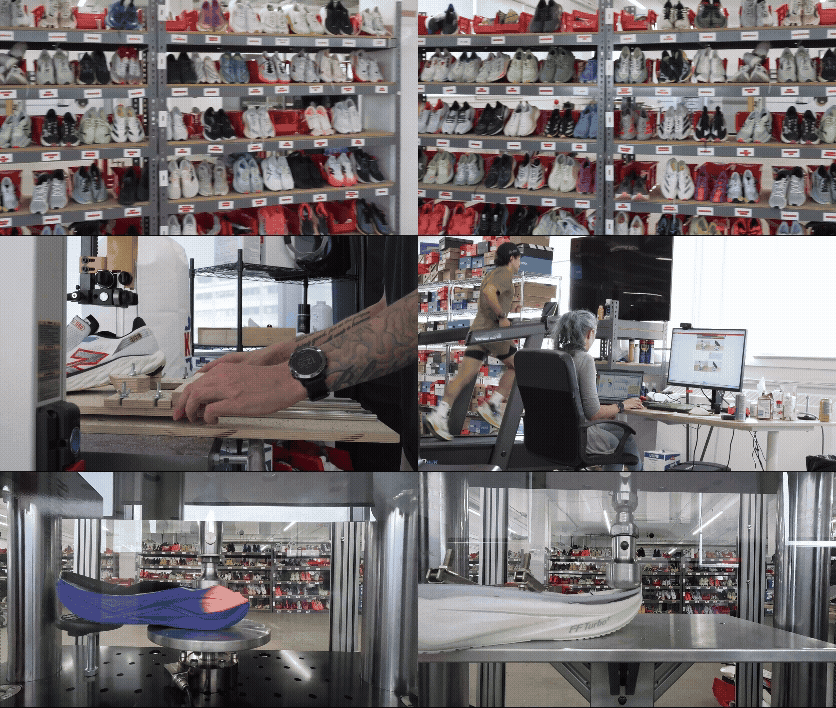
We've bought and tested more than 250 running shoes. Every pair purchased with our own money, never supplied or sponsored by brands. Our data-driven tests are designed to go beyond marketing claims, and since every shoe goes through the exact same methodology, you can directly compare results to find the right pair for your needs.
Test Results
Energy Return
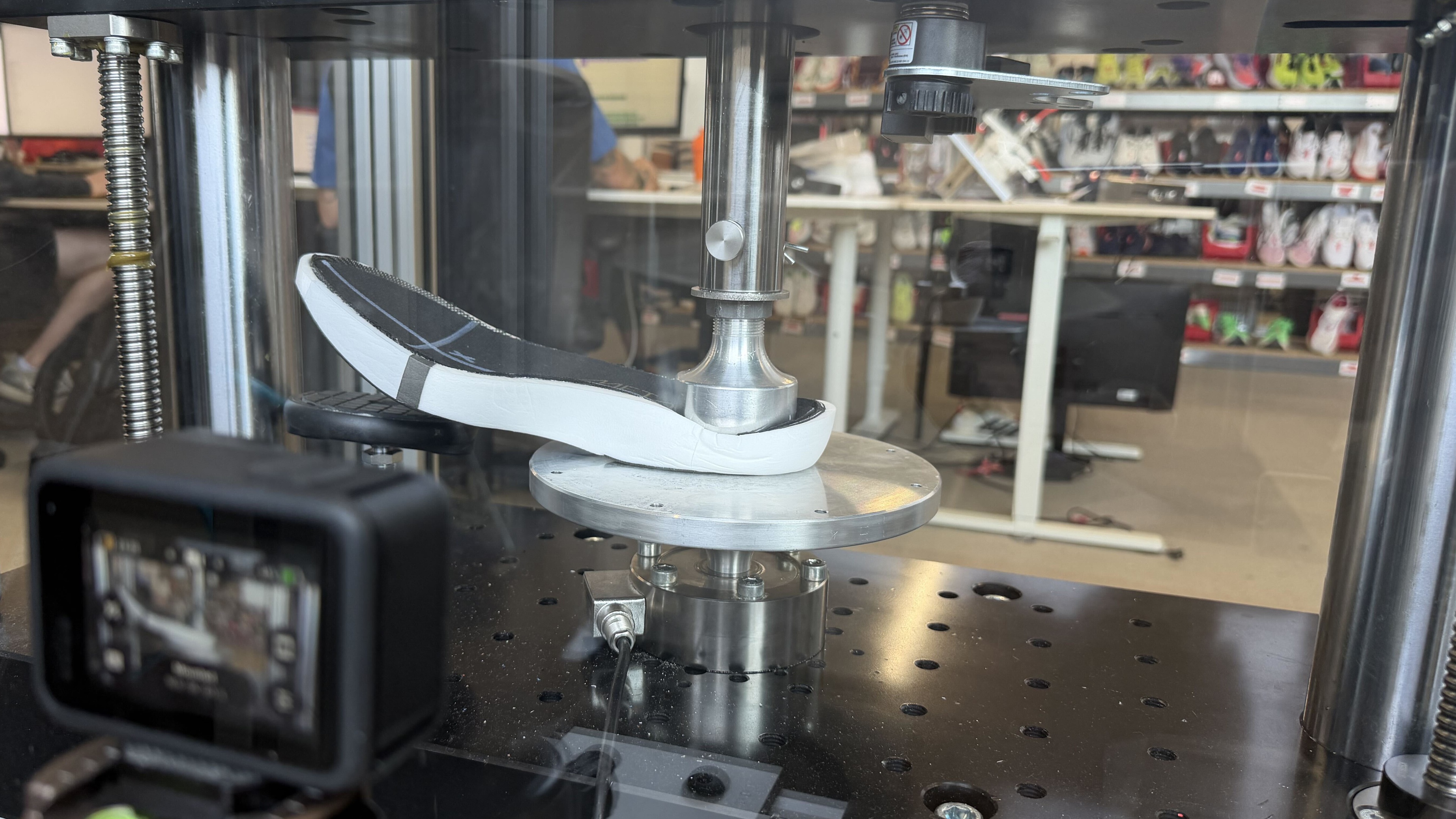
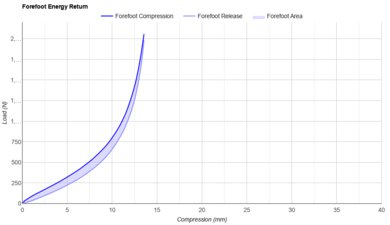
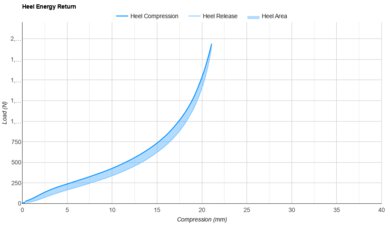
The ASICS METASLEEK returns an impressive amount of energy from each landing, particularly under the heel. Its responsive foam helps the shoe feel efficient without a plate, though this doesn’t translate into a highly propulsive toe-off.
Great energy return makes the ride feel responsive.
Stability
The ASICS METASLEEK provides adequate lateral stability. Its firm, low platform feels controlled when you land, but the narrow outsole demands more balance, particularly as form begins to deteriorate or when cornering aggressively on a track, for example.
Firm foam helps steady the platform.
Narrow outsole makes landings feel less steady.
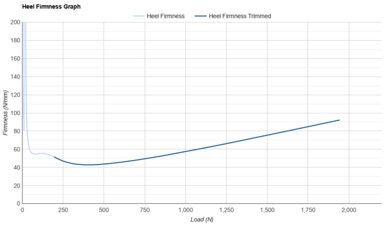
The heel feels very firm. That makes for a stable and direct feel underfoot but provides little softness on landing.
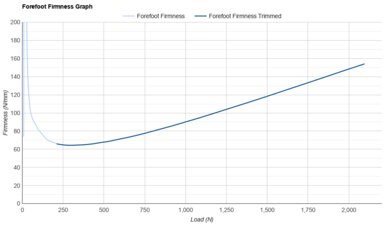
At the forefoot, the ASICS METASLEEK feels exceptionally firm. This produces a highly direct and controlled feel but offers very little give underfoot.
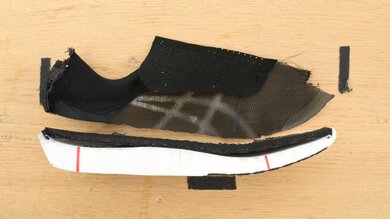
This shoe doesn't have a plate, unlike the adidas Adizero Adios 9’s shank or the Nike Streakfly 2’s carbon plate. This flexible construction feels more natural underfoot and makes it more training-oriented than its rivals.
Cushioning
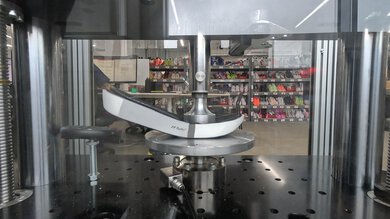
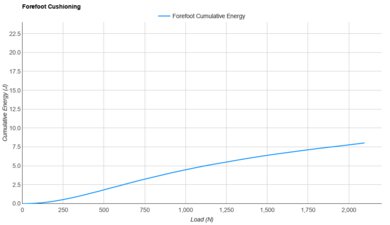
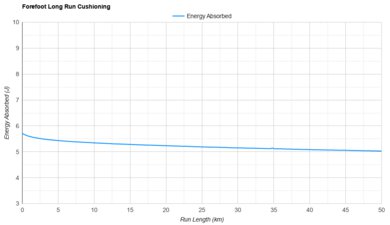
The ASICS METASLEEK provides disappointing impact protection. The heel offers acceptable cushioning, but the low-stacked forefoot feels much harsher, making the shoe better suited to short, fast sessions than sustained mileage.
Heel cushioning is acceptable for short efforts.
Cushioning is inadequate for long sessions.
Too little protection for recovery runs.
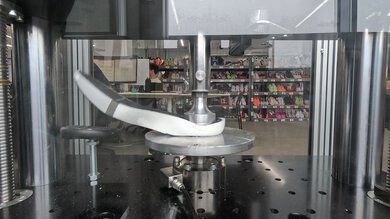
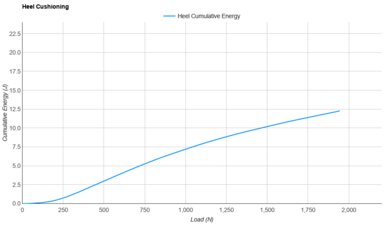
While not particularly cushioned at the heel, the ASICS METASLEEK provides more protection than similar alternatives like the adidas Adizero Adios 9. It absorbs lighter impacts well, so lighter runners are less likely to bottom out the foam.
Bounciness
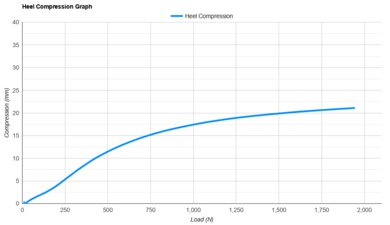
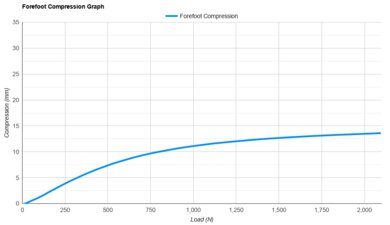
The ASICS METASLEEK has mediocre bounce. Its foam returns energy efficiently, but the shallow platform doesn't compress very deeply, resulting in a grounded ride that's not trampoline-like at all.
Great energy return makes the ride feel responsive.
Limited foam compression produces very little bounce.
Shallow forefoot rocker provides little forward assistance.
Snappiness
The ASICS METASLEEK isn’t designed to feel snappy. Its highly flexible, non-plated platform provides little assistance at toe-off, intentionally making your feet and lower legs do more of the work. It can still suit short races if you already have a strong push-off, or serve as a tool for developing foot and lower-leg strength.
Firm forefoot feels direct at faster paces.
Highly flexible forefoot doesn't feel snappy when toeing-off.
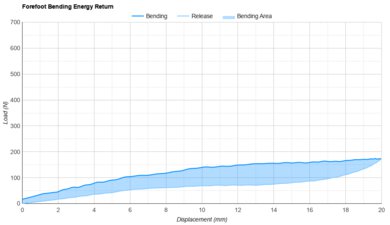
During toe-off, the forefoot returns little energy as it unbends. As a result, toe-offs don't feel particularly snappy despite the fact that the foam itself is energetic.
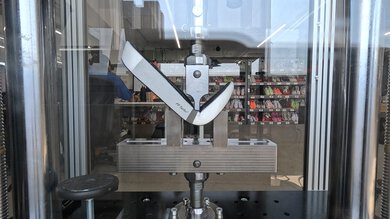
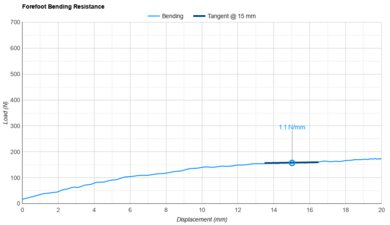
The ASICS METASLEEK is one of the most flexible shoes we've tested. It follows the foot's natural movement for a direct, grounded feel, but makes your feet and lower legs work considerably harder during push-off.
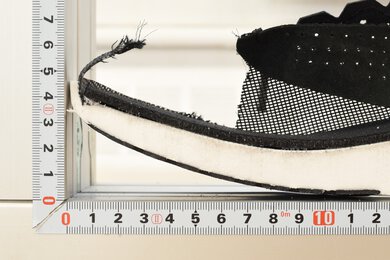
The forefoot has a subtle forefoot rocker. That brings it closer in spirit to shoes like the adidas Adizero Adios 9 than the snappier, more leveraged Nike Streakfly 2.
Roll
The ASICS METASLEEK has a poor rolling sensation. Its flexible forefoot and shallow rocker favor natural foot movement instead of smoothly guiding you from landing to toe-off, which makes transitions feel direct but largely unassisted.
Shallow forefoot rocker provides little forward assistance.
Minimal heel rocker makes transitions less smooth.
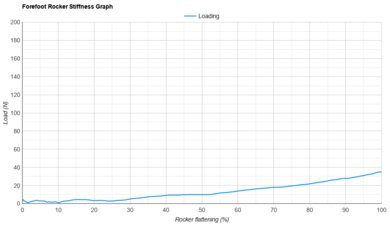
The rocker flexes very easily and flattens under load, so it provides little mechanical assistance. Your feet and lower legs must contribute much more during push-off than in stiffer shoes like the Nike Streakfly 2.
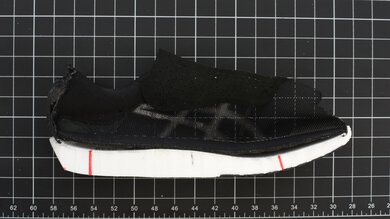
The ASICS METASLEEK has a low stack that feels very thin underfoot. There isn’t much foam between your feet and the ground, resulting in a direct ride with little protective buffering. The drop is also quite high for such a low-stack shoe, making the heel feel considerably more elevated than the forefoot.
True To Size
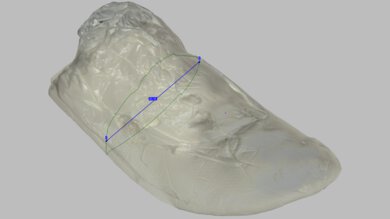
The ASICS METASLEEK fits true to size overall but has a very snug, race-like fit. It feels slightly short and is quite narrow through the arch, making it difficult to put on, though it feels secure once your foot is inside. The wide toe box allows some toe splay for better control during push-offs. If you use the shoe as intended for short speed sessions, you can still go with your normal size since your feet won't swell much.
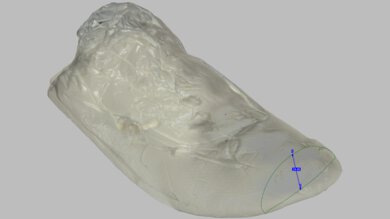
Wide toe box means there's room for your toes to splay during push-offs.
Race-like fit feels secure once the shoe is on.
Length feels slightly short.
Quite narrow at the arch.
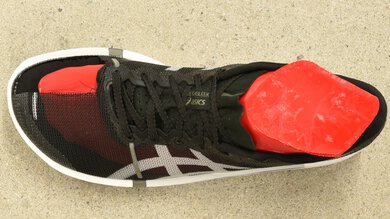
The length fits slightly short, reinforcing its race-oriented feel. This length remains acceptable for short sessions and races, but may feel cramped over longer distances.
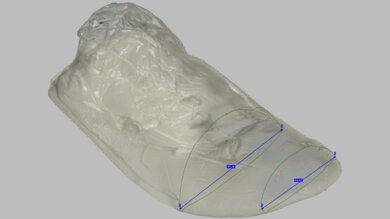
The ASICS METASLEEK has quite a roomy forefoot. This allows your toes to splay, creating a broader base for stronger, more controlled push-offs.
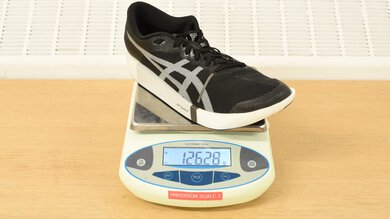
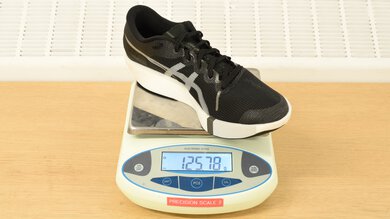
The ASICS METASLEEK feels nearly weightless underfoot, making running at faster paces feel more efficient. It’s lighter than almost every other shoe, though the much higher-stacked ASICS METASPEED RAY impressively weighs about the same, while the Nike Streakfly 2 is a few grams lighter.
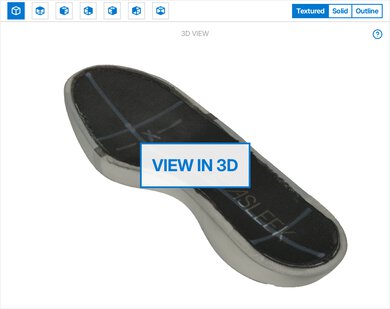

The midsole uses FF TURBO2, the same premium A-TPU based compound found in the ASICS MEGABLAST. The foam feels energetic, though it’s firmer and less silky than the FF LEAP foam used in the METASPEED RAY.
Popular Running Shoe Comparisons
The ASICS METASLEEK is a highly specialized, low-stack speed-training shoe built to develop foot and lower-leg strength. That said, its high price means it mainly makes sense for elite runners with an already extensive rotation who want a dedicated tool for a very specific training purpose. Even then, if your main goal is to reinforce natural mechanics and build lower-leg strength, you don't need to spend as much. Lightweight, relatively low-stack options like the adidas Adizero Adios 9, Topo Cyclone 3, and ASICS HYPER SPEED 6 can place similar demands on your feet and lower legs. What sets the METASLEEK apart is its premium foam, which makes the ride feel challenging but genuinely fun.
If you want a similarly lightweight, low-stack shoe but prefer a more snappy, mechanically assisted ride for short races, the Nike Streakfly 2 is the better choice.
For more options from the brand, check out our recommendations for the best ASICS running shoes. If you need a shoe for longer races, take a look at our picks for the best marathon running shoes.
The ASICS METASLEEK and adidas Adizero Adios 9 are both lightweight, unplated performance trainers with energetic, grounded rides. The ASICS is lighter and returns more energy, making it better suited to top-end speed. The adidas is still a perfectly capable option if you want to log mileage in a light, grounded shoe that usually retails for a much lower price point. Unless you're an elite runner who wants a more refined execution of a similar concept, the adidas is the better option for most people.
The ASICS METASLEEK and HOKA Clifton 10 are designed for very different types of running. The HOKA is the better daily trainer, as its higher-stack, more cushioned platform and greater stability make it more suitable for easy runs and longer efforts. The ASICS is the better option for intervals and short races, thanks to its remarkably lightweight build and energetic ride.
The ASICS METASLEEK and PUMA Fast-FWD NITRO Elite 2 have similar stack heights and weights but serve different purposes. The ASICS is the better strength-building tool for intervals and other workouts, with a more natural and flexible ride from its unplated construction, though the PUMA is more stable. The PUMA is the better race-day option if you’re chasing a 5K or 10K personal best, as its plate and more pronounced rocker create a much snappier, more assisted ride.
Differences Between Sizes And Variants
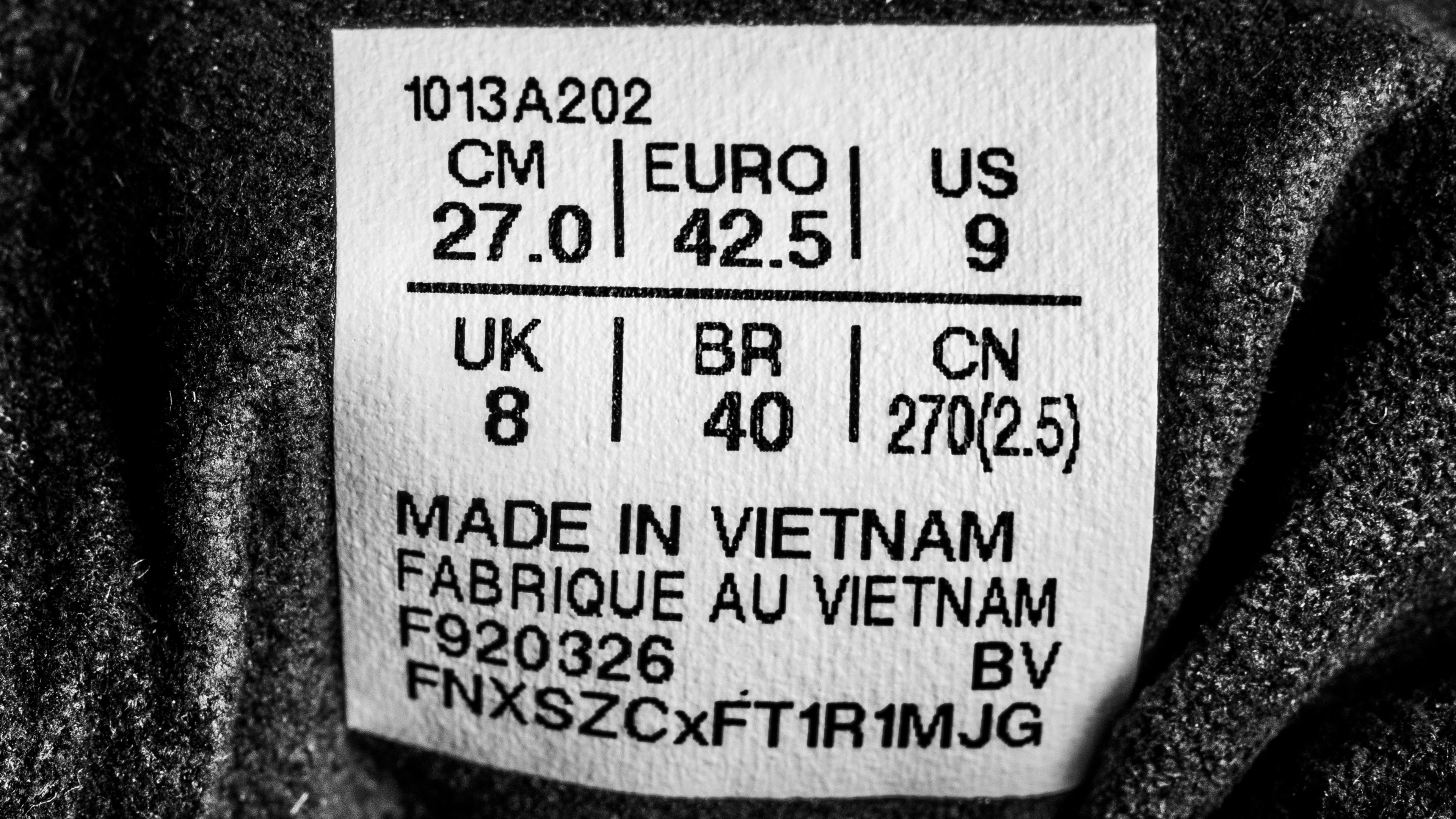
We tested the ASICS METASLEEK in men's U.S. size 9, as noted on the label for our pair. The colorway shown here is creatively named Black/White, and it’s the only option available at the time of writing. The design section applies only to the exact model we tested, but we expect other sizes to perform similarly.