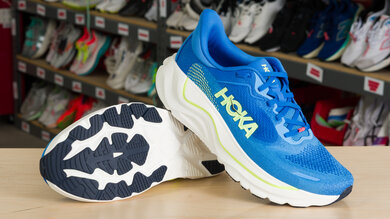
The HOKA Arahi 9 is a straightforward stability trainer designed to help correct overpronation and keep your foot planted through each stride. Its EVA midsole uses softer foam in key areas for comfort, paired with firmer foam arranged in an H shape to support the foot on both sides. Compared with the brand's other stability shoe, the HOKA Gaviota 6, this one feels simpler and more focused on stability. Its firm, controlled platform works well for easy daily mileage and a mix of walking and running, especially if you want dependable support without the overly bulky feel of a traditional stability shoe.
| ✅ Buy If: | ❌ Skip If: |
|
|
Our Verdict
The HOKA Arahi 9 isn't designed as a racing shoe, but you could still complete a half or full marathon with it if you prioritize stability over efficiency. Its planted ride helps keep your stride controlled as fatigue sets in, though its heavier build, muted foam, and limited forefoot propulsion make it feel sluggish compared with dedicated marathon racers. Also, while the cushioning is initially decent, the shoe absorbs a lot less shock as the miles pile up, so it's not well-suited for long distances.
Impressive stability keeps the foot planted and aligned.
Tall heel stack and good heel cushioning protect heel strikers well.
Heavy build makes the shoe cumbersome for racing and faster training.
Forefoot cushioning loses protection under higher forces.
The HOKA Arahi 9 isn't designed for racing, but it can handle the occasional 5K or 10K if you need extra support. Its firm forefoot and gentle rocker provide a controlled transition, but the shoe lacks the light weight, rebound, and snappy toe-off needed to feel nimble and effortless at faster paces.
Firm forefoot.
Decent rocker to help you roll through the stride.
Heavy build makes the shoe cumbersome for racing and faster training.
Limited responsiveness makes strides and pace pickups feel laborious.
The HOKA Arahi 9 is a decent choice for long runs if stability is your main priority. Its broad platform and firm support structure keep your foot planted when your form begins to break down, while the heel provides good impact protection. However, the forefoot feels less cushioned and can bottom out after a while, and the muted midsole can make longer efforts feel more laborious.
Impressive stability keeps the foot planted and aligned.
Decent rocker to help you roll through the stride.
Heavy build makes the shoe cumbersome for racing and faster training.
Forefoot cushioning loses protection under higher forces.
The HOKA Arahi 9 is a passable daily trainer that works best for easy, short runs. Its firm, highly stable platform and smooth heel rocker provide a predictable ride, but the shoe feels heavy and unresponsive, so it's less suitable if you want one shoe for both base mileage and occasional strides or pace pickups.
Impressive stability keeps the foot planted and aligned.
Limited responsiveness makes strides and pace pickups feel laborious.
Changelog
- Updated Aug 27, 2026: We've converted this review to Test Bench 0.15, which replaces Responsiveness with three specific performance usages: Bounciness, Snappiness, and Roll. To read more about the changes, see the changelog.
-
Updated Jul 21, 2026:
We've added a new table in the intro to help you quickly determine if this shoe matches your needs.
- Updated Jul 16, 2026: Review published.
- Updated Jul 13, 2026: Early access published.
- Updated Jul 08, 2026: Our testers have started testing this product.
- Updated Jul 02, 2026: The product has arrived in our lab, and our testers will start evaluating it soon.
- Updated Jun 30, 2026: We've purchased the product and are waiting for it to arrive in our lab.
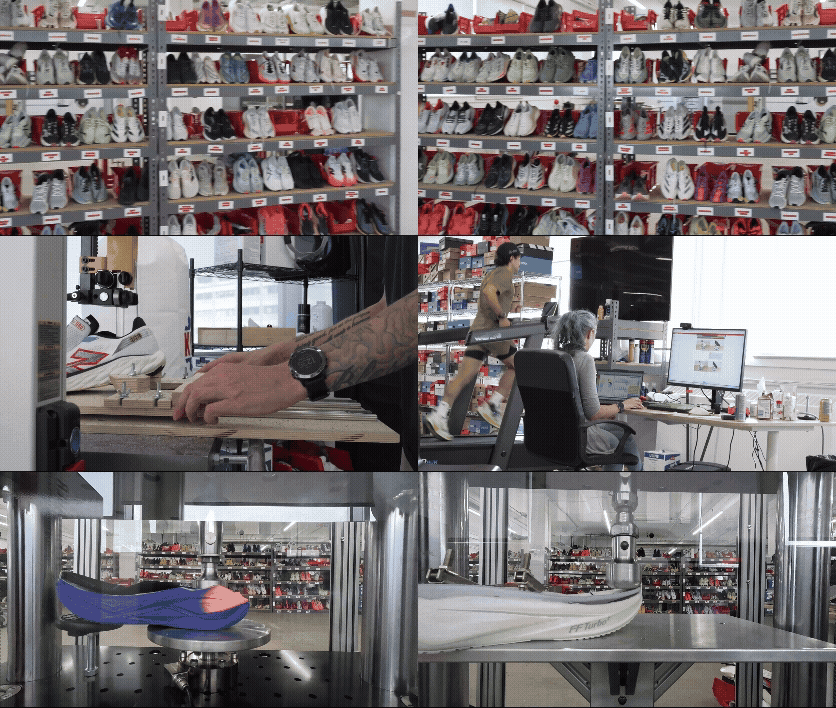
We've bought and tested more than 300 running shoes. Every pair purchased with our own money, never supplied or sponsored by brands. Our data-driven tests are designed to go beyond marketing claims, and since every shoe goes through the exact same methodology, you can directly compare results to find the right pair for your needs.
Test Results
Energy Return
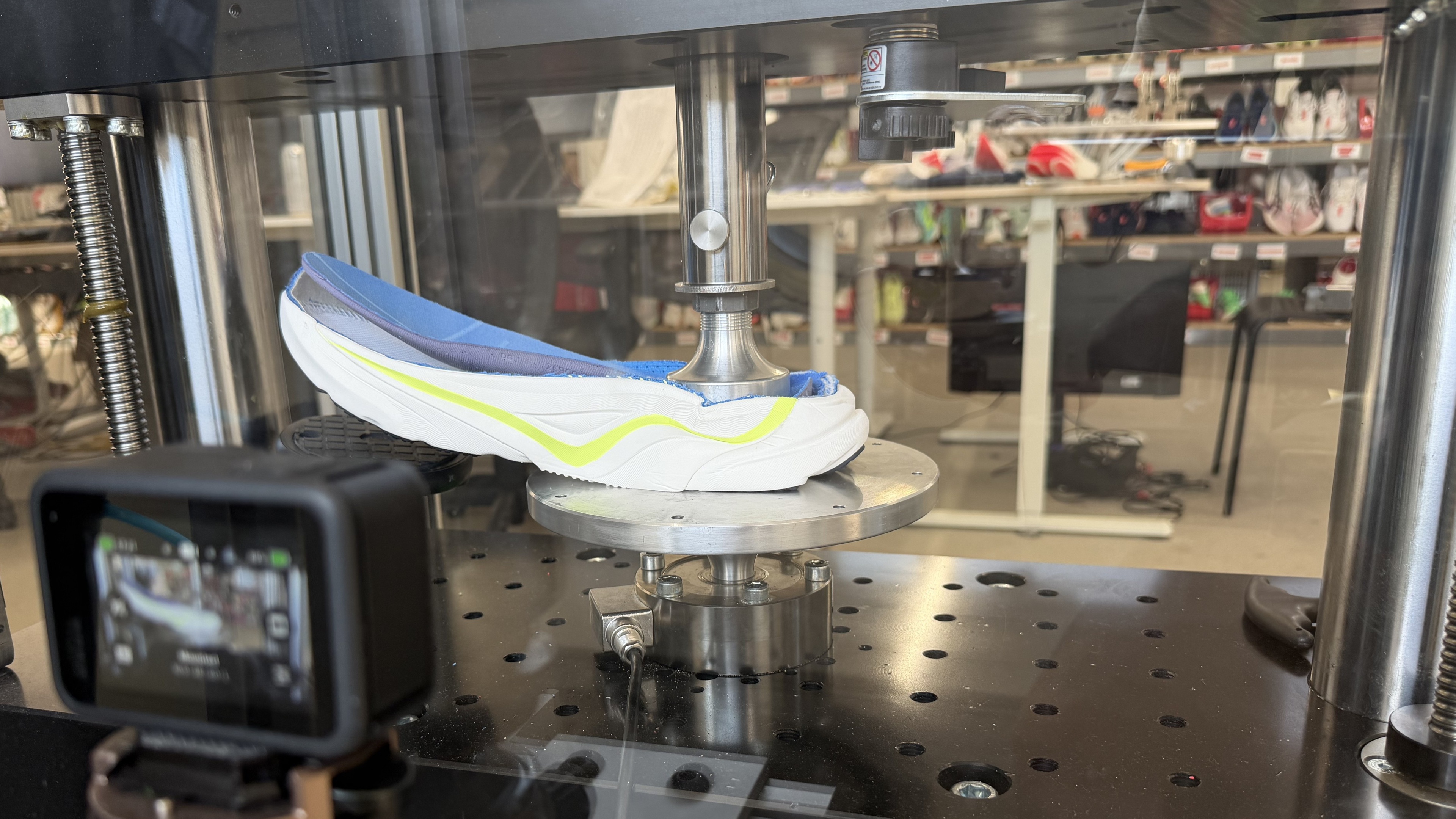
The HOKA Arahi 9 has poor energy return. Its EVA foam absorbs much of the force from each landing rather than sending it back into your stride, especially at the heel. This creates a flat, subdued ride that prioritizes control over bounce.
Poor energy return creates a flat, inefficient ride.

The midsole feels muted under the forefoot as it doesn't return much energy. High energy return isn't essential in a stability shoe, but more modern options like the Saucony Hurricane 25 show that guidance and a lively ride can coexist.

Stability
The HOKA Arahi 9 has excellent lateral stability. Its broad platform, firm foam, and supportive H-Frame help realign any side-to-side movement and keep your foot centered on the platform. This planted feel is particularly useful for overpronators and runners whose form becomes less controlled as they tire.
Impressive stability keeps the foot planted and aligned.
Firm forefoot.
Wide platform helps limits side-to-side movement.
Non-gusseted tongue.


The heel has a firm feel that creates a planted, controlled ride. It's much firmer than the brand's other stability shoe, the HOKA Gaviota 6, so it feels less plush and premium underfoot, but it relies more directly on foam firmness for stability rather than compensating with an especially wide base like the Gaviota.


Cushioning
The HOKA Arahi 9 provides decent overall cushioning, with noticeably better protection under the heel than the forefoot. Heel strikers get enough impact absorption for daily mileage and walking, while runners who land farther forward may find the ride less protective and the cushioning a bit too thin upfront.
Tall heel stack and good heel cushioning protect heel strikers well.
Forefoot cushioning loses protection under higher forces.


The HOKA Arahi 9 provides good impact protection under the heel across a wide range of landing forces. It doesn't feel especially plush or luxurious, but it dampens the road enough for most heel strikers during daily mileage.


This shoe absorbs impact reasonably well under low forces, so lighter runners and those moving at slower paces may find it sufficiently protective. As forces increase, the EVA foam struggles to absorb much more energy and can begin to bottom out.

The HOKA Arahi 9 provides enough forefoot protection early in a run, but its cushioning begins to feel limited after roughly 10 km. The EVA foam loses effectiveness as the miles accumulate, making it a poor choice for runners who need lasting forefoot protection over longer distances.
Bounciness
The HOKA Arahi 9 feels inadequate when you pick up the pace. Its forefoot is fairly stiff, but that stiffness mainly comes from the firm block of foam rather than a propulsive structure. For a shoe to feel truly responsive, that stiffness needs to work with lively, energetic foam, and the Arahi's muted midsole doesn't provide enough rebound to create a quick or snappy toe-off.
Poor energy return creates a flat, inefficient ride.
Limited responsiveness makes strides and pace pickups feel laborious.


Snappiness

The EVA-based midsole returns a poor amount of energy as the forefoot bends and releases. It isn't designed to feel springy, so toe-off doesn't feel propulsive and efficient.


Roll

The forefoot of the shoe bends quite easily, which flattens the rocker. As a result, the shoe provides less rolling assistance than its shape suggests and relies more on your foot and calf to carry you through toe-off.

The HOKA Arahi 9 has slightly less foam underfoot than the HOKA Arahi 8, both in the heel and the forefoot. This keeps the shoe somewhat more grounded, but it also leaves less material to absorb impact up front, which is particularly noticeable during longer runs or harder landings.

True To Size
The HOKA Arahi 9 fits true to size. Its length is accurate, and the forefoot and arch provide plenty of room for most foot shapes. The toe box is slightly less generous vertically, but it should still feel comfortable unless you need substantial space above the toes.
Accurate length.
Enough width to suit most foot shapes.
Toe box may feel low for runners who need a lot of space.


The HOKA Arahi 9 is heavy in general, but it's lighter than most stability shoes, such as the Saucony Guide 19. That said, it still isn't especially nimble compared with the majority of daily trainers.


Popular Running Shoe Comparisons
The HOKA Arahi 9 is a stability trainer that takes a simple, straightforward approach to support with a firm, planted platform and very little bounce. Compared with more modern stability shoes like the Saucony Hurricane 25 and Nike Structure Plus, it feels less cushioned and energetic, but also lighter and has more ground feel.
Within HOKA's lineup, the HOKA Gaviota 6 offers more protection and a better balance of comfort and support, while the Arahi is more firmly focused on keeping the foot controlled, which makes it a good companion for long days on your feet and daily runs if you want extra guidance. The HOKA Mach 7 is a neutral shoe, but its inherently stable design makes it a better option for runners who only need a planted platform rather than dedicated overpronation support.
If you're looking for more options, check out our recommendations for the best running shoes and the best stability running shoes.
The HOKA Arahi 9 and HOKA Gaviota 6 are stability trainers that use an H-Frame, a firmer foam structure shaped like an H that supports the foot from both sides. The Arahi is a bit lighter and takes a more straightforward approach to support, using a firmer platform to create a planted, controlled ride. The Gaviota is HOKA's more premium stability shoe, with more cushioning and a more padded, comfortable feel. It also relies more on its wider base for stability, with the difference most noticeable at the heel.
The Brooks Adrenaline GTS 25 and HOKA Arahi 9 are both supportive daily trainers, but they take different approaches to stability. The Brooks is heavier, though neither shoe is especially light, and its firm GuideRails provide more traditional, pronounced correction that can feel restrictive and harsher underfoot. The HOKA offers a bit more cushioning, especially at the heel, along with a wider arch and more rocker, giving it a smoother, more rolling ride that feels easier to use across daily mileage.
The HOKA Mach 7 and HOKA Arahi 9 are both stable shoes, but they achieve that stability in very different ways. The Mach 7 is a neutral trainer that feels naturally secure thanks to its moderate stack and gusseted tongue, which helps lock the foot in place without trying to correct your stride. It's the better running shoe for most people because it's lighter and uses more energetic foam, making it feel more effortless across a wider range of paces. The Arahi 9 is much more focused on control, using an H-Frame, a firmer H-shaped foam structure that supports the foot from both sides. That makes it the stronger option if you need extra guidance, but it offers less beyond that.
Differences Between Sizes And Variants
We tested the HOKA Arahi 9 in men's US size 9, as indicated on the label for our pair. The color shown here is Virtual Blue/Cobalt, and the shoe is available in several other colorways. Wide versions are available separately for both men and women. The design section applies only to the exact model we tested, but we expect other size and gender variants to perform similarly.