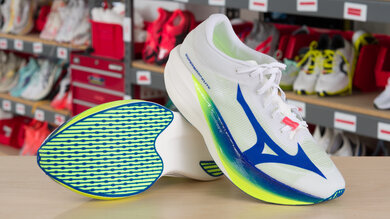
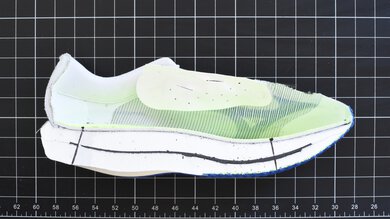
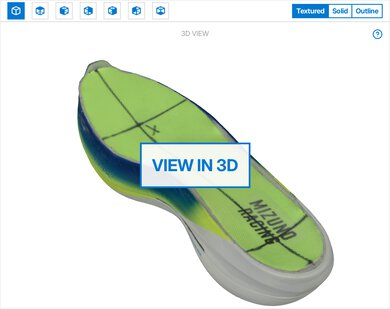
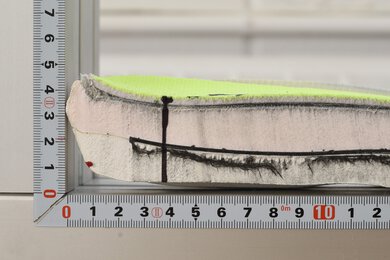
The Mizuno Hyperwarp Elite is a super shoe that uses a dual-density MizunoEnerzy XP midsole that pairs a PEBA-based top layer with a TPEE-based bottom layer, and a full-length carbon fiber plate sandwiched between them to create a propulsive and efficient ride. It sits at the center of the Mizuno's new Hyperwarp racing lineup, bridging the ultra-minimal Mizuno Hyperwarp Pure and the more support-oriented Mizuno Hyperwarp Pro. The Elite positions itself as a long-distance-ready option, and its low-drop geometry and moderate heel stack (for a super shoe) make the forefoot feel especially generously cushioned. As a result, it feels dialed in for midfoot-to-forefoot strikers, promoting a more forward landing that helps engage the plate more effectively and get more out of the bouncy midsole.
Our Verdict
The Mizuno Hyperwarp Elite is an excellent marathon racer shoe that blends a bouncy, dual-layer midsole with a carbon plate in a lightweight package, so it feels efficient when you're trying to hold pace for a long time. It stays lively without turning mushy, and its lower-drop geometry makes it an outstanding marathon super shoe for midfoot-to-forefoot strikers who can really load the plate for a snappy, powerful toe-off. On the flip side, heel strikers and runners who crave an ultra-plush ride may find it a bit less special than some rivals, and its stability is only average for the category.
Dual layer midsole delivers a punchy, consistent rebound.
Full-length carbon plate adds stiffness and keeps toe-offs snappy.
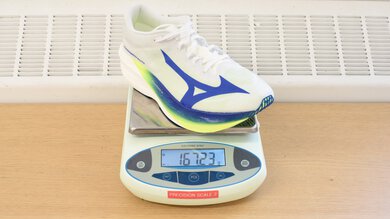
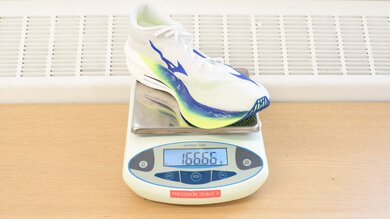
Very light for a plated racer.
Overall geometry isn't well suited for heel strikers.
The Mizuno Hyperwarp Elite is a great choice for 5K and 10K racing thanks to its low weight and stiff, propulsive platform that encourages quick turnover when you're running hard. Thanks to the carbon plate and well-tuned dual-compound midsole, the forefoot feel is firm enough to feel snappy, which helps it stay versatile across different racing paces.
Dual layer midsole delivers a punchy, consistent rebound.
Full-length carbon plate adds stiffness and keeps toe-offs snappy.
Very light for a plated racer.
Changelog
- Updated Jun 17, 2026: We've converted this review to Test Bench 0.12, which fixes how we measure firmness, a component of the Stability and 5K/10K Racing usages. There may be inconsistencies between the text and the scores for these usages, but the scores should still be considered valid. We've also brought back the Energy Return score and added two new usages: Daily Training and Long Run. To read more about the changes, see the changelog.
-
Updated Apr 30, 2026:
We've updated this review to add text for the new Responsiveness usage box and made minor phrasing adjustments throughout the review for consistency.
- Updated Apr 28, 2026: We've converted this review to Test Bench 0.11, adding two new rocker measurements to the Design section, and three new responsiveness tests to the Performance section. The Energy Return usage score has been replaced with Responsiveness. Check out the details in our changelog.
-
Updated Feb 26, 2026:
Following Test Bench 0.10, we wrote the full review with the most recent testing and results available.
- Updated Feb 20, 2026: We've converted this review to Test Bench 0.10, adding a new set of fit tests to the Design section and an overall fit performance usage. Check out the details in our changelog.
- Updated Feb 16, 2026: Review published.
- Updated Feb 05, 2026: Our testers have started testing this product.
- Updated Jan 16, 2026: The product has arrived in our lab, and our testers will start evaluating it soon.
- Updated Jan 08, 2026: We've purchased the product and are waiting for it to arrive in our lab.
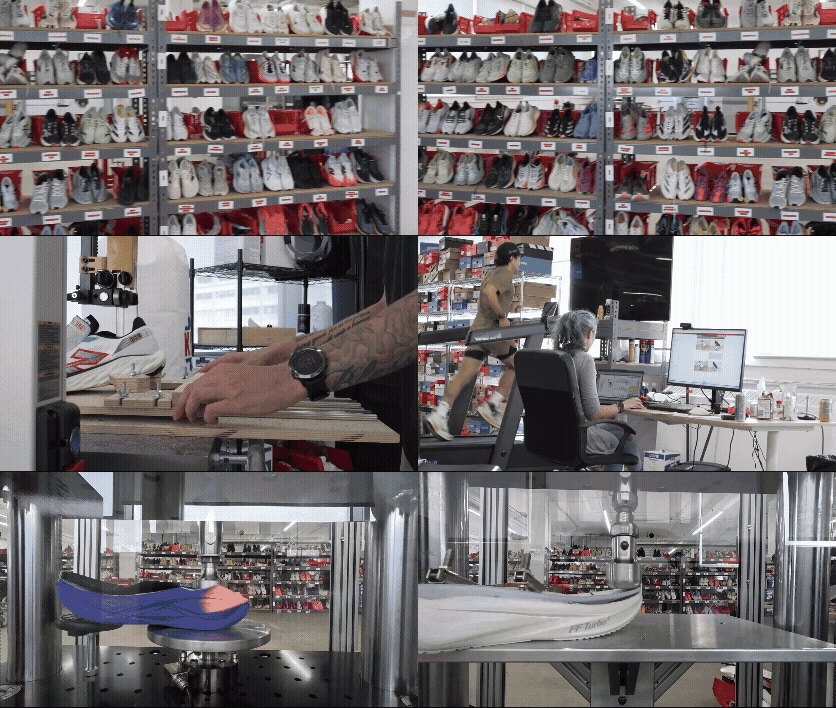
We've bought and tested more than 250 running shoes. Every pair purchased with our own money, never supplied or sponsored by brands. Our data-driven tests are designed to go beyond marketing claims, and since every shoe goes through the exact same methodology, you can directly compare results to find the right pair for your needs.
Test Results
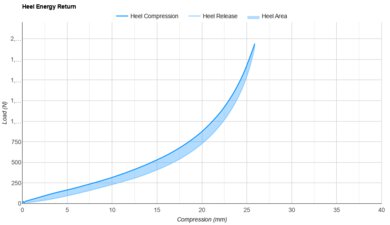
Energy Return
Stability
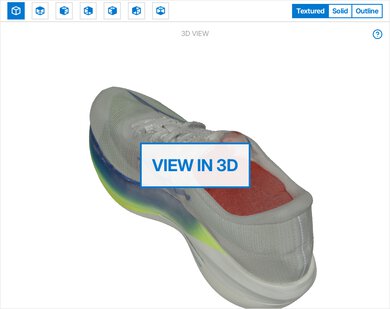
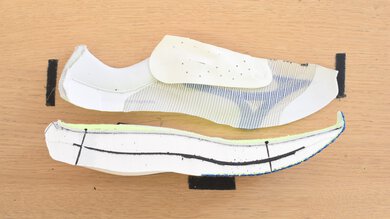
The Mizuno Hyperwarp Elite has decent lateral stability for a plated racer, offering a fairly controlled platform that helps keep the ride from feeling overly twitchy at speed. The platform isn't the widest, but the more moderate stack partly compensates for that and keeps things relatively stable. If you tend to wobble side to side when racing, especially on tired legs or uneven roads, some other super shoes are designed to feel more inherently stable.
Relatively wide platform relative to the stack.
Cushioning
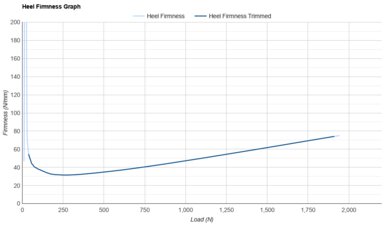
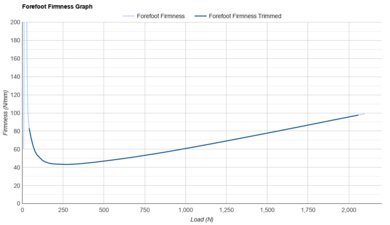
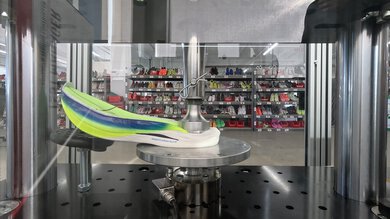
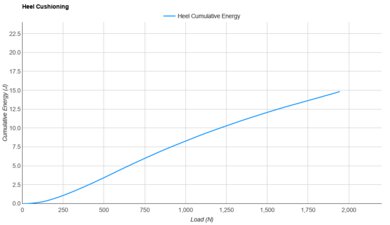
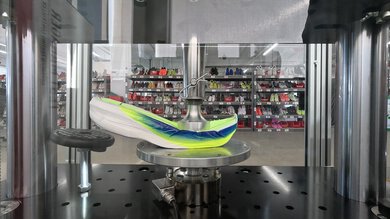
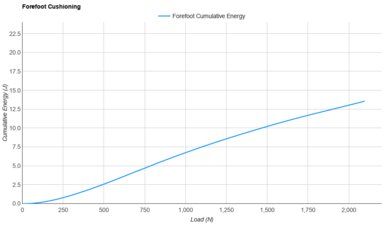
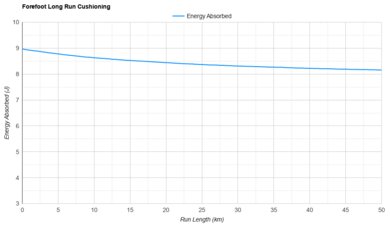
The Mizuno Hyperwarp Elite offers good overall protection, with a noticeably more cushioned forefoot that feels especially pleasant during toe-off and helps keep the ride comfortable as the miles add up. Therefore, it provides ample protection for long distances. The heel feels a bit less forgiving than the forefoot, so heavier heel strikers may want more cushioning, but mid-to-forefoot strikers should be satisfied.
Forefoot cushioning is awesome.
Overall geometry isn't well suited for heel strikers.
Responsiveness
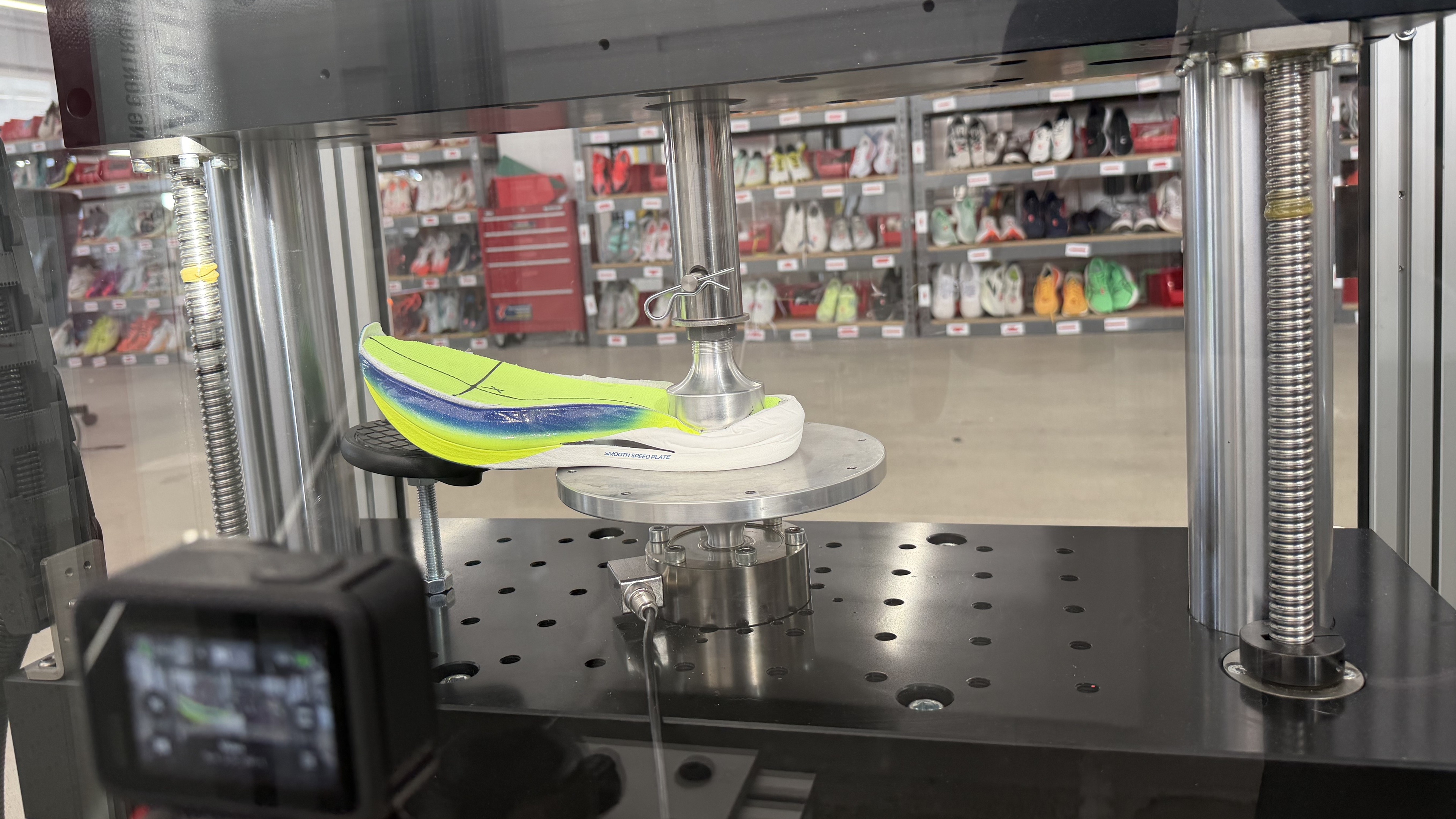
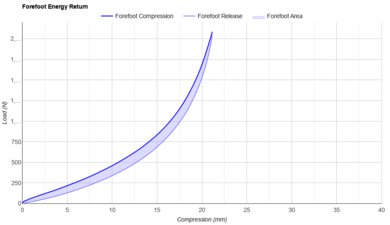
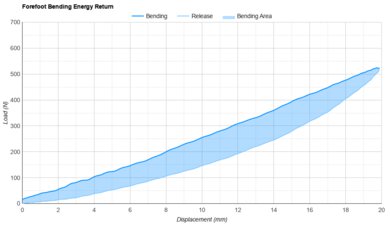
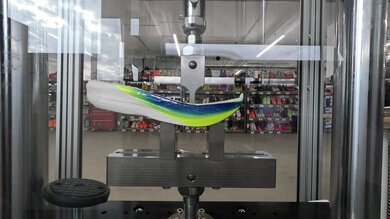
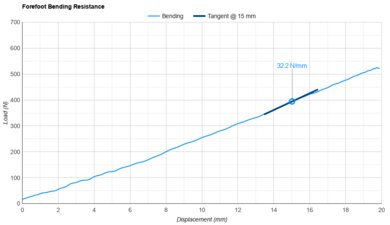
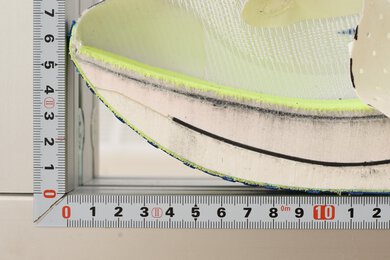
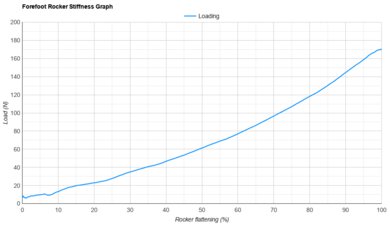
The Mizuno Hyperwarp Elite delivers great responsiveness with a consistent, efficient rebound through both the heel and forefoot. The top layer of PEBA and the bottom layer of TPEE midsole work together to create a very energetic, forward-driving stride that feels best when you're applying force and landing close to the forefoot. This foam is paired with a carbon plate that adds some stiffness for added propulsion.
Dual layer midsole delivers a punchy, consistent rebound.
True To Size
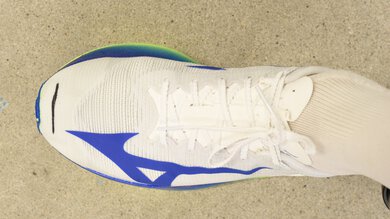
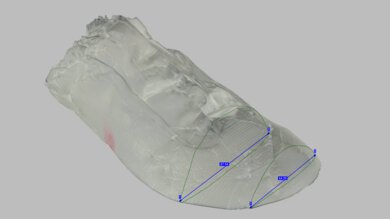
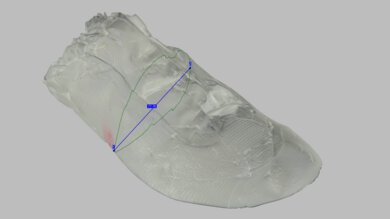
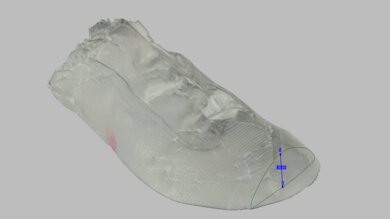
The Mizuno Hyperwarp Elite fits slightly short in length, which is common for super shoes, and its arch area is notably narrow, creating a snug midfoot wrap that prioritizes lockdown over comfort. Still, for its intended use as a performance-oriented racer, most runners can stick with their usual size since there is enough volume in the toebox to allow for the feet to spread, though those with higher arches or who prefer extra toe room may find it a bit restrictive.
Toe box is true to size in terms of volume.
Narrow arch.
Popular Running Shoe Comparisons
The Mizuno Hyperwarp Elite is a long-distance focused super shoe from the new Hyperwarp series, marking Mizuno's serious push into high-performance road racing and a clear shift away from the ultra-aggressive geometry of the Mizuno Wave Rebellion Pro 3. Two shoes complement the Elite in that lineup: the Mizuno Hyperwarp Pure sits as the lower-stack, short-distance option built around a full PEBA midsole, and the Mizuno Hyperwarp Pro leans more toward stability with a firmer TPEE-based midsole, making it more approachable than the Elite.
The Mizuno Hyperwarp Elite shows a willingness to experiment by including TPEE instead of sticking to a PEBA recipe, the way many brands still do, such as the Nike Alphafly 3 and HOKA Cielo X1 3.0. A few brands (notably adidas, PUMA, and ASICS) have already entered the game with TPU and TPEE-based super shoes, and it looks like Mizuno showed up fashionably late to the party. This could also partly explain why the Hyperwarp trio looks so clearly inspired by the ASICS METASPEED series. One question remains: are the Hyperwarp comparatively lower stacks an intentional design choice, or was it simply impossible to keep weight down like the ASICS without lowering the stack? Either way, the Hyperwarp Elite ends up as a well-executed long-distance racer that avoids the aggressiveness and chaotic feel of shoes like the ASICS METASPEED RAY or the PUMA Fast-R NITRO Elite 3, favoring a more controlled feel. It's best for runners who want a snappy, efficient super shoe, especially forefoot strikers with good running mechanics.
For more options, check out our recommendations for the best running shoes, or more specifically, for the best long-distance running shoes and the best shoes for running a marathon.
The Mizuno Hyperwarp Elite and Mizuno Hyperwarp Pro sit in the same super shoe family and share a similar race-ready intent, but their midsoles are tuned for different priorities. The Elite feels like the more efficiency-driven sibling, with a midsole that offers better protection and resists bottoming out as the distance piles up, making it the more confidence-inspiring option for longer races where top performance matters. The Elite is also noticeably lighter, delivering top-tier efficiency that the Pro simply can't match. The Pro feels more approachable by shifting the focus toward stability and structure, using a wider base, a firmer forefoot, and a plate setup that sits closer to the ground, which makes toe-off feel more controlled but rather uninspiring compared to the Elite.
The Mizuno Hyperwarp Elite and Mizuno Hyperwarp Pure are both built for efficient forefoot strikers with a low-drop platform, but they target different race distances. The Pure is the lower-stacked, lighter option, optimized for shorter distances where quick turnover matter most. It feels more direct and snappy underfoot, with less cushioning overall, making it better suited to fast 5K and 10K efforts. The Elite sits higher, though still only moderately stacked for a super shoe, and offers more cushioning for longer distances while offering a propulsive feel that can naturally lengthen your strides. If you want the most stripped-down feel for short racing (up to 10K), the Pure makes more sense, but if you're stretching toward longer events (half-marathon to marathon), the Elite is the more appropriate choice.
The Mizuno Hyperwarp Elite and ASICS METASPEED EDGE PARIS come from different Japanese companies, yet the Mizuno almost feels like the long-lost child of the ASICS. They share striking similarities in weight, drop, geometry, stack height, and even upper design, creating a very comparable silhouette and on-foot feel. Both deliver a similar energy return and cushioning profile, with a forefoot that feels a lot more protective than the heel. Their carbon plate shapes also follow a similar shape, though the ASICS uses a more aggressively spooned design that makes it very fast-rolling. The Mizuno has a few key distinctive elements: it sits on a wider platform and feels more stable overall, and with a slightly lighter build, it comes across as a more advanced, more composed evolution of that same high-performance super shoe concept.
The ASICS METASPEED RAY and Mizuno Hyperwarp Elite are both super-light super shoes, but they feel very distinct in spirit. The ASICS is dramatically lighter and tends to offer better running economy as a result, but it's also the riskier choice at longer distances because it feels much less stable underfoot. Its midsole feels bouncier and more cushioned, yet softer, which can make it feel less secure and a bit mushy when fatigue builds or when you're trying to move smoothly through toe-off. The Mizuno is still quite lightweight, with a responsive, snappy feel that appeals to runners who want an immediate, mechanical return when they apply force, with a ride that feels less chaotic and more stable at race pace.
Differences Between Sizes And Variants
We tested the Mizuno Hyperwarp Elite in men's US size 9, as indicated on the label for our pair. This shoe is currently only available in the White/Lightning Yellow colourway. Mizuno uses unisex sizing for this model, and wide versions aren't currently available. The design section applies only to the exact model we tested, but we expect other size and gender variants to perform similarly.