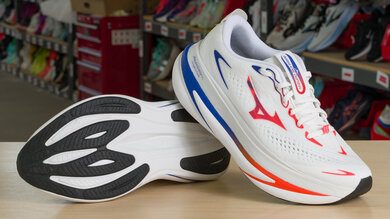
The Mizuno Sky Prime is a max-stack, deeply cushioned trainer designed for runners seeking a soft, comfortable shoe for long runs and easy miles. It's taller and more cushioned than the Wave Sky 9, Mizuno's more traditional max-stack trainer, while the Neo Vista 3 is the brand's plated max-cushioned option. The Sky Prime's incredibly broad platform provides good stability, while the amazing cushioning absorbs a huge amount of road impact and continues to protect your legs well as the miles add up. Its smooth ride can even handle the marathon distance decently if speed isn't your priority. However, its heavy build and sub-par energy return make it unsuitable for faster running, and it takes a long time to dry when it's wet.
| ✅ Buy If: | ❌ Skip If: |
|
|
Our Verdict
The Mizuno Sky Prime is a decent pick for half marathon and marathon racing if speed isn't your priority. Its excellent cushioning provides amazing protection over distance, while the broad, stable platform remains reliable as fatigue sets in. However, its considerable bulk becomes cumbersome when you're trying to maintain a quicker race pace, and the sub-par energy return offers little help with each stride, making it a tiring shoe to race in.
Excellent cushioning keeps your legs very well protected over the distance.
Good stability gives you a reliable platform when fatigued.
Heavy build can feel cumbersome as miles build.
Lack of energy return makes it a hard shoe to hold pace in.
The Mizuno Sky Prime is a sub-par pick for 5K and 10K racing. Though the forefoot has some stiffness, giving you a bit of leverage through toe-off, and the forefoot geometry encourages a quick roll forward, the shoe is much too heavy to run quickly in. The forefoot is also very soft when pushing off, so it doesn't give you a planted base to generate a forceful and fast turnover.
Forefoot rocker helps roll you forward quickly through toe-off.
Heavy build makes it hard to find and hold race pace.
Very soft forefoot makes it harder to generate a forceful push-off.
The Mizuno Sky Prime is a very good pick for long runs at relaxed paces. Its tall, thick stack of cushioning shields your legs excellently from road impact as the miles build, and its generous base stays stable as fatigue sets in, so you don't have to worry about the shoe wobbling beneath you. The forefoot rocker geometry and decent rocker stiffness help guide you smoothly through stride too, keeping your legs ticking over as you log long, steady miles. However, this is a heavy shoe, and its poor energy return means you get little help back through each stride, so it can become quite fatiguing the longer you run or if you try to pick up the pace.
Good stability gives you a reliable platform when fatigued.
Excellent cushioning keeps your legs very well protected on long runs.
Smooth roll keeps legs ticking over across relaxed miles.
Heavy build can feel cumbersome as miles build.
The Mizuno Sky Prime is a great daily trainer overall. Its good stability and amazing cushioning make it a reliable, protective option for easy daily miles, with plenty of impact reduction whether you land on your heel or farther forward. The decent heel rocker also helps heel strikers move smoothly into midstance. However, this is a heavy shoe with sub-par energy return, so it's much better at soaking up easy miles than handling faster workouts or strides.
Amazing cushioning keeps your legs well protected over regular miles.
Good stability gives you a dependable platform for day-to-day running.
Decent heel rocker helps heel strikers move smoothly into midstance.
Heavy build and sub-par energy return rule out faster running.
Changelog
- Updated Oct 16, 2026: Review published.
- Updated Oct 15, 2026: Early access published.
- Updated Oct 05, 2026: Our testers have started testing this product.
- Updated Sep 30, 2026: The product has arrived in our lab, and our testers will start evaluating it soon.
- Updated Sep 21, 2026: We've purchased the product and are waiting for it to arrive in our lab.
We've bought and tested more than 300 running shoes. Every pair purchased with our own money, never supplied or sponsored by brands. Our data-driven tests are designed to go beyond marketing claims, and since every shoe goes through the exact same methodology, you can directly compare results to find the right pair for your needs.
Test Results
Design


There's no escaping that the Mizuno Sky Prime is a heavy shoe. It's heavier than similarly cushioned options like the ASICS GEL-SLOWCUSH and even more cushioned shoes like the Saucony Paramount Max, and it's very noticeable on foot.


Energy Return
The Mizuno Sky Prime has inadequate energy return overall. The forefoot gives you a bit more spring through your stride than the heel, but neither end of the shoe provides much assistance. Instead, this shoe prioritizes cushioning and protection over efficiency.
Sub-par overall energy return gives you little help through stride.
Poor heel rebound makes rearfoot landings feel especially flat.


Stability
The Mizuno Sky Prime has good stability overall, especially for a shoe that's so soft and tall. Its very broad outsole provides a supportive, trustworthy platform, while the gusseted tongue helps keep your foot secure and prevents heel slippage. However, the softness means heel landings can feel a little less planted, while the very soft forefoot allows more movement under load than the score suggests when you push off.
Very broad outsole gives you a supportive platform from landing to toe-off.
Gusseted tongue keeps your foot securely locked in place.
Soft forefoot can feel less secure under load.


The heel strikes a good balance between softness and firmness. With more of the firmer EVA carrier foam concentrated here, landings feel plush without becoming overly wobbly.


Cushioning
The Mizuno Sky Prime provides truly amazing cushioning overall. The forefoot does a superb job of softening landings and shielding your legs from road impact, while the heel provides excellent protection as well. The cushioning also holds up amazingly well over longer runs, so your legs stay very well protected as the miles add up.
Heel provides excellent impact protection.
Forefoot impact reduction is outstanding.
Cushioning holds up amazingly over long distances.


The heel provides amazing cushioning overall, absorbing a large amount of road impact across different forces. It scales well as more force is applied, so heavier runners or anyone running quicker are well shielded from the road.


The forefoot cushioning of the Mizuno Sky Prime is outstanding overall. It absorbs a huge amount of road impact and continues to protect your legs amazingly, even under the highest forces we test.

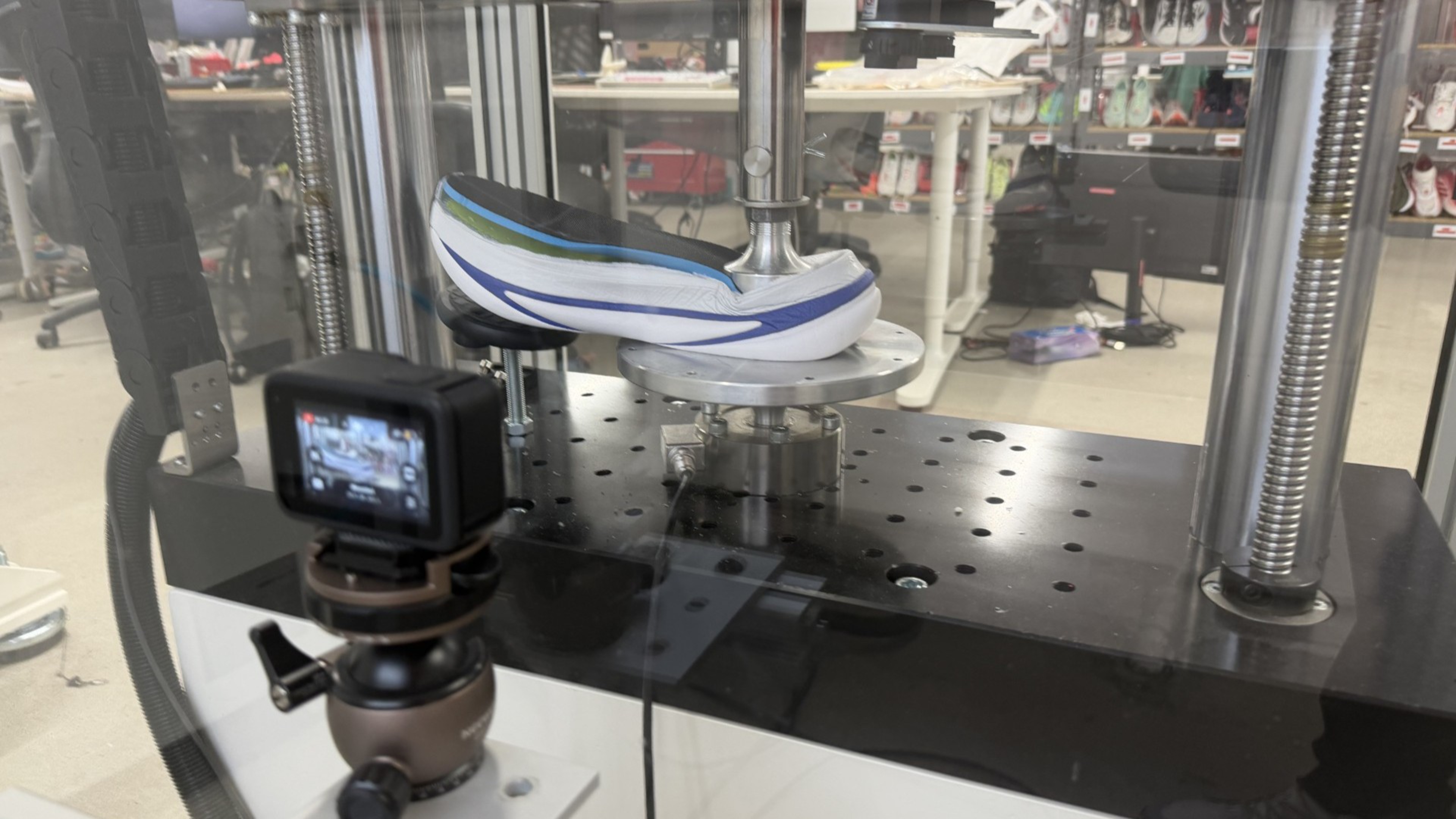
The Mizuno Sky Prime's cushioning holds up excellently over our simulated 50 km long-run test, keeping your legs very well protected even beyond the marathon distance. Its performance is very similar to the ASICS GEL-SLOWCUSH and a bit better than the Brooks Glycerin Max 2.
Wet & Warm Weather
The Mizuno Sky Prime has poor wet and warm weather performance. Its breathability isn't bad, so there's some airflow, but your feet can still get quite sweaty on hot days or longer runs. It also absorbs almost half its weight in water when soaked, making an already heavy shoe even more bulky. It also takes almost two days to dry completely, so even if you put it in front of a fan, it's unlikely to be ready to go again the next day.
Limited airflow can leave your feet sweaty on hot or long runs.
Absorbs a lot of water, making a heavy shoe even heavier.
Takes almost two days to dry after getting soaked.


The breathability of the Mizuno Sky Prime isn't bad. There's some airflow through the upper, but your feet can still get hot quite quickly on longer runs or warm days.


Bounciness
The Mizuno Sky Prime has an unremarkable amount of bounce overall. The forefoot compresses a decent amount, so you get some spring through the front of the shoe, but the heel is much less bouncy. Overall, the shoe feels more plush and cushioned than trampoline-like.
Forefoot has a bit of spring through toe-off.
Low heel energy return means rearfoot landings aren't very springy.


Snappiness
The Mizuno Sky Prime has a reasonable amount of snap for such a tall, soft, and heavy shoe. The forefoot has a decent amount of stiffness, giving you some leverage through push-off, while the very good rocker angle encourages a quick rollover through toe-off. However, the forefoot returns an unremarkable amount of the energy stored as it unbends, so the very soft platform doesn't give you a particularly forceful push-off overall.
Very good rocker angle helps guide a quick rollover.
Decent forefoot stiffness gives you some leverage through push-off.
Soft forefoot limits how forceful push-off feels.
Forefoot doesn't spring back with much force as it unbends.

The Mizuno Sky Prime returns an unremarkable amount of the energy stored when it springs back. You get some assistance through toe-off, but not enough to make the shoe especially efficient.


The Mizuno Sky Prime has a decently stiff forefoot, giving you a satisfactory amount of leverage through toe-off. It's significantly stiffer than the plastic-plated Neo Vista 3, despite lacking a plate, likely because its more aggressive rocker geometry makes the front of the shoe harder to bend. That said, a plate alone doesn't determine stiffness, its shape and placement, along with the foam, also affect how the shoe flexes.

The forefoot rocker helps your foot roll forward impressively quickly through toe-off. It's more pronounced than the rocker on the ASICS GEL-SLOWCUSH and even more curved than in marathon racers like the PUMA Fast-R NITRO Elite 3, so you get a great amount of assistance when pushing off.
Roll
The Mizuno Sky Prime has a good rolling sensation. The very good forefoot rocker geometry does a great job of guiding you forward smoothly, while the decent rocker stiffness helps maintain that rolling motion under load. The heel rocker also does a decent job of moving heel strikers into midstance.
Very good forefoot rocker helps guide you smoothly through toe-off.
Heel does a decent job of moving you into midstance.
Rocker stays stiff enough to maintain rolling motion under load.

The rocker is decently stiff, so it maintains enough of its shape under load to give you a decent amount of assistance as you roll through the stride.

The Mizuno Sky Prime has a huge stack in both the heel and forefoot. Traditionally, a max-stack shoe was considered to need more than 40 mm of foam in the heel, and the Sky Prime clears that mark at both ends, with so much foam up front that its forefoot is taller than the heel of shoes like the HOKA Mach 7.

True To Size
The Mizuno Sky Prime fits true to size overall. Its length is bang on, with enough width through the forefoot and arch to accommodate most runners comfortably. However, the shallow toe box may cause some chafing if you have taller toes or lift them on landing, though we still advise you to go with your usual size.
Length is bang on.
Enough room through the forefoot and arch.
Shallow toe box may cause chafing if you need more vertical room.


Popular Running Shoe Comparisons
The Mizuno Sky Prime adds another max-cushioned option to Mizuno's road lineup, sitting in the same family but above the Wave Sky 9 line as the taller, more protective shoe. It also overlaps heavily with the plated Neo Vista 3, which costs the same and fills a very similar role. The Sky Prime is the more cushioned and stable shoe, making it better suited to relaxed daily miles and long runs, while the Neo Vista 3 is even taller but lighter, with a higher drop and better heel cushioning, making it the better option for heel strikers. Outside Mizuno's lineup, the ASICS GEL-SLOWCUSH is another similarly priced, max-cushioned shoe released around the same time, but the Mizuno offers a smoother ride and is the better long-run option for most runners.
For more options, check out our picks for the most comfortable running shoes, the best cushioned running shoes, and the best running shoes overall.
The Mizuno Sky Prime is a better long-run shoe than the ASICS GEL-SLOWCUSH. Both cost the same and provide amazing cushioning and hold up similarly well as the miles build, but the Mizuno is a smoother, more efficient shoe that gives you more assistance over extended efforts. It's also slightly more stable. That said, the ASICS is lighter, so it's the better option if you want maximum cushioning with less bulk.
The ASICS SUPERBLAST 3 is a better running shoe overall than the Mizuno Sky Prime. It provides better cushioning while weighing significantly less, and its much better energy return makes it far more capable when you want to run faster. It can also cover pretty much all of your training and is the better option for getting you through a marathon. The Mizuno is cheaper and much more stable, with a smoother roll, so if you just want a stable shoe for relaxed running and don't want to spend SUPERBLAST money, it's the better pick.
The Mizuno Sky Prime is a better daily trainer than the Mizuno Neo Vista 3. It's much more stable, with a smoother roll that makes it easier to settle into a rhythm on easy runs, and its forefoot provides better cushioning through toe-off. However, the Neo Vista 3 is significantly lighter and returns more energy, so it's less tiring to run in and is the better choice if you don't want a bulky shoe for long runs. Its heel is also more cushioned, making it better suited to heel strikers, and it's a great alternative if you can find it at a discount.
Differences Between Sizes And Variants
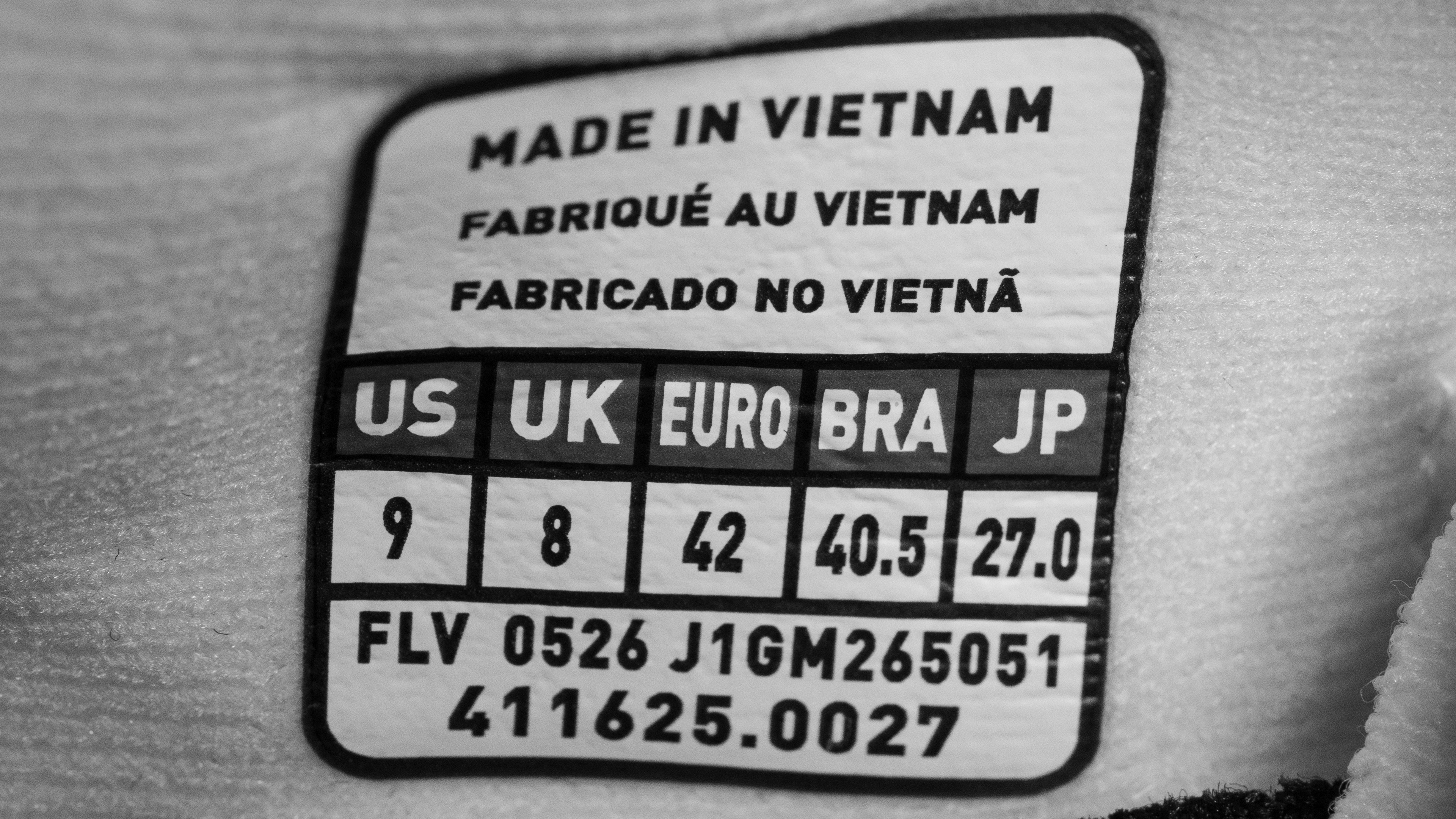
We tested the Mizuno Sky Prime in men's U.S. size 9, as indicated on the label of our unit. The colorway shown here is White/Orange. At the time of writing, Mizuno offers only one other men's colorway: Vulcan/Mirage Grey. Women get two separate colorways: White/Lime Pulp and Dark Slate/Icy Morn. This shoe isn't available in wide sizing for either gender. The design section applies specifically to the version we tested, but we expect other sizes and gender variants to perform similarly.