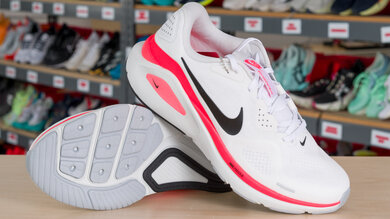
The Nike Structure 26 is a stability trainer with multiple elements designed to compensate for inefficient foot strike patterns. The shoe's support system is closer to older iterations of the Structure than its immediate predecessor (the Nike Structure 25), with a lateral heel guiderail and medial midfoot support to counter over- and under-pronation. Unsurprisingly then, the resulting ride feels like a classic stability shoe: smooth and steady but without much bounce or propulsion. The Structure 26 is the only shoe in Nike's current trainer lineup with a midsole composed entirely of ReactX foam, the injection-molded material used in combination with other compounds in the Nike Pegasus 41 and Nike Vomero 18. Although it's a stability shoe, the Structure 26 is accommodating for neutral strike runners as well, as evidenced by the fact that Nike's poster boy for the Structure 26 is 1500-meter Olympic gold medalist Cole Hocker.
Our Verdict
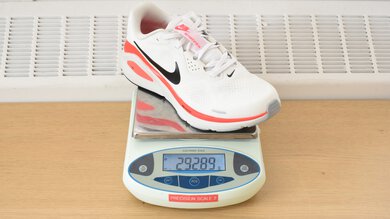
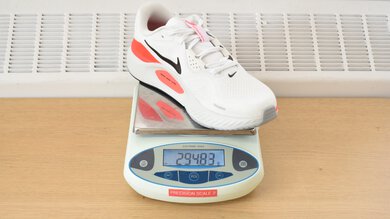
The Nike Structure 26 isn't a great choice for a marathon racing shoe. With its considerable weight and poor energy return, it'll weigh you down over long distances without giving much back.
Shoe is rather heavy.
Poor energy return.
The Nike Structure 26 is by no means a speedy shoe, and trying to run a fast race in these might feel something like trying to reach top speed on a bike with training wheels. The heavy construction and low energy return will make it difficult to pick up the pace.
Shoe is rather heavy.
Poor energy return.
Changelog
- Updated Sep 15, 2026: We've converted this review to Test Bench 0.12, which fixes how we measure firmness, a component of the Stability and 5K/10K Racing usages. There may be inconsistencies between the text and the scores for these usages, but the scores should still be considered valid. We've also brought back the Energy Return score and added two new usages: Daily Training and Long Run. To read more about the changes, see the changelog.
- Updated Sep 11, 2026: We've converted this review to Test Bench 0.11, adding two new rocker measurements to the Design section, and three new responsiveness tests to the Performance section. The Energy Return usage score has been replaced with Responsiveness. Check out the details in our changelog.
-
Updated Jun 26, 2026:
We've updated the Popular Comparisons section to include a link to the newly reviewed ASICS GT-1000 15.
- Updated Mar 25, 2026: We've converted this review to Test Bench 0.10, adding a new set of fit tests to the Design section and an overall fit performance usage. Check out the details in our changelog.
- Updated Nov 20, 2025: We've converted this review to Test Bench 0.9, which adds a Forefoot Long Run Cushioning test to our performance section. Read more in our changelog.
-
Updated Oct 21, 2025:
We've adjusted this review's writing to align with the new test bench, including updates to all usage scores and test boxes for Cushioning, Firmness, and Energy Return.
- Updated Oct 20, 2025: We've converted this review to Test Bench 0.8.2, which updates our methodology for the impact force range used in our compression tests to improve their accuracy. This also affects all usage and performance usage boxes using those compression tests as score components.
- Updated Sep 09, 2025: Review published.
- Updated Aug 28, 2025: Early access published.
- Updated Aug 06, 2025: Our testers have started testing this product.
- Updated Jul 14, 2025: The product has arrived in our lab, and our testers will start evaluating it soon.
- Updated Jul 04, 2025: We've purchased the product and are waiting for it to arrive in our lab.
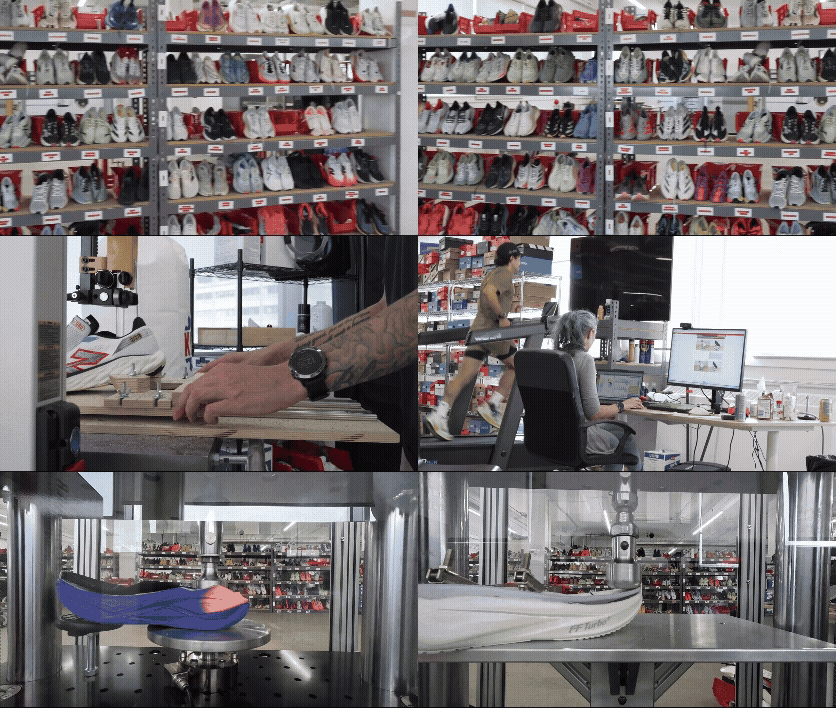
We've bought and tested more than 250 running shoes. Every pair purchased with our own money, never supplied or sponsored by brands. Our data-driven tests are designed to go beyond marketing claims, and since every shoe goes through the exact same methodology, you can directly compare results to find the right pair for your needs.
Test Results
Energy Return

Stability
The Nike Structure 26 is built to provide stability, and this is where it impresses. Guiderails on both sides keep the foot from rolling inward or outward, but they don't feel overly intrusive. The stiff, wide platform creates a very solid base for landing and push-off, ensuring that the foot keeps moving forward, instead of side-to-side.
Lateral heel guiderail corrects over-pronation.
Medial midfoot support corrects under-pronation.
Wide outsole platform.
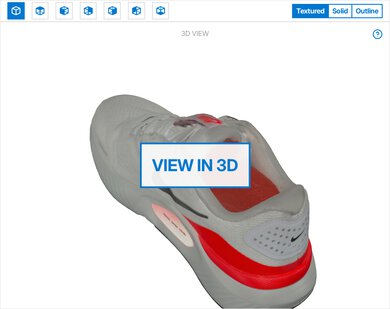

The heel of the Nike Structure 26 is rather firm, which, combined with the guide rails, facilitates very stable landings for heel strikers.

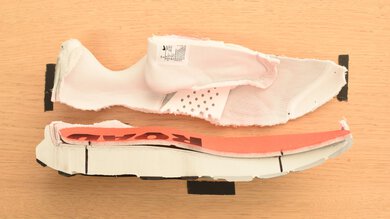
Cushioning
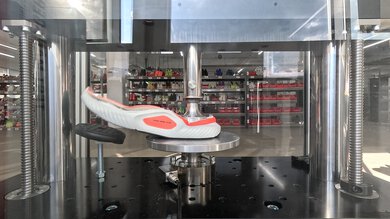
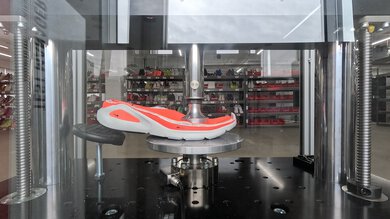
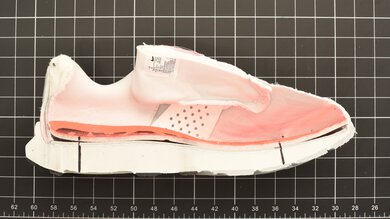
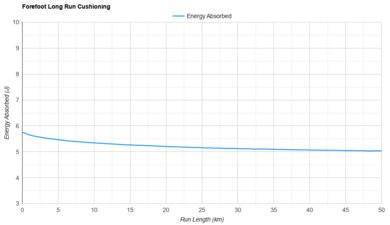
Overall, the cushioning in the Nike Structure 26 is not bad, although the heel is much better cushioned than the forefoot. The shoe feels soft when you step in, but this is due more to the padded upper than the midsole, which isn't the most absorbent.
Impact absorption is lacking.


Responsiveness
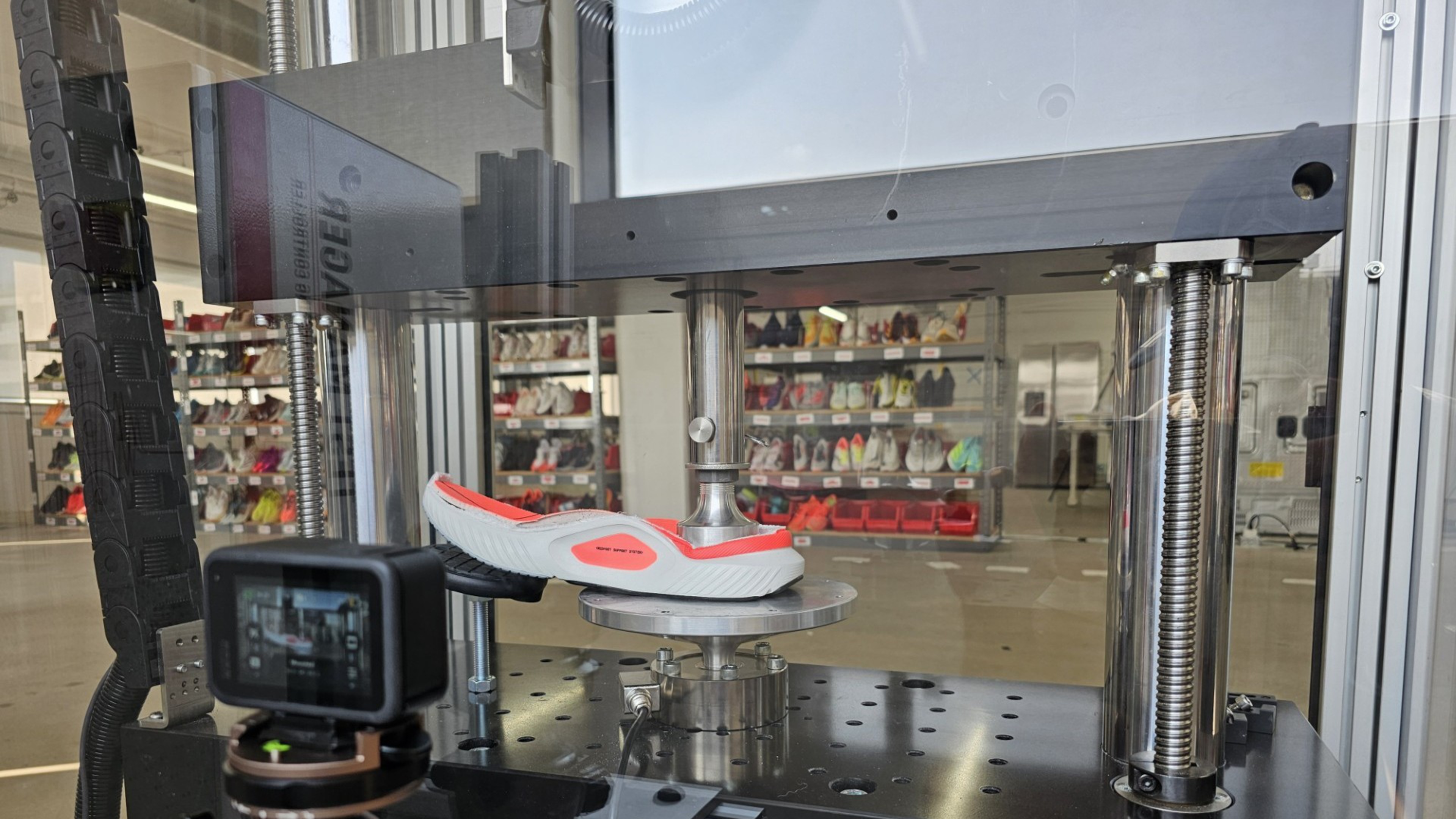
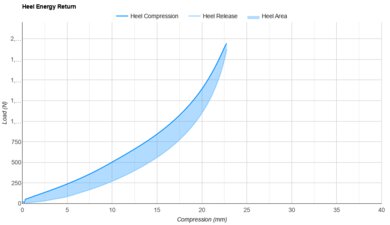
The Nike Structure 26 doesn't return energy well. The ReactX foam is lacking in bounce, and the design is more geared toward lateral stability than forward propulsion.
Poor energy return.


True To Size

Popular Running Shoe Comparisons
The Nike Structure 26 is a stability shoe designed for runners who require support and guidance with every foot strike during daily runs. Its support system relies on two guide rails: a lateral guide rail closer to the heel, which prevents the foot from rolling outward upon landing, and a medial rail closer to the midfoot to prevent the foot from rolling too far inward during transitions. This is essentially the same system used by the Brooks Adrenaline GTS 25 and the Saucony Hurricane 25, two other stability shoes that combine a wide base with sidewalls to prevent the foot from over- or under-pronating. The ASICS GEL-KAYANO 32 has similar features, but also adds a pod of bouncy foam to the medial side to help over-pronators return to a more neutral position. Runners who want a more bare-bones stability shoe that still offers impressive support should consider the ASICS GT-1000 15 instead.
The Structure 26 is the flagship stability trainer within Nike's lineup, and the brand's only shoe with dedicated support features for over- or under-pronators. The brand's daily trainer lineup is undergoing a reorganization, with the Structure positioned alongside the Pegasus series, which is their legacy lineup, and the Vomero series, which is the softer, more cushioned category. All three series are expected to follow a tiered model structure moving forward: a standard version (the Structure 26, Nike Pegasus 41, and Nike Vomero 18), a Plus version more ZoomX in the midsole ( the Nike Structure Plus, Nike Pegasus Plus, Nike Vomero Plus), and a Premium version built around a larger, wraparound Air Zoom unit (Nike Pegasus Premium and Nike Vomero Premium). Release dates for the Premium version of the Structure is currently unknown.
For more options, check out our recommendations for the best running shoes, as well as the best running shoes for men and the best running shoes for women.
The Nike Structure Plus and Nike Structure 26 share the same support-shoe DNA, but the Plus feels like a Structure on steroids in almost every way except outright support features. The Structure Plus sits higher and delivers more cushioning, using a top layer of ZoomX over its support platform to create a softer, more premium, more protective ride. The Structure 26, by contrast, uses a full ReactX midsole and stays lower to the ground, which gives it a classic support-trainer feel with a steadier, traditional sense of guidance. Even though both are in a similar weight range, the Structure 26 feels more grounded and support-focused, while the Structure Plus is the better fit if you want a more cushioned and balanced take on the category.
The Nike Pegasus 41 and Nike Structure 26 are contemporary iterations of two of the swoosh's most long-running shoe series. Both have undergone numerous updates over the decades without changing their respective identities: the Pegasus a daily workhorse, and the Structure a dedicated stability trainer. Neither is built for speed, but rather for reliably plodding through miles upon miles. For runners with a neutral stride, looking for a no-fuss trainer that can endure the daily grind, the Pegasus 41 is a solid option. For runners whose form breaks down easily or who have known pronation issues, the Structure 26 is a safe choice.
The ASICS GEL-KAYANO 32 and Nike Structure 26 are both stability shoes that use built-up sidewalls to keep runners' feet from under- or over-pronating. The GEL-KAYANO 32 has several extra features specifically targeting over-pronation, including a cut out in the bottom of the shoe meant to shift the weight of the shoe outward, and a pod of bouncier foam on the medial side designed to spring the foot back into neutral position faster. For the small percentage of runners who under-pronate, the Structure 26 would be a better choice, while over-pronators will get more support from the GEL-KAYANO 32.
The Nike Structure 26 and HOKA Arahi 8 are both stability trainers that use sidewalls on both sides of the shoe to support either over- or under-pronators. Neither is particularly fast or bouncy, but while the Structure 26 focuses on stability above all else, the Arahi 8 makes some concessions for comfort, with softer cushioning, including in the guide rails.
The Nike Structure 26 and ASICS GEL-KAYANO 31 are two classic stability shoes that are among their respective brands' oldest series. The GEL-KAYANO 31 has more stability-focused design elements, including a harder block of foam in the midfoot for arch support, and a softer pod of foam on the lateral side, designed to spring over-pronators back into a more neutral position; the Structure 26, meanwhile, mostly relies on guide rails on both sides of the shoe to stabilize the foot. The ASICS shoe is heavier and higher stacked than the Nike shoe, with much worse energy return.
The Saucony Hurricane 25 and Nike Structure 26 are both stability trainers that rely on a classic combination of a wide outsole and guide rails along the footbed to correct over- or under-pronation. But the Hurricane 25 has several more modern innovations designed to correct over-pronation, including a dual-density arrangement of foam under the heel with a higher concentration of denser foam on the medial side to prevent inward rotation. A cutout on the lateral side of the Hurricane 25 acts as a corrective measure for over-pronation, but also makes the ride much more fluid. With its softer cushioning, the Saucony shoe feels like a modern trainer that provides support for over-pronators, while the Structure 26 feels like a classic stability shoe.
The ASICS GT-1000 15 and Nike Structure 26 are both support shoes from their respective brands, but they have a few important distinctions. The ASICS is the much lighter and slightly taller of the two, feeling more nimble on foot. The Nike shoe uses traditional guide rails to achieve its support, and though it offers more protection underfoot, in the big picture, it's still only mediocre. With both delivering comparable stability overall, it largely comes down to whether you're willing to pay a premium for the Nike shoe's extra cushioning.
The Nike Structure 26 and On Cloudrunner 2 are stability trainers that target slightly different but overlapping areas of the foot. The primary stability features in the Cloudrunner 2 are focused on the heel, including a stiff heel clip, and mild sidewalls in the rearfoot. The Structure 26 also has a (more pronounced) lateral sidewall close to the heel, but the support on the medial side extends further into the midfoot than the Cloudrunner 2. The Cloudrunner 2 is somewhat lighter and better cushioned, but has much worse energy return than the Structure 26.
Differences Between Sizes And Variants
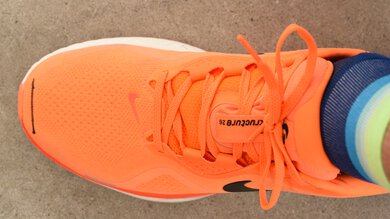
We bought and tested the Nike Structure 26 in men's US size 9, as noted on the label for our pair. The pair we purchased is the White/Bright Crimson/Photon Dust/Black. This shoe is available in a variety of other colorways, depending on the region, including Black/Cool Grey/Metallic Silver/White for both men and women, and Hyper Pink/Pink Spell/White/Black | Particle Pink/Taupe Grey/Silt Red/Metallic Rose Gold | White/Barely Green/Mint Foam/Black, and White/Pure Platinum/Black for women. The men's version is available in Total Orange/Total Crimson/Chalk/Black | Light Armory Blue/Ashen Slate/Football Grey/Diffused Blue | White/Pure Platinum/Barely Volt/Black | Black/Iron Grey/Black, and Summit White/Vast Grey/College Grey/Black.
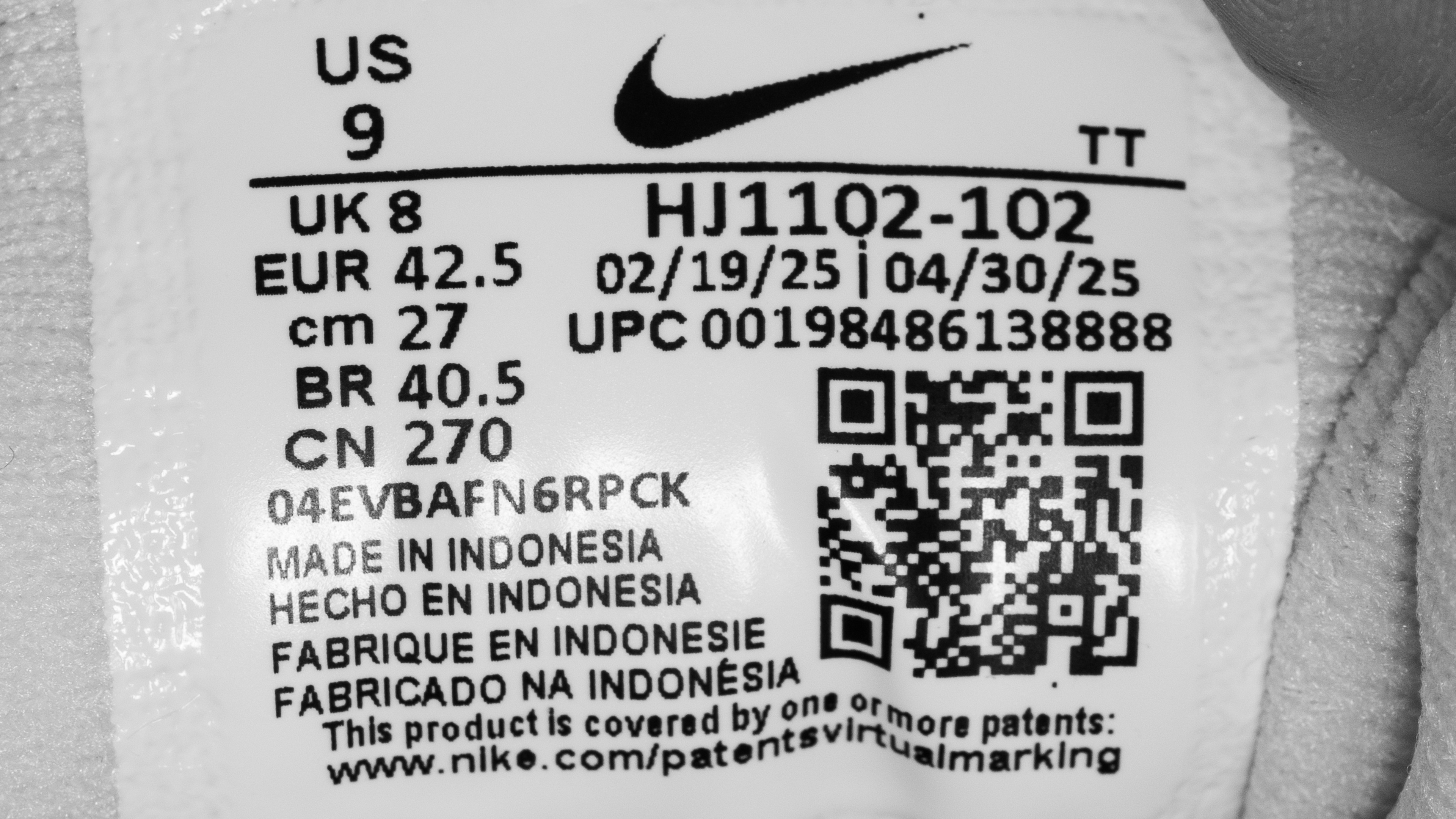
The Structure 26 is available for women in regular width (B) and extra wide (2E), and for men in regular width (D) and extra wide (2E).
The design section applies only to the exact model we tested, but we expect other sizes and gender variants to perform similarly.