Since 2022, QD-OLED technology has taken the display world by storm, and TVs utilizing it are frequently at the top of our list of the best OLED TVs. But what is QD-OLED? As Samsung's answer to OLED technology, these TVs deliver the same inky blacks we've all come to expect from OLED displays, but with much brighter, more vibrant colors. But just what are they exactly, and should you consider buying one?
Test results
What Is QD-OLED?
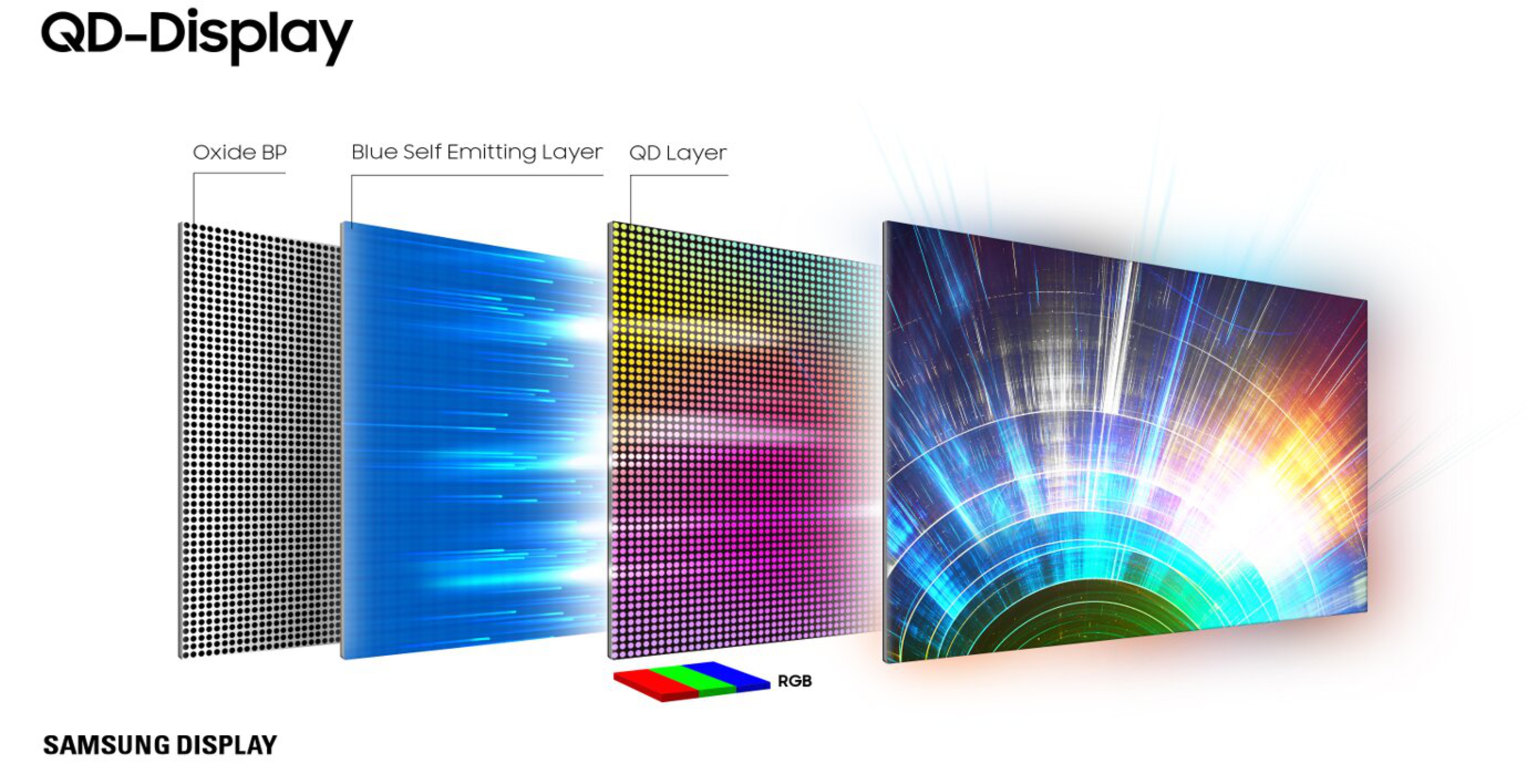
QD-OLED is a new approach to OLED technology that was first introduced in 2022. Up until 2022, all OLED TVs on the market used WOLED panels made by LG Display instead. Like WOLED panels, QD-OLED TVs use multiple stacks of light-emitting OLED materials. Unlike LG OLED's WOLED panels, which produce white light at the source, QD-OLEDs produce blue light. This blue light then passes through a layer of red and green quantum dots.
Quantum dots are a special material that can "convert" light from one wavelength to the next. Red and green quantum dots absorb the blue light from the self-emitting layer and then re-emit that light as green and red. Unlike WOLED panels, which work by simply blocking the unwanted portions of light in each red, green, and blue subpixel with a color filter, this conversion process is extremely efficient, and the emitted light is extremely precise. We'll get into the benefits of this later, but keep this in mind, as this precision is one of the core strengths of QD-OLED technology, and it's what sets it apart from WOLED panels. Check out our QD-OLED vs WOLED article if you want to learn more about the differences between these two technologies.
How Do QD-OLEDs Perform?
So now that we've explored the basics of how QD-OLED panels work, let's talk about how they perform so you can have a better idea of what to expect. The good news is, unlike other panel types like VA and IPS, there's actually very little difference in how QD-OLEDs perform. Samsung Display has continued to evolve the technology since it was first introduced, so the newer panels are a bit better, but the differences are mostly pretty minor. To explore QD-OLED performance, we'll take the Sony BRAVIA 8 II OLED as an example, as it uses the latest QD-OLED panel as of 2025, which is known as EL 3.0.
Dark Scene Performance
 |
 |
 5% Std. Dev. 0.579% 5% DSE 0.117% |
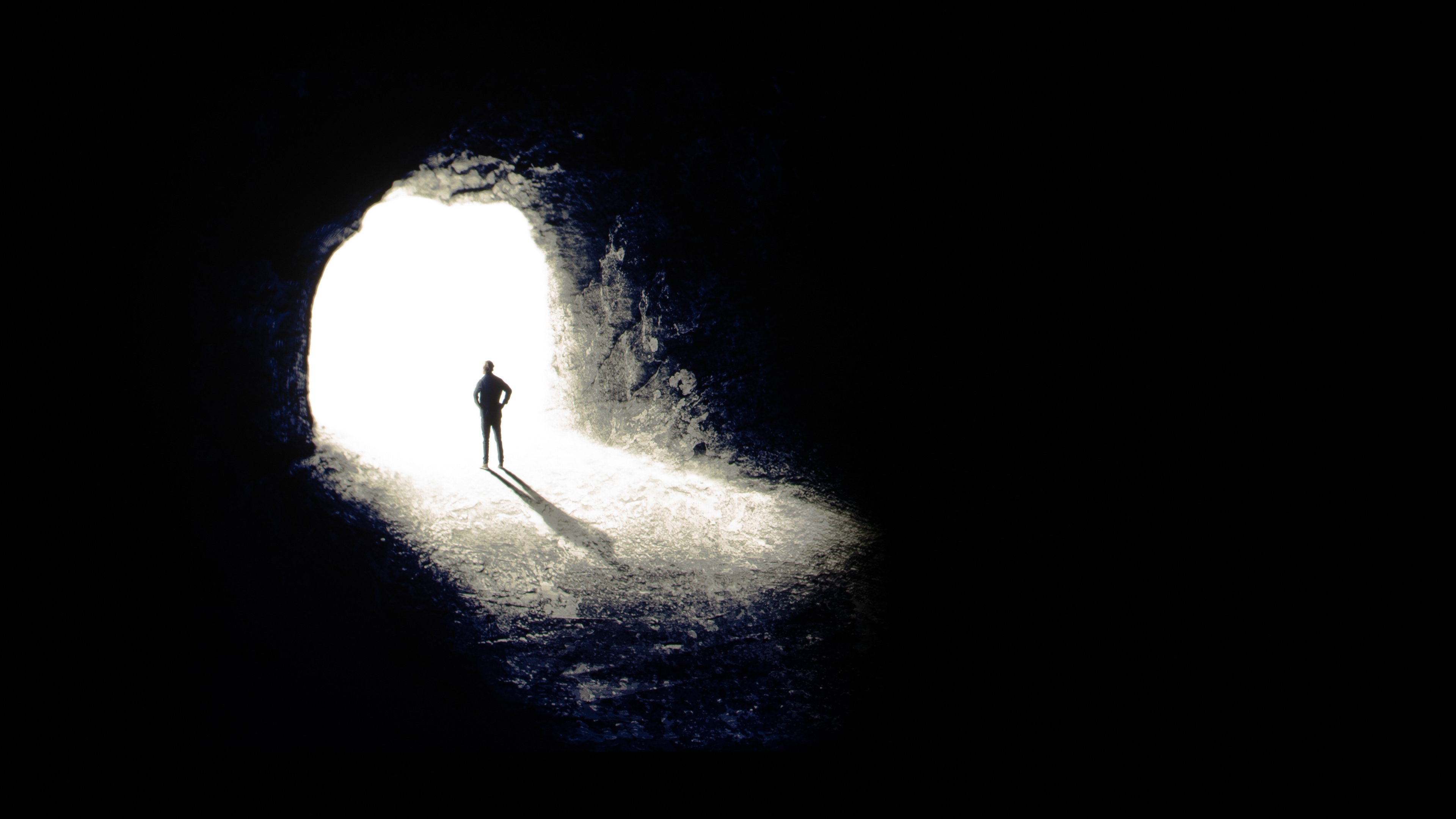
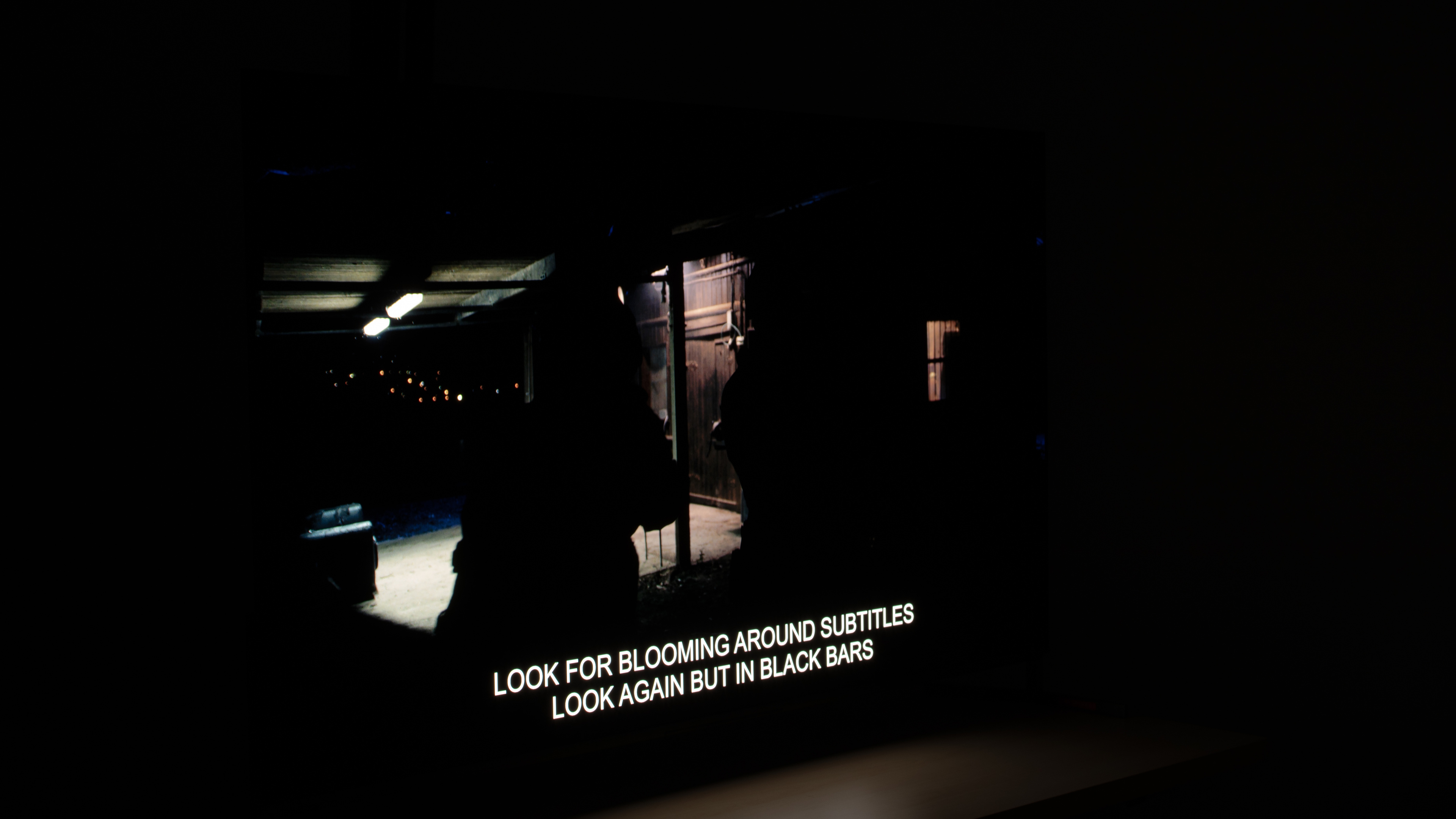
When watching TV in the dark, there are a few different performance metrics that are important. Contrast, lighting zone precision, and black uniformity are a few of the most important. The good news is that all QD-OLEDs have perfect contrast, as long as you're in a dark room. There isn't a hint of haloing around bright highlights, and blacks are deep, inky, and perfectly uniform. There's absolutely no variation between units, either, so if you care about a dark room experience, QD-OLEDs look amazing in that environment. Black uniformity is a bit more varied, but it's still extremely good across all QD-OLED TVs.
Brightness
| Samsung S85F OLED | Sony BRAVIA 8 II OLED |
|---|---|
 |
 |
 |
 |
 |
 |
| Test | Samsung S85F OLED (cd/m²) | Sony BRAVIA 8 II OLED (cd/m²) |
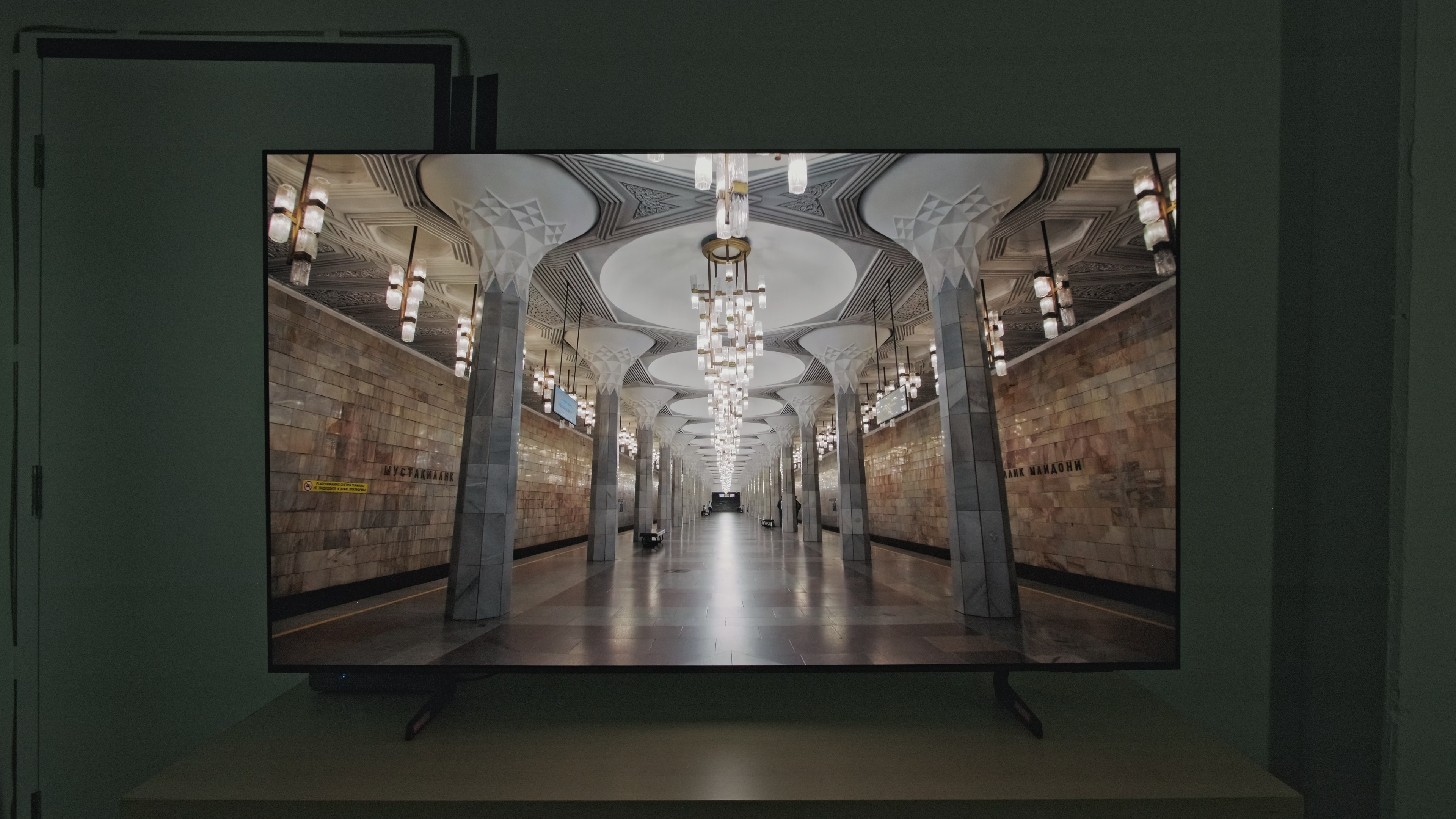
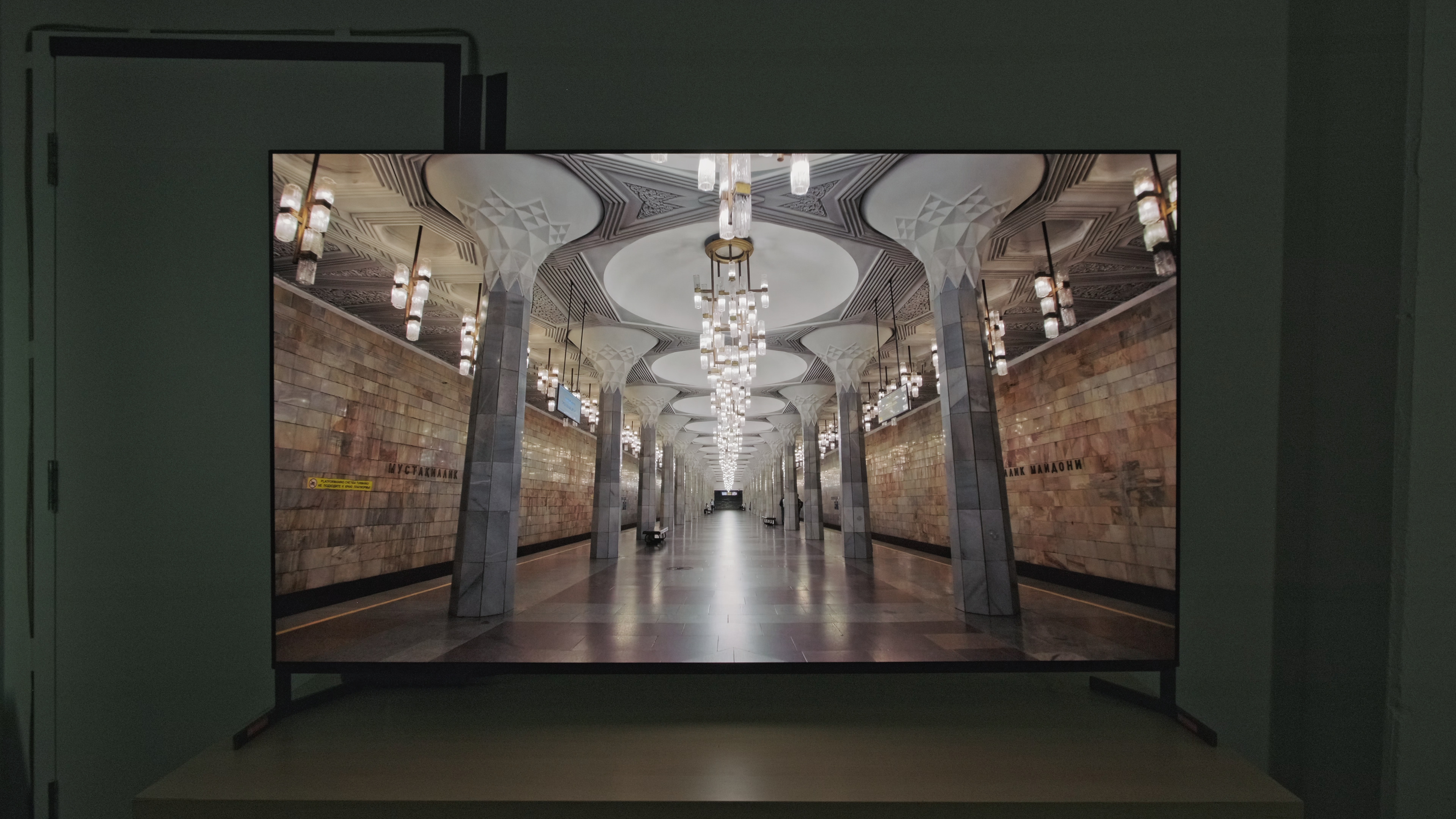
| Hallway Lights (~1950 cd/m²) | 561 | 1,072 |
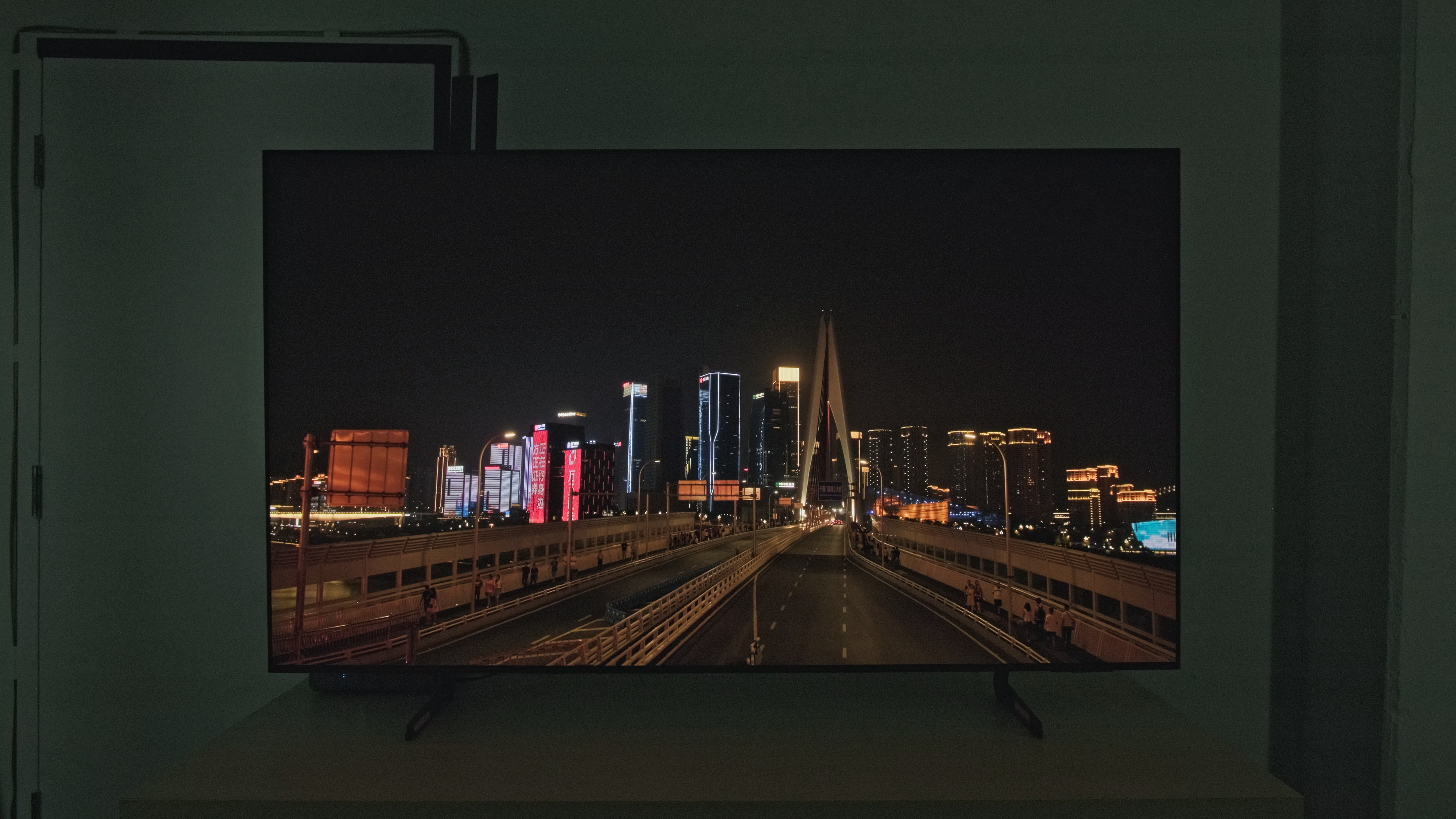
| Yellow Skyscraper (~700 cd/m²) | 500 | 712 |
| Landscape Pool (~300 cd/m²) | 195 | 246 |
| Peak 2% Window | 758 | 1,873 |
| Peak 10% Window | 754 | 1,561 |
| Peak 25% Window | 543 | 758 |
| Peak 50% Window | 281 | 430 |
| Peak 100% Window | 149 | 245 |
| Sustained 2% Window | 703 | 1,596 |
| Sustained 10% Window | 749 | 912 |
| Sustained 25% Window | 512 | 594 |
| Sustained 50% Window | 270 | 421 |
| Sustained 100% Window | 147 | 239 |
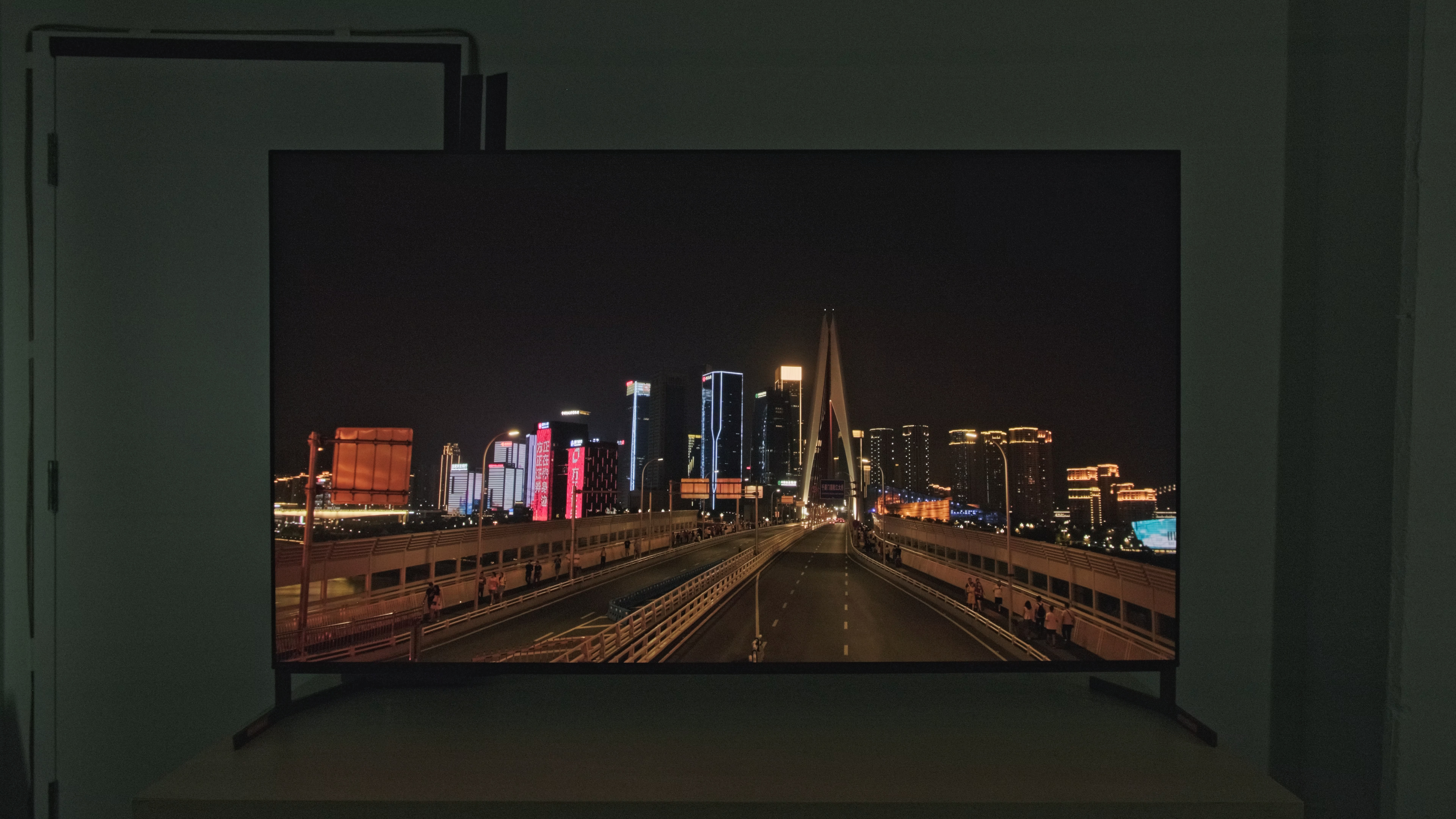
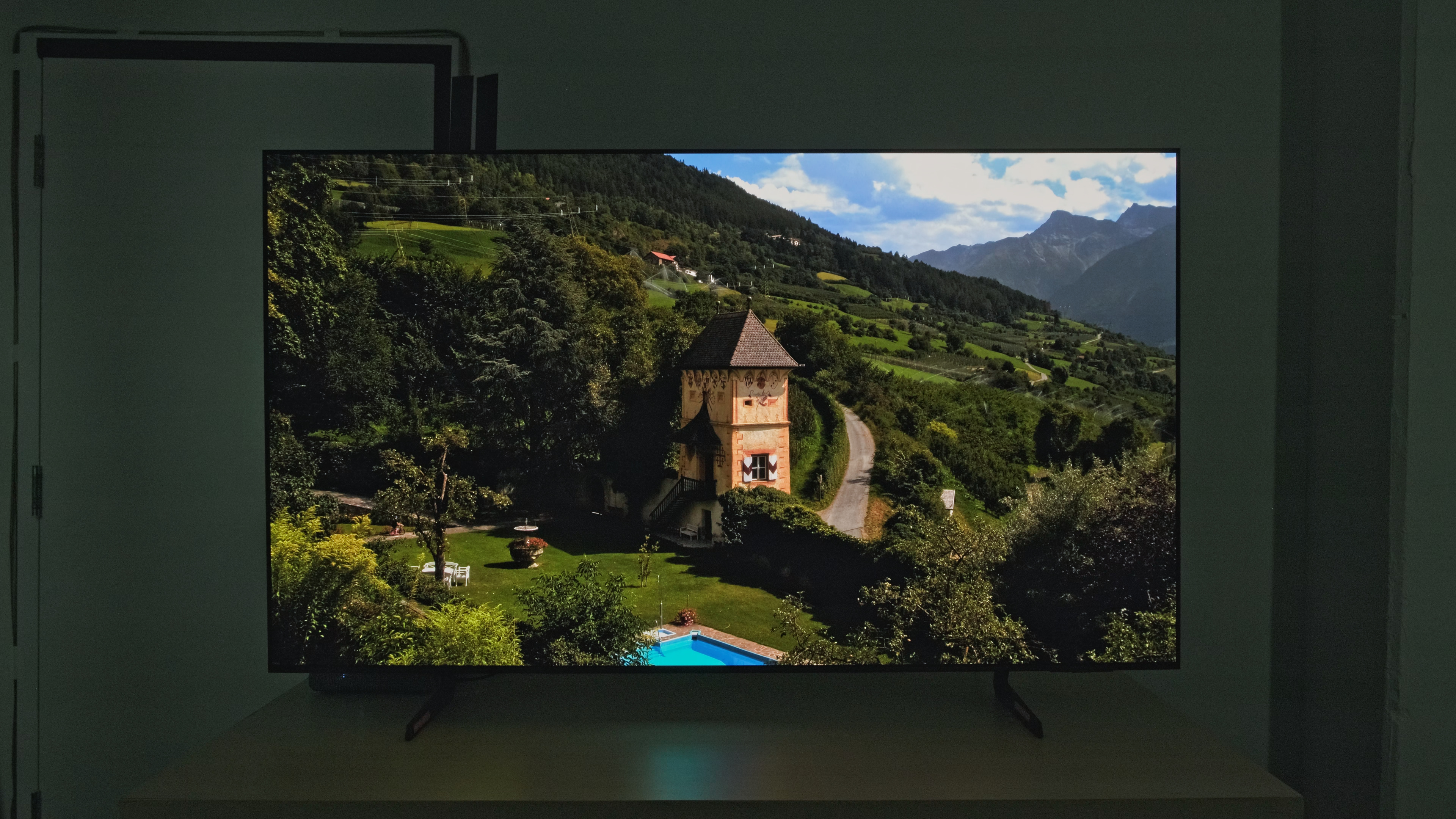
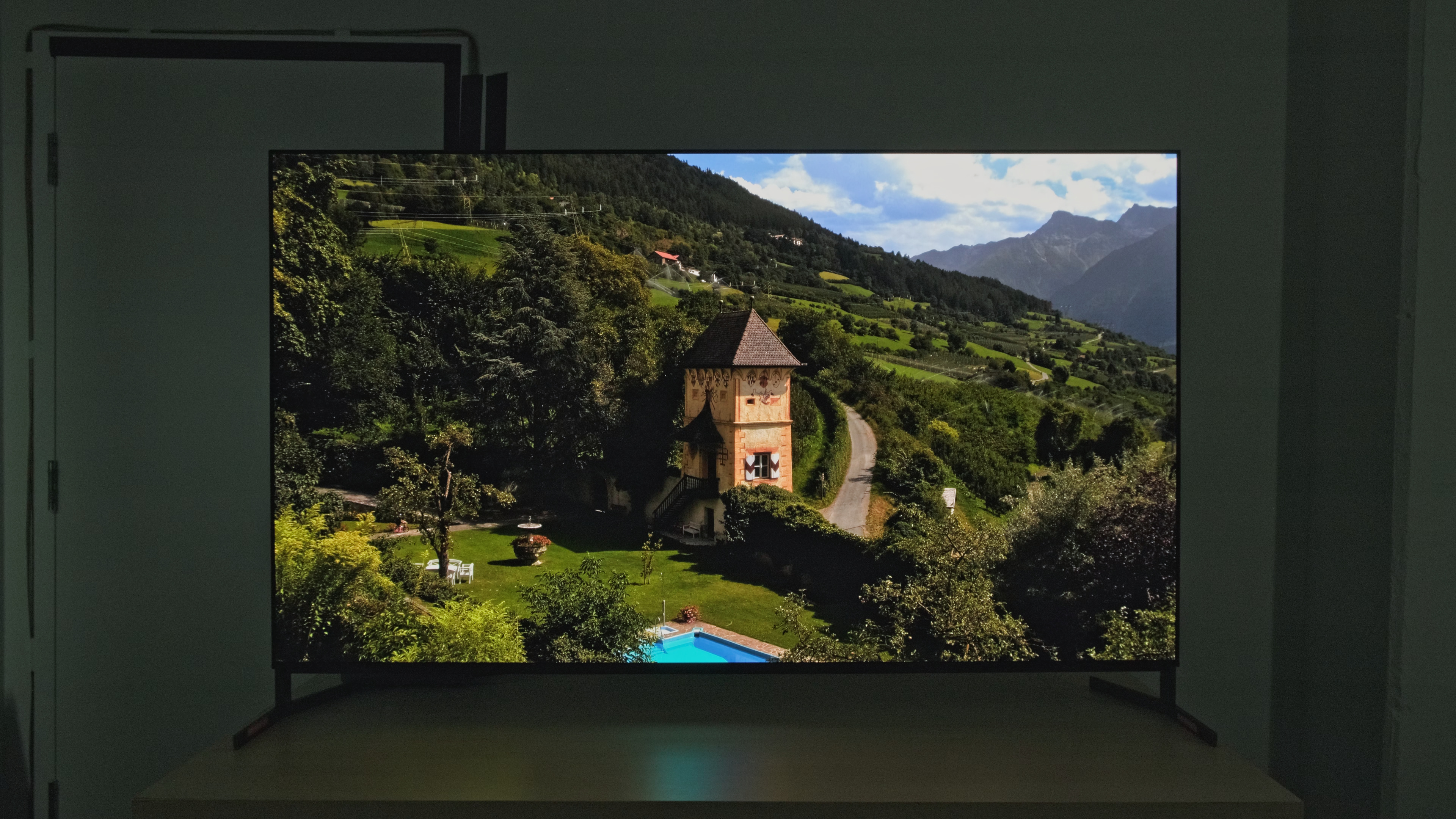
For brightness, we'll take a slightly different approach, as there are multiple generations of QD-OLED panels on the market, and the exact performance you get depends on the model. The Samsung S85F OLED and the Sony BRAVIA 8 II OLED are both 2025 releases, but the Sony uses the latest generation of QD-OLED panel, known as EL 3.0, while the Samsung uses an older model. As you can see, there's a considerable difference in brightness between them. The Sony is able to boost bright highlights incredibly high, so bright specular highlight details in HDR stand out a lot better than they do on the Samsung.
Combined with QD-OLED's incredible contrast, both models deliver an incredibly impactful HDR experience. Colors are vibrant and realistic, with lush greens and deep blues that most other display technologies simply can't reproduce. It's not all perfect, though, and both TVs struggle with very bright scenes where most of the screen is lit up, as you can see in the 50% and 100% window measurements. This is a well-known limitation of OLED technology, but newer models are getting a lot better. The Samsung S95F OLED uses the same EL 3.0 panel as the Sony, and Samsung has tuned that model to give even higher peak brightness, especially with 50% and 100% windows.
Colors
 |
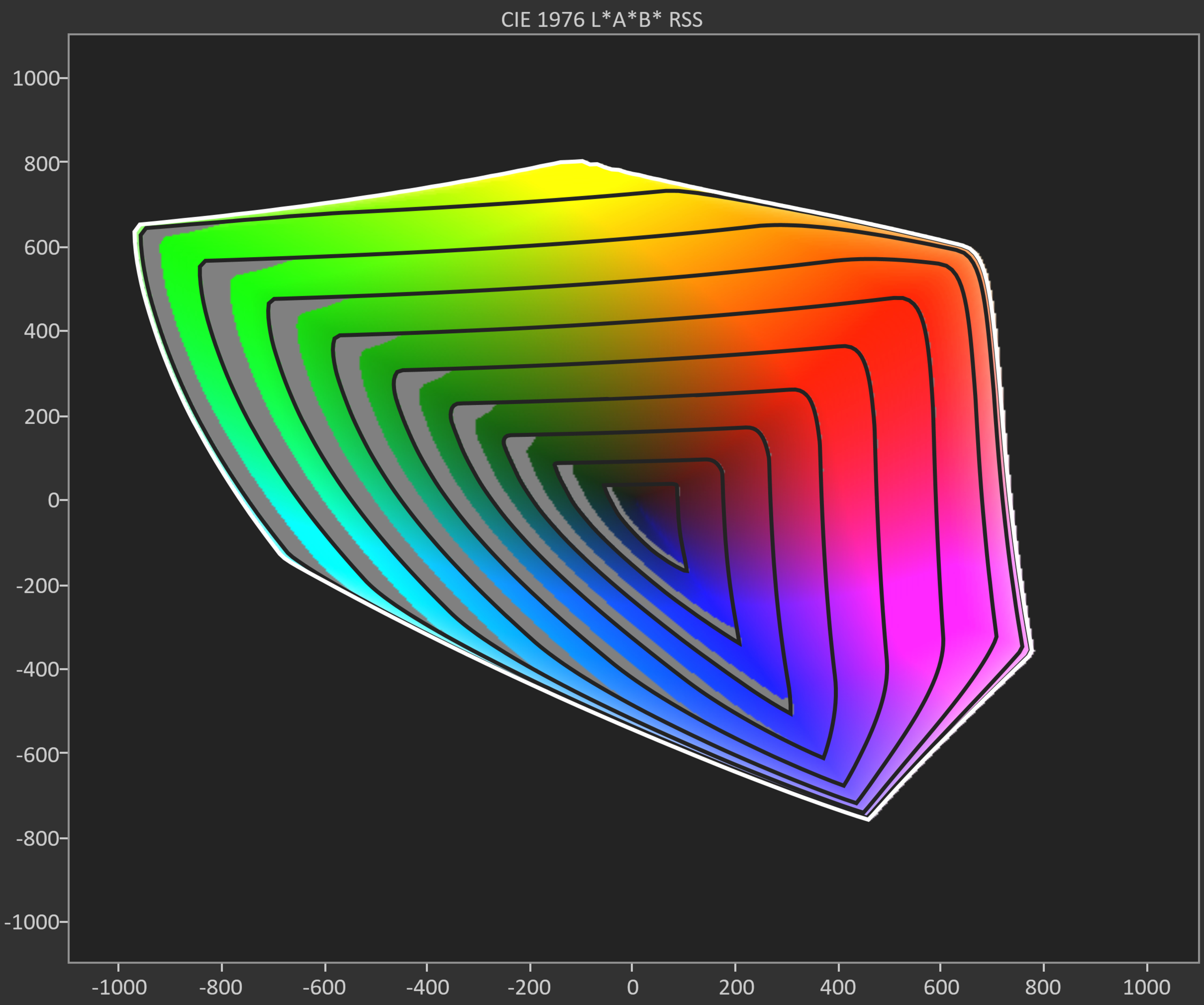 |
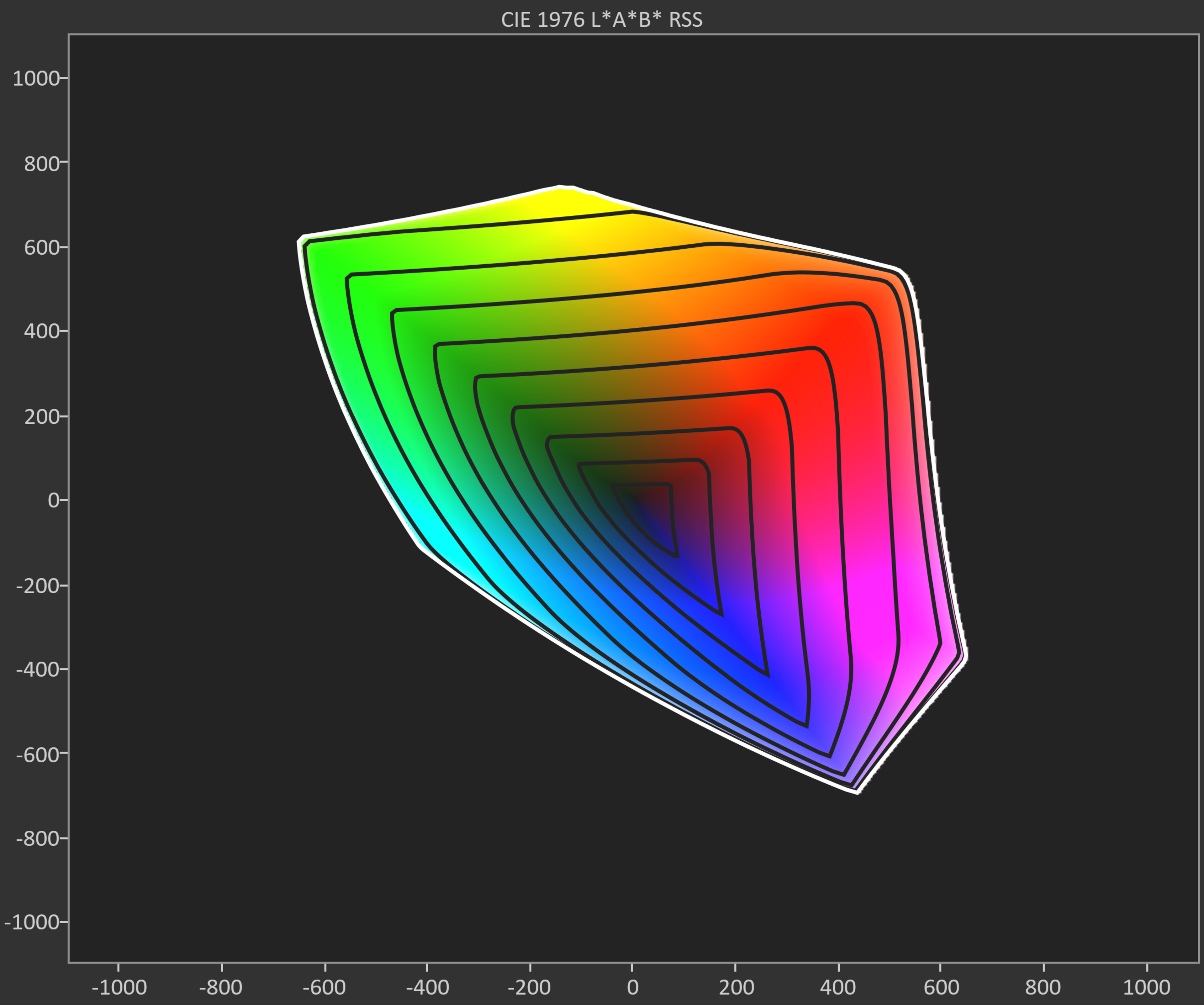
There are many different ways to evaluate a TV's ability to produce colors. Our SDR color volume approach looks at the range of colors that a TV can display, breaking it down into easy-to-understand slices. This test focuses on SDR, which is what you'll find on most DVDs, Blu-rays, and cable TV channels. Each slice shows a different range of lightness, so you can see how well the TV performs in both bright and dark scenes. The gray areas on each slice show areas where the TV can't produce colors that are as saturated as they should be.
As you can see in the example of the Sony BRAVIA 8 II above, it has nearly perfect coverage of the DCI-P3 color space. This is the most commonly used color space in HDR content, so even though this test is done in SDR, it gives us a good idea of what to expect in HDR as well. You can learn more about the differences between them in our HDR vs SDR article. Coverage of the wider BT.2020 color space on the Sony TV is still fantastic, but it struggles to display the most saturated greens across all lightness levels.
Overall, TVs with QD-OLED panels produce the most vivid, saturated colors of any TV technology on the market in 2025. Nothing else even comes close, including QLED TVs. The only TVs on the market at the time of publishing that exceed 80% coverage of the widest BT.2020 color space are all QD-OLED panels.
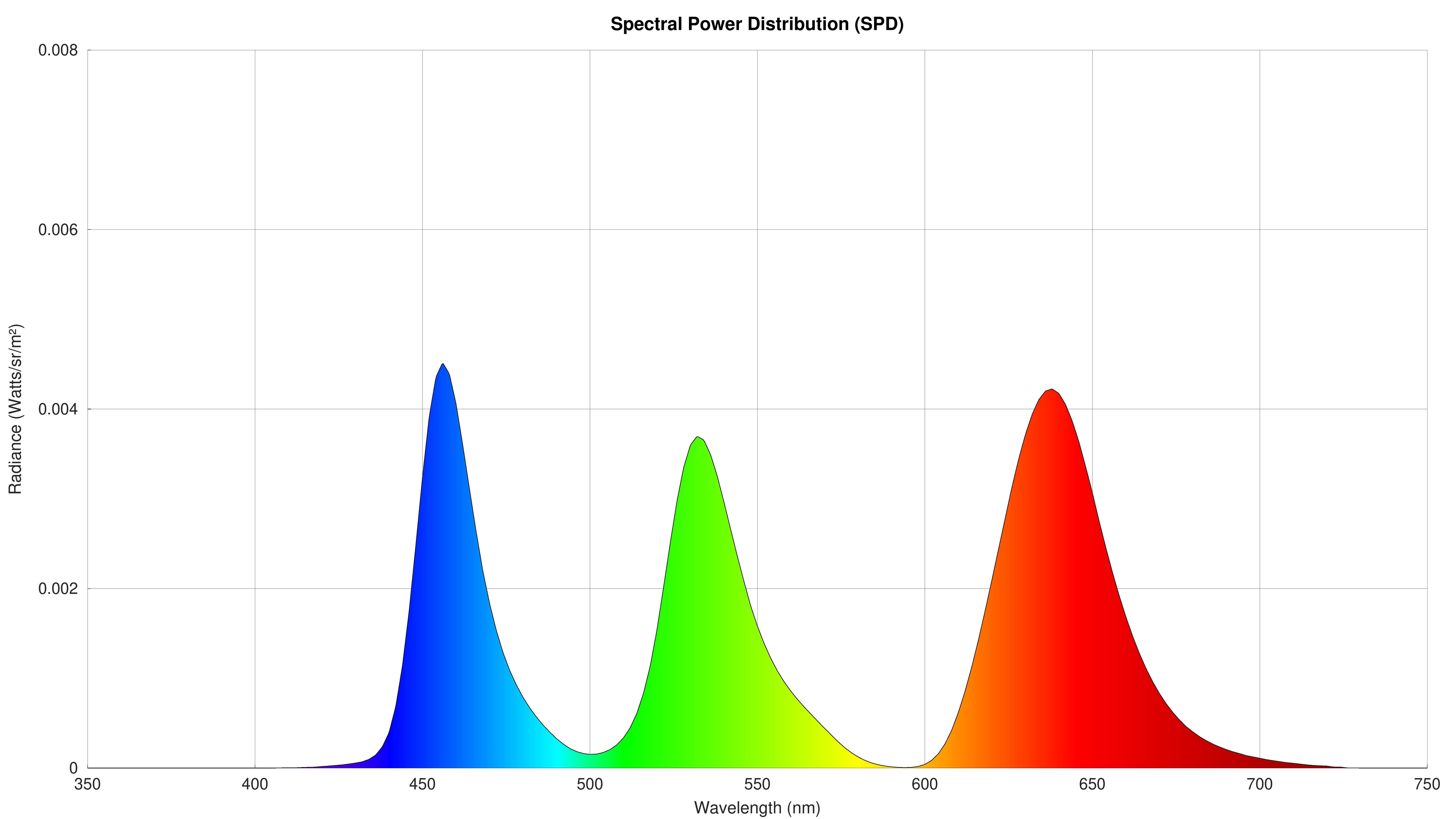
Why is that, though? One tool we can use to evaluate a TV's performance is the spectral power distribution, which shows us how powerful the light output is across all wavelengths of visible light when the TV is displaying pure white. A TV's ability to display pure colors is directly related to the purity of each of the three spikes. These narrow peaks with almost no noise mean that when the TV wants to display pure green, for example, it's only outputting green light, with very little yellow or cyan noise that would reduce the purity.
Viewing Angle
A wide viewing angle on a TV is important if you have a wide seating arrangement or like to move around the room while the TV is playing. A TV with a good viewing angle indicates that the image remains consistent even when you're looking at it from the sides of the room. It's also important if you like to sit close to the screen, as the sides of the screen will look different on a TV with a poor viewing angle.
Thankfully, all QD-OLEDs have an incredible viewing angle. The image remains incredibly consistent as you move to the sides, as you can see in the above video with the Sony BRAVIA 8 II OLED. This makes them a great choice for a wide seating arrangement, as everyone will see the same thing, even if you're nearly perpendicular to the screen.
Ambient Black Level Raise

Unfortunately, all QD-OLEDs have the same flaw that may or may not be a deal-breaker for you. In a bright room, their black levels rise considerably, significantly reducing contrast. This is true of all QD-OLEDs on the market, as they all lack a polarizing layer, so there's nothing you can do about it. The above test image shows the impact of this issue in a moderately lit room. Believe it or not, that's a pure black slide on the Sony BRAVIA 8 II OLED. TVs with WOLED panels also show raised blacks in a bright room; in fact, almost all TVs do to some extent, but it's not nearly as bad.
Motion Handling
 |
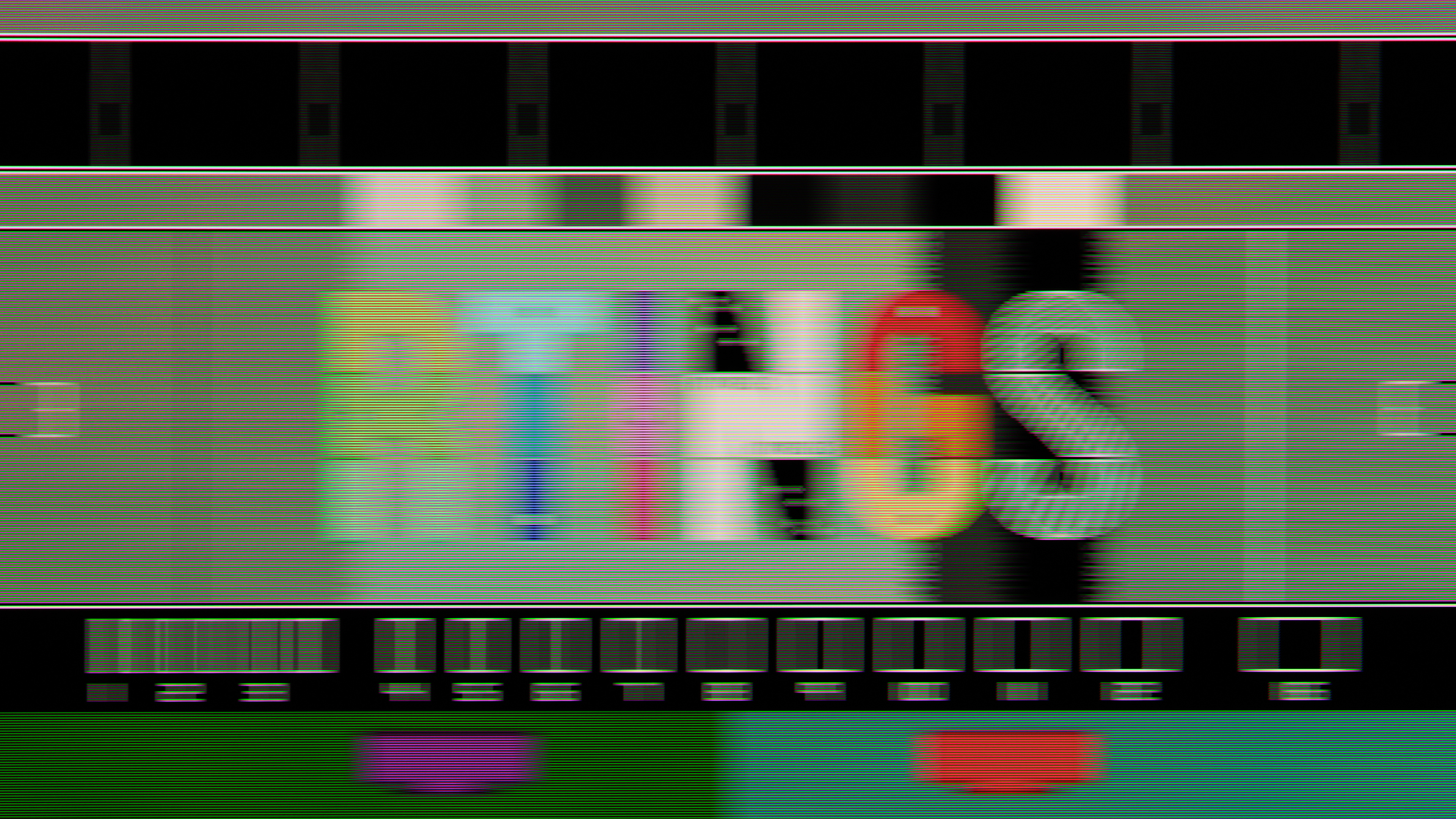 |
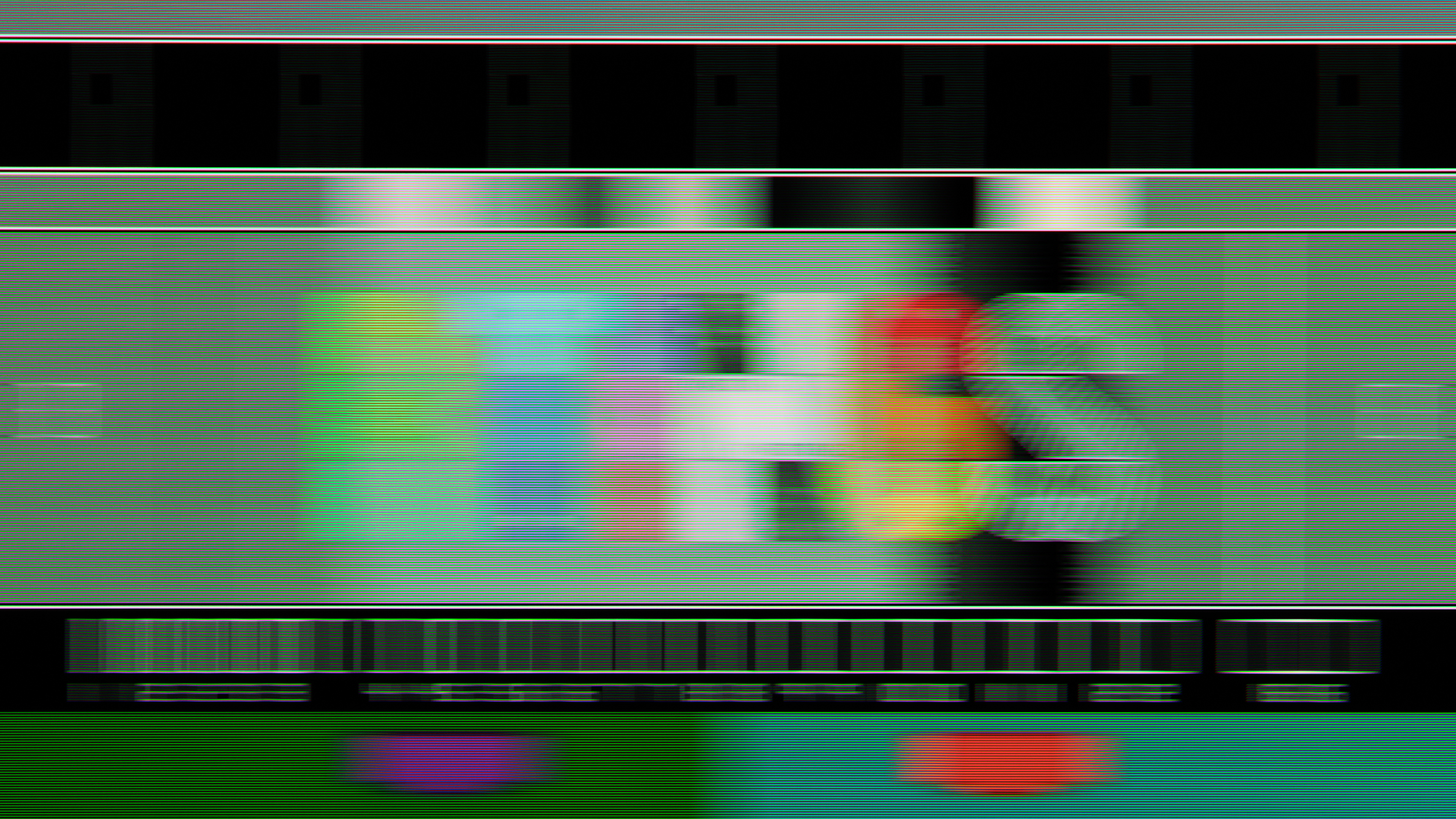
A TV's response time metric tells us how quickly the image can change from one shade to the next. A fast response time is important if you watch content with fast-moving objects, like in action movies or sports. A slow response time results in more noticeable motion blur behind fast-moving objects, and you might see other artifacts like overshoot or inverse ghosting. Having a fast response time isn't perfect for watching movies, either, as it also causes stutter and persistence blur.
All QD-OLED displays have a nearly instantaneous response time. This means that pixels can fully transition from one shade to another extremely quickly. This is both good and bad. When watching fast motion, this eliminates motion blur and motion artifacts like overshoot and inverse ghosting, making them a fantastic choice for sports fans or for gaming. On the other hand, this also causes noticeable stutter when watching low frame rate content like shows or movies, and the long frame hold time causes noticeable persistence blur, as you can see in the pursuit photos above.
Compared to Other Display Technologies
How do QD-OLED displays compare to other technologies, like QLED or WOLED?
QD-OLED vs QLED
QLED is mainly a marketing term used to describe LED TVs that employ some form of wide color gamut technology. This wide gamut technology is often very similar to the quantum dot materials used with QD-OLEDs, so they both usually have very good colors. There are some significant differences between them, too. QD-OLEDs have much deeper, inkier blacks, making them the better choice for a dark home theater room. You won't see any distracting halo effect around bright highlights or raised blacks with a QD-OLED. Read more about QD-OLED vs QLED panels.
QD-OLED Vs WOLED
QD-OLED and WOLED panels have many of the same strengths and weaknesses. Both technologies deliver incredibly deep, inky blacks in a dark room. QD-OLEDs stand out for their brighter, more vivid colors, so they're the better choice for things like anime or nature documentaries that often take advantage of wider HDR color spaces. While both technologies have incredibly wide viewing angles, QD-OLEDs also have an edge there, as their image remains incredibly consistent even at a very wide viewing angle. QD-OLEDs also have one major flaw compared to WOLEDs: they lack a polarizer, making QD-OLEDs look worse in a bright room, with noticeably raised blacks and a purple tint. Learn more about the differences between QD-OLED and WOLED.
Conclusion
QD-OLEDs aren't without their flaws, but since their introduction in 2022, they've consistently delivered top-tier performance and are among the best TVs in the market. While they offer many of the same strengths as traditional WOLED panels, their vivid colors and incredibly wide viewing angles make them an excellent choice for just about any usage.
Identifying QD-OLED Panels
If you're in a store and you're trying to figure out which TVs use QD-OLED panels, the easiest way is to try to take a picture of the subpixels with your phone. It takes practice, but if you lean one side of your phone gently on the screen and hold the camera side about an inch from the screen, you should be able to see the individual subpixels. Unlike other technologies like VA or IPS, it's usually pretty easy to identify QD-OLED panels by the pixel structure itself.
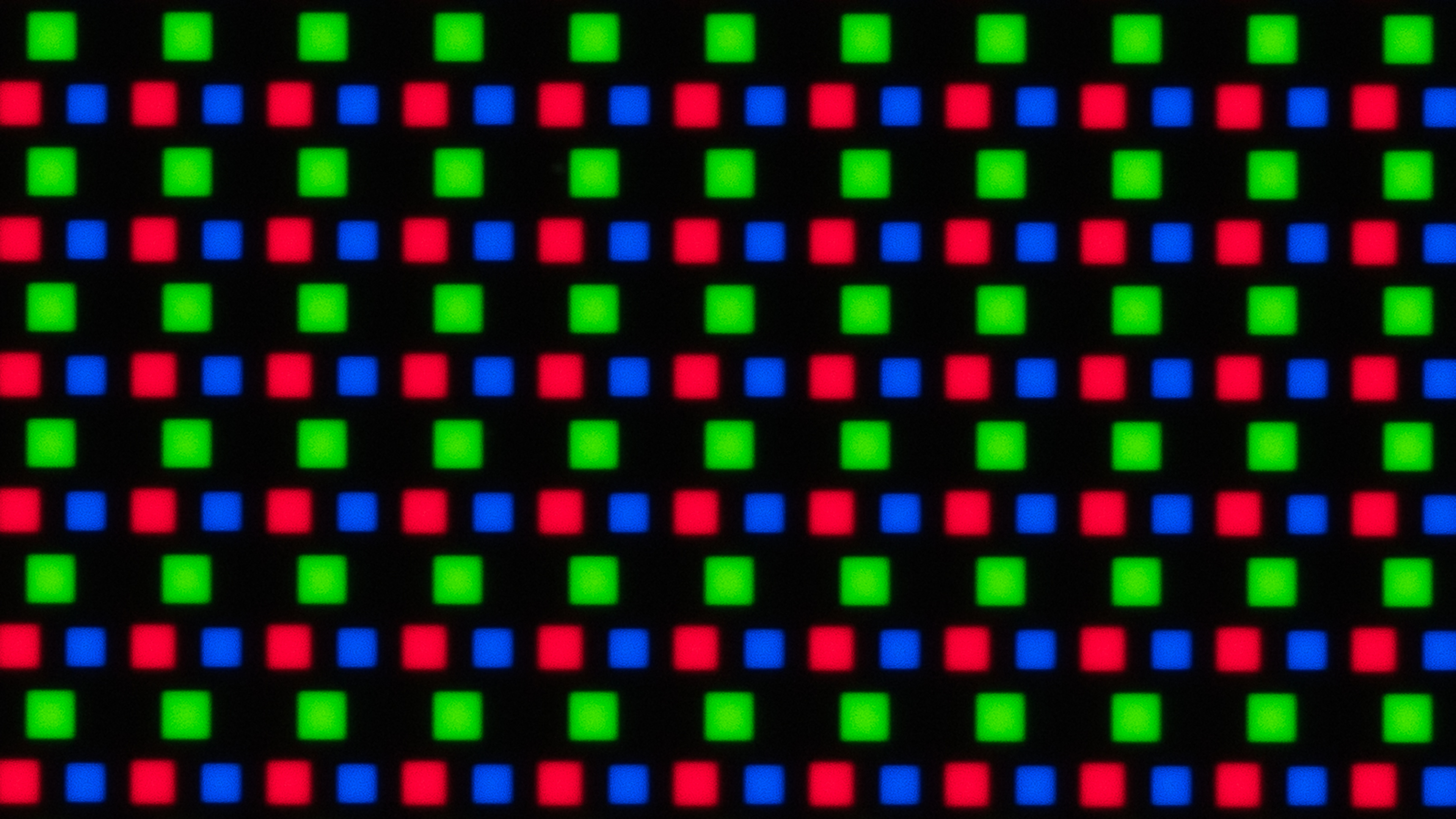
As you can see, QD-OLED panels have a very unique pixel structure. Instead of red, green, and blue subpixels forming a line for each row of pixels, they're arranged in a triangular shape, with green at the top and red and blue underneath. This is usually incredibly easy to spot with a phone camera, and even if you can't get a shot as clear as our macro photo above, you should be able to instantly spot this triangular structure. If the pixels are all in a row, it's not a QD-OLED. There have been multiple revisions to QD-OLED panels over the years, like the new 5-layer tandem panel found on the Samsung S95F OLED, but these haven't changed the overall pixel structure.