CrinEar Daybreak  Headphones Review

Reviewed Nov 18, 2025 at 09:20am
Tested using Methodology v2.0 
CrinEar Daybreak
6.8
Sports And Fitness 
7.4
Travel 
5.4
Office Work 
4.2
Wireless Gaming (In Development) 
6.2
Wired Gaming (In Development) 
7.7
Audio Reproduction Accuracy 
7.8
Noise Isolation 
0.0
Microphone (In Development) 
 1

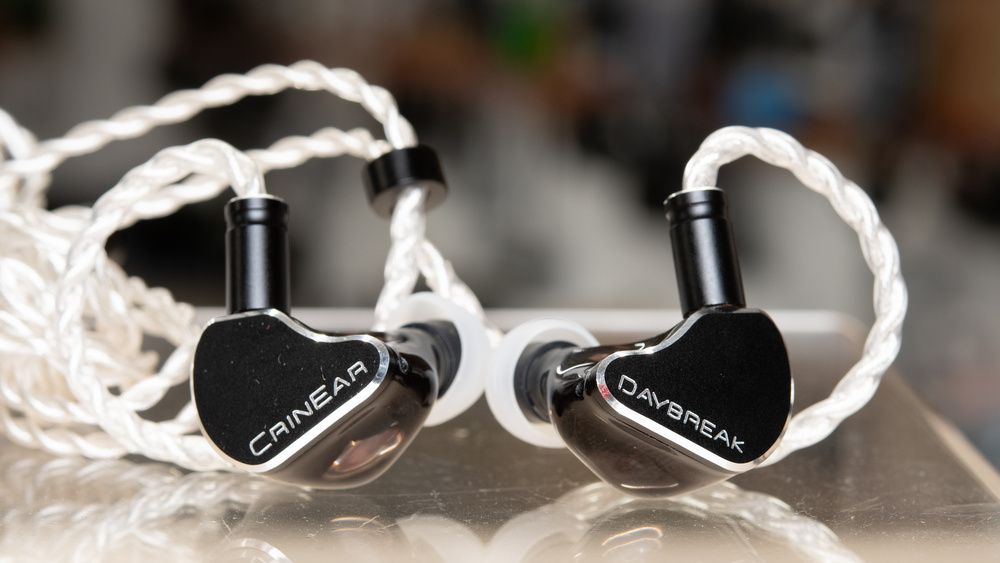
The CrinEar Daybreak are headphones influencer Crinacle's latest entry in his quest to ensure you get a pair of IEMs for every tuning without totally maxing out your credit card. These are made of molded resin with a detachable cable and your choice of hot-swappable balanced or standard mini jacks. Inside, they house a hybrid driver configuration featuring balanced armatures, micro-planar tweeters, and dynamic drivers to reproduce your audio, tuned to the 2025 IEF Target frequency response curve, which is the main appeal of these in-ear monitors (IEMs).

Our Verdict

6.8
Sports And Fitness 

The CrinEar Daybreak are okay for sports and fitness use. Bolstered by their compact and stable design, these IEMs can stay in-ears, even if you move around. That said, they lack sweatproofing, waterproofing, and dust resistance, so their resiliency may be compromised under more extreme conditions. Similarly, their wired design isn't necessarily an issue, but it leaves the cable vulnerable to equipment snags and requires having your audio player or smartphone with you to plug the cable into. Additionally, the absence of in-line controls means that skipping a track also requires your device. Still, they feel comfortable and render your music with a good amount of bassy oomph without overwhelming the mids and treble.

Pros
  • Comfortable and stable in-ear fit.

Cons
  • No IP rating.

7.4
Travel 

The CrinEar Daybreak are decent for travel. These wired-only IEMs offer relief from battery monitoring, but their passive design comes with limitations, such as the absence of a transparency mode to toggle on for convenience when hearing flight announcements or bus stops. They also lack a microphone or in-line controls. However, they're comfortable and very portable, but you'll need a device with a headphone jack; however, it makes plugging into supported flight entertainment consoles effortless. Despite the absence of noise cancellation, their foam ear tips provide a substantial degree of noise isolation, particularly of high-pitched noises. Still, they don't block out much low engine rumble. They're also tuned to have a balanced sound, which suits a variety of genres and media content.

Pros
  • Comfortable and stable in-ear fit.

  • Balanced tuning with consistent sound between listening sessions.

  • Great noise isolation for a passive design.

Cons
  • No microphone.

  • Slightly chunky design may be harder to fit in small ears.

  • No in-line remote.

5.4
Office Work 

The CrinEar Daybreak are disappointing for office work. They lack the usual benefits of active and wireless designs, such as active noise cancelling, controls, and a microphone. However, if you don't have many online meetings to attend or use an outboard mic, their portable design, comfortable fit, and the fact that you don't need to charge them is pretty appealing and fuss-free. While their passive isolation doesn't address a wide spectrum of environmental noises, including HVAC systems, and you can't easily toggle to a transparency mode, their foam ear tips still provide a solid buffer from high-pitched sounds and talkative coworkers. Additionally, their sound reproduces your audio with a good balance of lows, mids, and a clear top end, making them suitable for all kinds of media.

Pros
  • Comfortable and stable in-ear fit.

  • Great noise isolation for a passive design.

Cons
  • No microphone.

  • Slightly chunky design may be harder to fit in small ears.

  • No in-line remote.

4.2
Wireless Gaming (In Development) 

The CrinEar Daybreak are wired-only IEMs and can't be used for wireless gaming.

6.2
Wired Gaming (In Development) 

The CrinEar Daybreak are not bad for wired gaming. They don't have a mic or in-line controls, which limits their flexibility, but for solo gaming, they deliver a balanced sound, allowing you to catch the excitement of the action while also making out dialogue. Since these IEMs are passive-only, they don't offer any of the extra software features that many gaming headsets include, so any tweaks to the sound require third-party apps. That said, their passive design doesn't demand battery charging, and they feel comfortable to wear, if you're content with the deeper in-ear fit. Still, their in-ear fit design also means they don't interact with your outer ear, so they don't necessarily provide the same degree of immersion as over-ears, although they're very well-matched for a stable stereo image.

Pros
  • Comfortable and stable in-ear fit.

  • Balanced tuning with consistent sound between listening sessions.

Cons
  • No microphone.

  • Slightly chunky design may be harder to fit in small ears.

7.7
Audio Reproduction Accuracy 

The CrinEar Daybreak are very good for audio reproduction accuracy. These IEMs are tuned to follow the 2025 IEF Target curve, so their measurements don't perfectly match our target. Their tuning is smooth and balanced, though, with full bass, even mids, and treble that's slightly de-emphasized compared to our target. The L/R are very well-matched to create a stable stereo image, and their frequency response consistency provides a predictable listening experience from one day to the next. Their hybrid driver design reproduces your audio with very low harmonic distortion, ensuring that there are no unwanted artifacts that color your sound.

7.8
Noise Isolation 

The CrinEar Daybreak have very good noise isolation performance. They're passive-only, so their noise-isolating properties are determined by how well they fit and which ear tips you use. With the foam ear tips, they block a very impressive amount of bright, trebly environmental noises, but their effectiveness tapers off with lower-pitched sounds, which is natural for this type of design. Even so, for IEMs with no active noise cancelling tech, they're good for instances where you need zero latency and to isolate your surroundings.

0.0
Microphone (In Development) 

The CrinEar Daybreak don't include a microphone.

8.8
Frequency Response Consistency 

The CrinEar Daybreak have excellent frequency response consistency. Once you've found the correct ear tip size, these IEMs deliver your audio sounding virtually the same between listening sessions.

  • 6.8
    Sports And Fitness
  • 7.4
    Travel
  • 5.4
    Office Work
  • 4.2
    Wireless Gaming (In Development)
  • 6.2
    Wired Gaming (In Development)

  • Performance Usages

  • 7.7
    Audio Reproduction Accuracy
  • 7.8
    Noise Isolation
  • 0.0
    Microphone (In Development)
  • 8.8
    Frequency Response Consistency
  • Changelog

    1.  Updated Nov 18, 2025: Review published.
    2.  Updated Nov 10, 2025: Early access published.
    3.  Updated Oct 16, 2025: Our testers have started testing this product.
    4.  Updated Aug 21, 2025: The product has arrived in our lab, and our testers will start evaluating it soon.

    Check Price

    Black/SilverDaybreak
    SEE PRICE
    Amazon.com
    Black/SilverDaybreak
    B&H
    Black/SilverDaybreak
    BestBuy.com
    Black/SilverDaybreak
    Walmart.com

    Differences Between Sizes And Variants

    The CrinEar Daybreak come in one color, 'Black & Silver.' Earlier units, like ours, include different silicone ear tips than those included with later units. Newer models have the ear tips that came with our set, and also four pairs of silicone 'shortwide'-style ear tips, so this could affect some performances, as with any ear tip swap.

    If you come across another variant, let us know in the comments, and we'll update the review.

    Popular Headphones Comparisons

    The IEM market is rife with competitors, but Crinacle (of the CrinEar Daybreak) has carved out a corner by catering to audiophiles with moderately priced models and promises of different tunings to appeal to a variety of sound profile preferences. And really, the tuning is the main reason you'd buy these over, say, the TRUTHEAR x Crinacle ZERO: RED or TRUTHEAR x Crinacle ZERO. They're a relatively more affordable alternative to the limited-run CrinEar Project Meta. Other than tunings, the Daybreak have a semi-modular design with interchangeable headphone jacks (3.5 mm or 4.4 mm), which we've also seen on the upscale THIEAUDIO Monarch MKIII. Meanwhile, depending on your tastes, you might prefer the smaller housings of the, albeit less flashy, Sennheiser IE 200, or the Harman-curve inspired MOONDROP Blessing 3.

    If you want to complement your new IEMs with worthy cans, check out the best audiophile headphones and the best wired headphones. If you want to cut the strings, check out the best in-ear headphones.

    MOONDROP Blessing 3

    Whether you'll prefer the MOONDROP Blessing 3 or CrinEar Daybreak is largely determined by your preferred frequency response tuning, given that both are well-made IEMs. The MOONDROP are tuned with a somewhat brighter treble, while the CrinEar have a little more bass and a warmer low-treble. With the foam ear tips, the CrinEar also have better noise isolation and their semi-modular design includes a balanced jack, in addition to a standard 3.5mm. The MOONDROP are perhaps a little more upscale in look and feel, but neither come across as feeling cheap whatsoever.

    TRUTHEAR HEXA

    The CrinEar Daybreak and TRUTHEAR HEXA are very similar IEMs. Depending on whether you prefer the slightly brighter tuning of the TRUTHEAR or the slightly fuller sound of the CrinEar, either is worth the pick up, but they're not drastically different-sounding. Both are neck and neck with noise isolation using the foam ear tips. The CrinEar is a little more refined in terms of build quality and harmonic distortion performance, but realistically, you wouldn't notice a difference in distortion for everyday listening.

    MOONDROP x Crinacle DUSK

    One of the defining differences between the MOONDROP x Crinacle DUSK and the CrinEar Daybreak is that the DUSK can be used via USB and includes an app with controls and mic. In contrast, the Daybreak are analog audio-only, though they offer you either a standard 3.5 mm connection or a 4.4 mm balanced connection. The DUSK are more flexible for different usages, but it comes down to which tuning you like best. These have a warmer top-end and more sub-bass thump, while the Daybreak have a brighter treble and a more even bass. Additionally, the Daybreak's foam ear tips isolate you from noise more effectively. Neither is better exactly, but they're different beasts with different people in mind.
    FIIO FT1

    The FIIO FT1 are closed-back over-ears, and the CrinEar Daybreak are in-ear monitors, so first you need to decide which style makes the most sense for you. The FIIO have a warmer sound profile due to their extra boost in the low-end, but their frequency response consistency is notably worse, which is pretty common for over-ears. They're comfortable, but finicky with glasses. The CrinEar have a much better frequency response consistency, leading to a similar-sounding balanced tuning between listens. They're better built and more stable, but their in-ear design can feel invasive compared to over-ears. They also block out noise more effectively with their foam ear tips, but the FIIO interact with your outer ear, which gives a closer approximation to listening to an angled speaker.

    Overhauling Our Audio Measurements And A New Multi-Curve Graphing Tool
    Overhauling Our Audio Measurements And A New Multi-Curve Graphing Tool

    We've upgraded our Headphones Test Bench to 2.0! This update brings several key changes to our tests and usages, making it easier than ever to interpret our sound results based on your personal preferences. You'll also find a brand-new interactive graph tool featuring multiple targets (including our own!) for you to explore and compare.

    For a full breakdown, check out our changelog, which includes detailed commentary from our test designer explaining the rationale behind our update.

    We'd also love to hear your thoughts: your feedback helps us keep improving, so join us in the comments!

    Test Results

    perceptual testing image
    Sort:
    RATINGS
    Category:
    All
    Sound
    Sound Profile
    See details on graph tool
    Normalization Frequency
    450 Hz
    Bass Amount
    Slightly Emphasized (2 dB)
    Treble Amount
    Slightly Underemphasized (-2 dB)
    Sound Signature
    Balanced

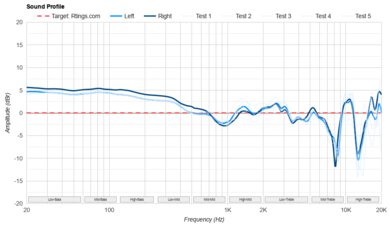
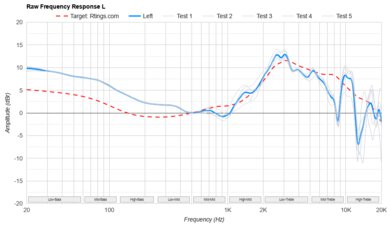
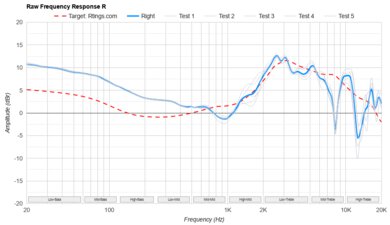
    Using the included foam ear tips, the CrinEar Daybreak follows our curve well with a slightly boosted bass, a mildly scooped mid-range, and a slightly dulled, yet open top-end. In all, the sound profile is balanced.

    Since their frequency response is based on the IEF Preference 2025 curve, they don't approximate any of our roster of target curves available in the graph tool for comparison. However, they share some similarities with aspects of the curves, like the extra bass and even mids, as in the Harman IEM target curve. Their curve also bears some resemblance to a more dramatic version of the SoundGuys.com Headphone Preference Curve.

    We also measured these with the included silicone ear tips, so you can compare the sound to the foam ones. After our pair arrived, CrinEar began including 'shortwide' silicone ear tips, which are similar to the Coffee KBEAR 4540, a popular go-to aftermarket ear tip.

    8.8
    Frequency Response Consistency
    See details on graph tool
    See details on graph tool
    Std. Deviation
    0.53 dB

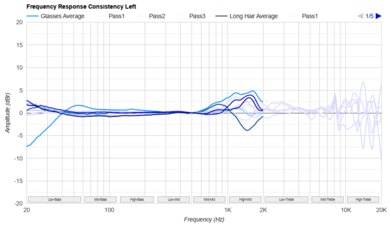
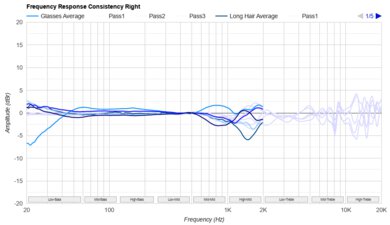
    The CrinEar Daybreak have amazing frequency response consistency with the included foam ear tips. These IEMs sound virtually the same from one listening session to the next.

    Raw Frequency Response
    See details on graph tool
    See details on graph tool
    9.6
    Bass Profile: Target Compliance
    See details on graph tool
    RMS Deviation From Target
    1.7 dB
    Low-Frequency Extension
    20 Hz
    Low Bass
    2.31 dB
    Mid Bass
    1.06 dB
    High Bass
    0.72 dB

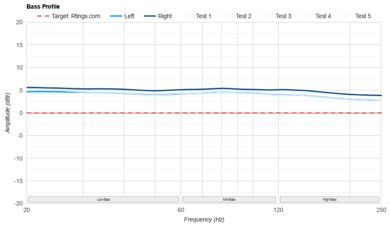
    The CrinEar Daybreak have fantastic bass profile target compliance. Bass is overemphasized across the range, but not so much as to overwhelm other higher frequencies.

    9.5
    Mid-Range Profile: Target Compliance
    See details on graph tool
    RMS Deviation From Target
    0.89 dB
    Low Mid
    1.09 dB
    Mid-Mid
    -0.07 dB
    High Mid
    0.86 dB

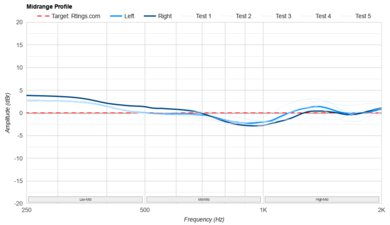
    These have remarkable mid-range target compliance. They're tuned with a very slight dip in the center of the mid-range and a gentle emphasis on the low-mids and high-mids, leading to even and clear melodies and voices. As a result, tracks like That's Us/Wild Combination by Arthur Russell sound even and clear on the vocals, sparse keys, and cello.

    8.5
    Treble Profile: Target Compliance
    See details on graph tool
    RMS Deviation From Target
    2.91 dB
    Low Treble
    -0.02 dB
    Mid Treble
    -3.99 dB
    High Treble
    -4.18 dB

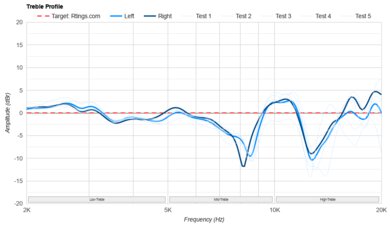
    The treble target compliance is excellent. The low-treble aligns very well with our curve for articulate vocals. Meanwhile, the rest of the treble is mostly under-emphasized, which slightly dulls elements like cymbal harmonics. The high-treble has narrow peaks that add brightness and sparkle to upper harmonics, yielding a somewhat more open sound.

    8.5
    Peaks/Dips
    See details on graph tool
    Peaks
    0.87 dB
    Dips
    1.33 dB

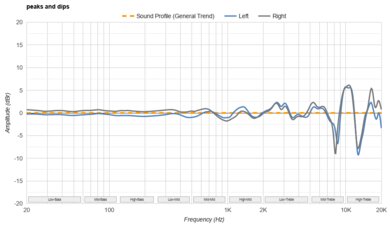
    The CrinEar Daybreak demonstrate amazing peaks and dips performance. Most of the bass and mids are totally even and smooth. In the treble range, a low peak adds relative extra detail on vocal harmonics. Meanwhile, the rest of the treble has either extra brightness on peaks or narrow dips that weaken clarity, depending on the pitch.

    7.9
    Stereo Mismatch
    See details on graph tool
    See details on graph tool
    Weighted Amplitude Mismatch
    0.50 dB
    Weighted Frequency Response Mismatch
    0.97 dB
    Weighted Phase Mismatch
    0.8°

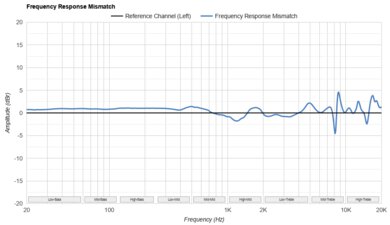
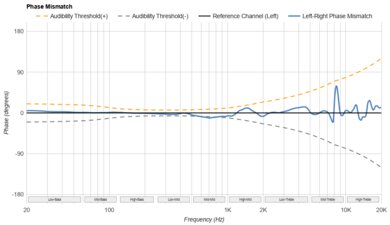
    The CrinEar Daybreak have very good stereo matching. The L/R of these IEMs are tightly matched in amplitude and frequency response, ensuring that the stereo image doesn't significantly tilt to one side. Although there's a mismatch in the high-treble range in frequency response and phase, it's quite subtle and not noticeable during everyday listening, as it's quite trebly, above many people's hearing sensitivity. That said, these results can vary across different units of the same model, so yours may perform differently.

    8.0
    Group Delay
    See details on graph tool
    Weighted Group Delay
    0.8 ms

    These IEMS have excellent group delay. Their timing falls below the threshold of audibility, indicating that each frequency is well-defined. Because of the lack of notable fluctuations in timing, they don't bleed into neighboring frequency bands.

    0.0
    PRTF
    PRTF Accuracy (RMS Deviation)
    N/A
    PRTF Size (Avg.)
    N/A
    PRTF Distance
    N/A
    7.6
    Harmonic Distortion
    See details on graph tool
    See details on graph tool
    WHD @ 94 dB SPL
    0.38%
    WHD @ 104 dB SPL
    0.66%

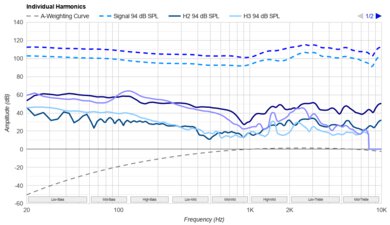
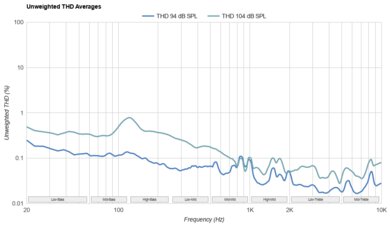
    These IEMS have low harmonic distortion. Even when each frequency band is pushed to blisteringly high output levels, the distortion remains low and inaudible. That said, it's not as low as the TRUTHEAR x Crinacle ZERO: RED's.

    Electrical Aspects
    See details on graph tool
    Sensitivity @1kHz-1V
    119.6 dB SPL
    Bluetooth Max SPL
    N/A

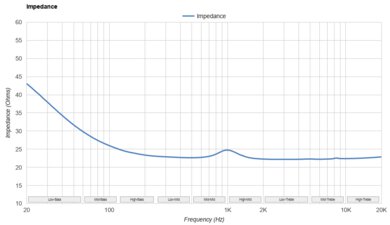
    These IEMs don't need an amp to drive them to sufficient volumes for listening.

    0.0
    Virtual Soundstage
    Head Modeling
    No
    Speaker Modeling
    No
    Room Ambience
    No
    Head Tracking
    No
    Virtual Surround
    No App
    Test Settings
    Firmware
    No Firmware
    Power
    Passive
    Connection
    Wired
    Codec
    PCM, 24-bit, 48kHz
    Test InstrumentAudio Precision APx517B
    EQ
    No EQ
    ANC
    No ANC
    Tip/Pad
    Foam (medium)
    Microphone
    No Microphone

    These are the settings used to test the CrinEar Daybreak. Our results are only valid when used in this configuration.

    Design
    Style
    TypeIn-ear
    EnclosureClosed-Back
    WirelessNo
    TransducerHybrid

    The CrinEar Daybreak are IEMs with molded resin enclosures and aluminium nozzles, complemented by a detachable silvery and clear braided cable. Their look is asymmetric, with the brand name on one bud and the model name on the other in silver with matching outlines around the black exterior. Each bud contains a hybrid driver design, with a dynamic driver to handle low frequencies, two balanced armatures for mids, and micro-planar tweeters to reproduce treble. These use a modular design, so you can disconnect the IEMs from the cable, and you can also swap the jack for either a standard mini headphone jack (3.5 mm / 1/8" TRS) or a balanced jack.

    7.5
    Comfort
    Weight0.08 lbs
    Clamping Force
    0 lbs

    These IEMs are comfortable. Deep in-ear fits can be polarizing, but it's also a characteristic of this style, and the suite of different ear tips provides enough variety for most people. However, if you have smaller ear canals, you might find that the smallest ear tip fits a little large. Similarly, the enclosures are somewhat chunky compared to the Sennheiser IE 200, for example, so that can cause fatigue if you have smaller ears. On balance, though, their finish feels smooth, and the cable is flexible enough to comfortably hook over the top of your ears.

    The three sets of silicone ear tips and one foam pair are nice to choose from, but one pair of foam ear tips is a little one-size-fits-most rather than one-size-fits-all. Newer units than ours are also shipped with four extra sets of different, 'shortwide'-style silicone ear tips, which likely fit a bit differently.

    0.0
    Controls
    OS Compatibility
    No Controls
    Ease Of UseNo Controls
    FeedbackNo Controls
    Call/Music ControlNo
    Volume ControlNo
    Microphone ControlNo
    Channel Mixing
    No
    Noise Cancelling ControlNo
    Talk-Through
    No
    Additional ControlsNo
    9.0
    Portability
    L3.4" (8.6 cm)
    W1.1" (2.8 cm)
    H1.1" (2.9 cm)
    Volume4.21 in³ (69.00 cm³)
    Transmitter RequiredNo

    The CrinEar Daybreak are very portable and easy to take with you. You can pocket them or stow them in a bag.

    7.5
    Case
    TypeHard case
    L1.6" (4.1 cm)
    W3.5" (8.9 cm)
    H2.8" (7.1 cm)
    Volume15.81 in³ (259.08 cm³)

    The black, leatherette case is good. Its nondescript, squarish look is reminiscent of an old camera or binocular case, albeit smaller. The lid is held closed with a magnet, rather than a snap button or a zipper, which is still secure, but can potentially catch on items in your bag and accidentally open. Overall, the case is portable (if a little large for the IEMs) and protects against bumps, but it isn't watertight.

    8.0
    Build Quality

    The CrinEar Daybreak have a great build quality. Their molded resin housings are smooth and lightweight with sturdy aluminum nozzles. The detachable braided cable deters excessive tangling and feels well-made. However, it uses a 2-pin design to connect to the buds, which is always a weak point, given how easily these can bend or break. Nevertheless, if you leave the buds on the cable at all times, the 2-pin connection doesn't pose a problem. Plus, you can replace a cable if it breaks without buying a whole new set of IEMs.

    The ear tips are average in quality and feel, so there's nothing wrong with them, but nothing to shout from the rooftops about either. The angled 3.5mm (1/8") TRS and 4.4mm (3/16") balanced adapters have the potential to break if you're not mindful of whether they'll catch on clothing or be exposed to stress where they connect to the pins, but they seem well-built, just a point of potential weakness.

    8.0
    Stability

    These have a very stable in-ear fit. The molded housings and deep in-ear design translate to a predictably secure fit. Their foam ear tips can help stabilize the fit by compressing and then expanding to snugly fit your ear canal. The over-ear cabling is a bit loose-fitting compared to the MOONDROP x Crinacle DUSK, if we're being nitpicky, but overall, the CrinEar Daybreak's stability isn't compromised, and you can still move around freely. Of course, cabling does mean a greater chance of snagging on clothes and equipment.

    Headshots 1
    Headshots 2
    Top
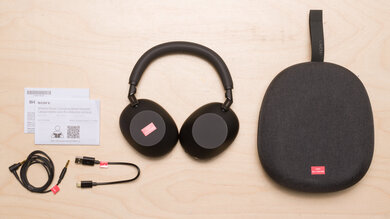
    In The Box

    • CrinEar Daybreak
    • 3x sets of silicone ear tips (S to L)
    • 1x set of foam ear tips (M)
    • 1x detachable cable (1.24 m / 4.07 ft) with hook-and-loop fastener
    • 3.5mm 90-degree angled connector
    • 4.4mm balanced 90-degree angled connector
    • Leatherette carrying case
    • Manual
    • Quality control card

    It's worth noting that newer units are shipping with an additional four sets of 'shortwide'-style silicone ear tips.

    Isolation
    8.0
    Noise Isolation - Full Range
    See details on graph tool
    Noise CancellingNo
    Overall Attenuation
    -20.82 dB
    Bass
    -5.87 dB
    Mid
    -21.28 dB
    Treble
    -38.47 dB

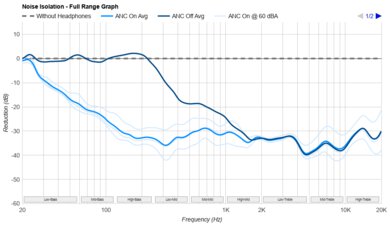
    The CrinEar Daybreak are very good at blocking out background noise. Like most passive-only isolating designs, they seal your ears against high-pitched and sharp noises better than low-pitched rumbles. The memory foam ear tips do the heavy-lifting and knock off a whopping 40 dB in some regions, nearly muting those treble frequencies. Their effectiveness is still notable in the mids for isolating out sounds like chit-chat, if not as good as active noise cancelling results. Low rumbles are slightly quieted, which is good for passive isolation, but, as expected, it can't match active noise cancellation capabilities.

    We also measured the noise isolation using the silicone ear tips for comparison, and as you might anticipate, they don't isolate out your environment as effectively, but they're not too different in the bass and mid-range isolation.

    7.1
    Noise Isolation - Common Scenarios
    See details on graph tool
    Airplane Noise Attenuation
    -16.49 dB
    Airplane Noise Isolation Audio
    Office Noise Attenuation
    -16.82 dB
    Office Noise Isolation Audio
    Street Noise Attenuation
    -19.21 dB
    Street Noise Isolation Audio

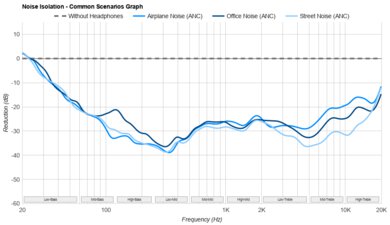
    Their noise isolation in common scenarios is decent. The passive isolation provided by the foam ear tips handily attenuates harsh and sharp noises, like dish clatter in coffee shops, and provides a buffer against nearby conversations. However, the bassy noises of street construction and ambient airplane din are softened, but not silenced.

    Noise Isolation - Voice Handling
    Female Voice 1
    Male Voice 1
    Female Voice 2
    Male Voice 2
    ANC Wind Handling
    ANC Wind Noise
    N/A
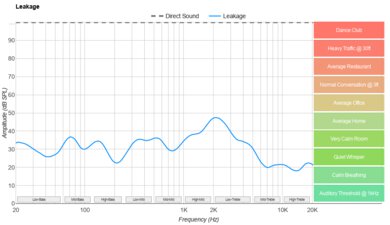
    9.5
    Leakage
    See details on graph tool
    Leakage Audio
    Overall Leakage @ 1ft
    23.77 dB

    Their sound leakage performance is fantastic. Your audio remains private even in dead quiet locations like silent zones in libraries.

    Microphone
    Microphone Style
    Integrated
    No
    In-Line
    No
    Boom
    No
    Detachable Boom
    No
    MicNo
    0.0
    Recording Quality
    Recorded Speech
    N/A
    LFE
    N/A
    FR Std. Dev.
    N/A
    HFE
    N/A
    Weighted THD
    N/A
    Gain
    N/A
    0.0
    Noise Handling
    SpNR
    N/A
    Noise Gate
    No
    Speech + Pink Noise Handling
    N/A
    Speech + Pink Noise Audio SampleN/A
    Speech + Subway Noise Handling
    N/A
    Speech + Subway Noise Audio SampleN/A
    Active Features
    0.0
    Battery
    Battery Type
    No Battery
    Continuous Battery Life
    N/A
    Additional Charges
    N/A
    Total Battery Life
    N/A
    Charge Time
    N/A
    Power-Saving Feature
    No
    Audio While Charging
    No
    Passive Playback
    Passive Headphone
    Charging PortNone
    0.0
    App Support
    App NameNo App
    iOSNo
    AndroidNo
    macOSNo
    WindowsNo
    Equalizer
    No
    ANC Control
    No
    Mic ControlNo
    Room Effects
    No
    Playback Control
    No
    Button MappingNo
    Surround Support
    No
    Connectivity
    10
    Wired Connection
    Analog Audio
    Yes
    USB Audio
    No
    Detachable
    Yes
    Length
    4.07 ft (1.24 m)
    Connector
    1/8" TRS
    Latency - Analog
    0.1 ms
    Latency - USB
    N/A
    Recorded Latency
    Recorded Latency ConnectionAnalog

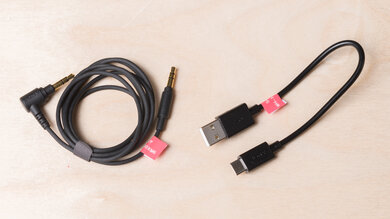
    The CrinEar Daybreak include a single removable cable. Rather than including two cables, the one cable uses a modular design that allows you to connect either the 3.5 mm (1/8") TRS jack or the 4.4 mm (3/16") balanced jack to it. The other end of the analog audio cable also uses a 2-pin design to attach the IEMs. Given that it's an analog design, it's virtually latency-free.

    0.0
    Bluetooth Connection
    Bluetooth Version
    No Bluetooth
    Multi-Device Pairing
    No
    Quick Pair (Android)
    No
    Quick Pair (iOS)
    No
    Line Of Sight Range
    N/A
    Latency - SBC
    N/A
    Latency - aptX
    N/A
    Latency - aptX Adaptive (High Quality)
    N/A
    Latency - aptX Adaptive (Low Latency)
    N/A
    Latency - LDAC
    N/A
    Recorded Latency
    N/A
    Recorded Latency CodecNo Bluetooth Audio
    AAC Support
    No
    0.0
    Wireless Connection (Dongle)
    Line Of Sight Range
    N/A
    Latency - Dongle
    N/A
    Recorded Latency
    N/A
    PC Compatibility
    Analog
    Audio Only
    Wired USB
    No
    Non-BT Wireless
    No

    You can connect these to your PC's 3.5 mm (1/8") headphone output to receive audio. Since they don't have a mic, you'll need to use an outboard one.

    PlayStation Compatibility
    PS4 Analog
    Audio Only
    PS4 Wired USB
    No
    PS4 Non-BT Wireless
    No
    PS5 Analog
    Audio Only
    PS5 Wired USB
    No
    PS5 Non-BT Wireless
    No

    You can use the 3.5 mm (1/8") TRS connector and plug it into your PS controller to listen to audio, but they don't have a microphone.

    Xbox Compatibility
    Xbox One Analog
    Audio Only
    Xbox One Wired USB
    No
    Xbox One Non-BT Wireless
    No
    Xbox Series X|S Analog
    Audio Only
    Xbox Series X|S Wired USB
    No
    Xbox Series X|S Non-BT Wireless
    No

    The analog cable with 3.5 mm (1/8") TRS jack can be plugged into your Xbox controller for audio support. However, these IEMs don't have a mic, so you'll need to provide your own to talk with others.

    0.0
    Base/Dock
    Type
    No Base/Dock
    USB Input
    No
    Line In
    No
    Line Out
    No
    Optical Input
    No
    RCA Input
    No
    Dock Charging
    No
    Power Supply
    No Base/Dock