JBL Free X True Wireless  Headphones Review

Review updated Aug 11, 2023 at 11:27am
Tested using Methodology v1.4 
JBL Free X True Wireless
7.2
Mixed Usage 
7.1
Neutral Sound 
7.7
Commute/Travel 
8.1
Sports/Fitness 
7.0
Office 
5.3
Wireless Gaming 
5.2
Wired Gaming 
6.3
Phone Calls 
 0

The JBL Free X True Wireless are simple, wallet-friendly in-ears. They're virtually identical to the JBL Free Truly Wireless 2018 in nearly every respect and have a no-frills design, so they lack sound customization features, a companion app, and noise cancelling.

Our Verdict

7.2
Mixed Usage 

The JBL Free X are decent for most use cases. They have a slightly bassy sound, a stable yet comfortable fit for sports, isolate noise fairly well for commuting, won't leak too much sound at the office, and are overall comfortable and portable. Unfortunately, however, they lack volume controls. They also have very high latency, which makes them less than ideal for streaming video, and have an inadequate microphone for taking calls on the go.

Pros
  • Decent sound.
  • Great isolation.
  • Compact and portable design.
Cons
  • Very high latency.
  • No volume controls.
7.1
Neutral Sound 

The JBL Free X are satisfactory for neutral sound. They have a bassy sound that delivers satisfying thump and rumble without overwhelming vocals and instruments, which are clear and detailed in mixes. However, sibilants are a little dull. In addition, since they're closed-back in-ears, their passive soundstage won't seem very immersive.

7.7
Commute/Travel 

The JBL Free X are good for commute and travel. They have good noise isolation and can block out passenger chatter well. They have trouble blocking the low rumble of bus and plane engines. They also lack volume controls, so you'll have to pull out your phone whenever you want to adjust the volume.

8.1
Sports/Fitness 

The JBL Free X are great for sports. They have a stable yet comfortable in-ear fit. They're lightweight and portable with an easy-to-use control scheme. Unfortunately, they have no volume controls, and their unique design is not as stable as other truly wireless headphones. They also don't have an IP rating for water resistance.

7.0
Office 

The JBL Free X are satisfactory for office use. They can passively block out chatty coworkers and don't leak a lot of audio, so you can crank your audio up without worrying about others hearing it. Although their battery does not last very long continuously, if you take short breaks to charge them in their case, they can last you all day. They don't support multi-device pairing, so you'll have to manually switch between your work computer and smartphone throughout the day.

5.3
Wireless Gaming 

The JBL Free X are poor for wireless gaming. They're Bluetooth-only headphones and have high latency across PC, Android, and iOS. Your audio and visuals will be out of sync, which makes for a frustrating gaming experience.

5.2
Wired Gaming 

The JBL Free X are truly wireless earbuds, and you can't use them wired.

6.3
Phone Calls 

The JBL Free X are mediocre for phone calls. They have an integrated mic, which makes your voice sound muffled and lacking in detail. The mic also struggles to separate your voice from moderate noise, so if you have an important call, it's best to do so from a quiet environment.

  • 7.2
    Mixed Usage
  • 7.1
    Neutral Sound
  • 7.7
    Commute/Travel
  • 8.1
    Sports/Fitness
  • 7.0
    Office
  • 5.3
    Wireless Gaming
  • 5.2
    Wired Gaming
  • 6.3
    Phone Calls
  • Changelog

    1.  Updated Aug 11, 2023: We've updated this review's text to keep it up to date and accurate.
    2.  Updated Aug 09, 2023: We've renamed these headphones.
    3.  Updated Feb 05, 2020: Converted to Test Bench 1.4.
    4.  Updated Nov 21, 2019: Converted to Test Bench 1.3.1.

    Differences Between Sizes And Variants

    The JBL Free X come in three color variants: 'Black', 'Blue', and 'White'. If you come across another variant, please let us know in the forums, and we'll update our review.

    Popular Headphones Comparisons

    Comparison picture

    The JBL Free X True Wireless are decent in-ear headphones that are virtually identical to the JBL Free Truly Wireless 2018. They're pretty no-frills and don't have features like noise cancelling or companion app support.

    If you like their truly wireless design but want something with a more stable fit or better battery life, check out our recommendations for the best truly wireless earbuds, the best wireless Bluetooth earbuds and in-ears, as well as the best wireless Bluetooth earbuds for running and working out.

    Apple AirPods (1st generation)

    The JBL Free X True Wireless are better truly wireless in-ears than the Apple AirPods (1st generation) in general. The JBL sound better, isolate more noise, have an easier-to-use physical control scheme, and have a more stable fit for sports. However, the Apple are much more comfortable than the JBL, have a significantly better battery life, and are easier to use with Apple devices. The JBL are a better choice for most use cases, but the AirPods could be worth looking into if you're a fan of the Apple ecosystem.

    Beats BeatsX Wireless

    The JBL Free X True Wireless are slightly better wireless in-ears than the Beats BeatsX Wireless. The JBL are more comfortable, well-built, and sound a bit better. However, the Beats have a much better battery since they're not truly wireless, charge quickly, pair quickly with Apple devices, and isolate more noise. If you prefer the fit and durable design of the JBL, they're a better choice, but the Beats are worth considering if you need the extra battery life and prefer a more stable fit.

    Samsung Gear IconX Truly Wireless

    The JBL Free X True Wireless and the Samsung Gear IconX Truly Wireless are both decent truly wireless in-ears. They're both well-designed and have similar isolation and microphone performance. The JBL sound slightly better out of the box, but the Samsung can be customized via EQ presets in the Samsung Gear app. The Samsung also have a better battery, a more stable fit, and volume control. They're both decent choices for most use cases, but the Samsung may be more advantageous for those who prefer more feature-packed headphones.

    Bose SoundSport Free Truly Wireless

    The JBL Free X True Wireless are overall better truly wireless in-ears than the Bose SoundSport Free Truly Wireless. The JBL have a less bulky design and a more portable charging case. They also isolate significantly more noise than the open-backed Bose, which makes the JBL a better choice for commuters or office workers. However, the Bose are better for critical listeners since they sound better, are slightly more comfortable, and have a longer battery life.
    EarFun Free Truly Wireless

    The JBL Free X True Wireless are better headphones than the EarFun Free Truly Wireless. The JBL are more comfortable, better-built, have a better-balanced sound profile, and their fit isolates better against ambient noise. On the other hand, the EarFun are Bluetooth 5.0 and have a USB-C port, but that's about it.

    JBL LIVE 300TWS Truly Wireless

    The JBL LIVE 300TWS Truly Wireless and the JBL Free X True Wireless are both decent truly wireless in-ears that perform similarly. The biggest differences between the two are that the 300TWS have touch-sensitive controls that work better overall, a more stable fit thanks to their stability fins, and slightly longer battery life off a single charge. They also have access to a dedicated companion app that works great and adds quite a few customization options, while the FreeX don't have an app.

    Overhauling Our Audio Measurements And A New Multi-Curve Graphing Tool

    We've upgraded our Headphones Test Bench to 2.0! This update brings several key changes to our tests and usages, making it easier than ever to interpret our sound results based on your personal preferences. You'll also find a brand-new interactive graph tool featuring multiple targets (including our own!) for you to explore and compare.

    For a full breakdown, check out our changelog, which includes detailed commentary from our test designer explaining the rationale behind our update.

    We'd also love to hear your thoughts: your feedback helps us keep improving, so join us in the comments!

    Test Results

    perceptual testing image
    Sort:
    RATINGS
    Category:
    All
    Design
    Style
    TypeIn-ear
    EnclosureClosed-Back
    WirelessTruly Wireless
    TransducerDynamic

    The JBL Free X have the same compact earbud design as the JBL Free Truly Wireless 2018. The earbuds are quite thick but relatively narrow. They feel fairly dense and durable but less high-end than more premium truly wireless models, like the Sennheiser Momentum True Wireless or Apple AirPods (1st generation) Truly Wireless. They also come in three color variants: 'Black', 'Blue', and 'White'.

    7.5
    Comfort
    Weight0.03 lbs
    Clamping Force
    0 lbs

    They're comfortable in-ear headphones. They're very lightweight and come with various tip sizes and earbud sleeves to help you find a good fit. Though they aren't quite as comfortable as the earbud-style Bose SoundSport Free Truly Wireless, the difference is negligible, and they're more comfortable than other truly wireless in-ears like the Jabra Elite Sport Truly Wireless. However, they have a unique shape that may not fit everyone, especially those with smaller ears.

    5.5
    Controls
    OS Compatibility
    Not OS specific
    Ease Of UseGreat
    FeedbackGood
    Call/Music ControlYes
    Volume ControlNo
    Microphone ControlNo
    Channel Mixing
    No
    Noise Cancelling ControlNo
    Talk-Through
    No
    Additional ControlsVoice Assistant

    These buds have two physical buttons on each earbud. Pressing the button on the right earbud will play or pause your music, answer calls, and trigger your device's voice assistant. The button on the left earbud is for track switching: press once to skip to the next track or twice to return to the last track. This simple control scheme is easy-to-use, and the buttons are good and clicky. Unfortunately, they don't have volume controls. You'll have to reach for your audio device whenever you want to raise or lower the volume of what you're listening to, which is a bit disappointing.

    9.1
    Breathability
    Avg.Temp.Difference0.9 °C

    Like most truly wireless in-ears, they're very breathable. This makes them a good option for working out since they won't make your ears sweat as much as over-ear headphones. They barely cause any temperature changes, even after long periods of use. They trap a little heat in the ear canal due to their in-ear design, especially if you add the rubber sleeves to the earbuds, but the difference is still fairly negligible and won't make you sweat more than usual.

    9.6
    Portability
    L1.1"
    W1.2"
    H0.7"
    Volume0.9 in³
    Transmitter RequiredNo

    These buds are very portable and will fit in almost any pocket. Their unique earbud design makes them smaller than most truly wireless headphones, making them one of the most portable headphones we've tested. The case can also easily fit in larger pockets.

    7.5
    Case
    TypeHard case
    L2.7"
    W2.7"
    H1.1"
    Volume8 in³

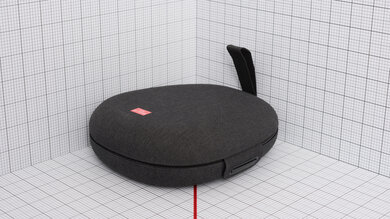
    They have the same plastic hard charging case as the JBL Free Truly Wireless 2018. This case will protect the earbuds if you accidentally drop them, but it may open on impact, causing the buds to fall out and get damaged. The case is a bit bulky but will fit better in your pockets than some of the other truly wireless charging cases, like the Bose SoundSport Free Truly Wireless' case.

    7.5
    Build Quality

    These buds have the same good build quality as the JBL Free Truly Wireless 2018. The earbuds feel dense and durable enough to survive a few accidental drops, and the case is sturdy. Although sturdy, they don't look or feel as high-end as some of the other truly wireless headsets we've tested.

    7.5
    Stability

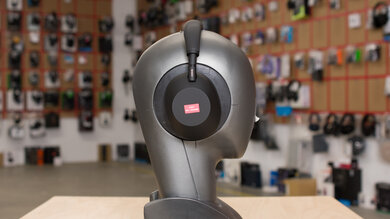
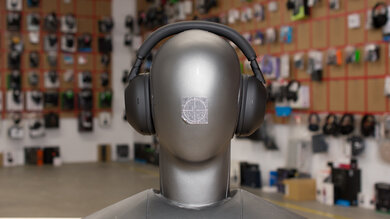
    They're good earbuds for sports, thanks to their stable in-ear design. They come with multiple silicone tips and earbud sleeves to help you achieve a secure fit. Once in your ears, they don't move around much, but the unique shape of the earbuds may not fit as well for everyone, especially those with smaller ears. You may also adjust the fit of these earbuds a bit more often, which can be annoying. If you're looking for headphones to wear while running and working out, you might want to consider models with ear-hooks, like the JBL Endurance Peak True Wireless.

    Headshots 1
    Headshots 2
    Top
    In The Box

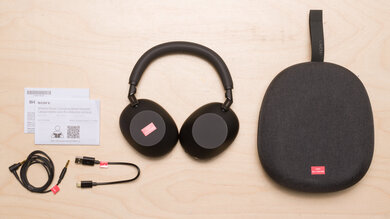
    • JBL Free X True Wireless headphones
    • 3 pairs of earbud tips
    • 2 pairs of rubber earbud sleeves
    • Charging case
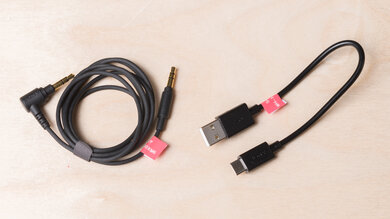
    • Micro-USB charging cable
    • Manuals
    Sound
    Sound Profile
    See details on graph tool
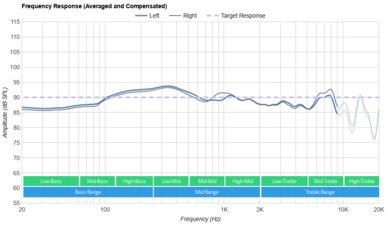
    Bass Amount
    2.56 dB
    Treble Amount
    -0.72 dB

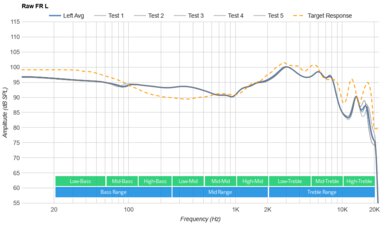
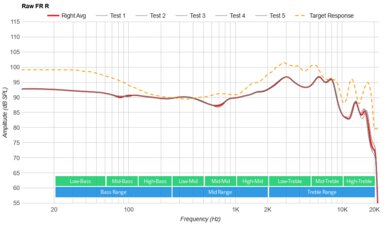
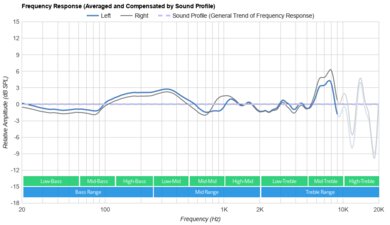
    These headphones have a bass-heavy sound that delivers extra thump, rumble, and boom, making them a solid choice for genres like EDM and hip-hop. They lack sound customization features, so you can't adjust their sound to your liking.

    9.0
    Frequency Response Consistency
    See details on graph tool
    See details on graph tool
    Avg. Std. Deviation
    0.21 dB

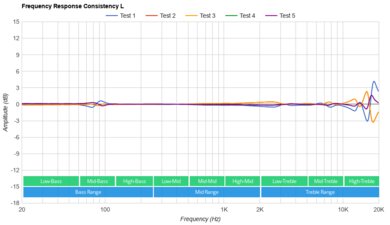
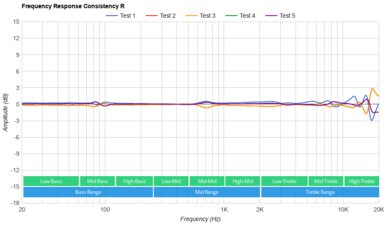
    These buds have excellent frequency response consistency. Once you achieve a proper fit and an air-tight seal using the assortment of tips that come with the headphones, you'll get consistent bass and treble delivery every time you use them.

    Raw Frequency Response
    See details on graph tool
    See details on graph tool
    8.2
    Bass Accuracy
    See details on graph tool
    Std. Err.
    2.52 dB
    Low-Frequency Extension
    10 Hz
    Low-Bass
    3.1 dB
    Mid-Bass
    3.2 dB
    High-Bass
    1.9 dB

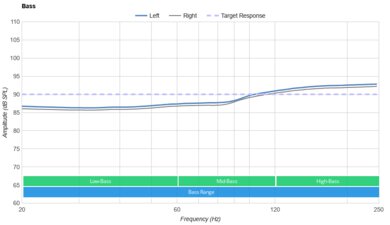
    These buds have great bass accuracy. The response throughout the range is flat and well-balanced. It means they have deep, thumpy, and punchy bass that isn’t overpowering, making them well-suited for all music genres.

    9.1
    Mid Accuracy
    See details on graph tool
    Std. Err.
    1.26 dB
    Low-Mid
    0.36 dB
    Mid-Mid
    -1.72 dB
    High-Mid
    0 dB

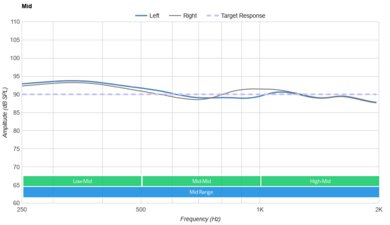
    Their mid accuracy is outstanding. The mid-range is quite well-balanced and produces clear and accurate vocals and instruments. That said, a slight dip in the mid-mid nudges vocals and instruments to the back of the mix.

    7.5
    Treble Accuracy
    See details on graph tool
    Std. Err.
    3.29 dB
    Low-Treble
    -0.83 dB
    Mid-Treble
    -1.59 dB
    High-Treble
    -0.52 dB

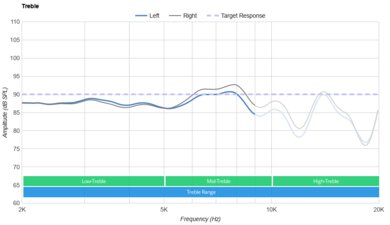
    These buds have good treble accuracy. The low-treble is slightly underemphasized, which results in slightly veiled vocals and instruments. The dip extends into the mid-treble, so sibilants like cymbals are also dulled.

    8.4
    Peaks/Dips
    See details on graph tool
    Peaks
    0.88 dB
    Dips
    1.44 dB

    The peaks and dips performance is great. The response is mostly flat, indicating that the headphones can control their sound profile well. That said, a dip in the mid-mid nudges vocals and instruments to the back of the mix. An uneven low-treble makes vocals and instruments sound harsh or veiled, depending on the frequency. Sibilants like cymbals are piercing, too.

    9.1
    Imaging
    See details on graph tool
    See details on graph tool
    Weighted Group Delay
    0.16
    Weighted Amplitude Mismatch
    0.68
    Weighted Frequency Mismatch
    1.02
    Weighted Phase Mismatch
    1.93

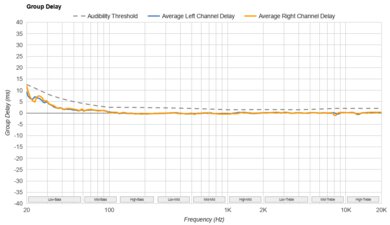
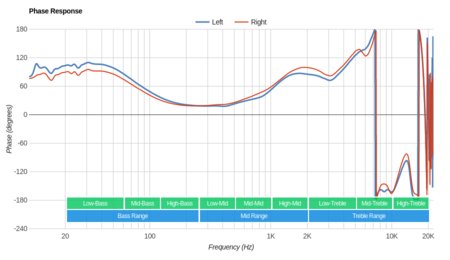
    JBL produces a lot of headphones, but they usually have well-matched drivers, and in turn, solid imaging performances. That said, imaging varies between units and indicates a manufacturer's quality control and ergonomics. Our unit's L/R drivers are well-matched in amplitude, frequency, phase response, and group delay. As a result, objects like voices and sound effects accurately localize in the stereo image.

    0.6
    Passive Soundstage
    PRTF Accuracy (Std. Dev.)
    N/A
    PRTF Size (Avg.)
    N/A
    PRTF Distance
    N/A
    Openness
    2.3
    Acoustic Space Excitation
    0.5

    They have a bad passive soundstage, which is normal for in-ear headphones. They bypass your outer ear, which needs to interact with sound to create a more immersive audio experience. As a result, their soundstage will be perceived as small and located inside the listener's head. They also have a closed-back design, meaning their soundstage won't feel as open as open-back earbuds like the Apple AirPods (1st generation) Truly Wireless.

    0.0
    Virtual Soundstage
    Head Modeling
    No
    Speaker Modeling
    No
    Room Ambience
    No
    Head Tracking
    No
    Virtual Surround
    No App
    7.6
    Weighted Harmonic Distortion
    See details on graph tool
    WHD @ 90
    0.214
    WHD @ 100
    0.163

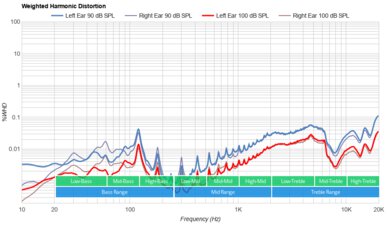
    The weighted harmonic distortion performance is good. There's a peak between the low to mid-treble at moderate and high volumes, but it affects a narrow frequency band and will be hard to hear with real-life content.

    Test Settings
    Firmware
    Unknown
    Power
    On
    Connection
    Bluetooth 4.0
    Codec
    SBC, 16-bit, 48kHz
    EQ
    No EQ
    ANC
    No ANC
    Tip/Pad
    Silicone (small)
    Microphone
    Integrated

    These are the settings used to test these buds; our results are only valid in this configuration.

    Isolation
    7.7
    Noise Isolation
    See details on graph tool
    Isolation Audio
    Overall Attenuation
    -21.68 dB
    Noise CancellingNo
    Bass
    -10.31 dB
    Mid
    -20.67 dB
    Treble
    -35.02 dB

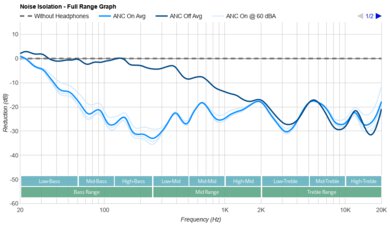
    These buds have good noise isolation. Although they don't have noise cancelling, they can block out ambient chatter and the high-pitched hum of AC units well. They have some trouble cutting down the low rumble of bus engines.

    These buds don't isolate you from noise as well as the JBL Free Truly Wireless 2018, but this may be because the large earbuds are difficult to fit in our test rig, and the scores obtained are within the tolerances of our testing.

    9.5
    Leakage
    See details on graph tool
    Leakage Audio
    Overall Leakage @ 1ft
    23.83 dB

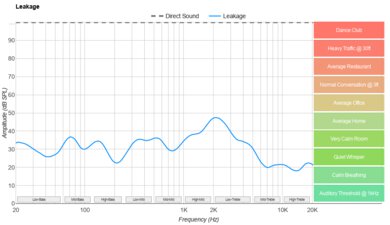
    The leakage performance is fantastic. Most of the leakage is concentrated in a narrow band in the mid-treble range and is very thin and sharp sounding. That said, people around you won't hear your audio if you're listening to it at high volumes.

    Microphone
    Microphone Style
    Integrated
    Yes
    In-Line
    No
    Boom
    No
    Detachable Boom
    No
    MicYes
    5.7
    Recording Quality
    See details on graph tool
    Recorded Speech
    LFE
    472.58 Hz
    FR Std. Dev.
    3.09 dB
    HFE
    2,957.7 Hz
    Weighted THD
    8.506
    Gain
    42.07 dB

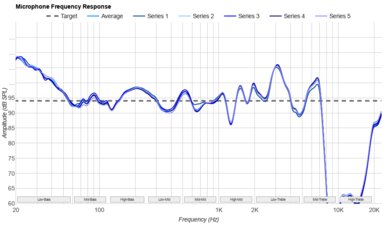
    The integrated microphone has sub-par recording quality. Your voice sounds thin, lacking a bit of detail, and noticeably muffled. However, it will still be relatively easy to comprehend. If you want truly wireless earbuds with a better mic, check out the Jabra Evolve 65t Truly Wireless. They use a proprietary dongle to achieve better mic performance and are quite a bit more expensive than the JBL Free X, so they may not be worth it for everyone.

    6.0
    Noise Handling
    See details on graph tool
    Speech + Pink Noise
    Speech + Subway Noise
    SpNR
    12.85 dB

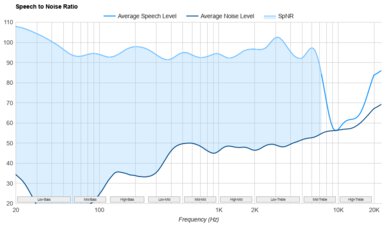
    The microphone has mediocre noise handling. The mic is best suited for quiet environments as it struggles to separate speech from ambient noise in moderately loud or loud situations. Background noise will drown out your voice if you take calls from a busy street or office.

    Active Features
    6.0
    Battery
    Battery Type
    Rechargable
    Continuous Battery Life
    3.4 hrs
    Additional Charges
    5.0
    Total Battery Life
    20.4 hrs
    Charge Time
    1.4 hrs
    Power-Saving Feature
    Auto-Off Timer
    Audio While Charging
    No
    Passive Playback
    No
    Charging Portmicro-USB

    These buds have a mediocre battery performance. They provide 3.4 hours of continuous playback, and their case provides five additional charges. They won't be ideal for long periods of continuous use. However, keep in mind that battery life varies depending on use. If you want a truly wireless design with a better battery, consider the Apple AirPods (1st generation) Truly Wireless.

    0.0
    App Support
    App NameNo App
    iOSNo
    AndroidNo
    macOSNo
    WindowsNo
    Equalizer
    No
    ANC Control
    No
    Mic ControlNo
    Room Effects
    No
    Playback Control
    No
    Button MappingNo
    Surround Support
    No

    They don't support the JBL My Headphones app like the JBL Everest Elite 700 Wireless.

    Connectivity
    6.2
    Bluetooth
    Bluetooth Version
    4.2
    Multi-Device Pairing
    No
    NFC Pairing
    No
    Line Of Sight Range
    83 ft
    PC Latency (SBC)
    336 ms
    PC Latency (aptX)
    N/A
    PC Latency (aptX HD)
    N/A
    PC Latency (aptX-LL)
    N/A
    iOS Latency
    341 ms
    Android Latency
    358 ms

    These buds have mediocre Bluetooth connectivity. They don't support NFC or multi-device pairing but auto-connect to the last paired device when you take them out of their charging case. They have terrible latency, which causes your audio and visuals to fall out of sync. Keep in mind that some apps compensate for latency.

    0.0
    Non-Bluetooth Wireless
    Non-BT Line Of Sight Range
    N/A
    Non-BT Latency
    N/A
    0.0
    Wired
    Analog Audio
    No
    USB Audio
    No
    DetachableNo
    LengthN/A
    ConnectionNo Wired Option
    Analog/USB Audio Latency
    N/A

    They're truly wireless earbuds that don't have an audio cable or a wired connection. If you want decent-sounding and stable in-ears with a wired connection, look at the TIN Audio T2 or the 1More Triple Driver.

    PC / PS4 Compatibility
    PC/PS4 Analog
    No
    PC/PS4 Wired USB
    No
    PC/PS4 Non-BT Wireless
    No
    Xbox One Compatibility
    Xbox One Analog
    No
    Xbox One Wired USB
    No
    Xbox One Non-BT Wireless
    No
    2.2
    Base/Dock
    Type
    Charging Case
    USB Input
    No
    Line In
    No
    Line Out
    No
    Optical Input
    No
    RCA Input
    No
    Dock Charging
    Yes
    Power Supply
    USB

    Their charging case delivers up to 17 hours of extra battery life. However, the case has no inputs or distinguishing special features like the Qi wireless charging on the Altec Lansing True Evo Truly Wireless.