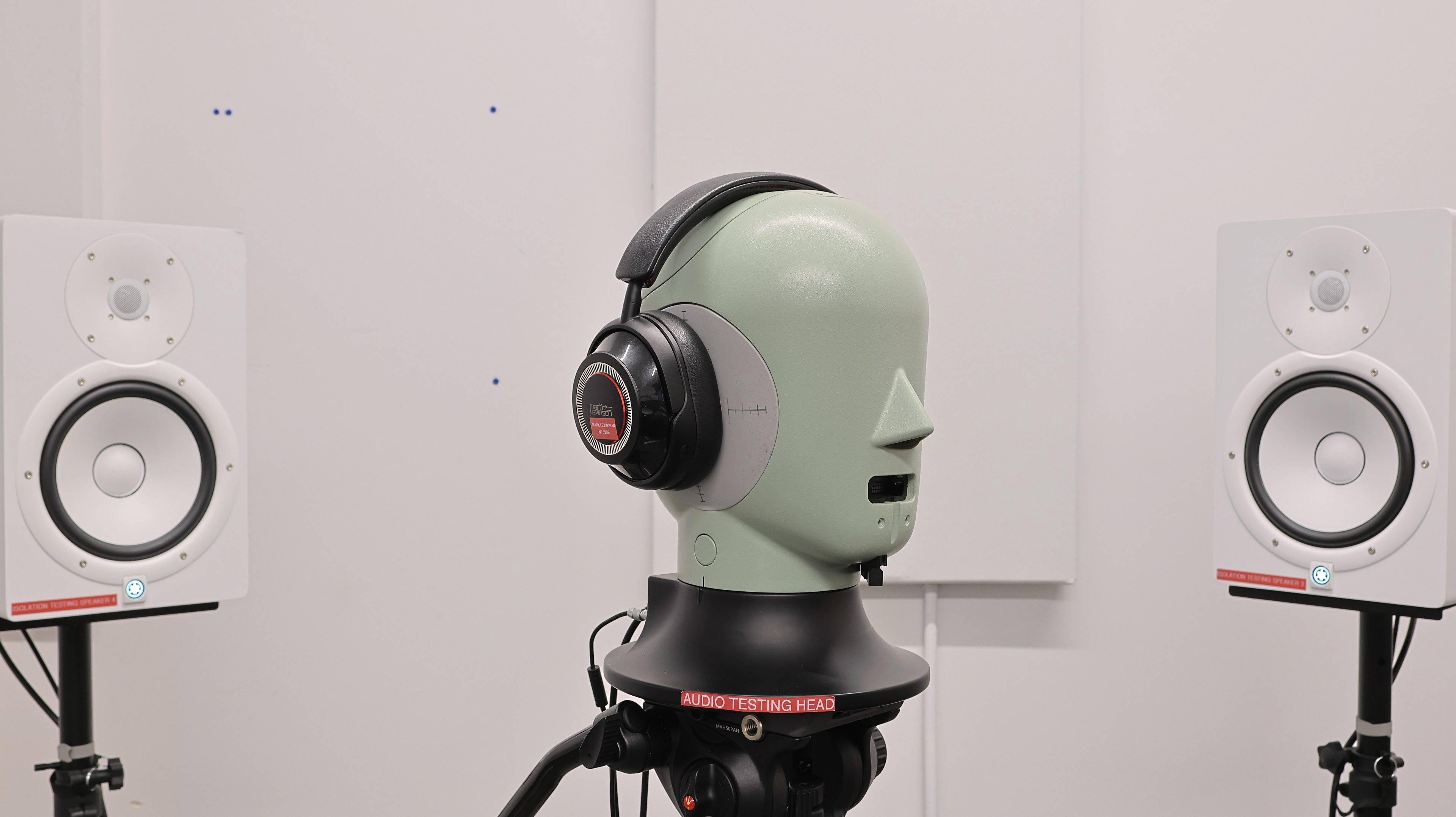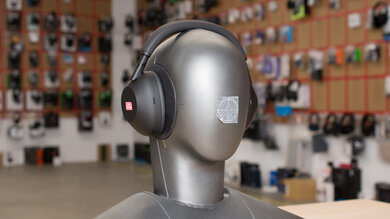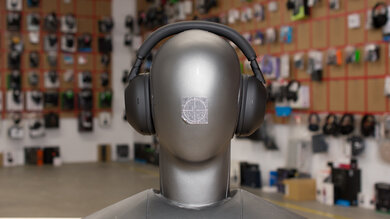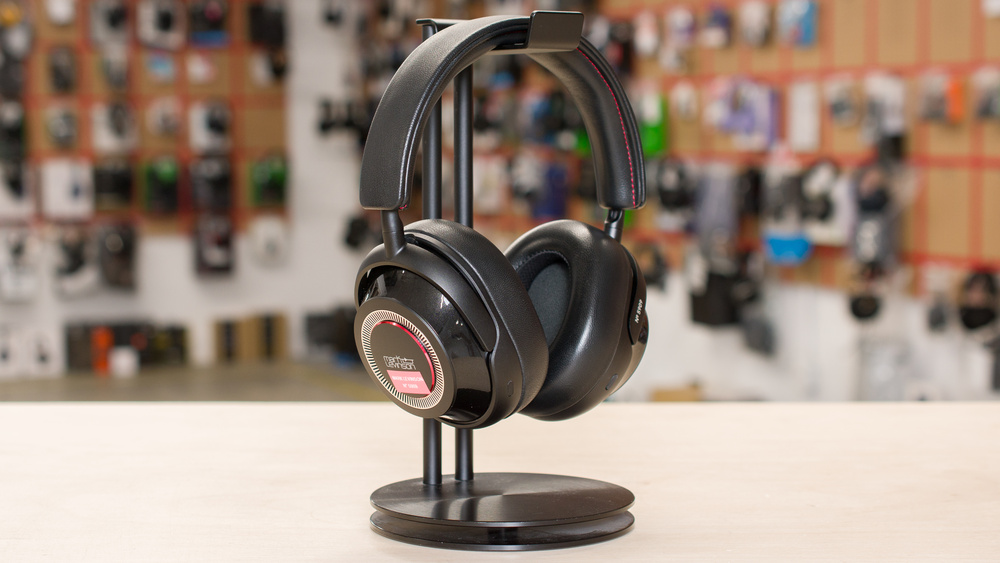
The Mark Levinson Nº 5909 are premium Bluetooth-equipped over-ears that bridge the gap between audiophile cans and modern, noise cancelling travel headphones. The American high-end audio company, who design everything from turntables to Lexus sound systems, is a subsidiary of Harman International, so it's perhaps unsurprising that these headphones are engineered to follow the Harman target closely. There's more to them than just the frequency response, as they feature a powerful ANC system, two wired connectivity options, and comprehensive codec support over Bluetooth.
Our Verdict
The Mark Levinson Nº 5909 aren't designed to be used for sports and fitness. While they're comfortable, well-built and can be used wirelessly, they're also bulky and offer little in the way of stability. While the soft leather used for their earpads feels nice on the skin, it'll trap sweat around your ears during exercise. They also lack any kind of IP or impact rating that can guarantee a bit more resilience if they're dropped or rained on.
Over 18 hours of battery life.
Not very portable or stable.
The Mark Levinson No. 5909 make for very good travel headphones. While they're not the most portable, they come with a luxurious case for taking them on-the-go and their premium, durable build will ensure they can survive a few long-haul flights. They're comfortable enough to be worn for long journeys too, though this will depend somewhat on the shape of your head and ears. Their ANC system does a great job of tamping down on irksome external sounds, and you'll be able to squeeze over 18 hours from the battery even with ANC enabled.
Great noise isolation performance.
Mic separates your voice well from busy backgrounds.
Over 18 hours of battery life.
Not very portable or stable.
High noise floor with ANC engaged.
The Mark Levinson No. 5909 are a good choice for office work. They're comfortable headphones that exude a premium quality, so you should have no trouble sporting them for full work days. They also come equipped with an ANC system that effectively tamps down on external noise, masking water cooler talk and scraping chairs alike. The built-in microphone renders your voice in an easily intelligible way, too, while effectively rejecting external noise, in case you need to take a last-minute call in a communal area.
Great noise isolation performance.
Mic separates your voice well from busy backgrounds.
Compatible with a wide range of Bluetooth codecs.
Over 18 hours of battery life.
Can't use the mic over a wired connection.
High noise floor with ANC engaged.
The Mark Levinson No. 5909 aren't suitable for serious wireless gaming as latency is too high when they're used wirelessly. That said, their lower latency performance with aptX Adaptive (Low Latency) means they could be suitable for some mobile games.
The Mark Levinson Nº 5909 are decent for wired gaming. They're comfortable enough for long gaming sessions and support both analog and USB-C connections. That said, you won't be able to use the built-in mic with either of these connection types, which is a major caveat if you're an online gamer who needs to communicate with teammates. Their bright sound profile is well-suited to a variety of games, though, with a prominent bass response and detailed mids. That said, the bright treble range might be fatiguing to listen to over time, depending on your in-game audio content.
Over 18 hours of battery life.
USB-C and analog wired connection options.
Can't use the mic over a wired connection.
The Mark Levinson 5909 are good for audio reproduction accuracy. The frequency response mostly follows their bright sound profile, with only some slight deviations in the mid and treble ranges. Group delay falls below the audibility threshold across the entire range when you use them with Bluetooth, but can increase over an analog connection. There's no audible distortion, even at higher listening levels, though, and the L/R drivers are mostly well-matched in amplitude, frequency, and phase response.
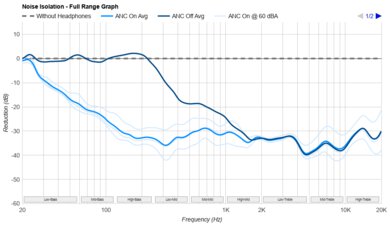
The Mark Levinson 5909 are great at noise isolation. Their over-ear seal provides a solid amount of passive isolation in the mid and treble range, with the ANC system only supplementing this. Still, they're effective at cutting out background babbling and cars zooming past at your intersection. The ANC system does more heavy lifting in the bass range, attenuating sounds like airplane engine rumble well, though not as effectively as top-tier travel headphones. They leak a bit of audio too, but you likely won't disturb anyone around you unless you're blasting your tunes in a quiet environment.
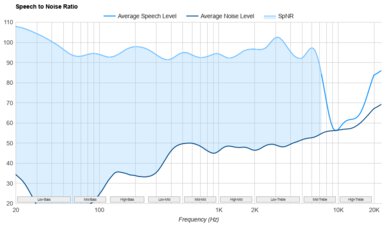
The Mark Levinson No. 5909 have a built-in mic that does a decent job of rendering your voice in a clear and natural way. The mic recording quality lacks a bit of low-end and also rolls off the highs, so your voice will sound a little boxy, but otherwise easily understandable to whoever you're talking to. The mic does a very good job of isolating your voice against noisier backdrops, whether it's some light chatter in a busy cafe or the screeching of a metro car pulling up to you.
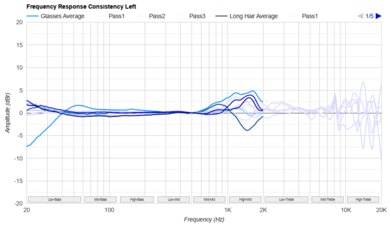
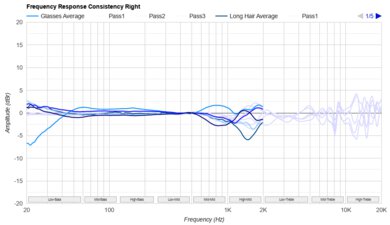
The Mark Levinson Nº 5909 have great frequency response consistency. The earcups are a little narrow, which means those with larger heads or ears will have to take some time to ensure a good seal. However, once you've established a solid seal, you're rewarded with consistent audio delivery between different listening sessions.
Performance Usages
Check Price
Differences Between Sizes And Variants
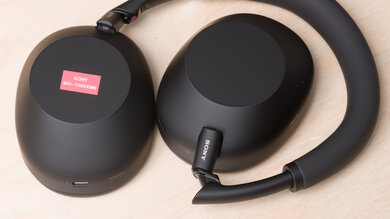
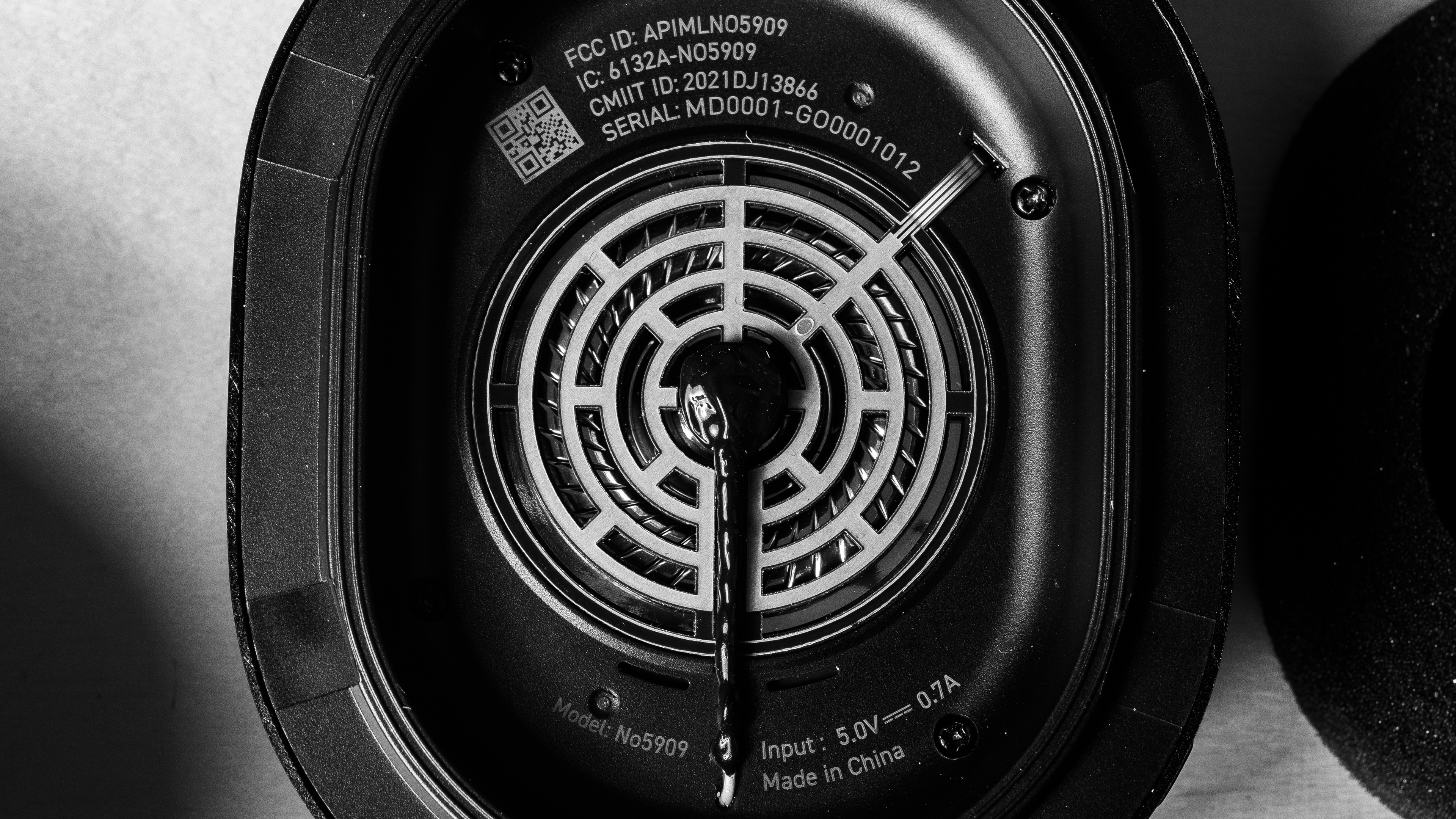
The Mark Levinson 5909 come in three color variants: 'Pearl Black', 'Ice Pewter', and 'Radiant Red'. We tested the 'Pearl Black' variant (here's a picture of its label), but we expect other variants to perform similarly. If you encounter another variant of these headphones, please let us know in the comments, and we'll update our review.
Popular Headphones Comparisons
The Mark Levinson No. 5909 occupy a middle ground between audiophile headphones, designed for home listening, and premium, ANC-equipped travel headphones from the likes of Sony and Bose. Their Harman-tuned frequency response will appeal to some audiophiles, especially those who prefer a brighter sound that's somewhat similar to the Beyerdynamic DT 770 PRO in their treble range presentation. The inclusion of an ANC system and Bluetooth support pits the Mark Levinson against heavy-hitters like the Sony WH-1000XM6. The Sony are more portable, with stellar noise isolation and comparable Bluetooth codec support (though they lack aptX Adaptive compatibility). However, they struggle to deliver audio consistently compared to the Mark Levinson. If you're looking to purchase from a luxury audio brand of a similar pedigree but prefer a darker sound, the Bang & Olufsen Beoplay H95 offers a similar feature set but rolls off some highs. They lack LDAC compatibility for high-resolution wireless audio playback, though.
Check out our recommendations for the best noise cancelling headphones, the best headphones for music, and the best audiophile headphones.
The Focal Bathys Wireless and the Mark Levinson Nº 5909 have very similar feature sets and are both marketed to audiophiles looking for a touch of luxury. That said, the Focal are superior overall and represent better value. Their default sound profile is less bright, with a balanced bass and mid-range, plus there's greater scope for adjustment via the graphic EQ and presets. Both headphones come with solid ANC systems and feature high-quality construction, but the Focal have a longer battery life. While both cans come with expansive codec support, the Mark Levinson just about edge the Focal in this regard, thanks to their LDAC support. Still, the Focal are available for less and offer more bang for your buck.
The Bowers & Wilkins Px8 Wireless and the Mark Levinson Nº 5909 are both ANC-equipped over-ears from luxury audio brands but they have different sound profiles and strengths. The Mark Levinson have a brighter sound that mimics the Harman target, while the B&W have a very bass-heavy sound that rolls off the highs. The Mark Levinson are a better choice for commuting and office work, with a superior ANC system and better mic noise handling performance. That said, the B&W are more comfortable and better-built.
The Mark Levinson Nº 5909 offer a very different sound profile to the Sony WH-1000XM6, which will appeal to some audiophiles, but the Sony are a better choice as overall or travel headphones. The Mark Levinson's Harman-tuned frequency response features a bright high-end response, while the Sony opt for a darker, more bass-heavy sound. The Sony offer more scope for adjustment via an in-app graphic EQ. The Sony are dominant when it comes to factors outside of sound: their noise isolation performance is far superior, they have a longer battery life, and a better-performing mic. The Mark Levinson are able to deliver audio more consistently, however, which could be important if you wear glasses or have a larger head.
The Mark Levinson Nº 5909 and the Dan Clark Audio AEON 2 Noire are both premium, closed-back offerings from high-end audio companies. The most obvious difference between the two is the Mark Levinson's wireless connectivity and ANC system, which immediately give them more versatility for travel and office use. Their more comfortable fit and built-in microphone help with this too, making them a good choice for long trips and long calls. Audiophiles will note that both headphones are tuned to the Harman curve, with emphasized bass and treble ranges, though the Dan Clark have a slightly bassier tuning. The Dan Clark feature better matched drivers, though, and come with tuning pads to subtly alter the sound.
The Mark Levinson Nº 5909 and the Bang & Olufsen Beoplay H95 are fully-featured over-ears from two prominent high-end audio brands. While they're both equipped with ANC systems and built-in mics, they differ in their sound profile quite a bit. While the Mark Levinson opts for bright highs and controlled bass, the B&O features a thumpy, exaggerated low-end and rolled-off highs. Both headphones are similarly well-built and have ANC systems that perform similarly. The B&O have a much longer battery life though, which is great if you need on-the-go headphones that can survive for a while without needing a recharge.
We've upgraded our Headphones Test Bench to 2.0! This update brings several key changes to our tests and usages, making it easier than ever to interpret our sound results based on your personal preferences. You'll also find a brand-new interactive graph tool featuring multiple targets (including our own!) for you to explore and compare.
For a full breakdown, check out our changelog, which includes detailed commentary from our test designer explaining the rationale behind our update.
We'd also love to hear your thoughts: your feedback helps us keep improving, so join us in the comments!
Test Results

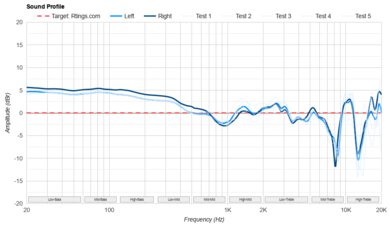
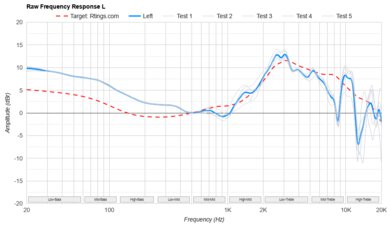
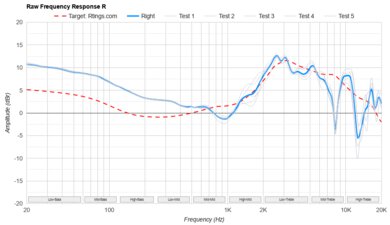
The Mark Levinson No. 5909 have a bright sound profile that's engineered to follow the Harman curve. It follows our target closely in the bass and mid-range with a more pronounced treble response.
As is often the case with ANC-equipped headphones, there are some slight differences in the frequency response when using them with ANC on vs off. These headphones can also be used via Bluetooth, analog, and USB-C connection types, with some variations in the frequency response depending on the connection type. In fact, the frequency response is the same on Bluetooth as it is with USB-C, until ANC is disabled, when it resembles the response with an analog connection. Finally, there are three different bass contour presets you can choose from that can modify the bass response somewhat to your taste. It's worth noting that some of these also boost the treble range to increase the perception of a weaker bass response.
The Mark Levinson 5909 have great frequency response consistency. While we had some trouble aligning the left and right ear cups to get consistent audio delivery with our B&K 5128 and HMS testing heads, this wasn't an issue with human passes. There's very little deviation in the frequency response between passes, and having glasses or long hair won't get in the way of consistent audio delivery.
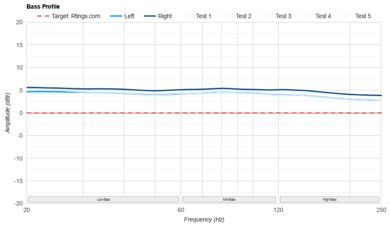
These headphones do an outstanding job of complying with our bass range target. Their low-bass is a touch overemphasized compared to our curve, and there's a slight boost between the mid- and high-bass, which brings out the sharp kick transients in Kraftwerk's Trans-Europe Express.
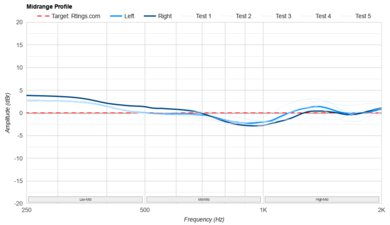
The mid-range compliance with our target is incredible. The lower part of this range is flush with our curve, resulting in a controlled and natural presentation of rhythm guitars, cellos, and baritone vocals. While the higher part of the range is slightly over-emphasized, with some light mismatch between the L/R drivers, it doesn't negatively impact the reproduction of vocals or lead instruments.
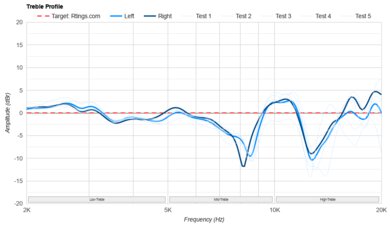
The Mark Levinson Nº 5909 have great treble-range compliance. Overall, the entire range is quite over-emphasized, though this is particularly noticeable in the mid-treble, where sibilant sounds, like splash cymbals and S and T sounds can have a harsh quality to them.
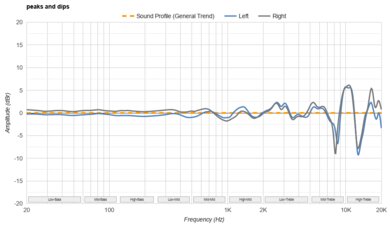
The Mark Levinson 5909 have good peaks and dips performance. Their frequency response has very few deviations from the bright sound profile in the bass and mid-range, though there's some slight mismatch between the L/R drivers in the upper mid-range, which is difficult to hear in real-life content. The treble range features more fluctuations, particularly in the mid-treble, where some sharper peaks bring out the harshness in sibilants.
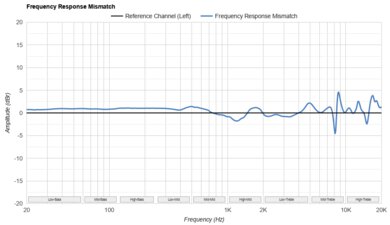
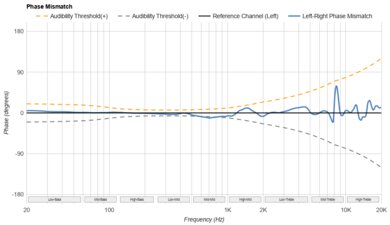
The Mark Levinson Nº 5909 have an okay stereo mismatch performance. The L/R drivers are generally well-matched when it comes to frequency, amplitude, and phase. There are some frequency mismatches in the mid and treble range that would cause the right channel to play back slightly louder than the left during testing. Similarly, with phase, there's a slight mismatch in the response in the upper-mid. That said, neither of these mismatches are audible in real-life content unless you're intentionally trying to pick them out.
The group delay performance is great, as it falls below the audibility threshold across the entire range. This results in tight bass transients and smooth, transparent treble reproduction.
Our results indicate a group delay when these headphones are used in Bluetooth mode, but we noticed a strange phenomenon when conducting the same tests with an analog connection. Group delay is worse when using a wired connection and suffers when ANC is disabled. While it's difficult to know exactly what's behind this, we'd hypothesize that the ANC system applies DSP to improve the group delay performance.
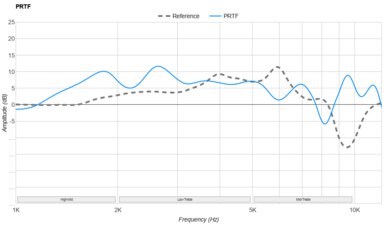
The Mark Levinson Nº 5909 have a disappointing PRTF performance. Our measurements indicate that they don't interact much with your pinna, which is somewhat normal for closed-back headphones. As a result, while they're able to convey some sense of space and size, they struggle to reproduce the same immersive quality of an angled reference speaker.
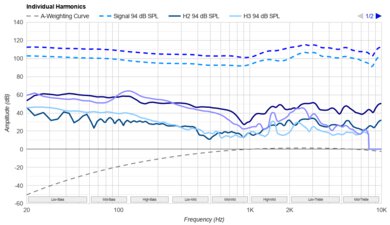
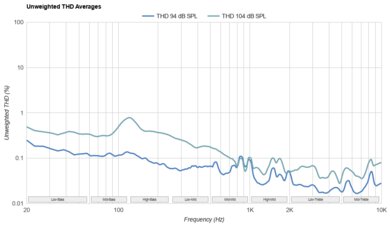
The harmonic distortion performance is excellent. There's very little coloration of audio at both 94dB/SPL and 104dB/SPL, resulting in audio playback that's clean, pure, and devoid of audible distortion.
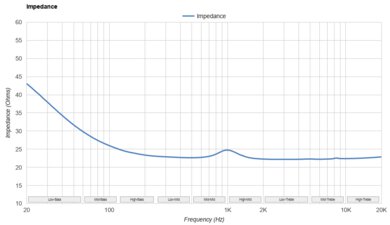
You won't need a dedicated headphone amp to drive the Mark Levinson 5909, even if you connect them to mobile end devices, like phones and laptops.
These are the settings used to test these headphones. Our results are only valid when used in this configuration.
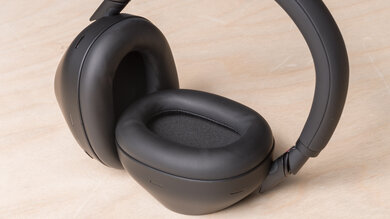
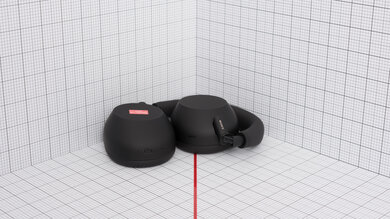
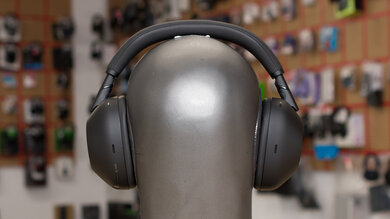
The Mark Levinson No. 5909 are closed-back, wireless headphones that can also be used with USC-C and analog connection types. Their large ear cups, which stick out quite a bit, are covered with high-quality leather earpads. They're available in a few color variants: 'Radiant Red', 'Ice Pewter', and 'Pearl Black'. Our 'Pearl Black' variant features a glossy black finish with bright red accents and the Mark Levinson logo emblazoned on both ear cups.
These over-ears are quite comfortable. The high-quality leather used on both the earpads and the headband is soft and feels supple on the skin. There's a nice range of motion of the headband and ear cup hinges; headband adjustments can easily be performed while in use, and the ear cups swivel to help you get a better fit. That said, the ear cups can be a bit narrow, depending on the size of your ears, so you'll need to adjust the fit to ensure you get a solid seal. The clamping force might also be on the higher side for those with large heads or ears, which can reduce comfort over longer listening sessions.
The controls are great. When using them in Bluetooth mode, the control scheme is intuitive and easy to memorize. All the controls are located on the back of the ear cups, and there's a good amount of tactile feedback when pressing the buttons. There are voice prompts that let you know when you engage different ANC modes, too. There's no audio feedback to let you know when you've reached max/minimum volume.
However, the same control scheme doesn't apply when connected via USB-C, as the volume and music controls are disabled. You'll need to make the changes on your device instead.
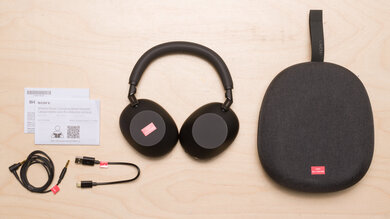
The included case is great. It's simple, but it excels at both protecting the headphones and looking good. The quality of the zipper is particularly impressive, and there's even an interior pouch (also with a zipper) that can be used to stash cables and such.
These headphones aren't the most stable. They're surprisingly resistant to up-down movements (hello headbanging) but are prone to slipping off if you shake your head or move it from side to side. Overall, if you attempt much more than a brisk walk in them, they'll likely slip from your ears and require some re-adjusting.
The Mark Levinson No 5909 have an impressive full-range noise isolation performance. Their closed-back over-ear design is able to isolate you against quite a bit of mid and treble-range noise. While the ANC system doesn't provide much of an improvement on this in the higher ranges, it does attenuate a lot of bass range noise. You can also toggle between the 'High', 'Adaptive', and 'Low' presets depending on your environment. Those who are sensitive to static noise will also notice that the noise floor of these headphones is quite high compared to other ANC-equipped headphones. It's most apparent with the 'High' and 'Adaptive' settings.
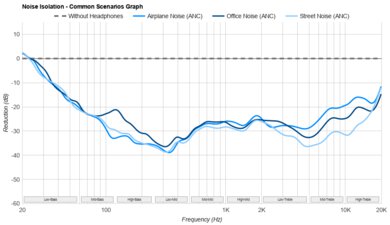
These headphones are excellent at isolating you from common scenarios. They excel at cutting out the honking horns and whooshing cars present in street noise, but also do an excellent job of tamping down on airplane engine rumble. While the ANC system's performance in office environments isn't quite as impressive, it still cuts out a significant amount of office noise, like the chattering of your co-workers.
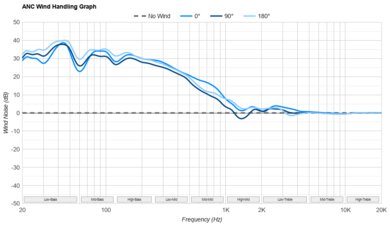
Wind noise is challenging for headphones to cut out as it directly interacts with the ANC's microphones. This causes the ANC system to produce anti-noise to cancel it out, although the sound never fully reaches your ear. However, it results in a loud, annoying sound. Unfortunately, these headphones also lack a wind reduction feature that can help cut out some of this noise.
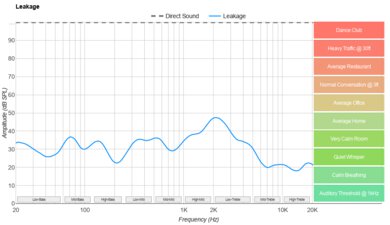
The leakage performance is good. If you listen to audio at high volumes, there's a chance that your audio could be audible to those in close proximity, especially in extremely quiet environments. That said, you won't bother those around you if you're listening to music at normal volumes while on the bus.
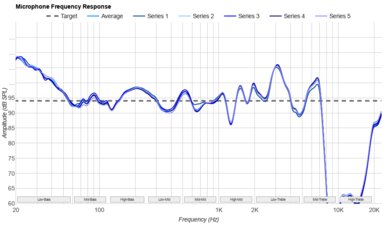
The microphone recording quality is passable. Your voice will be clearly understandable to whoever is on the other end, but it'll sound quite boxy: lacking both body and air.
The noise handling performance is good. It does a good job of accentuating your voice in the face of moderately noisy background environments, like a bustling cafe. It does an even better job in noisier environments, like a subway station, isolating your voice well even when a train's screeching to a halt nearby.
The Mark Levinson No 5909 have an amazing battery life performance. While the manufacturer advertises around 30 hours of battery life over Bluetooth with ANC enabled, we measured just shy of 19 hours, which is still impressive. They also charge relatively quickly and can still play audio over a USB-C connection while charging. There's also a quick charge feature that can give you six hours of playtime with a 15-minute charge.
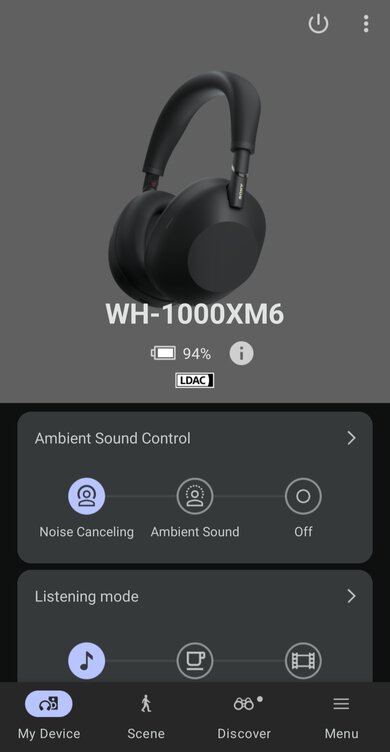
These headphones are compatible with the very sparse Mark Levinson app. As you can see in our app video, it gives you control over a limited set of parameters, letting you change the ANC presets, Bass Contour EQ presets, battery auto-off timer, and headphone head detection. It's also where you'll go to install firmware updates.
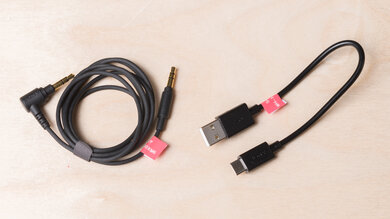
These headphones come with no less than three cables: a 1.24 m/ 4.06 ft USB-C to USB-C cable, a 1.24 m/ 4.06 ft USB-C to analog cable, and a longer 4 m/ 13.12 ft USB-C to analog cable. Latency is quite low via the USB-C connection and even lower via the USB-C to analog connection. Unfortunately, when you connect it to a device via USB-C, you'll disable the Bluetooth connection.
These headphones have very good Bluetooth compatibility. They're compatible with a wide range of codecs, including LDAC, AAC, and aptX Adaptive, and there's support for multi-device pairing. Latency is predictably quite high with SBC and aptX, but is a little lower via LDAC. If you're using your headphones to watch a video or to game over Bluetooth, it's worth using aptX Adaptive (Low Latency), which yields by far the lowest latency performance.
You can plug the headphones into your PC via both analog and USB-C connection types to listen to audio, but you won't be able to use the microphone.
You can connect the headphones to your PlayStation controller for audio support or connect to the console via USB-C. They lack microphone support with a wired connection, so if you want to talk with friends during a game, you'll need to buy a separate cable from the manufacturer with a mic and in-line controls.
These headphones can connect to your Xbox controller for audio only. You won't be able to use the mic over a wired connection, so you'll need to purchase a standalone mic to communicate with online teammates.