Sennheiser Momentum 2.0 On-Ear/HD1 On-Ear  Headphones Review

Review updated Aug 22, 2018 at 02:22pm
Tested using Methodology v1.3.1 
Sennheiser Momentum 2.0 On-Ear/HD1 On-Ear
5.8
Mixed Usage 
6.8
Neutral Sound 
5.3
Commute/Travel 
6.1
Sports/Fitness 
5.4
Office 
5.1
Wireless Gaming 
6.8
Wired Gaming 
6.1
Phone Call 
 0
The Sennheiser HD1 On-Ear are well built but mediocre wired on-ears for most use cases. They have a decent but slightly uneven sound quality that won't be ideal for more critical listeners but should be good enough for most. They have a sturdy build quality like the rest of the HD1 lineup but their on-ear fit won't be as comfortable for everyone. They also do not block a lot of noise so they won't be the ideal headphones to use in loud, noisy environments.

Our Verdict

5.8
Mixed Usage 

Mediocre for mixed usage. The Sennheiser HD1 On-Ear have a decent sound and a sturdy build quality. They also have easy to use controls and are decently portable. Unfortunately, they won't be the most suitable headphones to use in loud noisy environments due to their poor isolation performance. They're also not as comfortable as some of the other on-ear designs we've tested and aren't stable enough for sports or physical activity. These headphones are best use as a critical listening headphone since they do not perform as well for other use cases.

Pros
  • Lightweight, sturdy design.
  • Great audio reproduction.
Cons
  • Leaks quite a bit of sound.
  • Poor isolation.
6.8
Neutral Sound 

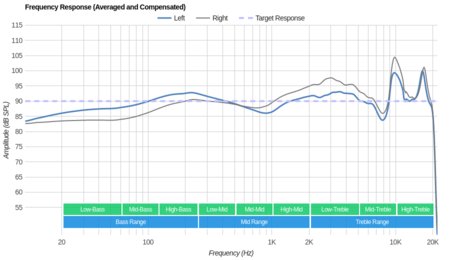
Decent for neutral listening. The Sennheiser Momentum 2.0 On-Ear have a slightly uneven but good enough sound quality for most. They pack an above-average amount of bass but tend to sound a bit boomy and cluttered since their mid-range is a little recessed. Their treble range is also a bit inconsistent and can sound a bit sharp on some S and T sounds but should be balanced enough to not be piercing on already bright tracks. Unfortunately, they won't be the ideal choice for more neutral listeners since they have a fairly small soundstage due to their closed back on-ear design.

5.3
Commute/Travel 

Poor isolation performance for noisy commutes. They're fairly portable and have a decent control scheme but won't block much ambient noise in loud environments.

6.1
Sports/Fitness 

Mediocre for sports use. They're compact and breathable but are a little too unstable for high-intensity exercises and running.

5.4
Office 

Poor for office use. The Sennheiser Momentum 2.0 On-Ear headphones will leak enough to be distracting to your colleagues and do not adequately block the chatter of a busy office.

5.1
Wireless Gaming 

Average for gaming. The Sennheiser HD1 on-ear have a decent sound and a low latency wired connection, but are not as convenient or as customizable as most wireless gaming headsets. They also have a mediocre at best microphone and an iOS specific audio cable that is only compatible with the PS4 controller and not the Xbox one.

6.8
Wired Gaming 
6.1
Phone Call 
  • 5.8
    Mixed Usage
  • 6.8
    Neutral Sound
  • 5.3
    Commute/Travel
  • 6.1
    Sports/Fitness
  • 5.4
    Office
  • 5.1
    Wireless Gaming
  • 6.8
    Wired Gaming
  • 6.1
    Phone Call
  • Changelog

    1.  Updated Nov 21, 2019: Converted to Test Bench 1.3.1.
    2.  Updated Nov 21, 2019: Converted to Test Bench 1.3.
    3.  Updated Feb 16, 2018: Converted to Test Bench 1.2.
    4.  Updated Oct 02, 2017: The microphone has been tested with our new methodology, as explained here

    Check Price

    Android, Black
    SEE PRICE
    Amazon.com
    Android, Ivory
    SEE PRICE
    Amazon.com
    Android, Silver
    SEE PRICE
    Amazon.com

    Popular Headphones Comparisons

    Comparison picture

    The Sennheiser HD1 On-Ear are well-built headphones with decent audio reproduction. They can be a little boomy and slightly sharp on some higher frequencies but sound good enough for most casual listeners. Their lightweight yet sturdy design feels durable thanks to the metal and dense plastic used for the frame and ear cups. Unfortunately, they're not the best sounding or most comfortable on-ears we've tested, especially when compared to some of the headphones below. See our recommendations for the best on-ear headphones.

    Sennheiser PXC 550 Wireless

    The Sennheiser PXC 550 Wireless are a better headset overall than the Sennheiser Momentum 2.0 On-Ear, but since the Momentum are wired-only headphones, you cannot make a direct comparison. The PXC 550 are more comfortable and have a lot more features, like a customizable sound and noise cancellation. This makes them more versatile for most use cases and suitable for different environments, unlike the Sennheisers. They also sound better out of the box, but on the other hand, the Momentum are wired, so they have no latency when watching videos. They're also a bit more compact and portable than the PXC 550 Wireless. However, you can also use the Bose with the provided audio cable for the same use case.

    Sony WH-1000XM2 Wireless

    The Sony WH-1000XM2 are a much better headphone than the Sennheiser Momentum 2.0 On-Ear, but they're also wireless and noise cancelling which is not as comparable. The WH-1000XM2 are more suitable for commuting and traveling than the Sennheisers since they are noise cancelling and the Sennheisers are not. The Sonys also have a lot more features like a customizable EQ, codec options, and room effects. On the other hand, since the Sennheisers are wired, they have no latency when watching videos. They're also a bit more compact and portable than the Sonys.

    Bose QuietComfort 35 II/QC35 II Wireless 2018

    The Bose QuietComfort 35 II/QC35 II are much better headphones than the Sennheiser Momentum 2.0 On-Ear/HD1 On-Ear. The Bose are much more comfortable and have an outstanding ANC feature that helps gives you peace and quiet during your daily commutes or on long travel days. Their sound profile is much better-balanced, and their wireless design gives you more freedom. On the other hand, the on-ear design of the Sennheiser makes them a bit more portable, and you don't have to worry about keeping their battery charged since they're not wireless.
    Overhauling Our Audio Measurements And A New Multi-Curve Graphing Tool

    We've upgraded our Headphones Test Bench to 2.0! This update brings several key changes to our tests and usages, making it easier than ever to interpret our sound results based on your personal preferences. You'll also find a brand-new interactive graph tool featuring multiple targets (including our own!) for you to explore and compare.

    For a full breakdown, check out our changelog, which includes detailed commentary from our test designer explaining the rationale behind our update.

    We'd also love to hear your thoughts: your feedback helps us keep improving, so join us in the comments!

    Test Results

    Sort:
    RATINGS
    Category:
    All
    Design
    Style
    TypeOn-ear
    EnclosureClosed-Back
    WirelessNo
    TransducerDynamic

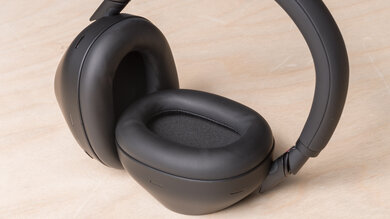
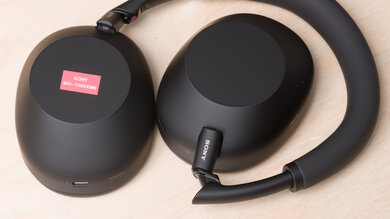
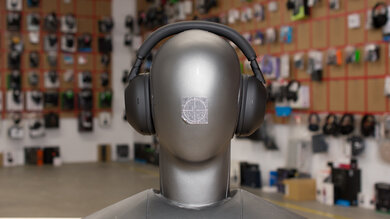
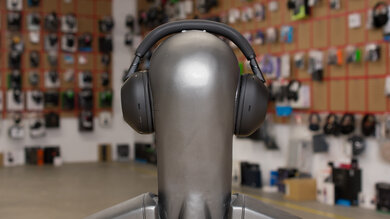
    The Sennheiser HD1 On-Ear are a more compact version of the HD1 Over-Ear, and keep the same old-school design language and color scheme. They have dark gray oval ear cups with black padding, covered in a suede-like, soft fabric. The metal headband is covered with hard faux leather. They also come in a couple color variants to better match your style and preference.

    6.5
    Comfort
    Weight0.39 lbs
    Clamping Force
    0.65 lbs

    The Sennheiser HD1 On-Ear are relatively comfortable. The on-ear cups are well padded and covered in a soft fabric that feels nice on the skin. Unfortunately, the on-ear design may not be ideal for everybody and the lack of padding on the headband further reduces their comfortability.

    7.1
    Controls
    OS Compatibility
    iOS
    Ease Of UseOkay
    FeedbackDecent
    Call/Music ControlYes
    Volume ControlYes
    Microphone ControlNo
    Channel Mixing
    N/A
    Noise Cancelling ControlN/A
    Talk-Through
    N/A
    Additional ButtonsNo

    The Sennheiser HD1 On-Ear deliver a solid button layout with decent functionality. The inline cable includes volume controls and a multi-purpose call/music button that allows you to for play, stop and skip tracks. The buttons also provide good feedback and are easy to find by touch alone.

    7.3
    Breathability
    Avg.Temp.Difference3.4 °C

    The Sennheiser Momentum 2.0 On-Ear are a bit more breathable than most over-ears. They do not fully cover the ear like the HD1 Over-Ear and therefore obstruct less airflow. This means you should be able to wear these headphones for a little longer than with the over-ears but comfort and fit will be a bigger deciding factor.

    6.5
    Portability
    L4.33"
    W6.5"
    H2.17"
    Volume60.92 in³
    Transmitter RequiredN/A

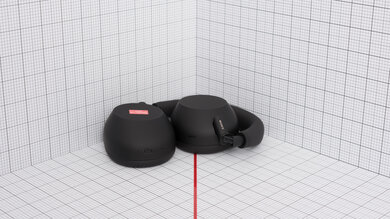
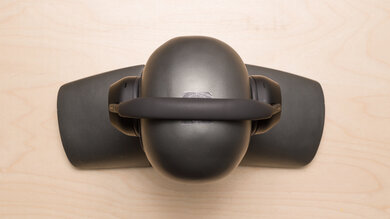
    These headphones have a moderately portable design. They fold up for easier transport and take up less space. However, they are on the larger side for on-ear headphones, and although they would fit relatively comfortably in a backpack or handbag, it will not fit in most pockets.

    7.0
    Case
    TypeSoft case
    L6.5"
    W7.68"
    H2.36"
    Volume117.8 in³

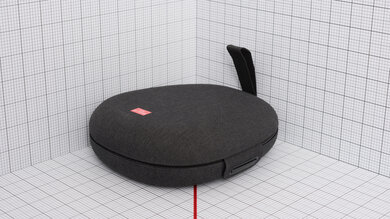
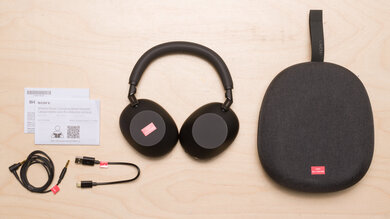
    The Sennheiser HD1 On-Ear, like the HD1 Over-Ear and the HD1 Wireless, have the same soft case that will protect the headphones from scratches and will fit all the gear that is provided with headphone. Unfortunately, the soft case will not protect the headphones much, from hard falls and impacts like a hard case would.

    7.5
    Build Quality

    Good build quality. The Sennheiser HD1 On-Ear have a sturdy metal headband that feels durable. The ear cups are dense enough to withstand a couple of drops without breaking; the overall build quality and design feel fairly high-end and premium. Unfortunately, the thin cabling connecting the ear cups is exposed and susceptible to damage from wear and tear.

    6.5
    Stability

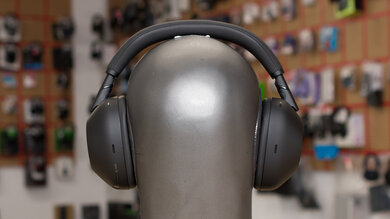
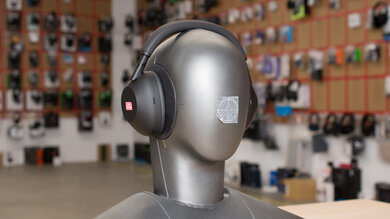
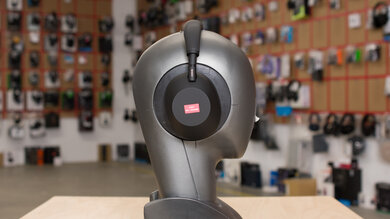
    The Sennheiser Momentum 2.0 On-Ear are decently stable headphones. They maintain their position during casual listening sessions. Unfortunately, they're not stable enough for sports or high-intensity activities like running and jumping. Their audio cable is detachable but can be locked into the ear cups. This means, that if the cable is locked and gets hooked by something in your environment, the headphones will be pulled off your head, unlike the wireless model.

    Headshots 1
    Headshots 2
    Top
    In The Box

    • Sennheiser HD1 On-Ear Headphones
    • Audio cable
    • Carrying case
    • Carrying pouch
    Sound
    Sound Profile
    See details on graph tool
    Bass Amount
    1.65 dB
    Treble Amount
    -0.47 dB
    7.9
    Frequency Response Consistency
    See details on graph tool
    See details on graph tool
    Avg. Std. Deviation
    0.42 dB

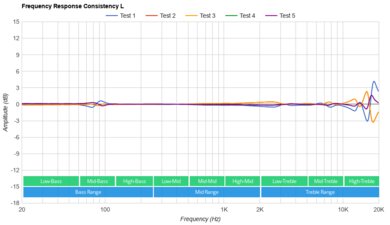
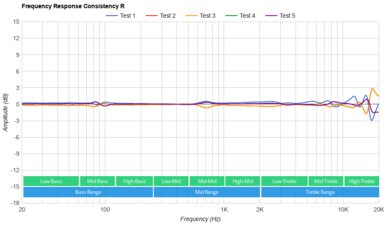
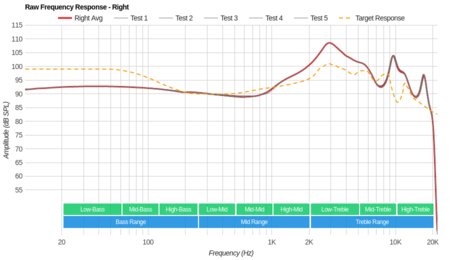
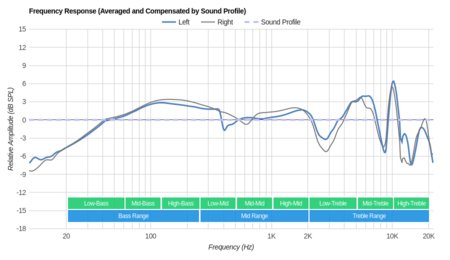
    The Sennheiser Momentum 2.0 On-Ear have a very good frequency response consistency. The consistency of their bass delivery across our 5 human subjects is above-average. Our measurements shows that if a proper fit/seal is achieved, the maximum deviation at 20Hz will be less than 3dB which is negligible. However, without a proper fit/seal, the user may experience a noticeable drop in bass. These headphones are even more consistent in the treble range, especially below 10KHz. This is most likely due to their small ear cups and on-ear design which makes the possible variations in positioning and placement across multiple re-seats quite limited.

    Raw Frequency Response
    See details on graph tool
    See details on graph tool
    8.2
    Bass Accuracy
    See details on graph tool
    Std. Err.
    2.47 dB
    Low-Frequency Extension
    10 Hz
    Low-Bass
    2.32 dB
    Mid-Bass
    2.87 dB
    High-Bass
    2.82 dB

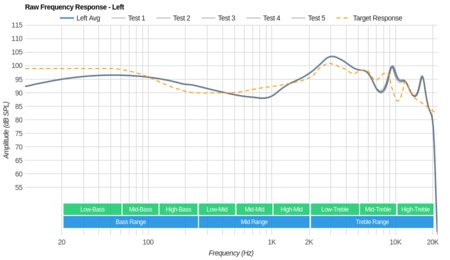
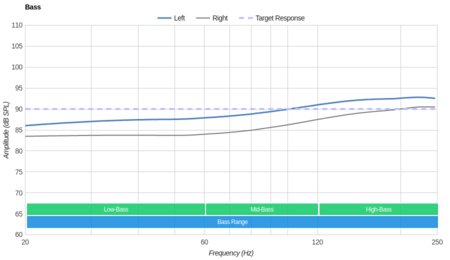
    The bass of the Sennheiser HD1 On-Ear is very good. The LFE (low-frequency extension) is at 10Hz, which is excellent. Overall, the bass response is flat and even, but consistently over our neutral target by about 2.5dB. This results in a deep and extended bass which is slightly hyped and on the heavy side, which fans of heavy-bass my like.

    7.7
    Mid Accuracy
    See details on graph tool
    Std. Err.
    3.13 dB
    Low-Mid
    -2.46 dB
    Mid-Mid
    -3.46 dB
    High-Mid
    0.87 dB

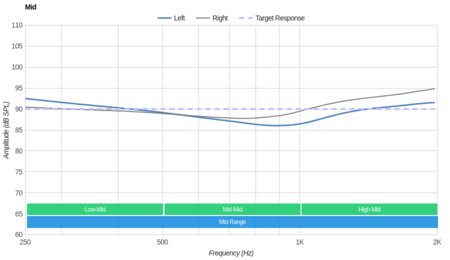
    The Sennheiser HD1 On-Ear have a good bass performance. The response throughout the range is quite even, but the broad 5dB recess centered around 500Hz nudges vocals and lead instruments towards the back of the mix by giving more emphasis to the bass and treble regions. It will also slightly thin out the vocals and lead instruments.

    6.8
    Treble Accuracy
    See details on graph tool
    Std. Err.
    4.49 dB
    Low-Treble
    -1.95 dB
    Mid-Treble
    1.67 dB
    High-Treble
    -3.56 dB

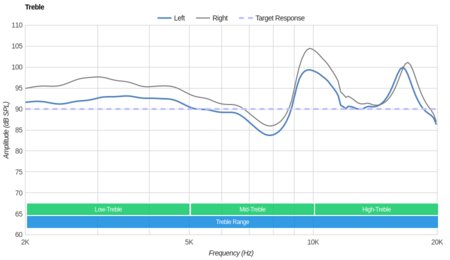
    The treble range performance is about average. The overall response is rather uneven, and the dip centered around 4KHz negatively affect the detail and presence of vocals and lead instruments. The peak around 9KHz, makes the S and Ts a bit sharp, especially for those with sensitive ears. This will be mostly noticeable on vocals and cymbals.

    6.3
    Peaks/Dips
    See details on graph tool
    Peaks
    2.46 dB
    Dips
    2.28 dB
    8.5
    Imaging
    See details on graph tool
    See details on graph tool
    Weighted Group Delay
    0.19
    Weighted Amplitude Mismatch
    0.99
    Weighted Frequency Mismatch
    1.96
    Weighted Phase Mismatch
    4.02

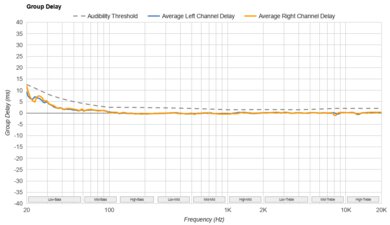
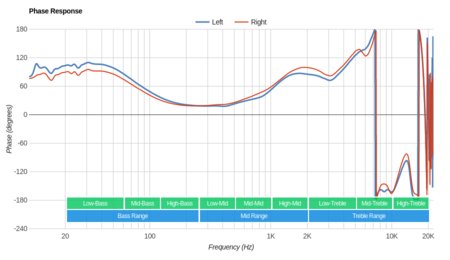
    The imaging is very good. Their weighted group delay is at 0.19, which is very low. The GD graph also shows that the entire group delay response is below the audibility threshold. This ensures a tight bass and a transparent treble reproduction. Also, the L/R drivers of our test unit were well-matched in frequency, amplitude, and phase response. This is important for accurate placement and localization of objects, such as footsteps and instruments, in the stereo field.

    3.3
    Soundstage
    See details on graph tool
    PRTF Accuracy (Std. Dev.)
    4.84 dB
    PRTF Size (Avg.)
    -0.17 dB
    PRTF Distance
    -4.41 dB
    Openness
    7.3
    Acoustic Space Excitation
    5.3

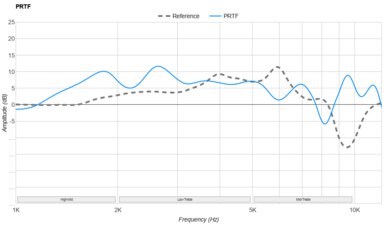
    The soundstage of the Momentum 2.0 On-Ear is poor. These headphones don't interact with the pinna, which is due to their on-ear design. This can also be seen in their PRTF graph where there is very little activation. This, and their open-back design, results in a soundstage that will be perceived as small and located inside the listener's head.

    5.9
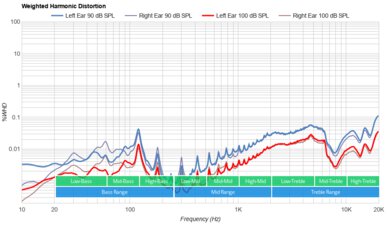
    Weighted Harmonic Distortion
    See details on graph tool
    WHD @ 90
    0.599
    WHD @ 100
    1.136
    Isolation
    3.1
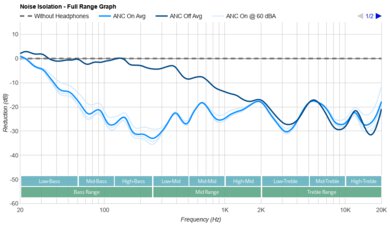
    Noise Isolation
    See details on graph tool
    Isolation Audio
    Overall Attenuation
    -7.3 dB
    Noise CancellingNo
    Bass
    -0.05 dB
    Mid
    -3.71 dB
    Treble
    -18.32 dB

    The Sennheiser Momentum 2.0 On-Ear have a sub-par isolation performance. These headphones don't have active noise cancelling and therefore don't provide any isolation in the bass range. This means they will let in all the low rumbling noises of airplane and bus engines. In the mid-range, which is important for blocking out speech, they provide an inadequate 4dB of isolation. In the treble range, occupied by sharp sounds like S and Ts, they isolate by more than 19dB, which is decent.

    5.8
    Leakage
    See details on graph tool
    Leakage Audio
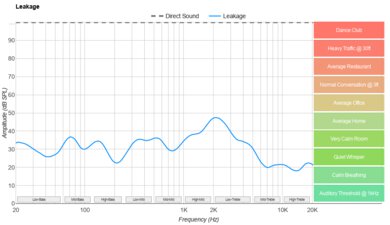
    Overall Leakage @ 1ft
    46.22 dB

    The leakage performance of the HD1 On-Ear is sub-par. The significant portion of the leakage is spread between 500Hz and 4KHz, which is a relatively broad range. The overall level of the leakage is relatively loud too. With the music at 100dB SPL, the leakage at 1 foot away averages at 46dB SPL and peaks at 62dB SPL which is noticeably above the noise floor of an average office.

    Microphone
    Microphone Style
    Integrated
    No
    In-line
    Yes
    Boom
    No
    Detachable Boom
    N/A
    MicYes

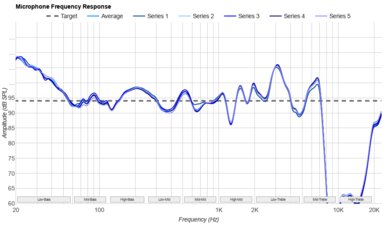
    The Sennheiser HD1 On-Ear have an average microphone. In quiet environments, speech recorded or transmitted with this mic sound relatively thin and lacking in presence, but it will be quite intelligible and open. In noisy situations, it will struggle to fully separate speech from background noise even in moderately loud environments, like a busy street.

    7.3
    Recording Quality
    See details on graph tool
    Recorded Speech
    LFE
    472.58 Hz
    FR Std. Dev.
    3.2 dB
    HFE
    14,905.89 Hz
    Weighted THD
    1.012
    Gain
    20.48 dB

    The HD1 On-Ear's microphone has a decent recording quality. The LFE (low-frequency extension) of 473Hz indicates a recorded/transmitted speech that is noticeably thin. The HFE (high-frequency extension) of 15KHz is quite extended, suggesting an airy and open sound. However, the dip around 5Khz, negatively affects the detail and presence of speech, but it will still be easily intelligible.

    6.0
    Noise Handling
    See details on graph tool
    Speech + Pink Noise
    Speech + Subway Noise
    SpNR
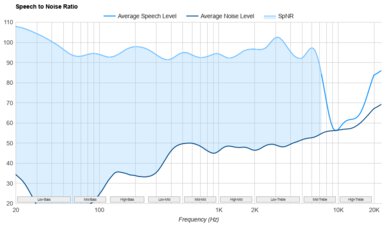
    12.55 dB

    The microphone of the HD1 On-Ear is mediocre at noise handling. They achieved a speech-to-noise ratio of 13dB in our SpNR test. This means they are best suited for quiet environments, since they will struggle to fully separate speech from ambient noise even in moderately loud situations.

    Active Features
    0.0
    Battery
    Battery Type
    N/A
    Continuous Battery Life
    N/A
    Additional Charges
    N/A
    Total Battery Life
    N/A
    Charge Time
    N/A
    Power Saving Feature
    N/A
    Audio While Charging
    N/A
    Passive Playback
    N/A
    Charging PortN/A

    These are passive headphones with no active components and no battery.

    0.0
    App Support
    App NameN/A
    iOSN/A
    AndroidN/A
    macOSN/A
    WindowsN/A
    Equalizer
    N/A
    ANC Control
    N/A
    Mic ControlN/A
    Room effects
    N/A
    Playback Control
    N/A
    Button MappingN/A
    Surround SoundN/A

    The headphones do not have a dedicated, compatible app for added customization.

    Connectivity
    0.0
    Bluetooth
    Bluetooth Version
    N/A
    Multi-Device Pairing
    N/A
    NFC Pairing
    N/A
    Line of Sight Range
    N/A
    Default Latency
    N/A
    aptX Latency
    N/A
    aptX(LL) Latency
    N/A

    These headphones are wired and do not have a Bluetooth connection. If you want a good Bluetooth headset for more casual use, check out the Plantronics BackBeat Pro 2.

    These headphones do not have a wireless range since they're wired. If you want a good wireless headset for critical listening, consider the Bose QuietComfort 35 II.

    0.0
    Non-Bluetooth Wireless
    Non-BT Line of Sight Range
    N/A
    Non-BT Latency
    N/A
    9.5
    Wired
    Analog Audio
    Yes
    USB Audio
    No
    DetachableYes
    Length4.49 ft
    Connection1/8" TRS
    Wired Latency
    0 ms

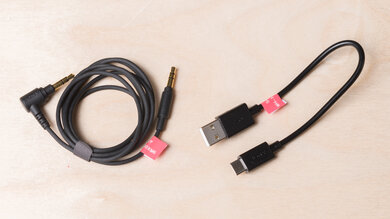
    These headphones come with a 1/8" TRRS audio cable with an in-line microphone that's compatible with the, PS4 and iOS devices but not the Xbox One. They will only provide audio when connected to your Xbox controller and will need a headset adapter or a compatible headphone jack to provide microphone support with your PC or tablet.

    PC / PS4 Compatibility
    PC / PS4 Analog
    Audio + Microphone
    PC / PS4 Wired USB
    No
    PC / PS4 Non-BT Wireless
    No
    Xbox One Compatibility
    Xbox One Analog
    Audio Only
    Xbox One Wired USB
    No
    Xbox One Wireless
    No
    0.0
    Base/Dock
    Type
    N/A
    USB Input
    N/A
    Line In
    N/A
    Line Out
    N/A
    Optical Input
    N/A
    RCA Input
    N/A
    Dock Charging
    N/A
    Power Supply
    N/A

    The Audio-Technica ATH-M60x does not have a dock. If you need a headset with a dock that also has a wired connection for gaming or watching movies, then consider the SteelSeries Arctis 7.