
The Logitech G213 Prodigy is a decent entry-level gaming keyboard with rubber dome switches. It has a simple plastic frame that bends easily and is fitted with ABS keycaps that feel rather cheap. Its zone-lit backlighting lacks brightness control, and customization can only be done through software. Thankfully, G HUB has a good amount of customization options and is available for Windows and macOS. The keyboard is comfortable enough to type on all day due to its low actuation force and built-in wrist rest; however, the typing experience is unremarkable and doesn't feel much different from your typical membrane keyboard. There are dedicated media controls, but only a very limited number of programmable keys.
Our Verdict
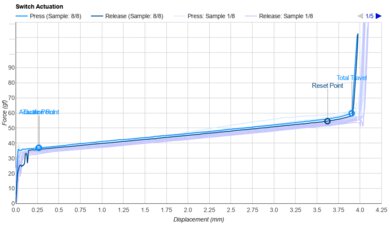
The Logitech G213 Prodigy is a decent gaming keyboard. The rubber dome switches have a low actuation force that makes typing feel very light, but their high pre-travel distance makes the keyboard feel less responsive overall. It doesn't feel well-built and the backlighting is zone-lit instead of per-key. The function keys are macro-programmable, but there aren't any dedicated macro keys for MMO games.
- Acceptable ergonomics.
- Programmable keys.
- Light actuation force.
- Dedicated media controls.
- Zone-lit backlighting.
- High pre-travel distance.
- No dedicated macro keys.
- Mediocre build quality.
The Logitech G213 Prodigy is decent for office use. It doesn't generate a lot of typing noise and it's fairly comfortable to type on due to the included wrist rest and light actuation force. However, the tactile feedback feels a bit mushy. The board flexes easily and the ABS keycaps can develop a shine with oil buildup. On the bright side, there's software support for both Windows and macOS.
- Acceptable ergonomics.
- Quiet typing noise.
- Light actuation force.
- Dedicated media controls.
- Mediocre typing quality.
- Mediocre build quality.
The Logitech G213 Prodigy is a wired-only keyboard and can't be used with mobile devices.
The Logitech G213 Prodigy is a mediocre keyboard for programming. Even though it's comfortable to type on for long periods, the typing experience itself feels unremarkable and similar to most generic membrane keyboards. It isn't particularly well-built, as the board flexes easily and the ABS keycaps feel cheap. It has macro-programmable keys and backlighting; however, the latter is zone-lit and there's no brightness setting.
- Acceptable ergonomics.
- Programmable keys.
- Light actuation force.
- Dedicated media controls.
- Mediocre typing quality.
- Zone-lit backlighting.
- Mediocre build quality.
- Acceptable ergonomics.
- Light actuation force.
- Dedicated media controls.
- Mediocre build quality.
- Acceptable ergonomics.
- Light actuation force.
- Dedicated media controls.
- Mediocre build quality.
Changelog
- Updated Nov 29, 2023: We've converted this review to Test Bench 1.3.1, which adds a new estimated PCB latency test to the Single-Key Latency section and a new Analog test to the Switches section of this review. You can see the full changelog here.
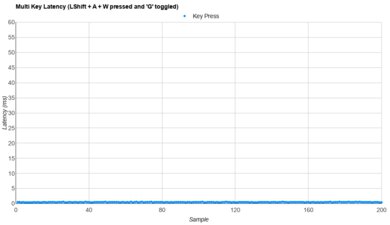
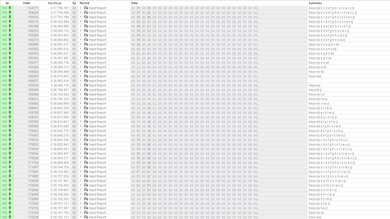
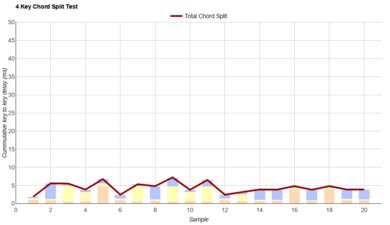
- Updated Oct 27, 2023: We've converted this review to Test Bench 1.3, which overhauls how key input is evaluated. We've added new tests for Single Key Latency, Multi Key Latency, Data Transmission, and Chord Split. We've also introduced a new Raw Performance usage and adjusted how the Gaming and Office usage scores are calculated. You can see the full changelog here.
- Updated Jun 15, 2023: We've converted this review to Test Bench 1.2. This update introduces new Backlight Features and Backlight Clarity test boxes. We've also added a new Switches test box, added additional test comparisons to our Hardware Customizability test box that we introduced with our last Test Bench. For an in-depth look at our changes, you can see our full changelog here.
- Updated May 19, 2023: We've converted this review to Test Bench 1.1. This update adds several new tests addressing Hardware Customization, Macro Keys And Programming, and Wireless Mobile Compatibility. We've also added new objective evaluations to the Typing Noise test, and we've simplified several tests and removed several others that were no longer relevant. For an in-depth look at all our changes, you can see our full changelog here.
Check Price
Differences Between Sizes And Variants
We reviewed the Logitech G213 Prodigy Gaming Keyboard and there are no other variants of this keyboard. It's the entry-level keyboard in Logitech's G Series lineup, which includes the Logitech G Pro Mechanical Gaming Keyboard and the Logitech G915 LIGHTSPEED, to name a few.
Popular Keyboard Comparisons
The Logitech G213 Prodigy is a mediocre gaming keyboard. It's decent for office use due to its light typing experience and higher pre-travel distance, but there are better options in this price range, such as the SteelSeries Apex 3. For more options, check out our recommendations for the best gaming keyboards, the best mechanical gaming keyboards, and the best RGB keyboards.
Overall, the Logitech G413 is much better than the Logitech G213 Prodigy. The G413 is a mechanical keyboard with significantly better build quality, and its Romer-G Tactile switches provide a better typing experience. Also, the G413 has a USB passthrough, the backlight has brightness settings, and the keys are individually lit. On the other hand, the G213 comes with a built-in wrist rest, and it has dedicated media controls. The backlight on the G413 is limited to a single red color, while the G213 is multi-color.
For most uses, the SteelSeries Apex 3 is significantly better than the Logitech G213 Prodigy. The SteelSeries' build quality is much better, it has full RGB backlighting with brightness control, and every key is macro-programmable. The SteelSeries also provides a better typing experience, it produces less typing noise, and the included wrist rest is detachable if you don't want to use it.
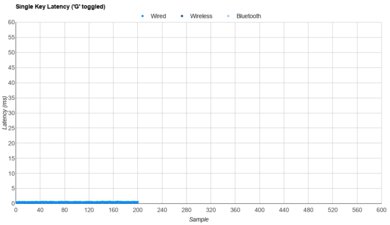
The Logitech G213 Prodigy and the Razer Ornata V3 X are both budget gaming keyboards that use membrane switches. However, the Logitech is a better option for gaming as its latency is significantly lower.
Overall, the Logitech G213 Prodigy is much better than the HyperX Alloy Core RGB. The Logitech is more comfortable due to the built-in wrist rest, has macro-programmable keys, and software support for customization. However, the HyperX has a better build quality and brightness control for its backlighting.
Test Results
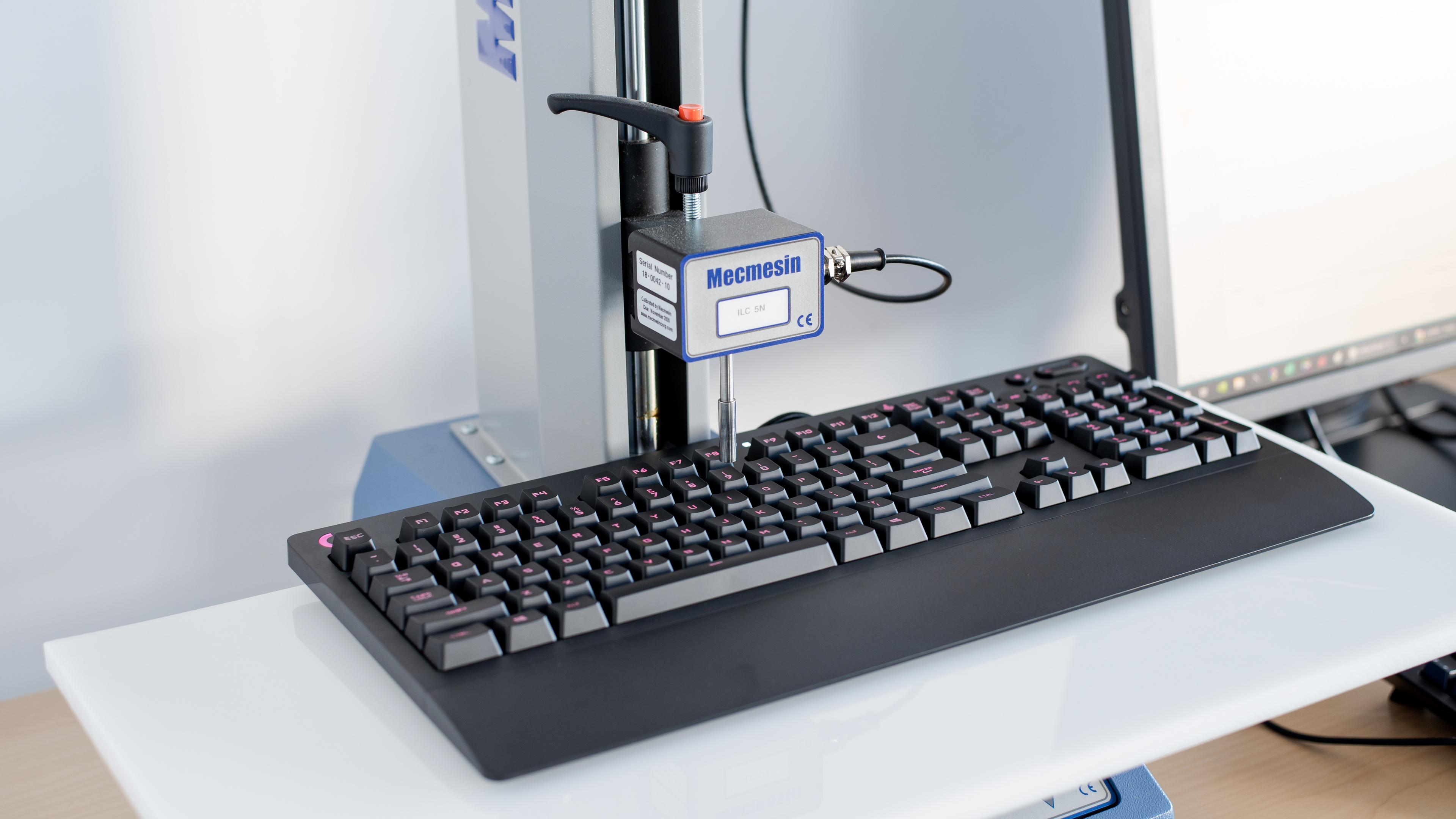
for pictures & test results
for pictures & test results

for pictures & test results


for pictures & test results

for pictures & test results
for videos & test results
