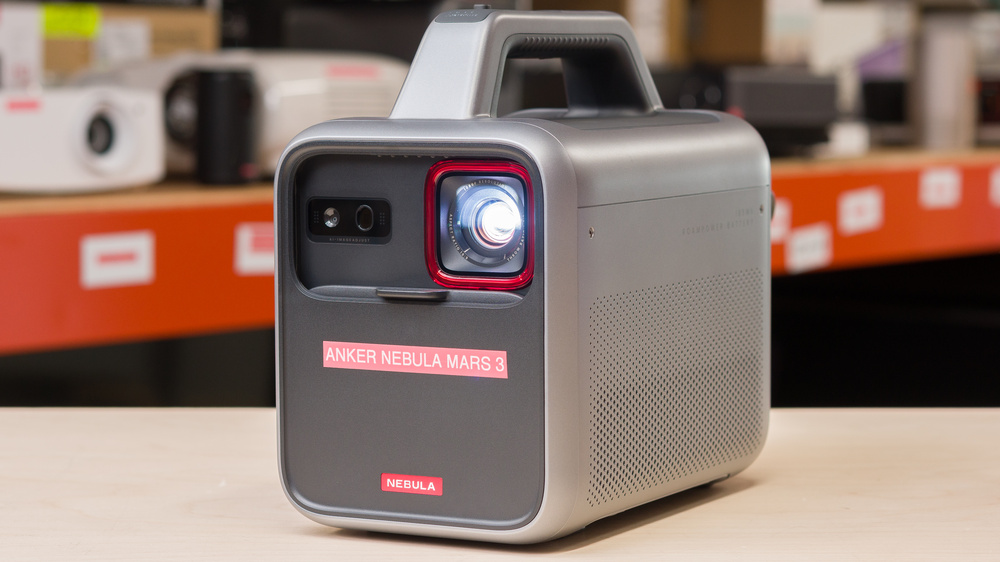
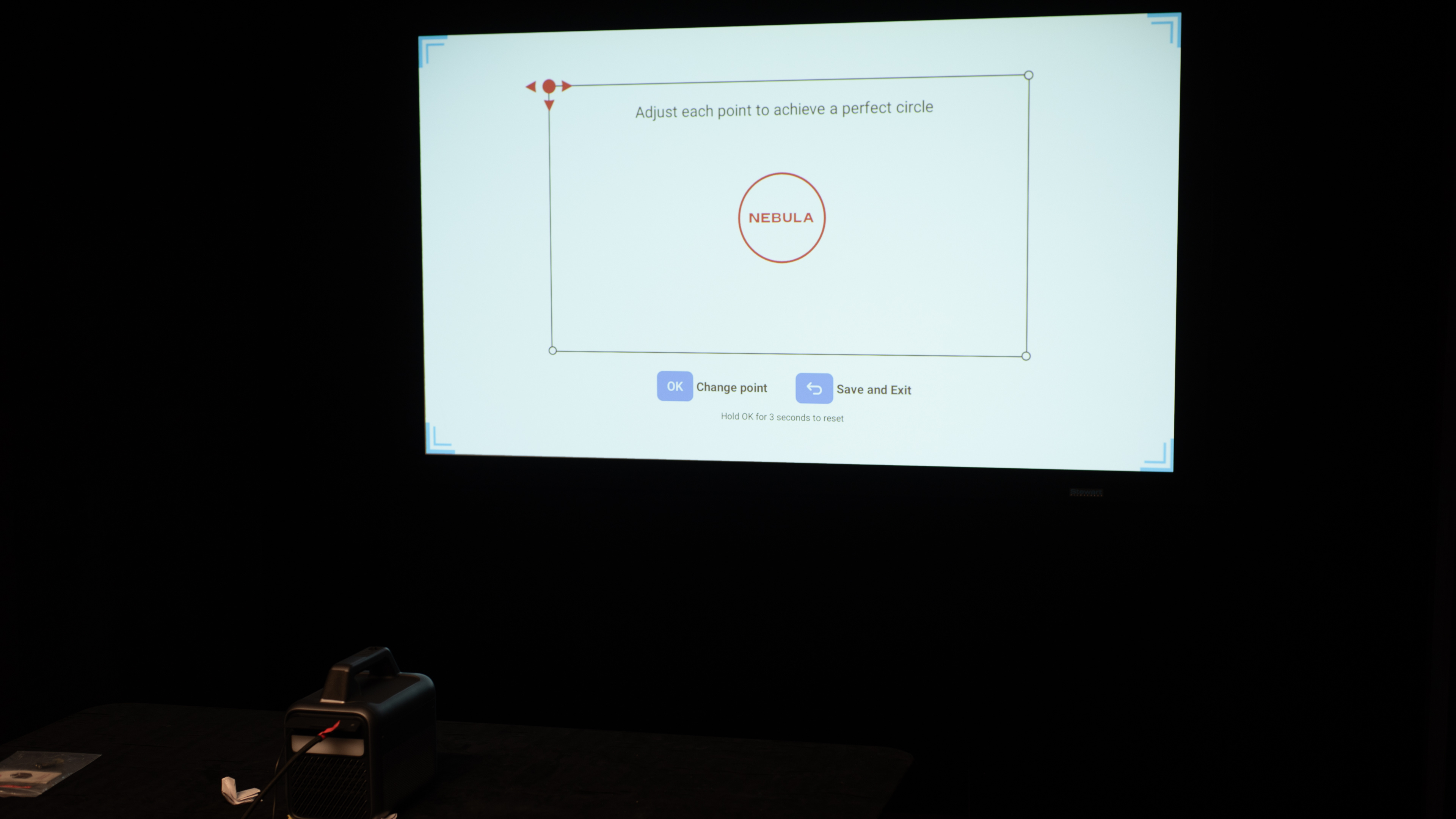
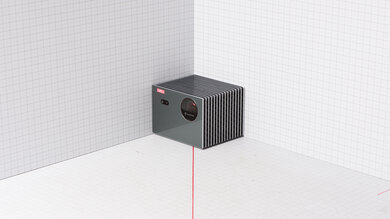
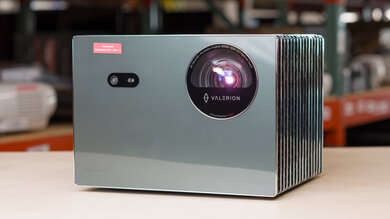
The Anker Nebula Mars 3 is a portable, outdoor-focused 1080p LED projector. It's medium-sized, with an integrated carry handle, and features a large 185 Wh battery rated for up to five hours of video playback in Eco mode. It's built with ruggedness in mind, featuring IPX3 water resistance, 0.5 m drop resistance, and 0.7 mm dust resistance. The unit can also serve as a power bank and features an integrated 40W sound system. It features a full suite of placement helpers, including autofocus, auto keystone, and Screen Fit, making setup quick and easy. The projector runs Android TV 11 with Chromecast built-in; Netflix isn't TV-licensed and must be installed via Nebula's app store (Nebula Play). It's capable of projecting an 80-inch image at about 6.9 ft, up to 200 inches at roughly 17.4 ft (fixed 1.2:1 throw).
Our Verdict
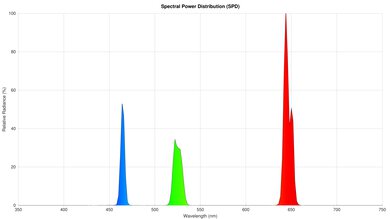
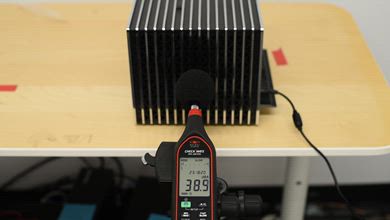
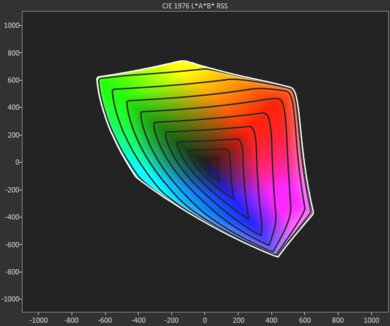
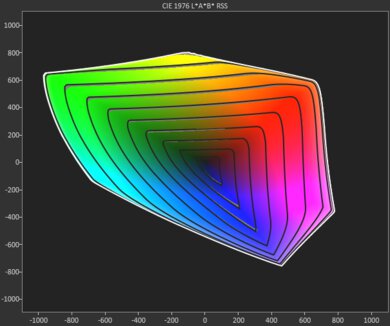
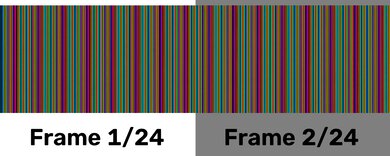
The Anker Mars 3 is poor for home theater setups. It can't achieve deep blacks as it has low contrast, so images lack depth and much detail. It also has disappointing color volume because it doesn't display the most saturated colors in common color spaces. It fails to provide a vivid viewing experience as a result. Unfortunately, it has noticeable rainbow effect when your eyes move around the screen, and it can't remove judder from any source, leading to jittery motion. It at least has a relatively quiet fan, so it doesn't drown out audio from your movie.
Quiet fan.
Low contrast, so blacks look gray.
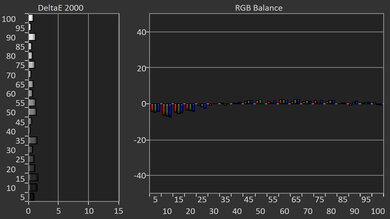
Isn't very accurate out of the box.
Noticeable rainbow effect.
Can't remove judder from any source.
Struggles displaying saturated colors.
The Anker Mars 3 is acceptable for outdoor setups. You need to use it at night in a dark space, though, as it doesn't get bright enough to fight ambient light. While it's a bit heavy, its carrying handle makes it easy to bring outside. You don't even need an outlet nearby as its battery lasts over 2 hours. It also has a bunch of features to help you set it up, like auto keystone, focus, screen fit, and obstacle avoidance. However, it lacks optical zoom or lens shift to clean up the image when the projector isn't directly facing the screen.
Carrying handle for easy transport.
Battery lasts over 2 hours.
Includes auto keystone and screen fit adjustments.
Relatively dim, so keep the lights off.
Somewhat heavy and big.
No optical zoom or lens shift.
The Anker Mars 3 is decent for use in bedrooms. Its carrying handle helps you bring it to the bedroom, and its built-in battery lets you watch content for over 2 hours without charging. It also has a bunch of features to help you set it up, like auto keystone, focus, and screen fit. However, it lacks optical zoom or lens shift to clean up the image when the projector isn't directly facing the screen. While you can hear its fan in quiet rooms, it's silent enough that the sound from your movie or show will drown it out.
Battery lasts over 2 hours.
Quiet fan.
Includes auto keystone and screen fit adjustments.
Somewhat heavy and big.
No optical zoom or lens shift.
The Anker Mars 3 is disappointing for gaming. It has relatively high input lag at 60Hz; it's fine for slower titles, like turn-based games and visual novels, but anything faster than that isn't optimal. There's no 120Hz support to make the unit more responsive, but its DLP imaging technology ensures minimal motion blur. As for image quality, it's unremarkable overall; its brightness is disappointing, and its contrast doesn't impress in dark contexts. It's also not very accurate out of the box, as it has a blue tint.
DLP technology with minimal motion blur.
Low contrast, so blacks look gray.
Isn't very accurate out of the box.
Relatively high input lag at 60Hz.
No 120Hz mode to make the unit more responsive.
Struggles displaying saturated colors.
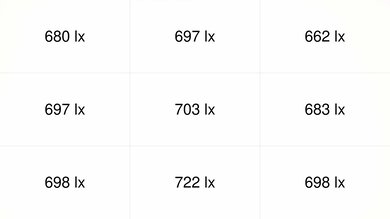
The Anker Mars 3 has disappointing brightness. It's just bright enough for relaxed movie nights in a dark room or for watching outdoors after sunset. On a big screen, it looks fairly dim, so you really need to keep other lights off to see the image clearly.
Relatively dim, so keep the lights off.
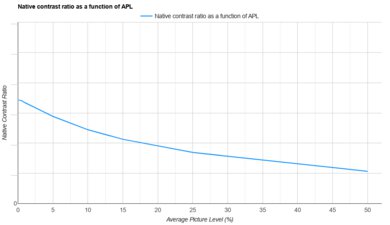
The Anker Mars 3 has poor contrast. With any content in bright and dark rooms, blacks and letterbox bars appear clearly gray, and darker scenes look flat. It doesn't offer the deep, rich blacks you would want for serious movie watching.
Low contrast, so blacks look gray.
The Anker Mars 3 has decent portability. Even though it's not lightweight or compact, its carrying handle makes it easy to take to another room or outdoors. It even has a built-in battery that lasts over 2 hours. It has a bunch of features to help you set it up anywhere, like auto keystone, focus, screen fit, and obstacle avoidance. However, it doesn't have optical zoom or lens shift to clean up the image if the projector isn't centered with the screen.
Carrying handle for easy transport.
Battery lasts over 2 hours.
Includes auto keystone and screen fit adjustments.
Somewhat heavy and big.
No optical zoom or lens shift.
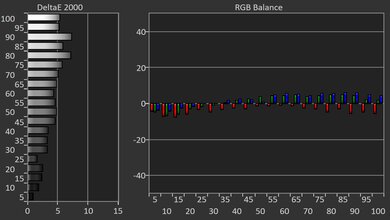
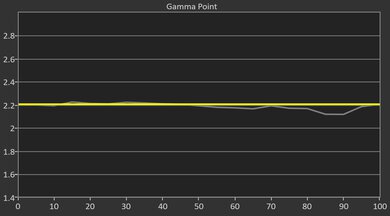
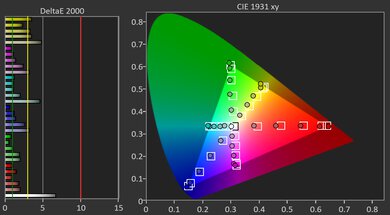
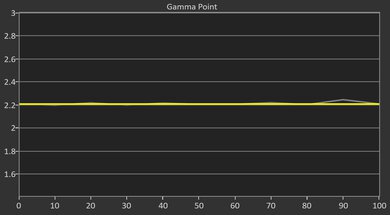
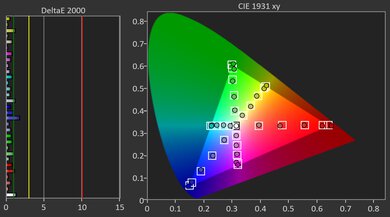
The Anker Mars 3 has poor colors. It's inaccurate out of the box because it has a blue tint, and you need to calibrate it to fix it. Even then, it fails to properly display saturated colors for an impactful viewing experience.
Isn't very accurate out of the box.
Struggles displaying saturated colors.
The Anker Mars 3 has alright gaming responsiveness. Its biggest strength is its DLP imaging technology, which results in minimal motion blur. However, it's limited to a 60Hz refresh rate with downscaled 1440p or native 1080p signals, and it has high input lag.
DLP technology with minimal motion blur.
Relatively high input lag at 60Hz.
No 120Hz mode to make the unit more responsive.
Performance Usages
Changelog
- Updated Aug 18, 2026: We've converted the review to Test Bench 1.0, which replaces our Color Gamut test with Color Volume and adds a new Rainbow Effect test box. We also updated Effective Contrast (formerly Native Contrast) to account for projector brightness and reworked Judder scoring. The new bench also adds Outdoors and Bedroom usages, plus Portability, Color, and Gaming Responsiveness Performance Usages; Movies is now Home Theater, and all existing usage scores have been updated. See the 1.0 changelog.
-
Updated Jul 03, 2026:
We mention the newly reviewed Anker Nebula Mars 3 Air in the Input Lag section of this review.
-
Updated May 13, 2026:
We mention the newly reviewed Anker Nebula P1 in the Native Contrast section of this review.
-
Updated May 11, 2026:
We've added text to some test boxes as a result of our latest test bench. We've also updated Inputs & Connectivity to include Bluetooth support checks.
Check Price
Differences Between Sizes And Variants
The Mars lineup ranges from a rugged, battery-first outdoor model like the Anker Mars 3 to a smaller Google TV option with native Netflix, like the Nebula Mars 3 Air. Key differences are light source, brightness, battery size/playback, OS/Netflix support, and max image size.
| Model | Light Source / Resolution | Brightness (ANSI) | Battery & Playback | Smart Platform / Netflix | Max Image / Throw | Speakers | Notable Extras |
|---|---|---|---|---|---|---|---|
| Nebula Mars 3 | LED / 1080p (DLP) | 800 | 185Wh; up to ~5 hrs video (Eco) | Android TV 11; Netflix via Nebula Play | Up to 200″; fixed ~1.2:1 | 40W (3-way) | Outdoor-ready (IPX3, dust/drop resistance), power-bank output; HDR10 (internal decode) |
| Nebula Mars 3 Air | LED / 1080p (DLP) | 400 | Built-in; up to ~2.5 hrs video | Google TV; official Netflix | Up to 150″; fixed ~1.2:1 | Dual 8W | IEA auto-setup (autofocus/auto keystone/screen fit/obstacle avoidance) |
| Nebula Mars II Pro | LED / 720p (DLP) | 500 | ~3 hrs video | Android 7.1; Nebula/Aptoide apps | Up to 150″; ~1.2:1 | Dual 10W | Older gen portable; simple carry-and-play |
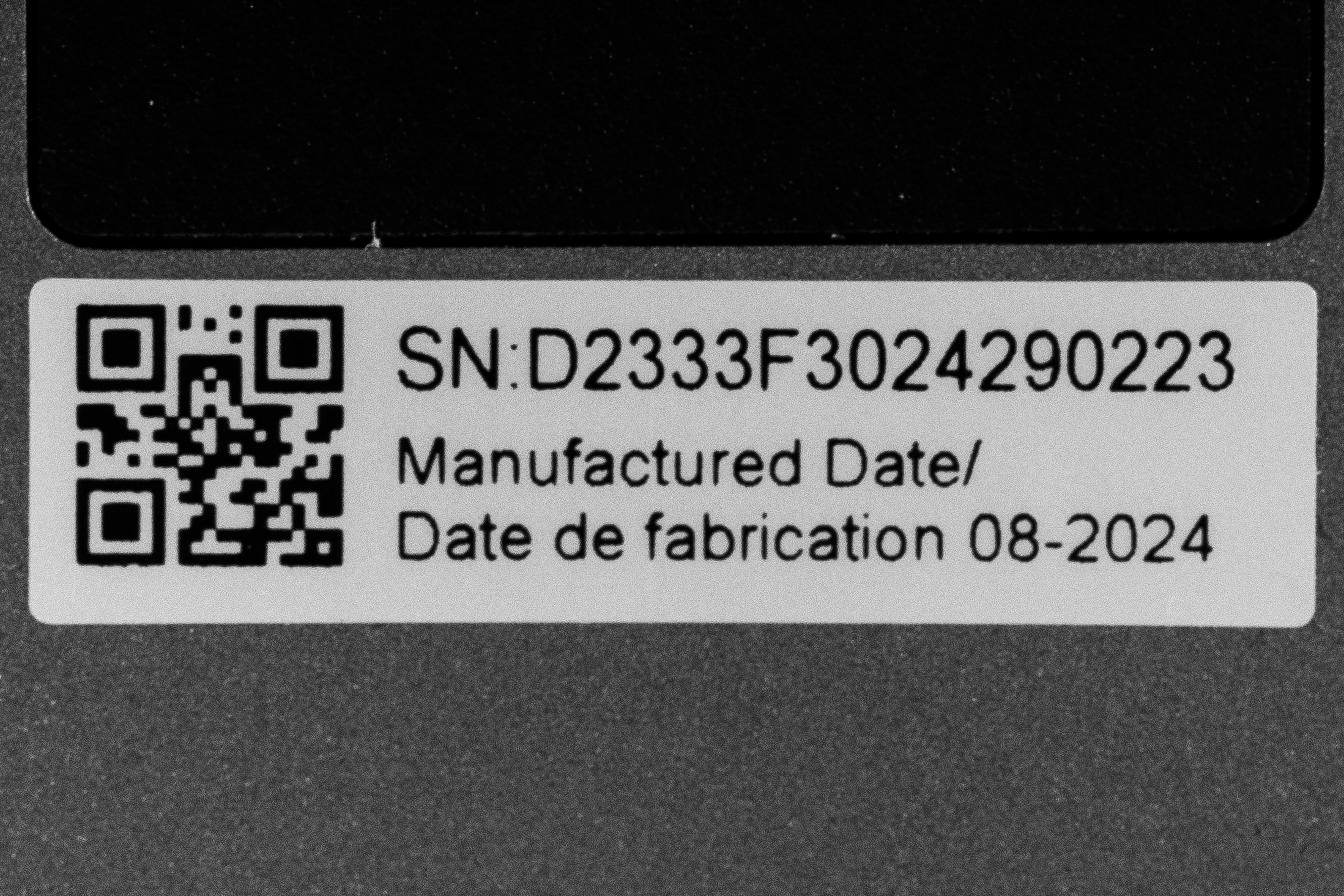
Our unit was manufactured in August 2024.
Popular Projector Comparisons
The Anker Mars 3 is a projector designed for outdoor use, featuring full IPX3 water and dust resistance, as well as drop resistance. It also has a large internal battery that can double as a power bank. If you're primarily looking for a unit to take camping, it's a solid choice and better than comparable portable units, which are typically not very robust. However, it has limited picture quality with blacks that look gray, disappointing color volume, and low brightness, so you need to use it in a dark space. If you're not looking to rough up your projector, other portable products, like the XGIMI Halo+ or the LG CineBeam Q, offer better image quality at a lower price.
Check out our recommendations for the best portable projectors, the best outdoor projectors, and the best overall projectors. If you'd prefer to shop for another product in the same price range, look up the best projectors under $1,000 instead.
The Anker Nebula Mars 3 and Anker Nebula Mars 3 Air look similar, and also perform similarly. The regular Mars 3 does have a few extra features: its battery lasts much longer, and it has water, drop, and dust resistance, making it much more rugged. Still, if you don't need a rugged portable projector, the Air is likely the better option, as its contrast is a little better, it's more accurate out of the box, and its input lag is lower.
The XGIMI Halo+ has slightly better image quality than the Anker Nebula Mars 3, but the Anker is a much more robust unit, truly meant to be used outdoors. While the XGIMI is smaller and easier to carry around, it's more fragile, so it's better used indoors. Ultimately, if you value outdoor robustness, the Anker is more attractive, but if you want a small and easy-to-carry-around unit, and you just want to bring it to your friend's house, the XGIMI is better.
The Anker Nebula X1 is far better than the Anker Nebula Mars 3, but they're not in the same price bracket. The Nebula X1 is a heftier unit that doesn't have an integrated battery, but it delivers far better image quality. In turn, the Mars 3 is lighter and has a ton of features meant for the outdoors, but its image quality isn't close to the X1.
The Anker Nebula Mars 3 and the NexiGo TriVision Ultra are two mid-sized projectors with a carry handle, but of the two, the NexiGo is the superior pick. It's far brighter than the Anker, with deeper contrast, so it looks punchier in any room condition. The NexiGo also delivers a sharper image with its pixel shifting technology, while the Anker is limited to 1080p. They're both inaccurate out of the box, with the NexiGo being more so than the Anker, but the former is easier to calibrate. The NexiGo is the superior pick for gamers, too, as its input lag is far lower at 4k @ 60Hz. If you instead game at 1080p, then the Anker's input lag is slightly lower at that resolution, but they're both pretty slow there. Both units have a handle for easy transport and weigh about the same, but the Anker is a tad more portable due to its fully featured smart OS; the NexiGo requires a dongle for apps.
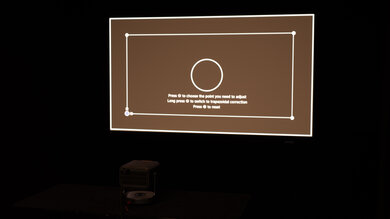
We've independently bought and tested over 80 projectors and published detailed results for each, so you can decide which one to buy. These have all been tested under the same standardized methodology, allowing you to compare them side by side. We still have all these projects in our lab, so we can continually go back and compare them to ensure our reviews are still accurate. All our test methodologies are also public on our website, so you can validate the results yourself.
Throw Calculator
Global Controls
Test Results
for pictures & test results
for pictures & test results



for pictures & test results