We buy and test dozens of TVs each year, and we've bought and tested more than 120 LG TVs. LG releases many TVs every year, as much as any other manufacturer. LG was one of the first brands to release TVs with OLED panels, and that's now their most popular lineup. They also have a wide selection of LED TVs, ranging from entry-level 4k TVs to high-end models with Mini LED backlights. Unfortunately, most of their LED TVs don't perform very well overall, so our LG TV reviews aren't very positive when it comes to their LED models. But if you're looking for a brand with a large variety of excellent OLED TVs, LG is it.
You can also vote on which LG TVs you want us to buy and test, check out our 2026 TV lineup page to learn about LG's new TVs being released this year, and learn about LG's webOS.
Updates
- 09/10/2026LG B6 OLED 2026 reviewed
- 09/09/2026LG B6E OLED reviewed
- 07/21/2026LG Gallery 2026 reviewed
- 04/24/2026LG G6 OLED reviewed
- 04/20/2026LG C6 OLED 2026 reviewed

We buy and test dozens of TVs yearly, taking an objective, data-driven approach to deliver results you can trust. Our testing process is complex, with hundreds of individual tests that take over a week to complete. Most of our tests use specially designed test patterns that mimic real content, but we also use the same sources you have at home to ensure our results match the real-world experience. We use two main tools for our testing: a Colorimetry Research CR-100 colorimeter and a CR-250 spectroradiometer.
-
Best LG TV
 Mixed UsageHome TheaterBright RoomSportsGamingBrightnessBlack LevelColorMotion HandlingGame Mode ResponsivenessProcessing (In Development)Resolution:4kNative Refresh Rate:165HzScreen Finish:GlossyPanel Type:OLEDSub-Type:WOLEDDolby Vision:YesSee all our test resultsSizes:55" 65" 77" 83" 97"
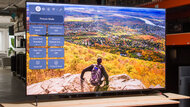
The LG G6 OLED is the best LG OLED TV we've tested. It's LG's flagship TV in 2026, with truly stunning picture quality, perfect, inky blacks, incredibly bright highlights, and vibrant, saturated colors. While OLEDs are usually associated with their dark room performance, this one is no slouch in a bright room. It has an excellent anti-reflective coating that nearly eliminates the glare from windows or lights facing the TV, and it's plenty bright enough to overcome anything that remains, so even dim scenes are easy to see when you're watching TV during the day.
Like most LG TVs, it has a fantastic selection of extra features as well. It supports high refresh rate gaming on all four HDMI inputs, so you can take full advantage of the latest gaming consoles or even a PC or Steam Machine. It's available in a wide range of sizes, so you can choose the size that best fits your room setup. The 97-inch uses an older panel technology, so it's not quite as good, but it still looks fantastic.
-
Best Upper Mid-Range LG TV
Mixed UsageHome TheaterBright RoomSportsGamingBrightnessBlack LevelColorMotion HandlingGame Mode ResponsivenessProcessing (In Development)Resolution:4kNative Refresh Rate:165HzScreen Finish:GlossyPanel Type:OLEDSub-Type:WOLEDDolby Vision:YesSee all our test resultsSizes:42" 48" 55" 65"If you want to save a bit of money, step down to the LG C6 OLED instead. The C6 is an upper mid-range TV with very similar performance to the more expensive LG G6 OLED. There are two key differences between them: peak brightness and reflection handling. Overall, the C6 is a less optimal choice for daytime viewing, and you're going to see a lot more glare reflected off the screen if you have any lights or windows around. In a light-controlled room, though, they look very similar, but small highlight details aren't quite as sharp or vibrant on the C6.
This model is a bit confusing in LG's 2026 lineup, as it exists as two distinct model names depending on which size you get. The 42, 48, 55, and 65-inch models are known as the C6. The larger 77- and 83-inch models are called the LG C6H OLED instead. That extra 'H' stands for LG's Hyper Radiant technology, and really, it just means that those sizes get a bit brighter and have more vibrant colors. Other than that, there's no real difference between them.
-
Best Mid-Range LG TV
Mixed UsageHome TheaterBright RoomSportsGamingBrightnessBlack LevelColorMotion HandlingGame Mode ResponsivenessProcessing (In Development)Resolution:4kNative Refresh Rate:120HzScreen Finish:GlossyPanel Type:OLEDSub-Type:WOLEDDolby Vision:YesSee all our test resultsSizes:48" 55" 65" 77" 83"The best mid-range LG TV we've tested is the LG B6 OLED. It's a surprisingly similar TV to the higher-end LG C6 OLED 2026, with the same deep, inky blacks and impressive motion handling, but it's definitely a slight step down in picture quality and features. It's not as bright, so small details don't stand out quite as well, and very bright scenes are considerably dimmer, so it's not as well-suited for watching sports. It's also limited to a maximum refresh rate of 120Hz. While this is just fine for console gamers, it'll disappoint PC gamers looking for the smoothest motion possible.
There's also a minor variant of this TV known as the LG B6E OLED. It's the exact same TV panel as the regular B6, but it comes with a simpler remote instead that can't be used as a motion pointer. Depending on local deals, you may find one cheaper than the other, so you should just buy whichever one is cheaper in your area. If you really want the motion-controlled remote, it can be purchased separately.
-
Best Lower Mid-Range LG TV
Mixed UsageTV ShowsSportsVideo GamesHDR MoviesHDR GamingPC MonitorResolution:4kNative Refresh Rate:Screen Finish:Type:LEDSub-Type:VADolby Vision:See all our test resultsSizes:50" 55" 65" 75" 86"If you'd rather get an affordable LED TV but don't want to lose out on features, the best lower mid-range LG TV we've tested is the LG QNED85T. It's not nearly as good as the OLEDs, but it's cheaper and doesn't skimp on many features. It doesn't support Dolby Vision like the OLEDs, but it passes through advanced DTS audio formats, which is great for physical media lovers with a soundbar. It's a fully featured gaming TV as well, with four HDMI 2.1 bandwidth ports capable of outputting up to 4k @ 120Hz. It also supports every VRR technology and has a superbly low input lag, but fast motion is a bit blurry.
By going with this model, you're losing out on picture quality. Despite having local dimming, the TV's contrast just isn't good enough to display very deep blacks in a dark room, and there's very noticeable haloing around highlights. It's bright enough to overcome glare in a well-lit room, but small highlight details don't stand out the way they should. Fortunately, it displays a wide range of colors, so HDR content is vibrant enough to have some impact on the viewer. Unlike the OLEDs, it has a narrow viewing angle, so it only looks its best when seated directly in front of the screen. Keep in mind that this is an edge-lit model, which is more prone to failure.
-
Best Budget LG TV
Mixed UsageHome TheaterBright RoomSportsGamingBrightnessBlack LevelColorMotion HandlingGame Mode ResponsivenessProcessing (In Development)Resolution:4kNative Refresh Rate:60HzScreen Finish:GlossyPanel Type:LCDSub-Type:IPSDolby Vision:NoSee all our test resultsSizes:43" 50" 55" 65" 75" 85"The best budget LG TV we've tested is the LG UA77. It doesn't have very good image quality and is light on features, but it's cheap and gets the job done. It's a dim model with mediocre reflection handling, so it doesn't handle much glare at all, making it best suited for dimly lit rooms. Unfortunately, the TV doesn't display deep blacks due to its awful contrast, so dark scenes look gray. It also doesn't display a wide range of colors and is too dim to bring out small highlight details in movies. Luckily, the TV does have a wide viewing angle, making it a decent option for a wide living room.
You won't find Dolby Vision on this TV, and it's also pretty barebones in terms of gaming features; it doesn't have HDMI 2.1 bandwidth or support for 120Hz at any resolution. You're limited to 4k @ 60Hz, but it does support VRR, and it has low input lag. However, pixel response times are quite slow on this model, so motion is blurry. The TV is available in a wide range of sizes, from a small 43-inch model to a huge 86-inch model.


Compared To Other Brands
-
Great OLED options.
LG's best TVs all use OLED displays, and they remain one of the biggest players in this market, with numerous options depending on your budget.
-
Great viewing angle.
Their OLED TVs have very wide viewing angles, making them a great choice for a wide seating arrangement.
-
Great smart platform.
LG's proprietary smart platform, webOS, is one of the most popular options. It's user-friendly, and the LG Magic Remote provides a unique way for you to control your TV.
-
Excellent gaming features.
Most of their mid-range models and up have a great selection of additional gaming features, including VRR support, low input lag, high refresh rates, and HDMI 2.1 bandwidth.
-
LED options have limited picture quality.
LG's LED models tend to offer disappointing picture quality.
-
LED options offer poor value.
Their LED TVs don't offer good value for what they offer in terms of performance, and better options are available from other brands.
LG vs Samsung
Samsung is LG's closest competitor, releasing a very similar lineup with both LED and OLED models. Whereas LG's OLEDs all use WOLED panels, though, Samsung uses QD-OLED technology on most of their lineup. There's no clear winner between these two brands, as they each release great models, and the best one ultimately depends on your specific needs. Learn more about the differences between Samsung and LG TVs.
LG vs Sony
Sony is a direct competitor of LG since their lineup also includes LED and OLED models. LG's OLEDs have better gaming performance and generally cost less. However, Sony's LED options usually deliver a better dark room experience than LG's LED models, and they typically have better color accuracy and superior image processing.
LG vs TCL
Although traditionally known as more of a budget brand, TCL TVs have significantly improved in recent years and now compete heavily against LG. TCL's LED models are far better than LG's equivalent models, offering similar features but much better picture quality. You should consider LG's OLED models if you mainly watch TV in a dark room, or TCL's LED options if you're in a bright room.
LG's OLEDs are among the best on the market, with stunning picture quality and a fantastic selection of extra features. However, their LED TVs don't offer good value and typically don't perform well. While their IPS LCD offerings have wide viewing angles, which is helpful for larger living rooms, the competition with VA panels often outperforms them in overall picture quality.
2026 LG Lineup
LG announced a big chunk of their TV lineup at CES 2026, with the main focus being on their new OLEDs and RGB Mini LED displays. LG placed a lot of emphasis on their new Wallpaper TV, known as the W6 series. The TV is extremely thin and only uses a single power cable, with the inputs located in a wireless external box. LG also announced a pretty large upgrade for one of this year's C Series models. The C6H uses the RGB tandem panel that was exclusive to the LG G5 OLED from last year, so expect superior brightness and color volume over the traditional WOLED panel used in the regular C6.
LG is also making a pretty big push with RGB Mini LED TVs, and they announced three new models that utilize the new technology. Sadly, LG is using marketing terms that are a bit misleading, since the two lower-end models in the lineup are edge-lit. Edge-lit models usually don't perform very well at all compared to direct-lit TVs, and they're less reliable, so we don't expect great performance from them.
If you want a more in-depth summary of LG's CES 2026 announcements, check out our 2026 TV lineup page. Below is some information on LG's announced 2026 lineup. We fully expect LG to announce more 2026 models sometime soon, and we'll be sure to update the table below as more information is made public.
| Model | Sizes | Backlight Type | Refresh Rate | Notes |
|---|---|---|---|---|
| W6 | 77", 83" | OLED | 165Hz | Wireless Zero Connect Box |
| G6 | 48", 55", 65", 77", 83", 97" | OLED | 165Hz | 97" doesn't have the Primary RGB Tandem 2.0 panel |
| C6H | 77", 83" | OLED | 165Hz | Primary RGB Tandem 2.0 panel |
| C6 | 42", 48", 55", 65" | OLED | 165Hz | Same panel as the LG C5. 42" and 48" aren't as bright |
| B6 | 48", 55", 65", 77", 83" | OLED | 120Hz | |
| MRGB95B | 75", 86", 100" | RGB LED | 165Hz | |
| MRGB9M | 65", 75", 86" | RGB LED | 144Hz | Edge-Lit, Wireless Zero Connect Box |
| MRGB85B | 50", 55", 65", 75", 86" | RGB LED | Unknown | Edge-lit |
| LX7 | 55", 65" | Direct LED | 60Hz | Gallery TV with magnetic frame |
LG Smart Features
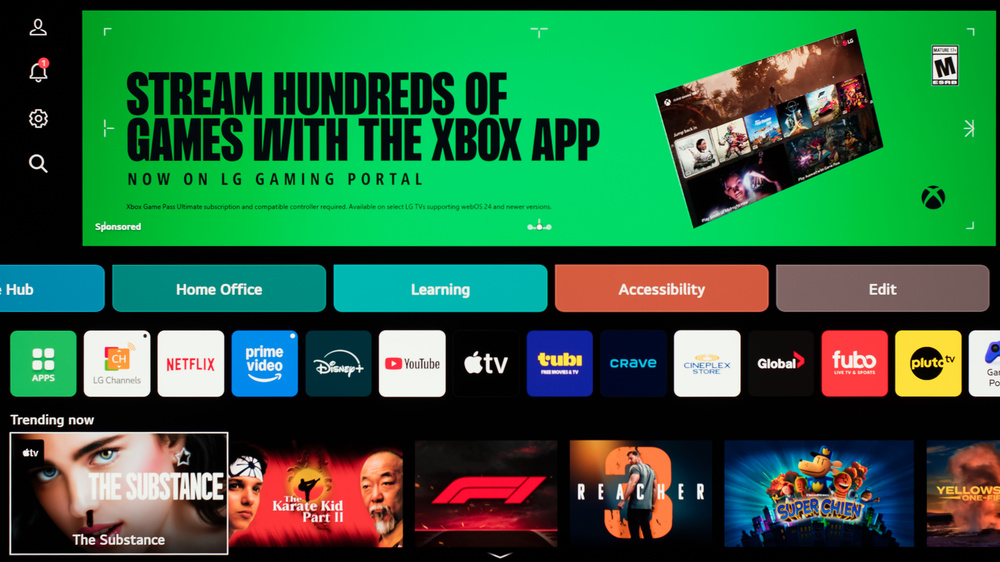
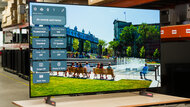
LG uses their own proprietary smart OS, known as webOS, across all of their TVs. It runs well and offers many smart features that make finding content to watch fast and easy. WebOS allows you to cast content from your phone, easily find popular apps, play content from a USB stick, and use your voice to control the TV. On top of that, you can download mobile-style games directly onto your TV, or pair a controller to your TV and play AAA titles through Xbox Cloud Gaming or GeForce Now. LG offers five years of guaranteed webOS updates, so you don't have to worry about your interface looking dated a few years after you purchase a TV.
If you want more detailed information on LG's webOS and how it stacks up against the competition, check out our article specifically on LG's webOS.
Recent Updates
Sep 23, 2026:
We replaced the LG B5 OLED with the LG B6 OLED 2026, as the newer model is more widely available.
Jul 24, 2026:
We verified our picks for accuracy and availability and refreshed the text throughout. We also changed our upper mid-range pick from the LG C6H OLED to the LG C6. Even though they're the same model, the C6 is available in a wider range of more popular sizes.
Jun 09, 2026:
We replaced the LG G5 OLED with the 2026 LG G6 OLED, and the LG C5 OLED with the 2026 LG C6H OLED, as the newer models offer higher peak brightness and better colors.
Mar 31, 2026:
We revised the 2026 LG Lineup section and modified some text throughout the article for accuracy.
Jan 21, 2026:
We updated the LG Lineup and Smart Features sections and revised other text throughout the article.
Conclusion
LG undeniably offers top-shelf products with OLED TVs, and our LG TV reviews of their OLEDs are usually very positive since they test so well. This technology is now quite mature and is an industry leader, but not all of their TVs are great. Most of their LED models really don't provide great image quality for their price, quite the opposite of their OLED offerings. Luckily, all their smart TVs come with a user-friendly webOS platform built in, making it easy to watch your favorite content. Below is a list of every LG TV we've reviewed, but keep in mind that most models tested before 2025 are on an older test bench, so they score higher than they would today.


