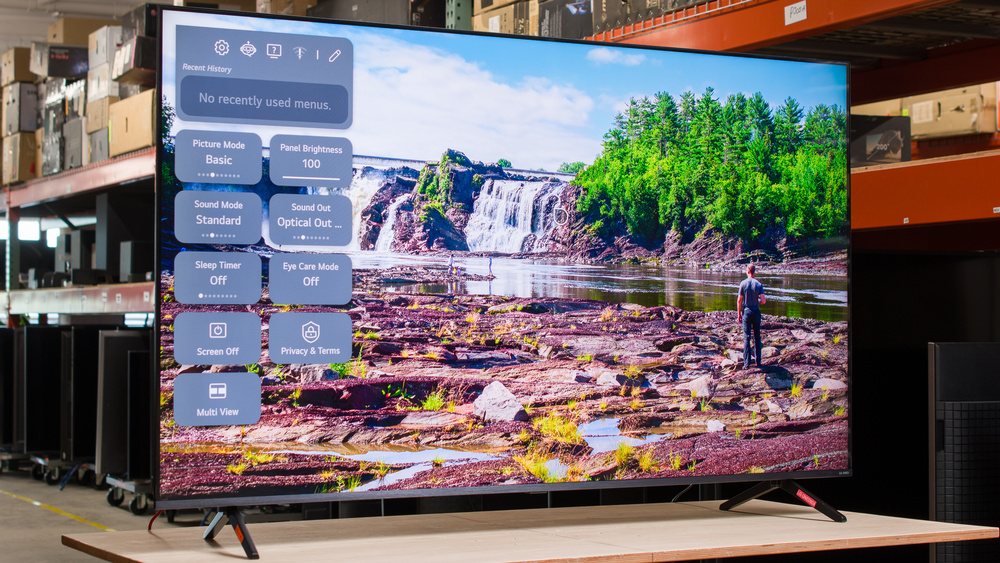
The LG QNED92A is an upper mid-range TV released in 2025 as part of LG's QNED evo lineup, which features Mini LED backlighting. The TV is LG's highest-tier offering in their 4k Mini LED lineup, sitting above the LG QNED85A. In Europe, it's known as the LG QNED93A, which is the same TV but with a center-mounted stand. It uses LG's α8 AI Processor gen2, which can automatically adjust picture settings based on the type of content you're watching. It ships with the 2025 version of LG's webOS smart interface, but as it's part of LG's Re:New program, it'll receive new versions of webOS for a few years after launch. We bought and tested the 65-inch model, but it's also available in 75- and 85-inch models.
Our Verdict
The LG QNED92A is a good TV for most uses. It looks good in a variety of room conditions, as it has deep blacks for home theater use but good peak brightness to handle glare in a bright room. It has a wide selection of features that make it suitable for most uses, including PC gaming, where its 144Hz refresh rate is nice for PC gaming especially. It also has good processing capabilities that make it a nice choice for binge-watching the latest shows or even your favorites from way back when. On the other hand, its motion handling isn't very good, especially at lower refresh rates, so sports and fast-action scenes are a bit blurry, and it's not as well-suited for console gaming.
Great SDR brightness helps it fight glare from indirect lighting.
Very good upscaling.
Effective local dimming for deep blacks in simple scenes.
Distracting direct reflections.
The LG QNED92A is a good TV for home theater use. It has great black levels thanks to its local dimming feature, but it's not perfect, and there's some noticeable haloing around bright highlights. It gets very bright in HDR, so bright highlights stand out well, and it has good processing capabilities. It has good motion handling, and it can remove judder from most sources. It's not perfect for enthusiasts, though, as it's not very accurate out of the box, and it doesn't support DTS audio formats.
Barely any banding in color gradients.
Effective local dimming for deep blacks in simple scenes.
Specular highlights are bright and stand out well in most content.
Removes judder from most sources.
Noticeable haloing around subtitles and highlights.
Doesn't support DTS audio formats commonly used on physical media.
The LG QNED92A is a good choice for a bright room, with some limitations. It has good peak brightness, so it can handle some glare in a well-lit room, but its direct reflection handling is poor so you should avoid placing it directly opposite an uncovered window or bright lights. On the positive side, ambient light has almost no impact on color saturation or black levels, so you get the same picture quality no matter how bright your room is.
Great SDR brightness helps it fight glare from indirect lighting.
Blacks stay deep, and colors stay vibrant in a bright room.
Distracting direct reflections.
The LG QNED92A is an okay TV for watching sports. It gets very bright, so it can handle a well-lit room, but it has poor direct reflection handling so you should avoid placing it opposite an exposed window or lights. It has good motion handling, with a decent response time, and there are very few transition artifacts in fast-moving content. It also has a narrow viewing angle, so it's not a good choice for a wide seating arrangement.
Great SDR brightness helps it fight glare from indirect lighting.
Very good upscaling.
Few transition artifacts.
Smooths out low-quality content well but removes some fine details in the process.
Distracting direct reflections.
Image degrades rapdily when viewed at an angle.
The LG QNED92A is a decent gaming TV. It has a few great gaming features, including HDMI 2.1 bandwidth, low input lag, and a high 144Hz refresh rate that's great for PC gaming. Motion is fairly clear at that refresh rate, but it's not as good for console gaming as motion looks considerably worse at 60Hz. It has decent picture quality in HDR, but there's a slight drop in peak brightness when you switch to the lowest-latency Game Optimizer mode.
Great SDR brightness helps it fight glare from indirect lighting.
HDMI 2.1 bandwidth, up to 4k @ 144Hz, and VRR support.
Very low input lag for a responsive feel.
Poor motion handling at 60Hz.
Slightly worse picture quality in Game Optimizer mode.
The LG QNED92A has good peak brightness. It's bright enough to overcome moderate amounts of glare in a well-lit room. In HDR, its high peak brightness brings out specular highlights well, but it struggles with brighter scenes in content mastered above 1,000 nits, where it struggles a bit more to keep up.
Great SDR brightness helps it fight glare from indirect lighting.
Specular highlights are bright and stand out well in most content.
The LG QNED92A has great black levels. Its local dimming feature delivers deep blacks in simple scenes, but there's more noticeable haloing spread out around bright highlights. It has just okay transitions, too, as the processing can't keep up with fast-moving bright areas.
Effective local dimming for deep blacks in simple scenes.
Noticeable haloing around subtitles and highlights.
The LG QNED92A has decent colors. It has decent color volume in both SDR and HDR, and most colors are bright and vibrant. It has just okay accuracy out of the box, though, although it's easy to calibrate in SDR.
Decent color volume in HDR and SDR.
Color accuracy in HDR is only okay and can't be fully calibrated.
The LG QNED92A has good motion handling when watching content. It removes judder from most sources, and there's no micro judder. It can't remove judder from 25p content sent via a 60p source, though, like a cable TV box or older streaming device. There's noticeable stutter in slow panning shots, but the motion interpolation feature does a great job reducing it. There's no micro judder, and most transitions are very clean, with few noticeable transitions artifacts.
Removes judder from most sources.
Great motion interpolation feature.
Few transition artifacts.
Can't remove judder from 25p content sent via a 60p source.
The LG QNED92A has decent responsiveness in Game Optimizer mode. It supports a wide range of resolutions and refresh rates, up to 144Hz for PC gamers, and it has low input lag in all supported modes. This ensures that your actions on the controller are in sync with what you see on the screen. On the other hand, it has just okay motion handling overall, and most motion is a bit blurry. It's especially bad at 60Hz, so it's not a great choice for console gamers.
HDMI 2.1 bandwidth, up to 4k @ 144Hz, and VRR support.
Very low input lag for a responsive feel.
Poor motion handling at 60Hz.
Note: We're in the process of improving our tests related to image processing, but this score should give you a general idea of how a TV performs overall with its image processing capabilities.
The LG QNED92A has very good processing and upscaling. It smooths out low-quality content well, but there's some loss of fine details when that feature is enabled. It also has good EOTF tracking, ensuring HDR content is displayed close to the content creator's intent. Finally, it has great gradient handling, with just a bit of banding in all shades.
Very good upscaling.
Barely any banding in color gradients.
Good PQ EOTF tracking.
Smooths out low-quality content well but removes some fine details in the process.
Performance Usages
Changelog
- Updated Sep 18, 2026: We converted this review to Test Bench 2.2.1, adding a new Dumb TV test for whether or not the TV can be used offline.
-
Updated Mar 17, 2026:
We added text to our new Cinematic Motion Handling performance usage and our new Transition Artifacts and Stutter Reduction Via Interpolation test sections after converting the review to TV 2.2.
- Updated Mar 10, 2026: This review has been updated to TV 2.2. We've added new sections for Transition Artifacts and Stutter Reduction Via Interpolation, and updated the way we test Stutter. Additionally, we removed the 'Broken' disclaimer from our Motion Handling usage.
- Updated Jan 20, 2026: We added text to the new Micro-Judder section and refreshed the text in the updated Judder and Response Time Stutter sections after converting the review to TV 2.1.
Check Price
Differences Between Sizes And Variants
We bought and tested the 65-inch LG QNED92A, and the results are also valid for the 75 and 85-inch models. In Europe, it's known as the LG QNED93A, and we expect most of our results to be valid for that model as well, but it has a center-mounted stand.
| Size | US Model |
|---|---|
| 65" | 65QNED92AUA |
| 75" | 75QNED92AUA |
| 85" | 85QNED92AUA |
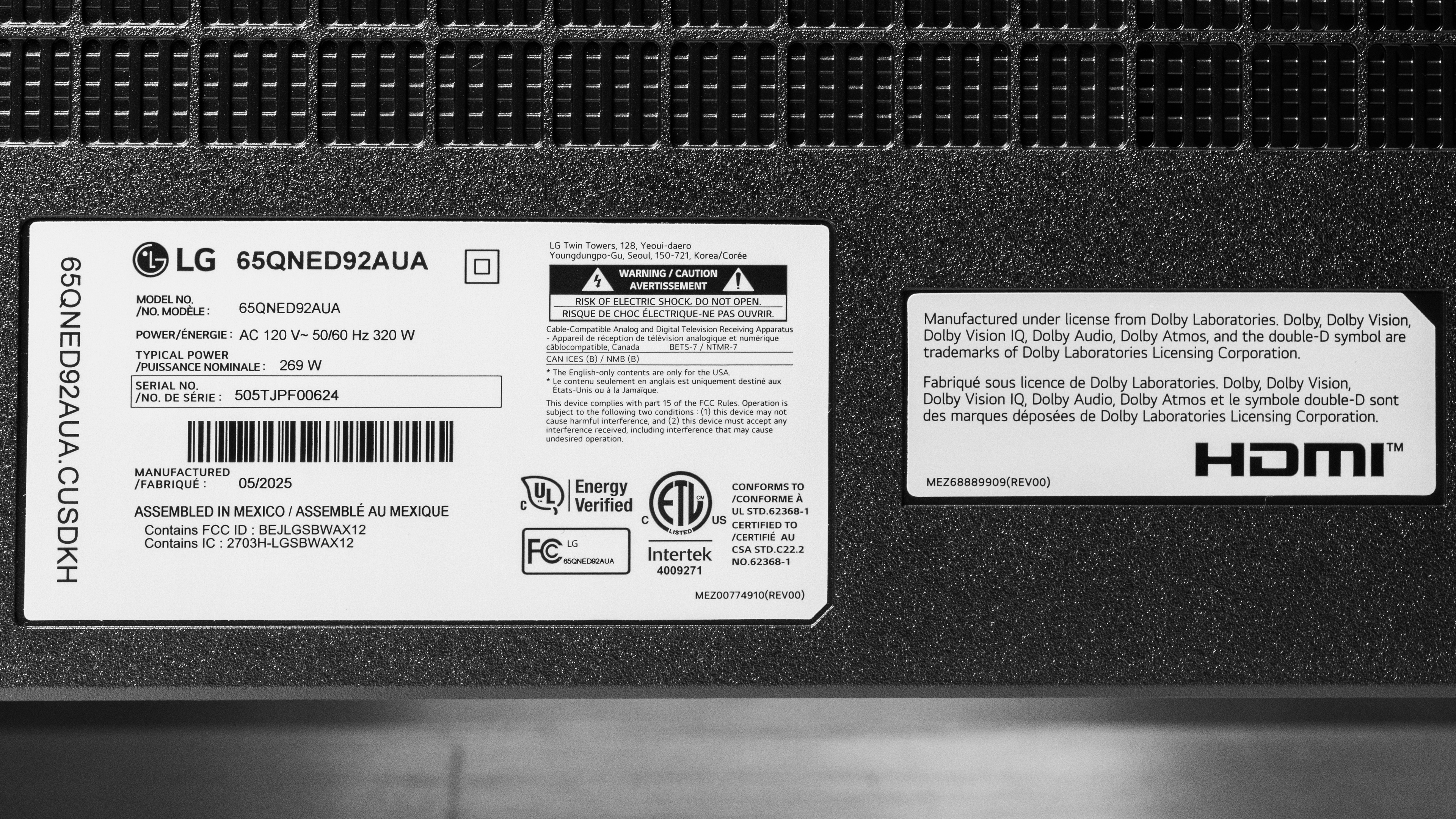
Our unit was made in Mexico in May 2025.
Popular TV Comparisons
The LG QNED92A is a pretty good TV overall, with good picture quality and a great selection of features, including HDMI 2.1 bandwidth and a fast refresh rate for gaming. It's a bit overpriced for the picture quality that it delivers, though, especially considering that LG's own OLED lineup starts at around the same price and delivers far better picture quality for most users. You can get much better performance for about the same price by going to other brands like the TCL QM8K or the Hisense U8QG.
For more options, check out our recommendations for the best TVs for bright rooms, the best TVs for gaming, and the best TVs.
The TCL QM7K delivers slightly better picture quality than the LG QNED92A. The TCL has better direct reflection handling, so glare from lamps and uncovered windows is reduced a bit, making it less distracting. The TCL is also slightly bright, making it a better choice overall for a bright room. The TCL is also a better choice for a dark room, as its local dimming algorithms are a bit better, and there's less haloing around bright parts of the scene.
The Samsung QN90F is a much better TV than the LG QNED92A. The Samsung gets a lot brighter in SDR, and coupled with its matte anti-reflective coating, it's simply a far better TV for bright room usage. Of course, this comes with a slight tradeoff as the matte coating also reduces the overall picture quality a bit in a bright room, but it still looks better than the LG. The Samsung also stands out in HDR, as it's significantly brighter and more vibrant, delivering a more lifelike HDR experience.
There's no contest here: the TCL QM8K delivers a far better viewing experience than the LG QNED92A. The TCL is significantly brighter, delivering a more impactful, lifelike HDR experience, and it can better handle glare in a bright room. The TCL also has better local dimming, with significantly less haloing around bright parts of the scene.
The LG QNED92A is a step up over the older LG QNED90T. The 92A is slightly brighter, delivering brighter secular highlights in HDR. It also has a better local dimming feature, delivering much deeper blacks, but they both have similar problems with haloing around bright highlights.

We buy and test dozens of TVs yearly, taking an objective, data-driven approach to deliver results you can trust. Our testing process is complex, with hundreds of individual tests that take over a week to complete. Most of our tests use specially designed test patterns that mimic real content, but we also use the same sources you have at home to ensure our results match the real-world experience. We use two main tools for our testing: a Colorimetry Research CR-100 colorimeter and a CR-250 spectroradiometer.
Test Results
for pictures & test results

for pictures & test results

for pictures & test results

The LG QNED92A has good brightness in HDR. Small specular highlights stand out well, and most bright scenes are bright enough to deliver an impactful HDR experience. It only struggles with extremely bright scenes.
Results in 'FILMMAKER' mode with LED Local Dimming on 'High':
- Hallway Lights: 738 cd/m²
- Yellow Skyscraper: 344 cd/m²
- Landscape Pool: 245 cd/m²
Results 'FILMMAKER' mode with Dynamic Tone Mapping enabled:
- Hallway Lights: 688 cd/m²
- Yellow Skyscraper: 345 cd/m²
- Landscape Pool: 307 cd/m²
for pictures & test results

for pictures & test results

for pictures & test results

There's a slight decrease in peak brightness when you switch to Game Optimizer to reduce input lag. It's still bright enough to deliver decent HDR brightness, with bright specular highlights in most scenes and very high full-screen brightness.
Results in 'Game' mode with LED Local Dimming on 'High':
- Hallway Lights: 670 cd/m²
- Yellow Skyscraper: 189 cd/m²
- Landscape Pool: 222 cd/m²
Results 'Game' mode with Dynamic Tone Mapping enabled:
- Hallway Lights: 715 cd/m²
- Yellow Skyscraper: 342 cd/m²
- Landscape Pool: 417 cd/m²
This TV has great peak brightness in SDR. It's bright enough to overcome glare in a bright room from windows or lights. The local dimming feature artifically dims dark scenes, though, so it's best-suited for brighter content.
for pictures & test results

The LG QNED92A has fantastic contrast. The local dimming feature is extremely effective at boosting contrast, so shadow details remain dark even when bright highlights are visible in the scene. The panel's native contrast is good overall, but blacks are more noticeably raised in more complicated scenes where the local dimming can't keep up.
Similar to the LG QNED90T, there are some oddities with the way LG has implemented local dimming. In SDR, the 'High' setting delivers the best results, with the highest peak brightness and the best contrast. In HDR, however, the TV defaults to 'Low,' and that's what delivers the best results. The results in this review use a mix of both settings depending on what's best for that mode. See our settings page for more information.
for pictures & test results

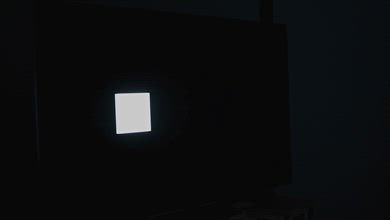
The LG QNED92A has okay zone precision. There's a noticeable halo effect around bright spots in the scene, including when watching with subtitles.
We encountered a strange processing bug with the TV during our lighting zone precision test, where the backlight would start flickering. The flickering persists at any local dimming setting (except off), but we weren't able to reproduce it outside of this test slide. Let us know if you encounter the issue with real content.
for videos & test results

The zone transitions on this TV are just decent. Its processor can't keep up with fast-moving objects, so the leading edge is darker than the body, as the TV isn't turning on the zones quickly enough. It's also sluggish to turn the zones off, as bright objects leave a zone, leaving a trailing halo behind it. There's also some noticeable flicker as things move between zones.
In comparison, the local dimming feature on the LG QNED85A, another model in the LG QNED evo AI lineup, also experiences issues primarily due to its edge-lit backlight and fewer dimming zones than the QNED92A.


for pictures & test results

for pictures & test results

The black uniformity on this TV is great. With local dimming disabled, black levels are raised more, giving the TV more of a bluish tint, but it's still fairly uniform with just a few warm spots. Enabling local dimming nearly completely eliminates this, though, and the backlight is very uniform except around bright highlights.
for pictures & test results

for pictures & test results

The LG QNED92A has decent color volume in SDR. It struggles a bit with brighter shades of green and red, but there's very little difference in color coverage at different lightness levels. It has good coverage of the DCI-P3 color space.
| Volume ΔE³ | DCI-P3 Coverage |
BT.2020 Coverage |
|---|---|---|
| L10 | 90.39% | 66.95% |
| L20 | 90.68% | 67.88% |
| L30 | 91.22% | 68.31% |
| L40 | 90.21% | 69.30% |
| L50 | 89.10% | 68.84% |
| L60 | 87.87% | 67.63% |
| L70 | 87.01% | 65.88% |
| L80 | 85.66% | 62.84% |
| L90 | 84.56% | 60.39% |
| L100 | 87.54% | 81.07% |
| Total | 87.81% | 66.54% |
for pictures & test results

for pictures & test results

The color volume in HDR is just decent. It displays low luminance colors well, thanks to its local dimming feature and high contrast, and most colors are bright and vibrant.
for pictures & test results

for pictures & test results

for pictures & test results

The LG QNED92A has just okay accuracy out of the box in SDR. Gamma tracking is close to the 2.2 target, but very bright and very dark scenes are crushed a bit. Color dE is very low overall, with a few issues in saturated reds and cyan, and the overall color temperature is a bit warm. The white balance is disappointing, as blues are underrepresented especially in brighter scenes.
for pictures & test results

for pictures & test results

for pictures & test results

This TV is really easy to calibrate and delivers fantastic accuracy after calibration. The white balance and gamma tracking are both nearly perfect, with no remaining issues. Saturated reds are still a bit off, but it's not noticeable, and all other colors are nearly perfect.
See our full calibration settings.
for pictures & test results

for pictures & test results

The HDR accuracy before calibration is just okay. The white balance is decent, with just a few noticeable issues, but the overall color temperature is a bit too cool. Color accuracy is okay, with noticeable mapping areas across the board.
for pictures & test results

for pictures & test results

Unfortunately, this TV doesn't benefit much from a calibration in HDR. White balance and color dE are both slightly lower after a full calibration, but they're both still noticeably off, and the color temperature barely moved.
for pictures & test results

The LG QNED92A has good PQ EOTF tracking. Shadow details are displayed well thanks to the local dimming feature, but midtones are crushed a bit. It clips at the TV's peak brightness with content mastered at 600 or 1,000 nits, but there's a more gradual rolloff with content mastered at 4,000 nits, which preserves some brightness gradients.
for pictures & test results

The TV's low-quality content smoothing is good. It does a great job reducing macro blocking and pixelization from low-bitrate streams, but there's some loss of fine details.
for pictures & test results

This TV has very good sharpness processing when upscaling lower resolution content. The image is sharp and clear, and text is easy to read.
for pictures & test results
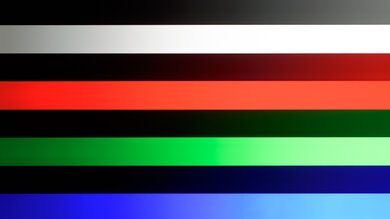
The LG QNED92A has great gradient handling. There's some very slight banding in all shades, but it's not really noticeable.
The LG QNED92A has very low input lag when set to Game Optimizer with 'Prevent Input Delay' set to 'Boost,' resulting in a very responsive gaming experience.
The TV supports all common formats up to a maximum refresh rate of 144Hz. It displays chroma 4:4:4 properly, which is important for clear text from a PC.
This TV supports VRR across a wide refresh rate range, which helps reduce tearing when the frame rate fluctuates.
for pictures & test results
for pictures & test results

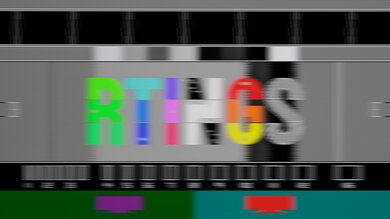
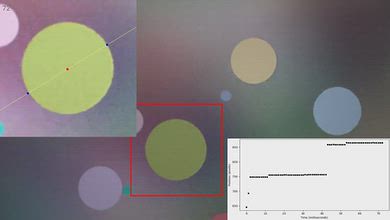
The TV's CAD at the max refresh rate of 144Hz is just okay. It performs best in brighter scenes, and most of those transitions are fairly quick with no noticeable overshoot and little blur. It struggles more coming in or out of shadow details, and those transitions are very slow, causing more noticeable blur.
for pictures & test results

for pictures & test results

Dropping down to 120Hz increases the TV's total deviation a bit, but it's still okay. There's noticeable blur when gaming at 120Hz, like on a console, and it's more noticeable in darker parts of the scene.
for pictures & test results

for pictures & test results

Unfortunately, dropping down to 60Hz increases the total deviation considerably, and almost all scenes look bad. There's no noticeable overshoot or inverse ghosting, but the TV is just extremely slow to transition between shades.
for pictures & test results

This TV is fully compatible with everything the PS5 offers, like 1440p @ 120Hz and 4k @ 120Hz, as well as HDMI Forum VRR. It also supports Auto Low Latency Mode, so you don't have to worry about switching to Game Optimizer to get the lowest input lag.
for pictures & test results

This TV is fully compatible with everything the Xbox Series X|S offers, including 1440p @ 120Hz, 4k @ 120Hz, HDMI Forum VRR, FreeSync Premium Pro, and Dolby Vision gaming. It also supports Auto Low Latency Mode, so you don't have to worry about switching to Game Optimizer to get the lowest input lag.

for videos & test results
for pictures & test results

for pictures & test results
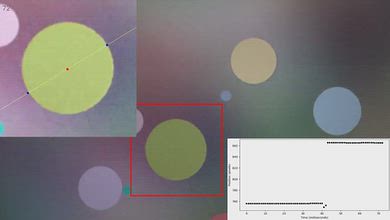
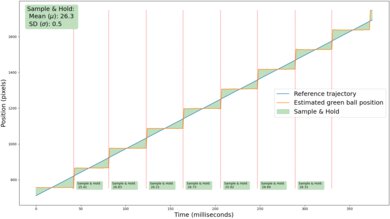
The motion interpolation feature does a great job reducing stutter on this TV. Even just interpolating 24p content up to 30p significantly reduces the frame hold time without adding soap opera effect. The feature is extremely consistent as well, so the frame timing doesn't change over time.
for pictures & test results
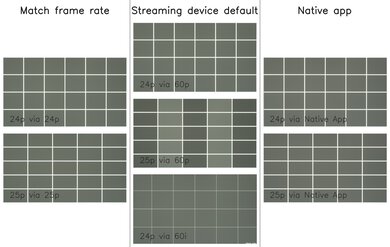
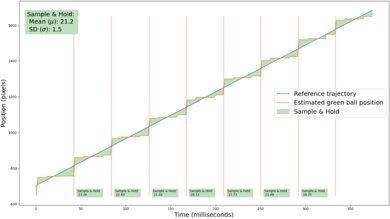
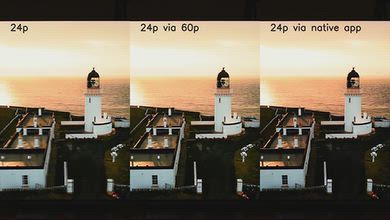
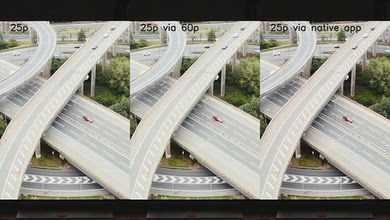
The TV removes judder from most sources. The frame timing is off with 25p content sent via a 60p signal, like from a cable TV box or older streaming device.
for pictures & test results

for pictures & test results

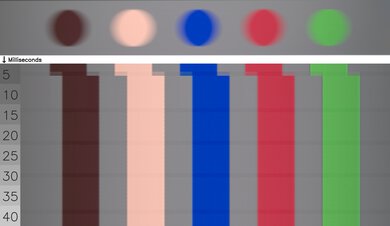
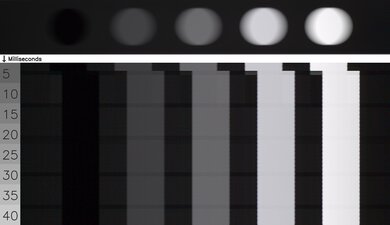
This TV has a decent cinematic response time when watching content, but there's still some noticeable blur behind fast-moving objects when watching movies, shows, or sports. It's most noticeable when transitioning to or from near-black shades.
for pictures & test results

This TV doesn't use pulse width modulation (PWM) to dim the backlight, but it does flicker at all brightness levels. The flicker frequency is extremely high, though, and shouldn't be noticeable.
for pictures & test results
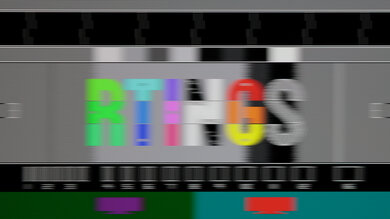
for pictures & test results
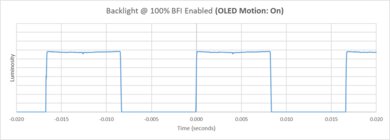
The TV has an optional backlight strobing feature, commonly known as black frame insertion. It's supported at both 60 and 120Hz, and the pulse timing is pretty good, so unlike many other TVs, there's no apparent image duplication.


for pictures & test results

for pictures & test results

Unfortunately, this TV has mediocre overall reflection handling. Direct reflections are bright and distracting, and there are noticeable diffraction artifacts with a slight rainbow smear.
for pictures & test results

The perceived color saturation in a bright room is very good. Ambient light has almost no impact on color saturation.
for videos & test results
for pictures & test results

for pictures & test results

for pictures & test results

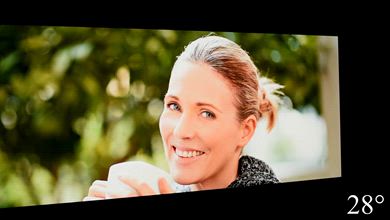
The LG QNED92A has a sub-par viewing angle. The image degrades noticeably when you're watching it from the sides, with a noticeable loss of contrast and a significant red color shift. This makes it unsuitable for a wide seating arrangement, as only people sitting directly in front of the screen will see a clear image.
for pictures & test results

for pictures & test results

The LG QNED92A has mediocre gray uniformity. There's not that much dirty screen effect in the center, which is great for watching sports, but the sides of the screen are noticeably darker.
for pictures & test results

for pictures & test results

The TV uses a BGR (Blue-Green-Red) subpixel layout instead of the traditional RGB layout. This doesn't cause any issues for video or gaming content, but it can be a problem for PC monitor use, as it impacts the text clarity, although not everyone will notice this.
The TV uses some form of quantum dot color converters to produce red and green light, so colors are well separated, but they're not as pure as some higher-end models.
for pictures & test results

for pictures & test results

This TV supports the full 48Gbps bandwidth of HDMI 2.1 on all four HDMI ports. This allows you to take full advantage of multiple high-bandwidth devices, like if you own both current-gen consoles and a high-end gaming PC.
This TV passes through all Dolby Digital options. However, it doesn't support any DTS audio formats commonly used on physical media. LG has supported DTS on most of their 2023 and 2024 models, but they've dropped support across their entire lineup in 2025.
for pictures & test results

The LG QNED92A has a somewhat premium design, with a metal frame and feet, but the back is mostly made of plastic. It has very thin bezels on three sides, but there's a noticeable gap between the sides and the first pixels.
for pictures & test results

The stand consists of two metal feet set near the sides of the TV, and there's no alternate mounting point to accommodate a smaller table.
Footprint of the 65-inch model: 49.0" x 13.4" x 3.5".
for pictures & test results

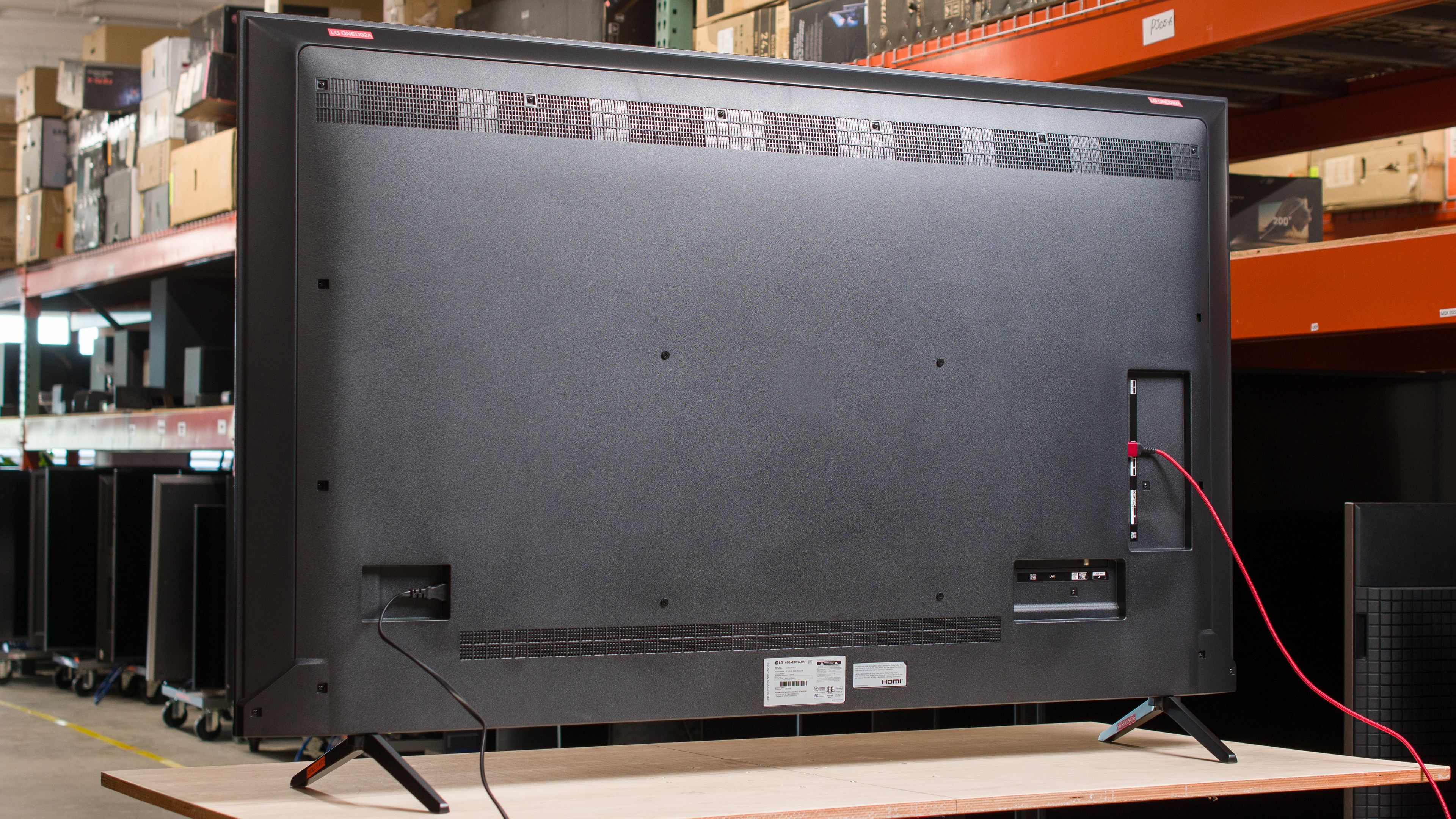
The back of the TV has a basic, less-premium look to it. The inputs are housed in two sections on the left side of the TV (when looking at it from the front). As they're inset into the TV, they're a bit hard to reach when the TV is wall-mounted, but at least they face down or to the sides, so you won't need any angle adapters for HDMI cables. Unfortunately, there's nothing to help with cable management.


for pictures & test results

The LG QNED92A has good build quality, but there are a few issues. The back panel has a decent amount of flex, which isn't as well-built as the metal backing on the LG QNED90T. Unfortunately, there are also some noticeable specs behind the glass panel that are visible on the screen.
for pictures & test results

The TV comes with LG's new Magic Remote. Like the old version, it can be used as a pointer, or you can use the traditional buttons to control the TV. Unfortunately, LG ditched the number pad on this new remote, so you can't assign quick launch shortcuts anymore. There's also no dedicated input button, so you have to use the home dashboard to switch inputs.
for pictures & test results

The LG QNED92A ships with the 2025 version of LG's proprietary smart interface, webOS. LG promises at least four years of webOS updates on their TVs as part of their Re:New program, and you get updated versions of the operating system once a year.
for pictures & test results

There are two settings in the 'Home Settings' menu, namely the 'Home Promotion' and 'Content Recommendation' settings. These settings remove the top banner ads and suggested content from the home screen. This gives your home screen a clean look, but there's no way to remove ads from the apps page.


for pictures & test results

The frequency response on this TV is mediocre. It has a fairly well-balanced sound profile, so dialogue is clear and easy to understand as long as you don't turn the volume up too high. It's not very loud at max volume.