The LG QNED85T is a lower mid-range TV released in 2024. It's part of LG's QNED lineup and sits above the LG QNED80T and below the LG QNED90T. It technically replaces the LG QNED85 but is more comparable to the LG QNED80 2023. It's an edge-lit model, but unlike the 2023 QNED lineup, it uses a VA panel instead of an IPS panel in most sizes. It still has features like local dimming, DTS audio passthrough, and HDMI 2.1 bandwidth on all four of its ports for 4k @ 120Hz gaming with VRR. The TV uses LG's α8 AI processor and runs the 2024 version of LG's webOS, which is loaded with apps and offers other smart features like voice control, AirPlay, and both Alexa and Apple HomeKit support. It has a built-in 20W 2.0 channel speaker system that can be virtually up-mixed to 9.1.2. We bought and tested the 65-inch model, but it's also available in 50, 55, 75, and 86-inch models.
Our Verdict
The LG QNED85T is decent for mixed usage. Fast motion has minimal blur trails behind it due to its quick response time, which is good for gaming and watching fast sports. It's bright enough to use in a room with the lights on, but it doesn't display the deep blacks needed to look very good in a dark room. Sadly, it's not a great model if you watch content with a group since it has a narrow viewing angle. Fortunately, it's fully compatible with current-gen gaming consoles due to its advanced gaming features.
Great response time.
Bright enough in SDR to fight glare in a well-lit room.
Narrow viewing angle leads to a degraded image when viewed from the sides.
The LG QNED85T is decent for watching TV shows. Its webOS has all of the popular streaming services and more, so finding new shows to watch is simple. The TV has very good SDR brightness and satisfactory reflection handling, so it overcomes glare in rooms with the lights on. Unfortunately, it has a narrow viewing angle, and the image degrades when viewed from the sides of the screen, making it a poor choice if you like to host watch parties with a big group of friends.
Bright enough in SDR to fight glare in a well-lit room.
Narrow viewing angle leads to a degraded image when viewed from the sides.
The LG QNED85T is satisfactory for watching sports. Its very good SDR brightness and satisfactory reflection handling means it overcomes glare in well-lit rooms, but it does struggle more with direct reflections, so you don't want to place it opposite a large window. It has very good uniformity, so you won't be distracted by the dirty screen effect when watching sports like hockey. Unfortunately, it has a narrow viewing angle, so it's not a good option when watching the big game with a large group of friends, as anyone seated to the sides of the screen sees a degraded image. However, its quick response time means there's very little blur behind fast-moving players, which is great.
Great response time.
Bright enough in SDR to fight glare in a well-lit room.
Narrow viewing angle leads to a degraded image when viewed from the sides.
The LG QNED85T is good for playing video games. It has very low input lag and a fast response time, so gaming feels responsive, and motion is mostly free of noticeable blur. Since the TV has very good SDR brightness, you can game in a brighter room and aren't distracted by reflections on the screen. It has HDMI 2.1 bandwidth on all four of its ports for up to 4k @ 120Hz gaming with VRR, so it's fully compatible with modern gaming consoles.
HDMI 2.1 bandwidth, 4k @ 120Hz, and VRR.
Great response time.
Bright enough in SDR to fight glare in a well-lit room.
Input lag is a lot higher at 60Hz.
The LG QNED85T is only alright for watching movies in a dark room. It displays a wide range of colors, but its HDR brightness and contrast just aren't good enough to display HDR movies with any real impact. It has subpar pre-calibration SDR accuracy, so you do need to get it calibrated if you care about color accuracy. Fortunately, it removes judder from any source, so you get a judder-free experience no matter how you watch films. It also has good low-quality content smoothing, which helps clean up artifacts in low-bitrate content, but it has only decent upscaling capabilities, so lower-resolution movies look a bit soft.
Removes judder from all sources.
No Dolby Vision support.
Subpar pre-calibration SDR accuracy.
Contrast and HDR brightness aren't good enough for impactful HDR.
The LG QNED85T is good for playing video games. It has a fast response time for minimal blur behind fast motion, and its low input lag means you don't feel a delay between your controller inputs and the action on screen. It has HDMI 2.1 bandwidth, 4k @ 120Hz, and VRR, making it fully compatible with the PS5 and the Xbox Series X. It has alright HDR brightness and a wide color gamut, but it doesn't display the deep blacks needed for a very impactful HDR gaming experience, and there's noticeable blooming around highlights when they're against a dark background.
HDMI 2.1 bandwidth, 4k @ 120Hz, and VRR.
Great response time.
Contrast and HDR brightness aren't good enough for impactful HDR.
Input lag is a lot higher at 60Hz.
The LG QNED85T is very good for use as a PC monitor. Its quick response time means fast cursor movements aren't blurry, and its low input lag means you get a responsive desktop experience. The TV is bright enough in SDR to overcome glare in a well-lit room, but it does struggle more with direct reflections; you don't want to place the screen opposite a lamp or a large window. It has very good uniformity, so you aren't distracted by the dirty screen effect when browsing the web. However, its narrow viewing angle means the sides of the screen aren't consistent with the center when you sit up close. It displays chroma 4:4:4 properly, but it uses a BGR subpixel layout that affects text clarity, which can bother some people.
Great response time.
Chroma 4:4:4 works properly.
Bright enough in SDR to fight glare in a well-lit room.
Narrow viewing angle leads to a degraded image when viewed from the sides.
Input lag is a lot higher at 60Hz.
Changelog
-
Updated Dec 18, 2025:
Mentioned the newly reviewed LG QNED85A in the Audio Passthrough section of this review.
-
Updated Mar 24, 2025:
We retested the TV's input lag after firmware 23.20.27 and updated the results in that section.
- Updated Nov 12, 2024: Review published.
- Updated Nov 07, 2024: Early access published.
Check Price
Differences Between Sizes And Variants
We bought and tested the 65-inch LG QNED85T, and these results are also valid for the 50, 55, and 75-inch models. The 86-inch model uses an IPS panel, so our results aren't valid for that size.
The exact model code varies between regions and retailers. The QNED85TAA variant sold at Costco comes with a remote that supports NFC, has Wi-Fi 6E, and has a longer warranty. There are two variants of this TV sold in Europe: the LG QNED86T and the LG QNED87T. They come with a center-mounted stand and have slight cosmetic differences, but they should otherwise perform the same. The LG QNED89T is a similar 98-inch model, but it performs differently overall, so our results aren't valid for it.
| Size | US Model | Costco Model |
| 50" | LG 50QNED85TUA | - |
| 55" | LG 55QNED85TUA | - |
| 65" | LG 65QNED85TUA | 65QNED85TAA.AUS |
| 75" | LG 75QNED85TUA | 75QNED85TAA.AUS |
| 86" | LG 86QNED85TUA | - |
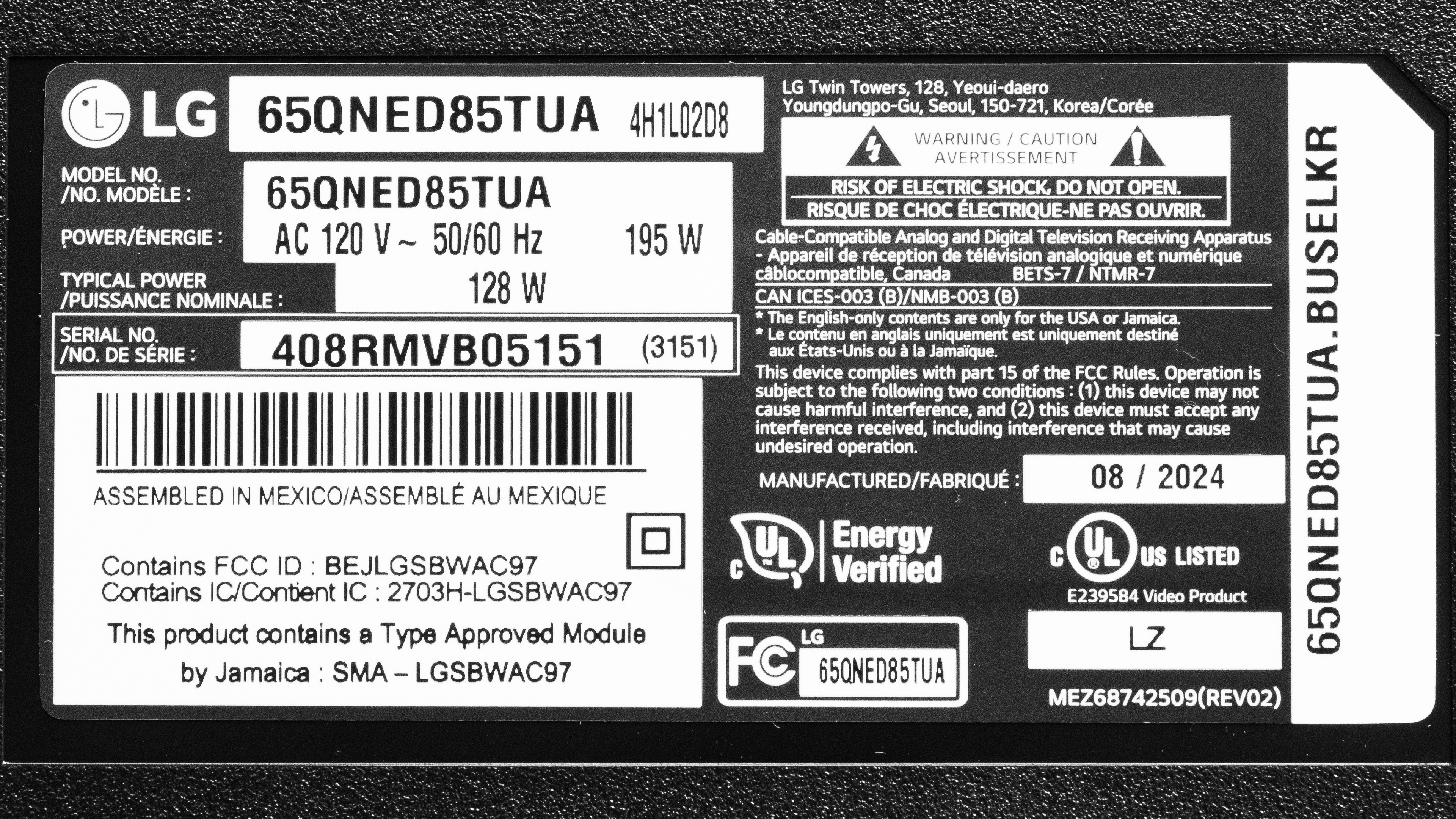
Our unit was manufactured in August 2024, as seen on the label.
Popular TV Comparisons
The LG QNED85T is a decent TV overall, but there are several better TVs in the same price range, so you probably shouldn't buy it. It's also an edge-lit TV, which is more prone to failure. You can get full-array models like the Hisense U7N and the TCL QM7/QM751G QLED for around the same price, and those TVs offer much better picture quality overall.
For more options, take a look at our recommendations for the best budget TVs, the best smart TVs, and the best LG TVs.
The LG QNED85 is a better TV than the LG QNED85T. The QNED85 has a much better local dimming feature, so it displays deeper blacks with less blooming around highlights. The QNED85 delivers a superior HDR experience thanks to its higher HDR peak brightness and its ability to display a wider range of colors. If you watch TV with a group of friends or family, the QNED85 is the better option since it has a much wider viewing angle.
The LG C4 OLED is much better than the LG QNED85T. The C4 displays significantly deeper blacks and more vibrant colors, so it delivers a more pleasing image. The C4 fights more glare in a well-lit room due to its better reflection handling, and it gets brighter in HDR, so highlights stand out more in HDR content. The C4 also has a much faster response time and supports 144Hz, making it better overall for gaming.
The TCL QM751G is better than the LG QNED85T. The TCL gets much brighter overall, meaning it fights more glare in a well-lit room and displays brighter highlights in HDR movies and games. The TCL also displays a wider range of colors with better accuracy and displays much deeper blacks with less blooming, giving it a more impressive picture quality. Regarding motion, the TCL is superior since it has the faster response time and a much faster flicker frequency. Additionally, the TCL is more fully featured, with support for Dolby Vision, HDR10+, and 144Hz.
The Hisense U7N is better than the LG QNED85T. The Hisense has superior contrast and has less blooming, so it looks better in a dark room. The Hisense is the brighter TV overall and has better reflection handling, so it overcomes more glare in a well-lit room. The Hisense also displays brighter highlights in HDR content and displays more vibrant and accurate colors, leading to a more impactful HDR experience. To top it off, the Hisense has the faster response time and supports Dolby Vision, and you can game in 144Hz on it.

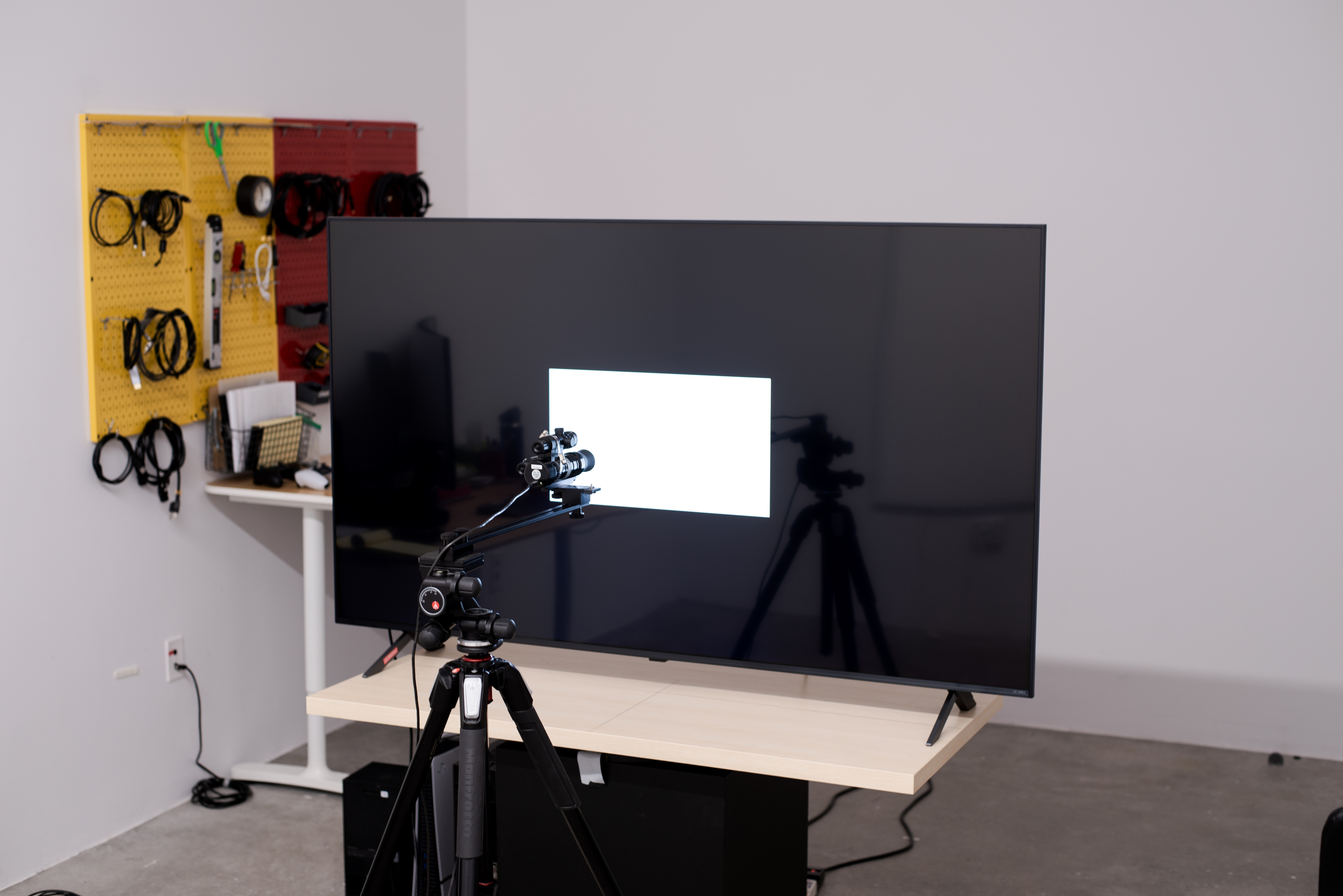
We buy and test dozens of TVs yearly, taking an objective, data-driven approach to deliver results you can trust. Our testing process is complex, with hundreds of individual tests that take over a week to complete. Most of our tests use specially designed test patterns that mimic real content, but we also use the same sources you have at home to ensure our results match the real-world experience. We use two main tools for our testing: a Colorimetry Research CR-100 colorimeter and a CR-250 spectroradiometer.
Test Results
Older Test Bench: We tested this product using an older TV test methodology before a major update. Some of the test results below aren't directly comparable with other TVs. Learn more
for pictures & test results

The LG 65QNED85TUA looks alright from a style perspective. Its bezels are pretty thick, so it doesn't look very sleek like other similarly priced models from other brands. It's a pretty basic design and doesn't look very premium.
for pictures & test results

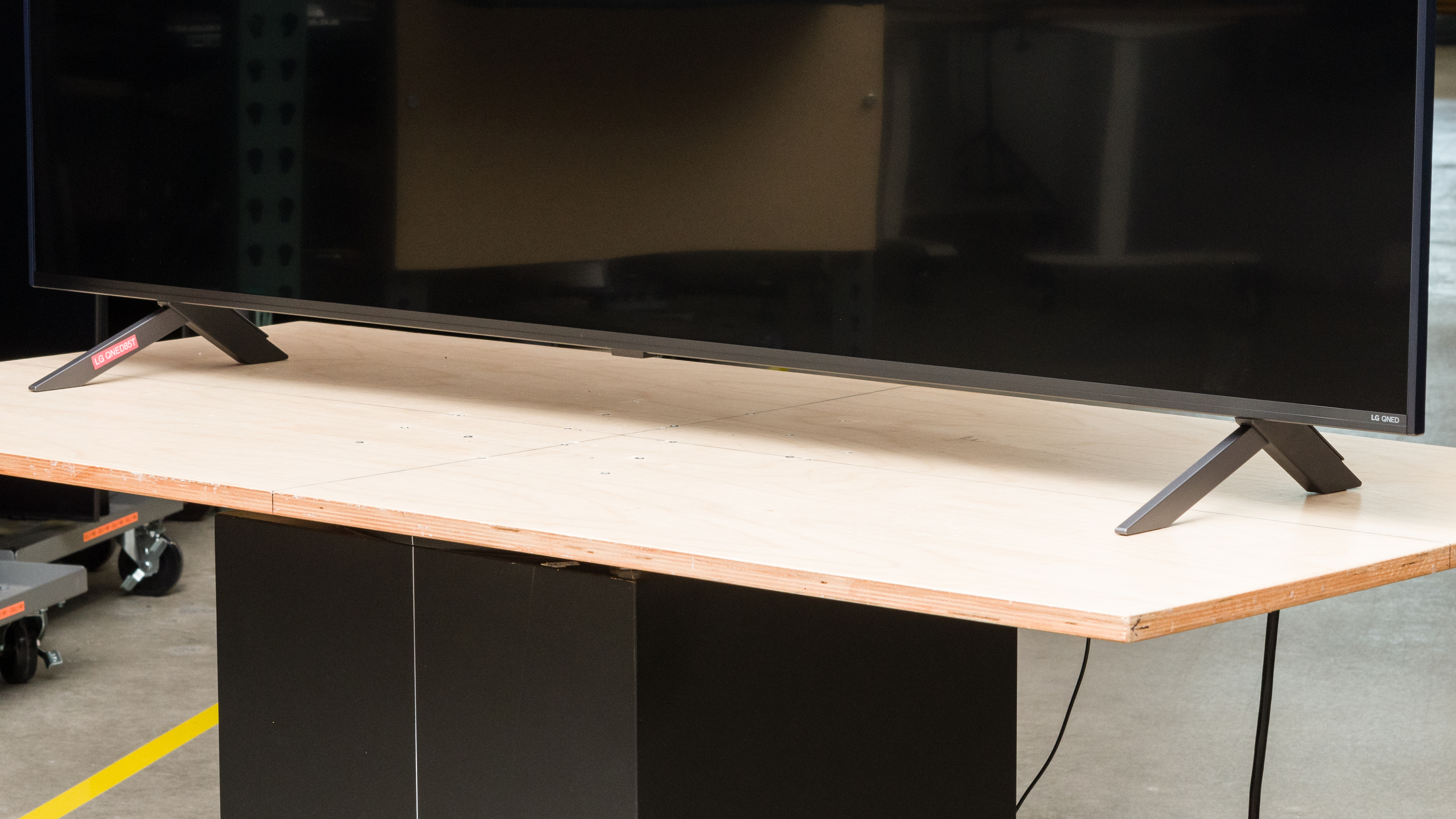
The TV comes with two plastic feet that can be adjusted into two different positions. The narrow position (pictured above) brings the feet close together, which is great if you have limited space on your table or media console. You can also widen the feet, which adds some stability and makes it easier to fit a soundbar between the two feet. The feet lift the TV about 3.23 inches above the table, so most soundbars fit underneath.
The footprint of the 65-inch stand is 46.06" x 11.69".
for pictures & test results

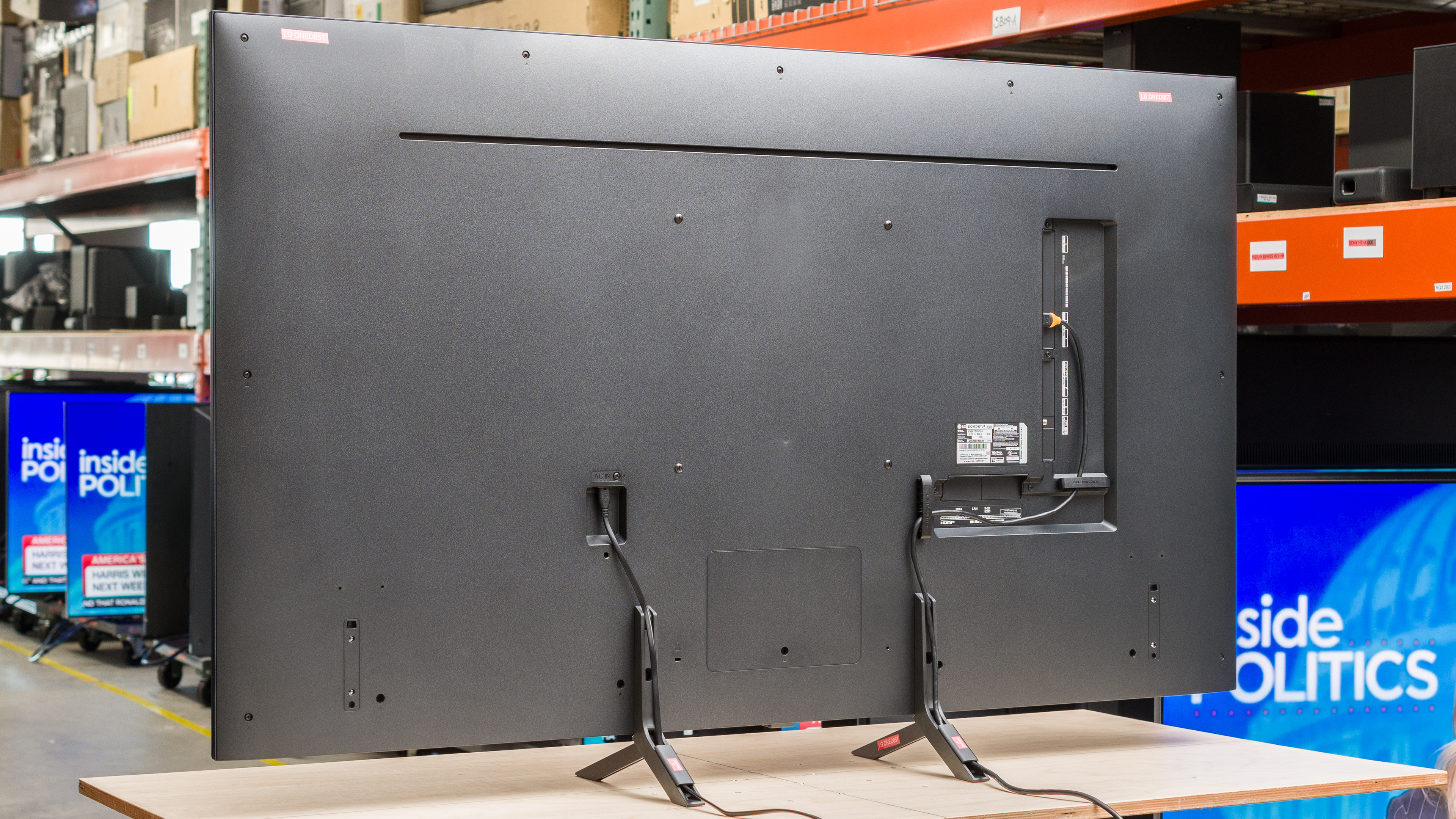
The back of the TV is made from plastic. All of the inputs are on the left side of the TV when facing the front, but they're in a recessed cutout that makes them hard to access if you have the TV mounted to a wall. There's a clip on the back, and each foot has a channel to funnel cables through to help with cable management.


for pictures & test results

The TV has decent build quality overall. There are no issues with quality control, but the TV is almost made entirely of plastic and doesn't use any premium materials, so it looks and feels a bit cheap.
for pictures & test results

The LG QNED85T has decent contrast overall. Its native contrast ratio is good, but setting local dimming on 'High' doesn't drastically improve black levels like it does on many other TVs, although it does help a bit. Even with local dimming enabled, blacks still become raised and washed out when bright highlights are also on the screen.
for pictures & test results

The TV has mediocre blooming performance. The amount of blooming depends on the local dimming setting you go with. Setting local dimming on 'High' increases contrast and black levels, but there's noticeable blooming around highlights or subtitles when they're against a dark background. With local dimming set to 'Low,' the blooming isn't quite as noticeable, but blacks aren't as deep.
The TV's local dimming performance isn't the greatest, mainly due to the TV being edge-lit. However, setting it on 'High' does increase its contrast ratio and gives the TV slightly better brightness, so the bulk of our testing was done with local dimming set to 'High.'
for videos & test results

The LG 85 Series has poor lighting zone transitions. The leading edge of bright highlights is noticeably dimmer as they quickly move across the screen, and over half of the screen is lit up when larger highlights transition at a quick pace, which is distracting.


for pictures & test results

for pictures & test results

for pictures & test results

The LG QNED85T has just alright HDR brightness. Combined with the TV's only decent contrast, it doesn't deliver a very impactful HDR viewing experience.
Our results are with Dynamic Tone Mapping turned off. Below are the results with Dynamic Tone Mapping turned on:
- Hallway Lights: 368.5 cd/m²
- Yellow Skyscraper: 287 cd/m²
- Landscape Pool: 131 cd/m²
for pictures & test results

for pictures & test results

for pictures & test results

Although the TV is a tiny bit dimmer in Game Optimizer, it's not noticeable. Our results are with HGiG enabled and Dynamic Tone Mapping turned off. Below are the results with Dynamic Tone Mapping turned on:
- Hallway Lights: 372 cd/m²
- Yellow Skyscraper: 285 cd/m²
- Landscape Pool: 141 cd/m²
for pictures & test results

The TV has fair PQ EOTF tracking. Shadows and mid-tones are displayed darker than intended across the board, but the TV follows the curve closely with highlights. There's a sharp cutoff with content mastered at 600 and 1000 nits, so details in specular highlights are lost. However, there's a gradual roll off with content mastered at 4000 nits, so some details in highlights are retained.
The LG QNED85T has very good SDR brightness. It's bright enough to overcome glare in a well-lit room, but it's not quite bright enough to completely eliminate reflections in a room with a lot of sunlight.
for pictures & test results
for pictures & test results
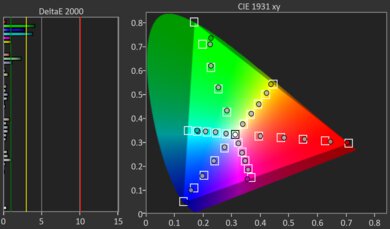
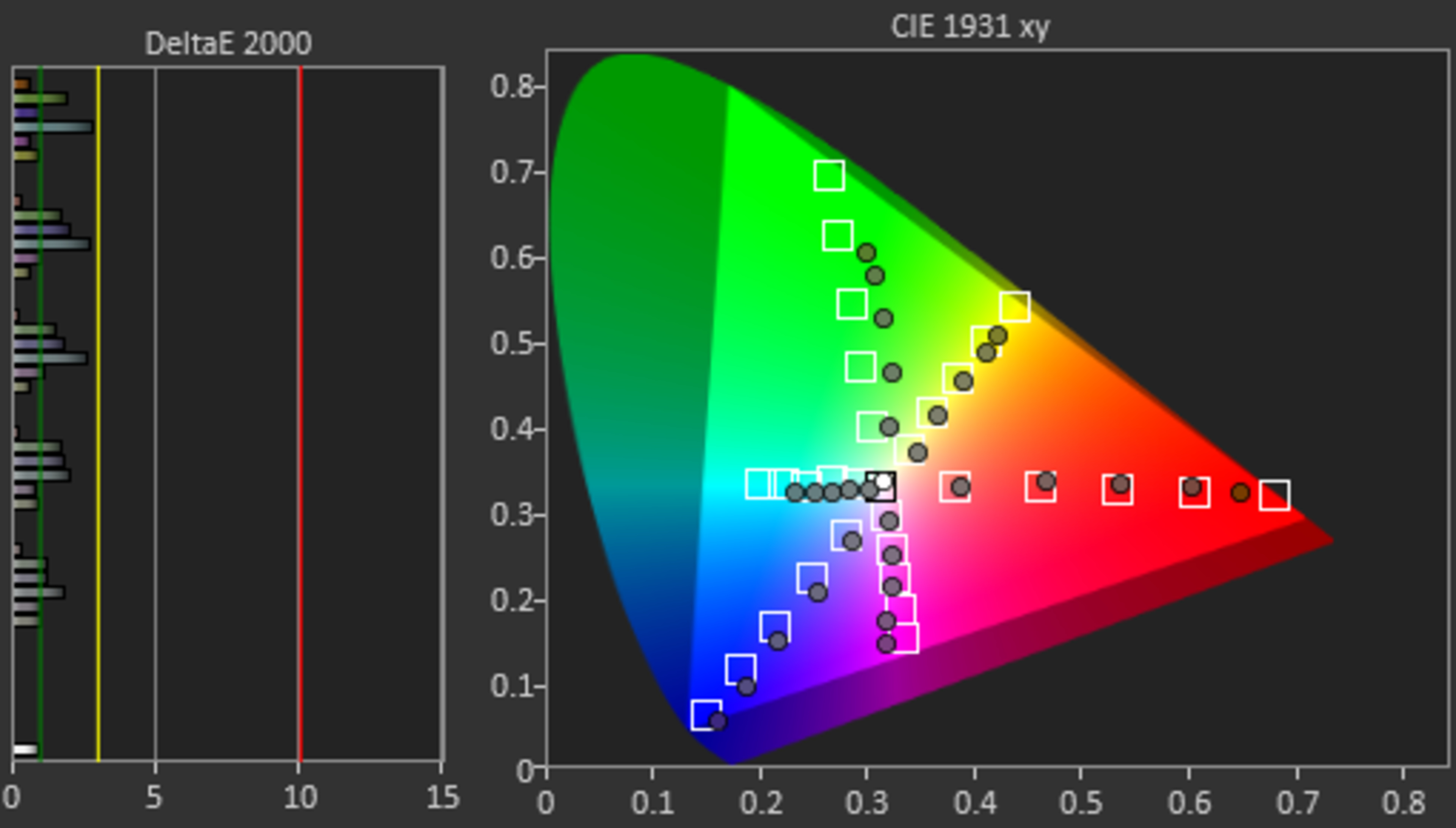
The TV supports a wide color gamut. It has fantastic coverage of the commonly used DCI-P3 color space and adequate coverage of the wider Rec. 2020 color space, but colors are very inaccurate and undersaturated across the board.
With a less aggressive 50% stimulus, the TV performs better in both the DCI-P3 and Rec. 2020 color spaces.
for pictures & test results

for pictures & test results

The TV has good color volume. It does a pretty good job displaying dark saturated colors, and although it displays colors bright enough to look good, it can't display colors at very high luminance levels.
for pictures & test results

for pictures & test results

for pictures & test results

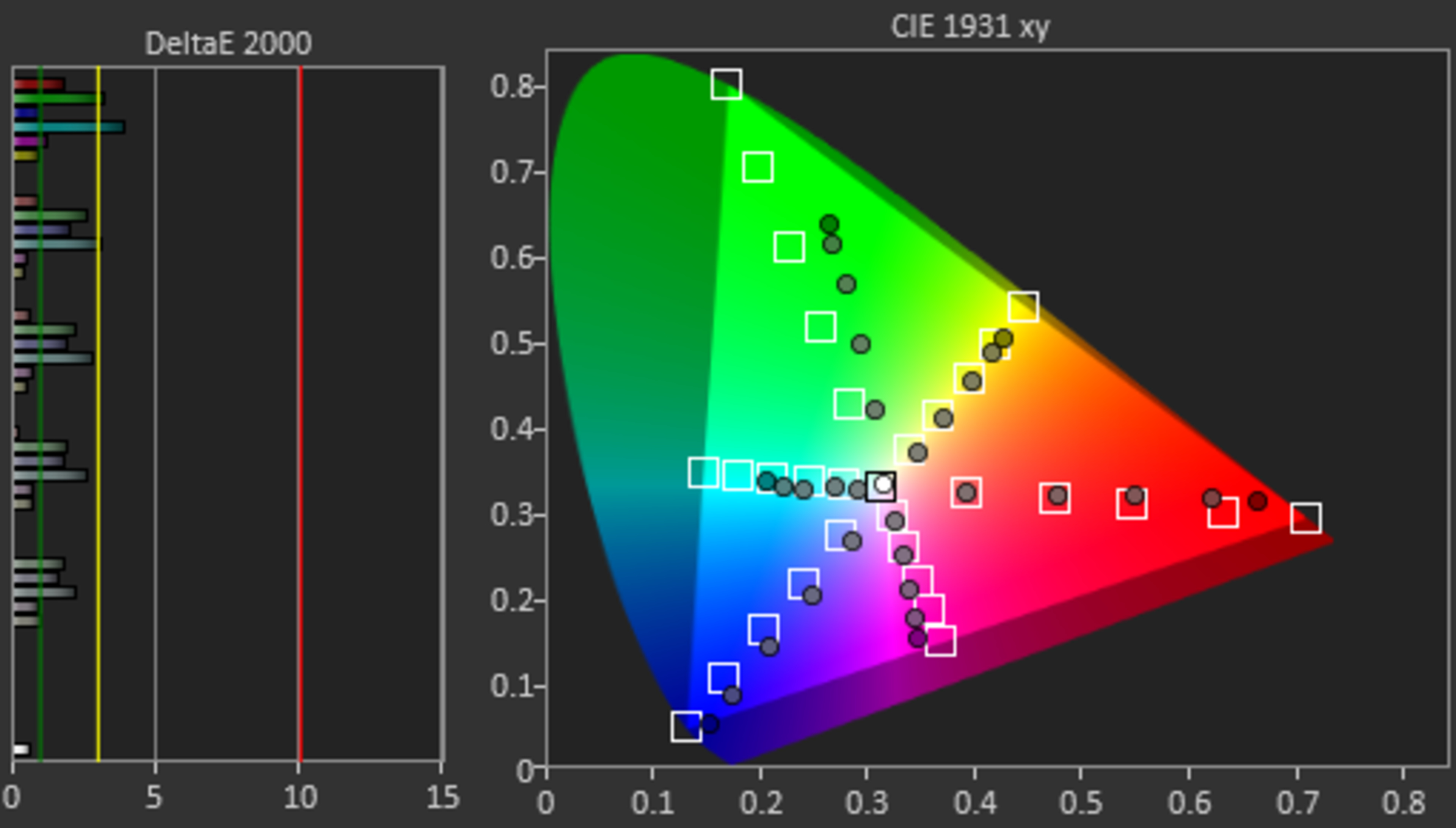
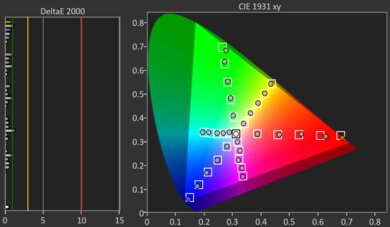
The LG QNED85T has subpar pre-calibration SDR accuracy. Reds are very overrepresented in most shades of gray, which gives the TV a noticeably warmer color temperature than 6500K. Its color accuracy is decent, but whites and most lighter shades are inaccurate. Gamma is very close to 2.2, but most scenes are slightly too dark.
for pictures & test results

for pictures & test results

for pictures & test results

The TV has fantastic accuracy after calibration, and it's easy to calibrate. White balance and color temperature are now almost perfect, and gamma is incredibly close to 2.2. The color accuracy is much better, but saturated reds are a bit inaccurate.
See our full calibration settings.
for pictures & test results

for pictures & test results

The TV has great gray uniformity. There's a little bit of dirty screen effect towards the center of the screen, and the sides of the screen are slightly darker than the center, but it's not noticeable with most real content.
for pictures & test results

for pictures & test results

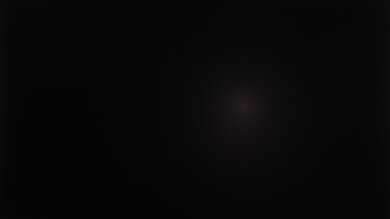
The TV has mediocre black uniformity. With local dimming disabled, the screen is cloudy and blueish. With local dimming enabled, it's a bit better, but there's still patches of blue and some cloudiness.
for videos & test results
for pictures & test results

for pictures & test results

for pictures & test results

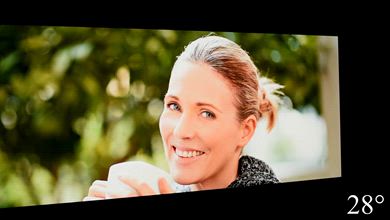
The TV has an inadequate viewing angle, so it's not suitable for a wide seating arrangement. As you move off-center, there's significant gamma shifting, color shifting, and raised black levels, and colors look increasingly washed out as you move further away to the sides.
for pictures & test results

for pictures & test results
for pictures & test results

The TV has decent reflection handling. Its semi-gloss screen finish reduces the intensity of indirect reflections, like when glare from a ceiling light isn't directly facing the screen. Unfortunately, the TV's handling of direct reflections is only alright, so reflections caused by something like an open window opposite the screen are distracting.
for pictures & test results
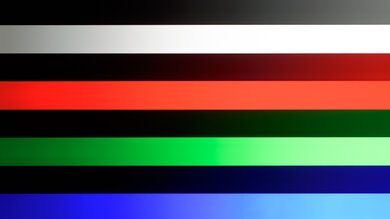
The LG 85 Series QNED has good HDR native gradient handling. There's some banding in greens and dark grays, but all other color gradients have very minimal banding.
for pictures & test results

The TV's low-quality content smoothing is good. It does a good job of removing most artifacts while still preserving detail, but there are still some visible artifacts in low-bitrate content.
for pictures & test results

The TV does a decent job at upscaling low-resolution content like DVDs or lower-resolution streams. The image is clear enough that you can still make out some detail, but finer details and small hardcoded text are hard to make out.
for pictures & test results

The TV uses a BGR (Blue-Green-Red) subpixel layout instead of the traditional RGB layout. This doesn't cause any issues for video or gaming content, but it can be a problem for PC monitor use as it impacts the text clarity, although not everyone will notice this.
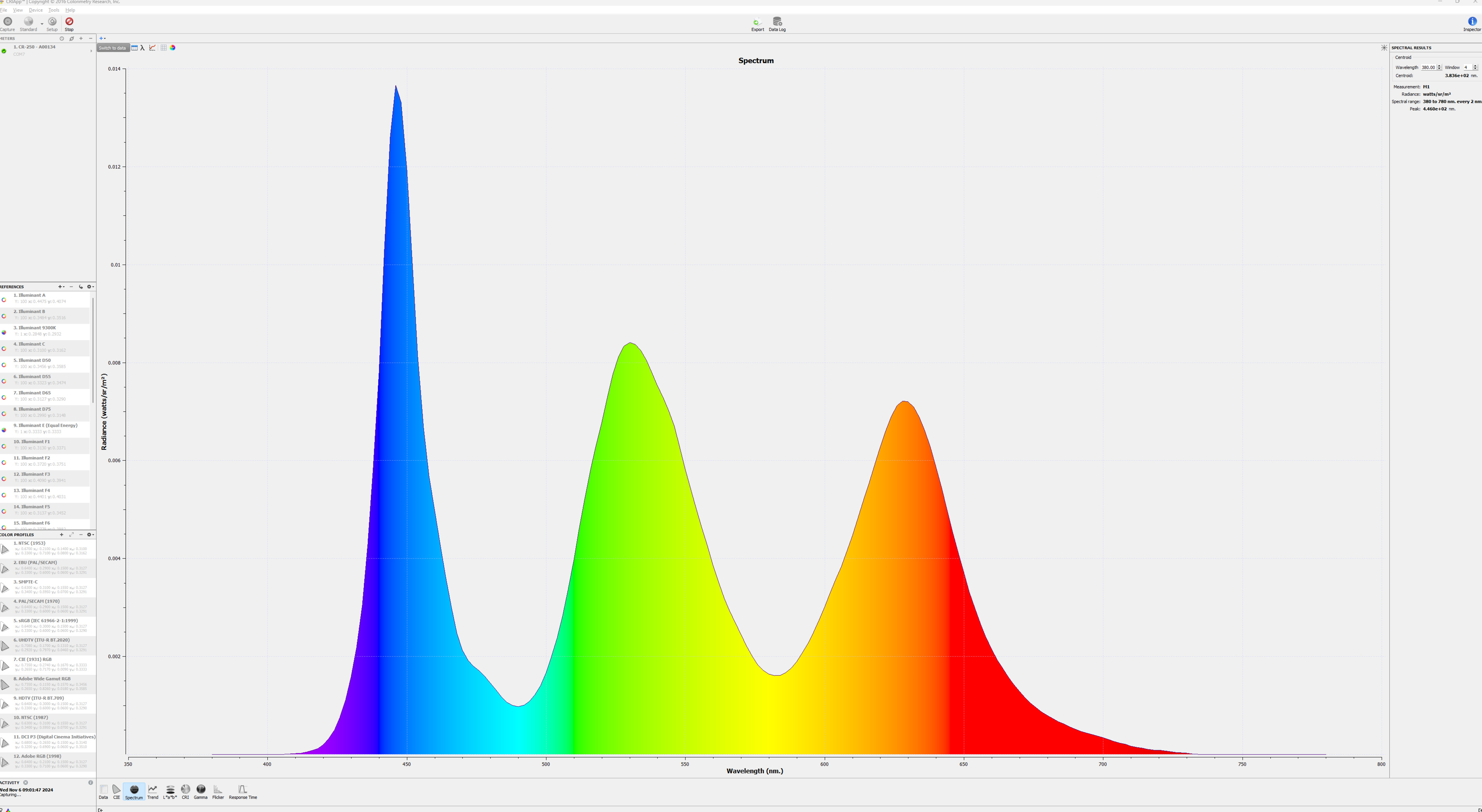
The TV has good separation between colors, which helps with color purity. This is confirmed by the TV's spectral power distribution (SPD).
for pictures & test results

for pictures & test results
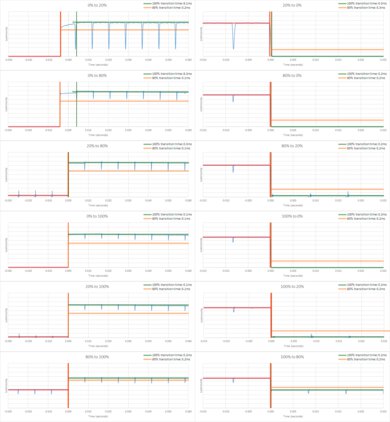
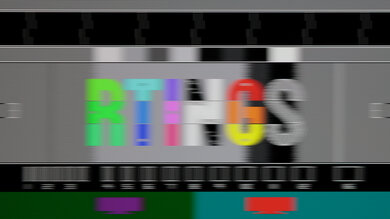
The LG 85 Series QNED has a great response time, but there's still some blur behind very fast-moving objects. Unfortunately, it's slower when coming out of dark states, so there's some black smearing in dark scene transitions.
for pictures & test results

The TV uses pulse width modulation (PWM) to dim its backlight, which introduces flicker that can bother people who are sensitive to it. The amount of flicker depends on whether or not local dimming is enabled. With local dimming turned on, the TV flickers at 120Hz in all picture modes. With local dimming disabled, the TV flickers at 480Hz. However, there's distracting image duplication when the TV flickers at 480Hz, so the 120Hz flicker frequency is less distracting.
for pictures & test results
for pictures & test results
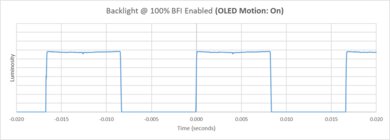
The TV has an optional backlight strobing feature, commonly known as black frame insertion (BFI). This feature is meant to reduce persistence blur and improve the appearance of motion. It works pretty well at both 60Hz and 120Hz, but there's some image duplication.
for pictures & test results

for pictures & test results

This TV has an optional motion interpolation feature to improve the clarity of motion. With slower moving scenes, it works okay, with only some artifacts around characters and objects. Unfortunately, it really struggles with faster-moving scenes, and there are distracting artifacts and haloing around characters.
Due to the TV's quick response time, there's some stutter when watching movies or TV shows, and it's most apparent in slow panning shots.
The TV removes judder when watching 24p movies or TV shows when the Real Cinema setting is enabled, even from sources that can only send a 60Hz signal, like a cable box.
The TV supports FreeSync and HDMI Forum VRR. It's also G-SYNC compatible, ensuring a nearly tear-free gaming experience from any VRR-enabled source.
On an NVIDIA graphics card, enabling FreeSync on the TV leads to screen-tearing, but if you turn that off and have the VRR toggle turned on, everything works as expected. On an AMD graphics card, you must have VRR set to 'Wide' for low frame rate compensation to work properly.
The LG 85 Series QNED has exceptionally low input lag when set to Game Optimizer, resulting in a very responsive gaming experience. The input lag is much higher in the other picture modes, so you do feel a slight delay when doing something like pausing a movie or TV show.
The TV supports all common formats. It displays chroma 4:4:4 properly, which is important for clear text from a PC.
There are two settings you can use to passthrough proper chroma 4:4:4. The first is to change the input label to 'PC.' The second is to enable the '4:4:4 Passthrough' setting in the 'HDMI Settings' menu. Both of these options work the same and lock you out from using the 'Noise Reduction,' 'MPEG Noise Reduction,' 'Smooth Gradation,' and 'Real Cinema' settings.
for pictures & test results

The TV is fully compatible with everything the PS5 offers, like 1440p @ 120Hz and 4k @ 120Hz, as well as HDMI Forum VRR. It also supports Auto Low Latency Mode, so you don't have to worry about switching to Game Optimizer to get the lowest input lag.
for pictures & test results

The TV is almost fully compatible with everything the Xbox Series X|S offers, including 1440p @ 120Hz, 4k @ 120Hz, HDMI Forum VRR, and FreeSync Premium Pro. It also supports Auto Low Latency Mode, so you don't have to worry about switching to Game Optimizer to get the lowest input lag. It doesn't support Dolby Vision gaming.
The TV supports the full 48Gbps bandwidth of HDMI 2.1 on all four HDMI ports. This allows you to take full advantage of multiple high-bandwidth devices, like if you own both current-gen consoles and a high-end gaming PC. It doesn't support Dolby Vision or HDR10+.


The TV supports eARC, which lets you pass high-quality, uncompressed audio to a compatible receiver or soundbar through an HDMI cable. It supports all major audio formats, so you don't have to worry about compatibility with external sources.
Worth noting is that its support of DTS advanced audio formats is something that is not included in the LG QNED85A, another lower mid-range LG TV, which was released in 2025.
for pictures & test results

The LG 85 Series QNED has a poor frequency response. The sound is well-balanced at low volume levels, making dialogue easy to understand. However, the sound becomes very unbalanced at moderate and high volume levels, so dialogue is hard to understand. The TV produces almost no bass at all, so you don't hear much low end on this model, and it doesn't get very loud overall.
for pictures & test results
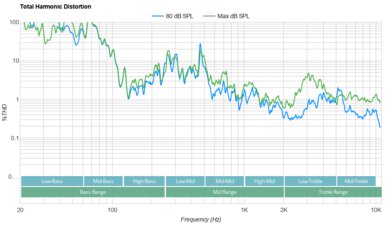
The TV has bad distortion that worsens as you raise the volume. Near and at the TV's maximum volume, the distortion is very audible and quite distracting.
for pictures & test results

The TV runs the 2024 version of LG's proprietary smart interface, webOS. The interface is fast and easy to use, and it supports user profiles, so you can customize the home page for different users.
Unfortunately, the TV has a bug that sometimes causes VRR handshaking issues. To fix this, you must disable and then reenable VRR in the Game Optimizer menu.
for pictures & test results

There are two settings in the 'Home Settings' menu, namely the 'Home Promotion' and 'Content Recommendation' settings. These settings remove the top banner ads and suggested content from the home screen. This gives your home screen a clean look, but there's no way to remove ads from the apps page.
for pictures & test results
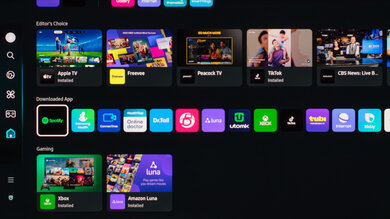
The LG QNED 85 Series has a great selection of apps, so it's easy to find your favorite content. You can also cast content from your phone onto the TV or play videos from a USB stick.
for pictures & test results

The LG QNED85T has the same Magic Remote that comes with many LG models. You can use the remote as a pointer or use the traditional buttons to control the TV. The TV also supports hands-free voice control through microphones on the unit itself. You can use your voice to change inputs, open apps, search for content, adjust settings, and ask for the weather and time.
for pictures & test results

On the bottom of the TV, in the middle, is a single button you can use to turn the TV on or off, change inputs or channels, and control the volume.
for pictures & test results

- Remote (with 2x AA batteries)
- User manuals
- Stand covers
- Cable clips
- Power cable