Anker Soundcore Space One Wireless  Headphones Review

Reviewed Sep 29, 2023 at 12:27pm
Tested using Methodology v1.5 
Anker Soundcore Space One Wireless
7.0
Neutral Sound 
7.4
Commute/Travel 
6.9
Sports/Fitness 
7.1
Office 
5.5
Wireless Gaming 
7.1
Wired Gaming 
5.7
Phone Calls 
 21

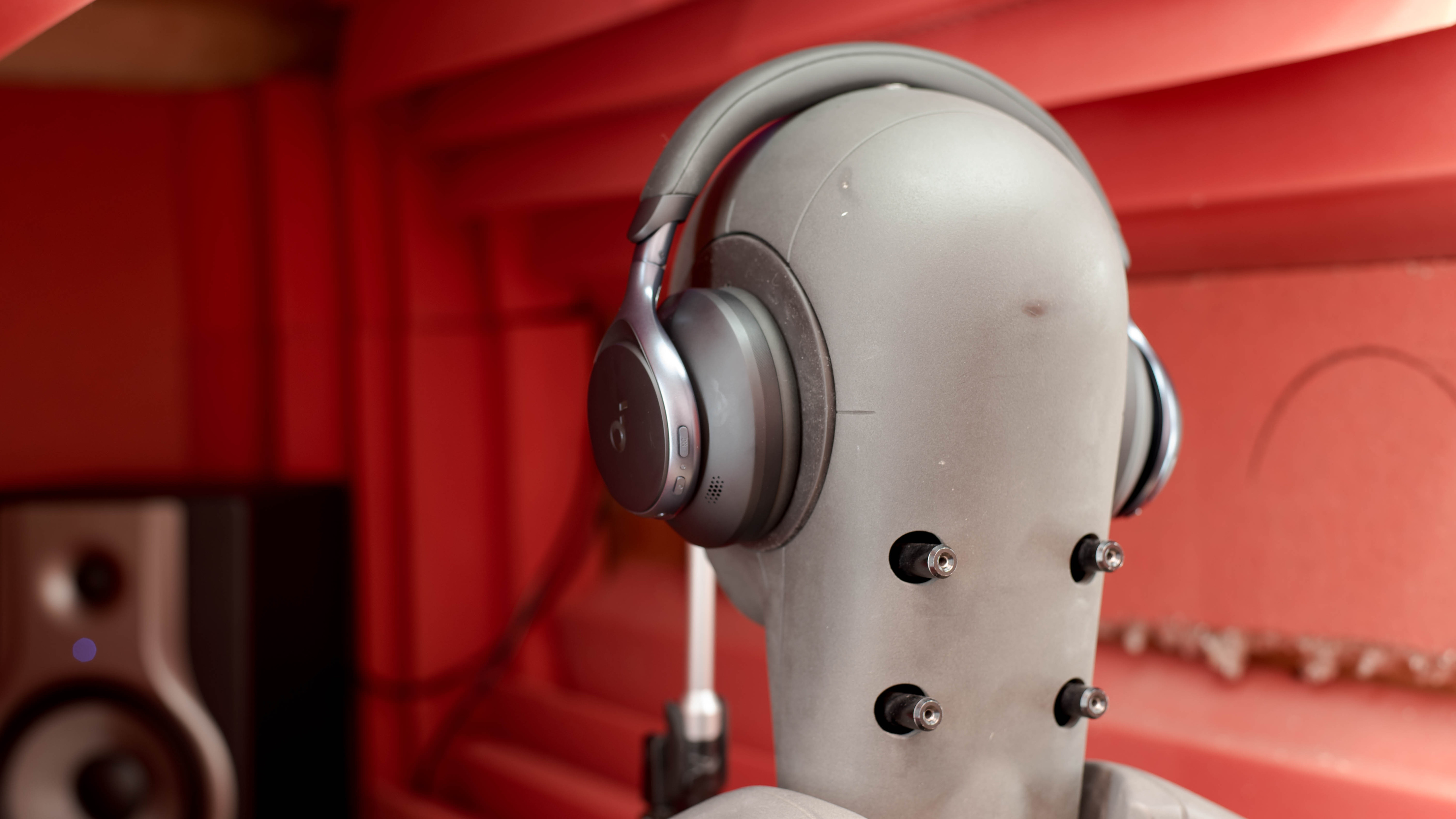
The Anker Soundcore Space One Wireless are wallet-friendly noise cancelling (ANC) headphones. They have adaptive noise cancelling, which automatically adjusts to the noise around you, as well as five modes to meet your preferred isolation needs. They also support LDAC codec, which is handy for streaming high-quality audio. That said, while they're meant to emulate the performance of their higher-end sibling, the Anker Soundcore Space Q45 Wireless, there are some obvious weak points, which reflect their affordable price tag.

Our Verdict

7.0
Neutral Sound 

The Anker Space One are satisfactory for neutral sound. Out of the box, they have a V-shaped sound profile that delivers extra bass while added treble helps vocals and instruments still stand out from the mix. That said, since they're closed-back headphones, they don't create the most immersive soundstage. Their ear cup padding is shallow, too, and it can be hard to get a good fit; if you wear glasses or have thick hair, these features can cause a big drop in bass delivery. Luckily, if you prefer a different sound, their companion app offers an adaptive EQ based on your unique hearing preferences, a graphic EQ for more robust sound customization, and a whopping 22 EQ presets.

Pros
  • Robust sound customization available via companion app.
  • Support LDAC codec.
Cons
  • Prone to inconsistencies in audio delivery.
  • Closed off and small soundstage.
7.4
Commute/Travel 

The Anker Space One are decent for commute and travel. These headphones have noise cancelling and can block out some of the low rumble of bus and plane engines, although it won't be enough for noisy commutes. They also lack a hard carrying case to help protect them from bumps or damage when you're on the go. Their shallow ear cups mean your ears can rub against the driver housing. On the upside, they last over 34 hours continuously, so you don't need to stress about them dying during your trip.

Pros
  • ANC can cut down mid to treble range noise well.
  • Well-built design.
Cons
  • ANC struggles to block out bass-range noise.
  • Lack a hard carrying case to protect them from damage.
6.9
Sports/Fitness 

The Anker Space One are fair for sports and fitness. If you want to wear over-ears for running or working out, note that these headphones can fall off your head with intense head movements. They also lack an IP rating for water resistance (though that's to be expected from their design). While they have a decently comfortable fit, the ear cup padding is shallow and can cause your ears to rub against the drivers.

Pros
  • Well-built design.
Cons
  • Not the most stable for moving around.
7.1
Office 

The Anker Space One are decent for office use. These headphones have an ANC system that can block out sounds like chatty coworkers and noisy AC vents. They also have a long continuous battery life, even with the ANC on. Thanks to multi-device pairing support, you can simultaneously stay connected to your work PC and smartphone. Unfortunately, while they're decently comfortable, the ear cup padding is quite shallow and can cause your ears to rub against the drivers.

Pros
  • Support multi-device pairing.
  • ANC can cut down mid to treble range noise well.
  • Well-built design.
Cons
  • Mediocre at best microphone performance.
  • Prone to inconsistencies in audio delivery.
  • Closed off and small soundstage.
5.5
Wireless Gaming 

The Anker Space One are Bluetooth headphones, and their latency is too high on PCs to be suitable for gaming.

7.1
Wired Gaming 

The Anker Space One are decent for wired gaming, so long as you don't mind their lack of mic support via analog. They have an excited sound that adds thumpy, rumbly bass to gameplay, which can help keep you pumped up while gaming. However, their ear cup padding is quite shallow and may not be the most comfortable for long gaming sessions. Their mids are recessed, too, so game dialogue sounds weak and veiled compared to the boominess of sound effects.

Pros
  • Well-built design.
Cons
  • Prone to inconsistencies in audio delivery.
5.7
Phone Calls 

The Anker Space One are sub-par for phone calls. Their integrated mic seems to have a compensation algorithm, which causes the mic to disable itself when there's a very high amount of background noise, as it can't detect your voice. This makes taking calls in noisy places like a busy office very challenging. Recorded speech also sounds thin and robotic. On the upside, these cans have ANC and can block out a good amount of ambient sound so that you can focus on your call.

Pros
  • Support multi-device pairing.
Cons
  • Mediocre at best microphone performance.
  • 7.0
    Neutral Sound
  • 7.4
    Commute/Travel
  • 6.9
    Sports/Fitness
  • 7.1
    Office
  • 5.5
    Wireless Gaming
  • 7.1
    Wired Gaming
  • 5.7
    Phone Calls
  • Changelog

    1.  Updated Oct 13, 2023: We've added information regarding the 'HearID' feature as well as clarified the difference between the 'Soundcore Signature', 'Flat', and 'Custom (Flat)' EQ presets in Sound Profile.
    2.  Updated Sep 29, 2023: Review published.
    3.  Updated Sep 26, 2023: Early access published.
    4.  Updated Sep 18, 2023: Our testers have started testing this product.

    Check Price

    Differences Between Sizes And Variants

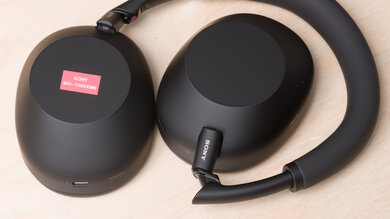
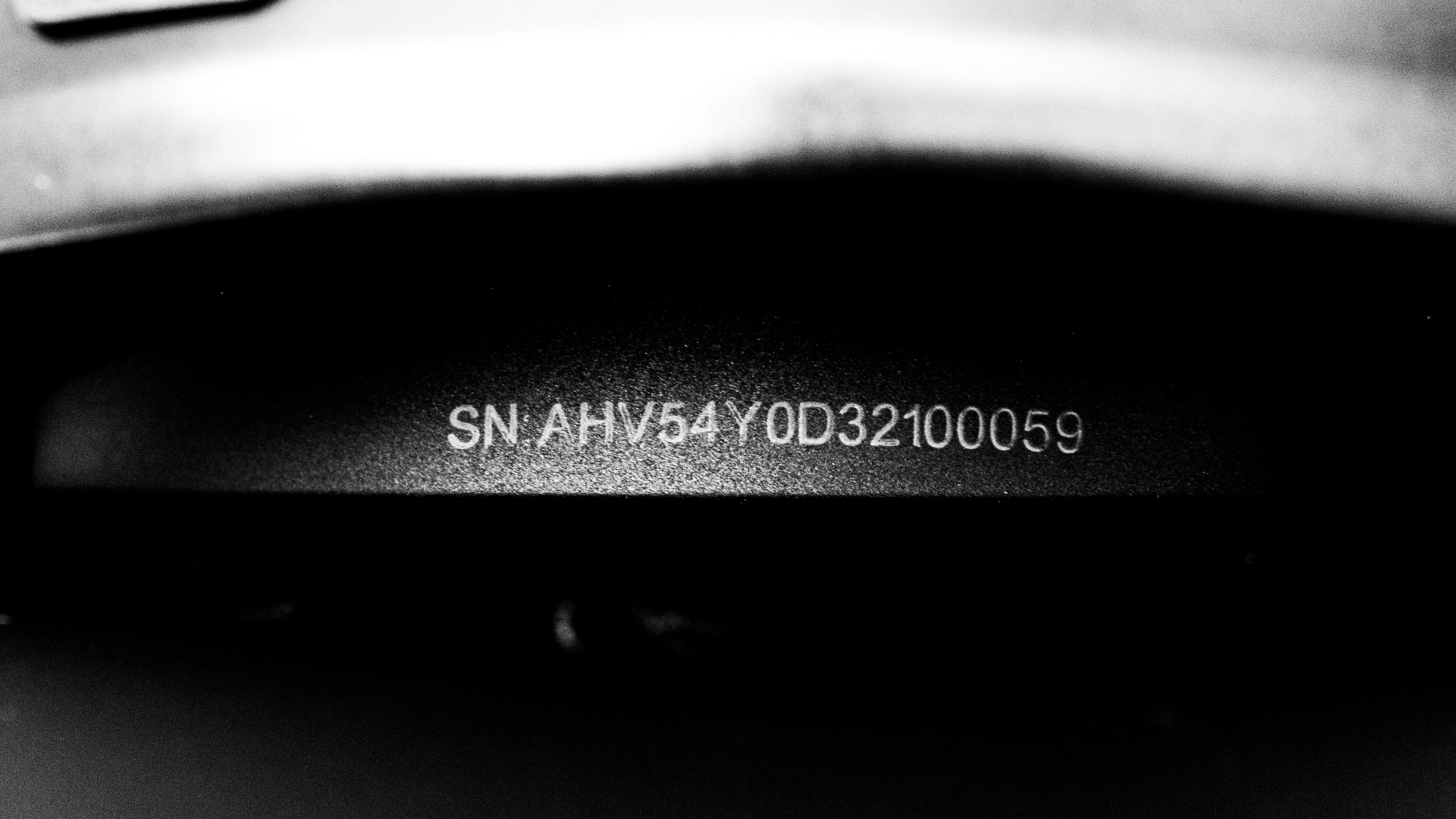
    The Anker Space One come in three color variants: 'Latte Cream', 'Sky Blue', and 'Jet Black'. We tested the 'Jet Black' colorway, and you can see our model's label here. If you come across another variant, please let us know in the forums.

    Popular Headphones Comparisons

    The Anker Space One are the more budget-friendly sibling of the Anker Soundcore Space Q45 Wireless. While both models look fairly similar and offer nearly identical features, there are some key differences between the two. The Space One's noise isolation performance isn't anything to write home about, especially compared to the similarly priced Anker Soundcore Life Q35 Wireless. Their ear cup padding also received a bit of redesign, but it's now shallower, making it trickier to get a good seal on your head. Even though they have a lot of extra features like other products from this manufacturer, they don't stand out from the rest of Anker's lineup.

    Check out our recommendations for the best wireless Bluetooth headphones under $100, the best noise cancelling headphones under $100, and the best bass headphones.

    Sony WH-CH720N Wireless

    Between the Sony WH-CH720N Wireless and the Anker Soundcore Space One Wireless the Anker are slightly better for most people. That said, the Sony have virtual surround sound, weigh slightly less, and have a much better microphone, so if you take a lot of calls, the Sonys are better. On the other hand, the Anker have a longer continuous battery life, an excited sound profile with more EQ options, and comparable noise isolation. They aren't miles ahead, but they're slightly better in these regards.

    Anker Soundcore Space Q45 Wireless

    The Anker Soundcore Space Q45 Wireless are better headphones than the Anker Soundcore Space One Wireless. While both headphones look similar, the Q45 are more comfortable, have a hard carrying case to protect them on the go, and have a superior noise isolation performance. Their mic also offers a better overall performance.

    Anker Soundcore Life Q30 Wireless

    The Anker Soundcore Life Q30 Wireless are a better deal than the Anker Soundcore Space One Wireless. While both headphones share similarities like LDAC support, the Life Q30 are more comfortable, come with a sturdy carrying case to help protect them from damage on the go, and have a significantly better noise isolation performance. However, the Space One are better built.

    Sony WH-1000XM4 Wireless

    The Sony WH-1000XM4 Wireless are much better headphones than the Anker Soundcore Space One Wireless. The Sony are more premium headphones, showing in both their design and performance. They're more comfortable, are better built, and have a hard carrying case to help protect the headphones when not in use. They deliver sound more consistently too, and support a virtual soundstage to help make your audio sound more immersive. Their noise isolation performance is superior, too.

    Anker Soundcore Life Q35 Wireless

    The Anker Soundcore Life Q35 Wireless are better over-ears than the Anker Soundcore Space One Wireless. The Life Q35 are more comfortable, come with a hard carrying case, making them feel more durable on the go than the Space One's cloth pouch, and have a better overall noise isolation performance. However, the Space One leak less audio.

    Overhauling Our Audio Measurements And A New Multi-Curve Graphing Tool

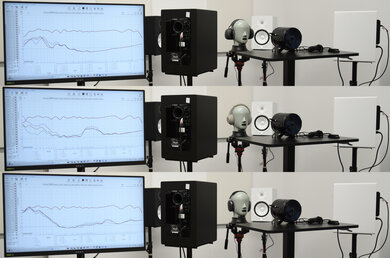
    We've upgraded our Headphones Test Bench to 2.0! This update brings several key changes to our tests and usages, making it easier than ever to interpret our sound results based on your personal preferences. You'll also find a brand-new interactive graph tool featuring multiple targets (including our own!) for you to explore and compare.

    For a full breakdown, check out our changelog, which includes detailed commentary from our test designer explaining the rationale behind our update.

    We'd also love to hear your thoughts: your feedback helps us keep improving, so join us in the comments!

    Test Results

    perceptual testing image
    Sort:
    RATINGS
    Category:
    All
    Design
    Style
    TypeOver-ear
    EnclosureClosed-Back
    WirelessYes
    TransducerDynamic

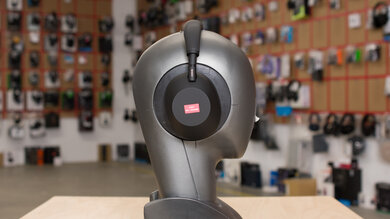
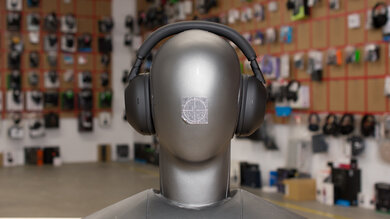
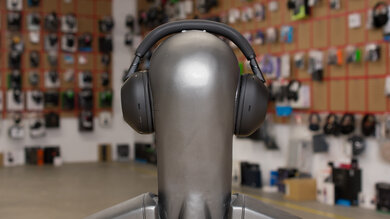
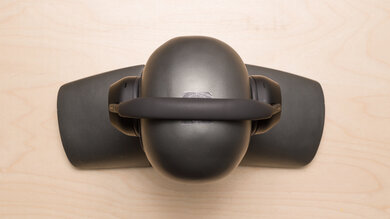
    These headphones look slightly different from sibling products like the Anker Soundcore Space Q45 Wireless. The yoke extends around the ear cup's protrusion rather than ending at it, and it's a soft metallic blue color instead of black. The manufacturer's logo is printed onto the protrusion, while the name of the headphone is printed onto the yoke. The headphones come in three colors: 'Jet Black', 'Sky Blue', and 'Latte Cream'.

    7.0
    Comfort
    Weight0.58 lbs
    Clamping Force
    0.8 lbs

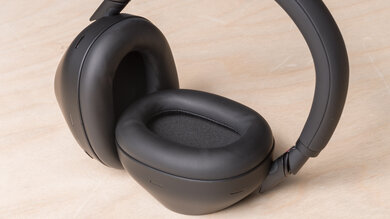
    The Anker Space One have a decently comfortable fit but are less comfortable than headphones like the Anker Soundcore Space Q45 Wireless or the Anker Soundcore Life Q30 Wireless. The padding is decently soft, but the ear cup padding is quite shallow, which affects their ability to create a quality seal on your head. The left and right ear cups don't have the same depth. The left driver has a visual sensor to detect when the headphones are on your head. However, the right driver lacks this sensor and is more shallow than the left one, so your ear can rub up against the interior mesh. On the upside, don't clamp too tightly to cause pain or discomfort.

    8.0
    Controls
    OS Compatibility
    Not OS specific
    Ease Of UseDecent
    FeedbackGood
    Call/Music ControlYes
    Volume ControlYes
    Microphone ControlMute/Unmute
    Channel Mixing
    No
    Noise Cancelling ControlOn/Off
    Talk-Through
    On/Off
    Additional ControlsVoice Assistant

    The Anker Space One have great controls. Their physical buttons have nice tactile response when pressing them, and the '-' button is even embossed so that you can feel the difference between this button and the '+' button. There's an audible click for button presses and voice prompts when powering the headphones on, using the Bluetooth connection, and using ANC. However, there aren't warnings to tell you when you've reached the minimum or maximum volume.

    On the left ear cup:

    Power button:

    • Press and hold: Turns headphones on or off. Holding this button beyond turning the headphones on enters Bluetooth pairing mode.

    NC button:

    • Single press: Cycles between ANC on, talk-through mode, which allows you to hear your surroundings without removing the headphones, and normal mode. If you prefer to customize these settings, you can remove and remap different ANC modes using the companion app.
    • Double press: Nothing by default, but you can add 'BassUp' in the companion app, which is an EQ feature that adds more bass to your audio.

    On the right ear cup:

    Play/Pause button:

    • Single press: Plays and pauses audio. Also answers and ends calls.
    • Double press: Activates voice assistant.
    • Press and hold: Rejects a call. If you're already on a call, it mutes and unmutes the mic.

    Volume rocker:

    • Single press (on the '+'): Raises the volume.
    • Single press (on the '-'): Lowers the volume.
    • Double press (on the '+'): Skips to the next track.
    • Double press (on the '-'): Skips to the previous track.
    5.7
    Portability
    L6.1" (15.4 cm)
    W6.9" (17.4 cm)
    H3.3" (8.5 cm)
    Volume138.99 in³ (2,277.66 cm³)
    Transmitter RequiredNo

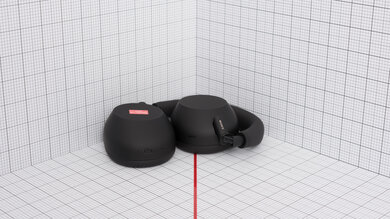
    These over-ears aren't the most portable. While the ear cups can swivel inwards, they can't fold flat. As a result, they're bulky and can be tricky to fit into most bags.

    6.0
    Case
    TypePouch
    LN/A
    WN/A
    HN/A
    VolumeN/A

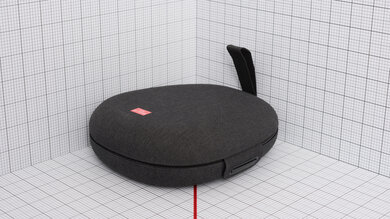
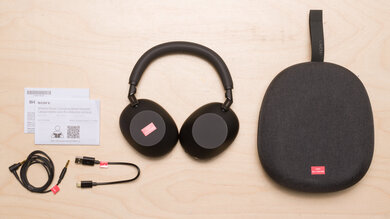
    The carrying case is mediocre and a step down from the Anker Soundcore Space Q45 Wireless' hard case. This soft cloth pouch has a microfiber interior but won't protect the headphones from anything but dust accumulation and scratches.

    7.5
    Build Quality

    These headphones have a good build quality. Even though they have a more affordable price point than their higher-end sibling, the Anker Soundcore Space Q45 Wireless, they have a similar plastic and faux leather build, which doesn't feel of lesser quality. That said, the ear cup padding is too shallow for consistent isolation around your ear, and the snappiness of the hinges will likely degrade over time.

    6.5
    Stability

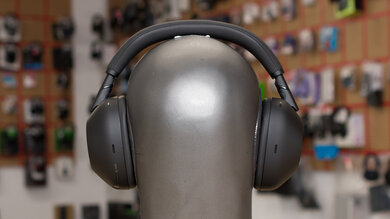
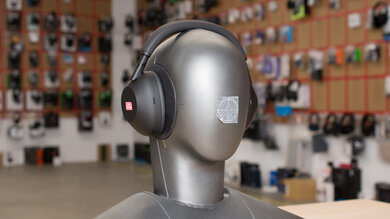
    The Anker Space One are fairly stable but not a good choice if you want to sport them at the gym. They'll stay in place if you're listening to audio at your desk; using them during a run or working out at the gym can cause them to fall off your head.

    Headshots 1
    Headshots 2
    Top
    In The Box

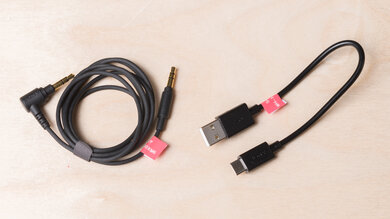
    • Anker Soundcore Space One headphones
    • 1/8" TRS to TRS audio cable
    • USB-C to USB-A charging cable
    • Cloth pouch
    • Manuals
    Sound
    Sound Profile
    See details on graph tool
    Bass Amount
    3.26 dB
    Treble Amount
    0.94 dB

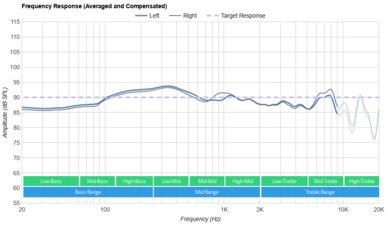
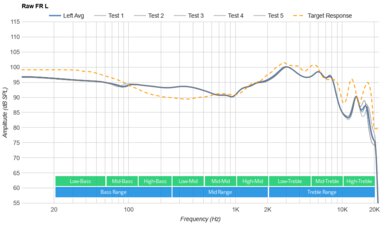
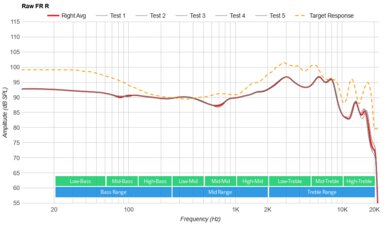
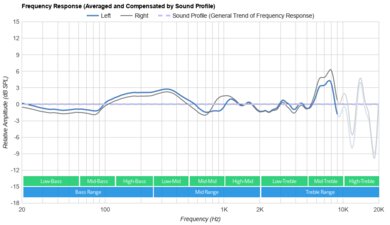
    Using the 'Soundcore Signature' EQ preset, these headphones have a V-shaped sound profile that helps emphasize rumbly, boomy basslines. While vocals and instruments are veiled and thin due to a recessed mid-range, sibilants like cymbals are bright to help cut through the extra bass. Luckily, if you prefer a different sound, their companion app offers a graphic EQ and presets to help you adjust them. Keep in mind that the 'Soundcore Signature' and 'Custom (Flat) EQ' have the same frequency response. The 'Flat' EQ preset is slightly different, with a touch less bass across the range as well as a little less treble, but it's not a significant change. In addition to the EQ, there's also a HearID feature available via the companion app. It's a personalized EQ based on your unique hearing abilities. The app plays a series of tones at different volumes and asks you to select which ones you hear. It then plays music if you want to further adjust the EQ to your tastes and customize it to other EQs or the audio genres you like. The performance of this feature depends on your own preferences, though.

    Although we do our sound tests with the ANC on (when available), we also ran a frequency response pass with the ANC off. You can see a comparison between both responses here. With ANC off, you'll experience a bit less thump and rumble from the bass range and even thinner vocals and instruments, though this second dip is somewhat hard to spot. There isn't much of a difference in the treble range, though.

    6.5
    Frequency Response Consistency
    See details on graph tool
    See details on graph tool
    Avg. Std. Deviation
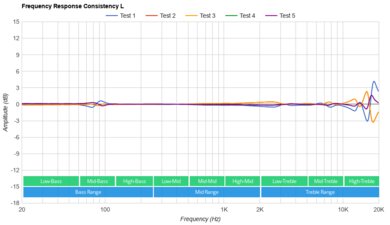
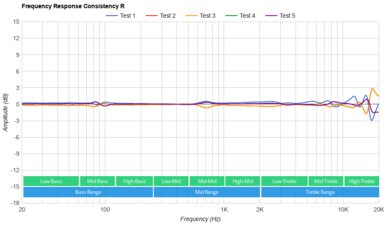
    0.75 dB

    The Anker Space One's frequency response consistency is just okay. They're prone to inconsistencies in audio delivery, especially as their ear cup padding is quite shallow, making it harder to get a good seal on your head. You'll especially notice a drop in bass delivery if you have thick hair or wear glasses. As a result, it's important to take the time to adjust their fit, positioning, and seal each time you use them to get a more consistent sound.

    Raw Frequency Response
    See details on graph tool
    See details on graph tool
    8.6
    Bass Accuracy
    See details on graph tool
    Std. Err.
    1.97 dB
    Low-Frequency Extension
    11.55 Hz
    Low-Bass
    1.4 dB
    Mid-Bass
    1.96 dB
    High-Bass
    -1.35 dB

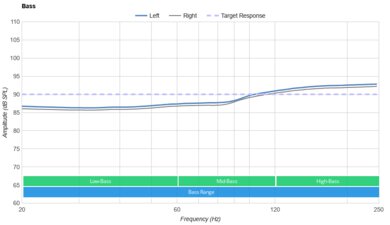
    The Anker Space One have excellent bass accuracy. The response is mostly overemphasized across the range, although it's fairly minor. As a result, your audio has a touch of extra thump, rumble, and punch but lacks a bit of warmth to round out the bass.

    6.6
    Mid Accuracy
    See details on graph tool
    Std. Err.
    4.49 dB
    Low-Mid
    -5.14 dB
    Mid-Mid
    -5.32 dB
    High-Mid
    0.01 dB

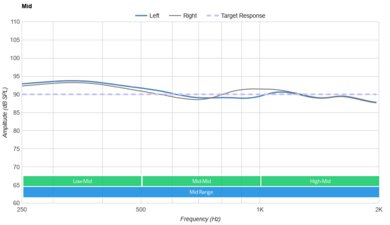
    The Anker Space One's mid accuracy is okay. The response is mostly underemphasized, by a significant margin. Vocals and instruments in songs like Mitski's Nobody sound thin and pushed to the back of the mix. They still sound clear, though.

    6.0
    Treble Accuracy
    See details on graph tool
    Std. Err.
    5.7 dB
    Low-Treble
    -4.36 dB
    Mid-Treble
    0.57 dB
    High-Treble
    -4.91 dB

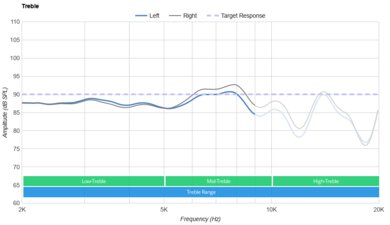
    Their treble accuracy is mediocre at best. The low-treble is underemphasized, resulting in very veiled vocals and instruments. In contrast, sibilants like cymbals are bright but not piercing.

    6.3
    Peaks/Dips
    See details on graph tool
    Peaks
    2.41 dB
    Dips
    2.24 dB

    These headphones have a passable peaks and dips performance. They struggle to control their sound profile, which results in a few significant deviations. A gradual peak in the mid to high-bass adds extra punch and warmth to mixes, while two dips in the low to mid-mid thin out vocals and instruments, pushing them to the back of the mix. A large peak in the high-mid makes these sounds harsh in the mix, while a dip in the low-treble veils their detail. Another large peak in the mid-treble makes sibilants piercing.

    8.5
    Imaging
    See details on graph tool
    See details on graph tool
    Weighted Group Delay
    0.29
    Weighted Phase Mismatch
    7.29
    Weighted Amplitude Mismatch
    0.72
    Weighted Frequency Mismatch
    1.56

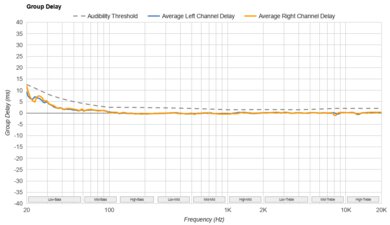
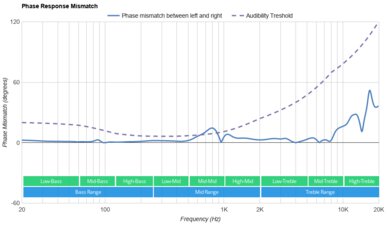
    Some of the previous headphones we've tested from this manufacturer display imaging issues, which indicates their quality control and ergonomics. That said, imaging varies between units. Our unit's L/R drivers are well-matched in group delay, resulting in tight bass and transparent imaging. They're also well-matched in amplitude and frequency response, which helps ensure a stable stereo image. However, there's a bit of phase mismatch, and the noise floor raises as the ANC kicks in on both drivers but disappears with audio. There are a couple of peaks in the high-mid to low-treble range. The soundstage turns inward at these spots, and the left driver loses depth. Audio in the left driver fluctuates back and forth, resulting in some higher-pitched vocals shifting slightly in the soundstage.

    4.8
    Passive Soundstage
    See details on graph tool
    PRTF Accuracy (Std. Dev.)
    3.04 dB
    PRTF Size (Avg.)
    6.53 dB
    PRTF Distance
    10.9 dB
    Openness
    2.5
    Acoustic Space Excitation
    2.3

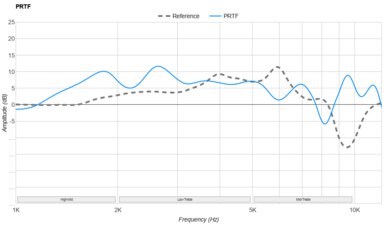
    The Anker Space One's passive soundstage performance is poor, but that's normal for closed-back headphones. Their soundstage doesn't feel very natural or spacious. Rather, it's quite small and unnatural. Audio sounds like it's coming from inside your head rather than from speakers placed in the room around you.

    0.0
    Virtual Soundstage
    Head Modeling
    No
    Speaker Modeling
    No
    Room Ambience
    No
    Head Tracking
    No
    Virtual Surround
    No
    7.5
    Weighted Harmonic Distortion
    See details on graph tool
    WHD @ 90
    0.310
    WHD @ 100
    0.150

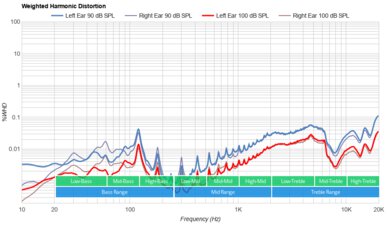
    The weighted harmonic distortion performance of these over-ears is good. There's a small spike in moderate listening volumes between the low to mid-treble. However, it affects a small frequency band and is hard to hear with real-life content. The rest of the frequency response also falls within good levels, resulting in fairly clean and pure audio reproduction.

    Test Settings
    Firmware
    02.77
    Power
    On
    Connection
    Bluetooth 5.0
    Codec
    LDAC, 32-bit, 48kHz
    EQ
    Soundcore Signature
    ANC
    Adaptive Noise Cancelling
    Tip/Pad
    Default
    Microphone
    Integrated

    These are the settings used to test the Anker Space One. Our results are only valid when used with these settings.

    Isolation
    7.5
    Noise Isolation
    See details on graph tool
    Isolation Audio
    Overall Attenuation
    -22.33 dB
    Noise CancellingYes
    Bass
    -9.29 dB
    Mid
    -23.94 dB
    Treble
    -35.27 dB

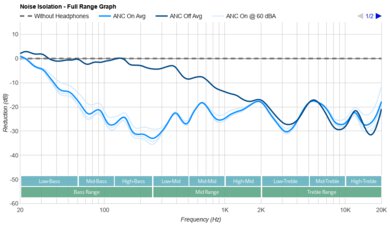
    Using the adaptive noise cancelling setting, the noise isolation performance of the Anker Space One Wireless is good. These over-ears have an adaptive ANC system, automatically adjusting its performance to your environment. Unfortunately, it doesn't do quite as good of a job as the more premium Anker Soundcore Space Q45 Wireless, as the ANC has trouble reducing the low rumble of bus and plane engines. On the upside, it does a significantly better job of cutting down ambient chatter and the hum of AC units than in the bass range, which can be handy for noisy offices.

    Extending the length of times our sweeps take shows a slight difference in performance. You can see a graph comparing these measurements here. The system adapts slightly better when exposed to noise for longer periods. However, this improvement is minor.

    If you don't like adaptive noise cancelling, you can also select one of five different ANC modes in their companion app. You can see a comparison between all these settings and the adaptive setting here. Level five will give you the overall best performance, but levels one and two can isolate you from a little more low-bass noise, like the rumbles of plane engines, and high-pitched noise, like computer fans.

    8.0
    Leakage
    See details on graph tool
    Leakage Audio
    Overall Leakage @ 1ft
    33.6 dB

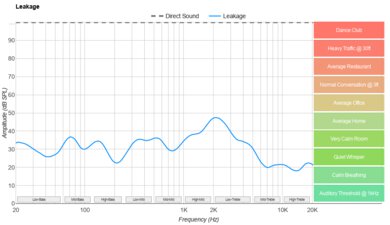
    The leakage performance of these over-ears is great. Leakage is mostly concentrated in the mid to treble range and is somewhat thin. That said, if you like to crank your audio to high volumes at the office, others around you won't hear it.

    Microphone
    Microphone Style
    Integrated
    Yes
    In-Line
    No
    Boom
    No
    Detachable Boom
    No
    MicYes
    3.6
    Recording Quality
    See details on graph tool
    Recorded Speech
    LFE
    ≈ 708.08 Hz
    FR Std. Dev.
    ≈ 12.43 dB
    HFE
    ≈ 7,452.94 Hz
    Weighted THD
    N/A
    Gain
    ≈ 13.07 dB

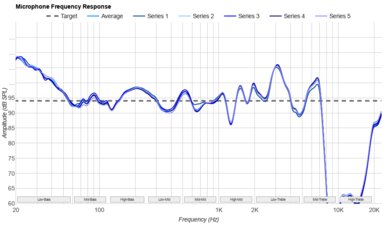
    Our test can't capture results representative of this mic's real-life use. The mic may have a compensation algorithm for high volumes across a wide frequency range. This results in the mic automatically turning itself off during our tests. We suspect that if the microphone doesn't detect a voice within the normal vocal range or is drowned out by loud audio, it cuts itself off to maintain the call quality for the other person on the line. We don't expect this to be an issue if you take calls in quieter spaces like home. However, loud noises can cut your voice out altogether, which can be frustrating.

    The mic's recording quality isn't great in real-life usage; your voice sounds thin and slightly robotic. It's still fairly easy to follow your voice, though.

    6.3
    Noise Handling
    See details on graph tool
    SpNR
    ≈ 52.45 dB
    Noise Gate
    Always On
    Speech + Pink Noise Handling
    7.5
    Speech + Pink Noise Audio Sample
    Speech + Subway Noise Handling
    4.5
    Speech + Subway Noise Audio Sample

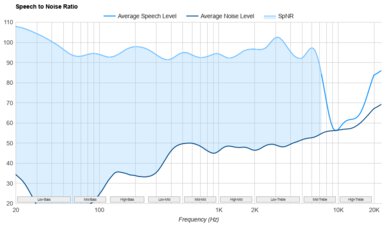
    The mic's noise handling performance is mediocre. When speaking in a place with moderate, consistent sound, background noise is mostly cut through, though your voice can sound muffled. However, if you're taking calls in a noisy environment like a busy street or office, the mic can disable itself, which basically cuts speech off. This may be due to a compensation algorithm within the headphones; when the microphone can't detect a voice within the normal vocal range, or if that voice is drowned out by loud audio, it disables itself to preserve call quality. As a result, the person you're talking to won't hear background noise, but they also won't hear your voice either.

    Active Features
    8.8
    Battery
    Battery Type
    Rechargable
    Continuous Battery Life
    34.25 hrs
    Additional Charges
    0.0
    Total Battery Life
    34.25 hrs
    Charge Time
    1.5 hrs
    Power-Saving Feature
    Auto-Off Timer and Standby Mode
    Audio While Charging
    No
    Passive Playback
    Yes
    Charging PortUSB-C

    The Anker Space One have excellent battery performance. The manufacturer advertises up to 40 hours of playback time with ANC on, and we measured a little less than that. If you turn the ANC off, Anker also says you can reach up to 55 hours of playback time. However, keep in mind that battery life can vary depending on use. If you forget to turn them off, they're equipped with a standby mode and auto-off timer to help conserve battery life. The manufacturer also notes that five minutes of charging can give you up to four hours of playback time.

    8.0
    App Support
    App NameAnker Soundcore
    iOSYes
    AndroidYes
    macOSNo
    WindowsNo
    Equalizer
    Graphic + Presets
    ANC Control
    Adjustable
    Mic ControlNo
    Room Effects
    No
    Playback Control
    No
    Button MappingYes
    Surround Support
    No

    The Anker Soundcore app is great, and you can see a video of it in action here. This app gives you a lot of control over the headphones, from switching between adaptive and five different modes of noise cancelling, to a graphic EQ, a personalized EQ based on your hearing, and 22 EQ presets. You can also access features like wearing detection (which allows the headphones to pause audio when you take them off your head), enable LDAC codec to stream high-quality audio, and remap controls.

    Connectivity
    8.4
    Bluetooth
    Bluetooth Version
    5.3
    Multi-Device Pairing
    2 Devices
    NFC Pairing
    No
    Line Of Sight Range
    334.65 ft (102.00 m)
    PC Latency (SBC)
    275 ms
    PC Latency (aptX)
    N/A
    PC Latency (aptX HD)
    N/A
    PC Latency (aptX-LL)
    N/A
    iOS Latency
    109 ms
    Android Latency
    168 ms

    The Anker Space One have great Bluetooth connectivity. They support multi-device pairing, so you can connect them with your smartphone and PC simultaneously. They also have LDAC support, which you can turn on within their companion app. You can only use this on one device at a time, and if you want to use it for streaming video, you'll experience some latency. They also have low audio lag on iOS devices. That said, they have high latency on PC and Android devices, so if you're streaming video, your audio and visuals can fall out of sync. Some apps compensate for latency, though.

    0.0
    Non-Bluetooth Wireless
    Non-BT Line Of Sight Range
    N/A
    Non-BT Latency
    N/A
    9.5
    Wired
    Analog Audio
    Yes
    USB Audio
    No
    DetachableYes
    Length4.00 ft (1.22 m)
    Connection
    1/8" TRS
    Analog/USB Audio Latency
    0 ms

    These headphones come with a 1/8" TRS cable that you can use to receive audio. If you use the headphones passively, you can also use the ANC. They come with a USB-A to USB-C cable, but it's only for charging the headphones and can't passthrough audio.

    PC Compatibility
    Analog
    Audio Only
    Wired USB
    No
    Non-BT Wireless
    No

    These headphones can only receive audio when connected to your PC via analog. However, if you're using Bluetooth, you can receive audio and use the mic.

    PlayStation Compatibility
    PS4 Analog
    Audio Only
    PS4 Wired USB
    No
    PS4 Non-BT Wireless
    No
    PS5 Analog
    Audio Only
    PS5 Wired USB
    No
    PS5 Non-BT Wireless
    No

    These headphones are only compatible with PlayStation consoles when you plug their analog cable into your console's AUX port. You'll only receive audio with this connection.

    Xbox Compatibility
    Xbox One Analog
    Audio Only
    Xbox One Wired USB
    No
    Xbox One Non-BT Wireless
    No
    Xbox Series X|S Analog
    Audio Only
    Xbox Series X|S Wired USB
    No
    Xbox Series X|S Non-BT Wireless
    No

    The Anker Space One only support audio via analog when connected to your Xbox console.

    0.0
    Base/Dock
    Type
    No Base/Dock
    USB Input
    No
    Line In
    No
    Line Out
    No
    Optical Input
    No
    RCA Input
    No
    Dock Charging
    No
    Power Supply
    No Base/Dock