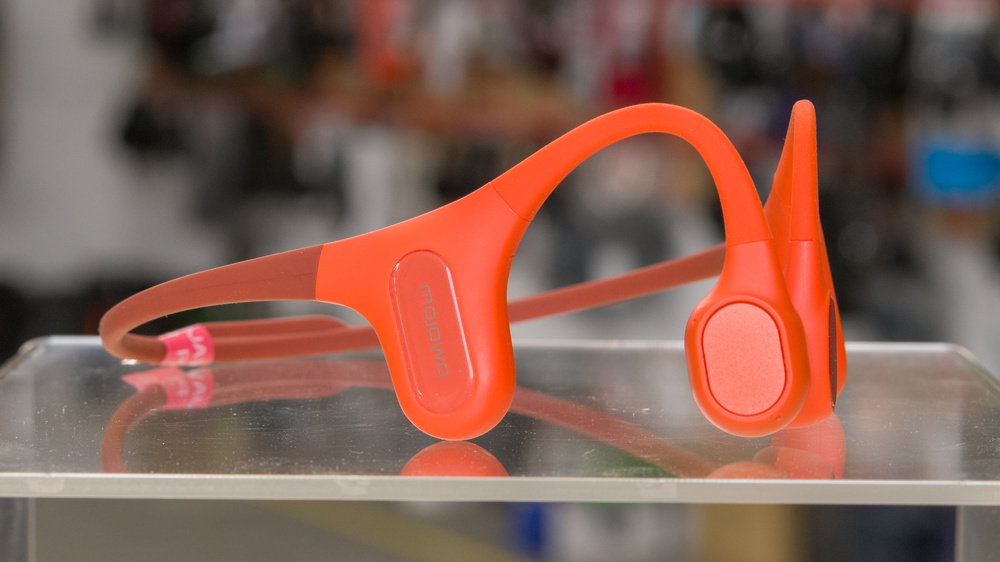
The Mojawa Run Plus are a set of bone conduction headphones with internal storage and marketed as a viable option for swimmers and athletes alike. They represent a step up from the entry-level Mojawa Aerra Open Ear Headphones, which lack the built-in file storage found on the Run Plus. While the headset technically works, sound quality falls low on the list of priorities, even for a bone conduction headset, despite the endorsements of Grammy winners. So, if you're charmed by the promise of iPod Shuffle-style controls over your pre-loaded audio files for convenient device-free playback, even if the audio is distractingly low quality, read on.
Our Verdict
The Mojawa Run Plus is good for sports and fitness use. It's in the name, 'run, and the headset has a very stable fit. Since it's also designed for swimmers, each side has to clamp a bit tighter than non-swimming headsets to counteract underwater drag. Otherwise, it's comfortable (so long as you're accustomed to the vibrations of bone conduction technology), unless you wear glasses, which the headset doesn't accommodate well without compromising the fit of either the glasses or the headset. It also boasts an IP68 rating and a swimming mode, so you can take it for a dip and access MP3 files stored on the headset for a phone-free listening experience, which is handy. All that said, the sound is rather distorted, and there's a significant stereo mismatch and an unusual, audible delay in the audio playback on the right side. Essentially, the headset's features are promising, but its sound quality challenges the thresholds of what falls under the umbrella of personal taste for audio reproduction. Even so, if your expectations are low for fidelity, it'll do the job for audiobooks.
Very stable fit.
IP68 rating and swimming mode available.
Onboard internal MP3 file storage.
Poor audio reproduction and fidelity, even for bone conduction.
Doesn't fit correctly with most glasses.
The Mojawa Run Plus is a bad choice for travel. Its sole upsides are that it's relatively portable and comfortable, unless you wear glasses. Besides that, like most bone conduction products, it does nothing to block out the racket of your neighbors on the bus or plane, meaning you'll have optimal awareness of the colorful sounds of humanity, warts and all. The headset's audio reproduction is quite distorted and uneven, so even if you can ignore the environmental noises, you still won't be rewarded with good-sounding audio.
Very stable fit.
Onboard internal MP3 file storage.
Poor audio reproduction and fidelity, even for bone conduction.
Absence of noise isolation limits versatility, by design.
Doesn't fit correctly with most glasses.
The Mojawa Run Plus bone conduction headphones are poor for office work, particularly if your office is noisy and you need to concentrate. Their open-fit design results in no noise isolation, which means your audio will simply compete with your surroundings' noises, which can be fine in collaborative spaces where it's more important to hear coworkers. However, for most offices where noise isolation helps with productivity, its absence is a real drawback. Otherwise, their audio reproduction is rather distorted and uneven, making voices during meetings and music sound fairly unpleasant. Their mic system is passable, so you can use it for meetings, and they're comfortable, unless you wear glasses.
Very stable fit.
Poor audio reproduction and fidelity, even for bone conduction.
Absence of noise isolation limits versatility, by design.
Doesn't fit correctly with most glasses.
The Mojawa Run Plus isn't meant for wireless gaming. It's Bluetooth-only, limiting compatibility with other devices, and the latency is too high to work with most games without distracting A/V sync issues.
The Mojawa Run Plus is a Bluetooth-only headset, so you can't use it for wired gaming.
The Mojawa Run Plus are poor for audio reproduction accuracy. The L/R drivers exhibit significant mismatches in frequency response and phase, which alter not only the stereo image but also how they sound to a distracting degree. Like most bone conduction tech, the tuning lacks much low-end, so the headphones don't align with our target, and the bass sounds weak, which is normal for headphones of this type. However, even through the mid and treble ranges, we note very uneven tunings relative to our curve, with plenty of peaks and dips, too, resulting in a combination of sharp frequencies jumping out in the mix, or conversely, other instruments sounding distant and buried. Suffice it to say, between terrible group delay, audible distortion, and the notable differences in the L/R drivers, sound quality isn't the primary reason for you to choose these headphones.
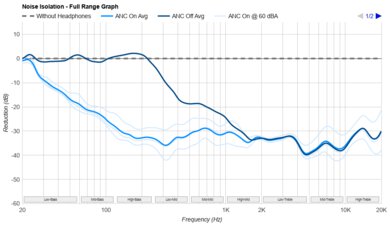
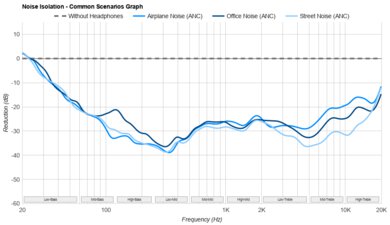
The Mojawa Run Plus has terrible noise isolation, by design. The open-fit headset intentionally leaves your ears unoccluded, allowing you to hear your environment without the artificiality of a transparency mode. That said, you'll hear everything as if you weren't wearing anything at all. The box includes a set of earplugs, which can deliver passive isolating properties, but it depends on how you feel about the invasive feel of earplugs.
The Mojawa Run Plus has unremarkable microphone performance. Your voice sounds hollow and low fidelity, albeit intelligible. The mic system struggles to fully remove background noises like other people talking and ambient din. Especially loud sounds, such as passing subway cars, can overwhelm the mic system, effectively cutting out portions of your speech and hurting the person on the other end of the call.
The Mojawa Run Plus have bad frequency response consistency. Like most bone conduction headphones, their positioning varies greatly between people, and it's trickier to achieve identical placement between wears than with earbuds, for example, which drastically affects how consistent their sound is.
Performance Usages
Check Price
Differences Between Sizes And Variants
The Mojawa Run Plus comes in 'Black,' 'Pink,' 'Blue,' 'Grey,' and 'Orange.' We purchased two different units in 'Orange,' one of which we returned because we initially believed it was defective, but it exhibited fairly similar measurements to the second unit (its label) we're reviewing here. As a result, we expect that the other colorways will perform similarly.
If you encounter a variant or additional colorways, please let us know in the comments, and we'll update the review.
Popular Headphones Comparisons
The Mojawa Run Plus belong to the niche category of bone conduction headphones, and the even more limited category of swimming headphones, even though 'run' is in the name. The IP68 rating, which makes them pool-ready, also ensures they'll handle whatever weather conditions your run club chooses to endure. That said, unless you're actually going for a long swim, the Suunto Wing's IP67 rating and the Shokz OpenRun Pro 2 Bone Conduction's IP55 rating are more than enough for most runs. The Suunto have a similar tuning as the Mojawa, though no internal storage as on the Mojawa. Meanwhile, the Shokz are more mid-rangey in sound, but they're better stereo-matched with a smoother sound that's less distorted, thanks in part to their hybrid bone conduction and dynamic driver design. For swimmers, the H2O Audio Tri 2 PRO are a popular option, alongside the Shokz OpenSwim Pro, featuring internal MP3 storage like the Mojawa, but we haven't reviewed them yet.
Outside of bone conduction, you still have plenty of reasons to consider open-fit designs, like the premium Bose Open Fit Ultra Earbuds and the inexpensive Anker Soundcore C30i. Neither of these are suitable for swimming, but they solve fit issues present in the wraparound design of bone conduction and don't sound quite as distorted as the Mojawa.
The market is rich with options, though, so check out the best headphones and earbuds for running and working out as a starting point. If you're looking for a more general guide, consider the best wireless headphones and the best-sounding wireless earbuds.
For most people, the Shokz OpenRun Pro Bone Conduction is the better pick over the Mojawa Run Plus. While bone conduction technology isn't renowned for its audiophile qualities, the Shokz still sound better with notably better stereo matching, while the Mojawa sound distractingly different in each driver. The Shokz have a lower IP rating, though, so if you plan on going for a swim, the Mojawa are the only pick, thanks to the IP68 rating and onboard MP3 storage. However, for most exercises on land and runs, the Shokz are the better buy, and you can choose different sizes to suit your anatomy and glasses, while the Mojawa are better suited for smaller and average-sized heads, but aren't easy to wear with glasses. The Shokz also have a better-sounding mic.
The Shokz OpenRun Pro 2 Bone Conduction are better than the Mojawa Run Plus, unless you're going for a swim and need onboard MP3 file storage, as found on the Mojawa. Otherwise, the Shokz provide a more consistent sound with better stereo matching. While bone conduction headphones aren't the best for audio fidelity and tend to lack bass overall, the Shokz offer a less distorted sound and a more competent app. Their mic sounds better, too. Outside of those specialty use reasons like swimming, though, the Mojawa's audio performance is distracting, and they're difficult to wear with glasses. But the Mojawa fit smaller and average-sized heads better than the 'Standard' sized Shokz, but you can also pick up the 'Mini' if your head is small in the Shokz.
For most people, the Bose Ultra Open Earbuds are better than the Mojawa Run Plus. They're completely different designs, though, with the Bose being open-fitting by clipping on to your ears and using dynamic drivers to reproduce your audio. They provide better fidelity audio with a more useful app. They also work better on people of different head sizes and those who wear glasses. However, if you're a swimmer, the IP68 rating on the Mojawa will suit you better, as will the onboard MP3 file storage, because you can't take the Bose into a pool and use them. The bone conduction technology can fit differently on everyone, so it's a matter of personal preference as to which style you like more.
Choosing between the Suunto Wing and the Mojawa Run Plus depends on how you plan to use your headset. Neither product delivers high-fidelity sound. With that in mind, how you plan to use them will determine which makes the most sense for you. The Mojawa's internal MP3 storage and IP68 rating makes it a good candidate for going swimming or leaving your Bluetooth device at home. On the other hand, the Suunto's external battery pack lends you greater flexibility to keep using the headset for longer. It also has a better mic system, so it's a better pick if you take calls.
Test Results
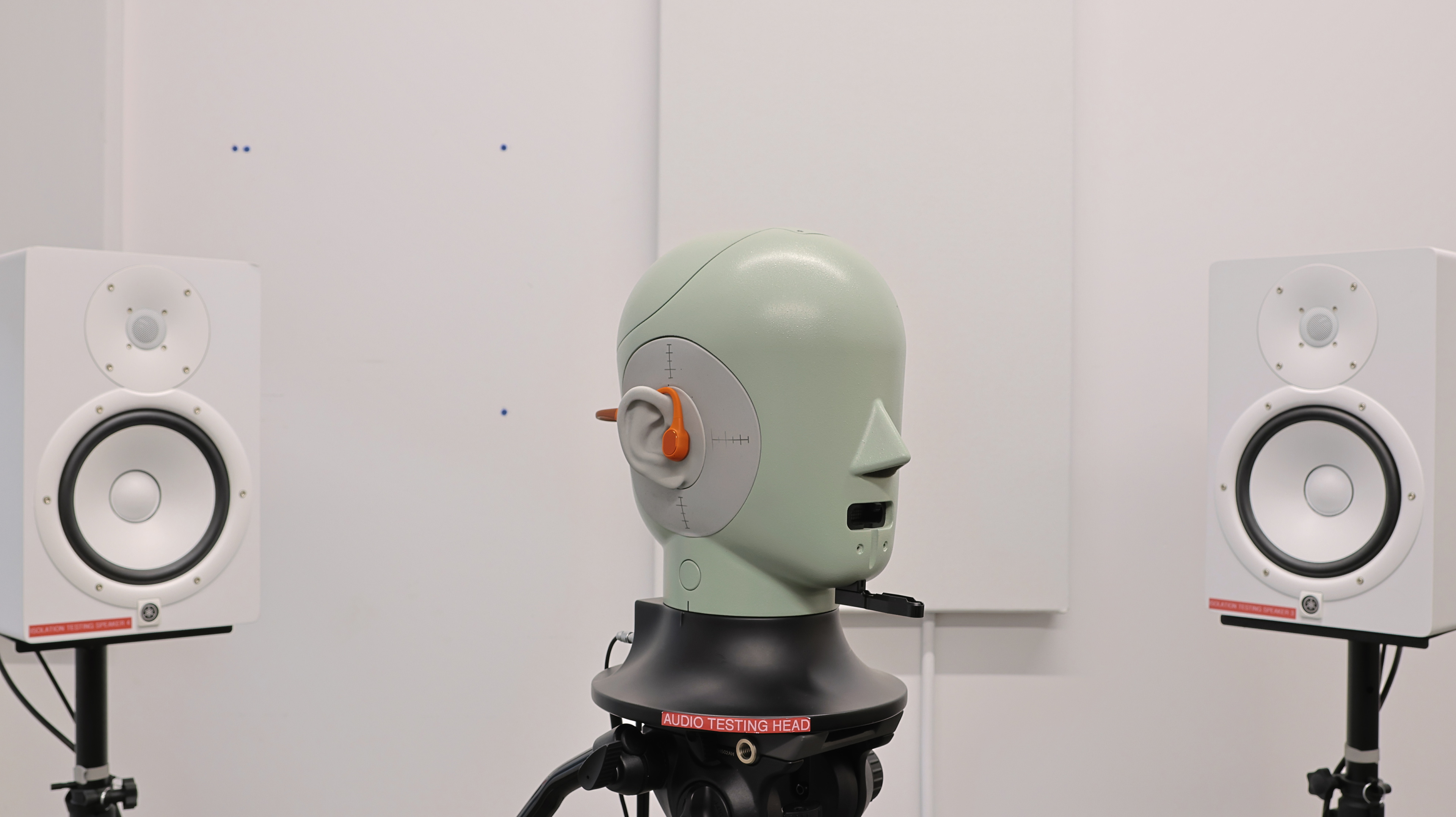
The Mojawa Run Plus have a mid-range dominant tuning, which is pretty characteristic of bone conduction headsets. Since our testing rig (the Brüel & Kjær HATS Type 5128-B) isn't expressly designed for how bone conduction works, the measurements aren't completely representative of the tuning, as with conventional headphones and earbuds that we test. Even so, the measured frequency response still offers a useful impression of how they sound.
The bass is rather rolled off and weak, though it's a little more present in the mix than on the Shokz OpenRun Pro 2 Bone Conduction, though neither headset is at all bassy.
There's also a pretty significant L/R mismatch, which you can hear. One of the reasons we returned the first pair was that the right driver exhibited a significant scoop in the mids compared to the left, which we still observe in this second unit we're reviewing, but it's more present in the treble range instead. Besides skewing the stereo image, the right driver is much darker-sounding and quieter in the highs. We also noticed that audio in the right driver plays on a very slight delay compared to the left, which is distracting. Unfortunately, we noted this in the first pair, and again in the second pair we purchased and tested.
In fairness, most people don't buy bone conduction headphones for their fidelity; rather, they're usually chosen as a trade-off for other features, but we still found it hard to listen for extended periods with this tuning in concert with the delay in the right driver's playback.
The Mojawa Run Plus exhibit poor frequency response consistency. Unlike in-ears, where there's very little room for possible error in placement, bone conduction transducers can easily be seated in different locations on different people and across listening sessions. Since they interact with your anatomy, how tightly they clamp, how high or low they're placed, and whether you wear glasses all contribute meaningfully to the frequency response, and also perceived volume.
With that said, the bass measurements aren't especially useful here, considering that the transducers scarcely reproduce bass at all.
As you may expect, these open-fit bone conduction drivers aren't designed to pump out serious bass. A narrow band in the high bass is over-emphasized, though, presumably in an effort to give bass instruments more boominess. However, the tuning drastically rolls off the rest of the low-end, leaving a mostly anemic sound on basslines in songs like Sir Duke by Stevie Wonder, but you can still make out the notes.
The mid-range target compliance is bad. The lower mids are strongly exaggerated with a sharp scoop in the center of the mid-range, and the high-mids are mostly underemphasized. Plus, the L/R mismatch results in a different sound in the upper half of the mid-range, skewing not only the stereo image, but also how you perceive the sound of lead melodies and speech. As a result, lead guitar can lose some of its presence in tracks like Don't Stop by Fleetwood Mac, and group vocals can overrepresent lower-register voices in the mix.
The treble's target compliance is decent. The entire range is de-emphasized, which ordinarily produces a warm or dull sound. However, due to the lack of bass, harmonics such as sibilants (S and Ts) in the treble range still sound a little brighter than the graph suggests, albeit not at all analytical, for reasons such as the stereo mismatch.
The Mojawa Run Plus have disappointing peaks and dips performance. Since they mostly reproduce mids and treble frequencies, you can disregard most of the peaks and dips below 150Hz because they're essentially inaudible. The peaks in the mids represent extra emphasis on lower-register voices and rhythm instruments, while the massive dip in the center of the mids hollows out a narrow band. In the upper frequencies, depending on the pitch, vocals can sound relatively harsh, shrill, or alternatively, distant and closed off.
Their stereo mismatch is sub-par. While the bone conduction technology used in the headphones isn't meant for use with our testing rig, the results still reflect much of our experience. Frequency amplitude is well-matched, but it's the frequency response mismatch that degrades the listening experience. It's quite obvious in the right driver that it's tuned differently, skewing the image depending on the pitch of a given sound.
Between the frequency response mismatch and phase mismatch, the stereo image is offset, especially in the mids through the treble, when combined with cancellations and holes in the image that are distracting and evident during regular listening. This issue was apparent with the first unit we purchased (and returned), and in this replacement unit, too, suggesting that while results vary with different units, you may experience similar mismatches.
Since the Mojawa Run Plus doesn't reproduce low frequencies, it means that our test picks up the noise floor as part of the measurements. Even so, there are delays in the mids that can affect the audio fidelity.
Due to the design of these bone conduction headphones, we've chosen not to include the harmonic distortion results, as they introduce too many variables into the measurements, such as the physical vibrations of the transducers with the testing head. As a result, the score and graph aren't directly comparable to other headphones. However, you can still view the results. Subjectively, we noted audible impurities with real-world content.
These are the settings used to test this headset. Our results are only valid when using it in this configuration.
The Mojawa Run Plus is a sports-oriented bone conduction headset with a flexible, wraparound shape, available in a single size. It rests over the top of your ears and places the drivers in front of your ears near your temples, leaving your ears open (unless you use the included earplugs), and sends vibrations that you can hear as audio. Somewhat unique to this model is the onboard MP3 file storage, so you can listen to pre-loaded files without a Bluetooth connection.
Our 'Orange' model features different shades of orange, and the logo is displayed on the battery pack that rests behind your ears. The other colors available are executed similarly with tonal shades of the same color; these include 'Blue,' 'Pink,' 'Black,' and 'Grey.'
The Mojawa Run Plus feels very comfortable on most people. The one-size-fits-most design consists of plastic and soft silicone with a flexible internal frame that works well for people with average-sized heads. It also fits people with small heads better than the Shokz OpenRun Pro 2 Bone Conduction (in the Standard size). If your head is larger, you may find that the clamping force is slightly stronger than on the Shokz. However, the headset's frame gets in the way of your glasses' arms, so this isn't necessarily the best choice if you wear glasses or sunglasses.
Fit is a major contributor to how the headset performs, as you can't adjust the sizing, unlike conventional headphones. Its fit also influences the sound; if it's too loose, lower frequencies are lost, and the overall volume is perceived as quieter. Conversely, if it fits you tighter, the inverse is true. Some people are sensitive to vibrations from bone conduction transducers, so if that's you, it can feel unpleasant or require an adjustment period. Like most wraparound headsets, hats, hoods, and exercises where you end up on your back, like crunches, can knock the headset ajar.
The controls on the Mojawa Run Plus are okay. They consist of a multi-function button handling playback on the left side and a touch-sensitive pad on the right side (where the logo is) for volume swipes and additional controls. You can see the control layout, which requires some memorization because most commands are multiple presses. To access the internal storage and stop using Bluetooth audio, you'll click the left button four times and lock the controls, and repeat to revert back to Bluetooth audio and unlock the buttons.
There are distinct chimes for min and max volume, though the touch-sensitive pad isn't very consistently responsive when you want to change the volume setting. Unique voice prompts and flashing lights alert you to the pairing and power statuses. Some chimes can sound a bit similar, causing you a bit of guesswork to know which command was registered.
The Mojawa Run Plus is very well-built. It has an IP68 rating, and it's designed to withstand water immersion. Its construction is somewhat unclear, even if you check the manufacturer's documentation, but it seems to have a titanium frame with a plastic and silicone or rubberized exterior. Like most neckband designs, the band is a possible point of weakness if exposed to extreme stress, but it doesn't seem particularly fragile. The charging port is left exposed, and the proprietary charging contacts touch your skin, which could be affected by sweat and salt with prolonged usage
These bone conduction headphones are amazingly stable. The combination of a semi-rigid neckband and over-ear hooks that press against the sides of your head makes these a great candidate for exercising. During intense movements, like HIIT workouts, the headphones stay in place and snug. Since their stability depends on a non-adjustable band, the fit can vary between people, but it's a generally reliable design that won't fall off.
The Mojawa Run Plus doesn't provide noise isolation because it doesn't block your ears. It's designed to lend you situational awareness, which is useful for running outdoors or working in a collaborative space. The headset comes with a set of earplugs, which offer noise isolation, though.
In common scenarios, you'll hear everything from nearby chit-chat to traffic passing by. While awareness is helpful for safely working out, this design lacks the versatility of conventional earbuds with noise cancelling and transparency modes like the Bose QuietComfort Ultra Earbuds (2nd Gen).
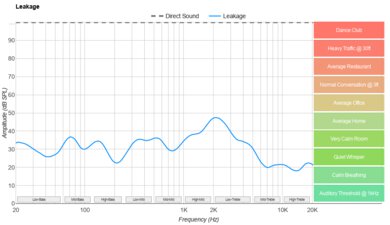
The leakage performance on the Mojawa Run Plus is okay. To obtain a measurement from the testing rig, we have maxxed out the volume; however, the rig isn't as sensitive as human anatomy, and most people won't set the volume that high. Most of what leaks out is trebly, but it depends on how loud your audio is.
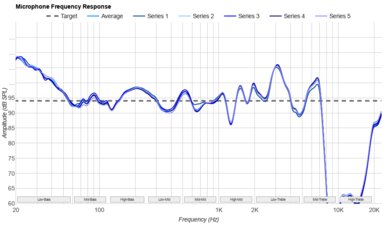
The mic's recording quality is disappointing. The lower registers of your voice are diminished by a big dip in the low-mids of the frequency response. The mic also renders your voice, so it sounds distant and uneven.
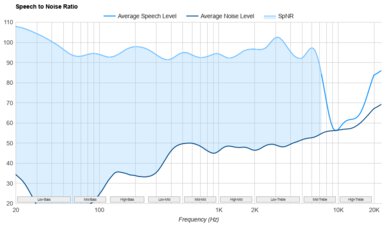
The microphone's noise handling is fair. While it can lower the volume of consistent background noise, it doesn't fully reject it. Other people's voices in the background are picked up, making it harder to distinguish your own voice. Lastly, a passing train can overpower speech and sound painfully loud for the person on the other end of the call.
The Mojawa Run Plus has a mediocre battery performance. It achieves 9.5 hours of continuous playback on a single charge at max volume. We tested it at max volume in this case to reach our standard battery testing loudness, but because the testing rig isn't designed to measure bone conduction and isn't as sensitive to loudness as your anatomy, your results can vary depending on your volume setting in real-world circumstances.
The headset uses a magnetic proprietary charger, which you'll need to buy from Mojawa if it breaks or if you'd like a spare. It can quick charge in five minutes to give you 90 minutes of audio, and the battery fully recharges in under an hour. According to the manufacturer, the battery will also enter a 10-day standby mode if left idle.
The Mojawa app is passable, but sparse. The main reason to download it is for firmware updates and access to the EQ presets. You can change the language of the voice prompts and assign the voice assistant. Otherwise, you can see in this tour that it has misspellings throughout and not much to offer otherwise.
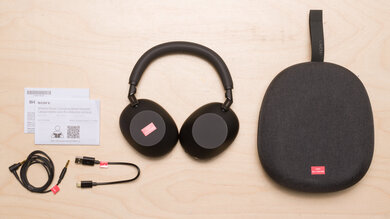
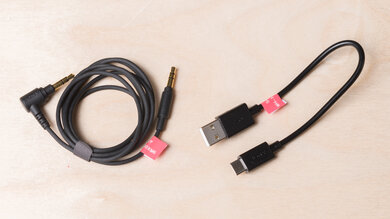
In the box is a 65 cm (25.6-inch) proprietary charging cable that uses a USB-A connection and features a magnetic two-prong design to attach to the headset. It reliably stays connected to the headset, but you'll need to purchase a replacement directly from the manufacturer if you lose it.
The Mojawa Run Plus have excellent Bluetooth connectivity. They support multi-pair with a second device. That said, they only use AAC and SBC codecs. Over SBC, latency is fairly elevated. If you want a lower latency performance, consider the Suunto Wing, which support aptX Adaptive (Low Latency), so long as your device is compatible. That said, latency varies with different devices and apps, so your experience will vary. If you only listen to music, it's not an issue, but it can be annoying when streaming videos.
You can connect the headset via Bluetooth to your PC for full audio and mic support.