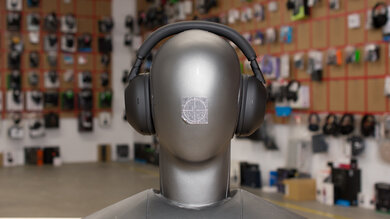
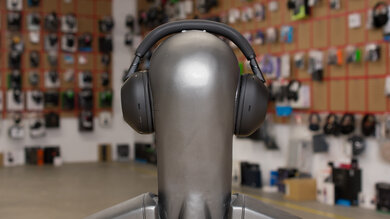
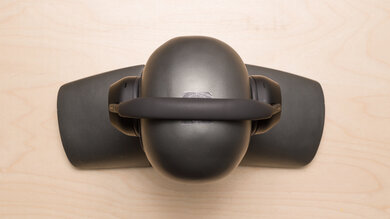
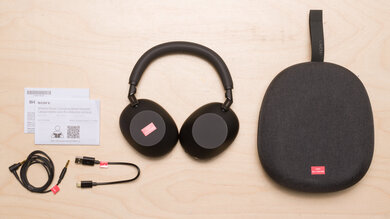
The Beats Powerbeats Pro Truly Wireless are sports earbuds with an ear hook design that helps keep them stable on your head during more intense exercises. An IPX4 rating also assures their protection from water splashes during hard runs outside. If you're an iPhone user, their H1 chip allows for seamless pairing with iOS devices, access to Spatial Audio via Apple Music, and compatibility with hands-free voice controls.
Our Verdict
The Beats Powerbeats Pro are good for neutral listening. They have a well-balanced sound profile with adequate bass and mid response, though their treble range veils voices and dulls sibilants. Their in-ear design won't be ideal for neutral listeners who care about soundstage, though, and you can't customize the sound since their companion app doesn't feature an EQ or presets.
- Very stable ear-hook design for sports.
- Good audio reproduction.
- Comfortable in-ear fit.
- Good control scheme.
- Lower IP rating than other sports headphones.
- Poor isolation performance.
The Beats Powerbeats Pro are acceptable for commuting. The Powerbeats Pro are comfortable enough for your daily commute, and you'll also have enough battery life for long trips. However, they don't do a good job of isolating against ambient noise. They won't block out the deep rumble of a bus engine and will let a lot of noise seep into your audio.
- Very stable ear-hook design for sports.
- Good audio reproduction.
- Comfortable in-ear fit.
- Good control scheme.
- Lower IP rating than other sports headphones.
- Poor isolation performance.
The Beats Powerbeats Pro are great for sports. These headphones are designed for physical activity. Their ear-hook design is stable and doesn't move around during intense sports. Like most in-ears, they are also very breathable, and you won't sweat more than usual when wearing them during your workouts. They have nice physical controls that are easy to use, even when being active. They are easy to carry around, but their case is a bit bulky, though this won't be a problem if you put it in a gym bag.
- Very stable ear-hook design for sports.
- Good audio reproduction.
- Comfortable in-ear fit.
- Good control scheme.
- Lower IP rating than other sports headphones.
- Poor isolation performance.
The Beats Powerbeats Pro are decent for the office. They have a long battery life and are quite comfortable to wear for long listening sessions. Unfortunately, they don't isolate well against ambient chatter and can become slightly leaky at high volumes. However, this won't be a problem if you don't blast your music or work from home.
- Very stable ear-hook design for sports.
- Good audio reproduction.
- Comfortable in-ear fit.
- Good control scheme.
- Lower IP rating than other sports headphones.
- Poor isolation performance.
The Beats Powerbeats Pro are sub-par for gaming; these headphones aren't designed for this use. Their latency will be too high for video games, and their microphone won't suit online multiplayer games.
The Beats Powerbeats Pro are wireless earbuds; you can't use them wired.
The Beats Powerbeats Pro are mediocre for phone calls. Their mic makes your voice sound muted and loses a lot of detail. They also can't separate your voice from louder background noise, so you won't be as understandable if taking a call from a busy street or subway station.
- Very stable ear-hook design for sports.
- Good audio reproduction.
- Comfortable in-ear fit.
- Good control scheme.
- Lower IP rating than other sports headphones.
- Poor isolation performance.
Changelog
-
Updated Jun 11, 2025:
The Compared To Other Headphones and Noise Isolation sections have been updated to mention the next generation Beats Powerbeats Pro 2.
- Updated May 17, 2024: The Build Quality and Battery sections have been updated to note reports of corrosion from sweat and charging issues.
- Updated Jan 18, 2024: We've lowered the score of App Support to reflect the limited capacity of the app.
- Updated Oct 20, 2023: Made a note that the newly-reviewed Jabra Elite 8 Active True Wireless have a better build quality and a higher IP rating for dust and water resistance.
Check Price
Differences Between Sizes And Variants
The Beats Powerbeats Pro are available in three colors: 'Black', 'Navy', and 'Ivory'. We tested the 'Black' unit and expect other variants to perform the same.
If you encounter another variant, let us know in the forums, and we'll update our review.
Popular Headphones Comparisons
The Beats Powerbeats Pro are great sports headphones that set themselves apart by their neutral audio reproduction, great battery life, and very stable ear hook design. They have a more comfortable fit than the similarly designed JBL Endurance Peak 3 True Wireless and are stable enough for tough workouts or runs in the park. Unfortunately, they don't create a very tight seal and can't passively isolate against much ambient noise. That said, the Beats Powerbeats Pro have since been surpassed by the next generation model, which boasts active noise cancellation, the Beats Powerbeats Pro 2.
See our suggestions for the best true wireless earbuds, the best Bluetooth earbuds, and the best wireless headphones for working out.
The Beats Fit Pro True Wireless offer more features than the Beats Powerbeats Pro Truly Wireless. The Fit Pro have a more neutral sound profile, which some users may prefer, a virtual soundstage feature, and ANC, which can block out more ambient noise. However, the Powerbeats Pro are more comfortable and have a better battery performance.
The Beats Powerbeats Pro 2 are an upgrade from the Beats Powerbeats Pro Truly Wireless. Basically, the Powerbeats Pro 2 adds ANC, a smaller and lighter form factor, updated H2 chip, and an app interface with small quality of life improvements alongside Apple Spatial Audio. That said, if you don't care about ANC and want a basic pair of Bluetooth buds with over-ear hooks, some other features are rather similar, like the IPX4 rating, controls, and stability. For most people, the Powerbeats Pro 2 are better, but the Powerbeats Pro Truly Wireless are essentially a stripped-back version if you don't need all the bells and whistles.
The Beats Powerbeats Pro Truly Wireless and the Beats Studio Buds True Wireless have different strengths, and you may prefer one over the other. While both headphones are comfortable, the Powerbeats are better for sports as they have a very stable in-ear fit. They also have a longer continuous battery life and an H1 chip so that you can seamlessly pair them up with other devices in your Apple ecosystem. However, the Studio Buds are better for commutes or in-office use. They have ANC, and while it offers a disappointing performance, it can still block out more background noise than the Powerbeats. They also leak less audio.
The Beats Powerbeats Pro Truly Wireless have better sound reproduction than the Apple AirPods Pro. The Beats also have a better control scheme, a great battery life, and a more sports-friendly ear-hook design. On the other hand, the Apple feel a bit more premium, have significantly better noise isolation thanks to their ANC, and have a much smaller and more portable design.
Test Results
The Beats Powerbeats Pro have a similar sleek look to the Beats Powerbeats3 Wireless or Beats Powerbeats 4, with an ear-hook on each bud to keep them in place during sports and fitness. What separates them from their predecessors, though, is their wireless design. They come in different colors: 'Black', 'Navy', and 'Ivory'.
The Beats Powerbeats Pro are comfortable in-ears. They're lightweight, and the ear-hooks are easily malleable to help you get them in a comfortable position. They don't enter the ear canal as deeply as other in-ears, and they also come with a few different tip sizes to help you find the best fit. However, if you have glasses with thick arms, you may have difficulty fitting the ear-hooks around your ears.
The control scheme is very good. The Beats logo on the outside of each bud acts as a physical multi-purpose button that gives good physical feedback when pressed. There's also a volume rocker on each bud as well as call controls and a smart pause feature that automatically starts/stops audio when you take the buds out or put them back in.
On either bud:
- Single press: Plays & pauses audio. Also, it answers and ends calls.
- Double press: Skips to the next track.
- Triple press: Plays the previous track.
- Press and hold: Activates the voice assistant and declines incoming calls.
These headphones are very portable. While slightly bulkier than most truly wireless in-ears, they're still easy to carry around as they easily fit in your pockets or a gym bag. They also come with a nice hard case, but it's bulky.
The hard case is good. While slightly bulky, it's easy to carry around in a gym bag and can fit in larger pockets. It's made of hard plastic and will hold up against a few accidental drops. There's also a multicolored LED to indicate battery level. However, it doesn't completely close if you've adjusted the ear hooks, so you must readjust them every time you put them back on your ears.
These earbuds are well-built. They're mostly made of plastic, which keeps them lightweight, but this makes their ear hooks feel a bit flimsy when moving them into place. Still, they feel nice and look like premium headphones. They're sturdy enough to survive a few drops, but earbuds are only rated IPX4 for resistance against water splashes, which is fairly disappointing for higher-end sports headphones.
The manufacturer recommends wiping the charging contact pins if you're working up a sweat to avoid damage over time to the charging pins. If you need a pair of earbuds that can withstand more dust and water exposure, you might prefer the Jabra Elite 8 Active True Wireless. Consumers also have reported issues with the battery connection pins of the earbuds not staying perfectly aligned with the charging case's contacts while seated in the case. This inconsistent connection can lead to the earbuds not fully charging or only one earbud receiving a charge. However, we didn't experience this issue during testing.
These headphones are very stable. Thanks to the ear-hook design, losing them during a run or a workout is nearly impossible, even with heavy head movement. They don't move much inside your ears either, so you don't need to reposition them mid-set. If you want even more stable earbuds for working out, check out the Bose Sport Earbuds. If you prefer sports headphones without ear hooks, try the Jabra Elite 4 Active True Wireless.
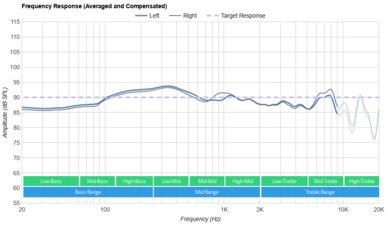
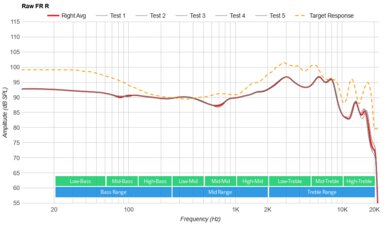
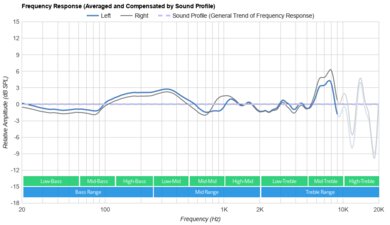
The Beats Powerbeats Pro wireless have a very neutral sound profile. The bass range is extremely well-balanced, ensuring adequate thump and rumble without overpowering the rest of the mix. Voices and instruments sound clear and present, though an underemphasized treble range makes sibilants, like cymbals, sound dull and lifeless. Like other Beats headphones, their companion app has no sound customization options, so you can't change the mix to suit your preferences.
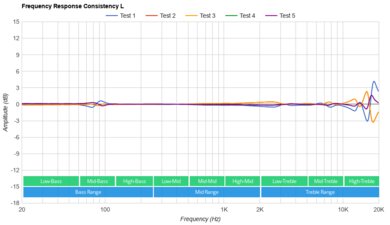
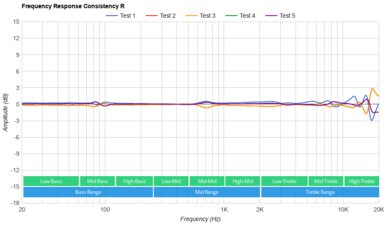
Like most in-ear headphones, they have excellent frequency response consistency. Assuming you can achieve a proper fit and seal using the included ear tips, you'll get consistent bass and treble delivery every time you use them.
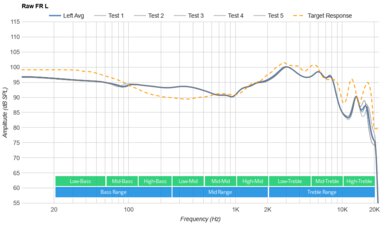
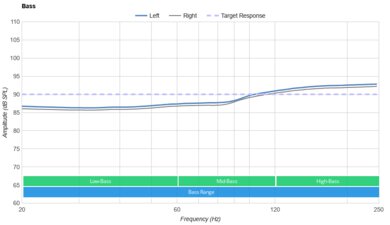
The bass response is remarkable. The response throughout the range follows our target curve accurately, so these earbuds can reproduce an adequate amount of the thump and rumble common to bass-heavy music. If you prefer a more bass-heavy sound from your wireless Beats headphones, consider the Beats Flex Wireless.
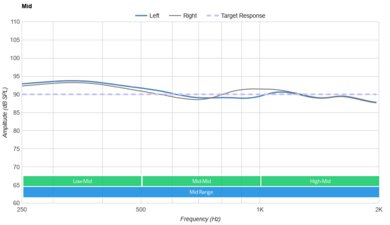
The Beats Powerbeats Pro have a great mid-range performance. The low-mid and mid-mid regions follow our target curve accurately. This results in an accurate reproduction of vocals and lead instruments.
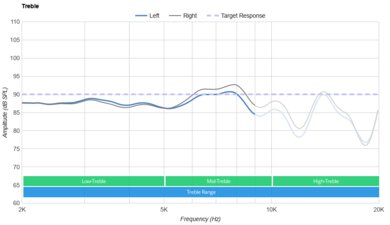
The treble accuracy is okay. It's uneven and mostly underemphasized, making higher-range vocals and sibilants, like cymbals, dull and lifeless.
The peaks and dips performance is great. There's a wide peak from the mid-bass to the high-bass, which makes the audio sound slightly boomy, but not by much. A small dip in the low and mid-mid is much more noticeable in the right driver than the left, meaning that instruments and vocals sound disproportionately cluttered and nudged back on one side. A wide peak in the high-mid continues into the treble range, making higher-frequency vocals overly harsh. An uneven treble range makes sibilants alternatingly dull and piercing.
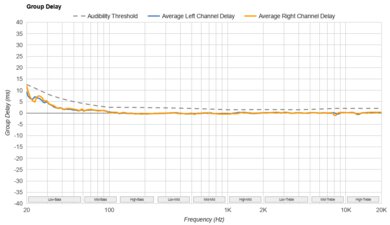
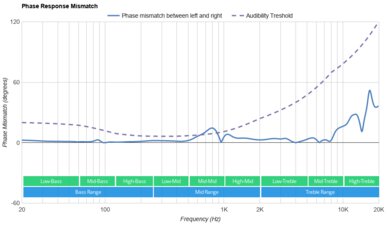
The Beats Powerbeats Pro's stereo imaging is very good. The weighted group delay stays below the audible threshold, ensuring tight bass and transparent treble reproduction. Additionally, the L/R drivers of our test unit were well-matched in amplitude, frequency, and phase response, which is important for the accurate placement and localization of objects (voices, instruments, video game effects) in the stereo image. Imaging varies between units, though.
The soundstage is poor. Since earbuds don't interact with the outer ear, you'll perceive their soundstage as small and located inside your head. Their closed-back design also means that their soundstage won't feel as open as open-back earbuds like the Apple AirPods (2nd generation) Truly Wireless and the Bose SoundSport Free Truly Wireless.
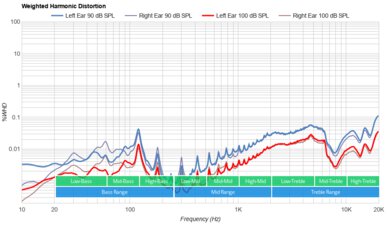
They have great weighter harmonic distortion performance. Audio falls within good levels, producing clean audio.
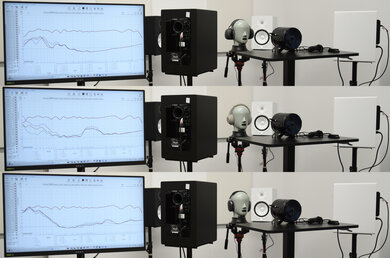
These are the settings used to test the Beats Powerbeats Pro Truly Wireless. Our results are only valid when using them in this configuration.
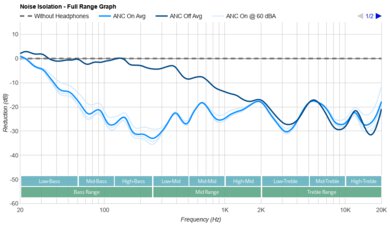
The Beats Powerbeats Pro's noise isolation performance is poor. These in-ears don't have active noise cancelling and only passively isolate. They practically don't block any lower-end and mid-range frequencies, like the deep rumble of bus engines and ambient speech. On the upside, they do a decent job against noises in the treble range, like a squeaky treadmill. If you want to better isolate yourself from your environment, check out the noise-canceling successor, the Beats Powerbeats Pro 2.
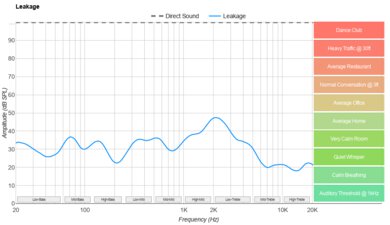
The Beats Powerbeats Pro's leakage performance is decent. Escaping audio is concentrated in the treble range, resulting in thin-sounding leakage, mostly composed of sharp sounds from the treble range. Even in a busy gym, though, people nearby will likely hear your audio at high volumes.
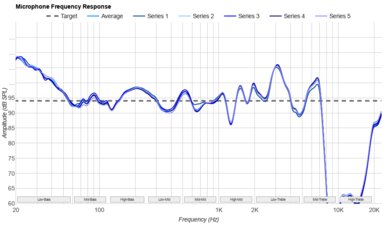
The integrated microphone's recording quality is mediocre. Your voice sounds quite thin, lacking detail, and is noticeably muffled.
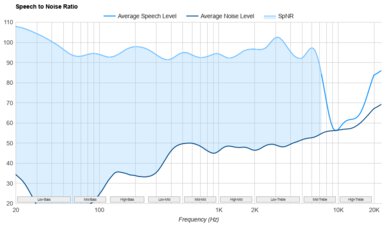
The integrated microphone has a sub-par noise handling performance. It performs decently well in quiet and moderately loud environments but may struggle to fully separate speech from background noise in loud situations like a subway station.
The Beats Powerbeats Pro's battery life is great. We've measured over 11 hours of continuous playback on a single charge, which will get you through a few consecutive workouts without needing recharging. These headphones also took less than an hour to charge fully, which is amazing. Thanks to their case, you can get up to 24 hours of total playtime according to the specs sheet. They also automatically enter a standby mode when idle for a while, but we couldn't accurately measure the timer's duration. Additionally, like the Apple AirPods (2nd generation) Truly Wireless, you can use one bud while charging the other. If you want similarly designed headphones that offer much better overall battery life, check out the Mpow Flame Pro.
While our unit did not exhibit this issue, there are reports of inconsistent battery charging, resulting in unexpectedly low battery life or one bud receiving a charge while the other doesn't.
These headphones don't have an app per se, but iOS has a built-in interface for the Beats Powerbeats Pro, just like with the Apple AirPods (2nd generation) Truly Wireless. It displays the battery status of the buds and the case, but this isn't available on Android. This interface will pop up when syncing the Beats to an Apple device. However, you can't remap controls like you can with the AirPods 2. On MacOS, you can also see the battery life information and connect via Bluetooth, but that's about it.
These Bluetooth-only headphones support version 5.0 and, unlike the Beats Studio Buds True Wireless, have an H1 chip for seamless pairing with Apple devices. Unfortunately, you can't pair them with multiple devices simultaneously.
Their latency is average for Bluetooth headphones. They're not great for watching video content, but our testing rig doesn't take advantage of the H1 chip, so your experience may be better on an iOS device. That said, if you're an Android user looking for a pair of sports-oriented truly wireless headphones, the Skullcandy Push Ultra Truly Wireless experience far less latency on such systems.
The Beats Powerbeats Pro come with a charging case that yields one extra charge. The case has no inputs, and you must charge it with a Lightning cable, which is disappointing as a USB-C would have been better for most.