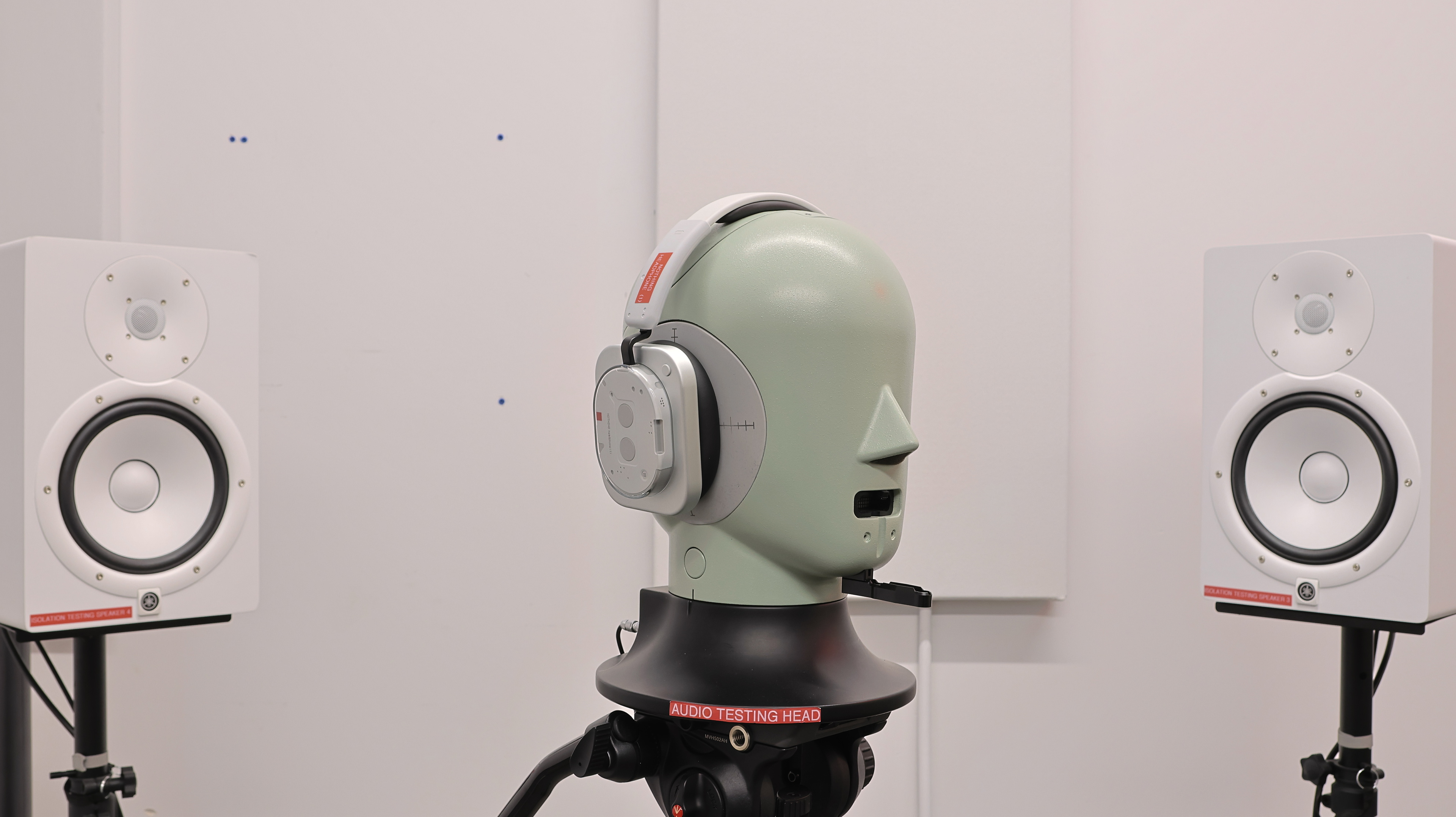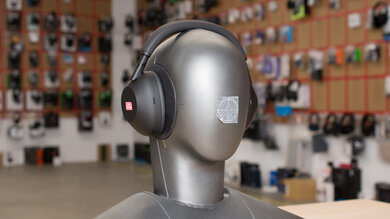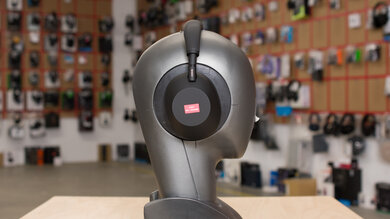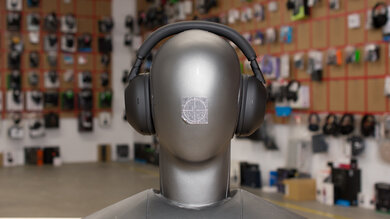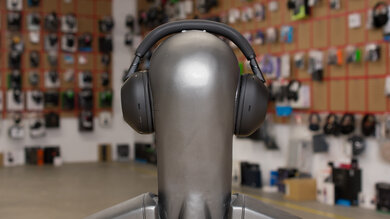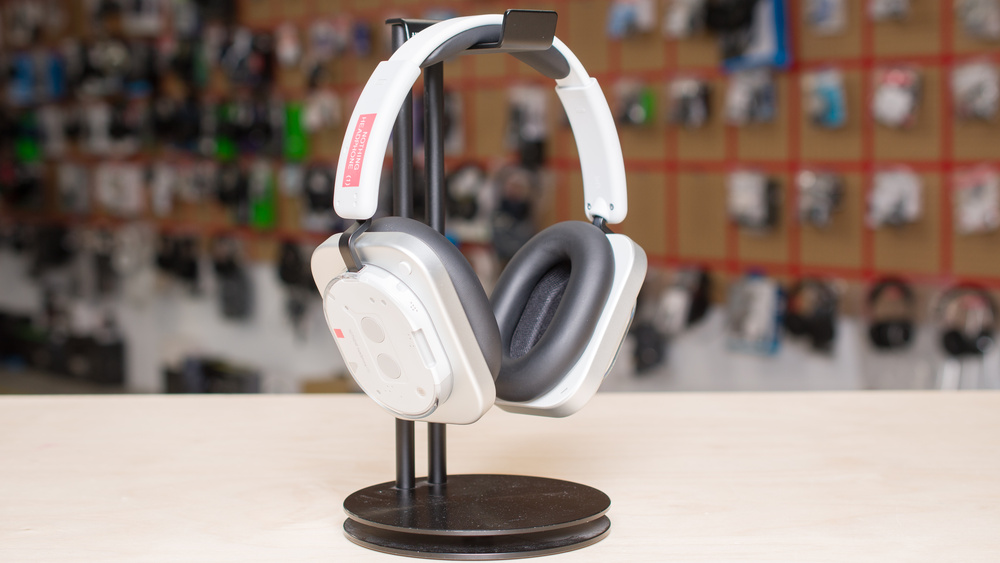
The Nothing Headphone (1) are the company's first over-ear wireless headphones. They have 40 mm drivers designed in partnership with KEF and carry over the brand's distinctive transparent design from their earbuds offerings like the Nothing Ear and Nothing Ear (a). With features like active noise cancelling (ANC), multi-device pairing, an IP52 rating, and a companion app for sound customization, they aim to compete with established options from Sony, Bose, and Apple, albeit at a slightly cheaper price point.
Our Verdict
The Nothing Headphone (1) are good for sports and fitness. Unlike many portable over-ears, they have an IP52 rating, so they can withstand a sprinkling of rain on your gentle jog outside. They're impressively stable on the head, so they'll stay on for most light to moderate workouts, although they might come loose during more vigorous activity. They're decently comfortable, but some may find the ear cups too shallow and snug, and they can also make your ears feel hot after a while. They support up to two devices at once using Bluetooth multi-point, so you can easily swap between your PC at home and your phone for workouts.
Excellent noise isolation.
IP52 rating is unusally good for over-ears.
Some may find the ear-cups too small, and they can get hot.
The Nothing Headphone (1) are very good for travel. They have an excellent battery life of over 33 hours with ANC enabled, so you'll be able to make it through long journeys off a single charge. The ANC system itself does an amazing job blocking out noise, although it's not the best when it comes to keeping out bass-range noise like rumbly engines. They're decently comfortable, but people with larger ears might find the ear cups too small, and the cans can make your head and ears feel a bit sweaty after a while. The carrying case will keep them safe while transporting them.
Excellent noise isolation.
Stylish, funky design.
IP52 rating is unusally good for over-ears.
Mic is only okay.
Some may find the ear-cups too small, and they can get hot.
The Nothing Headphone (1) are good for office work. Their excellent noise isolation system does a very good job blocking out mid-range noise like the sounds of chatty coworkers or tapping on keyboards. They're also decently comfortable, although they might make your ears a little sweaty over longer periods. Their mic is okay. It's good enough for conference calls, though you probably won't want to use it in very noisy settings, as the aggressive noise handling system can make your voice sound garbled if used in places like subway trains. The button-based control system is good, though it may take a little getting used to if you're coming from a touchpad set of Bluetooth headphones.
Excellent noise isolation.
Stylish, funky design.
Mic is only okay.
Even with Low Lag Mode enabled in the Nothing Headphone (1)'s companion app, we were unable to get latency lower than 240 ms, which is probably too long for many gaming situations. In general, we don't think these headphones are suitable for serious gaming, though their Bluetooth connection means they'll work in a pinch.
The Nothing Headphone (1) are alright for wired gaming. The headphones are decently comfortable, so you can wear them for long gaming sessions, although if you have larger ears, you might notice some discomfort. The overall sound profile is slightly warm by default, with a subdued treble that can reduce ear fatigue over long playtimes. But there's enough rumble in the bass and presence in the mids to ensure explosions and dialogue alike sound immersive and accurate. That said, people who wear glasses may experience a notable drop off in the bass response. These cans have to be powered on to be used, even via their wired connection. Thankfully, 33 ms latency is still usable for gaming, though expert gamers may prefer a passive analog connection with near 0 ms latency. You can also use these headphones via a USB-C connection, but be warned, you may need to restart them once plugged in for your PS5 or laptop to recognize that connection.
Excellent noise isolation.
Low-latency connection via cable.
Mic is only okay.
Some may find the ear-cups too small, and they can get hot.
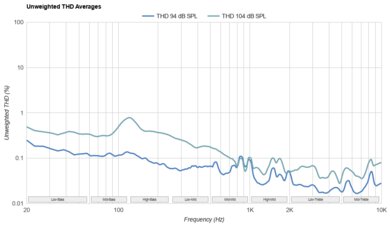
The Nothing Headphone (1) have good audio reproduction accuracy. They don't deviate much from their slightly warm sound profile, apart from a few narrow peaks and dips in the treble range that can make sounds like cymbals sound a touch bright or dull depending on their pitch. The left and right drivers are well matched in both frequency and phase, so objects are correctly located in the stereo field, and there are no audible issues with group delay. Of course, as closed-backs, they don't produce audio that sounds like it's coming from two angled speakers in a room. But distortion is incredibly low, so you can listen at unsafe levels without introducing artifacts to your audio.
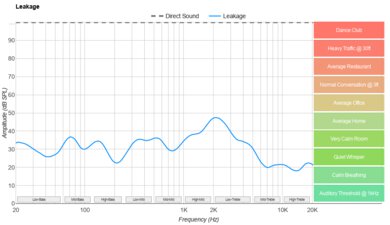
The Nothing Headphone (1) have excellent noise isolation. Their main weakness is in blocking out bassy sounds like rumbly engines. But they do a fantastic job in both the mid-range and treble regions, making them a great choice for use in places like offices or on the street. That said, these cans are sensitive to seal, which affects their noise isolation performance. So it's worth taking the time to ensure a good fit with every wear, especially if you wear glasses. On the plus side, these headphones leak very little audio, and the audio that does leak out sounds thin and weak.
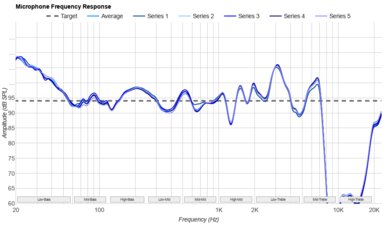
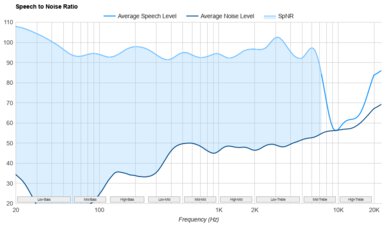
The Nothing Headphone (1) have an okay microphone. Their mic system performs better in use than test results suggest, largely because these cans have a very aggressive noise suppression system that suppresses everything it doesn't recognize as a human voice, which prevented us from getting reliable results. Still, the recordings we made sound okay, but we wouldn't recommend using the mic in very noisy places like subway cars, as the noise system will make your voice difficult to understand.
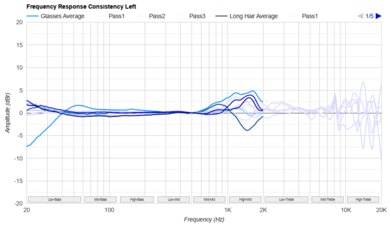
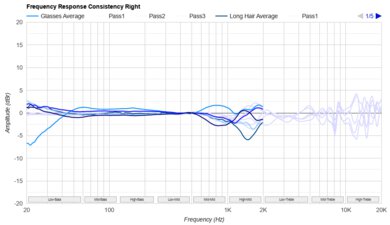
The Nothing Headphone (1) show poor frequency response consistency, mainly because of how much the bass response can drop when wearing glasses. Their shallow ear cups and soft foam pads make it hard to maintain a consistent seal, and for users who wear glasses, the fit around the frames often causes a noticeable loss in low-end response. If you have larger ears, you may also find the ear cups to be uncomfortably small.
Performance Usages
Changelog
-
Updated Oct 30, 2025:
The Comfort was modified to compare the Bose QuietComfort Ultra Headphones (2nd Gen).
- Updated Oct 10, 2025: Review published.
- Updated Oct 03, 2025: Early access published.
- Updated Sep 17, 2025: Our testers have started testing this product.
Check Price
Differences Between Sizes And Variants
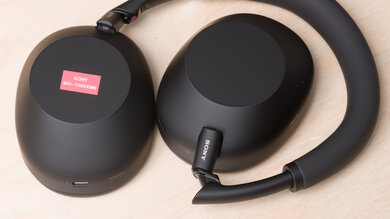
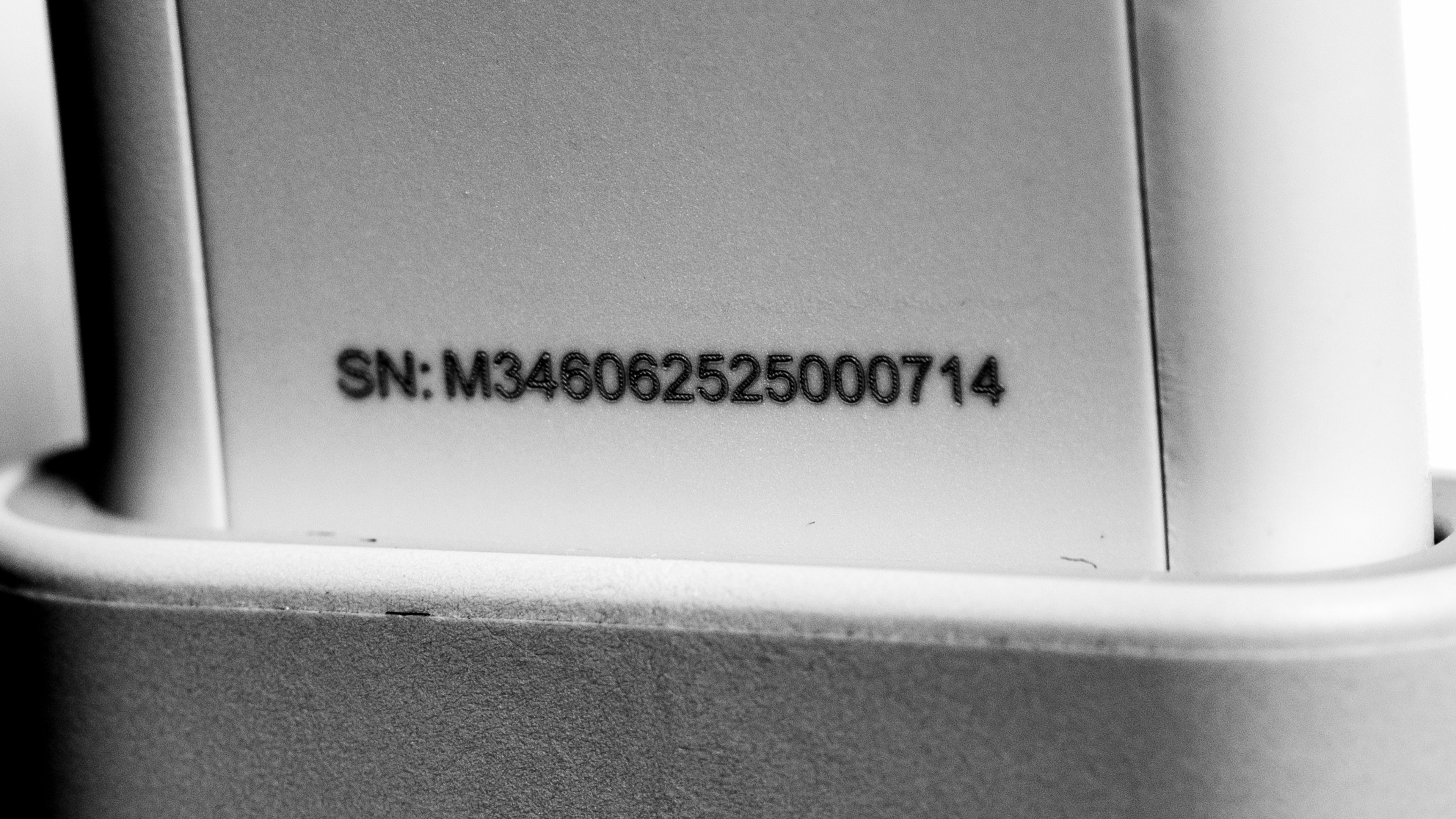
The Nothing Headphone (1) comes in two color variants: 'Black' and 'White.' We tested the 'White' variant (here's a photo of its label), but we expect all color variants to perform similarly.
If you encounter another variant of these headphones, please let us know in the comments.
Popular Headphones Comparisons
The Nothing Headphone (1) are the brand's flagship over-ears, but price-wise are positioned more or less in the mid-range of the ANC-equipped, over-ears market. That means they compete against both premium brands like Apple and Bose, as well as more budget-conscious brands like Anker. Like the rest of Nothing's headphone line, the Headphone (1) stand out with the unique, funky design and the incredibly detailed EQ available in their companion app, which includes extras like ChatGPT integration when paired with a Nothing phone.
The Nothing can't quite match more expensive flagships like the Apple AirPods Max, the Bose QuietComfort Ultra Headphones Wireless, or the Sony WH-1000XM6 for noise isolation performance, though they still do an excellent job, especially given they're the brand's first pair of over-ears. On the other hand, when compared to Anker's more budget-conscious offerings, the Nothing hold their own, performing about as well as the Anker Soundcore Space Q45 at blocking out noise. The Anker are cheaper than the Nothing, but their build quality isn't as good. All in all, the Nothing are something of a nice midpoint between the best of the budget brands and the best of the premium brands. You get eye-catching design, strong across-the-board performance, and nice quality-of-life features such as a fully parametric EQ, but the ANC isn't yet on par with the traditional market leaders.
For more headphone options, check out our recommendations for the best noise cancelling headphones, the best headphones for travel, and the best over-ear headphones.
The Sennheiser MOMENTUM 4 Wireless and the Nothing Headphone (1) are both flagship portable Bluetooth over-ears from their respective brands. The Sennheiser have been out longer, so can more often be found on sale, meaning they're usually the better deal. That said, the Nothing's ANC pulls ahead of the Sennheiser, so if noise isolation is a priority, they're the cans to pick. Other than that, these headphones are mostly distinguished by their designs: the Sennheiser take the traditional understated approach that we've come to expect from the brand, while the Nothing's bold, transparent design is more eye-catching. If you wear glasses, get the Sennheiser, as glasses wearers may find the Nothing's frequency response changes quite drastically, with a big drop in bass.
It may seem a little strange to compare the Nothing Headphone (1) with the Sony WH-1000XM4 Wireless headphones, since the Sony cans are a couple of generations and several years older. But Sony's newer flagships are much more expensive than the Nothing, making the XM4 a fairer comparison. Still, the Sony are just about the better cans, since they edge out the Nothing in noise isolation performance, and their sound doesn't change as much as the Nothing's between wears, especially if you wear glasses. The Sony also fold up smaller, which can be handy when you're out and about with just a coat to stow your headphones in. That said, the Sony's mic is worse than the Nothing's, and their design is plainer, although you may prefer that.
Though priced quite differently, the Apple AirPods Max and the Nothing Headphone (1) are worth comparing, because they're both flagship portable over-ears from brands that have become known for their design language as much as their technology. The Apple are the better-performing headphones, with superior noise cancelling and more accurate audio reproduction. That said, the Nothing aren't far behind: if they blocked out bass-range noise a little better, their ANC performance would be roughly on par with the Apple. Given their cheaper price, the Nothing may be the better value cans, if not the better headphones overall. That said, if you have an iPhone or Nothing phone, get the headphones that match the respective brand to get the most out of your technology.
While the Bose QuietComfort Headphones Wireless and the Nothing Headphone (1) share a similar over-ear design and target the same mid- to high-end ANC market, the Bose are ahead in most practical areas. They deliver slightly stronger ANC and are more comfortable thanks to their deeper ear cups and softer padding. The Nothing stand out mainly for their unique and funky transparent design, as well as the highly customizable EQ options available in their companion app. The Bose only offer a three-band graphic EQ compared to the Nothing's fully parametric 8-band option. Still, the overall performance is close. So for most people, getting whichever you can find cheaper makes the most sense. But if you have a Nothing phone, you may appreciate the extra features the Nothing cans offer, like access to ChatGPT integration.
Test Results
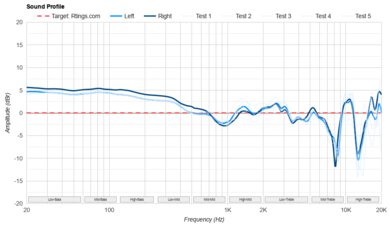
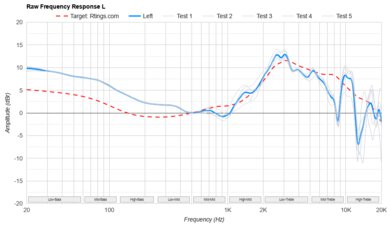
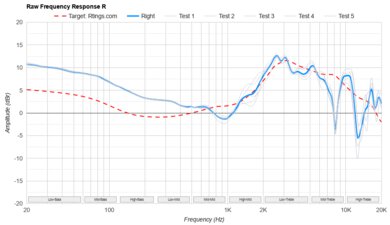
The Nothing Headphone (1) have a slightly warm sound profile, largely due to a gently recessed treble. The bass range is well-controlled, though a dip in the low-mids can thin out sounds like vocals. The overall sound profile is slightly closer to the SoundGuys.com Headphone Preference Curve than our own in-house target.
In the headphones' companion app, you can activate several levels of Bass Enhancement, choose between different EQ presets, and tweak a comprehensive 8-band parametric EQ. We also measured the frequency response with ANC on and off.
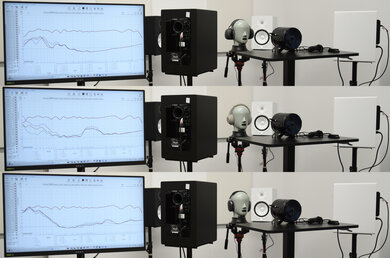
The Nothing Headphone (1) have disappointing frequency response consistency. This is largely due to the high bass drop off that people who wear glasses may experience. In general, their shallow ear cups and foam pads make it difficult to get a stable seal, but glasses wearers in particular can hear a large drop-off in low-end performance due to the poor fit around the frames. We also experienced difficulties getting a consistent seal when positioning these headphones on our testing rig, and had to perform multiple runs to get stable measurements.
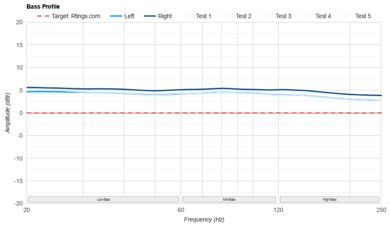
These headphones have superb compliance with our target curve in the bass range. The whole region is virtually flat. In songs like Das Wort by DJ Koze, the warm kick feels suitably punchy without overwhelming the vocals.
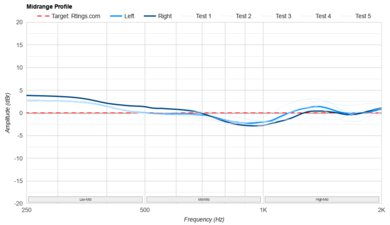
These headphones have impressive compliance with our mid-range target. In general, sounds are reproduced accurately. The guitar harmonics in songs like John Renbourne's The Pelican are rendered with clarity. That said, the lower-mids are a little recessed, which can make instruments sound a bit thin, while a small peak in the mid-mids adds a touch of honk to vocals.
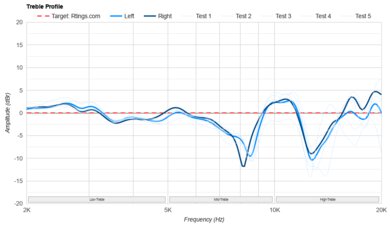
The Nothing Headphone (1) have decent compliance with our target in the treble region. The entire range is subdued compared to our target, which lends these cans their warm tonality. The range is also a little uneven throughout, so sounds like cymbal hits might sound a touch dull or piercing depending on their pitch.
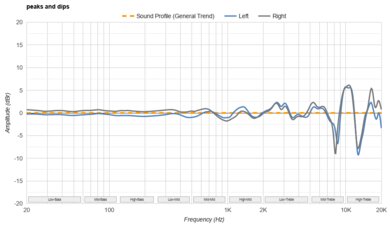
These headphones have satisfactory peaks and dips performance. The bass and mid-range are well-controlled, meaning these headphones adhere to their own warm sound profile well in those regions. The treble is a little more uncontrolled, with a series of narrow peaks and dips, meaning sounds like sibilants might sound a little muffled or bright depending on their pitch.
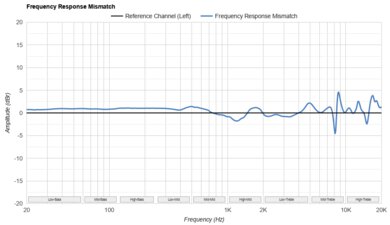
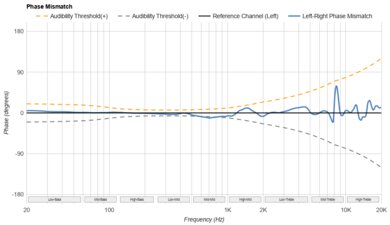
The Nothing Headphone (1) headphones have very good stereo matching. The left and right drivers are very well matched throughout the bass and mid-range in both phase and amplitude, so objects are correctly located in the stereo field. The small differences in amplitude between the drivers in the treble range aren't audible in regular listening, either. That said, stereo matching can be affected by quality control, so your experience may differ.
The group delay performance is satisfactory. The narrow dip between the low- and mid-bass shown on our graph isn't audible during regular listening, so you can expect tight bass and transparent treble reproduction.
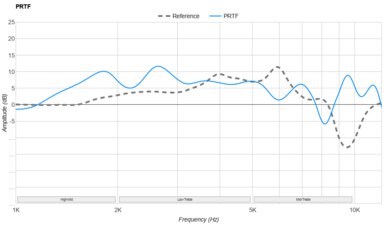
These headphones don't produce audio that interacts much with your pinna. Their PRTF results show that while these over-ears produce audio that feels a little spacious, it doesn't resemble the experience of listening to angled reference monitors.
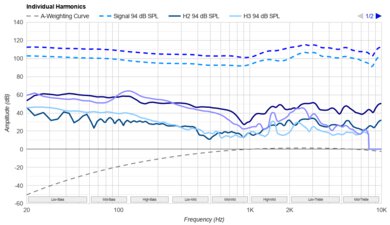
These headphones have exceptional harmonic distortion performance. Even if you listen at dangerously high levels, we don't expect you to hear distortion artifacts.
These headphones have to be powered on to use, so they don't require an external amp to drive.
The Nothing Headphone (1) have limited virtual soundstage features. Their Spatial Audio feature works similarly to Apple's Spatial Audio and Bose's Immersive Audio, offering two modes: fixed and head-tracked. In fixed mode, the headphones simulate a 360-degree field around your position, while head-tracking shifts the soundstage left and right as you move your head. The overall effect isn't very convincing. It sounds rather like a reverb has been applied to your music, and the soundstage doesn't feel as wide or immersive as competitors'.
These are the settings used to test these headphones. Our results are only valid when used in this configuration.
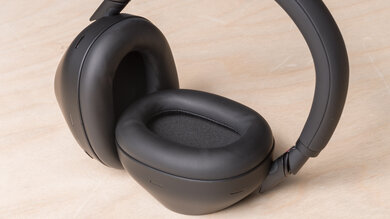
The Nothing Headphone (1) have a distinctive, funky design that carries over the brand's signature transparent aesthetic. They're available in 'Black' or 'White,' with translucent plastic shell casings over the outside of each ear cup that give them a unique, fun look compared to more understated competitors. The outer casings of the ear cups are built from aluminum alloy with a UV-resistant finish, while the headband arms and hinges are stainless steel. The control knob is wrapped in artificial leather that feels soft to the touch. Finally, the ear cups are made from polyurethane leather with memory foam stuffing.
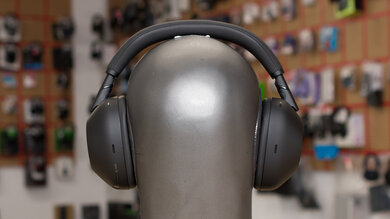
The Nothing Headphone (1) offer decent comfort overall, though they may not suit everyone. On the positive side, the headband has a good range of extension and swivel, and it holds its position well once adjusted. That said, the ear cups are somewhat small and shallow compared to the roomier Bose QuietComfort Ultra Headphones (2nd Gen). These smaller ear cups can feel uncomfortable if you have larger or more prominent ears, especially over longer listening sessions. The foam padding has a lot of give, which makes the fit more sensitive to glasses and imperfect seating, and the ear cups can also get warm during use.
The Nothing Headphone (1) have good controls, though their unique layout and input methods may take a little getting used to. You can view the full list of controls. The buttons are well-spaced and easy to identify, and the paddle that lets you skip back and forward through tracks is easy to use. The roller is convenient for adjusting volume, but it can be tricky to make changes without jumps in volume, unless you use it very slowly and just click one at a time (you hear audio feedback for each volume notch). In terms of other audible feedback, you'll hear power-on and connection chimes, but there's no feedback for play/pause or skipping tracks, no warning at minimum/maximum volume, and no option for voice prompts. You also can't turn feedback sounds on or off in the app, so you're stuck with the default settings.
If you're on a Nothing phone, you also get additional functionality via the button on the right ear cup, like swapping the assistant button for ChatGPT integration.
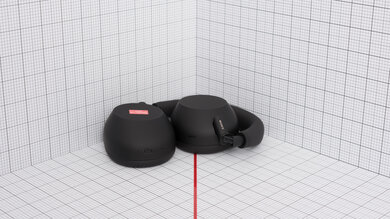
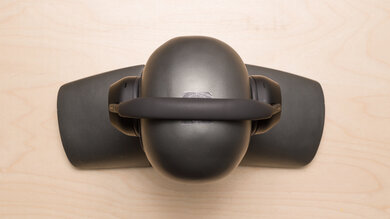
These headphones are acceptably portable. That's what we expect from over-ears, as they're too bulky to easily stow away inside a small pocket. When their ear cups are flat, these cans don't take up too much room, but they can't fold inwards to reduce their footprint further, unlike other portable over-ears such as the Sony WH-1000XM6.
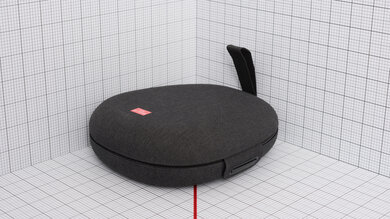
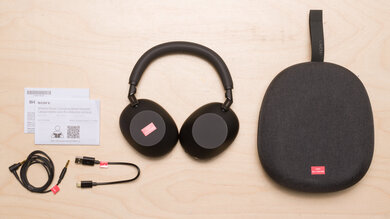
The Nothing Headphone (1) come with a great hard case. Its firm exterior provides good protection and uses a full zipper to close securely. The molded interior keeps the headphones snug and secure, and there's a small compartment to store cables. It's worth noting that the headphones are positioned opposite from what you might expect, so when you open the case up to take the headphones out, you'll need to switch the left and right over to position them on your head correctly.
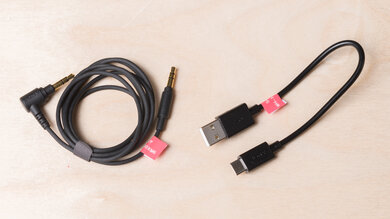
The Nothing Headphone (1) have impressive build quality. The hinges feel sturdy with good extension, and the yokes are solid. The headband slide adjustment is smooth in use, though it's possible that it will loosen with time, but we haven't experienced any issues yet. The headband is less cushioned and not as supportive as some competitors, like the Bose QuietComfort Headphones Wireless, and the ear cups can get warm over longer sessions. That said, unlike most over-ears, these headphones are also IP52 rated, offering protection against dust and light water exposure. The included cables are thick and high-quality, though a bit stiff.
The Nothing Headphone (1) have great stability. Their relatively firm clamping force and heavier ear cups help them stay secure better than lighter, looser-fitting headphones. You can headbang away in these without them coming off, and they'll also work for light workouts, though you may get a bit sweaty in them.
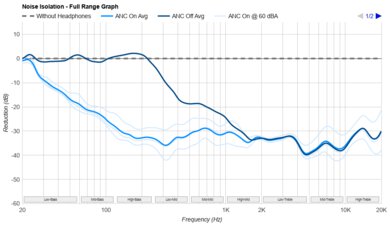
These headphones have amazing full-range noise isolation. While not as remarkable in the bass range as headphones like the Sony WH-1000XM6, they still do an okay job of blocking out rumbly sounds. However, they do a much better job in both the mid and treble ranges, where they almost match the top-tier performance we've come to expect from brands like Sony and Bose. If you're using these in an office, you won't hear much chatter or A/C whine. You can also set different ANC strengths in the companion app, which we also measured.
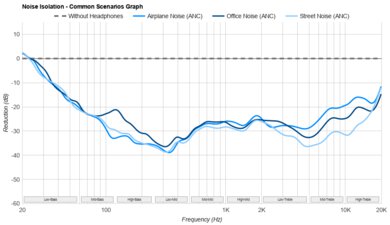
The Nothing Headphone (1) do a similarly amazing job when it comes to real-world performance. Again, they're poorest in the low-end, so don't expect these to block out the rumble of an airplane's engine, but higher-pitched sounds like chatty coworkers or pedestrians are effectively attenuated. It's worth noting that these headphones can be particularly sensitive to seal, which greatly impacts how well their noise isolation can perform. So it's worth taking the time to seat these securely on your head with each wear, but people who wear glasses may still hear more external noise than our tests show.
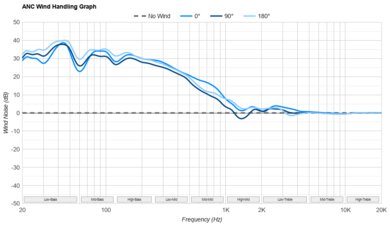
These headphones don't have a wind reduction feature. That means when wind blows against the ANC microphones, you're liable to hear muffled popping noises. Your best bet might be to turn ANC off in those moments.
The Nothing Headphone (1) headphones have impressive leakage performance. Audio that does leak out sounds thin, but it's unlikely anyone will even hear it unless you listen at unsafe levels.
The Nothing Headphone (1)'s microphone performs better in practice than our test score suggests. The headphones use very aggressive noise suppression that interfered with our testing process when it didn't detect a human voice, causing the mic to cut out quickly. In real use, though, the mic doesn't cut off speech. Recordings sound reasonably clear, though intelligibility isn't perfect, especially in louder environments. Overall, the samples we provide give a much better sense of what you can expect than the measured values.
The Nothing Headphone (1)'s microphone does a good job of cutting out background noise, but it comes at the cost of overall clarity. In our pink noise test, external sounds are almost completely removed, but your voice also loses some detail, making it harder to understand. If you're using the mic in very noisy places like a subway, the noise suppression system becomes more aggressive. On the one hand, that's handy as the system does a pretty good job suppressing background noise, but it does so at the cost of vocal clarity. Take a listen to the included sample recordings to get a sense for how the noise suppression algorithms sound.
These headphones have an excellent battery. With ANC on, Nothing says they'll last about 35 hours, and we measured just over 33 in our testing, which is very close. Of course, battery life varies with use. For example, Nothing says you can expect shorter battery life when using the LDAC codec instead of AAC. A five-minute charge will give you 2.4 hours of ANC-equipped playback and five hours of playback with ANC off. These cans will fully charge in a little less than two hours, and Nothing says you can expect 53 hours of talk time with ANC off and 37 with ANC on. The headphones enter sleep mode after 30 minutes of inactivity to conserve power.
The Nothing Headphone (1) have a great companion app that gives you plenty of control over their features. Check out this video of the app in use. Within the app, you can adjust noise cancellation amount, switch between ANC and Transparency mode, enable spatial audio, customize the controls, enable low-latency mode, manage dual-device connections, switch to high-quality audio, and toggle features like over-ear detection and Find My Headphones.
The app also comes with a couple of EQ options. One is a simple graphic mode with sliders for bass, mids, and treble, while the other is a parametric EQ that lets you control the gain, frequency, and bandwidth of up to eight bands. This extra control lets you approximate different target curves. You can save presets, and the app even includes access to various presets curated by Nothing.
If you have a Nothing phone, you'll get access to additional options like Channel Hop, which lets you quickly switch between audio streams from different apps, as well as Chat GPT integration and AI-generated news read-throughs, as this video shows.
The Nothing Headphone (1) headphones offer an okay wired connection. You can use them via analog or USB, but both methods disable the Bluetooth link, meaning you can't use the companion app while connected physically. The analog input also isn't passive, so the headphones still need to be powered on to work. As a result, you still experience some latency via an analog connection.
We also found that USB-C connections can be finicky. If the headphones are already on when you plug them in, they may not be detected by your device. This happened on both a PS5 and a laptop, and the only workaround is to restart the headphones after plugging them in.
These headphones have an amazing Bluetooth Connection. They use Bluetooth 5.3 and support multi-device pairing with up to two devices, though you have to hit pause on one device before hitting play on the other. They support Microsoft Swift Pair and Google Fast Pair, but not Quick Pair for iOS. Latency results are fairly high with both SBC and LDAC, even with Low Lag Mode enabled in the companion app, but latency varies with use, and different apps and devices try and compensate for it in different ways.
You can pair these headphones with Bluetooth-enabled PCs with full audio and mic support. You can also connect them via wired USB, and analog. However, if you connect them via analog, you'll only be able to receive audio.
These headphones only output audio when plugged into your PlayStation controller's AUX port, but you can also use the USB connection for audio and mic support.
You can connect these headphones to your Xbox controller's AUX port, but you'll only be able to receive audio.