The Technics EAH-AZ80 are mid-range wireless in-ears. These noise cancelling buds from this Japanese brand, who built their reputation on Hi-Fis and turntables, bring some distinctive features to the table, like LDAC support and the ability to connect to three devices simultaneously via Bluetooth. They have a low-profile and sleek design that won't look out of place, whether you're on the subway or running up a mountain trail. Plus, the manufacturer advertises a solid continuous battery life of seven hours with ANC enabled, though this will be reduced if you're using LDAC.
Our Verdict
The Technics AZ80 are impressive for sports and fitness use. They're exceptionally portable buds that have a comfortable fit and great stability. They're also well-built, and the buds themselves are certified IPX4 against water splash damage, so they won't be the reason you forego running in the rain. Their seven-hour battery life will be enough to get you through all but the most grueling endurance events without a recharge from the case. Plus, their three-way Bluetooth multi-point means you can connect to your phone and smartwatch simultaneously, with a device to spare.
- Great noise isolation performance across the frequency range.
- Well-built with an IPX4 rating for the buds themselves.
- Comfortable and stable in-ear fit.
- High latency with both SBC and LDAC.
The Technics AZ80 are great for travel use. Their lightweight, portable design is ideal for traveling, and their sturdy build quality and solid charging case mean you don't need to worry about damaging them in transit. They're comfortable enough for long plane and train journeys, too, and their impressive ANC system and passively isolating fit combine to block out most bothersome noises, from plane engine rumble to noisy passengers. Their three-way Bluetooth multipoint connectivity means you can stay connected to a whole suite of devices while on the move, though you may need to take advantage of the quick charge function in case the seven-hour battery life doesn't cut it for longer journeys.
- Can connect with up to three devices via Bluetooth.
- Great noise isolation performance across the frequency range.
- Well-built with an IPX4 rating for the buds themselves.
- Comfortable and stable in-ear fit.
- High latency with both SBC and LDAC.
The Technics AZ80 are good for office work. They have a comfortable, stable fit, and their seven-hour battery life can get you through most of the workday with the ANC enabled. The ANC will also ensure that background office distractions are minimal, effectively blocking out the sound of chatty coworkers and the collective squeals of delight when someone brings a box of doughnuts to share. They also don't leak very much audio, so you don't need to worry about disturbing anyone, even if you like to crank your tunes to the max. The integrated mic's recording quality is passable but makes your voice sound both thin and muffled.
- Can connect with up to three devices via Bluetooth.
- Great noise isolation performance across the frequency range.
- Very minimal audio leakage.
- Well-built with an IPX4 rating for the buds themselves.
- Comfortable and stable in-ear fit.
- Mediocre noise handling performance.
The Technics EAH-AZ80 aren't suitable for wireless gaming. While they can connect to your PC or console via Bluetooth, latency will likely be too high for a smooth gaming experience.
You can't use the Technics AZ80 wired, so they're not suitable for this use.
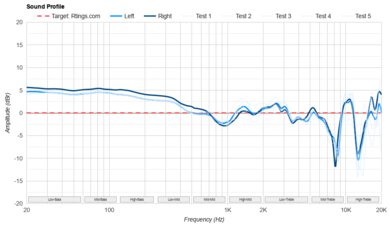
The Technics EAH-AZ80 are a great choice for audio reproduction accuracy. Their default sound profile is on the bassier side compared to our target, though the mid and treble ranges are well-balanced. The frequency response follows their warm sound profile very well, with very few deviations, and the L/R drivers are well-matched in terms of amplitude, frequency, and phase. Group delay falls below the audibility threshold across the entire range, too.
The Technics EAH-AZ80 offer an impressive noise isolation performance. The ANC system does some heavy lifting to help attenuate bass-range frequencies, while their in-ear seal helps tamp down on higher frequencies. The isolation performance shines in office environments, cutting out chit-chat and clacking keystrokes, though they do a serviceable job in environments like a busy street or airplane cabin.
The Technics EAH-AZ80 are passable for phone calls. Their integrated mic's recording quality isn't bad, and you'll be understandable on calls, but your voice will sound slightly thin and a little muffled. It does an okay job of separating your voice against moderately noisy backgrounds, like the hustle and bustle of a busy street, but it struggles with passing trains and other very loud sounds
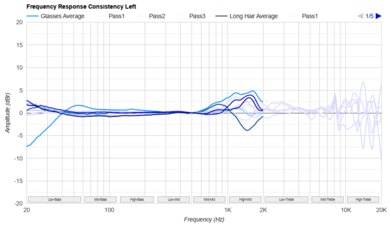
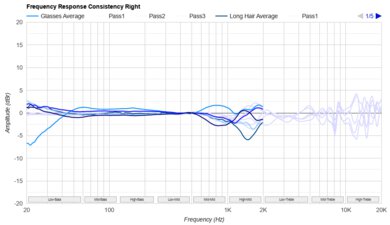
The Technics EAH-AZ80 have outstanding frequency response consistency. As long as you take the time to ensure a solid fit, you'll be rewarded with extremely consistent audio delivery.
Performance Usages
Changelog
-
Updated Nov 04, 2025:
This review has been updated to Test Bench 2.0, which adds the following tests: Stereo Mismatch, Group Delay, Cumulative Spectral Decay, PRTF, Harmonic Distortion, and Electrical Aspects. We've added new performance usages and updated the text throughout the Sound tests and side-by-sides.
- Updated Nov 04, 2025: We've converted this review to Test Bench 2.0, which updates our sound tests and adds performance usages. You can read more about this in our changelog.
-
Updated Apr 29, 2025:
We've updated the review to mention the Technics EAH-AZ100 in the Battery box.
-
Updated Apr 17, 2025:
We've revised the In The Box box to list the included USB-C to USB-C charging cable.
Check Price
Differences Between Sizes And Variants
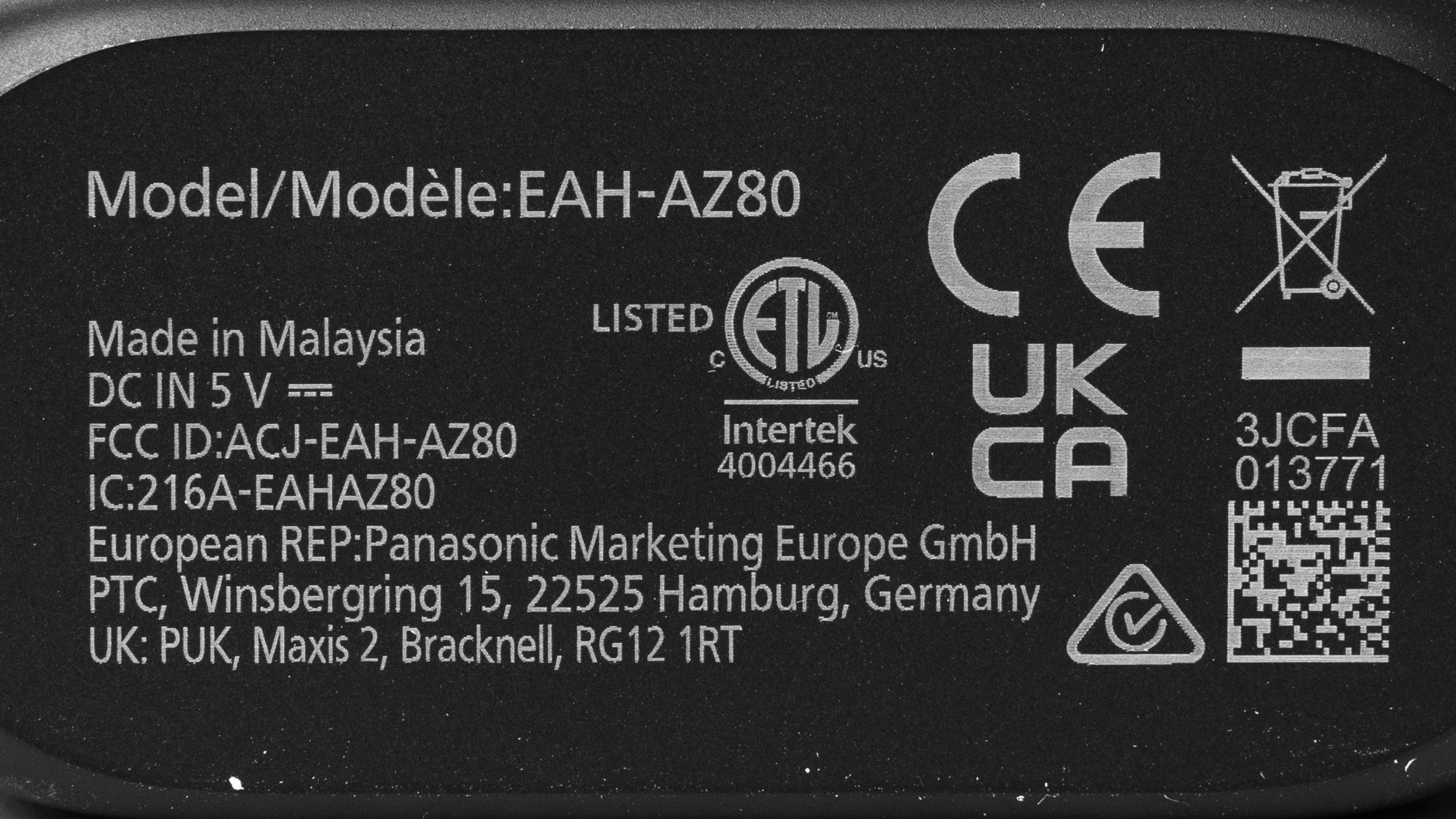
The Technics EAH-AZ80 come in three color variants: 'Black', 'Silver,' and 'Midnight Blue.' You can see our unit's label here. If you encounter a different variant, please let us know in the comments, and we'll update our review.
Popular Headphones Comparisons
The Technics AZ80 are premium wireless in-ears with ANC technology. The market for earbuds in this price range is very saturated. It puts them in direct competition with excellent in-ears, like the Sony WF-1000XM5 Truly Wireless and the Sennheiser MOMENTUM True Wireless 4. The Sony can provide slightly more noise isolation across most of the frequency range, thanks to their excellent foam ear tips, though the Technics do a marginally better job of blocking out bass frequencies, like engine rumble. The Technics are also better built, and if Bluetooth multi-device connectivity is a deciding factor for you, their three-way multipoint helps them stand out from the crowd. The three-way multipoint might also give them the edge over the Sennheiser. However, the Sennheiser have a better overall noise isolation performance. That said, the Technics have a more comfortable fit and, like the Sony, feature LDAC support for high-resolution audio streaming.
Check out our recommendations for the best wireless Bluetooth earbuds, the best noise cancelling earbuds, and the best wireless earbuds for Android.
The Technics EAH-AZ100 are the successor to the Technics EAH-AZ80. The AZ100 are better in most aspects; their ANC performs better across the board, especially when dealing with bass range noise like engine rumble, their battery life is significantly longer at 12.2 hours, and they support newer features like Bluetooth LE's LC3 codec and virtual surround for immersive listening. That said, the AZ80 are substantially cheaper and have most of the same features.
The Technics EAH-AZ80 and the Sony WF-1000XM5 Truly Wireless are both premium in-ears with noise cancelling technology (ANC). They're both excellent all-around performers with similar feature sets and slight differences, so you could opt for one over the other depending on your preferences. They both have a similar warm sound profile that you can tweak via the in-app EQ and presets. They also have comparable battery life performance and feature LDAC support. While the Technics are better built, the Sony have a slight edge in the noise isolation department, thanks to their excellent passively isolating foam tips. Meanwhile, the Technics have three-way Bluetooth multi-point connectivity, which can be useful if you bounce between a work phone, personal phone, and laptop.
The Sennheiser MOMENTUM True Wireless 4 and the Technics EAH-AZ80 are premium buds with premium feature sets. They both offer a comparable battery life performance and are similarly well-constructed. While both provide a great level of attenuation against ambient sound, the Sennheiser have the edge here, blocking out more external noise across the entire frequency range. That said, the Technics have a more comfortable fit and LDAC support, and they feature three-way Bluetooth multi-device connectivity for staying connected to multiple devices on the go.
Both the Bose QuietComfort Ultra Earbuds Truly Wireless and the Technics EAH-AZ80 require a serious outlay, but you'll be rewarded with a similarly excellent all-around performance. The Bose have a more comfortable fit, combined with a superior noise isolation performance that's great if you travel a lot and like to enjoy your peace. They also come with an Immersive Audio feature with head-tracking. Both boast a pretty balanced default sound that leans towards the warm side. The Bose include aptX Adaptive support, and the Technics have LDAC support. The Technics also include three-way Bluetooth multi-point connectivity, which will sway some users compared to the two-device multi-pairing on the Bose.
We've upgraded our Headphones Test Bench to 2.0! This update brings several key changes to our tests and usages, making it easier than ever to interpret our sound results based on your personal preferences. You'll also find a brand-new interactive graph tool featuring multiple targets (including our own!) for you to explore and compare.
For a full breakdown, check out our changelog, which includes detailed commentary from our test designer explaining the rationale behind our update.
We'd also love to hear your thoughts: your feedback helps us keep improving, so join us in the comments!
Test Results

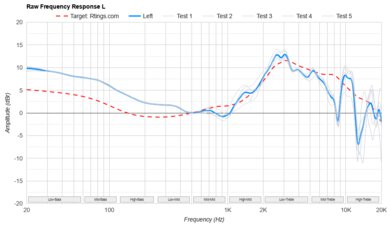
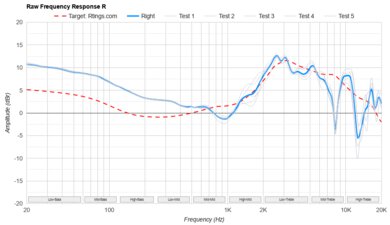
The Technics EAH-AZ80 have a warm default sound profile. In this graph, you can see how the different EQ presets affect the sound profile. As with other ANC-equipped earbuds, like the Sony WF-1000XM5 Truly Wireless, their sound profile is slightly different with the ANC enabled, with a slightly boosted bass response audible when the ANC is off compared to on. The sound is also altered when the mic is engaged, for example, when you're on a call. You can see a graph of how this affects the frequency response in Recording Quality.
These buds have amazing frequency response consistency. As long as you take the time to achieve a solid seal, you'll be rewarded with consistent audio delivery.
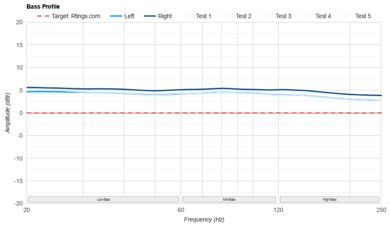
These buds have great bass compliance. The bass is boosted across the whole region but practically flat. Kicks and subby 808s have plenty of boom, but individual pitches don't jump out of the mix. There's also a touch of extra warmth from the elevated high bass, which helps bring out the fundamental frequencies of bass guitars. However, as this emphasis extends into the low-mids, it can clutter already warm mixes. For example, in songs like Sons of Mischief's 93 'Til Infinity, the lo-fi production treatment means that the bassline and breakbeat occupy similar sonic territory, and these buds struggle to provide clarity and separation between them in the mix.
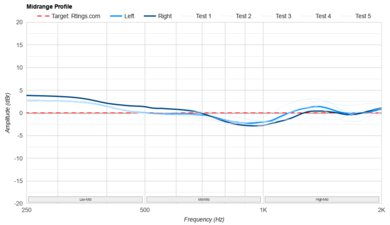
The mid-range target compliance is excellent. The low-mids are somewhat over-emphasized, adding substance to snares and toms, but when combined with the boosted high bass, this can clutter the mix. The rest of the range is well-balanced, so vocals and lead instruments sound clear and present.
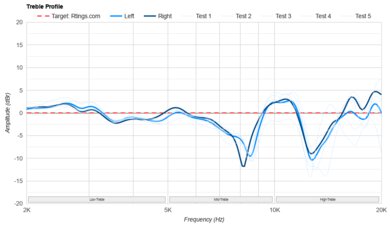
The treble compliance is amazing. The lower part of this range is slightly underemphasized, which can thin out the upper harmonics and richness of vocals, though these elements still sound detailed and accurate. A bump into the mid-treble response adds some extra presence to sibilants, like hi-hats and cymbals.
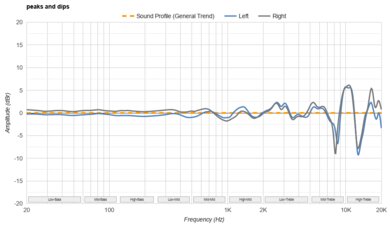
The Technics AZ80 have an excellent peaks and dips performance, meaning they follow their own sound profile amazingly well. The only noticeable deviations occur in the treble range, where a series of small peaks and dips can make voices sound slightly distant or bright, depending on the singer's pitch.
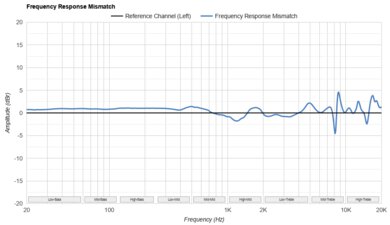
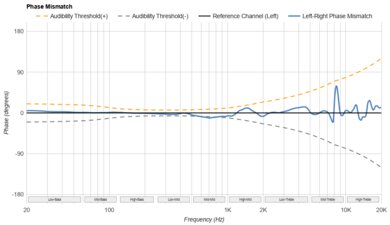
These earbuds have an excellent stereo mismatch performance. The L/R drivers are well-matched in terms of amplitude, frequency, and phase, with no audible mismatches that can impact your listening experience. This is indicative of tight tolerances that reflect well on the manufacturing and quality control process.
The group delay performance is amazing. It falls below the audibility threshold across the entire range, save for a small spike in the low-bass range that isn't audible with real-life content.
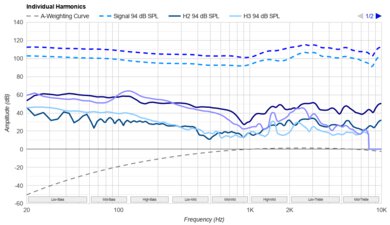
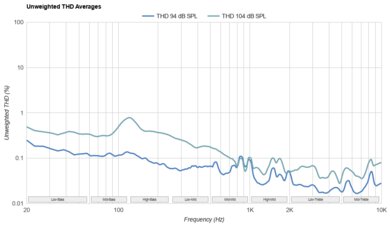
The harmonic distortion performance is outstanding. At both regular and elevated listening levels, these buds exhibit clean and pure audio reproduction that doesn't add any unintended coloration to your signal.
These are the settings used to test the Technics EAH-AZ80 True Wireless. Our results are only valid when used in this configuration.
The Technics EAH-AZ80 have a beveled teardrop design that's similar to other premium wireless in-ears like the Sony WF-1000XM5 Truly Wireless or the Sennheiser MOMENTUM True Wireless 4. They're made of smooth plastic and aluminum, with a shiny finish on the exterior plate that tapers to matte on the other side and a gold Technics logo embossed on the front. They're available in 'Black' and 'Silver' color variants.
The Technics EAH-AZ80 have a comfortable in-ear fit. They come with seven pairs of different silicone ear tips, making it easy to find a pair that's well suited to your ear canal shape. Once inserted, they apply minimal pressure to the inside of your ear canal, so inputting controls via the external surface doesn't hurt your ear. The result is a very secure fit and seal. The downside is that they often require a bit of maneuvering to remove from your ear as there's not a lot of purchase to be found on their sleek body.
These in-ears have great controls. They're mostly intuitive, although there's a learning curve at first to memorize the different functions. You can also further customize them via the app. There's audio feedback in the form of a chime every time you register a press or reach maximum/minimum volume. There are additional audio prompts to indicate when you've cycled through ANC and Ambient Sound modes and a melody that plays while in Bluetooth pairing mode. Ambient Sound uses the onboard mics to filter in some external sound so you can stay more aware of your surroundings. The touch-sensitive surface on the exterior of each bud is very responsive, though (although you can adjust this in the companion app). This can lead to accidentally inputting commands while you try to adjust the fit. So you'll want to be careful when adjusting them using the area around the touch surface. It can also be time-consuming to go from minimum to max volume, as you'll need to space out your presses to avoid the wrong command being registered.
On either earbud:
- Single tap: Plays/pauses audio and accepts an incoming call.
- Double tap: Mutes mic while on a call.
- Tap and hold: Cycles between ANC and Ambient Sound modes (you can also adjust this in the app). Ends call when on a call.
On the right earbud:
- Double tap: Skips to the next track.
- Triple tap: Skips back to the previous track.
On the left earbud:
- Double tap: Increases the volume.
- Triple tap: Decreases the volume.
The Technics AZ80 come with a great carrying case. It's small and practical, constructed from solid and sturdy plastic. The lid is sturdy and magnetically latched, so your buds won't spill out if you drop the case. While there's a battery level indicator inside your case, there's no immediate way to check the battery level without opening the case.
The Technics AZ80 have a great build quality. The seven pairs of provided ear tips are made of high-quality silicone that feels sturdier than most. The buds themselves are made of high-quality plastic that feels very solid to the touch. The same goes for the all-plastic construction of the case. The only negative point is that the IPX4 rating for protection against water splashes applies only to the buds and not the case. This still makes them a great choice for outdoor activities, though, where you won't be bringing the case anyway.
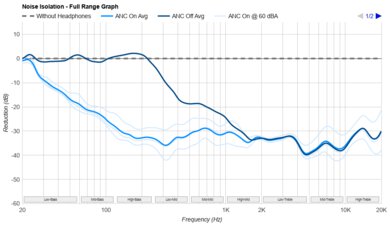
The Technics AZ80 have a great full-range noise isolation performance. While they don't have the foam tips and excellent passive isolation of the Sony WF-1000XM5 Truly Wireless, they have an active noise cancelling (ANC) system that does a solid job of blocking out noise across the entire frequency range. With the maximum ANC level, they attenuate more bass range noise than the Sony. However, this could be because the Technics' ANC system isn't adaptive and isn't constantly adjusting to environmental audio. As a result, they do an excellent job of blocking out noises like rumbling bus engines. This extends to the mid-range, too, so background conversations are effectively blocked out, and these headphones provide a considerable amount of attenuation against treble-range noises, too. However, this is more down to the passive isolation provided by their in-ear fit.
Using the controls, you can switch between the ANC and ambient sound mode, which uses the mic to feed in external audio and keep you aware of your surroundings. While these modes are toggleable by the physical controls, you can blend the two via the companion app to find a balance that works best for you.
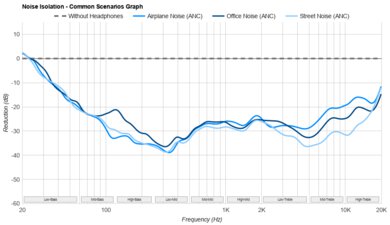
In common scenarios, these buds perform great across the board. They attenuate very well against the rumble of airplane engines, so you can nod off in peace while on a long flight. They do an even better job of blocking street noise, like onrushing cars and the accompanying honks, and insulate you well from the hustle and bustle of a busy office.
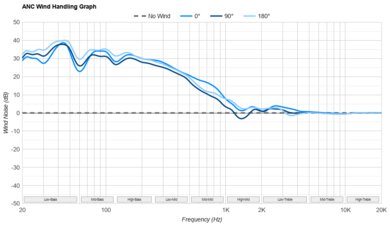
Wind noise is a unique feature for ANC systems to deal with as it interacts directly with the microphones used, which can cause the mics to create a loud, annoying tone from a noise that doesn't even reach your ear.
These buds don't have a wind reduction feature. However, they have a background noise reduction feature so that if you're taking a call, the person on the other end of the line hears your voice more clearly. As a result, we didn't use this feature for this test. Unfortunately, this feature won't do much to mitigate wind noise, so you'll want to avoid using the ANC feature in windy conditions.
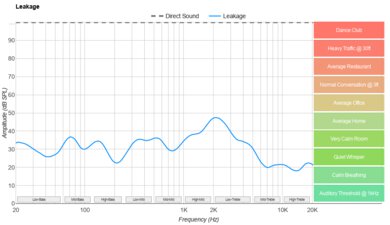
The Technics AZ80 have an excellent leakage performance. Audio leakage is mostly concentrated in the treble range, so it sounds thin. That said, even if you're blasting your tunes in a quiet office environment, it's unlikely that anyone around can hear your audio.
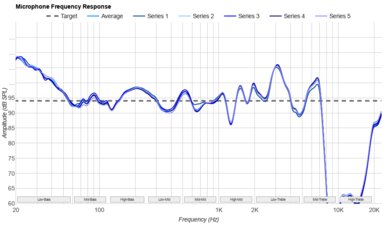
The mic's recording quality is passable. However, much of the treble response is shelved, so your voice will sound muffled. It also struggled to pick up lower frequencies, so the recorded audio sounds thin, too. For those who plan on using these buds for online meetings, you can check out a pass done with the integrated microphone activated here. Using the built-in mic can bring about a drop in audio quality due to having to switch to a different Bluetooth profile to transmit (and receive) audio. However, this is a limitation of Bluetooth rather than the buds themselves.
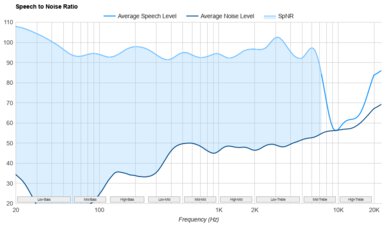
These buds do a middling job of separating your voice against moderately loud environments, so if you need to make a call in a busy street, you'll still be understandable even though there's some background noise present. It struggles more with louder levels of background noise, though, so your voice will drowned out by the sound of an incoming train, for example.
The Technics AZ80 have a decent battery life performance. They last a little over seven hours on a single charge, which aligns with the seven hours the manufacturer advertises. Plus, there are two additional charges contained in the case. However, this battery performance will decrease if you're using LDAC. There's an auto-off power-saving feature to help preserve battery life, and you can adjust the time before this kicks in in the app. The manufacturer also advertises a quick charge feature that gives you 70 mins of playtime with just a fifteen-minute charge. If you need more juice for extended workdays or intercontinental flights, consider the successor to the AZ80, the Technics EAH-AZ100, as they have a significantly longer continuous battery life.
The Technics app is great, with a host of features available and some deep customization possibilities if you're willing to spend some time with it. You can see the battery level of the buds and the case, access the 'find my headphones' feature, and change the voice prompt language and tone. There are a slew of customization options, too, as you can access custom EQ and presets, modify ANC/ambient sound levels, and alter the controls to your liking. You can also access the multipoint settings, change the auto-off timer time, and even use a tool that helps you find the right size tips. You can see a video of the app in action here.
You can't use the Technics AZ80 with a wired connection, but they come with a USB-C to USB-C cable for charging the case.
The Technics AZ80 have great Bluetooth connectivity. They stand out against the competition thanks to the inclusion of three-way Bluetooth multipoint connectivity and their LDAC compatibility for high-resolution audio streaming. However, you can't use these features to the fullest of their abilities, as you can't stream audio via LDAC while connected to three devices. The manual advises only connecting to one device while using LDAC, and connecting to two devices changes the playback quality to 'Best Effort.' These buds are compatible with AAC and SBC codecs, resulting in longer battery life performance than with LDAC. Latency with both LDAC and SBC is on the higher side, though, which can create lip sync issues when streaming video content from a device. Some apps and devices compensate for latency differently, so your experience may vary.
The Technics AZ80 can connect to Bluetooth-enabled PCs for full audio and mic compatibility. However, you can't connect them to your PC in any other way.
The included charging case can carry an additional three charges. You can charge the case using the supplied USB-C to USB-C cable; it also supports Qi wireless charging.