- 5.0%Pixel row error
- 5.0%Pixel column error
Color bleed is an undesirable artifact that appears on some monitors, causing discolored stripes to appear on the screen. It can happen when there are large areas of uniform colors next to each other and one color bleeds into the next. This can be distracting during content creation or when viewing webpages with similar elements, but it's rarely an issue on modern monitors. Even if a monitor does have some, it's hardly visible with most content, like when gaming.
We used to test for this, but we stopped as of recent test benches because most monitors don't have any noticeable color bleed.
Test Methodology Coverage
We stopped measuring color bleed as of Test Bench 1.2, so any monitor on newer test benches doesn't have it. The test was included as part of older test benches, though, and scores are comparable between them. We stopped performing this test because color bleed is rarely an issue on modern monitors.
| Tests | 1.0 | 1.1 | 1.2 and newer |
|---|---|---|---|
| Pixel Row Error | ✅ | ✅ | ❌ |
| Pixel Column Error | ✅ | ✅ | ❌ |
You can also learn how our test benches and scoring system work, and how we test monitors.
When It Matters
Color bleed is important to know if you're viewing content with large areas of uniform colors next to each other, like on a webpage or with content creation. On monitors with noticeable color bleed, you'll see colors bleed into others unintentionally, so the monitor isn't displaying content as intended. This is only an issue with images that have solid colors, and it's less of a concern if there are varied colors on-screen, like when gaming.
Our Tests
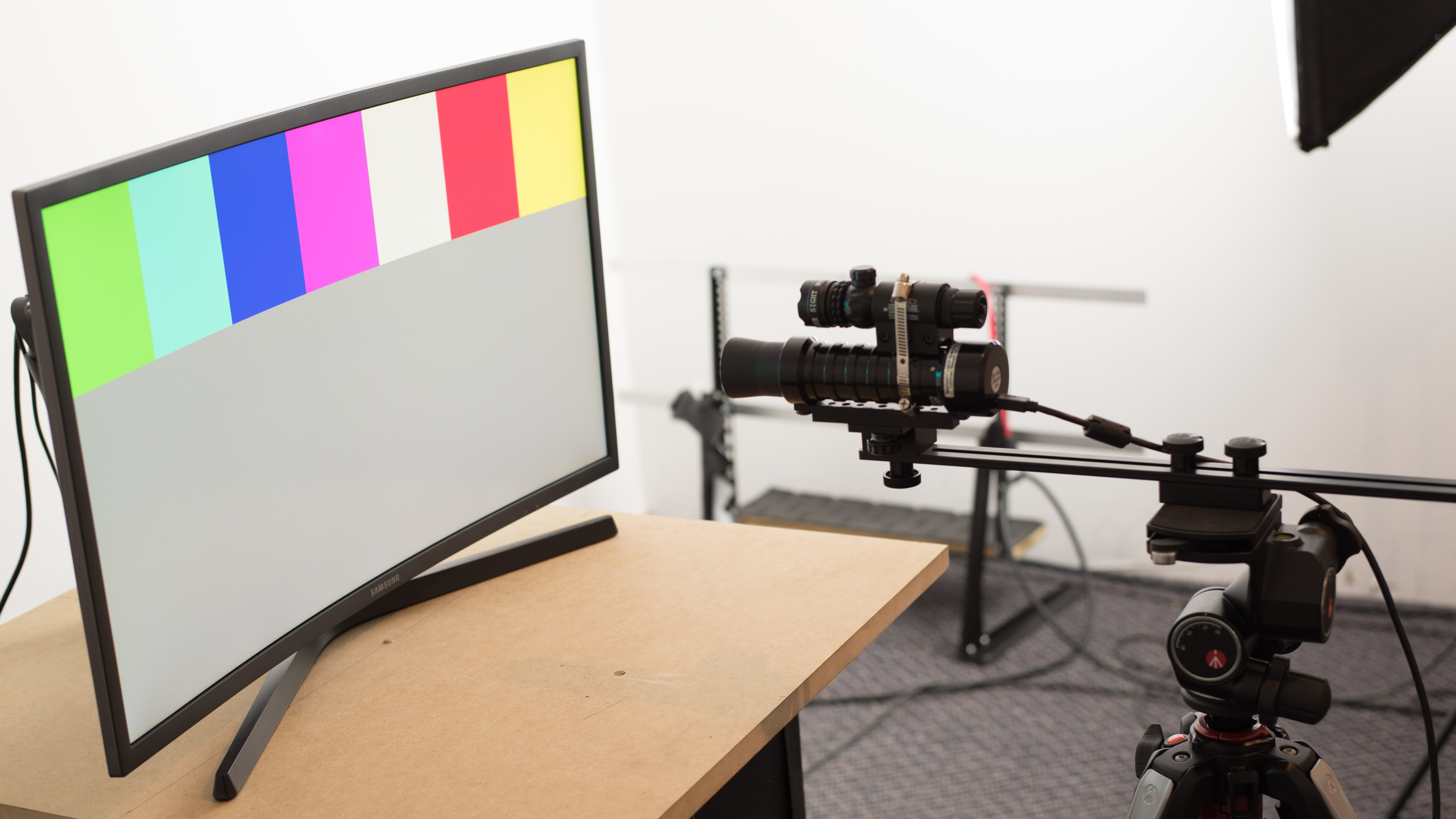
After calibrating the display and setting it to 100 cd/m2, we used a video sequence with large blocks of primary colors, secondary colors, and white, arranged in a row and column over a gray background. We used a Colorimetry Research CR-100 colorimeter to measure the colors and the gray in the pattern to calculate the color bleed, both horizontally and vertically.
Pixel Row Error
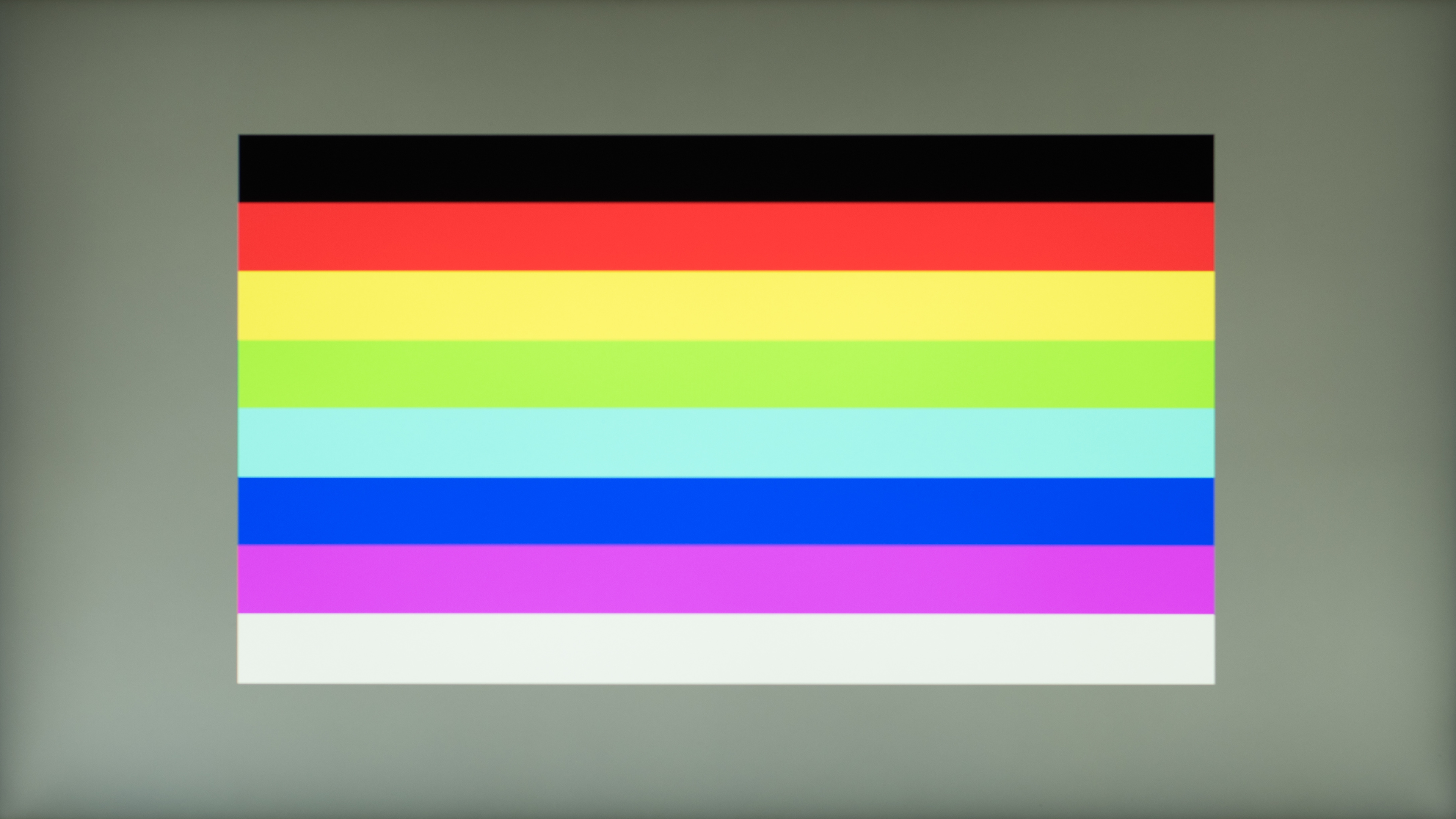
The pixel row error test represented the amount of color variance that appeared in the area surrounding the test pattern horizontally. Although the colorimeter measured the error in terms of a percentage, we also took a photo of horizontal bars to show any color bleed.
| Pixel row error: 0.000% | Pixel row error: 0.011% |
|---|---|
 |
 |
Pixel Column Error
The pixel column error test represented the amount of color variance that appeared in the area surrounding the test pattern vertically. Although the colorimeter measured the error in terms of a percentage, we also took a photo of vertical bars to show any color bleed.
As you can see with the two examples below, even though the Razer has much more vertical color bleed than the HP, this is hard to tell with the test pattern.
| Pixel column error: 0.000% | Pixel column error: 0.454% |
|---|---|
 |
 |
How To Get The Best Results
Unfortunately, color bleed tends to be an inherent property of the screen itself, so there isn't much to do to reduce its appearance. If this is an issue you feel might be problematic for your use, it's best to pick a monitor free of it when shopping.
Conclusion
Color bleed appears on some monitors, causing discolored stripes to appear on the screen when there are large areas of uniform colors next to each other. Colors bleeding into one another can be distracting during content creation or when viewing webpages with similar elements. It's rarely an issue on monitors, which is why we don't test it anymore. Even if a monitor has color bleed, it's hard to tell with most content, regardless.