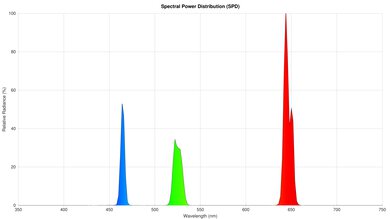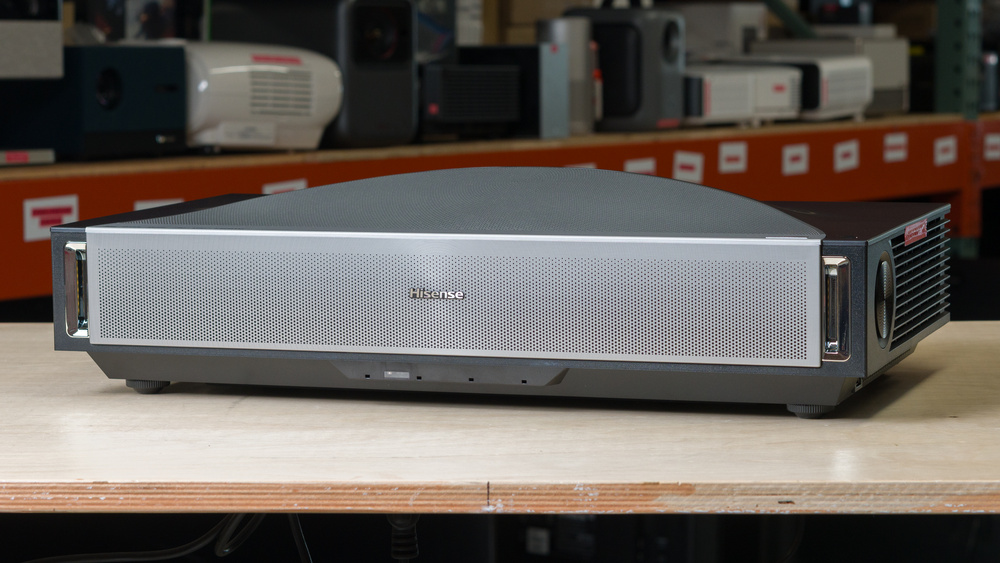
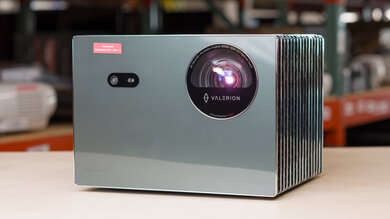
The Hisense PX4-PRO is a premium ultra-short-throw pixel-shift 4k projector. It uses DLP imaging technology with an RGB triple-laser source. Newer than the Hisense PX3-PRO, it competes with other high-end UST projectors, like the AWOL Vision Aetherion Pro and the AWOL Vision Aetherion Max. It's designed for home theater setups as a larger alternative to TVs, supporting screen sizes from 80 to 200 inches. It's meant to excel in any environment thanks to its 7-level Iris lens that deepens blacks, and it's advertised to deliver up to 3500 ANSI lumens, making it easier to see in bright rooms. It's feature-filled with Dolby Vision and IMAX Enhanced support, Dolby Atmos sound, and connectivity options like Bluetooth 5.4 and Wi-Fi 7. It also comes with the VIDAA smart system to stream content. Plus, it has built-in Devialet 66W speakers and has HDMI eARC support if you prefer connecting a soundbar. Besides that, it includes perks for gaming, like HDMI 2.1 ports alongside FreeSync Premium variable refresh rate (VRR) support to reduce screen tearing.
Our Verdict
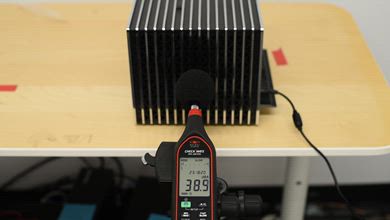
The Hisense PX4-PRO is good for home theater setups. With fantastic contrast in dark scenes, it displays deep blacks, but the black levels are raised in brighter scenes. It also displays a wide range of colors for a vivid viewing experience, but you'll need to calibrate it for the best image. Besides that, it removes judder from most sources, except 25p content from sources that don't match the content's frame rate. Its fan is quiet enough that it won't disturb you when watching movies. A downside is that it has a noticeable rainbow effect (RBE), which is problematic if you're sensitive to it.
Deep blacks in dark scenes.
Superb color volume for vivid images.
Removes judder from most sources.
Quiet fan.
Raised blacks in brighter content.
Inaccurate out of the box; needs a full calibration.
Noticeable RBE.
The Hisense PX4-PRO is unremarkable for outdoor setups. It's a UST projector that's meant to sit in one place, as it's heavy and doesn't have many features to help you quickly set it up with a screen outdoors. It has keystone adjustments that don't always work, and it lacks optical zoom or lens shift to get a cleaner image if the projector isn't centered with the screen. It at least gets very bright, so you can watch content even with some ambient light around.
Bright enough for ambient lighting.
Heavy projector with minimal adjustments; no optical zoom or lens shift.
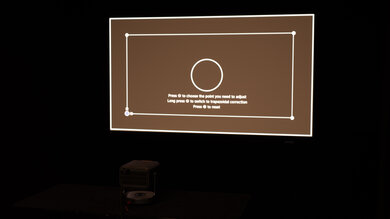
Keystone adjustment doesn't always work as intended.
The Hisense PX4-PRO is disappointing for bedroom setups. It's heavy to bring to the bedroom for an impromptu movie night, and it has minimal settings to help you set it up. Even its keystone adjustments don't always work as intended. On the plus side, its quiet fan ensures you won't have to crank the volume up much to listen to your favorite show or movie.
Quiet fan.
Heavy projector with minimal adjustments; no optical zoom or lens shift.
Keystone adjustment doesn't always work as intended.
The Hisense PX4-PRO is amazing for gaming. Its DLP imaging technology ensures there's minimal motion blur, and it has low input lag in its Game Mode for an extremely responsive feel. It also supports native 4k @ 60Hz, downscaled 4k @ 120Hz, and 1080p @ 240Hz signals, offering versatility for different types of games. Plus, it has variable refresh rate (VRR) support and HDMI 2.1 bandwidth to make full use of modern gaming consoles and PCs. Lastly, it delivers great picture quality with its deep blacks, good brightness, and vivid colors, so even HDR games look fantastic.
Deep blacks in dark scenes.
Superb color volume for vivid images.
DLP projector with minimal motion blur.
Extremely low input lag.
HDMI 2.1 ports and VRR support.
Supports 4k @ 60Hz and 1080p @ 240Hz natively.
Raised blacks in brighter content.
Inaccurate out of the box; needs a full calibration.
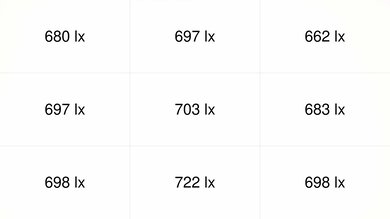
The Hisense PX4-PRO has great brightness. You can still see the image in rooms with ambient lighting, though it can look washed out, and visibility can be an issue in sunny environments. It's not the most uniform, though, as the edges are just a bit brighter than the center.
Bright enough for ambient lighting.
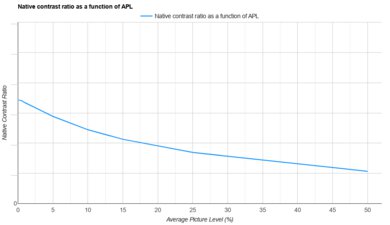
The Hisense PX4-PRO has very good contrast. It has deep blacks in dark scenes, but its black levels are raised in brighter content, causing a loss of detail and washed-out images.
Deep blacks in dark scenes.
Raised blacks in brighter content.
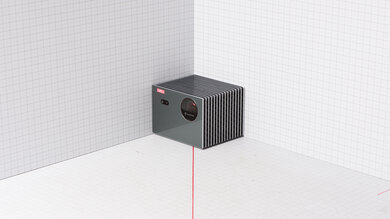
The Hisense PX4-PRO has poor portability. It's meant to sit in one spot as it's heavy, so it's difficult to move around. It also lacks features to quickly set it up with any screen, as there's no screen fit, optical zoom, or lens shift. Even its keystone adjustments don't always work as intended.
Heavy projector with minimal adjustments; no optical zoom or lens shift.
Keystone adjustment doesn't always work as intended.
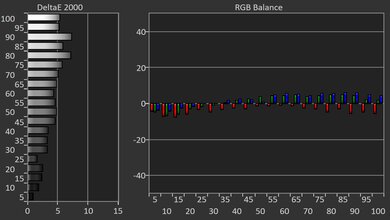
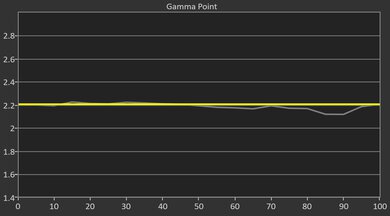
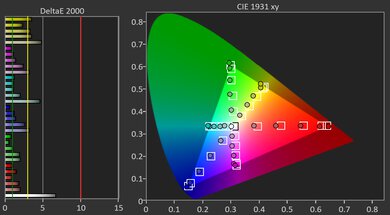
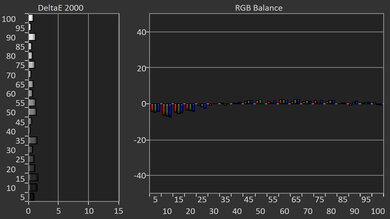
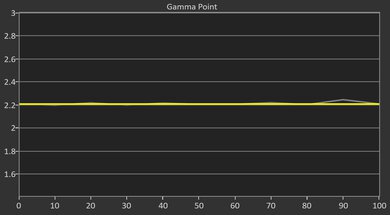
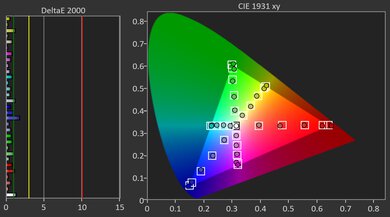
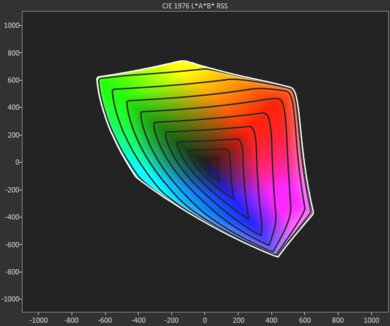
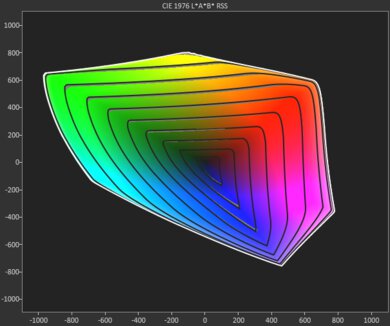
The Hisense PX4-PRO has decent colors. It displays a wide range of colors for a vivid viewing experience with any content. However, it's very inaccurate out of the box, with a blue tint. You need to calibrate it to fix that and get the best accuracy.
Superb color volume for vivid images.
Inaccurate out of the box; needs a full calibration.
The Hisense PX4-PRO has remarkable gaming responsiveness. Its biggest strength is its extremely low input lag, ensuring your inputs feel responsive. It also has minimal motion blur thanks to its DLP imaging technology. Plus, it supports native 4k @ 60Hz, downscaled 4k @ 120Hz, and 1080p @ 240Hz signals, offering versatility for different types of games.
DLP projector with minimal motion blur.
Extremely low input lag.
Supports 4k @ 60Hz and 1080p @ 240Hz natively.
Performance Usages
Changelog
-
Updated Aug 21, 2026:
Mentioned the newly reviewed XGIMI TITAN Noir in the Effective Contrast section.
-
Updated Aug 17, 2026:
We updated the Brightness and Effective Contrast sections of the review, since our previous results were with the IRIS level set to '2' instead of '1'. We also added some additional information about the 'Brightness Enhancer' setting.
- Updated Aug 13, 2026: Review published.
- Updated Aug 12, 2026: Early access published.
Check Price
Differences Between Sizes And Variants
We bought and tested the Hisense PX4-PRO. The results are only valid for this unit, which is newer than the Hisense PX3-PRO. The PX4-PRO is similar for the most part, as it's another UST projector with DLP imaging technology and an RGB triple-laser light source. However, there are differences in features, which you can see below.
| Model | Screen Sizes | Smart OS | Iris System | VRR | Speakers System | Inputs |
|---|---|---|---|---|---|---|
| PX4-PRO | 80-200" | VIDAA | Yes | Yes | Devialent |
2x HDMI 2.1 2x HDMI 2.0 (eARC) |
| PX3-PRO | 90-130" | Google TV | No | No | Harman Kardon | 2x HDMI 2.1 1x HDMI 2.0 (eARC) |
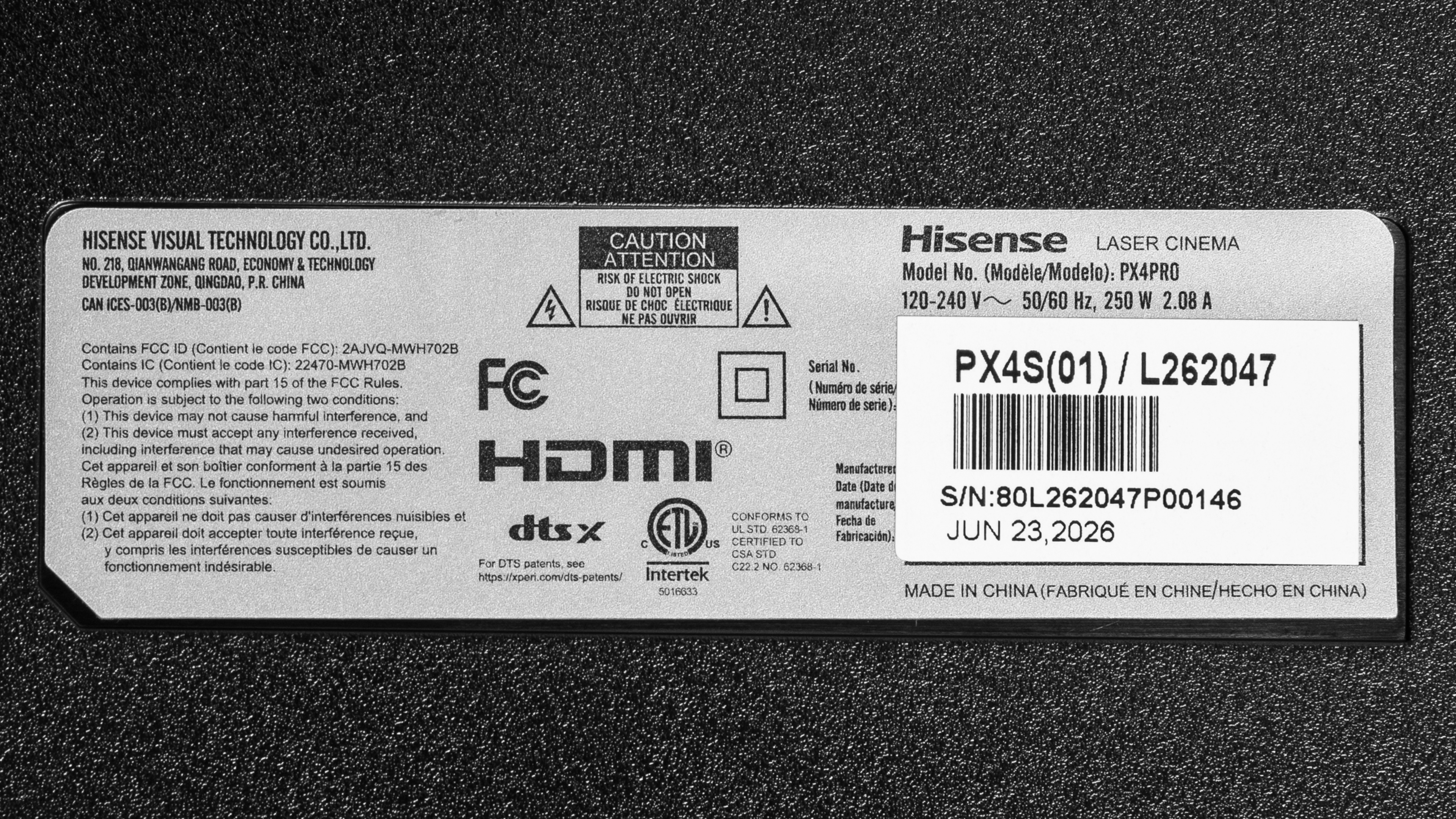
Our unit's label indicates it was manufactured in June 2026 in China.
Popular Projector Comparisons
The Hisense PX4-PRO is a high-end ultra-short-throw projector with DLP imaging technology and pixel-shift 4k. It's well-rounded with its high contrast for deep blacks in dark scenes, high brightness, and vivid colors that deliver a punchy viewing experience. It also includes useful gaming features, like refresh rates as high as 240Hz with a 1080p resolution, VRR support to reduce screen tearing, and HDMI 2.1 bandwidth to take advantage of the latest gaming consoles and PCs. Overall, it's an upgrade over the older Hisense PX3-PRO thanks to its lower input lag for gaming and improved contrast.
Its all-around performance and features put it in line with other high-end UST projectors, like the AWOL Vision Aetherion Pro. However, it's a step back from the higher-end AWOL Vision Aetherion Max, which gets brighter and has better contrast, particularly in bright scenes, so the Hisense doesn't deliver the best picture quality in the market. Keep in mind that it's expensive, but there are trade-offs as you move down price categories, as cheaper projectors, like the AWOL Vision LTV-3000 Pro, tend to have worse contrast and brightness.
Also see our recommendations for the best short-throw projectors, the best home theater projectors, and the best gaming projectors.
The Hisense PX4-PRO is a newer version of the Hisense PX3-PRO. The PX4-PRO upgrades in a few areas, like with its input lag, contrast, and RBE handling, but otherwise, they have very similar performance. There are a few differences in features, though, as the PX4-PRO supports VRR, which the PX3-PRO doesn't. You may prefer the built-in Google TV on the PX3-PRO over the VIDAA system of the PX4-PRO, though.
The AWOL Vision Aetherion Max and the Hisense PX4-PRO are both high-end UST projectors. They both use DLP imaging technology with a laser light source, but the AWOL is a bit more well-rounded overall. This is thanks to the AWOL projector's improved brightness, contrast, and color accuracy, so it delivers a more impactful viewing experience. You may also prefer the Google TV interface on the AWOL over the VIDAA system on the Hisense.
The Hisense PX4-PRO and the AWOL Vision Aetherion Pro are competing high-end UST projectors. They trade punches, with the Hisense having the advantage in brightness, but the AWOL having better contrast, especially in brighter scenes. The AWOL is a bit better at reducing RBE, but both projectors have it regardless. You may also prefer the Google TV interface on the AWOL over the VIDAA system on the Hisense.
The Hisense PX4-PRO and the AWOL Vision LTV-3000 Pro are both UST projectors that use DLP imaging technology. The Hisense has better overall picture quality with deeper blacks, higher brightness, and a wider range of colors. The Hisense is also an improvement for gaming as it supports higher refresh rates and has lower input lag for a more responsive feel.
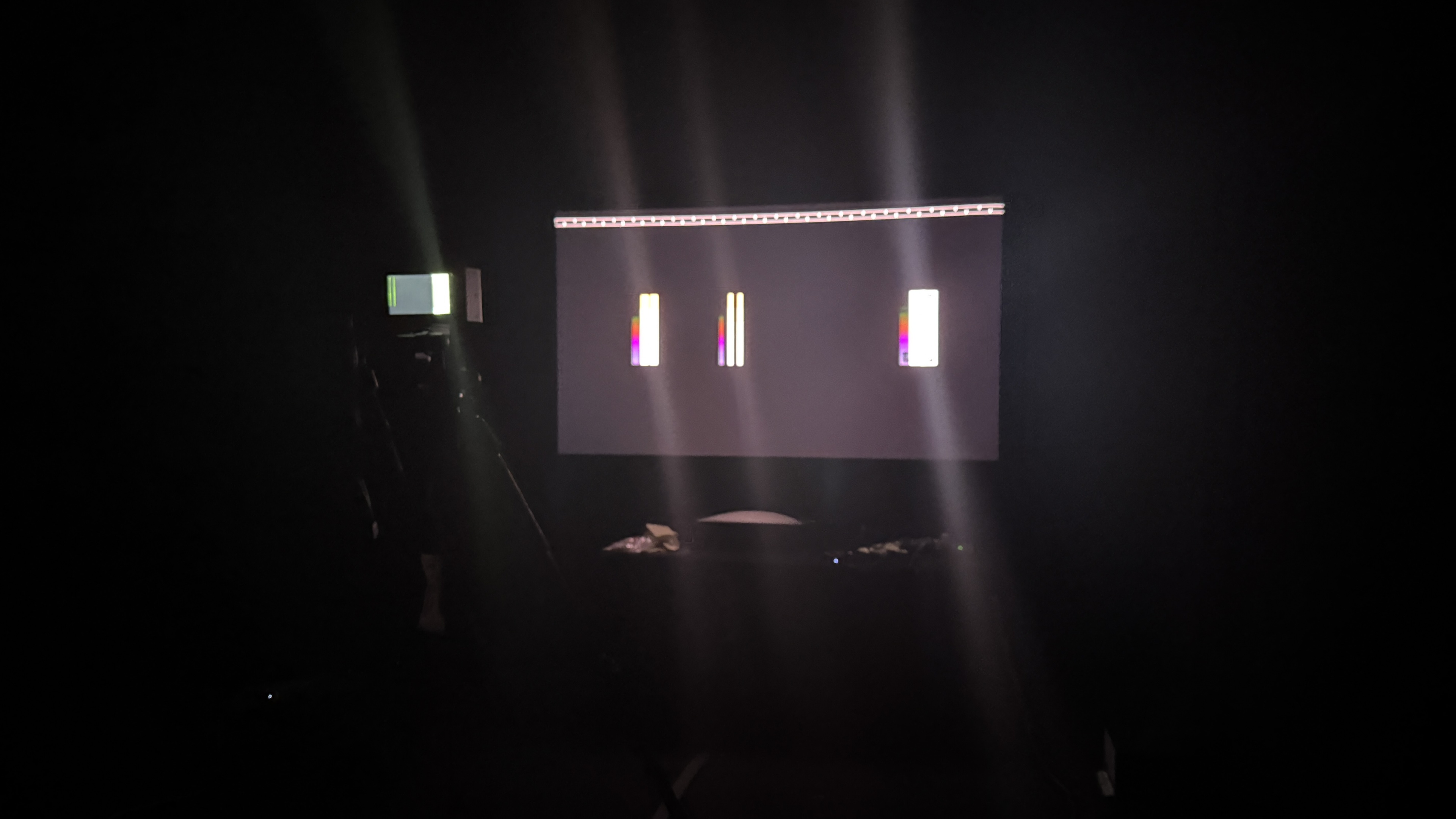
We've independently bought and tested over 100 projectors and published detailed results for each, so you can decide which one to buy. These have all been tested under the same standardized methodology, allowing you to compare them side by side. We still have all these projectors in our lab, so we can continually go back and compare them to ensure our reviews are still accurate. All our test methodologies are also public on our website, so you can validate the results yourself.
Throw Calculator
Global Controls
Test Results
for pictures & test results
for pictures & test results



for pictures & test results