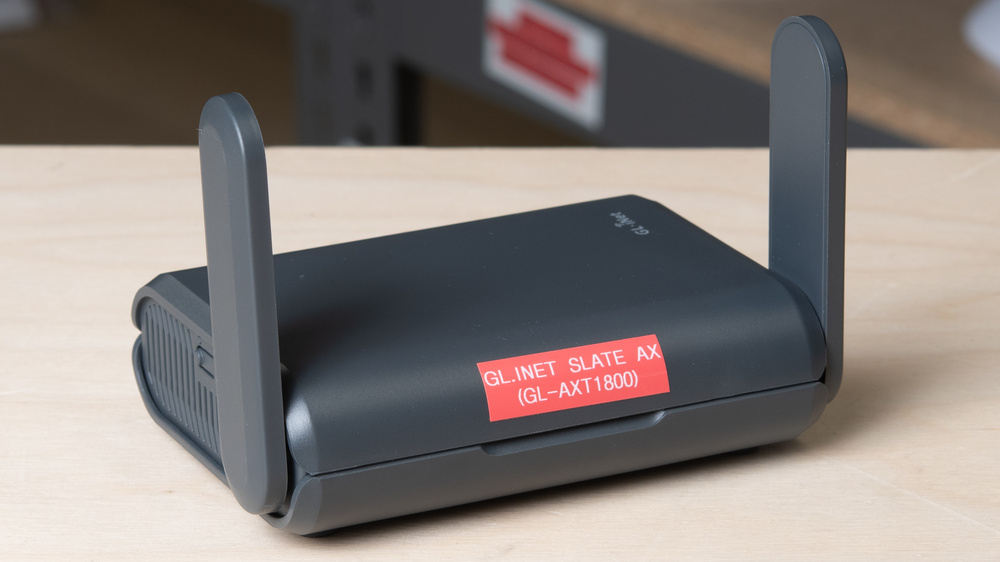
The GL.iNet Slate AX (GL-AXT1800) is a portable dual-band Wi-Fi 6 router with 2.4GHz and 5GHz bands. It sports two retractable antennas, three 1Gbps Ethernet ports (one WAN, two LAN), and both a microSD and USB 3.0 connection for file sharing, smartphone tethering, and media backup. Like other GL.iNet devices, it runs on a custom version of OpenWrt, a highly configurable open-source operating system. It includes an internal fan for heat dissipation, as well as a suite of network tools like Tailscale, ZeroTier, OpenVPN, and WireGuard pre-installed.
Note: We have removed the Wi-Fi coverage tests and are exploring better ways to convey results that will be more helpful to users.
Our Verdict
The GL.iNet Slate AX is a good choice for apartments or hotel rooms. As a travel router, its compact design and retractable antennas make it easy to stow in a bag or on a corner shelf. It delivers very good 5GHz speeds at close range, making it suitable for streaming 4k media or taking video calls nearby. Its range is adequate for small spaces, and you can use its USB 3.0 port and microSD slot to share files directly across your network. Three 1Gbps ports make the Slate well-equipped for gigabit connections, though it lacks a faster 2.5Gbps option. The router's highly configurable open-source firmware also comes bundled with pre-installed VPN tools for added security and travel utility.
Highly configurable software.
Reasonable range.
Very good top speeds.
Portable size with retractable antennas.
microSD slot supports up to 512GB of network storage.
No 2.5Gbps Ethernet ports.
Wi-Fi 6 doesn't take full advantage of newer Wi-Fi 6E or 7 devices.
First and foremost a travel router, the GL.iNet GL-AXT1800 is still a decent choice for multi-level homes. Its overall range is only okay, and it lacks native mesh support to expand coverage across multiple floors. However, it delivers very good speeds at close range, making it a solid option for high-bandwidth tasks like downloading and uploading large files while on the same floor. For wired connections, the router squeezes three 1Gbps LAN ports into its pocket-sized chassis (but no 2.5Gbps option), alongside a versatile USB 3.0 port and microSD slot for file sharing, tethering, and failover. It runs highly configurable OpenWrt firmware with pre-installed tools well-suited for network & security enthusiasts.
Highly configurable software.
Reasonable range.
Very good top speeds.
Portable size with retractable antennas.
microSD slot supports up to 512GB of network storage.
No 2.5Gbps Ethernet ports.
Wi-Fi 6 doesn't take full advantage of newer Wi-Fi 6E or 7 devices.
The GL.iNet Slate AX is a compact and versatile travel router that fits easily into a bag or pocket. It features foldable antennas and comes with international power adapters. You can route traffic from all your devices through a VPN, making it appear as though you're browsing from your home country while traveling. It also supports Tailscale for secure remote access to your home network, while USB tethering lets you connect through a cellular network when needed.
Portable size with retractable antennas.
Supports VPN, WISP, and cellular connectivity.
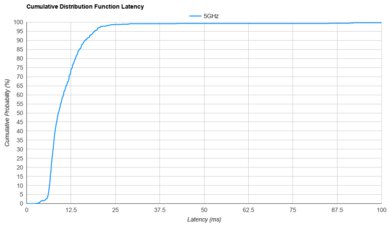
The GL.iNet Slate AX delivers very good wireless speeds suitable for internet plans up to ~900Gbps. It supports Dynamic Frequency Selection (DFS) in the US, UK, Europe, and Japan, providing extra channels for better speeds in congested environments.
Very good top speeds.
Wi-Fi 6 doesn't take full advantage of newer Wi-Fi 6E or 7 devices.
The GL.iNet GL-AXT1800's range is reasonable. While it doesn't have native mesh support, you can configure it as a repeater in its software.
Reasonable range.
The GL.iNet Slate AX offers exceptional configurability. Its intuitive web-based interface provides easy access to both essential features and advanced settings, making the router remarkably flexible and simple to customize.
Highly configurable software.
Performance Usages
Changelog
-
Updated Sep 15, 2026:
We've added links to the newly reviewed TP-Link Roam 6 TL-WR3002X and the TP-Link Roam 7 in the Interior Short Range section of the review.
- Updated Sep 11, 2026: We've updated this review to Test Bench 0.10! This update adds Portability and Configurability testing to evaluate how suitable routers are for travel and to show how configurable their settings are. Read the changelog for more info.
- Updated Jun 22, 2026: We've updated this review to Test Bench 0.9.1! This is a minor change that makes the router type easier to see at the top of each review. Read the changelog for more info.
-
Updated May 29, 2026:
We've added a link to the newly reviewed Davolink Minions Bob in the Interior Long Range section of the review.
Check Price
Differences Between Sizes And Variants
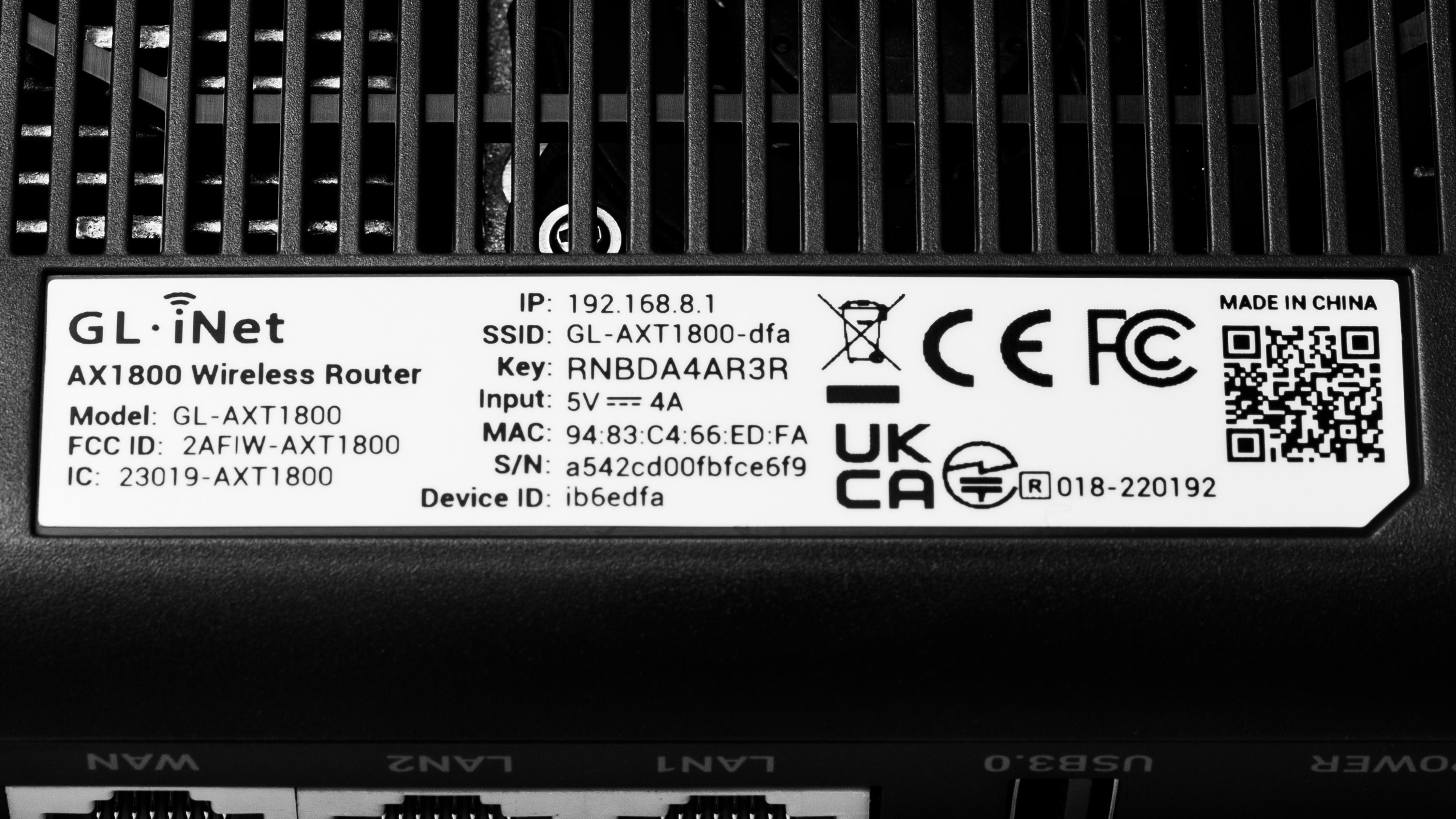
The GL.iNet Slate AX is GL.iNet's Wi-Fi 6 entry in the Slate lineup of compact travel routers. We bought and tested the GL-AXT1800, which is succeeded by the GL.iNet Slate 7 (GL-BE3600).
Popular Router Comparisons
The GL.iNet Slate AX (GL-AXT1800) is a travel-friendly, mid-range Wi-Fi 6 router with customizable OpenWrt firmware and a robust suite of networking tools out of the box. Its pocket-sized design and a convertible power adapter (interchangeable outlet converters are sold separately) make it more convenient to toss into a suitcase than a traditional home router, like the GL.iNet Flint 3 (GL-BE9300). To round out its travel utility, it sports three 1Gbps Ethernet ports and versatile network storage in the form of a USB 3.0 port and a microSD card slot. Its form factor is nearly identical to that of its cousin, the GL.iNet Beryl AX (GL-MT3000), which omits the Slate's third LAN port and microSD slot in favour of a faster 2.5Gbps WAN port, improved range, and two additional travel adaptors included in the box.
Despite its small size, the GL-AXT1800 still delivers very good speeds, though it lacks the Wi-Fi 7 features of its successor, the GL.iNet Slate 7 (GL-BE3600), and its range falls short of the wide-reaching coverage you'd get from a whole-home solution like the eero Pro 6E.
For more recommendations, see our picks for the best Wi-Fi routers, the best budget routers, and the best routers for Xfinity.
The GL.iNet Slate 7 (GL-BE3600) is the Wi-Fi 7 successor to the GL.iNet Slate AX (GL-AXT1800). The Slate 7 achieves better speeds and range than the Slate AX while maintaining the lineup's portable size. As a Wi-Fi 7 router, the Slate 7 also offers limited MLO implementation and faster 2.5Gbps Ethernet ports (compared to the AX's 1Gbps ports). However, the AX includes one extra LAN port and a microSD slot that the Slate 7 lacks.
The GL.iNet Beryl AX (GL-MT3000) and GL.iNet Slate AX (GL-AXT1800) are both dual-band Wi-Fi 6 travel routers that share a lightweight design and a highly-configurable OS. The Beryl offers significantly better range than the Slate, but their speed is nearly matched. The Beryl features a 2.5Gbps WAN port for faster internet connections, whereas the Slate's is limited to 1Gbps. However, the Slate AX is better-equipped with two LAN ports compared to the Beryl AX's one, as well as a microSD slot for more storage options.
The GL.iNet Slate AX (GL-AXT1800) and the ASUS RT-BE58 Go are dual-band travel routers with compact designs and foldable antennas. The ASUS is Wi-Fi 7 while the GL.iNet is Wi-Fi 6. Both are highly configurable, but the GL.iNet is slightly more customizable thanks to its open-source firmware. The ASUS has one 1Gbps and one 2.5Gbps Ethernet ports, while the GL.iNet has three 1Gbps ports. Performance-wise, the ASUS has slightly better close-range speeds, but the GL.iNet has significantly longer range.
The GL.iNet Slate AX (GL-AXT1800) and the TP-Link Archer AX20 are both dual-band Wi-Fi 6 routers, but they serve very different purposes. The TP-Link is a traditional standalone router designed for home networking, offering better overall range, mesh support and four 1Gbps LAN ports. Conversely, the GL.iNet is a highly compact travel router with DFS support and slightly higher speeds, but fewer ports for physical connections. While it lacks the range and mesh capabilities of the TP-Link, the GL.iNet sports highly configurable firmware and greater versatility with a programmable button and multi-purpose microSD card slot.
Test Results
for pictures & test results
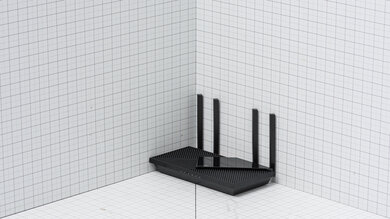
for pictures & test results
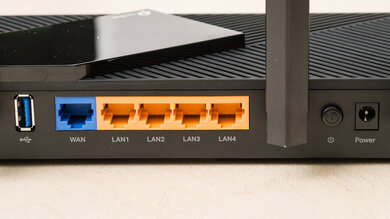
The GL-AXT1800 has a physical switch on its side called the Toggle Button. You can customize the Toggle Button's behavior to create shortcuts for common tasks.
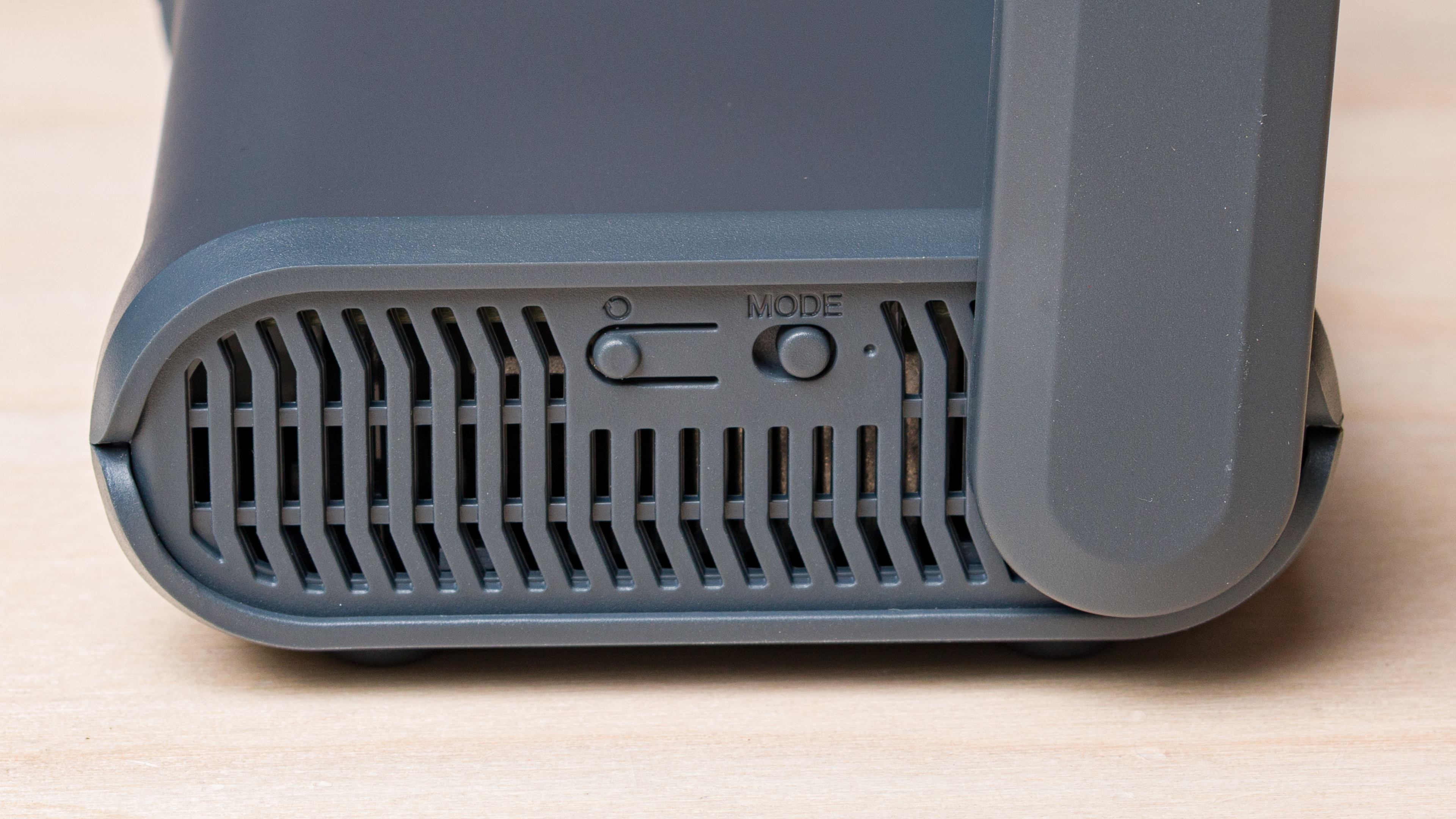
If you're looking for a router with a faster 2.5Gbps WAN port, check out the NETGEAR Nighthawk RS90. If you're looking for more Ethernet ports, check out the ASUS RT-BE82U.
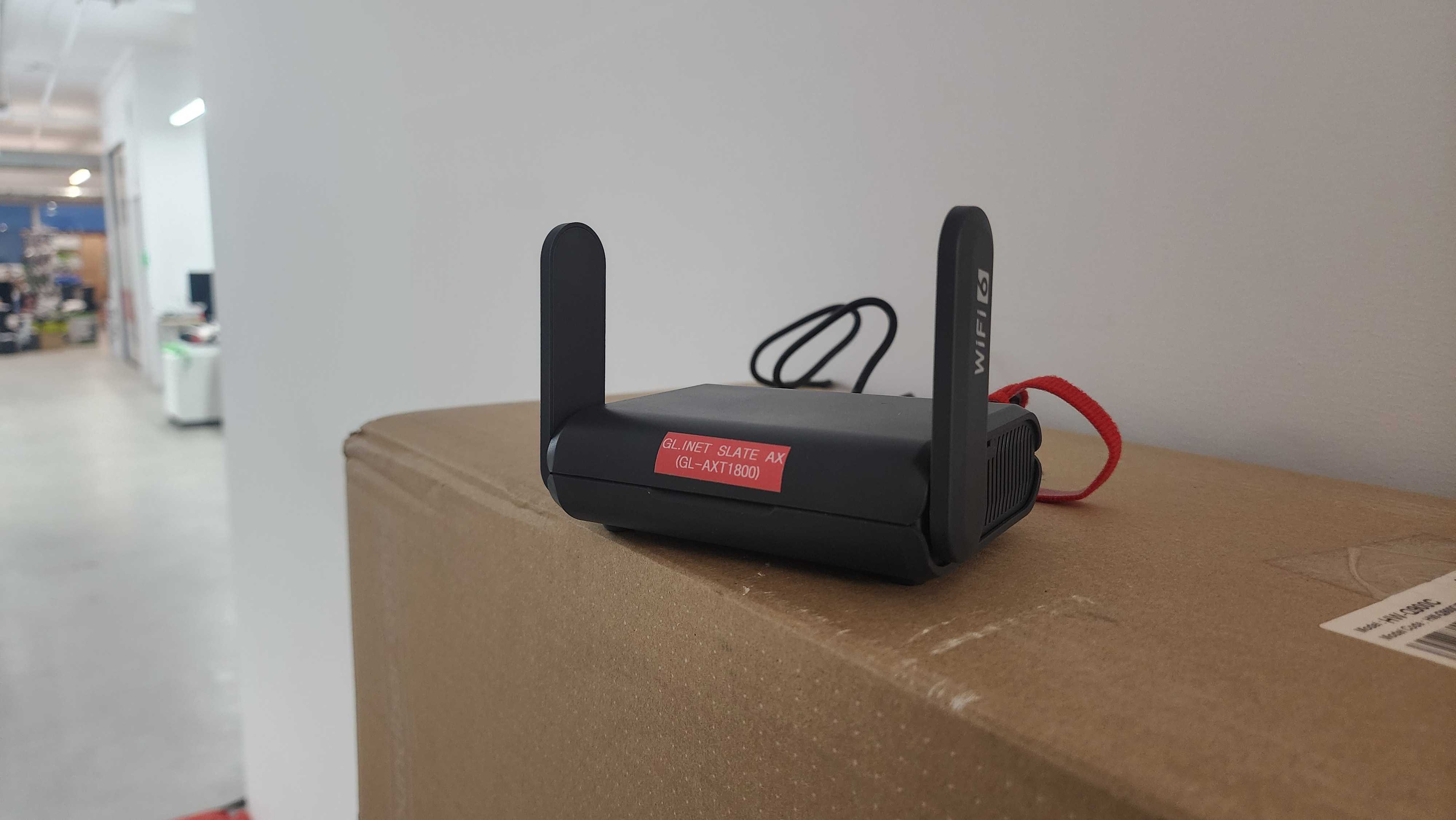
The GL-AXT1800's USB-C port is only for power and doesn't support data transfer.
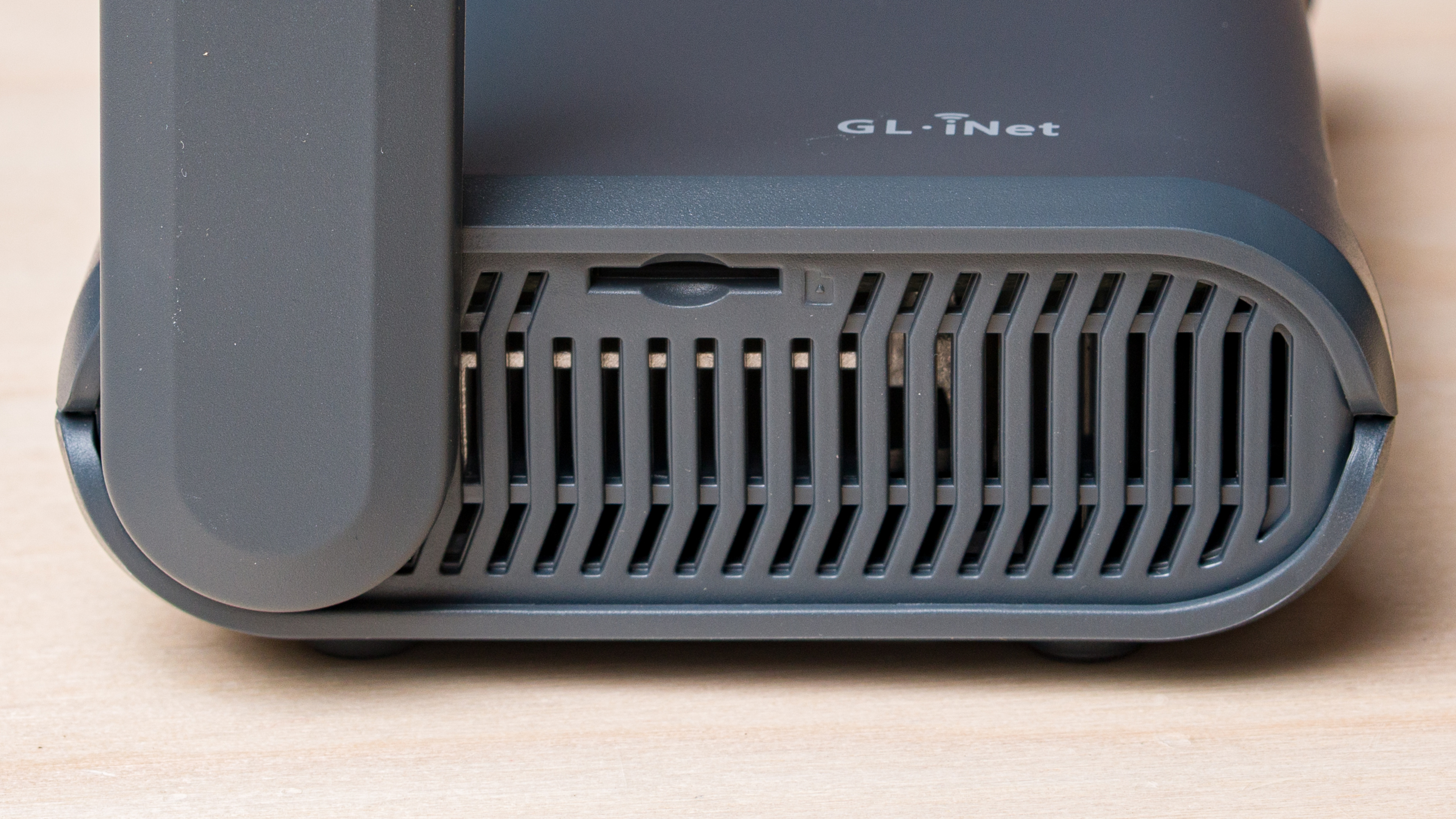
See a photo of the Slate AX's microSD card slot.
for pictures & test results
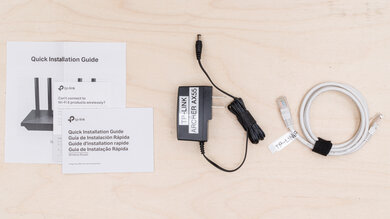
- Ethernet cable
- Type-C power adapter
- User documentation
If you're looking for a similar travel router with additional outlet adapters in the box, check out the newer GL.iNet Slate 7 (GL-BE3600).
for pictures & test results
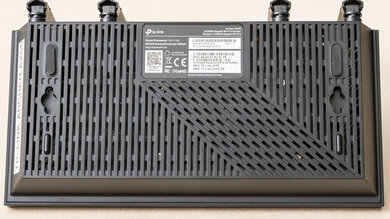
Check out the ASUS RT-BE58 Go if you're looking for a travel router with a pair of screw head slots for wall mounting.
While you can configure this router as a Wi-Fi repeater, it doesn't have native mesh capability.
for pictures & test results
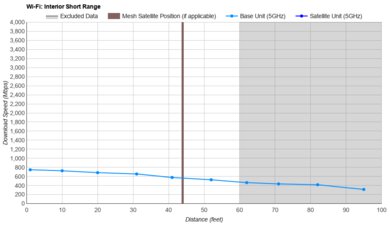
Check out the TP-Link Roam 6 TL-WR3002X or the TP-Link Roam 7 if you're looking for travel routers with faster close-range speeds.
for pictures & test results
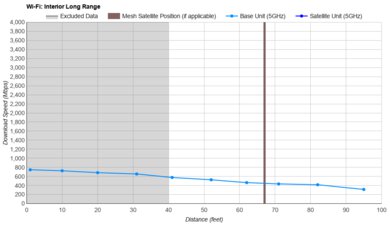
If you're looking for a Wi-Fi 6 router with better long-range performance, check out the Davolink Minions Bob.
for pictures & test results