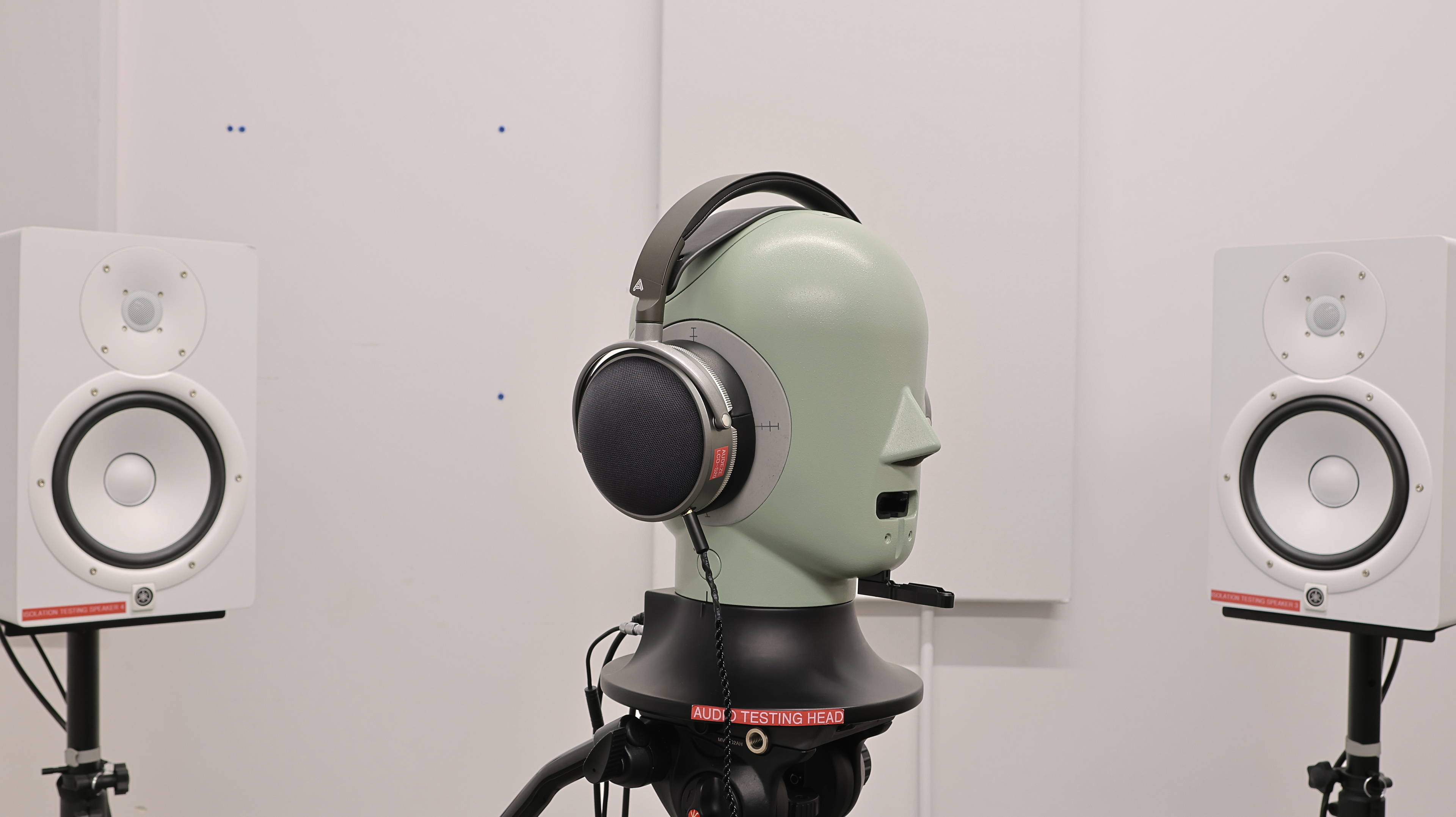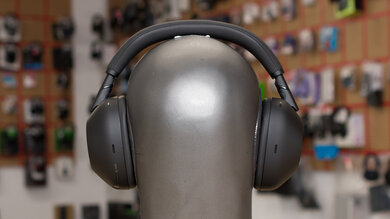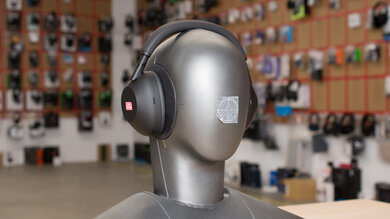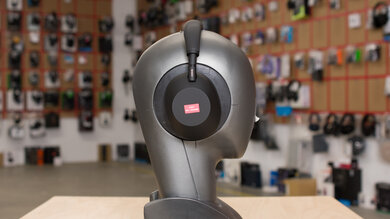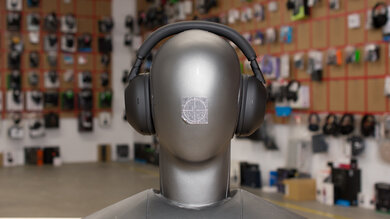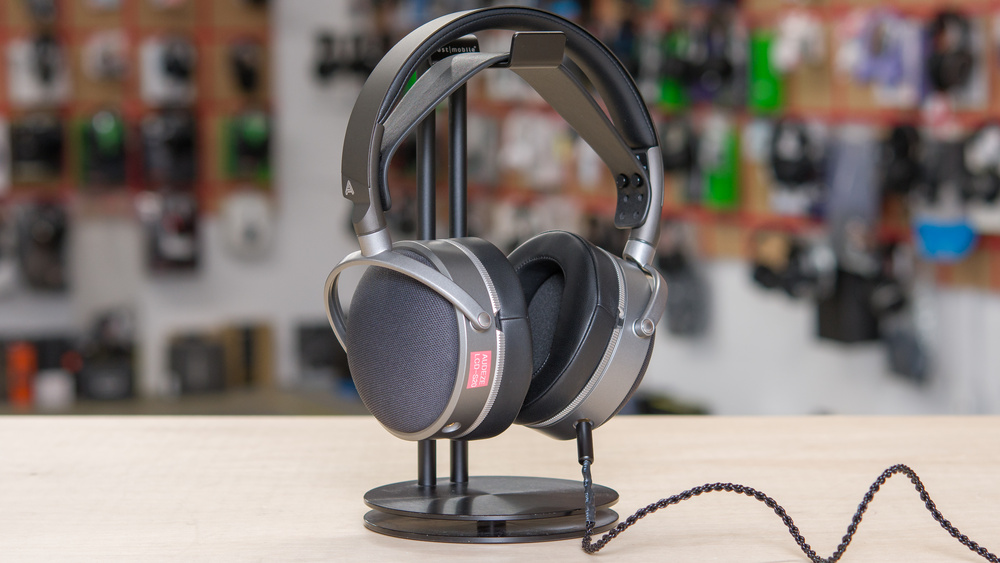
The Audeze LCD-S20 are closed-back planar magnetic-equipped headphones meant to lend your mixes an extra boost to the low-end content's playback, thanks to their trademarked Symmetric Linear Acoustic Modulator, AKA 'SLAM' design inherited from the unobtainium-priced Audeze CRBN headphones. Landing at a more approachable price (relatively speaking), the LCD-S20 promise comfort and low distortion without costing a few months of rent.
Our Verdict
The Audeze LCD-S20 are inadequate for sports and fitness use. They're large and heavy planar magnetic headphones, so they're not at all meant for workouts. More evidence of this is that they're wired with a long cable that can snag on gym equipment or trip you, and they're not very stable, so they can fall off with dynamic movements. On the positive side, the gel-filled earpads are cooling, even if the leather covering isn't particularly well-suited to handling sweat.
Comfortable and gel-filled earpads.
Bulky and heavy.
No microphone or in-line controls.
The Audeze LCD-S20 are mediocre for travel. Since these are wired-only headphones, you can plug them into any device with a headphone jack and not concern yourself with battery life. However, the cable is cumbersome and long, and you likely need the mini jack adapter. They're also bulky and large headphones with passive isolation-only, so you'll hear all the low rumbles of a bus engine. That said, they feel comfortable to wear for long sessions, thanks to the thick gel-filled pads, and their warm sound profile with a flat mid-range won't tire your ears during a long flight either.
Comfortable and gel-filled earpads.
Very well built.
Excellent L/R matching.
Bulky and heavy.
Passive isolation only.
No microphone or in-line controls.
The Audeze LCD-S20 are poor for office work. While they feel comfortable and their amply cushioned earpads provide a degree of isolation from your workplace, in the absence of active noise cancellation, you'll still hear clacking keystrokes and HVAC systems. These are wired-only without a microphone, so you'll need a separate mic for online meetings. Their frequency response lacks brightness, but the mids and bass are balanced.
Comfortable and gel-filled earpads.
Very well built.
Bulky and heavy.
Passive isolation only.
No microphone or in-line controls.
The Audeze LCD-S20 are wired-only headphones and can't be used wirelessly.
The Audeze LCD-S20 are alright for wired gaming. If you don't need a microphone, they're very well-built and comfortable to wear for long gaming sessions because of the gel-filled pads. Their sound profile is warm with a balanced mid-range and a smooth bass, but the treble is rather dark, which can make voice articulation less clear, especially when teammates have all sorts of mic recording quality. With consoles, the adapter and cable might be a little distracting, but otherwise, these are straightforward and well-matched drivers.
Comfortable and gel-filled earpads.
Very well built.
Excellent L/R matching.
Passive isolation only.
No microphone or in-line controls.
The Audeze LCD-S20 are decent for audio reproduction accuracy. They're very well-built planar magnetic cans with excellent stereo mismatch performance, low harmonic distortion, and a smooth, warm sound signature. The bass and mids comply with our target exceedingly well, but the top-end lacks detail and clarity compared to our treble target curve, though this can give the impression of a bassier tuning. With that said, the group delay negatively impacts the low frequencies' heft and thump. The closed-backed over-ear design interacts with your outer ear, but doesn't mimic the effect of an angled reference monitor, which isn't unusual for this type of headphone.
The Audeze LCD-S20 are middling for noise isolation. These headphones only block the environmental surroundings passively. As a result, they isolate you from the high-pitched and shrill noises best, and slightly muffle high-mids like speech, but these aren't a substitute for active noise cancelling headphones.
The Audeze LCD-S20 don't have a built-in microphone.
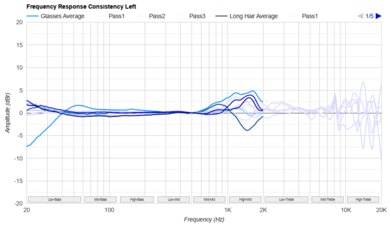
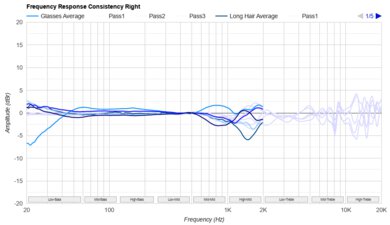
The Audeze LCD-S20 are disappointing when it comes to frequency response consistency. People with long hair or glasses experience a considerably weaker bass response than folks with small, average, and large-sized heads. That said, the consistency is good between wears on the same person, delivering a reliable sound.
Performance Usages
Changelog
-
Updated Oct 01, 2025:
The Style section's 'Type' category was corrected to state 'Over-ear.'
-
Updated Aug 28, 2025:
We've updated the Sound Profile box with a link to a downloadable folder of EQ settings that will help you match these headphones' frequency response to different target curves available in our Graph Tool.
-
Updated Aug 27, 2025:
The Dan Clark Audio AEON 2 Noire are mentioned in the Treble Profile: Target Compliance box.
- Updated Aug 22, 2025: Review published.
Check Price
Differences Between Sizes And Variants
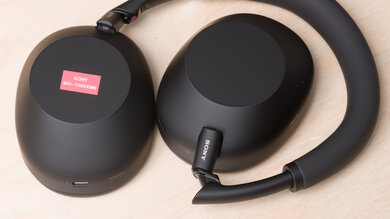
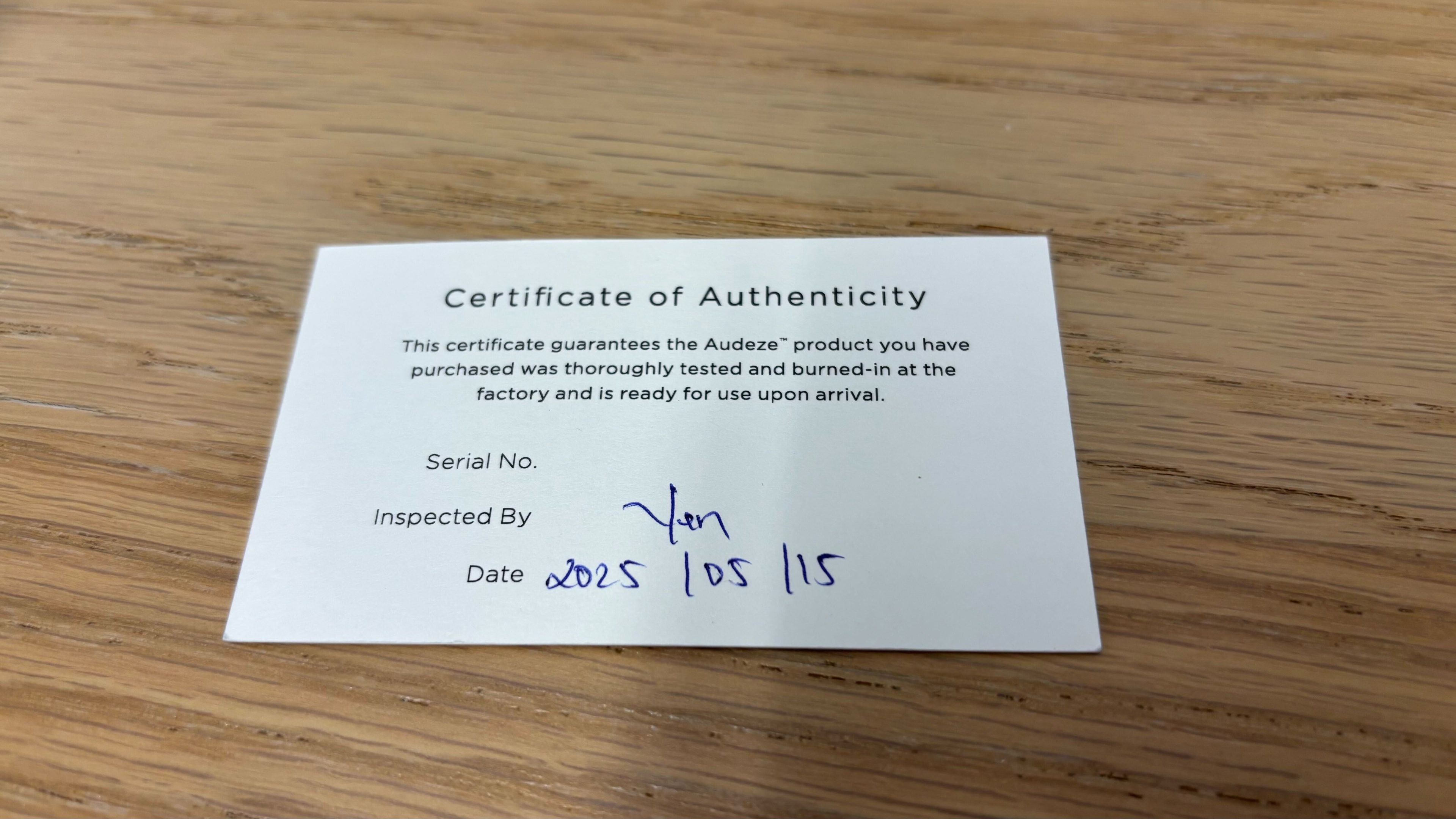
The Audeze LCD-S20 only come in 'Grey' and you can see our unit's certificate of authenticity. If you encounter additional colorways, please let us know in the comments, and we'll update the review.
Popular Headphones Comparisons
The Audeze LCD-S20 use planar magnetic drivers, which the brand is known for, but unlike most of their models, such as the Audeze MM-100, these are closed-backed, so they won't leak your audio, and they isolate you more from your environment. The LCD-S20 share this passive isolating attribute with the gaming-oriented Audeze Maxwell Wireless, but each have completely different frequency responses. While they look similar, apart from the fabric on the LCD-S20's ear caps, the Maxwell Wireless include a microphone and have the option of wireless or wired connections. Although marketed as a bassier alternative, and relative to other Audeze cans we've tested, that's true, the LCD-S20 aren't quite as rumbly as other closed-backs like the FIIO FT1. That's not necessarily a negative; to be clear, it's a matter of personal preference. Still, the LCD-S20 have a more consistent over-ear fit than the FIIO, leading to a more predictable sound. Plus, the LCD-S20 boast a better build, free of user complaints regarding the hinges, as has previously been the case for the FIIO.
For more ideas, check out the best closed-back headphones, the best audiophile headphones, and the best headphones for music.
The Audeze Maxwell Wireless is a more versatile gaming headset than the Audeze LCD-S20, but which you'll prefer depends on how you want to use either pair. The Maxwell cans deliver wireless or wired audio, a boom mic, and controls, while the LCD-S20 are purely analog, wired headphones without those extra bells and whistles. Both are planar magnetic-equipped, but the main differences in these similar-looking headphones come down to tuning. The LCD-S20 boast a warmer sound profile with better L/R matching, but the Maxwell's frequency response consistency far outdoes the LCD-S20. For most people, it depends on how you plan to use your headphones.
When choosing between the Sennheiser HD 490 PRO and Audeze LCD-S20, the central question is whether you need noise isolation, given that the Sennheiser are open-backs and provide none. Outside of that criteria, the Sennheiser sound more balanced with a brighter top-end, and a bit less low-end rumble. They're more consistent sounding between wears and a bit smoother sounding, and weigh less. That said, the Audeze's darker and warmer sound profile with passive isolation are appealing for a different tuning that's still smooth. The L/R are well-matched, and they feel comfortable to wear. That said, they lack an extra set of earpads and a case you get with the Sennheiser.
Between the FIIO FT1 and Audeze LCD-S20, there are a few pros and cons for each. The FIIO have a weightier low-end with a brighter treble. They're comfortable with more granular size adjustments. That said, the Audeze's profile is a bit more mid-forward, with a darker treble, which some prefer. The build quality is superior as well. That said, both headphones suffer from inconsistent frequency responses on different people, especially those with long hair. The Audeze are a touch more consistent, but their group delay hinders how the bass sounds.
The Audeze MM-100 are high-end open-backs, while the Audeze LCD-S20 aren't cheap, but they're not as expensive, closed-backs. The MM-100 offer a flatter sound profile that subtly rolls off the lows like traditional professional studio headphones, but also under-emphasizes the highs. They're much more consistent between wears with impressive group delay. On the other hand, the LCD-S20 have a bit more bass in their frequency response while still having a warm treble, the group delay is worse, though. Both are very well-built headphones, and it truly depends on what you need them for: the LCD-S20 have the added versatility of closed-backs blocking noise and not leaking much either, but the MM-100's open-back design interacts with your ears more similarly to an angled reference speaker for monitoring.

We've upgraded our Headphones Test Bench to 2.0! This update brings several key changes to our tests and usages, making it easier than ever to interpret our sound results based on your personal preferences. You'll also find a brand-new interactive graph tool featuring multiple targets (including our own!) for you to explore and compare.
For a full breakdown, check out our changelog, which includes detailed commentary from our test designer explaining the rationale behind our update.
We'd also love to hear your thoughts: your feedback helps us keep improving, so join us in the comments!
Test Results

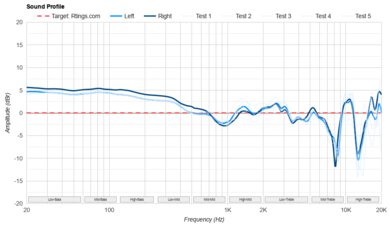
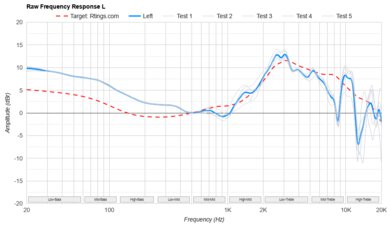
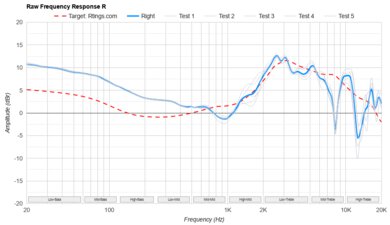
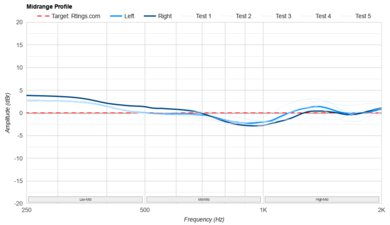
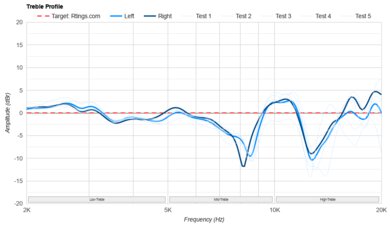
The Audeze LCD-S20 have a warm sound signature with under-emphasized treble. Even if it's not quite as thumpy-sounding as our curve, relative to other target curves, the bass is more boosted than the SoundGuys.com Studio Curve's flat bass. Meanwhile, the treble response is still warmer than the SoundGuys.com Headphones Preference Curve, but it otherwise mimics this curve more than our target. The strongly de-emphasized treble will give the impression of a more bass and mid-forward tuning at the cost of clarity and detail, which some people prefer.
It's worth mentioning that these headphones sound considerably different when worn by different people. The brand's SLAM technology, meant to inject more punch, may be set back by too few fit adjustments; more on this in Frequency Response Consistency. But, overall, most people will hear more bass than the raw frequency response measured on our rig suggests.
Download our EQ presets to explore matching the headphones' tuning to our target curve and the others featured in the Graph Tool.
Their frequency response consistency is disappointing. Like the Audeze Maxwell Wireless, these headphones have too few size adjustments available, which can compromise over-ear seals, affecting the bass and mid-range. That said, most people will perceive more bass than our measurements taken on the B&K 5128 testing rig, which seems more in line with the brand's claims for punchy low-end. On the other hand, if you wear glasses or have long hair, the bass will sound quite a bit weaker and anemic compared to what most other people hear.
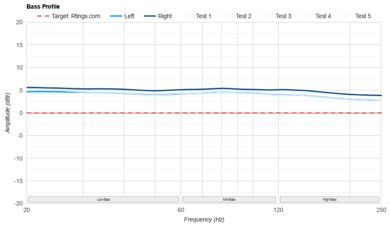
Their bass compliance with our target is superb. The curve closely mirrors ours to provide basslines and kick drums rumble, fullness, and punch. However, the bass range is sensitive to how these fit you, so you could experience a heftier or weaker low-end emphasis depending on how these headphones fit.
The Audeze LCD-S20 have outstanding mid-range target compiance. For tracks like Changes by Black Sabbath, the mix of Ozzy Osbourne's vocals with keys and strings comes through as balanced.
Their treble compliance is middling. These headphones de-emphasize treble, resulting in a warm sound that lacks detail. The dulled clarity on upper harmonics, such as sibilants like 'S' and 'T,' can weaken comprehensibility when listening to busy mixes. The tuning sounds closed-off without airiness. Still, it's a somewhat smooth treble relative to itself. This warm treble also mitigates fatigue from high-frequency transients over prolonged sessions. It's a stark contrast from closed-backs with sharp and potentially fatiguing treble range presentations, like the Dan Clark Audio AEON 2 Noire.
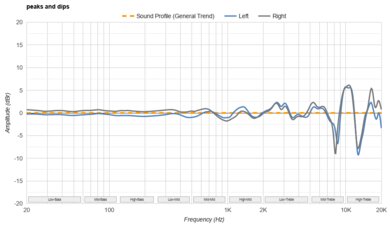
Their peaks and dips performance is good. By and large, the bass and mids retain a smooth tuning without notable frequencies jumping out or missing from the profile. There are small boosts and dips in the low- and mid-treble that can sound alternately a bit harsh, piercing, or dull on harmonics of vocals and cymbals. The high-treble hosts the largest deviations, which can hollow out narrow bands of harmonics or add a relatively boosted airiness. However, since most people's hearing loses sensitivity to those high frequencies with age, they're not necessarily too impactful.
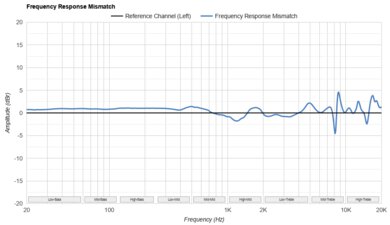
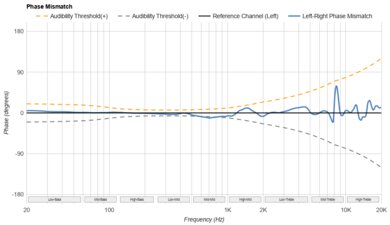
These headphones have excellent stereo mismatch performance. Their L/R weighted amplitude is extremely well matched and virtually the same. The frequency response is decently matched between each side, and although the treble exhibits small differences that tend to favor the right driver a bit, it wasn't noticeable. Similarly, the bass range's phase mismatch, which is also present in the L/R frequency response mismatch, wasn't audible during testing. These measurements only apply to our unit and can vary from results obtained from a different set of the same model.
Their group delay is poor. The delay we measured below 60Hz impacts the low-bass by reducing its volume by about 0.5 dB, which can affect the phase on some bassy frequencies. As a result, select deep bass frequencies can sound a little undefined. That said, the mids and treble perform much better, yielding tight melodies and transparent transients
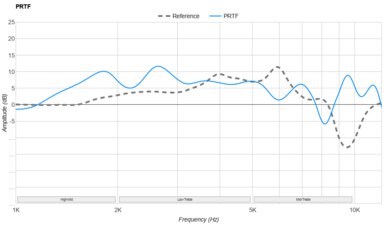
These closed-back over-ears exhibit disappointing PRTF performance. Each driver interacts with your outer ear, but not in a way that mimics an angled reference speaker. As a result, your audio tends not to have a particularly immersive quality. This is an expected result of the closed-back design.
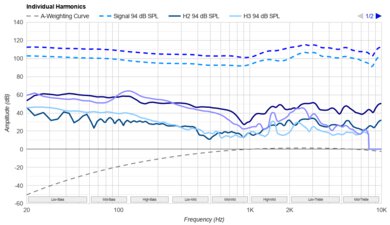
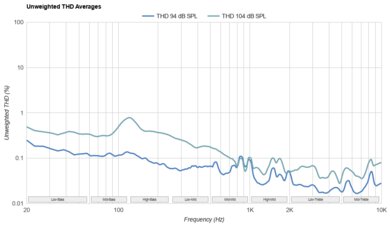
The Audeze LCD-S20 have fantastic harmonic distortion performance. At 94 and 104 dB/SPL, each frequency band tested demonstrates remarkably low distortion, resulting in a clean signal without additional unwanted artifacts.
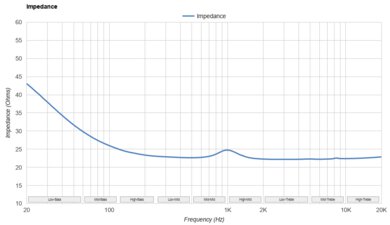
These headphones have low impedance and don't require additional power to drive them with most devices, like laptops and audio interfaces.
These are the settings used to test these headphones. Our results are only valid when used in this configuration.
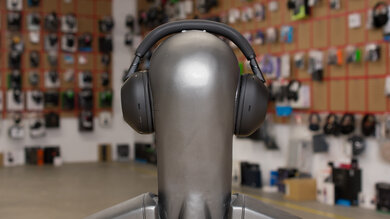
The Audeze LCD-S20 come in classy semi-satin 'Grey' with contrasting darker blueish knit grey caps for the closed-backs. The over-ears' design with articulating and rotating ear cups resembles the silhouette of the brand's successful gaming headset, the Audeze Maxwell Wireless, just without a boom mic. Like the Audeze MM-100, they include a detachable audio cable that can fit in either ear cup, so you can divert the cable so it's not in the way.
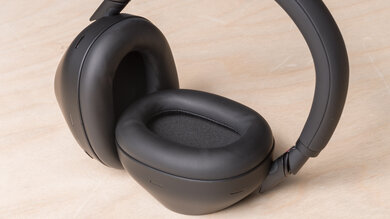
The headphones are comfortable. Their clamping force is greater than the Audeze Maxwell Wireless', but the gel-filled earpads have a nice give that forms around your ears and helps keep them feeling cool. Still, it's worth mentioning the clamping force because they're also heavy compared to dynamic driver cans like the Beyerdynamic DT 1770 PRO. These earpads are covered in leather, so they're not exactly vegan-friendly, if that's a concern. Even if leather doesn't bother you, you can swap out the earpads more easily than most headphones because they use magnets to hold them in place, rather than glue or more fiddly designs.
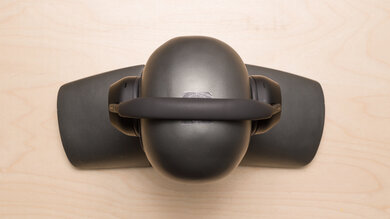
Their leather headband distributes the weight well, too. However, the headband only adjusts to three sizes on each side, like the Audeze Maxwell Wireless, which means if you're in between sizes, it doesn't distribute the weight evenly. The lack of granularity in sizing can contribute to fit issues like an uneven over-ear seal.
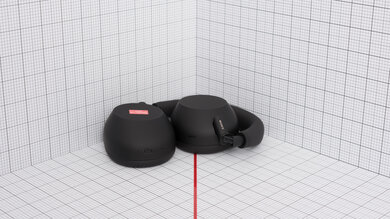
These headphones are large with chunky earpads. They don't fold down smaller, either, but since they're intended for use in one location, most people are willing to make the trade-off. On the upside, the cable is detachable, so it's unlikely to snag in your backpack and cause strain to the wiring when you pack these up.
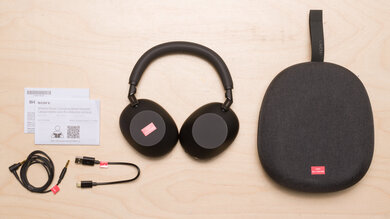
Unlike higher-end headphones by the brand like the Audeze MM-500, which come with a veritable hardshell briefcase and a fabric pouch, these don't ship with a case at all.
The Audeze LCD-S20's build quality is impressive. They're made mainly from magnesium, aluminium, steel, with sturdy plastic and leather. The caps of the closed-backs are made of a tightly woven fabric, though it's a little thin. Otherwise, the hinges feel strong and the yokes offer a good range of motion, too.
The earpads are gel-filled, covered in leather, and held in place with magnets, making them easy to change. The headband is also good quality leather, but it offers limited sizing adjustments, and if you share your headphones, constant size adjustments could stretch the leather. A nice detail is that you can connect the braided audio cable to either ear cup.
The chunky over-ears aren't very stable. Their heft means that they can shift around, particularly if you look down and up quickly, like nodding along to a song. If they don't fit you well, they could slowly slide forward over time while you look down at piano keys. Still, they're not exactly meant to go with you to the gym, so some movement is normal.
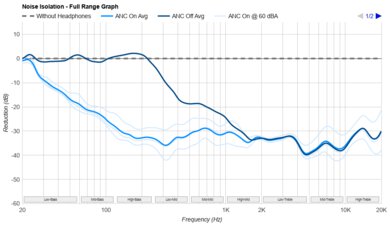
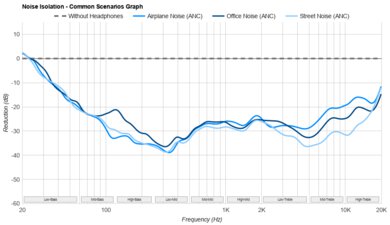
The Audeze LCD-S20 have middling full-range noise isolation performance. These closed-backs use the headphones' passive noise blocking properties to muffle, mainly, high-pitched and mid-frequencies. For not having any active noise cancellation, these are still a bit more capable of isolating you compared to the Beyerdynamic DT 770 PRO or Sony MDR-7506. Trebly sounds are effectively blocked, and voices are somewhat isolated from reaching your ears (depending on the pitch). However, passive isolation's weak point is with bass frequencies, and these go unattenuated by the headphones.
In common scenarios, the Audeze LCD-S20 exhibit poor noise isolation. These results are pretty typical for closed-back headphones that only use passive isolation. High frequencies like squealing subway trains and bus brakes are dampened, and voices are a little muffled, but deep, rumbling engines and construction zones will still make it to your ears.
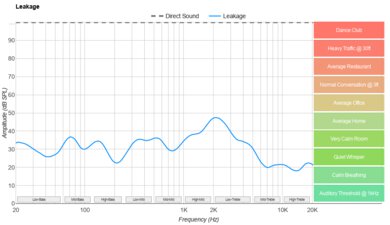
These headphones have very good leakage performance. Their closed-backed enclosures ensure that your audio stays private for the most part, unless others are seated close to you, and your volume is set high. What does leak sounds mid-rangey, so voices and melodies can be picked out by others, but it's not obviously audible in the majority of spaces.
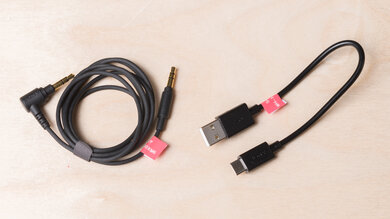
These headphones come with a long detachable cable that you can plug into either earcup. They terminate in a 6.35 mm (1/4") TRS jack, but if you need a smaller size, they ship with a 3.5 mm (1/8") adapter, too. Given that these are passive headphones, their latency is virtually zero.
Since most computers use 3.5 mm (1/8") headphone output jacks, you'll need to use the included adapter with the Audeze LCD-S20, but they can certainly receive audio from your PC. They don't have a mic, though, so you'll need a separate outboard one.
Since these headphones don't have a built-in microphone, they can only receive audio. You'll need to use the included adapter to plug them into your PlayStation's controller.
With the included 6.35 mm (1/4") to 3.5 mm (1/8") adapter, you can send audio from the Xbox controller to your headphones. However, they don't have a microphone, so you won't be able to speak with other players without an outboard mic.