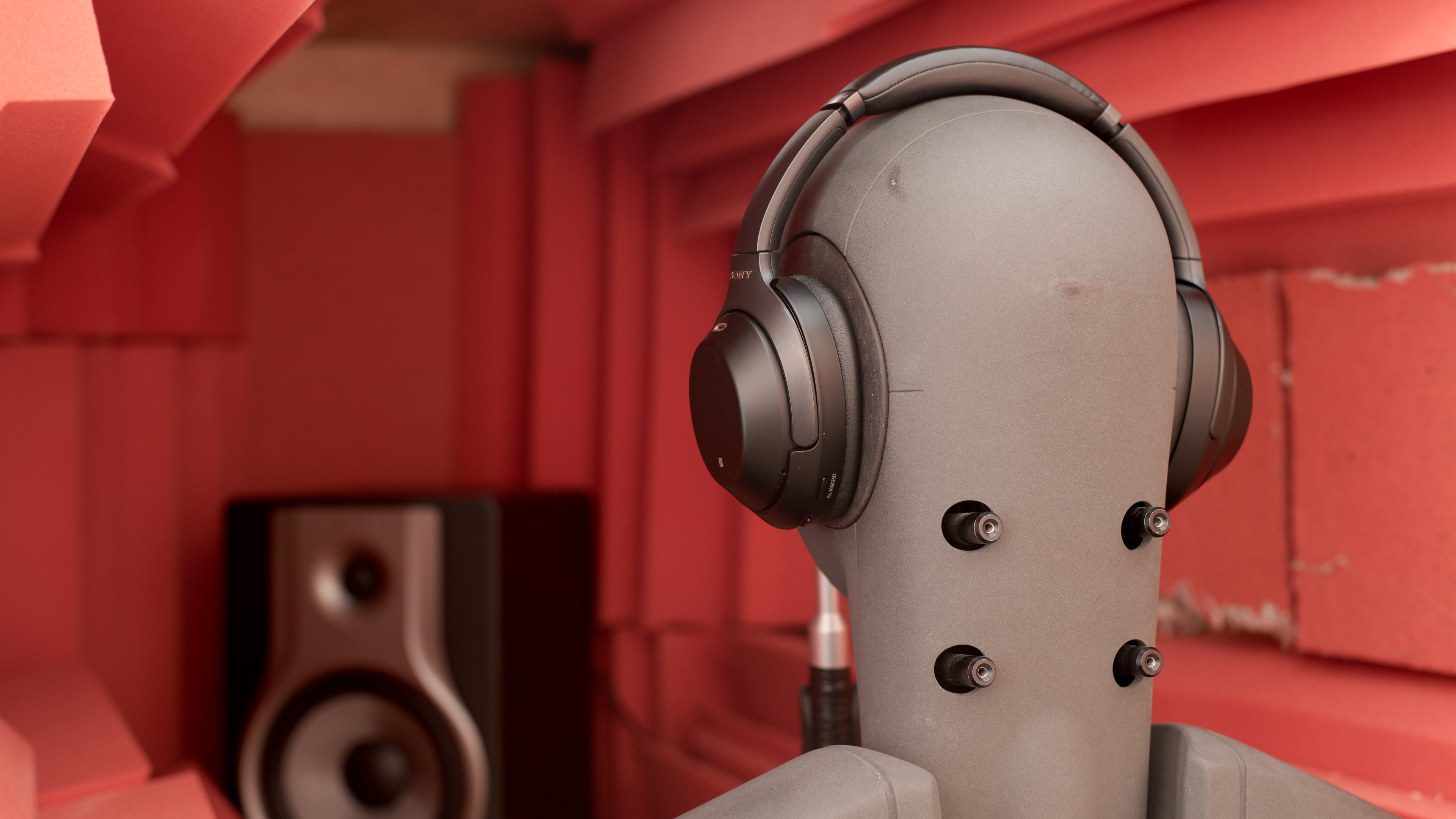
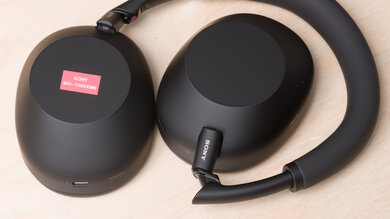
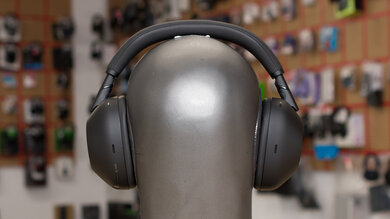
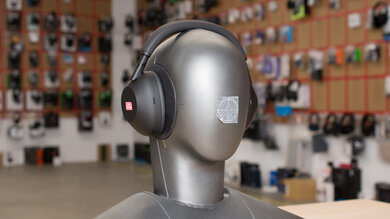
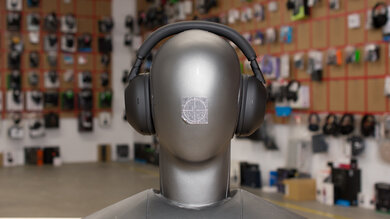
The Sony WH-1000XM3 are versatile, feature-packed Bluetooth-enabled over-ear headphones. They have an excellent battery life, a great wireless range, and a remarkably effective ANC feature, along with a comfortable, sturdy design. However, their default sound can be a bit too bass-heavy for some, though that can be adjusted via an EQ in their companion app.
Our Verdict
The Sony WH-1000XM3 are satisfactory for neutral listening. While their high-bass range is slightly overemphasized, yielding a slightly boomy quality to some tracks, their exceptionally well-balanced mid-range and good treble accuracy results in clear, present, and detailed vocals and lead instruments. Their sound profile can be adjusted in their companion app, too.
- Great active features and app support with graphic EQ.
- Closed-off soundstage.
The Sony WH-1000XM3 are great for commuting. Their ANC feature does a superb job of blocking out ambient noise, especially if you have a bit of music playing in the background. They also have easy-to-use controls and a long 27-hour battery life that should be more than enough for most long flights and commutes.
- Comfortable fit.
- Exceptional noise cancellation.
- Good battery life.
- Slightly bulky design.
The Sony WH-1000XM3 are decent for sports and fitness. They have a comfortable fit and an easy-to-use control scheme. Unfortunately, like most closed-back over-ears, they aren't especially breathable, and they're a bit bulky which makes them slightly unstable when running and working out.
- Comfortable fit.
- Slightly bulky design.
The Sony WH-1000XM3 are good for office use. Their ANC system should filter out the chatter of coworkers and the clattering of keyboards. They're also comfortable and don't leak that much audio, so you shouldn't disturb people working nearby. Unfortunately, you can't connect to more than one device simultaneously.
- Comfortable fit.
- Exceptional noise cancellation.
- Good battery life.
- No multi-device pairing capability.
The Sony WH-1000XM3 aren't suitable for wireless gaming. They can't connect wirelessly with Xbox One or PS4 consoles and have high wireless latency when connected to Bluetooth-enabled PCs.
The Sony WH-1000XM3 are good for wired gaming, as long as you don't plan on using their integrated mic since you can only receive audio on a wired connection. They're comfortable for long gaming sessions and have a decently well-balanced sound profile that delivers more than sufficient thump and rumble.
- Comfortable fit.
- Deliver audio consistently.
- No microphone usage on a wired connection.
The Sony WH-1000XM3 are decent for phone calls. Their integrated microphone delivers mediocre recording quality, so your voice may sound thin and muffled. The microphone can struggle to isolate speech from loud background noise. However, they block out a lot of background noise with their ANC system enabled, so you should be able to follow what's being said, even in loud environments.
- Exceptional noise cancellation.
- Mediocre microphone recording quality.
Changelog
- Updated Nov 02, 2023: The following test groups have been updated following TB 1.6: Wired Connection, and Bluetooth Connection. There have also been text changes made throughout the review, including to the usages and product comparisons to match these results.
- Updated Nov 02, 2023: We've converted this review to Test Bench 1.6 , which updates how we measure latency. We've updated and renamed the following test groups: Wired Connection, Bluetooth Connection, and Wireless Connection (Dongle). We've also added new codec latency measurements and provided an audio sample of recorded latency.
- Updated Feb 07, 2022: Added Sony's 360 Reality Audio feature to Virtual Soundstage.
- Updated Jul 27, 2021: We've retested 'Android Latency'.
Check Price
Differences Between Sizes And Variants
The Sony WH-1000XM3 come in two variants: 'Black' and 'Silver'. We tested the 'Black' variant, but expect the other color variant to perform similarly.
If someone comes across a differently-equipped model, let us know in the discussions so that we can update our review.
Popular Headphones Comparisons
The Sony WH-1000XM3 are versatile wireless over-ears. They're well-built and offer superb noise cancellation performance. They're also comfortable and deliver a long-lasting battery life, while their Sony | Headphones Connect companion app grants you access to a broad range of customization features. If you're looking for alternatives, see our recommendations for the best closed-back headphones, the best noise cancelling headphones, and the best travel headphones.
The Sony WH-1000XM4 Wireless have more features than the Sony WH-1000XM3 Wireless. The WH-1000XM4 support multi-device pairing, have a longer continuous battery life, and offer some additional talk-through control options. However, the WH-1000XM3 offer more consistent audio delivery.
The Sony WH-1000XM5 Wireless are a later generation of the Sony WH-1000XM3 Wireless. While some aspects have stayed the same, such as their battery life and companion app support, the XM3 and XM5 have different strengths. While both headphones offer a fantastic overall isolation performance, the XM3 have the edge, particularly regarding the low rumble of bus engines. They're also more comfortable and support aptX and aptX HD codecs for high audio quality via Bluetooth. In comparison, the XM5 support multi-device pairing, and they have an auto-off timer to help conserve battery life when you aren't using them.
The Sony WH-1000XM3 are a slightly better noise cancelling headset than the Sennheiser PXC 550 Wireless. The Sonys have a more premium, high-end build quality and offer better noise isolation for traveling and commuting in noisy conditions. The Sonys are also a bit more comfortable than the Sennheisers. On the other hand, the PXC 550 Wireless have more connection options, making them a great choice if you have a lot of devices that you typically use your headphones with. The PXC 550 Wireless also give you a bit more control over their active features, and they sound a bit better with their default sound profile although both headphones can be EQed fairly easily thanks to their respective apps.
The over-ear Sony WH-1000XM3 Wireless are better for most uses than the in-ear Sony WF-1000XM3 Truly Wireless. The WH-1000XM3 are more comfortable, have a better battery life, and do a much better job of blocking out external noise like bus engines. Their mid-range accuracy is also better, so vocals and lead instruments sound clear and detailed without being cluttered. On the other hand, the WF-1000XM3's in-ear design makes them more portable and suitable for sports.
Test Results
The Sony WH-1000XM3 are conservative-looking headphones. The headband has a two-tone finish with pleather coating over the pads. It doesn't look quite as premium as the Sony WH-1000XM2 Wireless' metal frame, but they're sleeker. The ear cups are fairly similar to the previous models but have contrasting accents around the vents and the Sony logo.
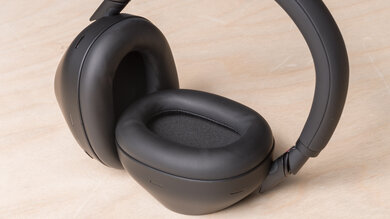
These headphones are very comfortable. They have soft padding, a headband design that fits the contours of your head, and a relatively lightweight design, resulting in less fatigue during long listening sessions. That said, the Bose QuietComfort 35 II/QC35 II Wireless 2018 are still a bit more comfortable overall.
The Sony WH-1000XM3 have a good control scheme that's fairly easy to use. Swiping up and down controls the volume level while swiping left and right rewinds and skips tracks, respectively. Double-tapping pauses or resumes audio or answers and ends incoming calls. If you cover the touch-sensitive pad, you can also temporarily mute your music if you need to pay attention to your surroundings. Finally, the ambient button on the left cup can activate Aware Mode, though you can reconfigure it to trigger Google Assistant via the app instead. While feedback is less intrusive compared to previous models, the auditory cues aren't as loud, especially at high volumes.
Some users have indicated that the touch-sensitive controls don't work properly in colder climates. While we do plan to implement a cold and heat test in a future update, we can confirm that this headset's controls don't work as expected in cold conditions.
The Sony WH-1000XM3, like most closed-back over-ear headphones, aren't very breathable. They can create a good seal around your ears and reduce airflow. If you use these headphones while running or working out, you may sweat more than usual, but for more casual use, they should be fine.
Update 09/09/2020: We have remeasured the dimensions of these headphones, which has slightly lowered their portability score.
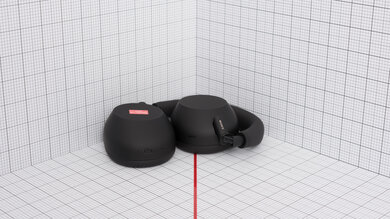
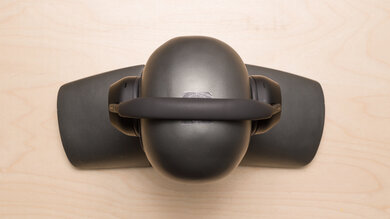
The Sony WH-1000XM3 are only passably portable. While their ear cups fold inwards to reduce their footprint, they're still quite bulky.
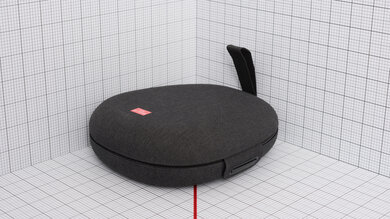
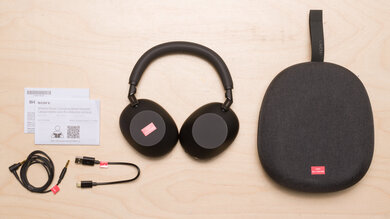
The Sony WH-1000XM3 come with a great hard case that should protect the headphones from scratches, minor falls, and water damage. It has a fabric finish instead of the pleather-like coating of other Sony headphones, which some may prefer. It's not the most portable case, but it'll easily fit in larger bags.
The Sony WH1000XM3 have a great build quality. They look and feel premium and should easily withstand a couple of accidental drops. The new headband design is sturdy and flexible, and the ear cups are dense. Unfortunately, the headband is coated with pleather-like padding that won't fare as well over time as the metal frame of the Sony WH-1000XM2 Wireless. They also have a similar yoke and hinge design, which may crack over time. We'll continue to monitor the discussion threads for any major defects with the headband that may warrant a score change. However, they still feel more premium and durable than the Bose QuietComfort 35 II/QC35 II Wireless 2018.
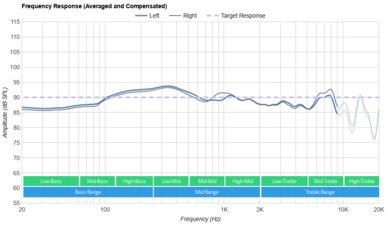
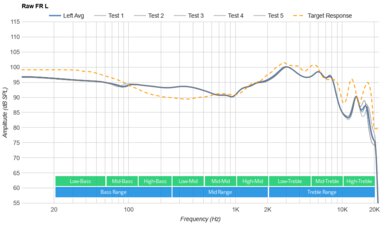
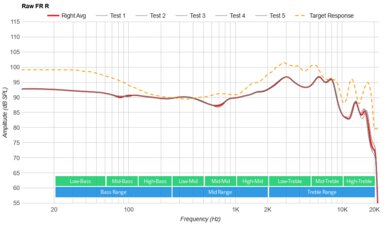
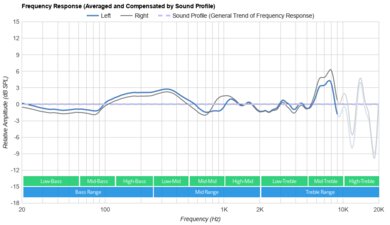
The Sony WH-1000XM3's default sound profile is bass-heavy. Out-of-the-box, these headphones are well-suited for listening to genres like dubstep and electronica, with plenty of extra thump and rumble, well-balanced mids, and a slightly under-emphasized treble response. However, if this sound profile isn't right for you, the Sony | Headphones Connect app offers several audio presets and a graphic EQ to fine-tune your listening experience.
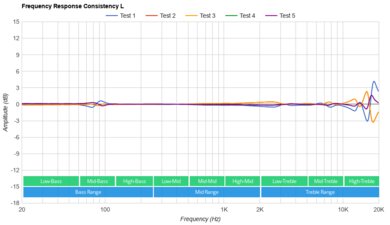
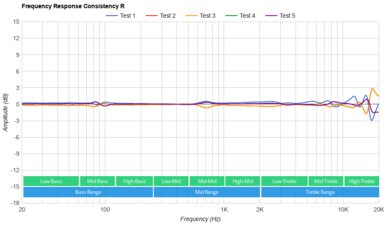
The frequency response consistency is great. In the bass range, they perform extremely consistently. In the treble range, they're also quite consistent, but to a lesser degree. This results in consistent bass and treble reproduction across multiple users and re-seats.
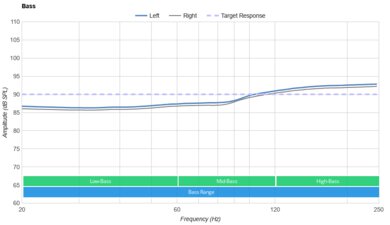
The Sony WH-1000XM3 have decent bass accuracy. While the entire range is overemphasized, the response is generally even and flat. Bass should be deep, full-bodied, and punchy, which is good if you like listening to genres like EDM. However, the rise in the high-bass range does generate a somewhat boomy quality in some mixes.
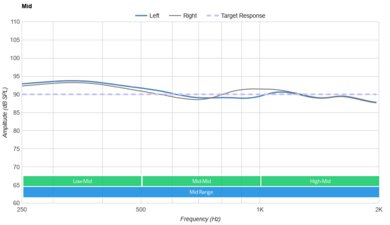
The mid accuracy of the Sony WH-1000XM3 is superb. The entire range is well-balanced and even, resulting in clear, present, and detailed vocals and lead instrumentals free of harshness.
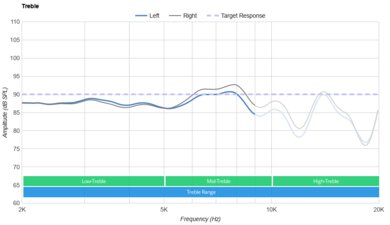
The Sony WH-1000XM3 have good treble accuracy. The response throughout the range is even and well-balanced, but there's a broad dip between low treble and mid-treble. This results in a slight loss of clarity in both vocals and lead instruments.
The Sony WH-1000XM3's peaks and dips performance is good. The peak in the high bass gives extra thump to some tracks but can also generate a bit of boominess. The peak in the mid-treble can make some instruments and vocals sound piercing and painful. Otherwise, the frequency range doesn't exhibit too many sudden spikes or drops.
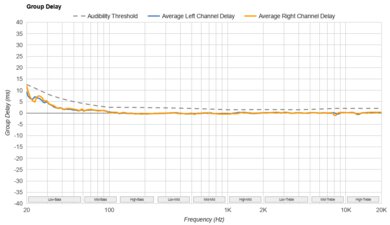
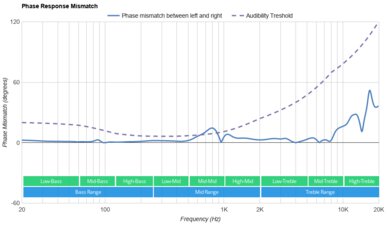
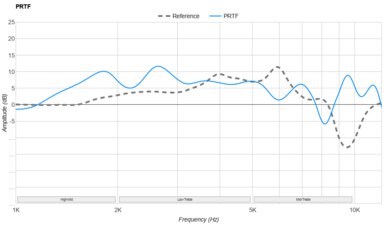
The Sony WH-1000XM3 have a good stereo imaging performance. Their weighted group delay falls below the audibility threshold, resulting in tight bass and transparent treble reproduction. The L/R drivers are also well-matched in amplitude, frequency, and phase response, so objects like voices and sound effects should be accurately placed in the stereo image. However, these results are only valid for our unit, and yours may not perform similarly.
The Sony WH-1000XM3's passive soundstage, like that of most other noise cancelling closed-back headphones, is poor. They create a spacious but ultimately unnatural soundstage, so sound may be perceived as coming from the inside of your head rather than speakers placed around you.
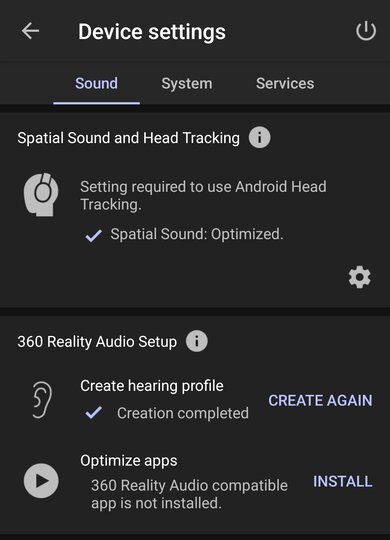
Update 02/07/2022: These headphones are compatible with Sony's 360 Reality Audio feature, which you can control in the companion app. In addition to Virtualphones Technology (VPT) and Sound Position Control, 360 Reality Audio can offer better sound quality. However, you need to subscribe to services that support this feature and use compatible files. We have updated our review to reflect these changes.
The Sony WH-1000XM3 offers Virtual Surround, an acoustic effect unique to Sony products. With this technology, you can control sound positioning in a 360-degree environment. These headphones also can turn multi-channel content into 3D binaural audio. These headphones also have a 360 Reality Audio feature available through the Sony Headphones Connect app that produces a better spatial quality of sound. To use this, you need to subscribe to a streaming service like Tidal or Nugs.net compatible with this technology.
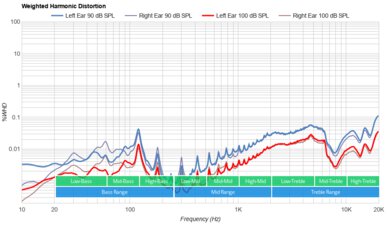
The weighted harmonic distortion performance is satisfactory. While there's some distortion in the low and mid-treble at both moderate and high volumes, the overall level of distortion remains fairly low, resulting in mostly clean and pure audio reproduction.
These are the settings used to test the Sony WH-1000XM3. Our results are only valid for these test settings.
Note 09/09/2020: We have updated the ANC setting from "Maximum" to "On".
Update: 03/11/2019: Some users have been experiencing a reduction in noise cancelling performance after the 4.1.1 update. We re-tested our Sony WH-1000XM3, but from our measurements, it doesn't seem like there's a noticeable difference in noise cancelling efficiency. You can check out the results for yourself here. However, we may have gotten lucky with our unit since the consensus online seems pretty mixed on this issue. You can participate in the discussion thread below if you're also experiencing this issue.
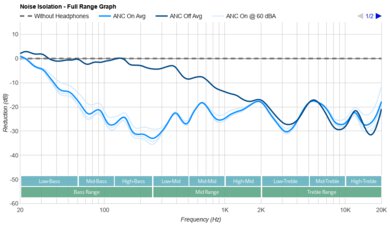
The Sony WH-1000MX3's noise isolation performance is incredible. Their ANC system is outstanding, allowing them to filter out ambient noise across the frequency spectrum, ranging from the low rumble of bus and plane engines to the high-pitched hum of an AC unit.
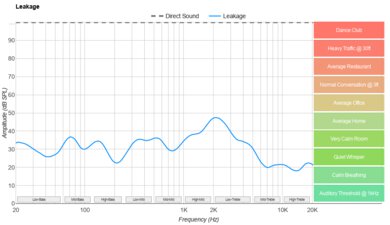
The Sony WH-1000XM3 have decent audio leakage performance. A significant portion of it is spread over the mid-range, resulting in a fuller-sounding leakage compared to that of in-ears and earbuds. The overall level of the leakage is relatively low, so you shouldn't disturb people nearby while listening to music.
The Sony WH-1000XM3 have an integrated microphone.
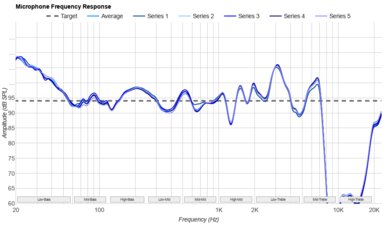
The integrated microphone has a mediocre recording quality. Like most Bluetooth headphones, recorded speech may sound a little thin, noticeably muffled, and lacking in detail.
For Bluetooth headphones with a better performing microphone, take a look at the Jabra Elite 85h Wireless.
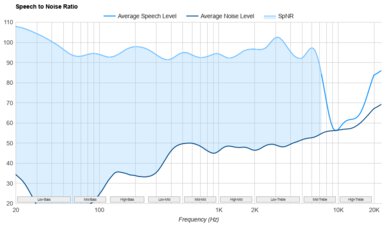
The microphone has okay noise handling capability. People on the other end of the line should be able to understand you if you're calling from moderately loud environments, like a busy street. However, they may still struggle to fully separate speech from ambient noise in really noisy environments.
Update: 08/02/2019: The auto-off timer only triggers after they're disconnected from their source rather than when no content is playing. We don't consider this to be a feature that prolongs the battery life as you could put the headphones down on your desk and they could still be connected to your PC or phone. The review and text have been updated.
The Sony WH-1000XM3 have good battery performance. They have about 27 hours of continuous playtime with ANC enabled. Unfortunately, they don't have a true smart auto-off timer and they need to be disconnected from a source to automatically turn off. If you're looking for a pair of Sony over-ears and value long battery life above all else, consider the Sony WH-H910N/h.ear on 3 Wireless, which provide roughly 40 hours of continuous playback.
The Sony | Headphones Connect app is excellent. It's easy-to-use and features a broad range of options, including a graphic equalizer with presets, an in-app media player, and options for room effects and sound position. You can also check live data on their adaptive noise cancelling performance. You can also calibrate the ANC directly in the app instead of holding the NC/ambient button.
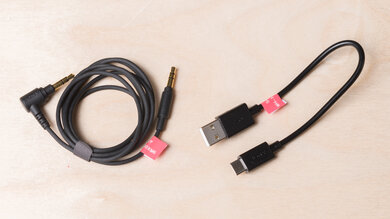
These headphones come with an audio cable with no in-line remote or USB adapter. They only support audio via an analog connection as they use a TRS cable.
These headphones have decent Bluetooth connectivity. They support Google Fast Pair, which makes it a breeze to connect them to Android devices. Unfortunately, unlike the Bose QuietComfort 35 II/QC35 II Wireless 2018, they don't support multi-device pairing. They also have high latency whether you're using the default SBC codec, aptX, or Sony's own LDAC high-res audio codec, which makes them less than ideal for watching movies and gaming. This won't be an issue if you only plan on playing audio. Note that some apps and devices compensate for audio latency differently, so your own experience can vary depending on what apps you use.
The Sony WH-1000XM3 can only connect wirelessly via Bluetooth.
You can use the Sony WH-1000XM4 wirelessly with Bluetooth-enabled PCs. You can also use them via an analog connection, but they can only receive audio, so you can't use their mic.
The Sony WH-1000XM3 can only receive audio when you wire their 1/8" TRS cable into your PS4 or PS5 controller's AUX jack.
The Sony WH-1000XM3 aren't Bluetooth compatible with the Xbox One. While you can still receive audio by plugging their audio cable into an Xbox One controller, you won't be able to use their integrated microphone.
The Sony WH-1000XM3 don't have a base or dock. If you want a versatile headset with a base that you can also use wired, check out the SteelSeries Arctis 7 2019 Edition Wireless.