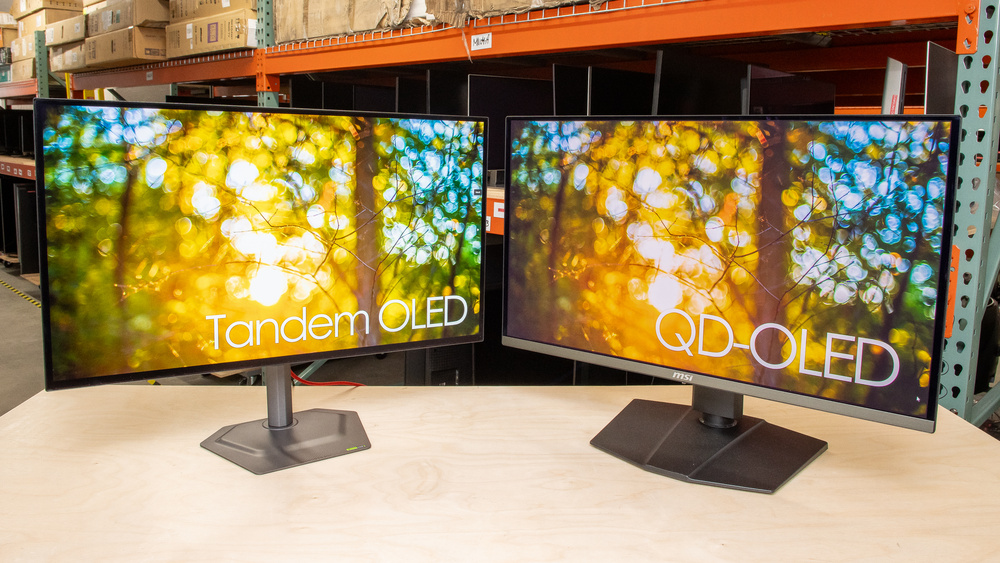
As OLED monitors become more mainstream and accessible, new panel technologies are emerging. The latest is LG Display's new Tandem OLED panel, which is also known as RGB Tandem OLED or Tandem WOLED. It's a fourth-generation WOLED panel designed to deliver higher brightness levels and improved color purity compared to older models. It's supposed to bridge the gap with QD-OLEDs, which offer the most vivid colors for any OLED panel type.
While Tandem OLEDs and QD-OLEDs share many similarities, including perfect blacks in dark rooms, no haloing, and sharp motion, there are some key differences between them. Generally speaking, Tandem OLEDs are close to QD-OLEDs in terms of color saturation, but don't match them just yet. That said, the newer panel type gets brighter and is able to maintain better black levels in bright rooms, making them the better choice for a well-lit space.
In this article, we'll break down the differences between Tandem OLED vs QD-OLED and see which is better for your needs. You can also learn more about OLED vs. LED panel types, including Tandem OLED vs WOLED.
Which Panel Is Better: QD-OLED vs. Tandem OLED
The battle between QD-OLED and Tandem OLED monitors is close. They have many of the same strengths, including fantastic picture quality and incredible gaming performance, so you can't go wrong with either. There are notable differences to consider when comparing QD-OLED vs Tandem OLED monitors.
Generally speaking, the biggest strength of QD-OLED monitors is their ability to display brighter colors, resulting in a more vivid HDR image. Tandem OLEDs aren't far behind in terms of color vividness, though. An advantage of Tandem OLED is that it's brighter, and, combined with its lower black levels in well-lit rooms, it's the better choice for bright spaces. Tandem OLED isn't without its flaws, though, as many units have noticeable uniformity issues with dark colors.
Another thing to consider is that QD-OLED is an older technology, so there are many more options available at the start of 2026. Tandem OLED monitors are relatively new, so you may have to wait until later in 2026 or early 2027 to have more models available, including those with higher resolutions.
Panel Technology Explained
QD-OLED and Tandem OLED are types of organic light-emitting diode (OLED) displays. This means they don't have a backlight, and instead use an organic light-emitting layer beneath filters that let light pass through. Each pixel in an OLED display is self-emitting, producing its own light and turning on and off. The advantage is that any OLED panel type offers a near-infinite contrast ratio for deep blacks in dark rooms, without haloing around bright objects.
Despite each having organic light-emitting layers, QD-OLED and Tandem OLED panels are made differently.
What Is Tandem OLED?
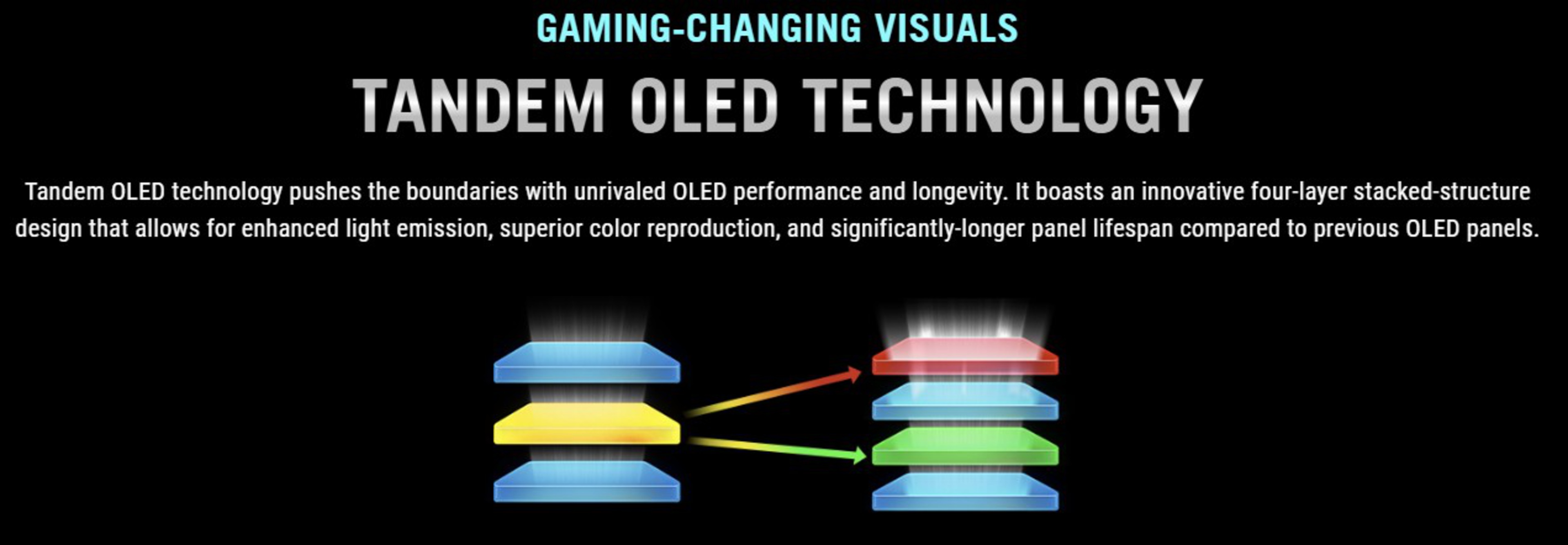
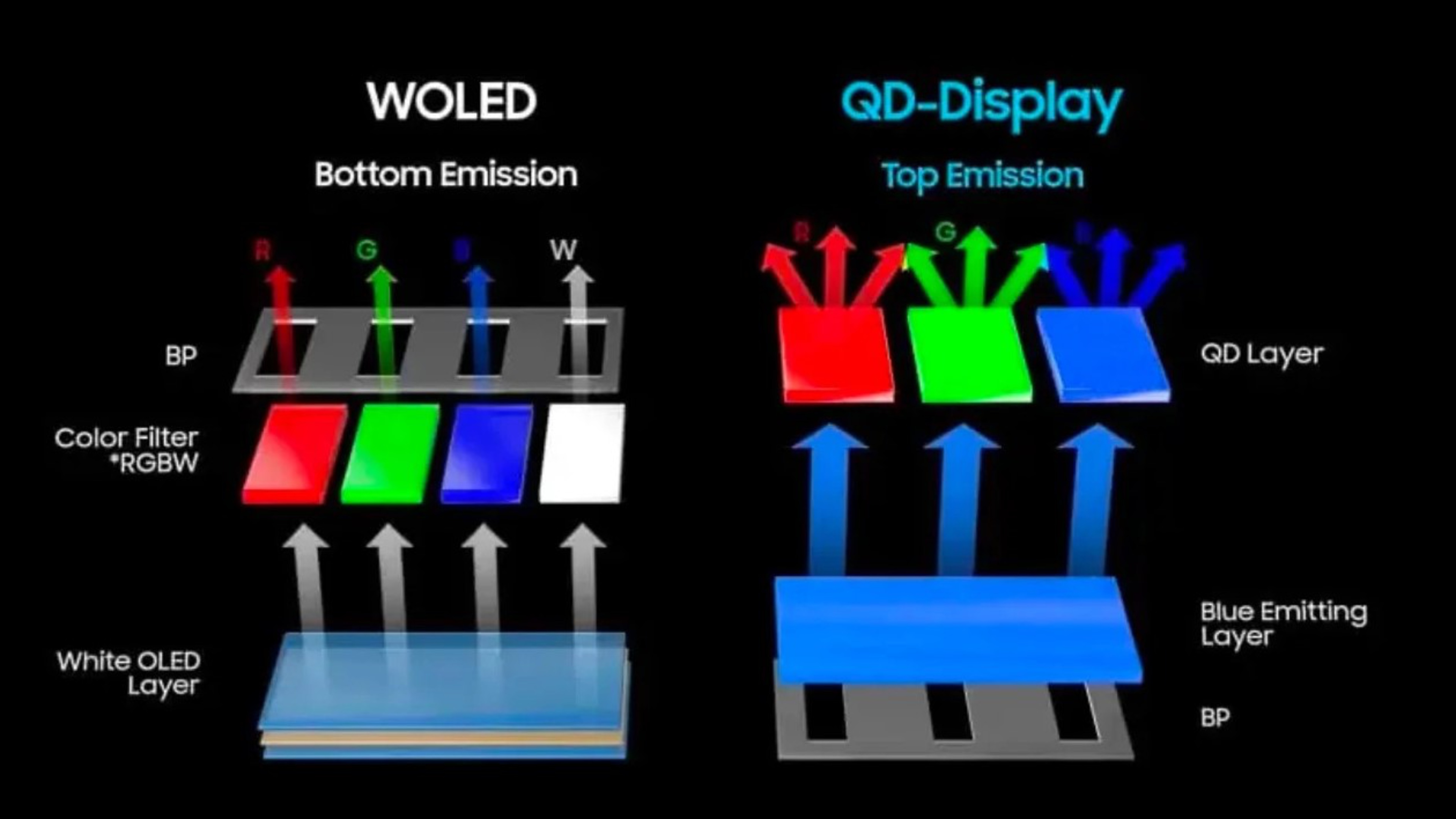
Tandem OLED, also known simply as RGB Tandem OLED, is the fourth generation of LG Display's WOLED panel. This means it uses a white subpixel, but it's different than older versions. It uses a stack of four layers to produce light that passes through the red, green, blue, and white subpixels, compared to a three-layer stack on older panels. This new structure targets higher brightness, better colors, and improved efficiency.
As the subpixel structure on Tandem OLEDs is the same as previous versions, this means they still rely on the white subpixel to display pure white. Other colors aren't as bright as white because of this. The two generations of WOLEDs visually look the same just by looking at their pixel photos:
| Tandem OLED | Older WOLED |
|---|---|
 |
 |
However, newer Tandem OLED panels with RGB Stripe will drop the white subpixel entirely, improving text clarity and color purity even further. This is not to be confused with the current generation of Tandem OLED panels that still feature the white subpixel. The ASUS PG27UCWM will feature this panel, and it's supposed to be available in Q2 of 2026. Stay tuned with our Review Pipeline to see any future Tandem OLEDs we'll test.
What Is QD-OLED?
QD-OLED, which stands for quantum-dot OLED, is made by Samsung Display. Instead of a white OLED layer underneath the pixels, it's blue. It uses three subpixels (red, green, and blue) with a quantum dot layer that displays a wider range of colors compared to both older WOLEDs and Tandem OLEDs.
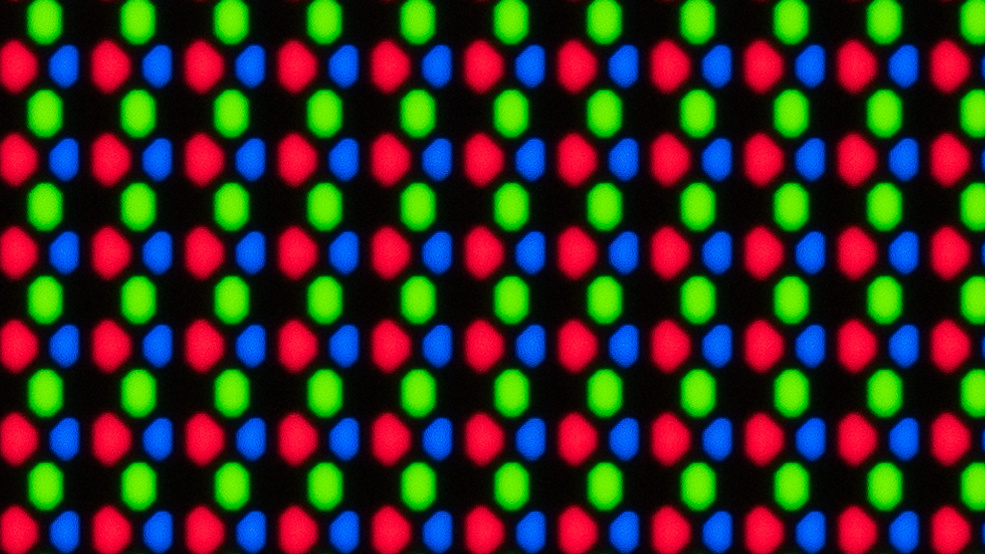
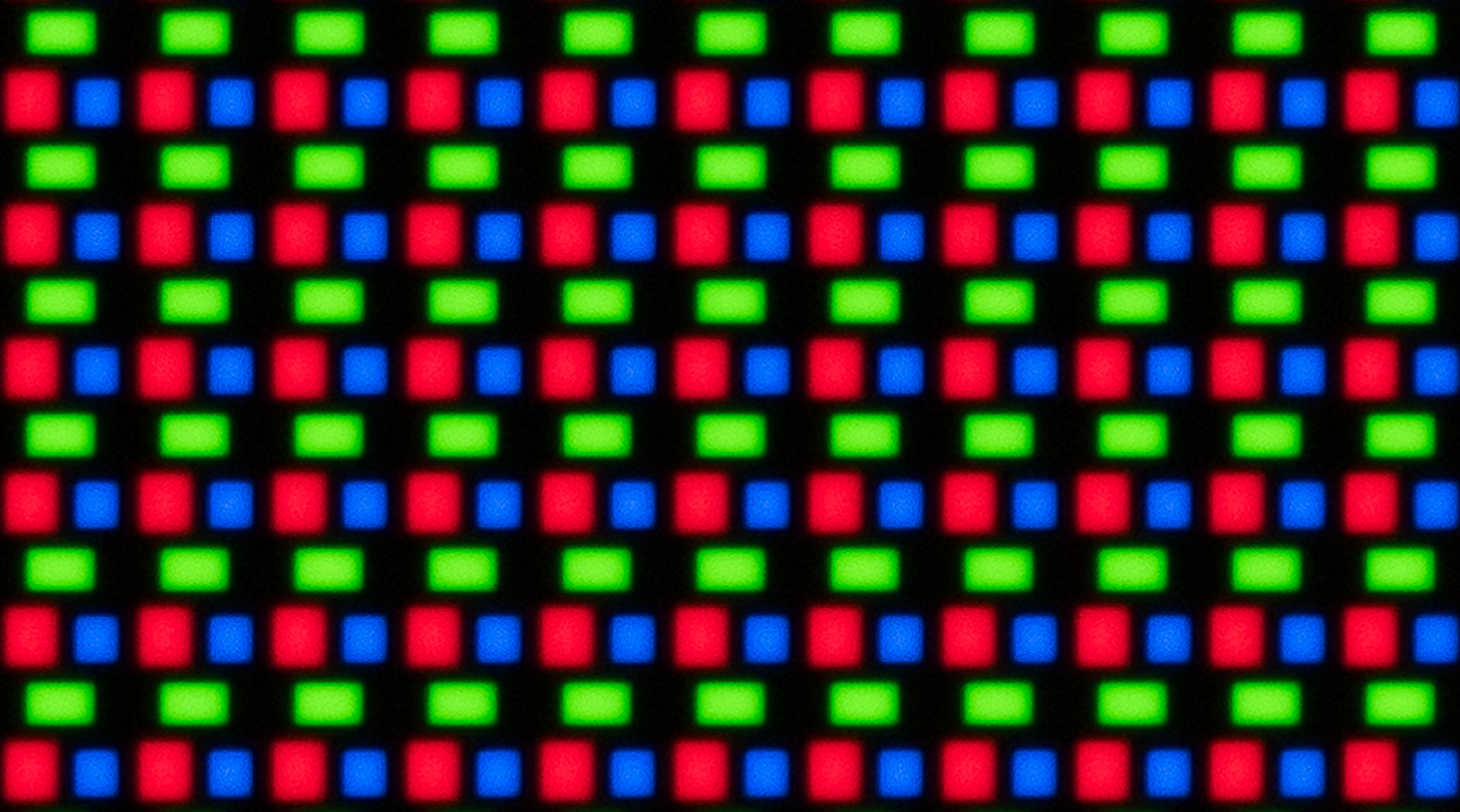
Another difference with Tandem OLED is that the subpixels are arranged in a triangular subpixel layout. The green pixels are on top, with the red and blue pixels below them. The exact shape of the subpixels changes between QD-OLED generations:
| 1st & 2nd Gen | 3rd Gen | 4th Gen |
|---|---|---|
 |
 |
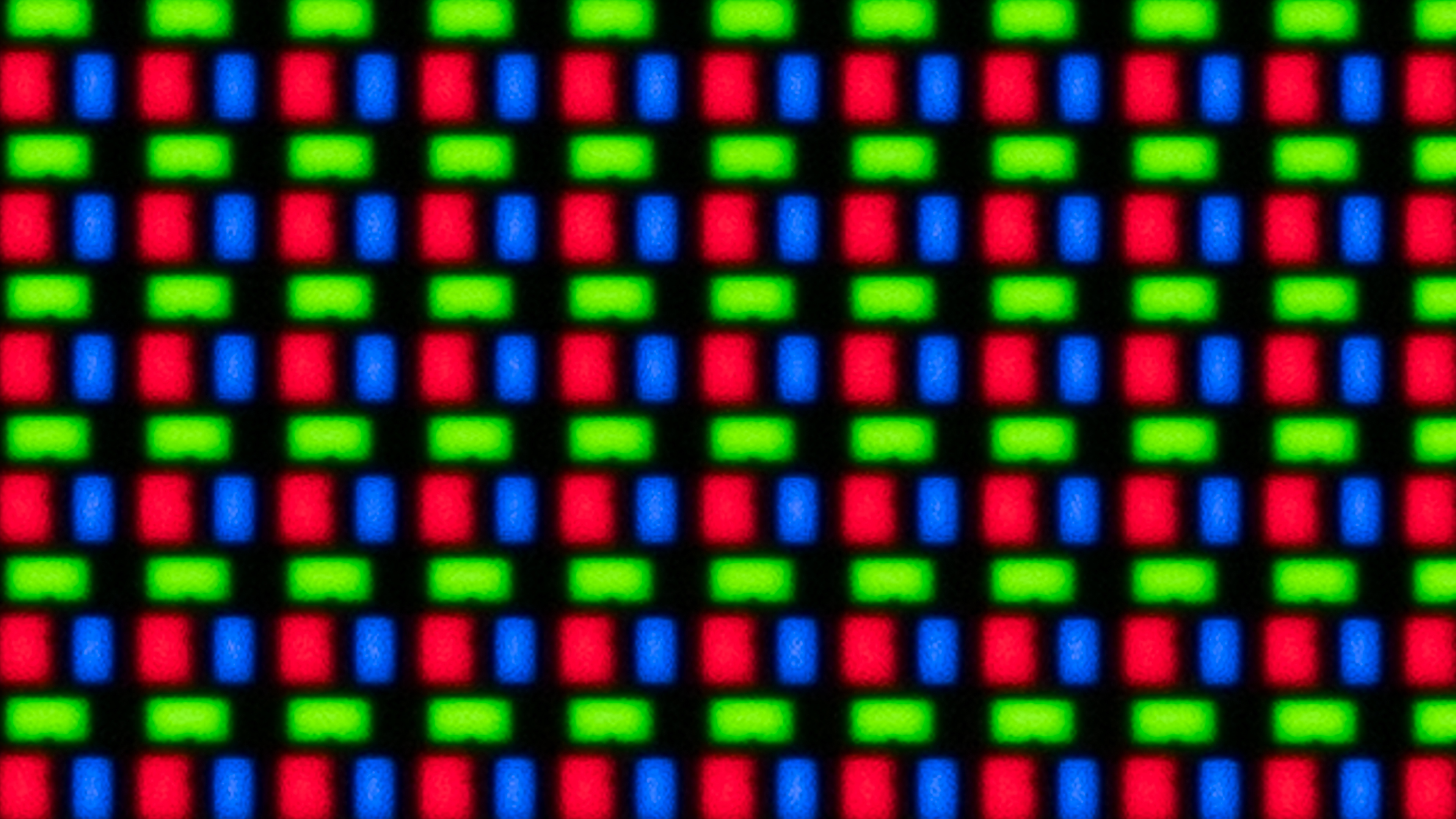 |
A downside of this triangular subpixel structure is that there's fringing around text or at the edges of windows. For example, you'll see a thin green line at the top edge and a thin purple line at the bottom edge of a window that's open on your monitor.

Newer QD-OLED panels will feature a V-Stripe structure, meaning the pixels will be aligned vertically as opposed to in a triangular layout. This is meant to improve text clarity even further, but we won't know how they perform until we buy and test them. If there's a specific monitor you want us to buy and test, you can vote for it.
Differences Between QD-OLED vs. Tandem OLED
There are a few areas in which QD-OLEDs and Tandem OLEDs differ, including their brightness, colors, and uniformity.
Brightness
The biggest advantage of Tandem OLED is its brightness. Out of the three Tandem OLEDs we've tested so far (Gigabyte MO27Q28G, LG 27GX700A-B, and LG 27GX790B-B), they each reach around 550 cd/m2 with real content in HDR. They all have a max brightness of over 1,300 cd/m2 with peak 2% HDR highlights, so small objects really pop against dark backgrounds. On the other hand, we have yet to test a QD-OLED that reaches over 500 cd/m2 in real HDR content and 1,100 cd/m2 with 2% highlights. While they both struggle to maintain high brightness with larger highlights, which is typical of OLEDs, it's clear that Tandem OLEDs are brighter in HDR.
The battle is closer in terms of SDR brightness, but that's because some QD-OLEDs offer settings to get the brightest screen possible. Generally speaking, though, if you want a bright OLED, Tandem OLED is currently the way to go.
Ambient Black Level Raise
Another advantage of using a Tandem OLED in a bright room is that it maintains low black levels better in well-lit spaces. A downside of QD-OLED is that they lack a polarizer, which causes black levels to rise in bright rooms and makes them look purple. This means you need to use a QD-OLED in a dark room to get the perfect black levels that it's known for. While the black levels rise a bit in bright rooms on Tandem OLEDs, it's not as noticeable as on QD-OLEDs.
| Tandem OLED | QD-OLED |
|---|---|
 |
 |
Other factors may impact the ambient black level raise, like the type of screen coating, but Tandem OLEDs have the clear advantage.
Colors
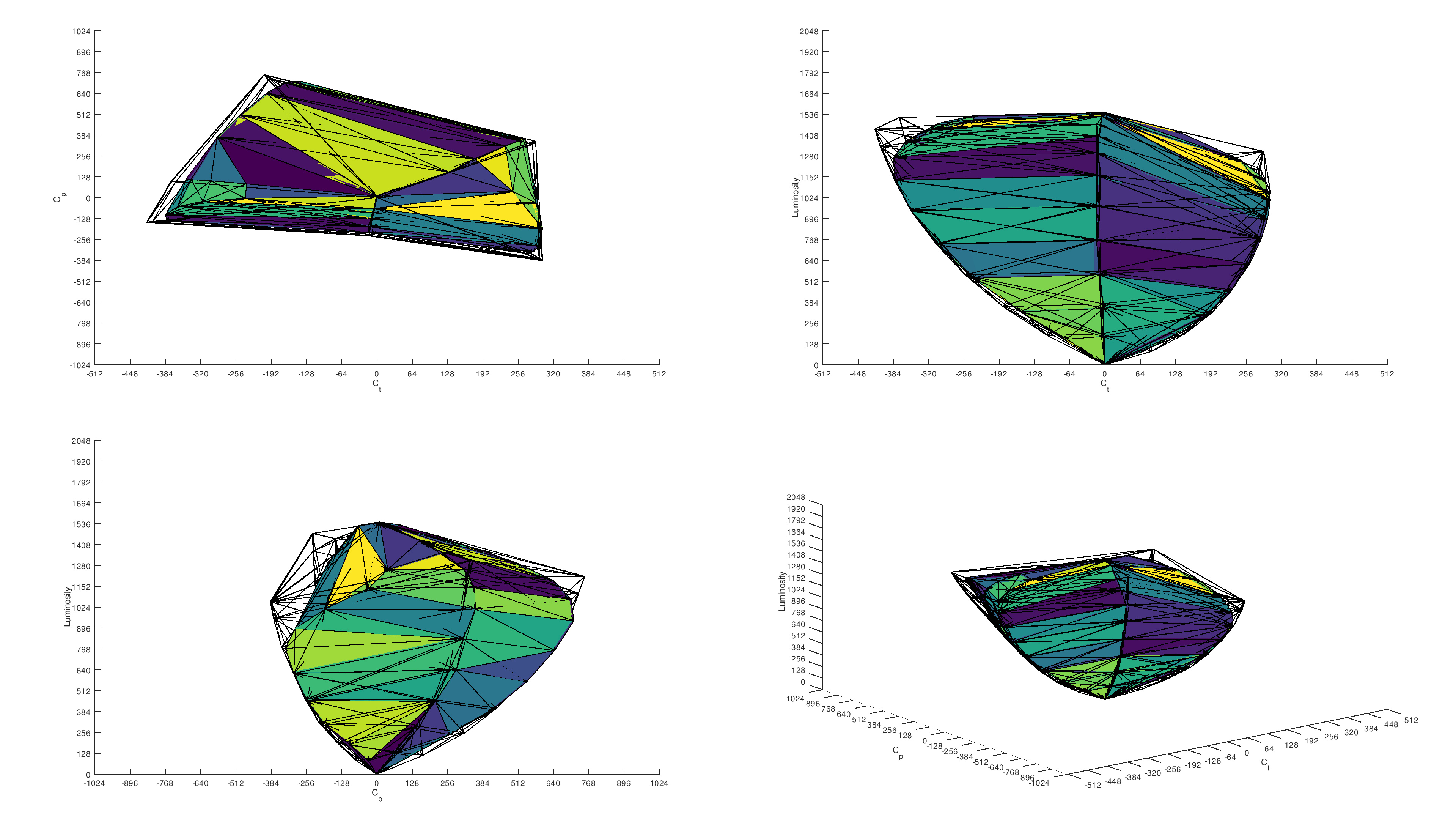
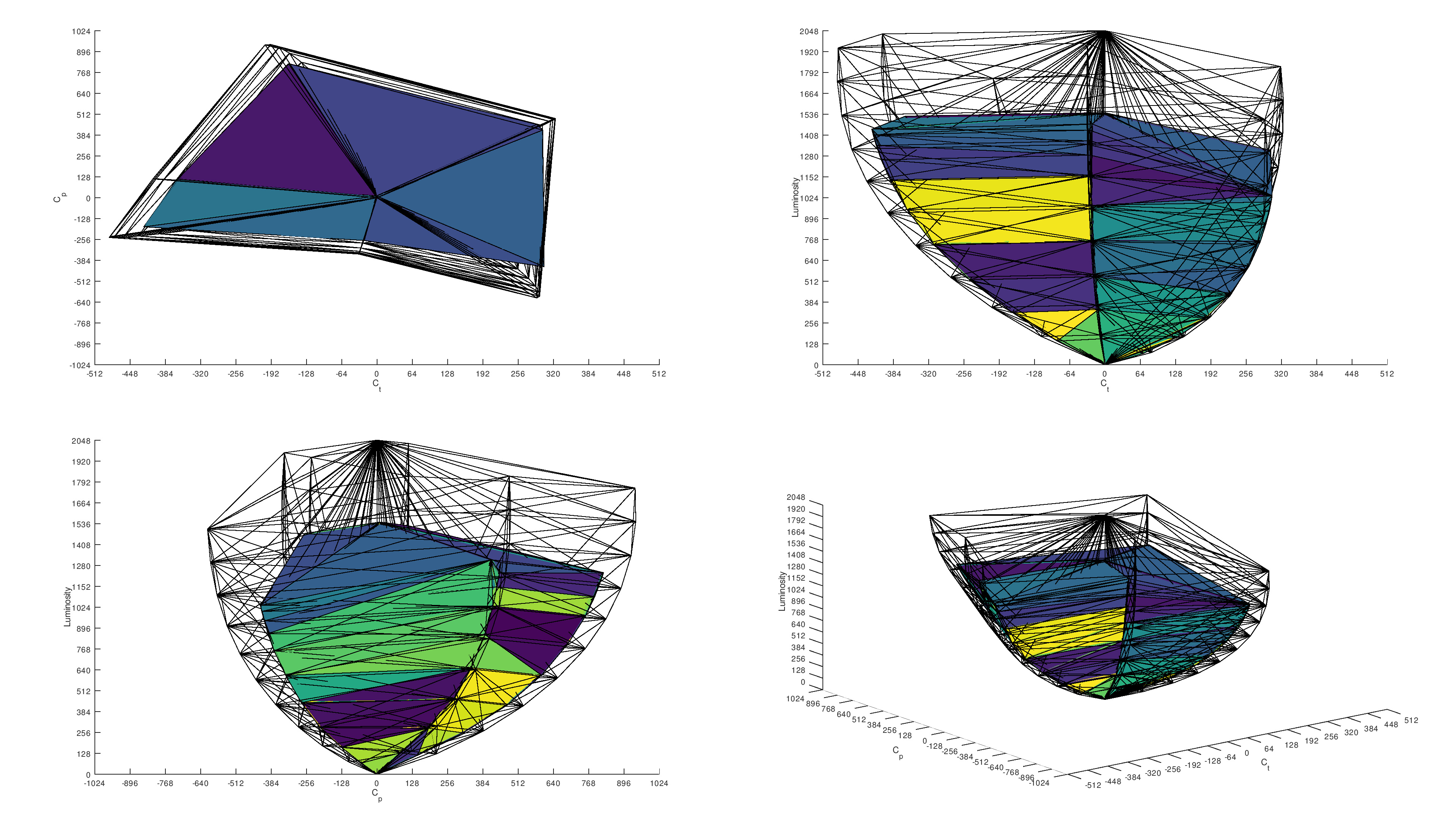
Although the biggest downside of QD-OLEDs is how they perform in bright rooms, their biggest strength is their colors in dark rooms. They do a better job at displaying the brightest colors in HDR, so content is punchy and vivid. However, Tandem OLEDs aren't far behind and are an improvement compared to previous-generation WOLED panels.
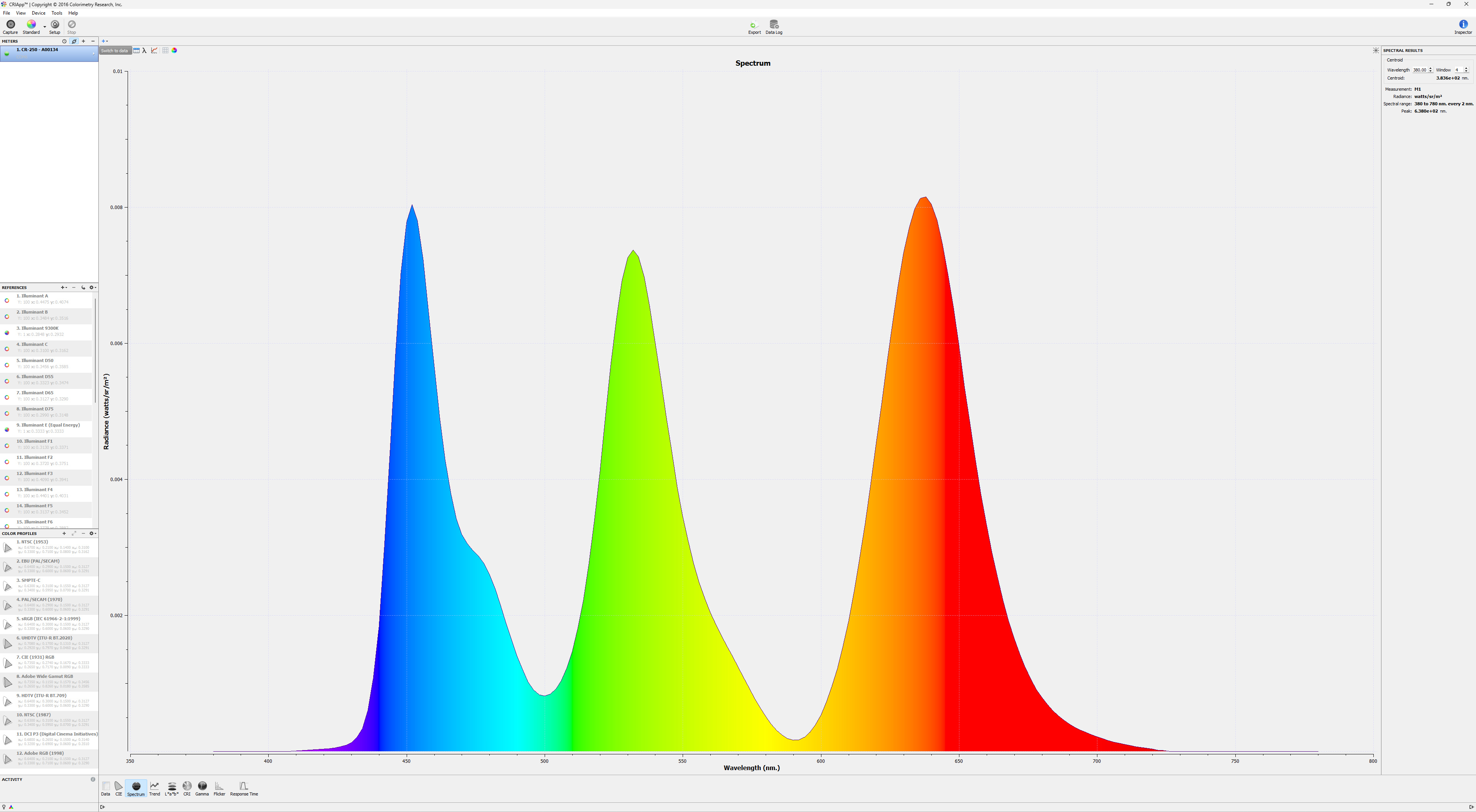
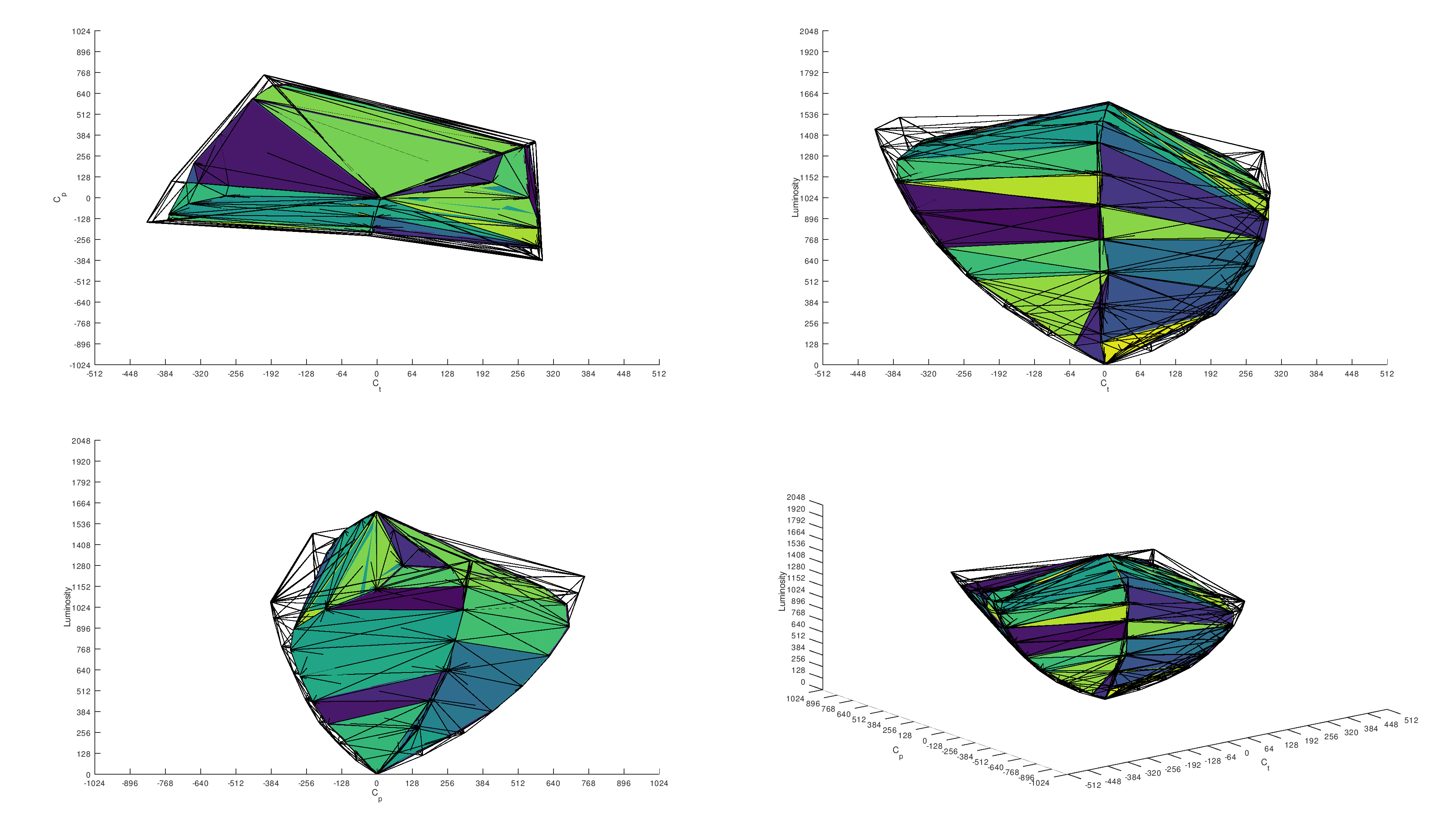
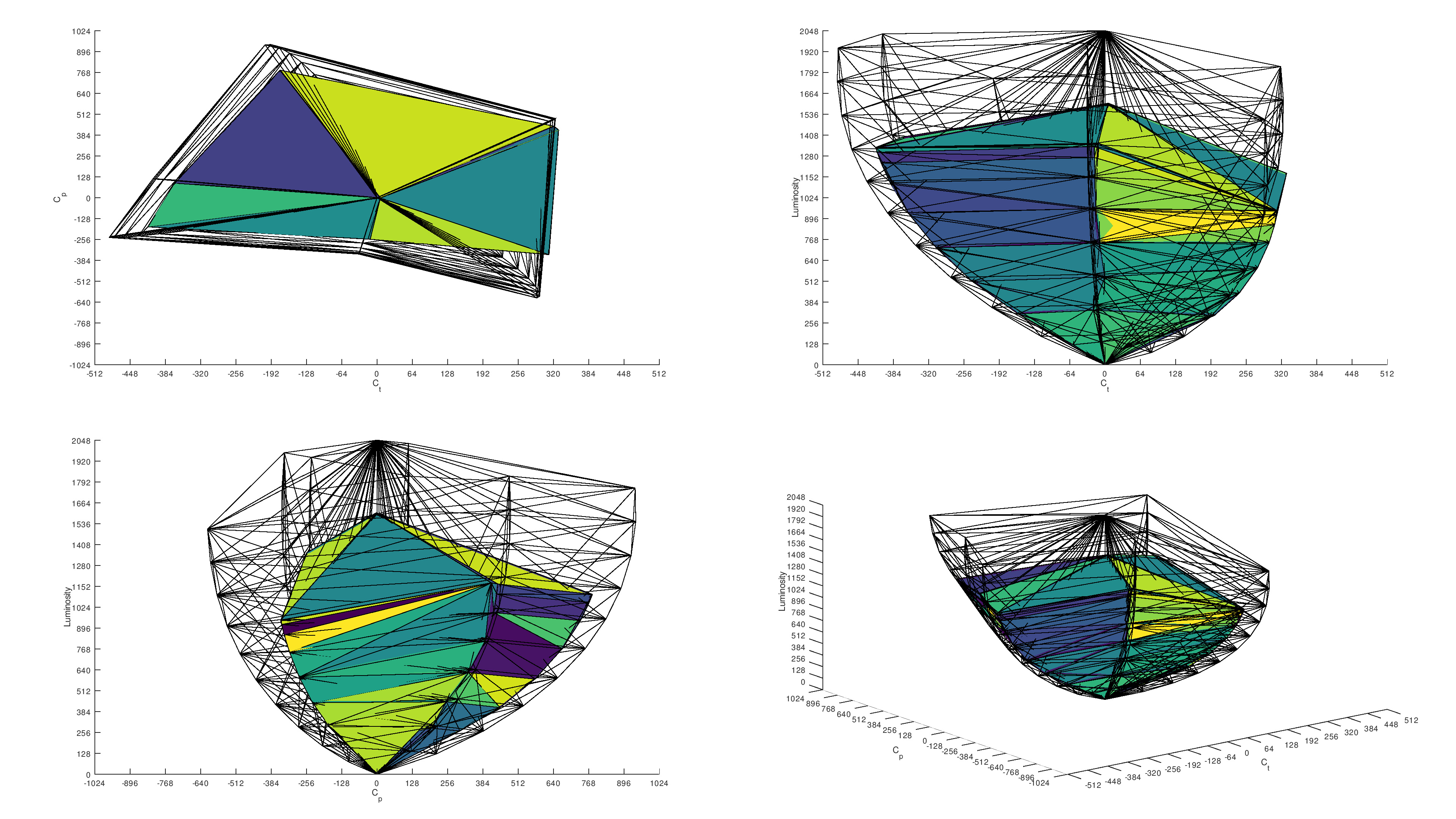
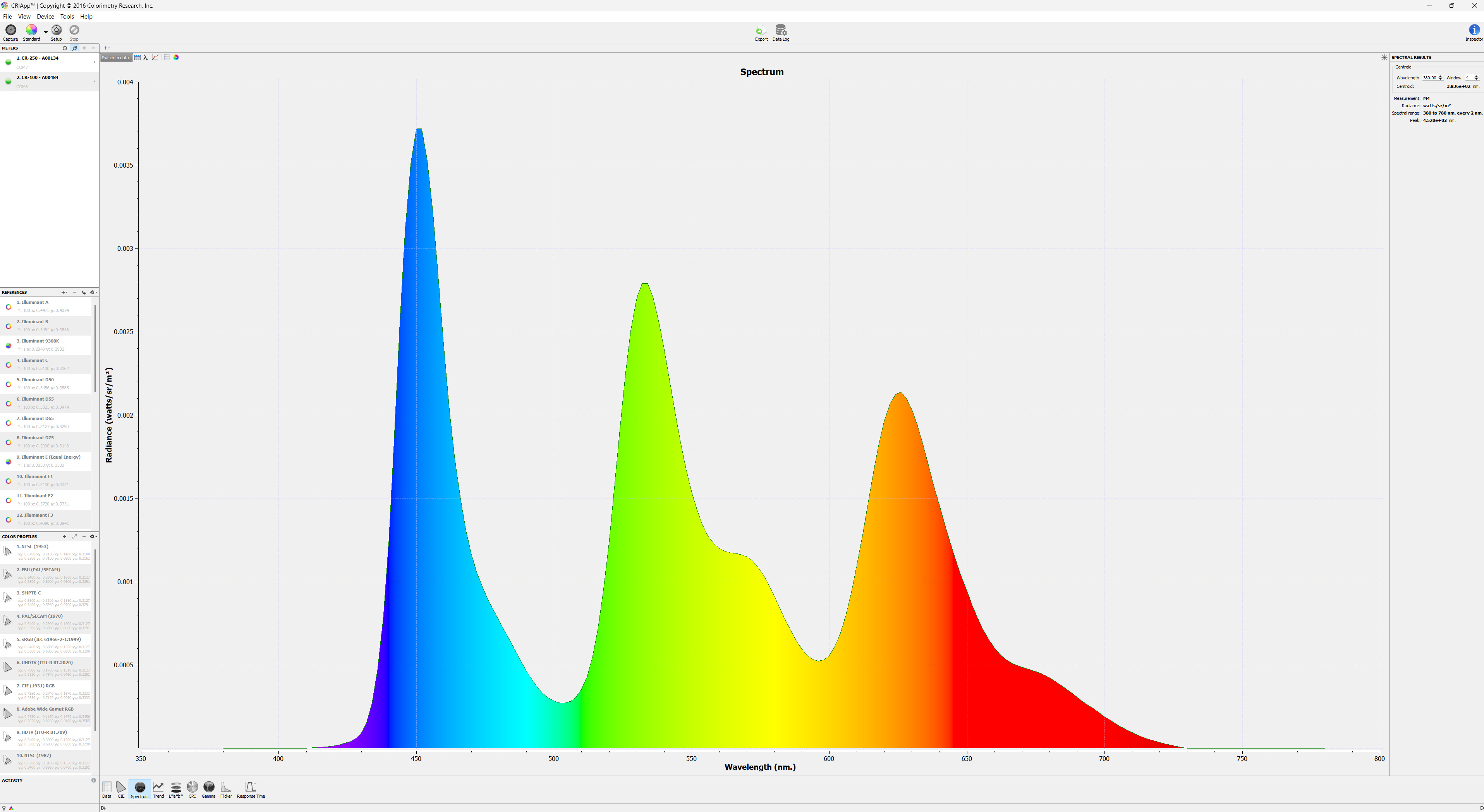
You can see examples of the HDR color volume and spectral power distribution (SPD) of a QD-OLED and a Tandem OLED below. While the ASUS is the winner here, the LG is very close in color volume, but colors outside pure white just aren't as bright. However, their SPDs show that the QD-OLED is better at separating primary colors, particularly red and green, resulting in better color purity.
| Type | HDR Color Volume | SPD | |
|---|---|---|---|
| QD-OLED ASUS ROG Strix OLED XG27ACDNG |
 |
 |
 |
| Tandem OLED LG 27GX700A-B |
 |
 |
 |
Keep in mind that colors desaturate in bright rooms on QD-OLEDs, similar to their black level raise. So, if you have each panel type in a bright room, colors will look better on the Tandem OLED.
Uniformity
A known issue with Tandem OLEDs is their vertical banding with dark grays. While it's most noticeable with 5% gray test patterns, it can be distracting if you play a lot of games with dark, full-screen content. It's also more of a problem at higher refresh rates than at lower ones.
This vertical banding doesn't only happen on Tandem OLEDs, as any OLED can suffer from it because of the way voltage is passed through pixels at low luminance levels. However, QD-OLEDs suffer far less from it. Another thing to keep in mind is that it varies between units, so you may get a Tandem OLED without any of these problems.
You can see examples of this with 50% and 5% gray test slides on each panel type below:
| QD-OLED | Tandem OLED |
|---|---|
| Samsung Odyssey OLED G81SF S27F810S | LG 27GX790B-B |
 |
 |
 |
 |
Market And Availability
Since the first consumer QD-OLED monitor was released in 2022, there have been numerous models that have come out. This includes options with different refresh rates and resolutions, including ultrawides and 4k, 240Hz displays, so there's a variety to choose from. You'll likely find the right refresh rate, resolution, and size for your needs in the rapidly growing QD-OLED market.
Since Tandem OLED monitors are relatively new, only appearing in the consumer market in late 2025, there are fewer options available than QD-OLEDs as of early 2026. Currently, only 1440p Tandem OLEDs are available, with 4k models coming later in 2026. This includes the ASUS PG27UCWM that will feature the new RGB Stripe subpixel arrangement. While the future is bright for the Tandem OLED market, you may have to wait a bit for larger, higher-resolution options. Otherwise, any of the current models are also fantastic monitors.
If you're looking for a monitor now, check out our recommendations for the best OLED monitors.
Conclusion
When comparing Tandem OLED vs QD-OLED monitors, you'll notice that both provide fantastic gaming performance and picture quality. They each have the perfect black levels, highlights that pop, and sharp motion that OLEDs are known for. The main advantage of getting a QD-OLED is its better color purity, particularly with bright colors. There are also more QD-OLED monitors to choose from, mainly because the technology is more mature. The first Tandem OLED monitors were released recently, so the selection is limited, but more are expected in the future. The biggest strength of this panel technology is how bright it gets, making it the better choice for well-lit rooms. Unfortunately, there are some issues with these displays, particularly with vertical banding in dark scenes. Regardless, both OLED panel types have their strengths and weaknesses, and choosing one over the other comes down to your personal needs.
