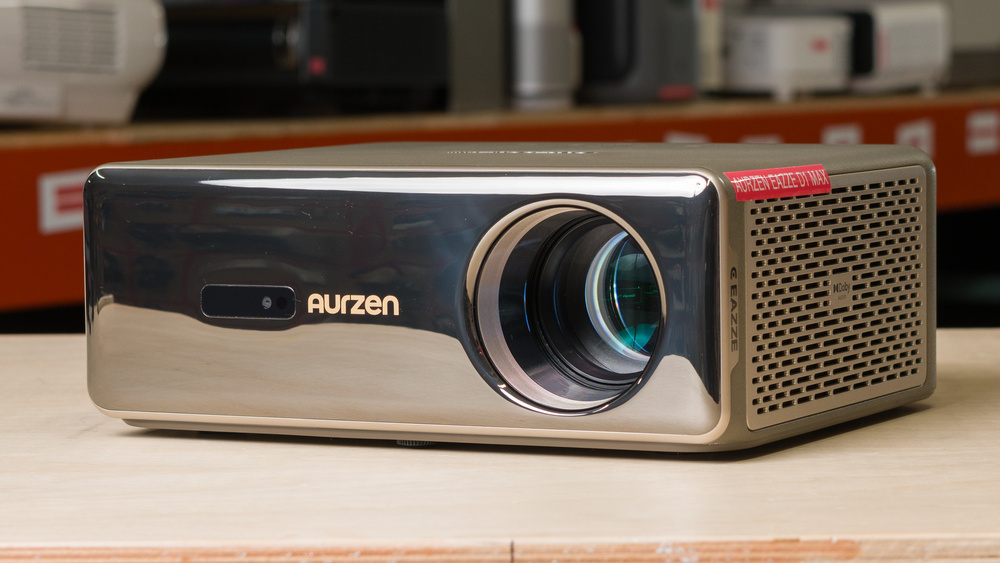
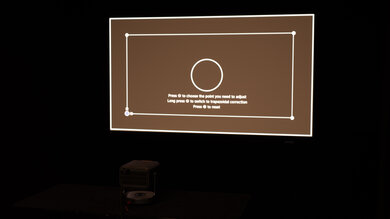
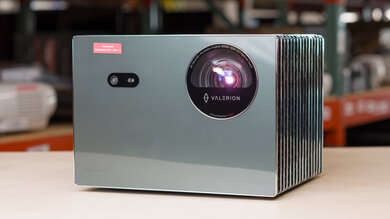
The Aurzen EAZZE D1 MAX is an entry-level projector. It has a 1080p resolution with an LED light source, and it uses LCD imaging technology. It competes with other low-cost options with similar specs, like the NexiGo PJ40 Pro. As a higher-end and updated model from the older Aurzen EAZZE D1, it comes with a few upgrades, like a fully integrated Google TV to quickly stream content. The Aurzen includes a few settings to help you quickly set it up, like autofocus, auto keystone, and obstacle-avoidance adjustments. It works with screens from 80 to 200 inches. It includes wireless connectivity options with built-in Wi-Fi to mirror content from your phone, and Bluetooth 5.1 if you want to use a speaker. Though, it has built-in 10W speakers that support Dolby Audio. However, it lacks HDMI 2.1 bandwidth, and it's limited to a 60Hz refresh rate, so it doesn't take advantage of gaming consoles.
Our Verdict
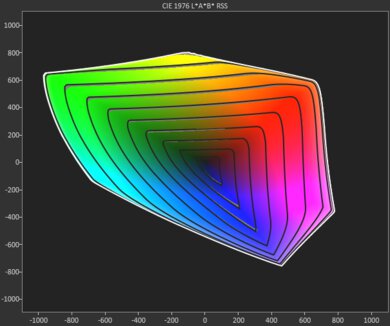
The Aurzen D1 MAX is poor for home theater setups. Despite displaying fairly deep blacks, it doesn't get bright enough to provide depth to the image, so details are lacking. It can't display a wide range of vivid colors either, so content doesn't punch, and it has a blue tint out of the box that's hard to fix with a calibration. Plus, it can't remove judder from any source, so motion looks jittery. It also has a loud fan, which may be distracting during quieter scenes. Although it doesn't have any rainbow effect (RBE), there are image reflections in panning shots.
No visible RBE.
Displays fairly deep blacks in dark scenes.
Images lack depth due to low contrast ratio.
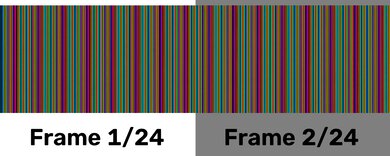
Can't remove judder from any source.
Image reflections in moving content.
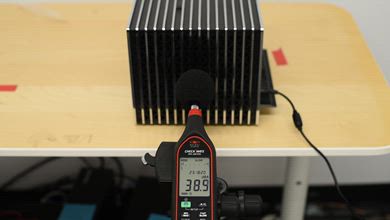
Loud fan at max brightness.
Blue tint out of the box.
Colors lack punch.
The Aurzen EAZZE D1 MAX is disappointing for outdoor setups. While it gets brighter than other entry-level projectors, it doesn't fight ambient glare well. Also, it can't maintain this brightness well across the screen. This means the edges are darker, especially on a bigger projection screen size. It's at least easy to carry outside thanks to its compact design, and it has a few settings to quickly set it up, like auto keystone, autofocus, and obstacle avoidance. However, you need to make sure it's centered with the wall or screen at a proper distance, because it lacks optical zoom or lens shift to clean up the image if that's not the case. You also need to make sure there's an outlet nearby, as it doesn't have a built-in battery.
Auto adjustment settings, like auto keystone and screen fit.
Lightweight, compact design that's easy to carry.
No optical zoom or lens shift.
Lacks built-in battery.
Doesn't fight ambient glare well.
The Aurzen D1 MAX is alright for bedroom setups. Its lightweight design makes it easy to carry to the bedroom, and it has some settings to quickly set it up against a wall, like auto keystone, obstacle avoidance, and screen fit. However, the image isn't the sharpest possible if it's off-center because it lacks lens shift. It also doesn't have optical zoom to cleanly adjust the projected image size. At least, its built-in Google TV makes it easy to stream content without any extra devices, but you need to plug it into the wall because it lacks a battery. A downside is that it has a loud fan when using it at its max brightness, so you may want to dim it if you want a quieter fan.
Auto adjustment settings, like auto keystone and screen fit.
Lightweight, compact design that's easy to carry.
Loud fan at max brightness.
No optical zoom or lens shift.
Lacks built-in battery.
The Aurzen EAZZE D1 MAX is bad for gaming. It's limited to a 60Hz refresh rate, and its LCD imaging technology results in motion blur. It also has very high input lag, so you'll notice a delay when pressing buttons, and it's not suggested for reaction-based gaming. Unfortunately, another downside is its limited picture quality. It fails to deliver depth to the image due to its low contrast ratio, and it can't display a wide range of vivid colors.
Displays fairly deep blacks in dark scenes.
Images lack depth due to low contrast ratio.
Image reflections in moving content.
Blue tint out of the box.
Limited to 60Hz refresh rate with motion blur.
Very high input lag.
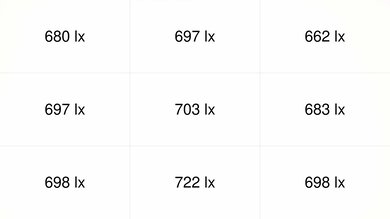
The Aurzen D1 MAX has mediocre brightness. While it's brighter than entry-level projectors, as it doesn't look dim in a dark room, it doesn't fight ambient glare well. Plus, it has bad uniformity, so the edges of the image are noticeably darker, especially on a bigger screen.
Doesn't fight ambient glare well.
Terrible brightness uniformity; edges are noticeably darker.
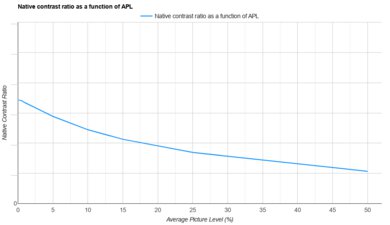
The Aurzen EAZZE D1 MAX has disappointing contrast. Although it has low black levels, its limited brightness prevents it from displaying depth to images. It also has raised blacks in brighter content, so these scenes look washed out.
Displays fairly deep blacks in dark scenes.
Images lack depth due to low contrast ratio.
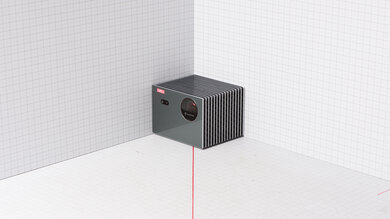
The Aurzen D1 MAX has alright portability. It's lightweight and easy to carry around, and its cap protects the lens. However, without a built-in battery, you need to plug it into a power outlet. It has a few settings to help you set it up, like auto keystone, autofocus, screen fit, and obstacle avoidance, so you don't have to worry about making adjustments. However, it's best to center it, as without lens shift, the image lacks sharpness. It doesn't have optical zoom, either, so you might have to bring it closer or further from the wall if it doesn't fit the screen.
Auto adjustment settings, like auto keystone and screen fit.
Lightweight, compact design that's easy to carry.
No optical zoom or lens shift.
Lacks built-in battery.
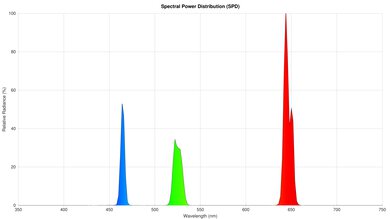
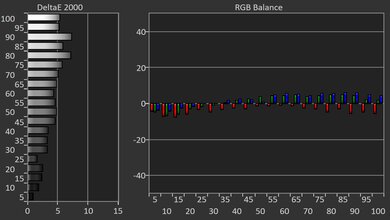
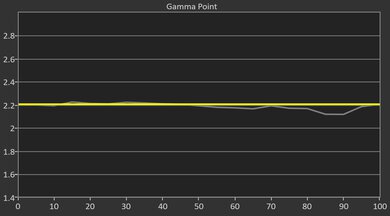
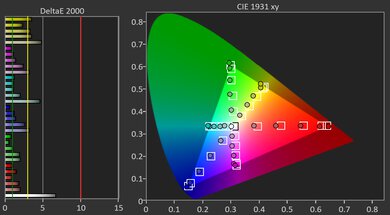
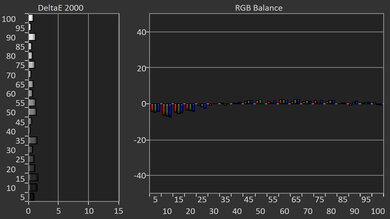
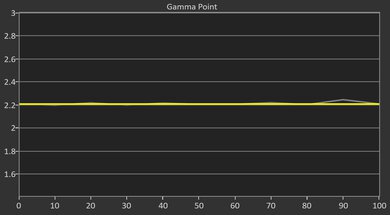
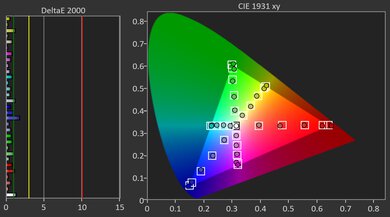
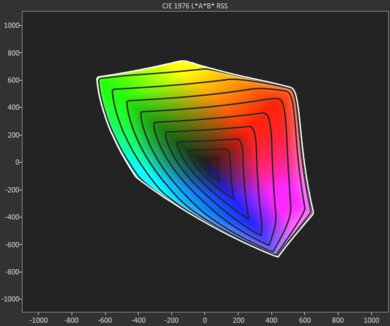
The Aurzen EAZZE D1 MAX has terrible colors. It has a blue tint out of the box that's hard to fix, even with a full calibration. It also can't display a wide range of colors in most color spaces. Images lack punch because of this.
Blue tint out of the box.
Colors lack punch.
The Aurzen D1 MAX has awful gaming responsiveness. It's limited to a 60Hz refresh rate, and with high input lag, gaming feels sluggish, so it's not suggested for gamers. It also has motion blur due to its LCD imaging technology.
Limited to 60Hz refresh rate with motion blur.
Very high input lag.
Performance Usages
Check Price
Differences Between Sizes And Variants
We bought and tested the Aurzen EAZZE D1 MAX. It's higher-end and newer than the Aurzen EAZZE D1, which doesn't have Google TV built-in, and it has some fewer features, which you can see below. The results are only valid for the MAX model.
| Model | Screen Sizes | Smart OS | Speakers |
|---|---|---|---|
| D1 | 60–200" | Limited to built-in apps | 2x 8W |
| D1 MAX | 80–200" | Google TV | 2x 10W |
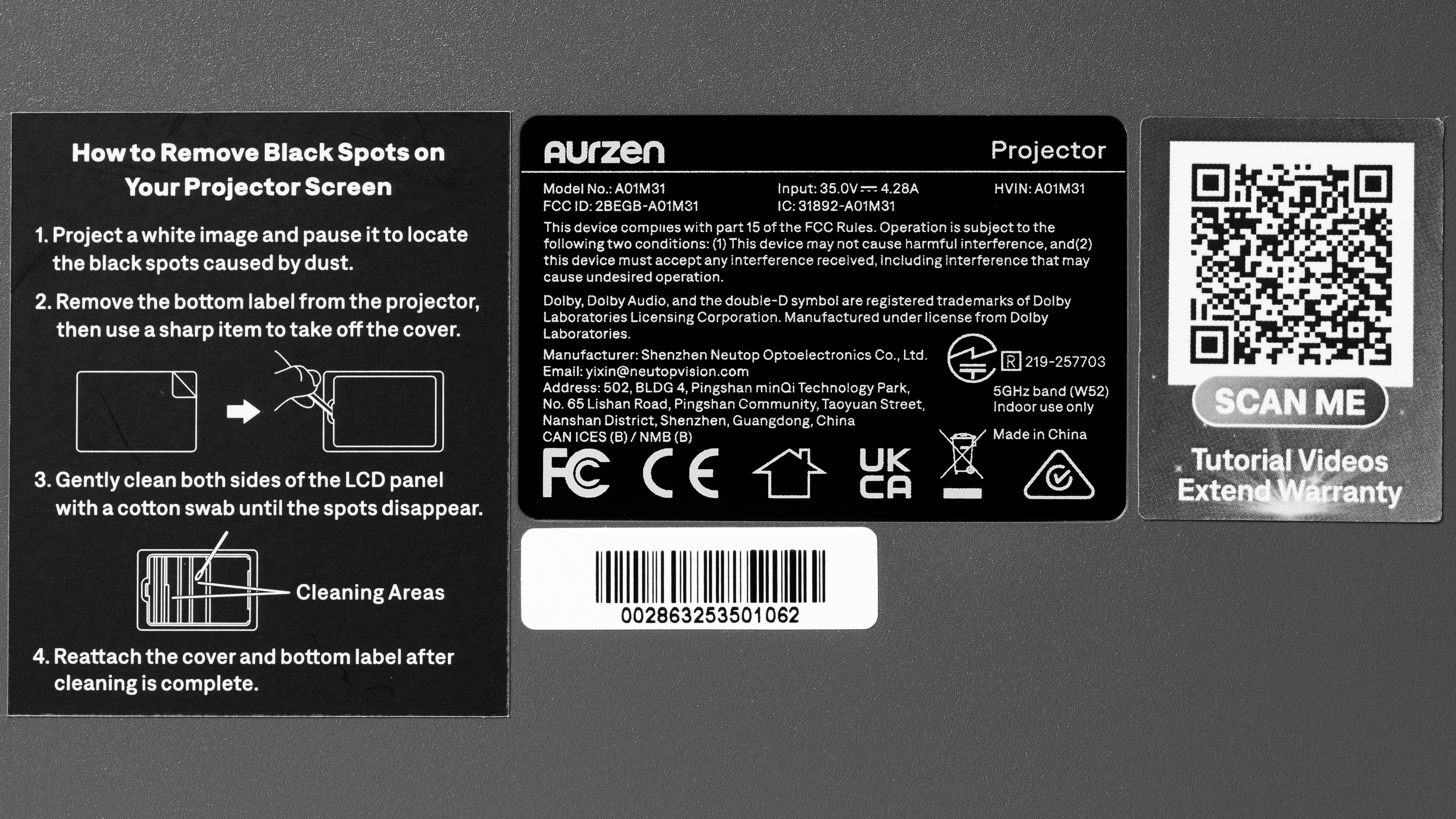
Our unit's label indicates it was manufactured in China.
Popular Projector Comparisons
The Aurzen EAZZE D1 MAX is an entry-level 1080p smart projector with LCD imaging technology and an LED light source. It competes against other options with the same specs meant for quick movie nights or sports watch parties in dark rooms or outdoors, like the Anker Nebula P1i or the Wanbo X5 Pro. It's easy to set up thanks to its screen adaptation features and built-in Google TV, so you won't have to worry about external streaming devices. However, it doesn't have a built-in battery, so you need an outlet nearby.
It's meant exactly for people who want a projector that's easy to use, as it has limited picture quality otherwise. Its colors lack punch, and it's hard to calibrate for a proper image. It also struggles with brightness uniformity, as edges are darker. You'd have to spend more to get better picture quality, though. It's also somewhat expensive for an entry-level option, so you can save more with a cheaper model, like the XGIMI Vibe One, which has a built-in battery.
Also see our recommendations for the best portable projectors, the best projectors under $500, and the best budget and cheap projectors.
The Wanbo X5 Pro and the Aurzen EAZZE D1 MAX are very similar low-cost 1080p projectors with LCD imaging technology. They have many of the same features, including built-in Google TV and screen adjustment settings. They trade punches for picture quality as the Aurzen is brighter and the Wanbo is easier to calibrate, but neither has good picture quality anyway. An advantage of the Wanbo is that its fan is quieter, making it better for bedroom setups.
The XGIMI Vibe One and the Aurzen EAZZE D1 MAX are both entry-level 1080p LCD projectors. The XGIMI is the more portable option because it's lighter, includes a carrying handle, and has a built-in battery, which the Aurzen doesn't have. The XGIMI's fan is also quieter, making it the better choice for bedroom setups. The Aurzen has the advantage in picture quality, though, as it gets brighter, but it's nothing special, regardless. The Aurzen also has obstacle avoidance and screen fit settings, which the XGIMI lacks.
The Aurzen EAZZE D1 MAX and the NexiGo PJ40 Pro are competing entry-level LCD projectors with a 1080p resolution. They both have Google TV built in and are easy to bring around with their compact designs. The Aurzen is easier to set up as it has auto screen fit and obstacle avoidance settings, which the NexiGo doesn't have. However, the NexiGo has the advantage in picture quality because it's easier to calibrate, so you can fine-tune colors as you wish. The NexiGo also removes 25p judder from sources with frame-rate-match features or internal apps, so motion looks better with 25 fps content than on the Aurzen, which can't remove judder.
The Aurzen EAZZE D1 MAX and the Anker Nebula P1i are competing entry-level LCD projectors with a 1080p resolution. They both have Google TV built in and are easy to bring around, but the Anker has a handle that's easy to carry with one hand. They have similar picture quality, too, but the Anker is easier to calibrate, and the Aurzen has the slight advantage in brightness. Another difference is that the Anker has much lower input lag in Game Mode, making it the better choice for casual gaming.
We've independently bought and tested over 100 projectors and published detailed results for each, so you can decide which one to buy. These have all been tested under the same standardized methodology, allowing you to compare them side by side. We still have all these projectors in our lab, so we can continually go back and compare them to ensure our reviews are still accurate. All our test methodologies are also public on our website, so you can validate the results yourself.
Throw Calculator
Global Controls
Test Results
for pictures & test results
for pictures & test results



for pictures & test results