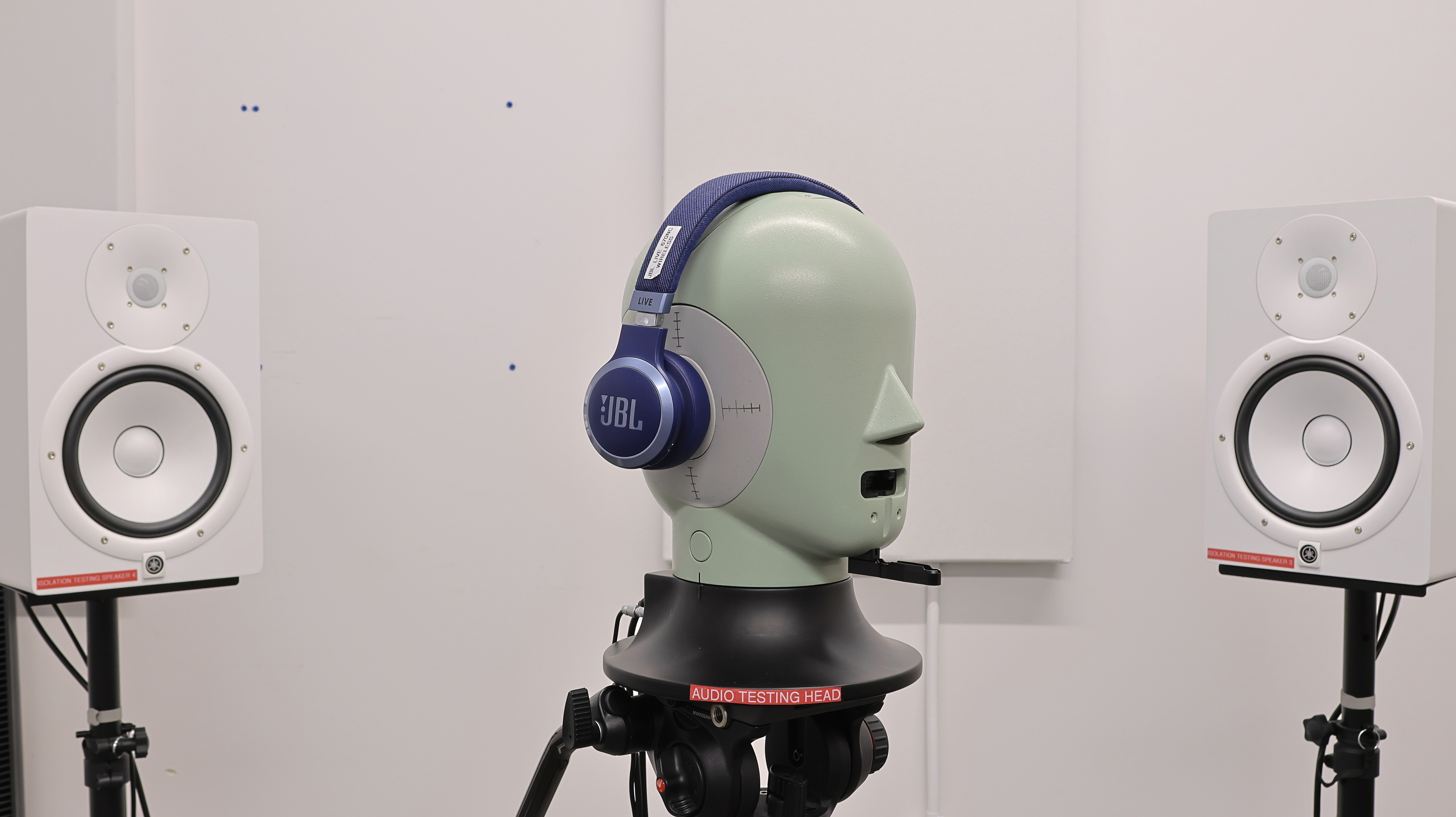
The JBL Live 670NC Wireless are wallet-friendly on-ear headphones equipped with active noise cancelling (ANC) technology. They come with some useful features that belie their relatively affordable price point, like an impressive 65 hours of advertised battery life with the ANC off (and even more when we tested it). There's also voice assistant integration and a spatial audio feature that's accessible via the companion app.
Our Verdict
The JBL 670NC are okay for sports and fitness use. They have a comprehensive control system and voice assistant integration, which can be great for performing functions while on a run. They also have a solid, reasonably sturdy build quality, and we tested an outstanding 88 hours of battery life with the ANC enabled. Sadly, their on-ear design and slippery ear pad material mean they're not the most stable headphones, and they're also not particularly portable.
- Outstanding 88-hour battery life.
Great control scheme.
- Disappointing mic recording quality.
- ANC struggles to isolate your audio from noisy environments.
The JBL 670NC are adequate for commute and travel use. They're reasonably comfortable and feature an outstanding 88 hours of continuous battery life, ensuring they'll last even for the longest journeys. That said, they're not the most portable, despite being able to fold up their ear cups. While their ANC does help block out some ambient sound, it's not a huge improvement on the passive isolation provided by their on-ear design. Sounds like engine rumble and street noise will still find their way into your audio.
- Outstanding 88-hour battery life.
Great control scheme.
- Disappointing mic recording quality.
- ANC struggles to isolate your audio from noisy environments.
The JBL 670NC are passable for office use. They have an extremely long 88-hour battery life that'll get you through the workweek with battery to spare, plus they're comfortable enough to wear for extended periods. While they do leak a bit of audio, it's unlikely to disturb anyone unless you're in a very quiet office environment. While they are equipped with ANC technology, it doesn't do much to block out common sounds you'd hear in an office environment, so they're not ideal for distraction-free productivity.
- Outstanding 88-hour battery life.
Great control scheme.
- Disappointing mic recording quality.
- ANC struggles to isolate your audio from noisy environments.
The JBL 670NC aren't suitable for wireless gaming. While they're equipped with Bluetooth, even with the lowest latency mode enabled, latency is too high for most games when using the default SBC codec.
The JBL Live 670NC are satisfactory for wired gaming. You can use them via an analog connection, and they come with a 1/8" TRS cable for this purpose. Latency is minimal via this connection type, so you won't experience much lag between your audio and visuals. They're also comfortable enough for long gaming sessions. While their overemphasized bass response will certainly add some boom to in-game audio cues, like explosions, it muddies the rest of the frequency range. It's worth noting that you won't be able to use the microphone if you're using these headphones with a wired connection.
- Outstanding 88-hour battery life.
Great control scheme.
- Disappointing mic recording quality.
- ANC struggles to isolate your audio from noisy environments.
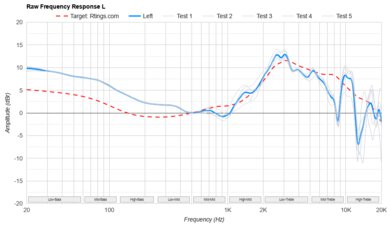
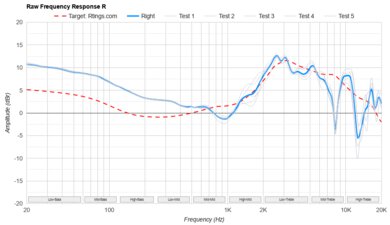
The JBL Live 670NC have decent audio reproduction accuracy. They don't deviate much from their booming, bass-heavy sound, although a couple of big peaks and dips in the treble range can render sibilants either dull or piercing, depending on their pitch. That said, the extra bass can overwhelm the mids, so many listeners may appreciate the EQ offered in the companion app. Still, inaudible group delay and well-matched left and right drivers mean kick drums sound punchy, and objects are correctly located in the stereo field. Your audio also sounds like it's coming from inside your head, which is to be expected for on-ear headphones.
The JBL Live 670NC have mediocre noise isolation. In use, they don't block out much real-world noise, especially bass-range sound like the rumble of a passing train engine. They fare better with mid-range sounds like street noise, but you'll still hear people chatting and car doors slamming. On the plus side, these cans have good leakage performance. Unless you're listening very loudly in a quiet space, people around you won't be disturbed by your audio.
The JBL Live 670NC have a disappointing microphone. The mic makes your voice sound both thin and dull, and doesn't do a good job of separating your voice from any surrounding noise. While you'll be understandable in quiet environments, if you take calls in a noisy place like a bus station, the person at the other end of the line may have trouble understanding you.
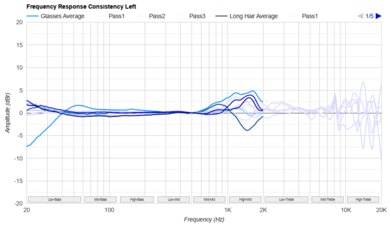
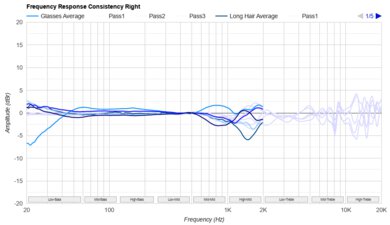
The JBL Live 670NC have mediocre frequency response consistency. Individuals with larger heads or those who wear glasses are likely to experience deviations in bass response. It's essential to take the time to seat these headphones correctly on your head with every wear if you want consistent audio between uses.
Performance Usages
Changelog
-
Updated Jan 09, 2026:
This review has been updated to Test Bench 2.0, which adds the following tests: Stereo Mismatch, Group Delay, Cumulative Spectral Decay, PRTF, Harmonic Distortion, and Electrical Aspects. We've added new performance usages and updated the text throughout the Sound tests and side-by-sides.
- Updated Dec 23, 2025: We've converted this review to Test Bench 2.0, which updates our sound tests and adds performance usages. You can read more about this in our changelog.
-
Updated Jan 16, 2025:
Several Sound tests have been updated following Test Bench 1.8. There have also been text changes made throughout the review, including to the usages and product comparisons to match these results.
- Updated Jan 15, 2025: We've converted this review to Test Bench 1.8, which updates our target curve and Sound tests. You can read more about this in our changelog.
Check Price
Differences Between Sizes And Variants
The JBL Live 670NC are available in four color variants: 'Black,' 'White,' 'Blue,' and 'Sandstone.' We tested the 'Blue' variant, but we expect the other colorways to perform similarly. If you encounter a different variant of these headphones, please let us know in the comments, and we'll update our review.
Popular Headphones Comparisons
The JBL Live 670NC are a pair of on-ear headphones within JBL's 'Live' line of mid-range headphones. They follow in the footsteps of the JBL Live 460NC Wireless, which share a similar build quality and on-ear design. While the two have a similar noise isolation performance, the JBL Live 460NC have a more balanced sound profile that follows our target curve much more closely. That said, the older generation lacks the newer model's amazing 88-hour battery life. The Live 670NC's overpowering bass response brings it more in line with DJ headphones, like the Pioneer DJ HDJ-CUE1BT Wireless, where the prominent bass can be an ally when beat-matching.
If you're looking for more headphone options, check out our recommendations for the best on-ear headphones, the best wireless Bluetooth headphones, and the best headphones.
The JBL Live 670NC offer more customization and extra features than the Beats Solo 4. While both on-ears are similarly comfortable and well-built, the JBL have companion app support, including a parametric EQ and presets, and they have ANC. While it does a mediocre job of blocking out background noise, it's still better than the Beats' passive capabilities. They also support multi-device pairing and have a significantly longer continuous playback time. However, the Beats have a more balanced sound profile, which some users may prefer, and can also be used via wired USB.
The JBL Live 670NC and the JBL Live 770NC are from the same generation with more in common than not. They share the same app, nearly identical controls, and almost the same frame. The Live 670NC boast a longer battery life. Because they're on-ears, their noise isolation isn't quite as good as the Live 770NC over-ears' noise isolation. The Live 770NC are also more stable fitting and cut out more environmental noise overall.
The JBL Live 660NC and the JBL Live 670NC have different designs. The former is an over-ear design, while the latter has an on-ear design that sits directly on your ear. That said, their distinctions go beyond simple design differences. While both headphones have a boosted bass response, the Live 670NC have an overwhelming amount of bass that can muddy the rest of the mix. By contrast, the Live 660NC follow our target curve more closely, with a balanced sound that leans towards being bass-heavy. The Live 660NC have a better performing ANC system and better mic recording quality, making them a better fit for calls, but they lack the Live 670NC's monumental 88-hour battery life.
The JBL Live 670NC and the JBL Live 460NC Wireless both share an on-ear design. They're both equipped with ANC systems, too. While neither will fully insulate you from the roar of a bus engine or the cacophony of a busy street, the Live 460NC do a slightly better job of isolating you. When it comes to sound profile, the Live 460NC have a much more balanced default sound profile, lacking the overpowering bass response of the Live 670NC. The Live 460NC have a better mic recording quality, too, making them a better fit for phone calls, but their battery life falls short of the outstanding 88 hours offered by the Live 670NC.
Test Results
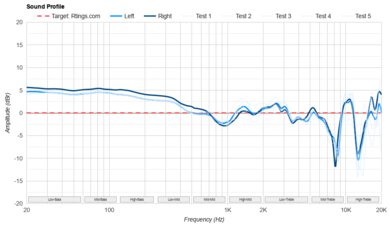
The JBL Live 670NC have a boosted bass sound profile. In fact, the staggering amount of bass can overwhelm the rest of the mix, detracting from the clarity and detail of the mids. The treble range is also emphasized, resulting in sibilants sounding overly sharp and piercing to the ear. Fortunately, the companion app offers a parametric EQ and presets, so you can tame some of these more excessive frequencies. You can see how the presets affect the sound profile.
It's also worth noting that the sound profile will be altered to varying degrees depending on whether the ANC is on. While using the ANC function doesn't drastically alter the sound profile, it does reduce the overall volume by a very small amount. Using the Ambient Aware mode does bring about a more noticeable change in the sound profile, though, with less high bass and more low mids. You can see the sound profile when using a wired connection.
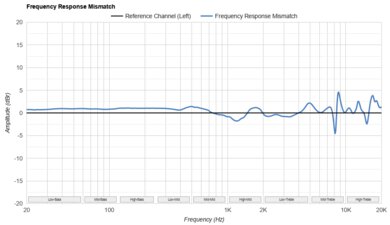
These on-ears have passable frequency response consistency. There's quite a bit more deviation in the response with the left ear, so users with larger heads or those who wear glasses may experience some deviation in bass delivery.
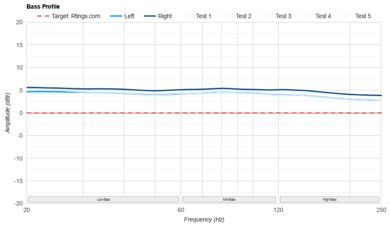
The bass compliance is okay. The bass response is massively overemphasized across the entire range, resulting in kicks and basslines that sound overly boomy and bloated. Fans of genres like EDM and hip-hop might find some satisfaction in this, but for other genres that put more emphasis on the mids and highs, this bombastic bass can eclipse elements like vocals and lead instruments. This is evident on tracks like Sade's Cherish the Day, where the subby bassline that comes in halfway through the track proceeds to obscure the rest of the delicately balanced mix.
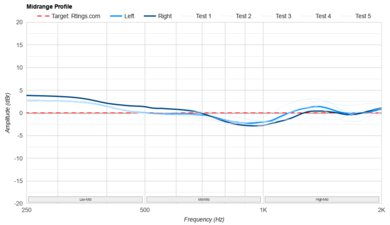
The mid-range compliance with our target is great. While the response in the low-mid is overemphasized compared to our target curve, it's hard to tell, as the bass response is so overpowering. Fortunately, there's a boosted high-mid response that can help bring out the upper harmonics of vocals and lead instruments, allowing them to cut through the bass frequencies a bit.
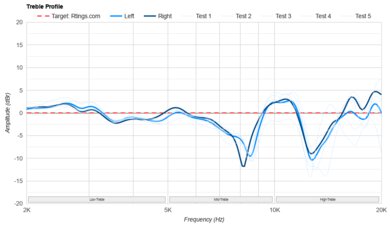
These headphones have decent treble compliance. The treble is overemphasized across most of the low and mid-treble, which can help add some much-needed detail to vocals and lead instruments. Unfortunately, the boosted mid-treble means that sibilants, like S and T sounds, are rendered harshly and can sound sharp to the ear. There's also a sharp drop-off in the response at the top end of the mid-treble and beyond. Though we lose sensitivity to much of this range over time, it still results in a lack of airiness in vocals and acoustic guitars.
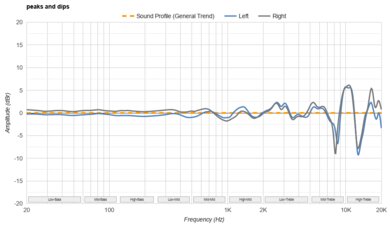
The JBL Live 670NC have a decent peaks and dips performance, meaning they generally control their own sound profile. There's a significant peak in the high-mid that adds clarity and presence to the upper harmonics of vocals. Finally, there's a sharp peak in the mid-treble that brings out the harshness in sibilants and adds a piercing quality. This is followed by a sharp dip at the top of the range that can remove air and presence from vocals.
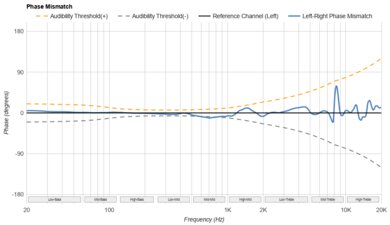
These headphones have decently well-matched left and right drivers. Measurable differences in amplitude and phase between the drivers are concentrated in the highest frequencies, which we lose sensitivity to over time. As a result, objects sound correctly placed in the stereo field, without any unnatural panning or your audio feeling lopsided.
These headphones have very good group delay performance. Bass drums are reproduced accurately, and higher-pitched sounds like hand claps sound clear and present.
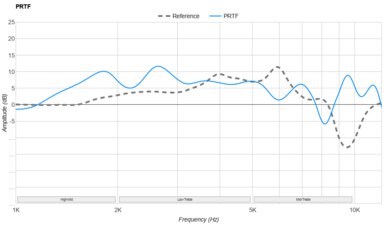
The JBL Live 670NC don't produce audio that interacts much with your outer ear, which is typical of on-ear designs that don't allow for sound to interact with your outer ear. As a result, your audio sounds relatively small and closed off, lacking the large, immersive quality found in some open-back headphones.
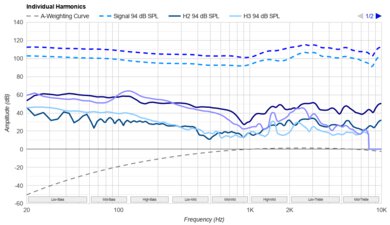
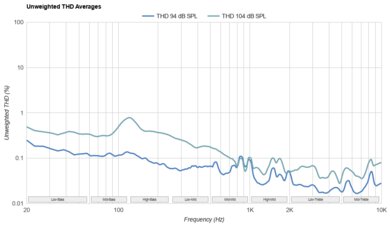
These headphones have impressively low harmonic distortion. Even if you listen at unsafely loud levels, your audio will be reproduced cleanly, without audible distortion artifacts.
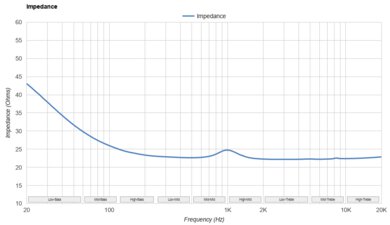
These headphones don't require an amp to drive them, and can be driven from your phone or laptop.
The JBL Live 670NC have a spatial audio feature that can be enabled via the companion app. It can simulate surround sound using Digital Signal Processing (DSP) to mimic a more immersive soundstage. You can choose between the 'Video,' 'Movie,' and 'Game' presets depending on how you're using them.
These are the settings used to test the JBL Live 670NC. Our results are only valid in this configuration.
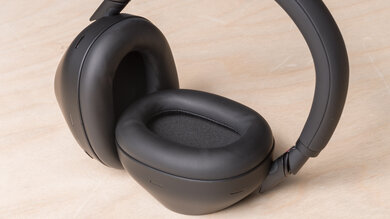
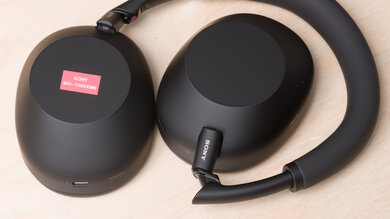
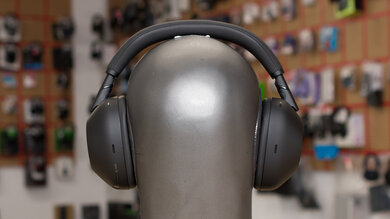
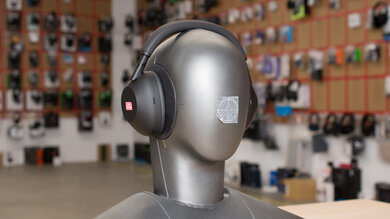
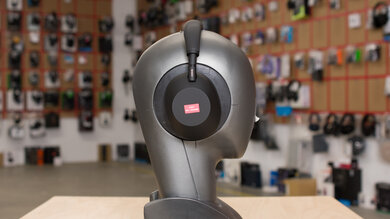
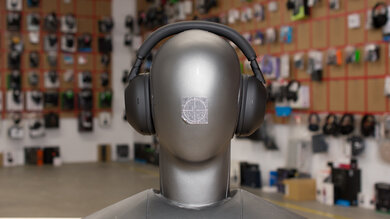
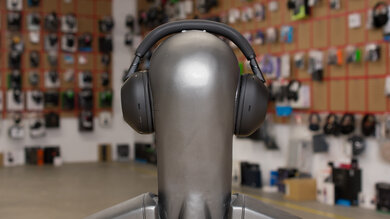
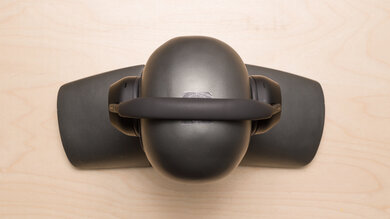
The JBL Live 670NC have a similar on-ear design to the JBL Live 460NC Wireless. They feature earpads that match the color of the rest of the headphones, providing a sleek, uniform look. They have plastic ear cups that feature a silver ring with the JBL logo centered inside. The rest of the frame is made of plastic with a thin, tweed-like padding on the headband. They're available in 'Blue,' 'Sandstone,' 'White,' and 'Black.'
These on-ears are reasonably comfortable. They're relatively lightweight and don't put pressure on the top of your hand; the headband is also padded with a tweed fabric material for extra support. The hinges aren't too stiff either, so it's easy to adjust the fit. That said, the padding that's used on the ear cups is quite bulky and isn't made of the most breathable material.
These headphones feature excellent controls, combining tactile and physical controls that enable you to adjust a wide range of parameters. The control scheme is designed to allow you to perform all tasks without needing to refer to the companion app, and the buttons are well-arranged to facilitate this. All the controls are arranged on the right ear cup, with physical buttons on the lower rim and a tactile control surface on the exterior of the ear cup. Audio feedback is provided when you reach the maximum volume, as well as every time you input a control via the tactile surface. There are also voice prompts for powering the headphones on/off, connecting to a Bluetooth source, or switching between ANC and Ambient Aware (which filters external sounds into your audio via the integrated mic). That said, there's not as much feedback for the physical buttons, and they don't always click to confirm a command has been registered. There's also no feedback to indicate that you've adjusted the volume.
Physical buttons on the right ear cup:
-
Power Slider
- Slide up: Powers the headphones on/off.
-
'+' button
- Single press: Raises the volume.
- Press and hold: Skips track forward.
-
'+' and '-' button
- Press together: Performs a factory reset.
-
'-' button
- Single press: Lowers the volume.
- Press and hold: Skips the track backward.
-
Multi-function button:
- Single press: Plays/pauses audio. Also answers/ends a call.
- Two-second press: Activates Siri or another voice assistant.
-
Ambient Aware button:
- Single press: Toggles between ANC and Ambient Aware mode.
- Press and hold: Activates Talk-Through mode, which amplifies your own voice using the integrated mics.
-
Bluetooth button:
- Single press: Pair additional device.
Tactile surface on the right ear cup:
- Tap once: Play/pause audio.
- Tap twice: Skips to the next track. Answers/rejects call.
- Tap three times: Skips back to the previous track.
- Hold for two seconds: Activates voice assistant. Toggles the mic on/off while on a call.
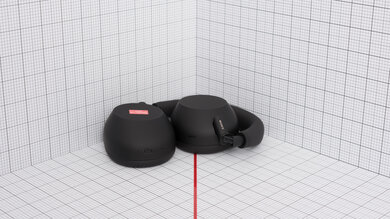
These on-ears' portability isn't bad. While they're lightweight and have ear cups that swivel inwards to reduce their overall size, they're still quite bulky in this form. They come with a very basic case that can help keep them protected while traveling.
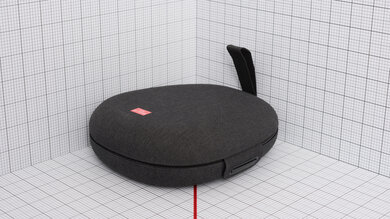
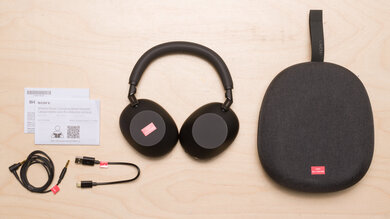
The JBL Live 670NC come with a simple, soft cloth carrying pouch. The material is soft enough to prevent scratching the headphones, yet it feels reasonably robust. The pouch uses a drawstring to close the opening, but we found that it could open back up very easily after being adjusted.
The JBL Live 670NC have a good build quality. They're made mostly of plastic, metal yokes, and a thin, tweed-like cloth that pads the headband. The ear cup material is a faux leather that feels nice on the skin. The hinges accommodate a good amount of motion that will suit all head and ear shapes, and there's the right amount of stiffness when adjusting the fit, so they don't feel too loose. The included braided audio cable is also high quality and can be easily coiled for ease of transport. Unfortunately, the ear cups aren't swappable, so you'll need to replace the headphones if they get worn out. The plastic frame also creaks slightly when moved and appears susceptible to breakage if dropped or handled roughly.
These headphones have passable stability. They won't completely fall off your head during moderately intense activities, like light headbanging, but they're likely to shift around on your head a bit. The ear cup padding material is also slightly more slippery than that of the JBL Live 460NC Wireless, which contributes to them moving around your head more. Thankfully, their wireless design means you don't need to worry about getting the cable snagged on something unless you're using them wired. If you want a more stable set of headphones from the manufacturer, the JBL Live 770NC Wireless over-ear headphones are more reliably secure.
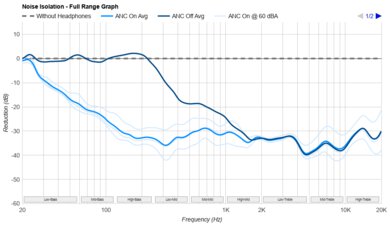
These headphones have a passable full-range noise isolation performance. Their ANC system struggles to block out bass-range noise but does a slightly better job of cutting out mid-range frequencies, like background chatter. They block a decent amount of treble-range noise; however, this is mostly due to the passive isolation provided by their on-ear fit. Typically, choosing an over-ear fit, such as the JBL Live 770NC Wireless, supplies better noise isolation performance. It's worth noting that although our results indicate that the ANC actually amplifies the low-bass frequencies, it is due to an issue with our testing apparatus rather than the headphones themselves. Subjectively, low-bass frequencies appear equally audible, regardless of whether the ANC is on or off.
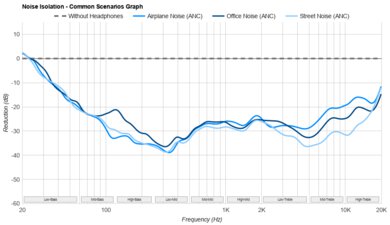
The JBL Live 670NC have a disappointing noise isolation performance when it comes to common scenarios. They do very little to block out the roar of airplane engines. They do a marginally better job at attenuating against street noise and the hustle and bustle of an office environment, but you'll likely still be disturbed when you're in these environments. Although our results indicate that the ANC actually amplifies the low-bass frequencies, this is due to an issue with our testing apparatus rather than the headphones themselves. Subjectively, low-bass frequencies appear equally audible, regardless of whether the ANC is on or off.
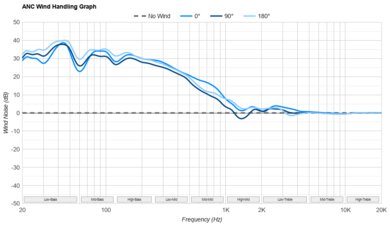
Wind noise is challenging for headphones to tackle as it interferes with the ANC's microphones. This causes the ANC to produce anti-noise to cancel it out, even though the sound doesn't really reach your ear. However, it results in a loud, irritating sound. These headphones lack a wind-handling feature that would help mitigate this issue.
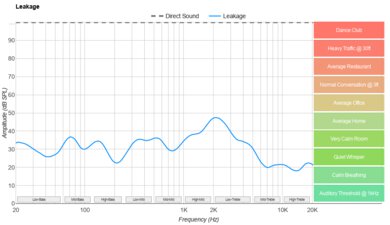
These headphones have good leakage performance. Escaping audio is mostly concentrated in the mid and treble ranges, so leakage sounds thin and tinny. Unless you're in a quiet environment, like a library, others around you will unlikely be able to hear your audio. While a leakage compensation feature is accessible through the app, we found that it had no effect on the level of leakage coming from the headphones.
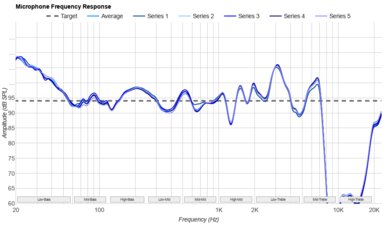
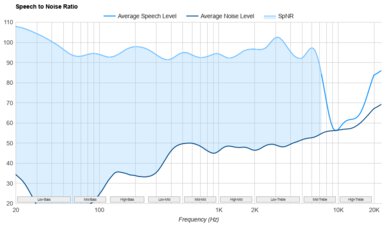
The integrated mic has disappointing audio quality. Your voice sounds muffled and is lacking in body, but you'll still be understandable to whoever's on the other end. Engaging the mic for a call also changes the buds' sound profile.
The JBL Live 670NC's microphone has a subpar noise-handling performance. In moderately noisy environments, like a busy street, your voice will become quite distorted as the microphone struggles to adapt to its surroundings. This issue is exacerbated in noisier environments, like a subway car, as the mic can take a long time to adjust to the louder noise, and your voice sounds impossible to understand in the meantime.
These headphones have an outstanding battery life performance. The manufacturer advertises 50 hours of battery life with the ANC on, which stretches to 65 hours with this feature disabled. However, we achieved 88 hours of battery life in testing with the ANC enabled. There's even an auto-off timer feature that can help preserve battery life, although it must be enabled via the app first. Finally, the manufacturer advertises a quick charge feature that gives you four hours of playtime from just a five-minute charge. However, it's worth noting that battery life varies according to usage, so your experience may differ.
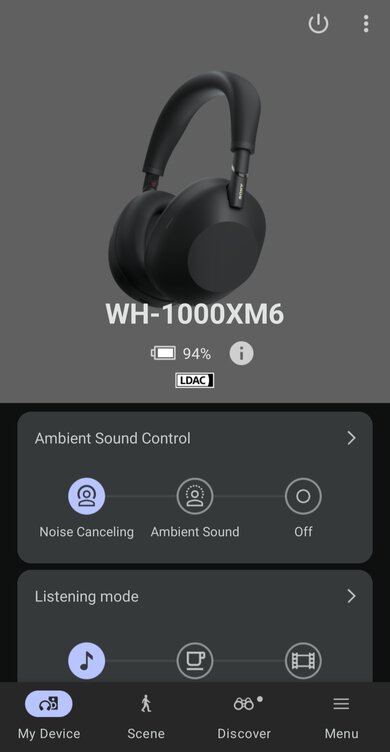
The JBL Headphones app is great. It's packed to the brim with features, and you can adjust settings like the ANC, EQ (including both a parametric EQ and presets), and spatial sound mode. You also have access to handy features like Personi-Fi (which generates a personalized EQ based on your hearing capabilities), Low Volume Dynamic EQ (which boosts the highs and lows to ensure music sounds good at lower volumes), and VoiceAware (which lets you adjust how much of your own voice gets blended into your audio while on a call). You can even toggle between latency modes (video, audio, and normal), set up voice assistant support, adjust the L/R balance, and activate the auto-off timer (which you can't do via the controls). You can see a video of the app in action.
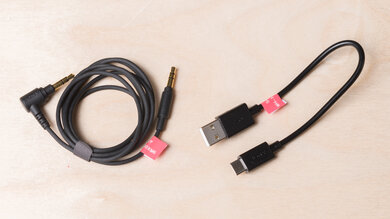
The JBL Live 670NC Wireless come with a 1/8" TRS cable for analog connection. When connected this way, these headphones can switch between passive mode and active mode, the latter of which disables Bluetooth (and app access) and enables active features like ANC.
These headphones have great Bluetooth connectivity. They support multi-device pairing with up to two devices, allowing you to stay connected to both your phone and laptop. They also support Google Fast Pair for seamless pairing with your Android device. Sadly, they're incompatible with any high-resolution streaming codecs, like LDAC or aptX HD. Latency via the default SBC codec is great in 'Audio' mode, though, so you likely won't experience any lip-sync issues when using these headphones to watch video content. You can even switch between different latency presets, like 'Video' and 'Normal,' but we found the 'Audio' mode to have the lowest latency performance. However, some apps and devices seem to compensate for latency differently, so your results may vary.
These headphones are partially compatible with PCs, so you'll only be able to receive audio when using a wired connection. You can always switch to a Bluetooth connection for full mic and audio compatibility, but know that this will introduce some latency.
The JBL Live 670NC are compatible with PlayStation family consoles, but you can only receive audio. If you plan to communicate with your teammates, you'll need to purchase a separate microphone.
The JBL Live 670NC are only partially compatible with Xbox consoles when using their audio cable plugged into the controller. While you can receive audio, you can't communicate with your teammates.