Klipsch T5 True Wireless  Headphones Review

Reviewed Dec 02, 2019 at 09:55am
Writing modified Sep 28, 2021 at 05:11pm
Tested using Methodology v1.4 
Klipsch T5 True Wireless
6.4
Mixed Usage 
5.6
Neutral Sound 
6.9
Commute/Travel 
7.8
Sports/Fitness 
6.1
Office 
4.8
Wireless Gaming 
4.7
Wired Gaming 
5.8
Phone Calls 
 0
Notice: These headphones were replaced by Klipsch T5 II True Wireless ANC

The Klipsch T5 are unique-looking truly wireless headphones that have a weirdly long stalk that enters your ear canal. They might not be the most comfortable headphones, but they're still a decent option for people looking for wireless headphones with an excited, V-shaped sound profile. The battery life on a single charge is quite impressive for truly wireless headphones, and they come with a very nice charging case.

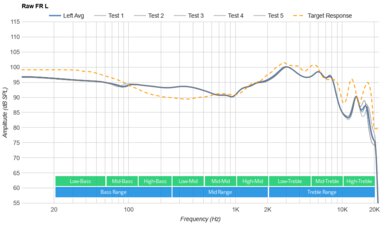
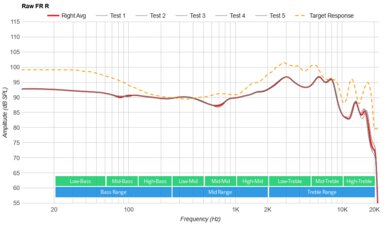
Note: We had issues with the fit of these headphones on our measurement equipment, which resulted in odd-looking results. In this review, we give our subjective impression of their sound, but a colleague couldn't get them to fit in his ears and thinks the measurements below could be representative for a user who can't find a good fit.

Our Verdict

6.4
Mixed Usage 

The Klipsch T5 are just passable for mixed usage. These headphones have a very long stalk design that enters the ear quite deeply, which isn't the most comfortable to wear for long periods. They have an exciting, V-shaped sound profile if you get a good fit, which won't satisfy critical listeners looking for a neutral sound. They're also only rated IPX4, which isn't that great for sports. They can have decent isolation performance with a good fit, and their 8-hour battery life on a single charge is what makes them stand apart.

Pros
  • Great looking charging case.
  • Great single charge battery life for truly wireless headphones.
  • Well-built design.
Cons
  • Sub-par microphone performance.
  • Enters the ear canal deeply; even more than typical in-ears.
  • No customization options.
  • Very high wireless latency.
5.6
Neutral Sound 

The Klipsch T5 are sub-par for neutral sound. This score is influenced by the poor results during our testing procedure due to the poor fit. We don't think the Klipsch T5 are that bad-sounding, but they do seem to have a more excited, V-shaped sound that wouldn't be great for neutral listening. Also, if you're prone to getting seal issues with in-ears, these probably won't be any different.

6.9
Commute/Travel 

The Klipsch T5 are alright for commuting. If you can get a good seal, you can probably isolate even more noise than what we measured, although they aren't the most comfortable. Their single charge battery life is quite good and will be more than enough for your daily commute, but might be a bit short for long flights. On the upside, they're easily portable and come with a very good case.

7.8
Sports/Fitness 

The Klipsch T5 are good for sports. Thanks to their portable and breathable design, these headphones can be used for physical activity, although better options are available. They're only rated IPX4 for water resistance, which isn't that great for sports headphones.

6.1
Office 

The Klipsch T5 are acceptable for the office. They aren't the most comfortable to wear for a full workday, but their battery life should last all day, especially if you charge them during your lunchtime.

4.8
Wireless Gaming 

The Klipsch T5 are bad for wireless gaming. These Bluetooth headphones have very high latency and won't be a good option for gaming.

4.7
Wired Gaming 

You can't use the Klipsch T5 wired.

5.8
Phone Calls 

The Klipsch T5 are sub-par for making phone calls. Their microphone's recording quality is pretty disappointing, and recorded speech is muffled and lacking in detail. The mic also struggles to separate ambient noise and your voice.

  • 6.4
    Mixed Usage
  • 5.6
    Neutral Sound
  • 6.9
    Commute/Travel
  • 7.8
    Sports/Fitness
  • 6.1
    Office
  • 4.8
    Wireless Gaming
  • 4.7
    Wired Gaming
  • 5.8
    Phone Calls
  • Changelog

    1.  Updated Feb 18, 2020: Converted to Test Bench 1.4.
    2.  Updated Dec 02, 2019: Review published.
    3.  Updated Nov 25, 2019: Our testers have started testing this product.
    4.  Updated Nov 25, 2019: Early access published.

    Check Price

    Popular Headphones Comparisons

    Comparison picture

    The Klipsch T5 are uniquely designed in-ear headphones that enter your ear canal quite deeply, which isn't the most comfortable. On the upside, they have a cool-looking case and offer a lot of battery life, especially on a single charge.

    See our recommendations for the best true wireless headphones, the best wireless Bluetooth earbuds, and if you're looking for something cheap, check out our best wireless earbuds under $50.

    Jabra Elite 65t Truly Wireless

    The Jabra Elite 65t Truly Wireless are better headphones than the Klipsch T5 True Wireless. They have a more traditional in-ear fit and a more neutral sound profile, which some users may prefer. They can also be connected to two devices simultaneously, which is helpful at the office. The passive noise isolation is also quite impressive. On the other hand, if you want longer battery life on a single charge, then the Klipsch T5 have the upper hand.

    Bose SoundSport Free Truly Wireless

    The Bose SoundSport Free Truly Wireless are better than the Klipsch T5 True Wireless. The Bose have a more neutral-sounding sound profile, while the Klipsch have an excited, V-shaped sound profile. The Bose are also more comfortable thanks to their earbud-like design, while the Klipsch enter your ear canal very deep. However, the Bose are semi-open, which means their noise isolation is practically nonexistent.

    Sennheiser MOMENTUM True Wireless

    The Sennheiser MOMENTUM True Wireless are better headphones than the Klipsch T5 True Wireless. The Sennheiser are better built and offer a more neutral sound profile than the V-shaped profile of the Klipsch. They also feel more stable in the ear, and their passive noise isolation seems to block more ambient noise. On the other hand, the Klipsch have a great battery life for truly wireless headphones.

    Sony WF-1000XM3 Truly Wireless

    The Sony WF-1000XM3 Truly Wireless are better truly wireless headphones than the Klipsch T5 True Wireless. Although we had fit issues with both headphones, the Sonys still perform better, with better sound quality and a noticeably better noise isolation performance thanks to their ANC feature. They also have a dedicated app that allows customization options.
    Show more 
    Overhauling Our Audio Measurements And A New Multi-Curve Graphing Tool

    We've upgraded our Headphones Test Bench to 2.0! This update brings several key changes to our tests and usages, making it easier than ever to interpret our sound results based on your personal preferences. You'll also find a brand-new interactive graph tool featuring multiple targets (including our own!) for you to explore and compare.

    For a full breakdown, check out our changelog, which includes detailed commentary from our test designer explaining the rationale behind our update.

    We'd also love to hear your thoughts: your feedback helps us keep improving, so join us in the comments!

    Test Results

    perceptual testing image
    Sort:
    RATINGS
    Category:
    All
    Design
    Style
    TypeIn-ear
    EnclosureClosed-Back
    WirelessTruly Wireless
    TransducerDynamic

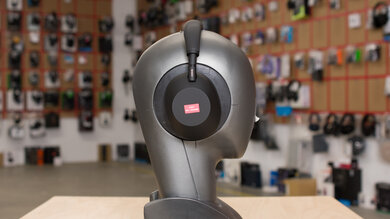
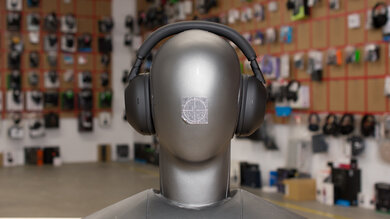
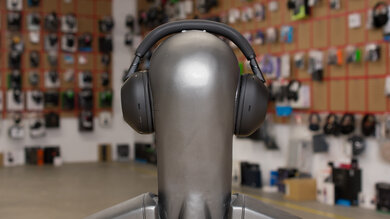
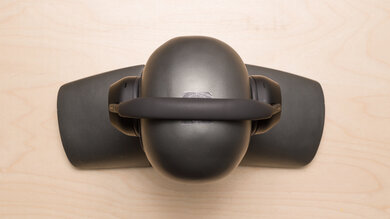
    The Klipsch T5 are decent-looking headphones, but their design makes them protrude quite a bit out of the ears, which some may not like. On the upside, they have a copper accent that gives off a nice high-end feel.

    6.5
    Comfort
    Weight0.02 lbs
    Clamping Force
    0 lbs

    The Klipsch T5 are typical in-ears that go very deep inside the ear canal. They come with a few different tips to help you find a more comfortable and stable fit. However, since they have a tactile control scheme, pushing the control buttons pushes the earbuds even further inside your ears, which hurts a bit. If you want a much more comfortable pair of truly wireless in-ears, check out the JBL LIVE 300TWS Truly Wireless or the Google Pixel Buds 2020 Truly Wireless.

    7.1
    Controls
    OS Compatibility
    Not OS specific
    Ease Of UseGood
    FeedbackGood
    Call/Music ControlYes
    Volume ControlYes
    Microphone ControlMute/Unmute
    Channel Mixing
    No
    Noise Cancelling ControlNo
    Talk-Through
    No
    Additional ControlsVoice Assistant

    The Klipsch T5 True Wireless' control scheme is rather intuitive and easy to use. The right bud is for raising the volume and skipping tracks, while the left one reduces the volume and goes backward. You can obviously play/pause your music with either bud and manage calls as well. You can also mute your microphone when using the headphones for calls, which is nice.

    9.2
    Breathability
    Avg.Temp.Difference0.8 °C

    Like most in-ears, they don't trap heat inside or around the ears. You won't sweat more than usual when using these, and they make a decent option for sports, although they aren't designed for this use.

    9.5
    Portability
    L1.3"
    W1.1"
    H0.8"
    Volume1.1 in³
    Transmitter RequiredNo

    Like all truly wireless headphones, the Klipsch T5 don't take a lot of space, and their footprint is very small. You'll easily be able to fit them inside your pants pockets or a bag. You can also put them inside their charging case.

    7.5
    Case
    TypeHard case
    L2"
    W1.3"
    H2"
    Volume5.2 in³

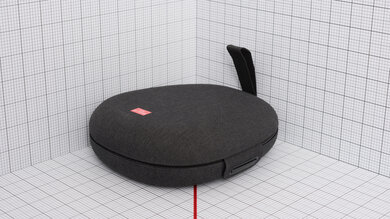
    The Klispch T5 True Wireless come with a good metal case that protects the headphones well. It's small enough to fit in most pockets, although some people might think it's a bit too heavy for a truly wireless case. The lid is also a bit loose, but this shouldn't bother most people. Also, when taking the buds out of the case, the tips stay stuck and turn themselves inside out, which gets frustrating since you need to adjust them every time you take the buds out of the case.

    7.5
    Build Quality

    The Klipsch T5 True Wireless' build quality is good. They should survive accidental drops without too much damage, especially if they're protected by the metal-feeling, heavy charging case. The buds feel dense and are rated IPX4 for water resistance. With head movement, you can easily hear the buttons moving around because they're loose.

    7.0
    Stability

    These headphones are decently stable but not the best option for sports. If you don't have a good seal, they fall off with head movement.

    Headshots 1
    Headshots 2
    Top
    In The Box

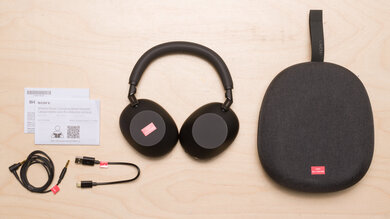
    • Klipsch T5 True Wireless headphones
    • 3x silicone tip sizes
    • Charging case
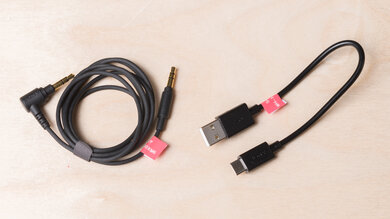
    • USB-C to USB-C charging cable
    • USB-C to USB adapter
    • Manuals
    Sound
    Sound Profile
    See details on graph tool
    Bass Amount
    -10.65 dB
    Treble Amount
    -3.17 dB

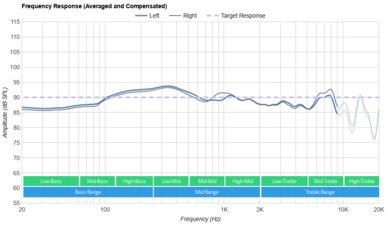
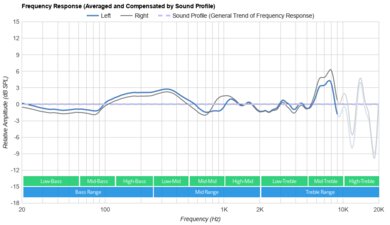
    We had trouble measuring the Klipsch T5 True Wireless with our testing rig due to fit issues, which explains the lack of bass. We couldn't get an airtight seal. However, when listening to them, the ones that get a good fit hear an exciting, V-shaped sound profile, while the one who doesn't get a seal hears something similar to the test results, meaning it can be representative of use for someone that can't get a good seal.

    9.8
    Frequency Response Consistency
    See details on graph tool
    See details on graph tool
    Avg. Std. Deviation
    0.04 dB

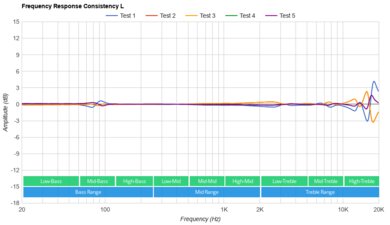
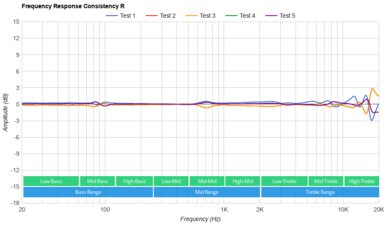
    The frequency response consistency was amazing on our dummy head, but only because we couldn't get a good fit every time we tried testing them. However, this is different with humans, as we tested with employees. A few people could get a decent seal, while another one could barely fit them inside his ears, even with the smallest tips. Therefore, they perform quite differently depending on the seal you can achieve.

    Raw Frequency Response
    See details on graph tool
    See details on graph tool
    1.3
    Bass Accuracy
    See details on graph tool
    Std. Err.
    11.46 dB
    Low-Frequency Extension
    179.59 Hz
    Low-Bass
    -20.2 dB
    Mid-Bass
    -10.99 dB
    High-Bass
    -2.52 dB

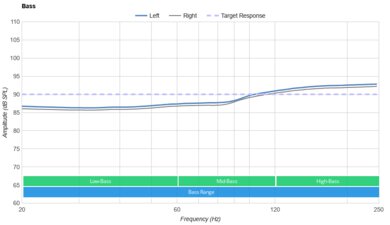
    In our testing procedure, we couldn't get the Klipsch T5 to fit appropriately in our measurement rig, resulting in a drastic loss of bass. These results seem to be accurate for people who can't get a good seal with these, but if you can, we experienced a lot of low-end thump and pretty good bass performance. We don't think the bass is neutral, but it sounds better than what the graph shows.

    8.7
    Mid Accuracy
    See details on graph tool
    Std. Err.
    1.77 dB
    Low-Mid
    0.14 dB
    Mid-Mid
    -2.78 dB
    High-Mid
    -0.01 dB

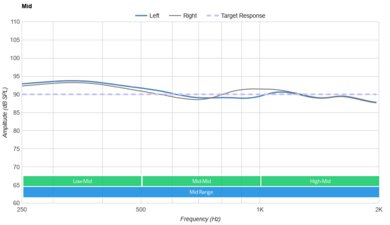
    With the fit issues we had during testing, the Klipsch T5 show overdone mid-range accuracy, which results in forward-sounding vocals and lead instruments. However, when subjectively listening to these headphones, we thought the bass was slightly overpowering the mid-range, although voices were still accurately reproduced and clear enough for most people.

    5.7
    Treble Accuracy
    See details on graph tool
    Std. Err.
    5.69 dB
    Low-Treble
    -4.93 dB
    Mid-Treble
    -4.56 dB
    High-Treble
    -14.05 dB

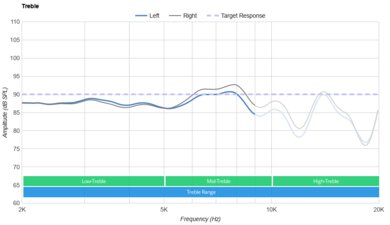
    The treble performance of the Klipsch T5 True Wireless is sub-par. Although we didn't get a good fit, we think these results are pretty close to reality when we gave them a listen. However, they should sound a bit overly sharp and piercing on high frequencies like vocals and cymbals.

    6.9
    Peaks/Dips
    See details on graph tool
    Peaks
    2.23 dB
    Dips
    1.15 dB

    Due to the poor fit, the Klipsch T5's peaks/dips performance is okay. However, we don't think this reflects an accurate user experience. They do sound a bit excited with an overemphasis in bass and treble, but they aren't uncomfortable to listen to.

    8.5
    Imaging
    See details on graph tool
    See details on graph tool
    Weighted Group Delay
    0.14
    Weighted Amplitude Mismatch
    1.07
    Weighted Frequency Mismatch
    2.27
    Weighted Phase Mismatch
    2.36

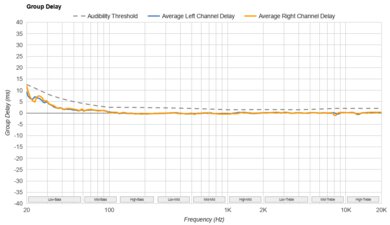
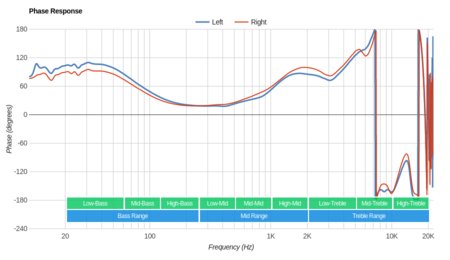
    The Klipsch T5's imaging is excellent. The group delay is under the audibility threshold, which results in a tight bass and transparent treble range. Our unit also has well-matched L/R drivers, which is important for the reproduction of sounds in the stereo image. Note that these results are only valid for our unit, and yours may perform differently.

    1.3
    Passive Soundstage
    PRTF Accuracy (Std. Dev.)
    N/A
    PRTF Size (Avg.)
    N/A
    PRTF Distance
    N/A
    Openness
    4.4
    Acoustic Space Excitation
    1.3

    Due to the in-ear design, these headphones don't interact with the pinna, which doesn't result in a very wide or natural sounding soundstage.

    0.0
    Virtual Soundstage
    Head Modeling
    No
    Speaker Modeling
    No
    Room Ambience
    No
    Head Tracking
    No
    Virtual Surround
    No App
    7.0
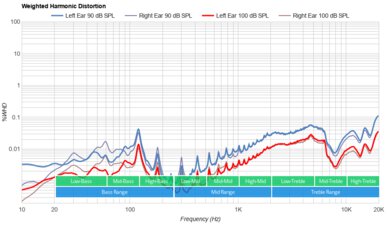
    Weighted Harmonic Distortion
    See details on graph tool
    WHD @ 90
    0.554
    WHD @ 100
    0.253

    The Klipsch T5's weighted harmonic distortion performance is decent. The amount in the bass is within good limits, but it's slightly elevated for the treble range, making these frequencies a bit impure and harsh. On the upside, there's no big jump under heavier loads, which is good.

    Test Settings
    Firmware
    Unknown
    Power
    On
    Connection
    Bluetooth 4.2
    Codec
    aptX, 16-bit, 48kHz
    EQ
    No EQ
    ANC
    No ANC
    Tip/Pad
    Silicone (small)
    Microphone
    Integrated
    Isolation
    5.5
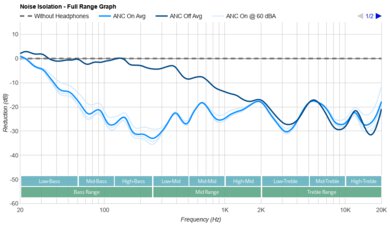
    Noise Isolation
    See details on graph tool
    Isolation Audio
    Overall Attenuation
    -13.21 dB
    Noise CancellingNo
    Bass
    0 dB
    Mid
    -13.97 dB
    Treble
    -27.08 dB

    The noise isolation performance is disappointing. However, this was measured with the same fit issue that we were getting with our sound measurements. They aren't the greatest for blocking noise, but we couldn't hear near conversations when using the headphones with some music, meaning they'll be good for the office. However, they don't block much noise in the bass range, so they might not be the ideal option for your daily commute.

    8.9
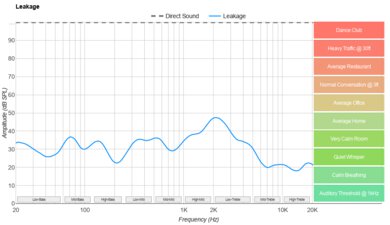
    Leakage
    See details on graph tool
    Leakage Audio
    Overall Leakage @ 1ft
    27.91 dB

    These headphones have excellent leakage performance. They practically don't leak unless you crank up the volume to its maximum in a quiet environment. The leakage volume isn't loud, but when audible, it's thin-sounding.

    Microphone
    Microphone Style
    Integrated
    Yes
    In-Line
    No
    Boom
    No
    Detachable Boom
    No
    MicYes
    5.8
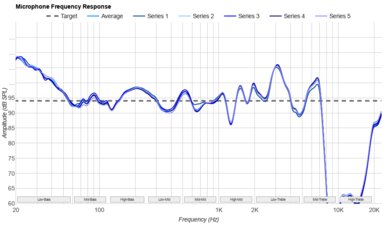
    Recording Quality
    See details on graph tool
    Recorded Speech
    LFE
    538.17 Hz
    FR Std. Dev.
    2.7 dB
    HFE
    3,179.16 Hz
    Weighted THD
    0.912
    Gain
    1.97 dB

    The integrated microphone's recording quality is sub-par. People on the other end of the line will understand you in very quiet environments, but the audio quality won't be the best. Recorded speech sounds muffled and lacks detail and brightness.

    6.0
    Noise Handling
    See details on graph tool
    Speech + Pink Noise
    Speech + Subway Noise
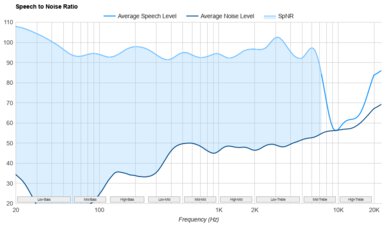
    SpNR
    11.85 dB

    Like most truly wireless Bluetooth headphones, the noise handling of this microphone is mediocre. It will only be suitable for quiet environments and can't separate ambient noise from your voice in moderately loud situations like a busy street.

    Active Features
    6.1
    Battery
    Battery Type
    Rechargable
    Continuous Battery Life
    8 hrs
    Additional Charges
    3.0
    Total Battery Life
    32 hrs
    Charge Time
    1.3 hrs
    Power-Saving Feature
    No
    Audio While Charging
    No
    Passive Playback
    No
    Charging PortUSB-C

    These headphones offer about 8 hours of continuous playback time, which is quite good for truly wireless headphones and can last you for a full day at work. Their case also holds three additional charges for when you're on the move. Unfortunately, you can't use only one bud at a time while the other is charging.

    0.0
    App Support
    App NameNo App
    iOSNo
    AndroidNo
    macOSNo
    WindowsNo
    Equalizer
    No
    ANC Control
    No
    Mic ControlNo
    Room Effects
    No
    Playback Control
    No
    Button MappingNo
    Surround Support
    No

    These headphones don't have a dedicated companion app for customization options. If you're looking for Klipsch headphones with a companion app, try the Klipsch T5 II True Wireless ANC.

    Connectivity
    6.5
    Bluetooth
    Bluetooth Version
    5.0
    Multi-Device Pairing
    No
    NFC Pairing
    No
    Line Of Sight Range
    116 ft
    PC Latency (SBC)
    408 ms
    PC Latency (aptX)
    321 ms
    PC Latency (aptX HD)
    N/A
    PC Latency (aptX-LL)
    N/A
    iOS Latency
    117 ms
    Android Latency
    106 ms

    The Klipsch T5 are Bluetooth-only truly wireless headphones. They only have a decent line of sight range, but you shouldn't have any issues if you keep your source near you. Unfortunately, their latency is very high, and even with app or device compensation, people should notice a delay when watching video content.

    0.0
    Non-Bluetooth Wireless
    Non-BT Line Of Sight Range
    N/A
    Non-BT Latency
    N/A

    These headphones are Bluetooth-only.

    0.0
    Wired
    Analog Audio
    No
    USB Audio
    No
    DetachableNo
    LengthN/A
    ConnectionNo Wired Option
    Analog/USB Audio Latency
    N/A

    As expected, you can't use these truly wireless headphones wired. They come with a USB-C to USB-C charging cable, which means you can plug the case into your phone for on-the-go charging. It also comes with a USB adapter.

    PC / PS4 Compatibility
    PC/PS4 Analog
    No
    PC/PS4 Wired USB
    No
    PC/PS4 Non-BT Wireless
    No

    You can only use these headphones via Bluetooth on PCs, and they won't work with the PS4.

    Xbox One Compatibility
    Xbox One Analog
    No
    Xbox One Wired USB
    No
    Xbox One Non-BT Wireless
    No

    These Bluetooth-only headphones aren't compatible with the Xbox One.

    2.2
    Base/Dock
    Type
    Charging Case
    USB Input
    No
    Line In
    No
    Line Out
    No
    Optical Input
    No
    RCA Input
    No
    Dock Charging
    Yes
    Power Supply
    USB-C

    Like all truly wireless headphones, their case serves as a charging dock that you can bring around. It supports charging via USB-C and has no other inputs.