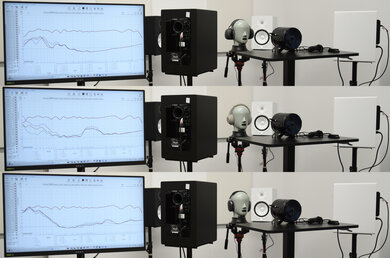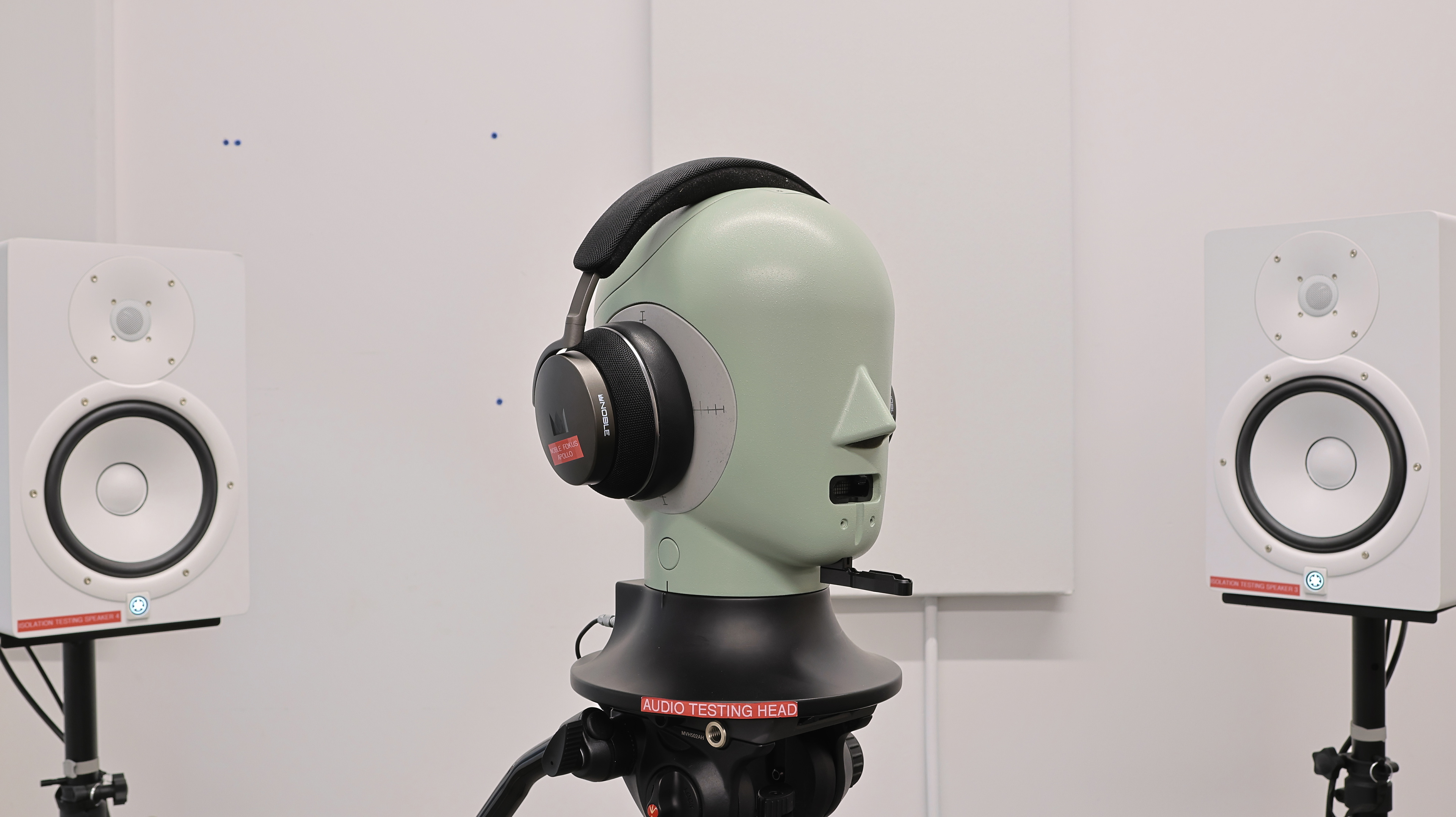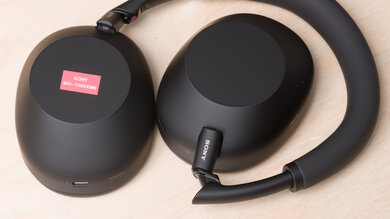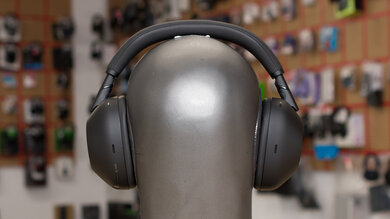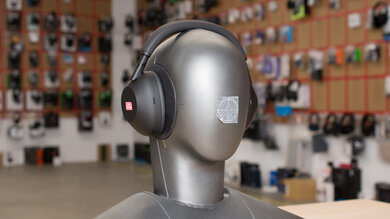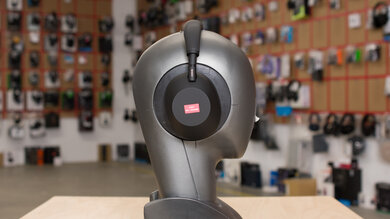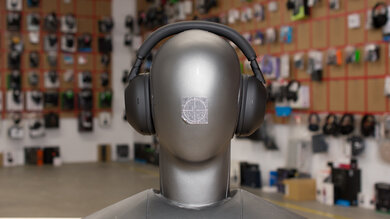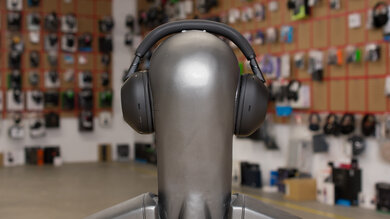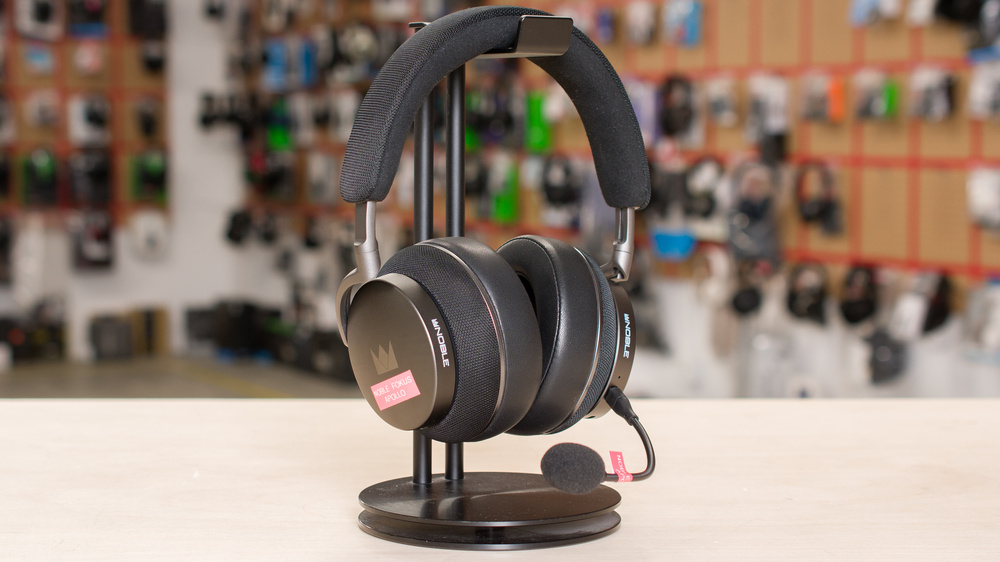
The Noble FoKus Apollo are the brand's first entry into the over-ear headphone product category. That said, the brand isn't a no-name in the audio space; it has a rich history of producing well-respected, artisanal IEMs and TWS for over a decade. The FoKus Apollo aim to compete with veterans of the premium over-ear market, including Focal, Bowers & Wilkins, and Bang & Olufsen. The Noble's claim to fame is their 'world first' hybrid 40 mm dynamic driver + 14.5 mm planar magnetic driver speaker arrangement, wrapped in a package that boasts premium materials, a detachable boom mic, and wide codec support.
Our Verdict
The Noble FoKus Apollo aren't ideal for sports and fitness. While they're wireless and comfortable to wear, they aren't stable during head shakes and vigorous tilting; if you bounce around while taking a jog or working out, they likely won't stay on your head. Though the headphones are also well-built with premium and durable materials, they don't have an IP rating and may not survive a disastrous drop.
Impressive comfort.
No IP rating.
The Noble FoKus Apollo are great for travel. They have outstanding noise isolation, so you can nap uninterrupted on your next transcontinental flight without worrying about airplane engine rumble. If you lean more toward passing the time with entertainment, the headphones have a battery life north of 40 hours and come with a 3.5 mm to two-prong airplane adapter, so you can connect to an in-flight entertainment system. Although the headphones are pretty bulky, they come with a convenient hard case, which should keep them much safer than tossing them unprotected into your backpack while you blitz to the next gate for a transfer.
Impressive comfort.
Outstanding noise isolation.
Bulky design and large case takes up space.
The Noble FoKus Apollo are impressive for office work. Whether you're in the office or working remotely from your home, the headphones provide ample support for locking in for a productivity sprint or updating your team over Teams. They're comfortable over long periods of time, and they have a battery life that'll last for a few workdays without charging, a boom mic with very good performance, and outstanding noise isolation.
Impressive comfort.
Outstanding noise isolation.
Boom microphone captures natural vocals.
The Noble FoKus Apollo don't have a low-latency wireless solution like a dongle or low-latency codec support. As a result, they aren't ideal for gaming due to their high audio latency, which can cause audio/visual desync (lip-sync) issues.
The Noble FoKus Apollo are good for wired gaming. They have a plush headband and earpads, making them a great companion for long sessions on newly launched games or fresh start servers. Their balanced sound profile leans slightly warm, bringing adequate rumble to intense explosions and immersive cinematics. Plus, the headphones' included boom microphone (and its compatibility with analog connections across devices and consoles) makes the Noble a perfect option for more socially inclined gamers to chat on Discord or use in-game comms.
Impressive comfort.
Boom microphone captures natural vocals.
Driver matching issue may be introduced depending on ANC setting.
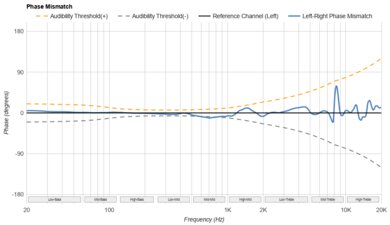
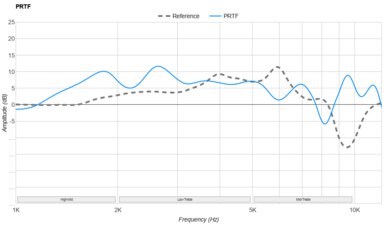
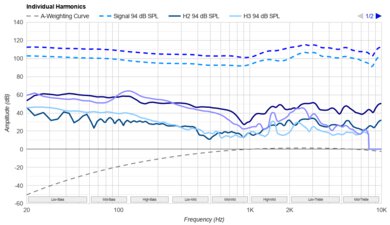
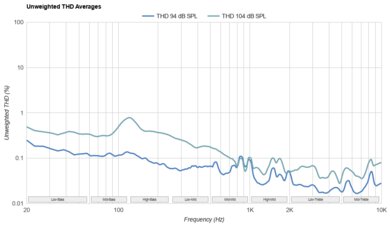
The Noble FoKus Apollo have good audio reproduction accuracy. Their frequency response mostly resembles their balanced sound signature, with some fluctuations in the treble range rendering instruments and vocals alternately harsh or dull across neighboring bands. Over Bluetooth and with ANC enabled, the headphones have solid group delay and stereo matching performance as well. Neither indicates serious audible issues; wave interactions in neighboring mid-bass frequencies cause minor emphasis in the same range, and audio objects are accurately represented in the stereo image without bias or gaps. At higher volumes, you likely won't notice any audible coloration due to harmonic distortion. That said, while the headphones interact with your pinna and provide some spatial cues from outer ear excitation, the Noble's PRTF doesn't resemble that of our benchmark, a stereo speaker setup.
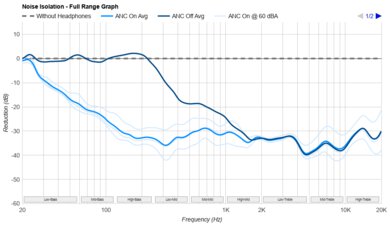
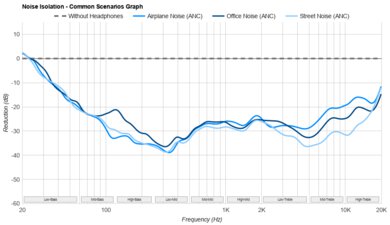
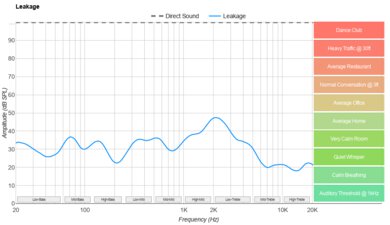
The Noble FoKus Apollo have outstanding noise isolation performance. The headphones will handily attenuate noise like the whirr of landing gear stowage, the rumble of accelerating semi trucks, and the rasp of office ventilation. They also don't leak much audio; people won't notice your audio leaking unless you're in a quiet space like a library, and they're quite close.
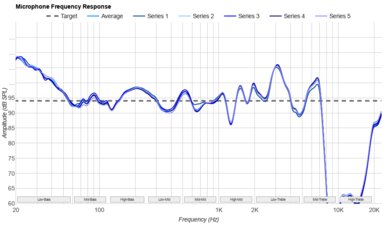
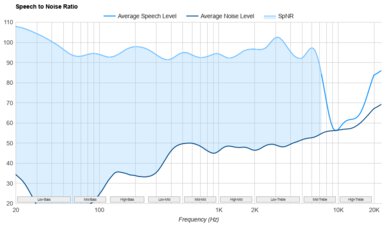
The Noble FoKus Apollo have very good microphone performance. Over Bluetooth (forcing the Hands Free Protocol), the boom microphone captures your voice as natural and intelligible, while mitigating background noise thanks to the microphone's proximity to your mouth and pickup pattern. The headphones also have a decent integrated microphone. While it doesn't record your voice as naturally and captures more background noise, the integrated mic remains a convenient option that's less bulky.
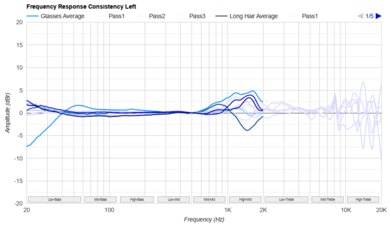
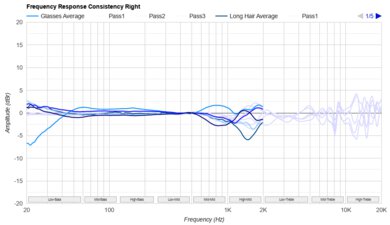
The Noble FoKus Apollo have great frequency response consistency. Most people's listening experience will resemble our frequency response measurements. However, if you wear glasses, you may notice less pronounced sub-bass and slightly more mid-bass emphasis.
Performance Usages
Check Price
Differences Between Sizes And Variants
The Noble FoKus Apollo don't have any variants. If you encounter a variant, please let us know in the comments and we'll update the review.
Popular Headphones Comparisons
Bringing a classic IEM design archetype to the over-ear market, the Noble FoKus Apollo are one of the few over-ears on the market that use a hybrid dual-driver design. Their pricing and design place the headphones solidly in the premium Bluetooth over-ear category, in competition with the likes of the Focal Bathys Wireless, the Bang & Olufsen Beoplay H95, and the Bowers & Wilkins Px8 Wireless. In an upset for the newcomer, the Noble FoKus Apollo outperforms most headphones' noise isolation in this price category, approaching the effectiveness of giants like the Bose QuietComfort Ultra Headphones in performance. The Noble also have a longer battery life than the aforementioned premium competitors. And while their wide support for connection types like Bluetooth, USB, and analog is welcome for audiophiles with a variety of source devices, the brand's overall execution could use improvement, as switching ANC modes can introduce driver mismatch issues by skewing objects to the left, depending on your configuration.
If you're focused on sound and open to some wired headphone options, check out our recommendations for the best headphones for music and the best audiophile headphones. For more casual use headphones, check out our picks for the best noise cancelling headphones.
The Noble FoKus Apollo and the Focal Bathys Wireless are similarly positioned headphones. Both are closed-back over-ears with wireless capability targeted at audiophiles and consumers focused on sound quality. The Focal have less volatile sound signature that more closely resembles our target curve. The Noble have a slightly bassier sound (still balanced), which some might prefer for genres like funk or EDM. That said, if you're on the go, the Noble app has more customization options with their 10-band EQ versus the Bathys' 5-band EQ. For casual use, the Noble also have much better ANC performance and nearly double the battery life. That said, you may run into driver mismatch issues on the Noble, depending on your ANC configuration. While the Noble are likely the better pick for most, due to the audiophile focus of both products, user preference can easily outweigh the aforementioned ANC and battery life.
The Bowers & Wilkins Px8 Wireless and the Noble FoKus Apollo are very similar headphones. Even in their styling, both products bear a striking resemblance in finish and geometry. That said, the Noble are a bit bulkier, and as a result, less stable. Both trade blows in comfort and build quality, but the Noble are significantly better at cancelling noise. While the Noble have a boom microphone, the B&W support aptX Adaptive (Low Latency), making them a better option for wireless gaming. In terms of sound, the B&W are warmer than the Noble, though both are suited for a variety of genres from classical to hip-hop.
The Noble FoKus Apollo are better than the Bang & Olufsen Beoplay H95 for most people. While both have premium designs (and pricing), the Noble have better build quality and comfort. The B&O have worse noise isolation and microphone performance compared to both the Noble's boom mic and integrated mic. And while the B&O support aptX Adaptive (Low Latency), they don't support their microphone over wired analog or USB-C connections. The Noble have a more balanced sound with a slightly warm tone, while the B&O have a warmer sound signature with more bass and low-mid emphasis.
The Noble FoKus Apollo and the Bose QuietComfort Ultra Headphones Wireless target different crowds. While the Bose keeps your listening experience both quiet (thanks to their top-tier ANC) and comfortable, the Noble aren't too far behind in either respect. That said, a significant price difference between the two means the Noble incorporates more premium materials like anodized aluminum and Alcantara. In terms of sound, both headphones are quite similar, the Bose feature a more 'popular' tuning with a warm tonality, while the Noble are balanced. The ultimate decision between these products probably comes down to whether you're looking for a flexible audiophile companion with multiple connection options in the Noble, or a casual use commuter headphone in the Bose.

We've upgraded our Headphones Test Bench to 2.0! This update brings several key changes to our tests and usages, making it easier than ever to interpret our sound results based on your personal preferences. You'll also find a brand-new interactive graph tool featuring multiple targets (including our own!) for you to explore and compare.
For a full breakdown, check out our changelog, which includes detailed commentary from our test designer explaining the rationale behind our update.
We'd also love to hear your thoughts: your feedback helps us keep improving, so join us in the comments!
Test Results

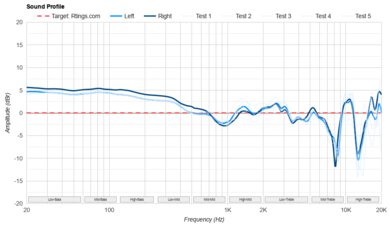
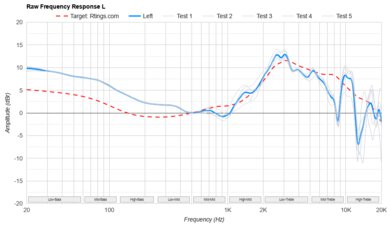
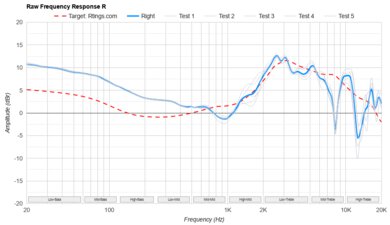
The Noble FoKus Apollo have a balanced signature with their default EQ over Bluetooth. That said, you might perceive them as slightly warm due to the contrast between their emphasized bass and scooped high-bass to low-mid frequencies. If their stock tuning isn't to your liking, you can always use their 10-band graphic EQ, try their multiple EQ presets, or go through the personalized EQ test on the headphones' app.
Matching the Focal Bathys Wireless, the Noble have an onboard DAC (digital-to-analog converter) and support Bluetooth, USB-C, and analog connections. While each connection type performs similarly under the same conditions (powered on, ANC on), the headphones' frequency response varies depending on the state of ANC (or power) for analog, USB-C, and Bluetooth connections. In further investigations, we also noticed that phase response mismatch was more pronounced in some ANC off configurations.
The Noble FoKus Apollo have great frequency response consistency for most people. That said, if you wear glasses, you may notice the headphones don't deliver as much sub-bass. Their audio delivery doesn't fluctuate much between reseats, though, so you'll enjoy consistent audio between sessions.
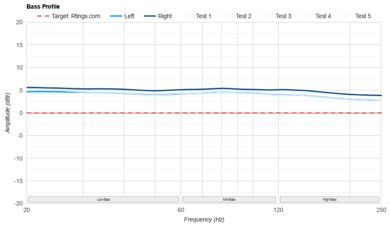
They have outstanding bass compliance. They have a bit of emphasis in both the sub-bass and mid-bass, with the latter indicated by group delay fluctuations. In practice, you won't perceive too many differences in thump and punch due to their relatively understated emphasis (5 dB) and our lower sensitivity to loudness changes in the bass range.
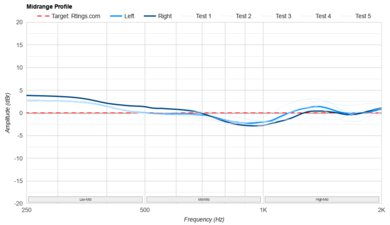
The headphones have excellent mid-range compliance. Slight underemphasis from the high bass continues into the low-mids, which sidesteps potential mudiness that could result from their slightly emphasized bass. Vocals and instruments are present but forward in the mix. The headphones reproduce Jacqueline du Pre's wistful cello in Elgar's Cello Concerto in E Minor without sounding boxy.
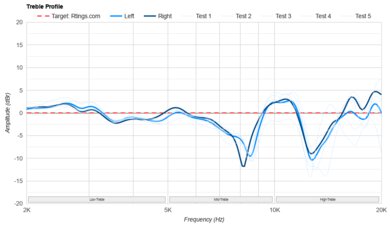
The Noble FoKus Apollo have great treble range compliance. On average, their frequency response lines up with our target curve. However, their response fluctuates from band to band, which can render neighboring frequencies as piercing or dull as high-pitched vocals traverse their frequency response.
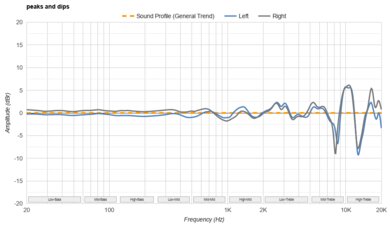
The Noble FoKus Apollo's peaks and dips performance is okay. Most of the frequency response is smooth and fluctuation-free, adhering to their balanced sound signature. However, the treble range contains alternating peaks and dips, which can render neighboring frequencies alternately dull or piercing, and hissy or closed-up. That said, fluctuations aren't more than 7 dB from trough to peak, and we aren't as sensitive to dB changes in this high-frequency range.
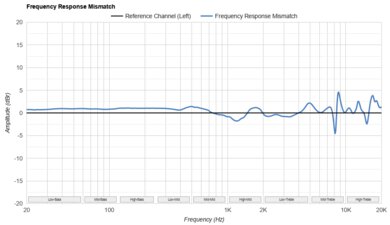
The Noble FoKus Apollo have great stereo matching in overall amplitude, frequency response, and phase response. Audio objects like individual instruments are rendered accurately in a stereo image without gaps.
That said, you might run into more obvious phase (and frequency) response mismatch issues, depending on your connection and ANC settings. We noticed that stereo mismatch varied depending on ANC settings when connected via Bluetooth and analog. There is an extended phase alignment issue around 350Hz–800Hz that was replicable for both Bluetooth and analog connections with ANC (or the headphones) off. In practice, this can bias the fundamental frequencies of vocals and instruments to the left.
These headphones have good group delay performance. That said, a small fluctuation around 90Hz contributes to a tuning decision of the frequency response in the same region due to constructive and destructive wave interactions of neighboring frequencies.
These closed-back headphones excite the pinna, but they don't sound as natural or immersive as a benchmark stereo speaker setup.
These headphones have good distortion performance. At high volumes, most listeners won't perceive an audible coloration due to distortion.
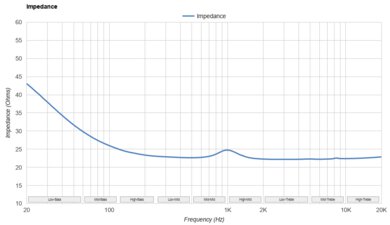
The headphones get plenty loud via Bluetooth and have a low enough impedance (and high enough sensitivity) that you won't need a dedicated amp to drive them. Content with a larger dynamic range, like orchestral music, won't clip during emotional swells, even if you're connected to your laptop or phone.
These are the settings used to test these headphones. Our results are only valid when used in this configuration.
The Noble FoKus Apollo are premium Bluetooth headphones, and they certainly look the part. Their silhouette is pretty wide on your head, and certainly more evocative of less modern designs, yet their finish and material selection support a refined look more suited for current sensibilities. The headphones house concentric hybrid drivers (14.5 mm planar magnetic and 40 mm dynamic drivers) and use a mix of materials throughout their design.
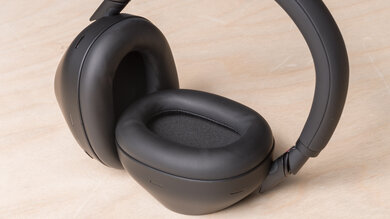
The earpads are memory foam bound with protein leather, while the ear cup housing, further from the head, has a textured finish mirrored by the top of the headband. The outer ear cups feature an anodized aluminum finish with the manufacturer's crown-like logo and branding. The asymmetrical yokes and hinges mirror the gunmetal aluminum finish of the outer ear cups, and telescope into the Alcantara-upholstered lower section of the headband.
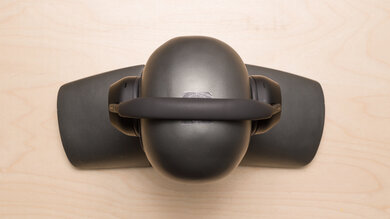
The Noble FoKus Apollo are very comfortable headphones. While they aren't as lightweight as consumer flagships like the Sony WH-1000XM6 or Bose QuietComfort Ultra Headphones Wireless, they hit a good middle ground, opting for a lighter design than the heavier Apple AirPods Max. To help them stay in the sweetspot, they have yokes and hinges that swivel and tilt to conform to your head shape, optimally sheltering your ears in deep, spacious earpads. Their headband also has ample padding and distributes their weight well; if you have a more exposed scalp, the suede-like finish of the band's Alcantara (synthetic suede) upholstery is soft and comfortable to the touch.
For gamers (or teleworkers), the boom mic takes the headphones' total weight to 0.77 lbs. It's also worth pointing out that due to their relatively high clamping force and deeper earpads, the headphones can apply mildly discomforting pressure on your temples, particularly if you wear glasses.
These headphones have great controls. Their control scheme exclusively uses physical buttons, which some users prefer due to the lower likelihood of erroneous inputs. We found them quite intuitive and easy to use, though certain mappings have consequences for overall usability. For example, holding the volume up button cycles to the next song, which means you need to press the volume button multiple times to increase your volume (rather than holding it down, which is common for other control schemes). You also have access to a dedicated ANC mode button and a switch to mute/unmute the microphone.
The headphones chime in response to inputs (which you can toggle off) and have physical notches and texture, which help with navigation. That said, you have to hold the power button down for a few seconds to power the headphones on/off. It's not a dealbreaker, but it's still noticeably longer compared to other brands' controls. If you have the headphones powered on and connected to your device via analog, you won't be able to control calls (but playback controls work just fine).
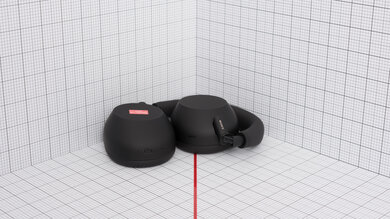
These headphones are quite bulky. While their hinges and yokes swivel, allowing the headphones to lie flat, they aren't foldable. That said, they won't be too cumbersome if you want to hang them around your neck. If you plan on putting them away during your travels, it's probably best to keep them safely stowed in their hard case, considering their price tag.
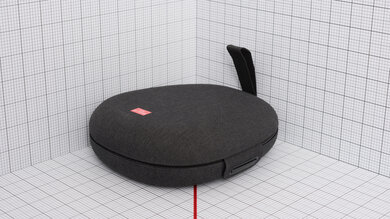
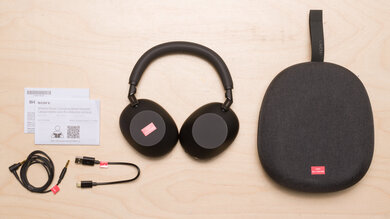
The headphones come with a great, albeit large, carrying case. Noble claims the hard case is made from EVA (a durable plastic material). It comes with ample storage space for the headphones and their included accessories. You can also store additional cables underneath the plastic structure inside the case.
The case comes with a handle, making it easier to carry around as a separate item. However, its bulky footprint can take up precious real estate in a carry-on bag or backpack on your next flight.
The Noble FoKus Apollo have excellent build quality. Their construction features premium materials, including an anodized aluminum frame, protein leather wrapped memory foam earpads, and a headband that incorporates Alcantara. The hinges and yoke can swivel easily and have tight tolerances without play or wobble. The bottom of the headband is upholstered with branded Alcantara, known for its durability and use in high-contact surfaces like car steering wheels. In terms of control surfaces, the headphones' buttons don't have much wobble and have a satisfying click. While their included cables aren't braided, they have thicker housings and are less prone to tangles.
These headphones have remarkable full-range noise isolation. Their closed-back design and ANC system provide solid attenuation against bassy engines, ambient chatter, and whirring fans. That said, they aren't as effective at mitigating noise from voices as the Sony WH-1000XM6, which provide stronger low-mid and mid-mid attenuation.
Our subjective assessment found their transparency mode somewhat digital compared to the benchmark, the Apple AirPods Max.
The Noble FoKus Apollo have outstanding noise isolation in common scenarios. They can handle the consistent rumble of airplane engines, screeching brakes of buses rolling to a stop, and whirring HVAC at the office.
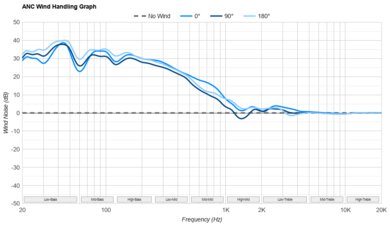
Wind noise is challenging for most ANC headphones. ANC systems try to cancel phantom noise (from wind interacting with the systems' microphones) and produce undesirable popping. Unfortunately, these headphones lack a wind noise reduction feature, and the audio recordings indicate they're more susceptible to this phenomenon compared to the Mark Levinson Nº 5909.
The headphones don't leak much audio. Someone sitting beside you might notice a thin version of your audio if you're studying in a library. That said, busier workspaces will likely mask any leakage.
The Noble's boom microphone has impressive recording quality via Bluetooth. Your voice sounds quite natural and comprehensible.
The integrated microphone (also through Bluetooth) predictably performs worse. That said, it's still good: here's how it sounds. Your voice will sound a bit more boxy and nasal, but you'll still be intelligible if you prefer not to walk around public with the boom mic attached.
The boom mic's noise handling over Bluetooth is very good. Against both pink noise and subway noise, the microphone system doesn't seem to attenuate noise through software or noise cancelling. Instead, the proximity to your mouth and pickup pattern do the heavy lifting. In practice, your conversation partner will hear your background, but your voice will remain louder and audible even as the train comes to a screeching halt.
As you'd expect, the integrated microphone doesn't perform as well as the boom microphone. You can listen to the pink noise sample and the subway noise sample for comparison.
These headphones have impressive battery performance. Although our measurements underperformed the manufacturer's advertised 60 hours with ANC, the Noble FoKus Apollo have one of the longest-lasting batteries we've tested. Noble also advertises 80 hours of playback with ANC disabled, though we haven't verified this claim. It's also worth noting that other factors like microphone and codec usage, volume, and ANC load can also affect battery life.
While a Noble rep reached out in the comments about an upcoming firmware update that includes an auto-off timer, the feature isn't available in our tested firmware v1.0.6.
The Noble FoKus app is pretty lightweight, which isn't surprising considering they're relative newcomers in the active headphones space. That said, the app has good functionality. You can adjust their sound with a 10-band graphic EQ or the included presets, toggle feedback tones, and adjust your volume. Check out our app walkthrough for a more in-depth look that covers additional functionality like their personalized EQ test.
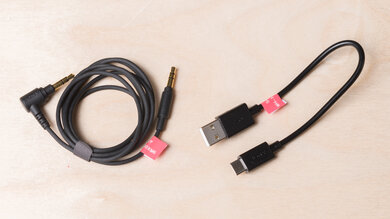
These headphones support two wired connections via their USB-C (1.22 m/4.00 ft) and 1/8" TRRS (1.24 m/4.06 ft) cables. While active (powered on), both connections have low latency, but you can use them passively (via analog) for even lower audio latency (0.24 ms). Their microphone (boom or integrated) also works with most devices over either connection. That said, Noble recommends using an analog connection and their boom microphone.
The Noble FoKus Apollo have impressive Bluetooth connectivity. They support a number of codecs, including SBC, AAC, and higher bitrate aptX HD and LDAC. That said, the Noble have high audio latency across the board, which is expected due to their lack of low-latency codec support. While apps and devices compensate for latency, you may notice some audio/visual desync in non-playback content like games.
You can pair the headphones with up to two devices simultaneously, and switching is quite snappy compared to the similarly positioned Focal Bathys Wireless. That said, you'll need to pause your content before switching devices.
You can connect the headphones to your PC via analog, wired USB, or Bluetooth. You'll get full audio output and mic compatibility (boom or integrated mic) over each connection. That said, Noble recommends using an analog connection and their boom microphone.
These headphones work as an audio output and a microphone input when connected to PlayStation consoles via analog and wired USB. Both their internal microphone and boom attachment function. That said, Noble recommends using an analog connection and their boom microphone.
These headphones have microphone and audio compatibility with Xbox consoles via their analog connection. Both their boom and integrated mic function.