See the previous 0.12.1 changelog.
What's Changed?
This test bench adds a new 'Video Image Quality' section to our camera reviews, consisting of two new tests: Video Dynamic Range and Luminosity Patch Detection. Additionally, we've converted the 'Raw Photo Performance' usage box into the newer Performance Usage format in the 'Our Verdict' section of the review under the name 'Raw Photo.'
| Test Group | Description |
|---|---|
| Our Verdict |
|
| Video Dynamic Range |
|
| Luminosity Patch Detection |
|
Video Dynamic Range
Our Video Dynamic Range test adds a new objective metric to evaluate one of the most important aspects of video quality. While we already test Photo RAW Dynamic Range, we built this new test from the ground up to measure a camera's dynamic range in video.
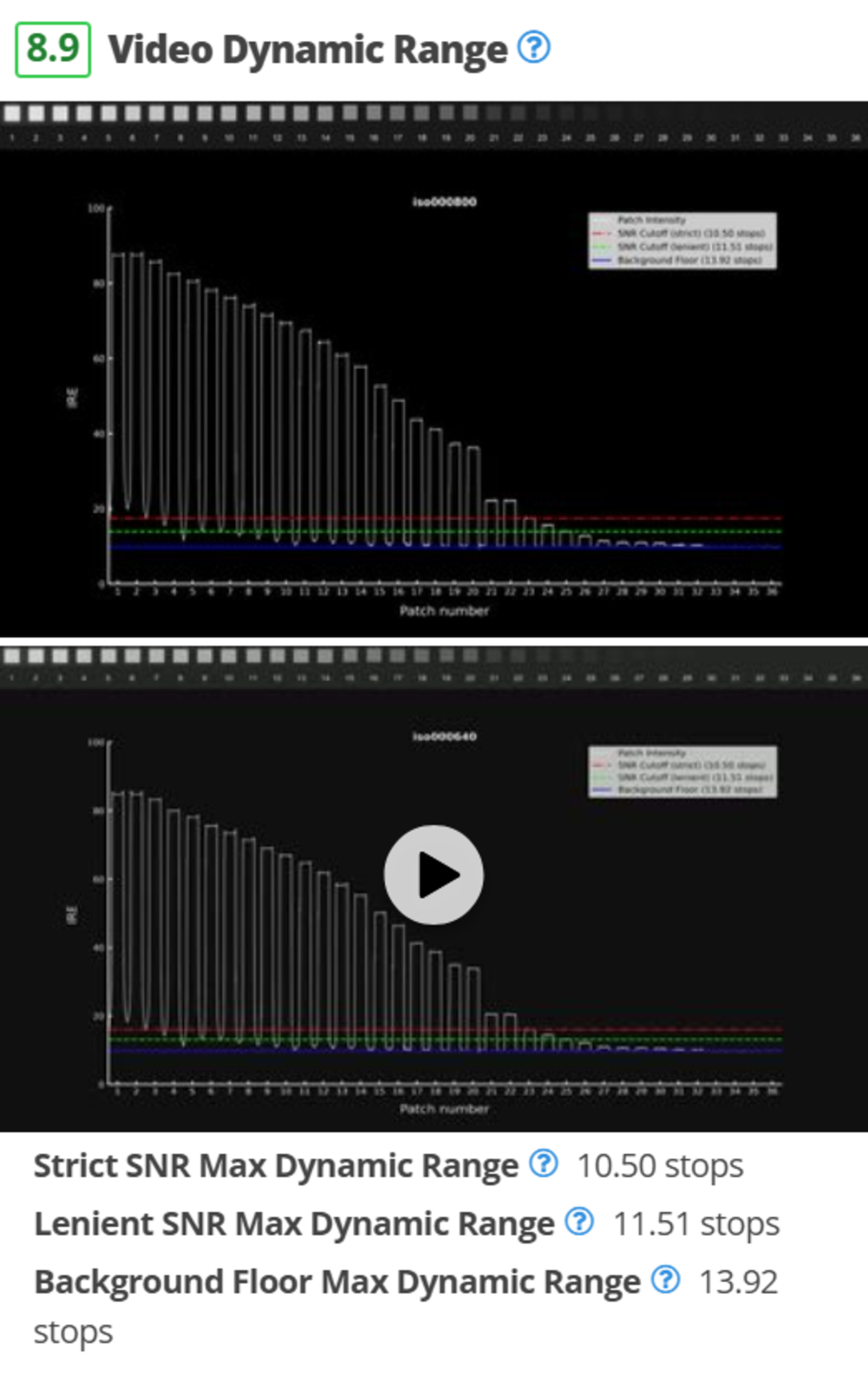
The test consists of a waveform showing the full dynamic range of a camera, a slideshow to show the dynamic range at every ISO setting, and three dynamic range values based on different noise thresholds. You can read our R&D article to learn more about our testing and how sensor hardware, noise, and Log gamma curves all play a role in getting the most video dynamic range out of a camera.
Luminosity Patch Detection
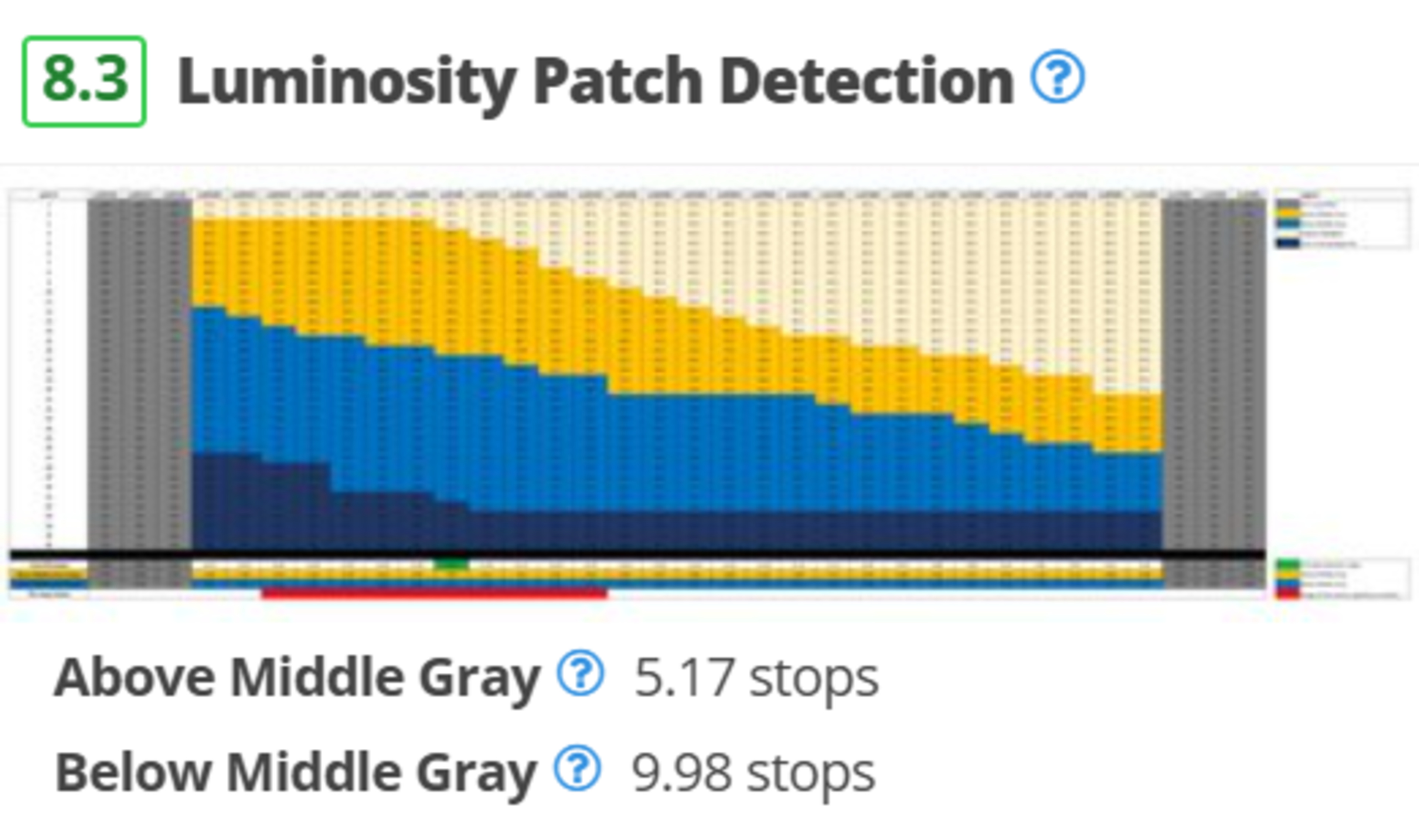
The Luminosity Patch Detection test complements the Video Dynamic Range test. This test measures the maximum number of stops the camera can capture in the highlights (above middle gray) and the shadows (below middle gray) across its entire ISO range. While the Video Dynamic Range test takes noise into account, the Luminosity Patch Detection test does not.
Usage Scores
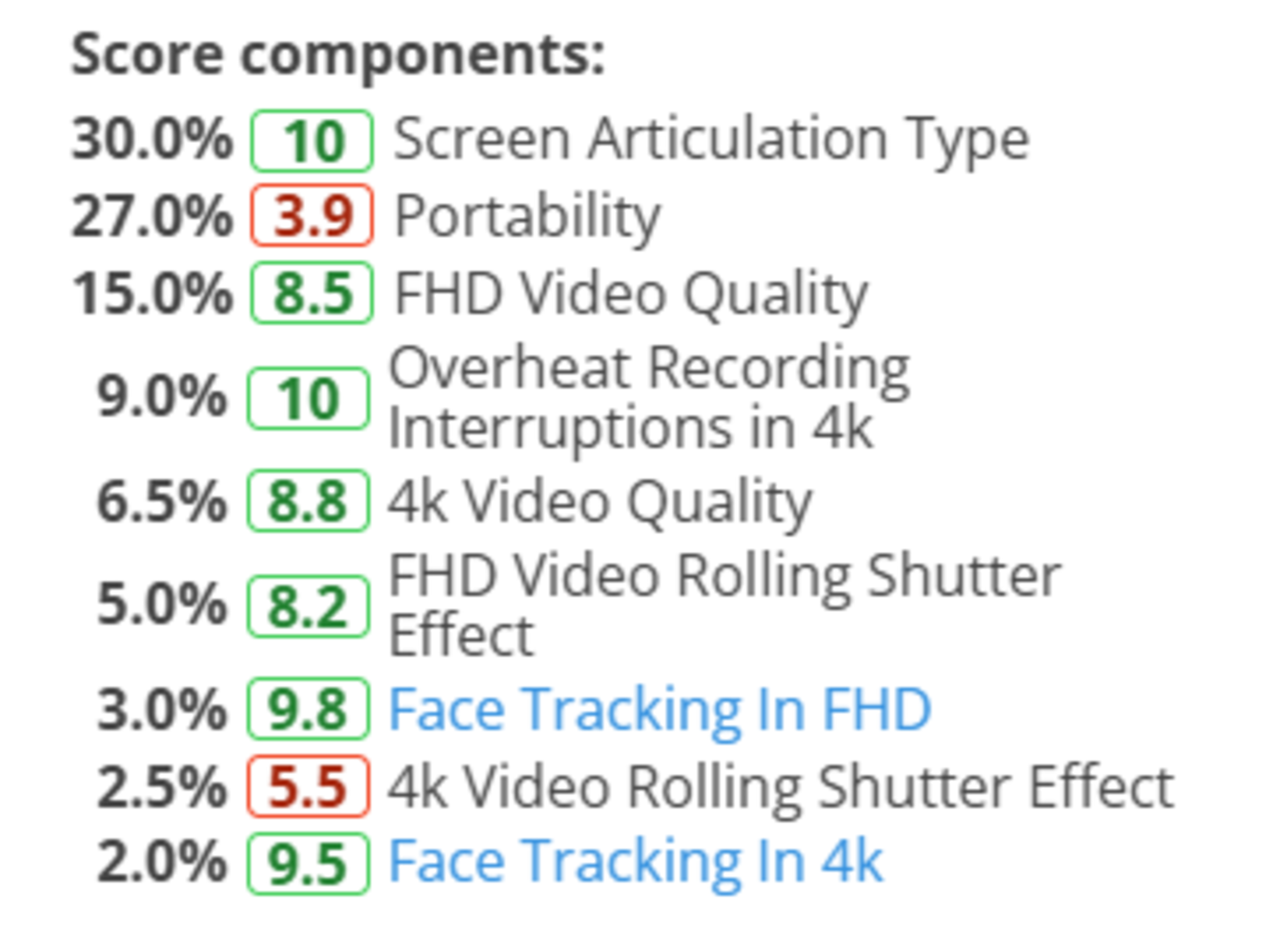
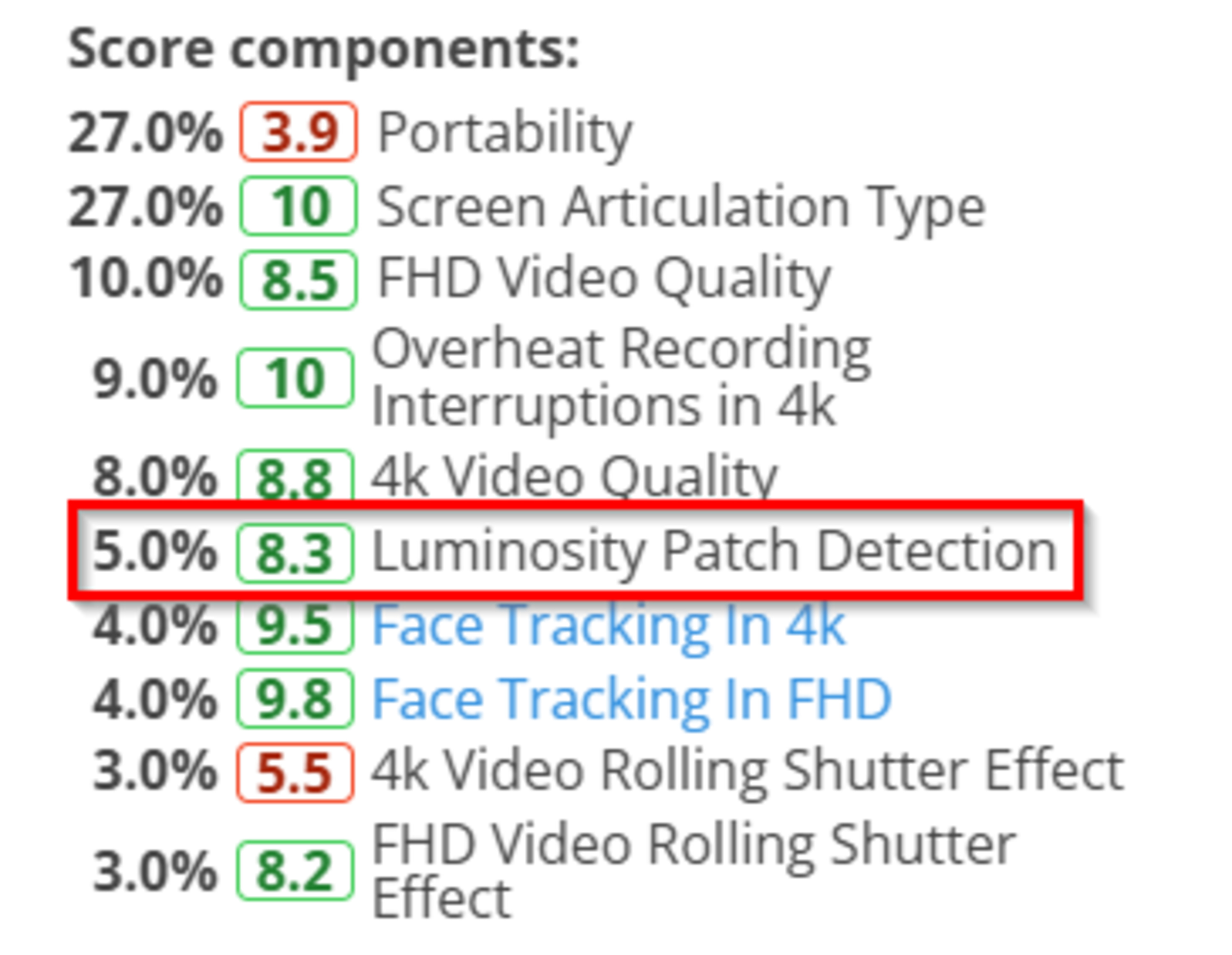
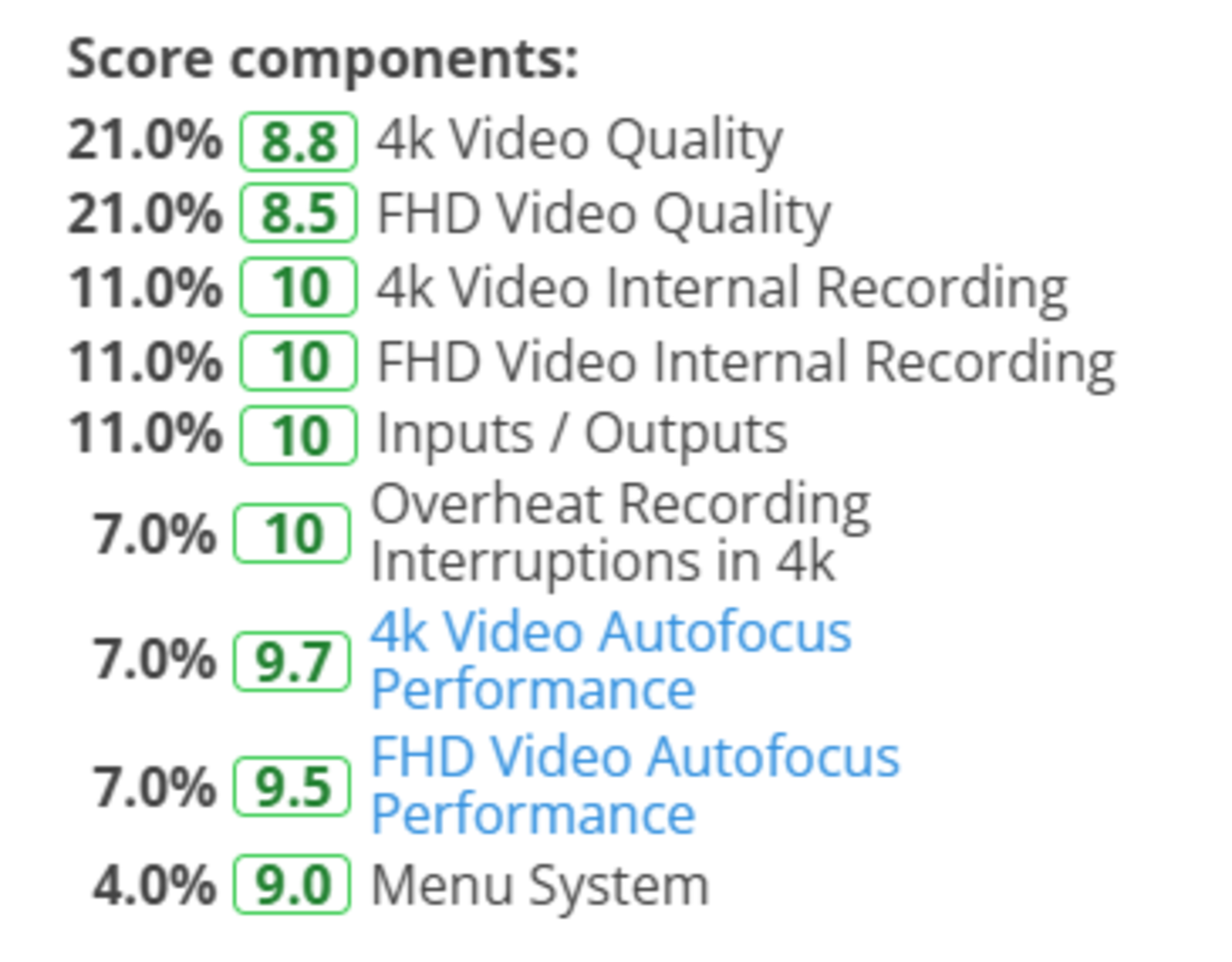
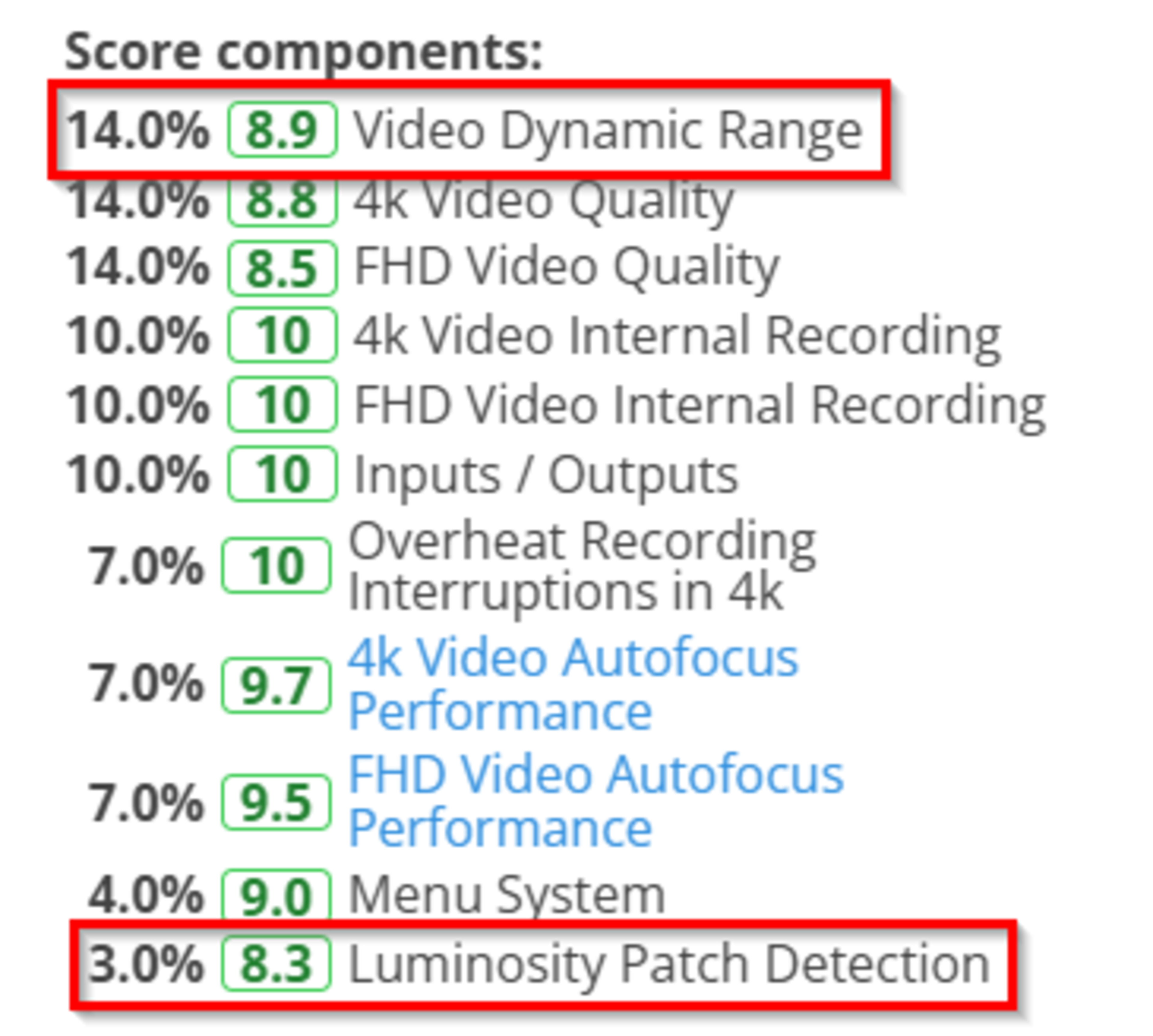
In the Our Verdict section of the review, we've added the above tests to the score breakdown in the Vlogging and Studio Video usages. Luminosity Patch Detection makes up 5% of the usage score for Vlogging. For Studio Video, Video Dynamic Range is weighted at 14%, while Luminosity Patch Detection is weighted at 3%.
| Vlogging 0.12.1 | Vlogging 0.13 |
|---|---|
 |
 |
| Studio Video 0.12.1 | Studio Video 0.13 |
|---|---|
 |
 |
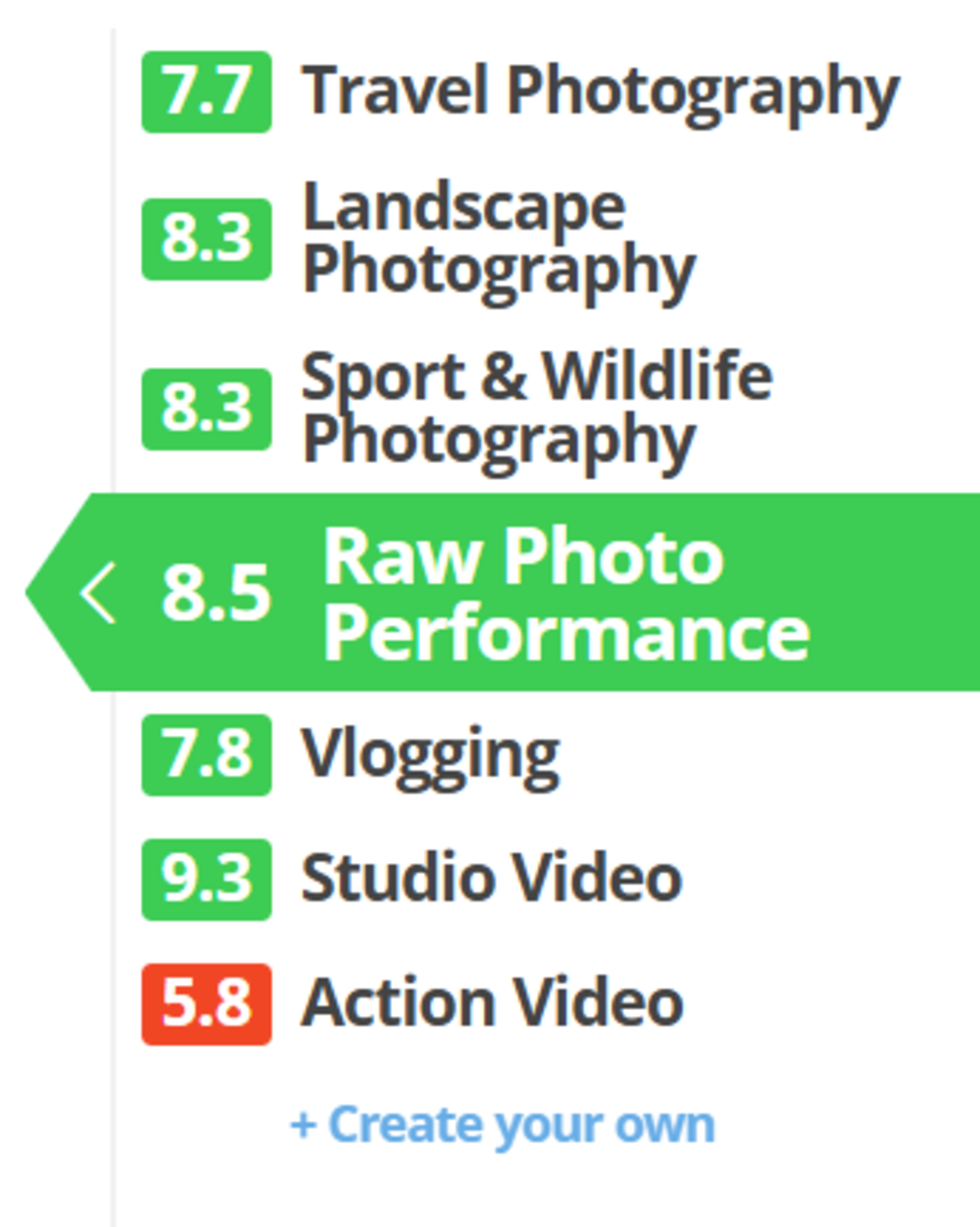
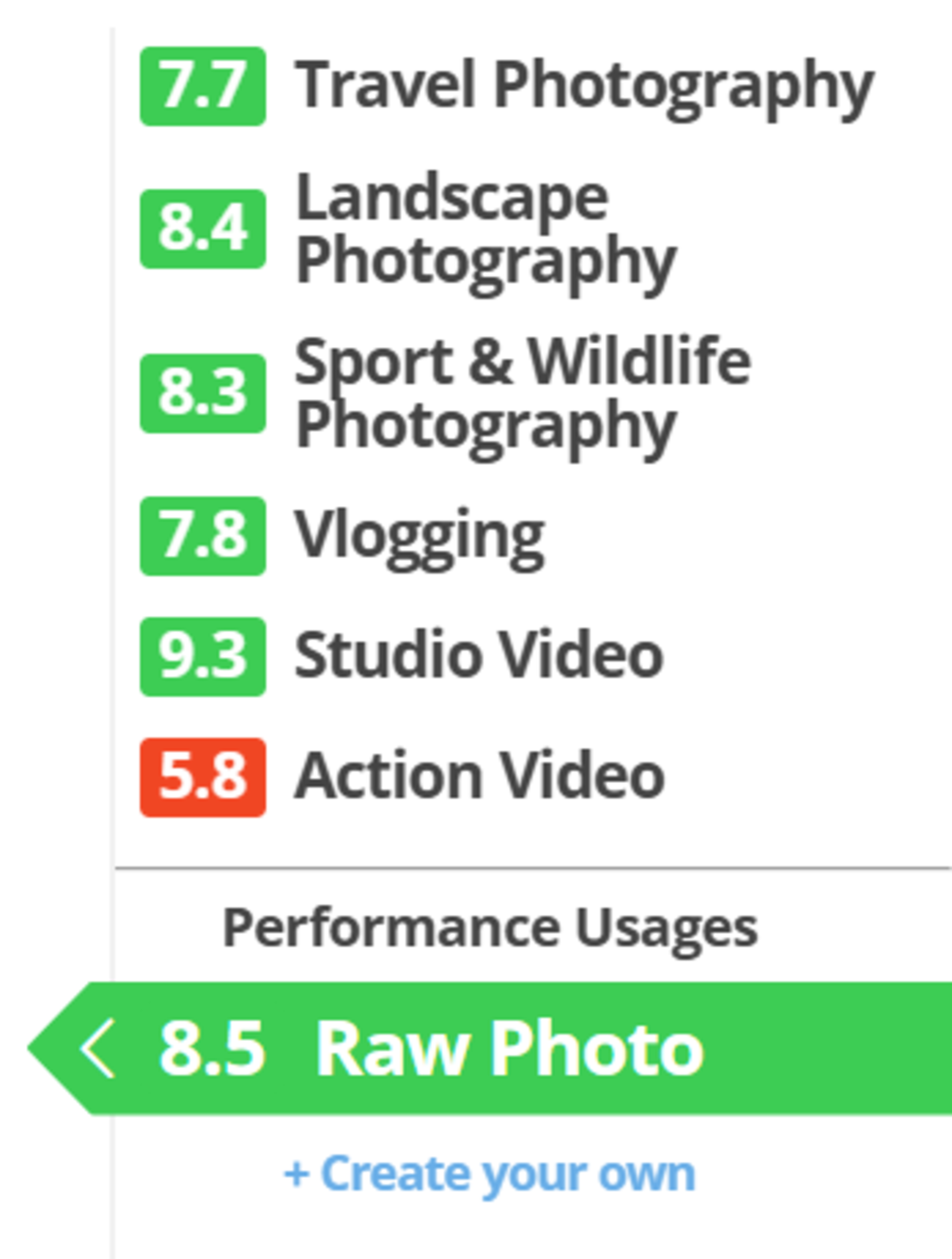
The previous 'Raw Photo Performance' verdict box has also been converted to a Performance Usage, which scores a single performance aspect—in this case, RAW image quality—rather than a broader usage.
| Test Bench 0.12.1 | Test Bench 0.13 |
|---|---|
 |
 |
Let Us Know What You Think!
Your feedback is instrumental in making improvements to our testing. If you have comments, questions, or suggestions about this or any future updates, let us know in the comments.
62 Cameras Updated
We have retested popular models. The test results for the following models have been converted to the new testing methodology. However, the text might be inconsistent with the new results.
- Canon EOS R10
- Canon EOS R100
- Canon EOS R50
- Canon EOS R6
- Canon EOS R6 Mark II
- Canon EOS R7
- Canon EOS R8
- Canon EOS Rebel T100/4000D
- Canon EOS Rebel T7/2000D
- Canon PowerShot G7 X Mark III
- Canon PowerShot SX740
- Fujifilm X-H2
- Fujifilm X-H2S
- Fujifilm X-M5
- Fujifilm X-S10
- Fujifilm X-S20
- Fujifilm X-T30 II
- Fujifilm X-T4
- Fujifilm X-T5
- Fujifilm X-T50
- Fujifilm X100V
- Fujifilm X100VI
- KODAK PIXPRO AZ528
- Leica D-Lux 7
- Nikon COOLPIX P1000
- Nikon D780
- Nikon D850
- Nikon Z 30
- Nikon Z 5
- Nikon Z 50
- Nikon Z 6II
- Nikon Z 6III
- Nikon Z f
- Nikon Z fc
- Olympus OM-D E-M10 Mark IV
- OM SYSTEM OM-1 Mark II
- Panasonic LUMIX G9 II
- Panasonic LUMIX GH6
- Panasonic LUMIX GH7
- Panasonic LUMIX S5
- Panasonic LUMIX S5 II
- Panasonic LUMIX S9
- Panasonic LUMIX ZS80
- RICOH GR III
- RICOH GR IIIx
- Sony RX10 IV
- Sony RX100 VII
- Sony ZV-1
- Sony ZV-1 II
- Sony ZV-E1
- Sony ZV-E10
- Sony ZV-E10 II
- Sony α6000
- Sony α6100
- Sony α6400
- Sony α6600
- Sony α6700
- Sony α7 III
- Sony α7 IV
- Sony α7C
- Sony α7C II
- Sony α7R IIIa
