Sony WH-CH400 Wireless  Headphones Review

Reviewed May 22, 2019 at 10:06am
Tested using Methodology v1.4 
Sony WH-CH400 Wireless
6.1
Mixed Usage 
6.9
Neutral Sound 
6.0
Commute/Travel 
6.7
Sports/Fitness 
5.7
Office 
5.1
Wireless Gaming 
5.0
Wired Gaming 
6.1
Phone Calls 
 0

The Sony WH-CH400 are good-sounding on-ear headphones. These are wireless-only, and you can't use them with an audio cable. They feel cheaply made with very thin plastic and poor padding. They aren’t very comfortable and won’t create a good seal to block out ambient noise, meaning they aren't great for commuting or the office. On the upside, their battery life is long enough to last you a full workday without a problem, but they take a bit of time to fully charge. They also support NFC for quicker and easier pairing.

Our Verdict

6.1
Mixed Usage 

The Sony WH-CH400 are mediocre for mixed usage. Their sound profile is versatile for a wide variety of music genres, but their on-ear fit won’t be ideal for other use cases. They won’t block out enough ambient noise to be suitable for commuting, and they’ll be too leaky for the office. They won’t be stable enough for sports, but they won’t trap as much heat as over-ears. Their latency is also too high for watching TV wirelessly, and they won’t be suitable for gaming, on top of having a microphone that won’t be good enough for online games.

Pros
  • Good audio reproduction.
  • Remarkable wireless range.
  • Good battery life.
Cons
  • Long charging time.
  • Flimsy and plasticky build.
  • Very high latency.
6.9
Neutral Sound 

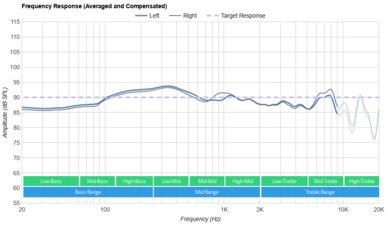
The Sony WH-CH400 are decent for neutral listening. Their bass is accurate and punchy, their mid-range is well-balanced and even, and the treble is very good. However, their bass might feel light on thump and rumble and is very inconsistent across different users. Their treble is also lacking in detail on one driver and is slightly too sharp on the other. Overall, these headphones will be versatile enough for a wide variety of music genres.

6.0
Commute/Travel 

The Sony WH-CH400 are passable for commute and travel. They aren’t that portable since you can’t fold them, and most importantly, they don’t block ambient noise. This means noise will easily seep into your audio and will negatively affect your listening experience. They also won’t be the most comfortable option for long rides and flights.

6.7
Sports/Fitness 

The Sony WH-CH400 are adequate for sports and fitness. They aren’t the most stable headphones for sports, but they’ll be fine for a casual jog. However, they don’t fold into a more compact format, and they aren’t that easy to carry around. They also aren't the most breathable option. On the upside, they are wireless, so you won’t have a cable in your way if you work out with these.

5.7
Office 

The Sony WH-CH400 are sub-par for office use. They don't isolate you from ambient noise like ambient chatter and A/C systems, but you’ll have enough battery life to go through a normal workday without a problem. However, they aren’t the most comfortable headphones, and you might feel discomfort quite quickly due to the poor cup and headband padding. On the upside, their range is pretty impressive, and you’ll be able to walk around the office without hearing too many audio cuts.

5.1
Wireless Gaming 

The Sony WH-CH400 aren't suitable for wireless gaming. These aren't suitable for playing video games as their latency is very high with PCs, and their microphone won’t rival most gaming headsets' boom microphones. They also aren’t customizable and won’t be comfortable for long gaming sessions.

5.0
Wired Gaming 
6.1
Phone Calls 
  • 6.1
    Mixed Usage
  • 6.9
    Neutral Sound
  • 6.0
    Commute/Travel
  • 6.7
    Sports/Fitness
  • 5.7
    Office
  • 5.1
    Wireless Gaming
  • 5.0
    Wired Gaming
  • 6.1
    Phone Calls
  • Changelog

    1.  Updated Mar 27, 2020: Converted to Test Bench 1.4.
    2.  Updated Nov 21, 2019: Converted to Test Bench 1.3.1.
    3.  Updated Nov 21, 2019: Converted to Test Bench 1.3.
    4.  Updated May 22, 2019: Review published.

    Popular Headphones Comparisons

    Comparison picture

    The Sony WH-CH400 are okay on-ear headphones with a versatile, well-balanced sound profile. Unfortunately, their build quality is cheap, and they feel fragile.

    See our suggestions for the best on-ear headphones and the best wireless Bluetooth headphones.

    Sony WH-CH500 Wireless

    The Sony WH-CH400 Wireless are slightly better headphones than the Sony WH-CH500 Wireless. While the WH-CH500 model feels better made, there’s a big difference in sound quality that favors the WH-CH400. They also have a better wireless range, but they don’t have the same great 20-hour battery life as the WH-CH500. They also offer better value overall since they're cheaper.
    Skullcandy Grind Wireless

    The Skullcandy Grind Wireless are more comfortable on-ear headphones, and you can use them wired. They’ll be more versatile than the Sony WH-CH400 Wireless, and they're noticeably more durable. These headphones will sound fairly similar, but the Skullcandy will have a more accurate bass for most, with a slightly V-shaped sound profile. They also take about half the time to charge, which is nice. However, the Skullcandy don’t support NFC like the Sony, but you can use them wired and get an in-line microphone, which the Sony are lacking.

    Mpow H5 Wireless

    The Mpow H5 Wireless are better headphones than the Sony WH-CH400 Wireless. These over-ears offer great value thanks to their ANC feature. They are more comfortable than the Sony on-ears and will also have a decent sound quality, on top of being noticeably better-built. Their design is more stable due to larger cups, and their latency is fairly low for Bluetooth headphones. The Sony support NFC for quicker and easier pairing, and they have better sound quality. However, you can’t use them wired like you can with the Mpow, which may be a deal-breaker for some.

    JBL T450BT Wireless

    The JBL T450BT Wireless are better mixed-usage headphones than the Sony WH-CH400 Wireless, but the Sony have better sound quality. Other than that, the JBL are more stable, better-built, leak less and have about half the latency of the Sony. On the other hand, the Sony headphones have more battery life, better wireless range, and support NFC. If sound quality is your most important criterion, then the Sony will be the better choice.

    Overhauling Our Audio Measurements And A New Multi-Curve Graphing Tool

    We've upgraded our Headphones Test Bench to 2.0! This update brings several key changes to our tests and usages, making it easier than ever to interpret our sound results based on your personal preferences. You'll also find a brand-new interactive graph tool featuring multiple targets (including our own!) for you to explore and compare.

    For a full breakdown, check out our changelog, which includes detailed commentary from our test designer explaining the rationale behind our update.

    We'd also love to hear your thoughts: your feedback helps us keep improving, so join us in the comments!

    Test Results

    perceptual testing image
    Sort:
    RATINGS
    Category:
    All
    Design
    Style
    TypeOn-ear
    EnclosureClosed-Back
    WirelessYes
    TransducerDynamic

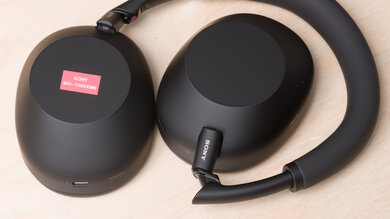
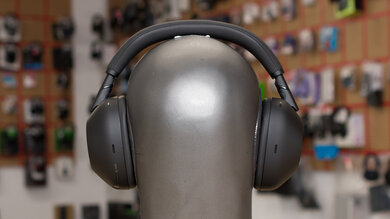
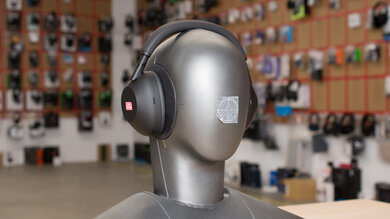
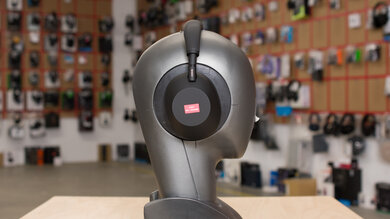
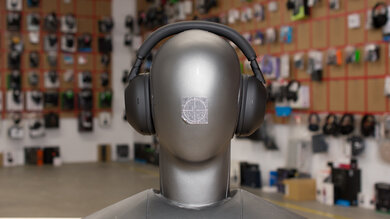
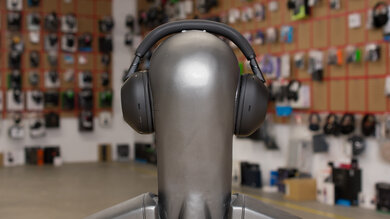
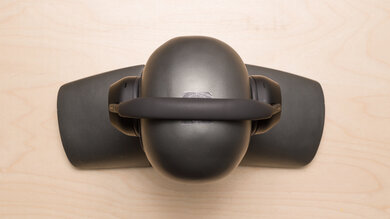
    The Sony WH-CH400 are flimsy-looking on-ear headphones that come in a few bright monochromatic color schemes (red, blue, and grey) but also a more low-profile black design. The cups are very small with poor padding, and the headband is thin but quite wide. The headphones rest on your ears without covering them. They look plasticky and feel like cheaply-made headphones.

    6.5
    Comfort
    Weight0.23 lbs
    Clamping Force
    0.6 lbs

    The Sony WH-CH400 are passably comfortable. The padding on the ear cups seems fairly thick, but in reality, there's barely any padding between your ears and the driver itself. The cups sit at an angle on your ears which may feel weird for some. The headband is made out of plastic and doesn’t have any padding, which isn’t comfortable during long listening sessions. On the upside, the headphones are very lightweight and aren’t too tight.

    6.6
    Controls
    OS Compatibility
    Not OS specific
    Ease Of UseDecent
    FeedbackGood
    Call/Music ControlYes
    Volume ControlYes
    Microphone ControlNo
    Channel Mixing
    No
    Noise Cancelling ControlNo
    Talk-Through
    No
    Additional ControlsVoice Assistant

    The Sony CH-400 have a pretty straightforward control scheme with common functionalities. You get a volume rocker that also serves as a track skipper, and the power button acts as a play/pause button on top of being used for call management. You can enter their pairing mode by holding the power button, but you’ll need to hold it for 7 seconds, which is quite long. You don’t have any voice prompts, but you can trigger your device’s voice assistant for voice-enabled commands.

    7.0
    Breathability
    Avg.Temp.Difference4.2 °C

    The Sony WH-CH400 are decently breathable. They trap some heat under the ear cups, but this shouldn’t be an issue during casual listening sessions. You might sweat a bit more than usual if you work out with these, but it won’t be as drastic as with some over-ear headphones.

    6.1
    Portability
    L6.6"
    W6.2"
    H2.2"
    Volume90 in³
    Transmitter RequiredNo

    The Sony WH-CH400 headphones aren’t very portable because you can't fold them in a more compact format, and their cups don’t swivel, which would have made them easier to slide into a bag. The headband is quite flexible, but it might break if you squeeze them into a more portable format.

    0.0
    Case
    TypeNo case
    LN/A
    WN/A
    HN/A
    VolumeN/A

    The Sony WH-CH400 don’t come with a case or a pouch.

    5.5
    Build Quality

    These headphones don't feel very durable or well-built. The whole build is made from thin plastic that feels cheap and easily breakable. On the upside, the cups are decently dense, and the headband is flexible, but the plastic used is cheap, and the one-piece design doesn’t help with durability, especially that you can’t fold them. It feels like putting the headband under a bit of stress could easily cause it to snap.

    6.5
    Stability

    The Sony WH-CH400 aren’t the most stable as they simply rest on your ears. They aren’t very tight, so a bit of head movement makes them sway around easily. They won’t be ideal for sports as they could easily fall off your head, but on the upside, since they are wireless, you don’t have any wires in your way that could get stuck on something and yank the headphones off your head. This shouldn’t be an issue during casual listening sessions, and you can use them for a casual jog.

    Headshots 1
    Headshots 2
    Top
    In The Box

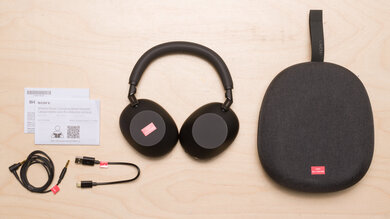
    • Sony WH-CH400 headphones
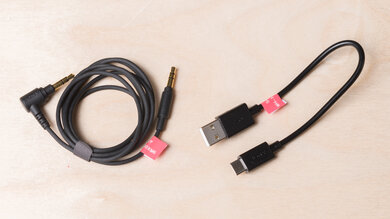
    • Micro-USB to USB charging cable
    • Manuals
    Sound
    Sound Profile
    See details on graph tool
    Bass Amount
    -1.66 dB
    Treble Amount
    -1.15 dB
    5.5
    Frequency Response Consistency
    See details on graph tool
    See details on graph tool
    Avg. Std. Deviation
    2.22 dB

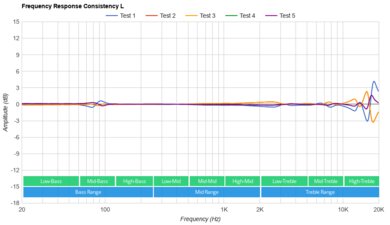
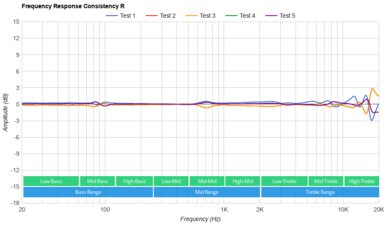
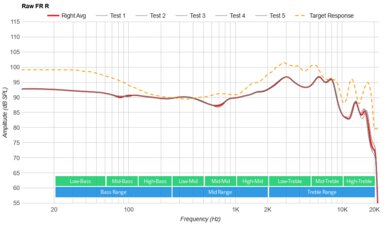
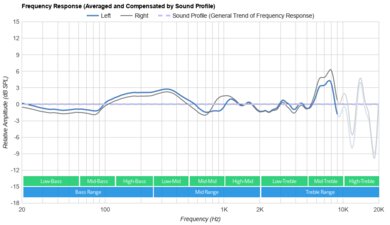
    The Sony WH-CH400's frequency response consistency is pretty bad in the bass range, but they perform consistently in the treble range between reseats. In the bass range, the graph shows major variations at 20Hz, reaching more than 20dB of difference between our human test subjects. This will be very noticeable and means that people’s listening experiences will differ greatly from one another.

    Raw Frequency Response
    See details on graph tool
    See details on graph tool
    8.2
    Bass Accuracy
    See details on graph tool
    Std. Err.
    2.38 dB
    Low-Frequency Extension
    31.29 Hz
    Low-Bass
    -3.9 dB
    Mid-Bass
    1.01 dB
    High-Bass
    0.01 dB

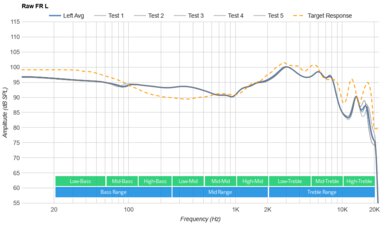
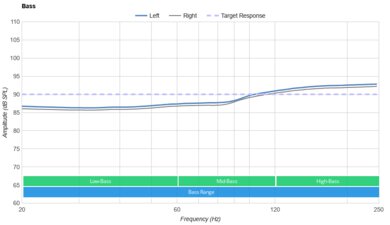
    The Sony WH-CH400 have great bass accuracy. Their LFE (low-frequency extension) is down to 26Hz, which is very good. However, their low-bass is slightly lacking, which results in a bass that may be a bit light on thump and rumble common to bass-heavy genres like EDM and dubstep. There’s a small 2dB bump in mid-bass, responsible for the punch of bass guitars and kick of drums. Since the high-bass is accurate and follows our curve well, this will result in a fairly good bass, but it may feel a bit light on thump.

    However, their bass delivery varies significantly across users and is sensitive to the quality of fit, seal, and whether you wear glasses. The response here represents the average bass response, and your experience may vary.

    8.4
    Mid Accuracy
    See details on graph tool
    Std. Err.
    2.16 dB
    Low-Mid
    0 dB
    Mid-Mid
    0.32 dB
    High-Mid
    -2.69 dB

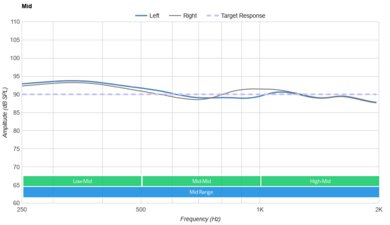
    This Sony WH-CH400's mid-range is impressive. The response throughout the range is fairly even and well-balanced, which results in an accurate reproduction of vocals and instrumentals. However, there’s a small bump around 500Hz, which could bring them forward in the mix. However, the effect is fairly subtle and should barely be noticeable.

    7.6
    Treble Accuracy
    See details on graph tool
    Std. Err.
    3.2 dB
    Low-Treble
    -1.11 dB
    Mid-Treble
    0.21 dB
    High-Treble
    -5.72 dB

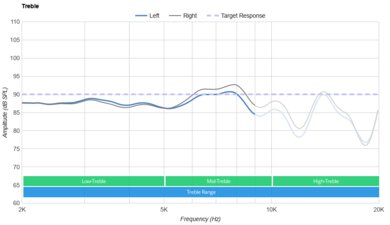
    Their treble accuracy is good. The response is flat and even throughout the response, with a small dip around 6kHz that hurts vocals, leads, and cymbals but should be barely noticeable. There also seems to be a small mismatch in our unit's drivers in the treble range, resulting in the right driver sounding a bit sharper.

    7.2
    Peaks/Dips
    See details on graph tool
    Peaks
    1.89 dB
    Dips
    1.17 dB
    8.2
    Imaging
    See details on graph tool
    See details on graph tool
    Weighted Group Delay
    0.35
    Weighted Amplitude Mismatch
    0.6
    Weighted Frequency Mismatch
    2.41
    Weighted Phase Mismatch
    6.4

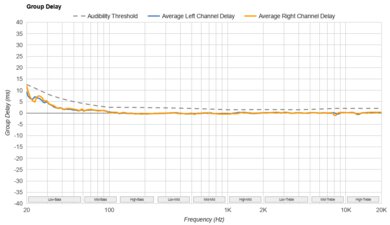
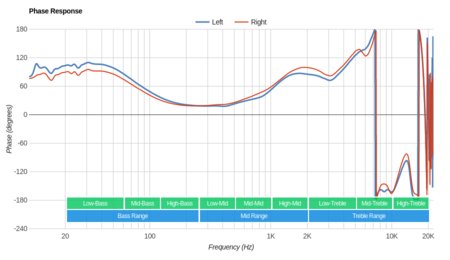
    These headphones have impressive stereo imaging. Weighted group delay is at 0.35, which is good. The GD graph also shows that, except for the area around 70Hz, which could sound a tad loose, the response is below the audibility threshold. This suggests a bass that's tight for the most part and a transparent treble. In terms of driver matching, our test unit was very well-matched, which is important for accurate localization and placement of objects (voice, instruments, video game effects) in the stereo image, but there's a slight frequency mismatch between the L/R drivers. However, these results are only valid for our unit, and yours may not perform the same way.

    4.8
    Passive Soundstage
    See details on graph tool
    PRTF Accuracy (Std. Dev.)
    3.75 dB
    PRTF Size (Avg.)
    1.68 dB
    PRTF Distance
    7.46 dB
    Openness
    6.8
    Acoustic Space Excitation
    3.6

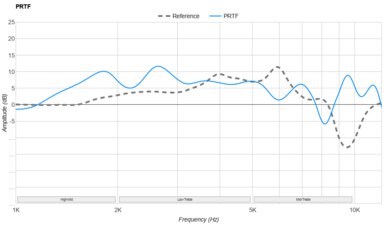
    The Sony WH-CH400's soundstage is poor. These on-ear headphones' PRTF graph shows a small amount of pinna interaction, with mediocre accuracy. This results in a soundstage that's perceived to be small and unnatural. There's also no deep notch around the 10kHz region, and with their closed-back design, the soundstage will be perceived as being inside the listener’s head rather than in front.

    0.0
    Virtual Soundstage
    Head Modeling
    No
    Speaker Modeling
    No
    Room Ambience
    No
    Head Tracking
    No
    Virtual Surround
    No App
    6.5
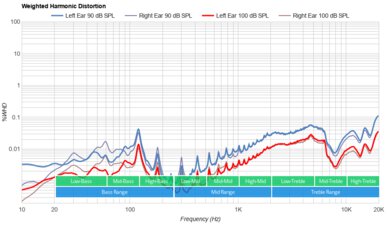
    Weighted Harmonic Distortion
    See details on graph tool
    WHD @ 90
    0.528
    WHD @ 100
    0.661
    Test Settings
    Firmware
    Unknown
    Power
    On
    Connection
    Bluetooth 4.0
    Codec
    SBC, 16-bit, 48kHz
    EQ
    No EQ
    ANC
    No ANC
    Tip/Pad
    Default
    Microphone
    Integrated
    Isolation
    3.4
    Noise Isolation
    See details on graph tool
    Isolation Audio
    Overall Attenuation
    -7.04 dB
    Noise CancellingNo
    Bass
    0.75 dB
    Mid
    -6.57 dB
    Treble
    -16.01 dB

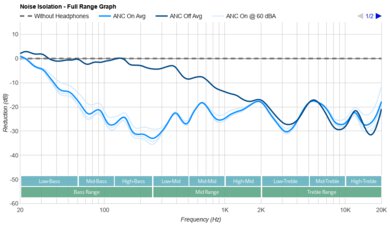
    The noise isolation performance of these headphones is bad. Their on-ear design doesn’t isolate against the deep rumble of a plane or bus engines, which means they aren't suitable for commuting. In the mid-range, important for blocking out speech, they achieve about 7dB of isolation, which is fairly negligible. In the treble range, important for blocking out S and T sounds and A/C noise, they block out about 16dB of ambient noise, which is sub-par.

    6.8
    Leakage
    See details on graph tool
    Leakage Audio
    Overall Leakage @ 1ft
    40.54 dB

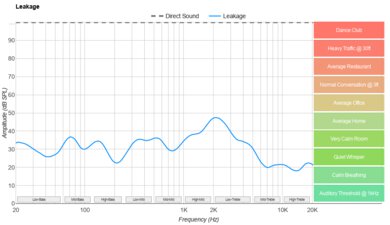
    The Sony WH-CH400 have an okay leakage performance. A significant portion of their leakage is spread from 1kHz to 10kHz, which is a relatively broad range and will mostly consist of the high-mid and the whole treble ranges. The overall level of the leakage isn't very loud either. With the music at 100dB SPL, the leakage at 1 foot away will average around 41dB SPL and peaks at 54dB SPL, which is about the same as the noise floor of most offices.

    Microphone
    Microphone Style
    Integrated
    Yes
    In-Line
    No
    Boom
    No
    Detachable Boom
    No
    MicYes
    6.7
    Recording Quality
    See details on graph tool
    Recorded Speech
    LFE
    236.29 Hz
    FR Std. Dev.
    2.84 dB
    HFE
    3,368.2 Hz
    Weighted THD
    4.745
    Gain
    37.98 dB

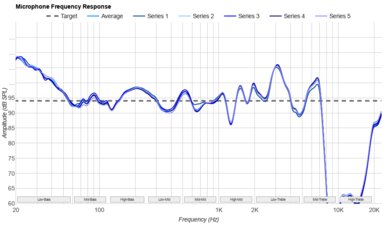
    The integrated microphone's recording quality is adequate. LFE (low-frequency extension) is at 236Hz, meaning transmitted/recorded speech with this mic will sound slightly thin. The HFE (high-frequency extension) of 3.4kHz indicates speech that lacks detail and is noticeably muffled. This will hurt the understandability of speech, but it should still be understandable in quiet environments.

    6.3
    Noise Handling
    See details on graph tool
    Speech + Pink Noise
    Speech + Subway Noise
    SpNR
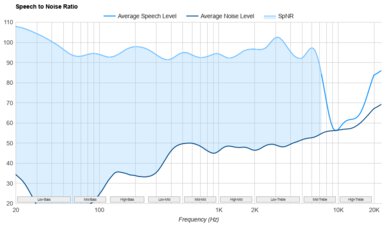
    15.44 dB

    The integrated mic is mediocre at noise handling. In our SpNR test, it achieved a speech-to-noise ratio of 15dB, indicating it's best suited for quiet environments and struggles to separate speech from ambient noise in moderate and loud situations.

    Active Features
    6.5
    Battery
    Battery Type
    Rechargable
    Continuous Battery Life
    16.6 hrs
    Additional Charges
    0.0
    Total Battery Life
    16.6 hrs
    Charge Time
    3.6 hrs
    Power-Saving Feature
    No
    Audio While Charging
    No
    Passive Playback
    No
    Charging Portmicro-USB

    The Sony WH-CH400 will allow you to listen to audio content for more than 16 continuous hours on a single charge, which should be more than enough for a normal workday. Unfortunately, they take more than 3 hours to charge fully, which is slow. They automatically turn off if they're disconnected from their source but won’t do so if you’re still connected to your phone. You also can't use them while charging, which is especially disappointing considering you can't use them passively with an audio cable either.

    0.0
    App Support
    App NameNo App
    iOSNo
    AndroidNo
    macOSNo
    WindowsNo
    Equalizer
    No
    ANC Control
    No
    Mic ControlNo
    Room Effects
    No
    Playback Control
    No
    Button MappingNo
    Surround Support
    No

    There's no companion app for the Sony WH-CH400.

    Connectivity
    7.8
    Bluetooth
    Bluetooth Version
    4.2
    Multi-Device Pairing
    No
    NFC Pairing
    Yes
    Line Of Sight Range
    311 ft
    PC Latency (SBC)
    292 ms
    PC Latency (aptX)
    N/A
    PC Latency (aptX HD)
    N/A
    PC Latency (aptX-LL)
    N/A
    Android Latency
    17 ms

    These headphones are Bluetooth-compatible but can only be connected to a single device at a time. On the upside, they support NFC for a quicker and easier pairing procedure, which is nice since it takes 7 seconds to put them into pairing mode.

    Their latency with PCs is very high. Even if some apps and devices offer some delay compensation, they won’t be ideal for watching video content and playing games. Most people should see a noticeable delay between audio and video content. On the plus side, they have very low latency with Android devices.

    0.0
    Non-Bluetooth Wireless
    Non-BT Line Of Sight Range
    N/A
    Non-BT Latency
    N/A
    0.0
    Wired
    Analog Audio
    No
    USB Audio
    No
    DetachableNo
    LengthN/A
    ConnectionNo Wired Option
    Analog/USB Audio Latency
    N/A

    You can't use the Sony WH-CH400 wired. There is no jack for an audio cable on the headphones, and they don’t support audio over their USB charging cable.

    PC / PS4 Compatibility
    PC/PS4 Analog
    No
    PC/PS4 Wired USB
    No
    PC/PS4 Non-BT Wireless
    No
    Xbox One Compatibility
    Xbox One Analog
    No
    Xbox One Wired USB
    No
    Xbox One Non-BT Wireless
    No
    0.0
    Base/Dock
    Type
    No Base/Dock
    USB Input
    No
    Line In
    No
    Line Out
    No
    Optical Input
    No
    RCA Input
    No
    Dock Charging
    No
    Power Supply
    No Base/Dock

    These headphones don’t have a dock.