Our Verdict
Average for mixed usage. The Sony WI-C400 have a decently comfortable and lightweight design that's stable enough to run with. They also have a long battery life for continuous use. Unfortunately, they have a mediocre-at-best sound quality. They do not isolate as well as other in-ears and take a long time to charge. They also have quite a bit of latency which is not suitable for gaming or watching a lot of videos.
- Lightweight and stable design.
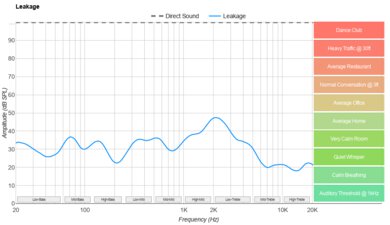
- Low leakage.
- Long battery life.
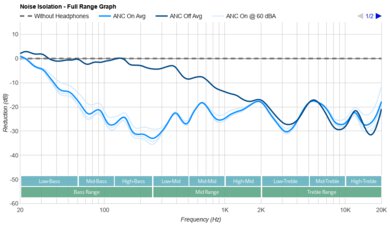
- Poor noise isolation.
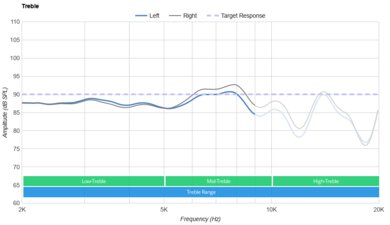
- Mediocre-at-best and slightly piercing sound.
- High latency.
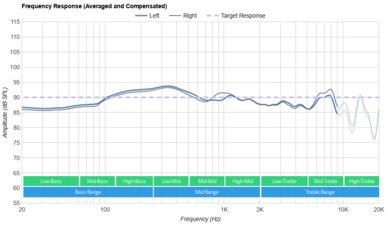
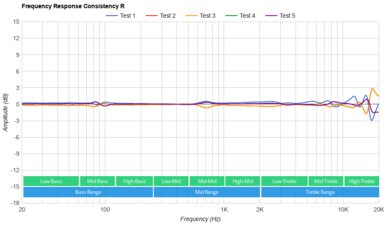
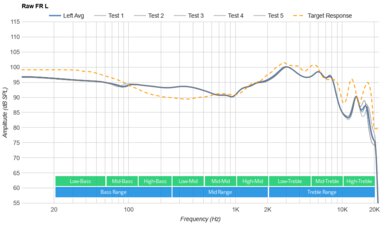
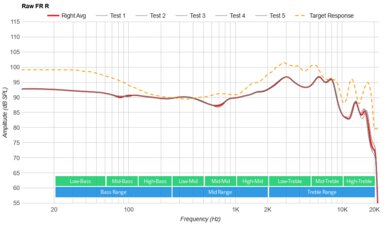
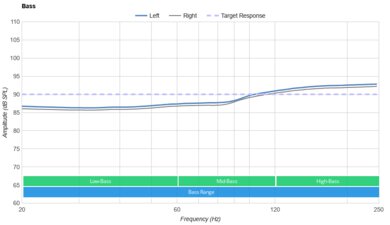
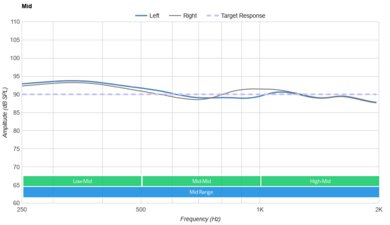
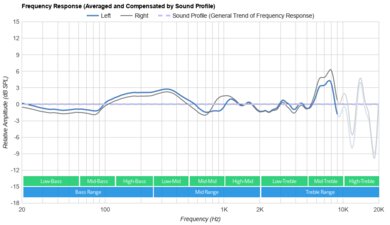
Mediocre for neutral listening. They have a good mid-range but can sound a bit too forward and piercing on already bright tracks. They also have a lackluster bass range that's missing a lot of thump and rumble so they may sound a bit bland and boring to some. Unfortunately, they are closed-back in-ears so they can't create a spacious and open soundstage which won't be ideal for neutral listeners.
Average for commuting. The Sony WI-C400 do not block a lot of noise but they're decently portable, comfortable and fairly easy to use. You can also mask some of the ambient chatter of your commute by raising the volume level since they barely leak.
Above-average for sports. The WI-C400 are easy-to-use and have an around-the-neck, in-ear design that's stable enough for running. They're also lightweight, decently portable, and wireless. However, the in-ear tips do slide a bit in the ear canal during more strenuous activities.
Average for office use. The Sony WI-C400 struggle to isolate in loud environments but have very low leakage which won't distract your colleagues. They also have a long battery life and an intuitive control scheme.
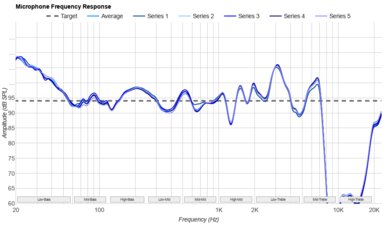
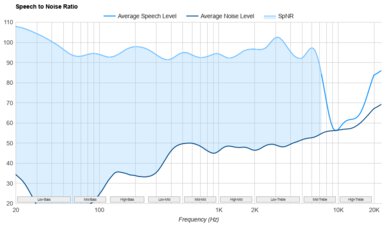
Below-average for gaming. The Sony WI-C400 have too much latency for gaming and a mediocre-at-best microphone and sound quality. They also do not support the Sony| Headphones Connect app so they have no customization options which are typical for a gaming headset.
Changelog
- Updated Mar 27, 2020: Converted to Test Bench 1.4.
- Updated Nov 21, 2019: Converted to Test Bench 1.3.1.
- Updated Nov 21, 2019: Converted to Test Bench 1.3.
- Updated Apr 05, 2018: Review published.
Check Price
Popular Headphone Comparisons

The Sony WI-C400 are average around-the-neck, in-ears with a long-lasting battery life and a decently comfortable design that you can use for sports. They're also decently flexible and lightweight but do not have the build quality of some o the other around-the-neck headphones we've tested. They have a mediocre sound quality, they lack a bit of bass and can sound slightly piercing on some tracks. They also take a considerably long time to charge and have a high amount of latency which is not suitable for gaming or watching videos. See our recommendations for the best cheap earbuds, the best earbuds for bass, and the best noise cancelling earbuds and in-ears.
The Samsung Level On Wireless are not directly comparable to the Sony WI-C400 since they are in-ears and the Level On are on-ear headphones. However, the Level On are noise cancelling headphones, so they perform a bit better at isolating you from low-frequency noise like that of an engine when commuting. They also have a better-balanced sound that you can customize thanks to the Level app on Android. They have a better build quality (although it's not really comparable) and some may prefer the fit of the on-ears over the in-ear headphones like the Sony WI-C400. On the upside, the C400 are a lot more portable. They also leak a lot less since they are small in-ears, but they are worse for most other categories and have a lot more latency when watching videos.
The Samsung Level Over Wireless are a much better wireless headset if you want an over-ear headphone, but the Sony WI-C400 are a better choice if you want something more portable. The Sonys have a wireless around-the-neck design that's a lot easier to carry around on your person than the bulky Level Over Wireless. They're also a lot more breathable and stable for sports and physical activity. On the upside, the Level Over Wireless have a much better sound quality which you can EQ to better match what you're listening to. They're also noise cancelling headphones, so they're a bit more suitable for noisy conditions and commuting, although portability might be an issue for some.
The Samsung Level U Pro are better around-the-neck wireless in-ears than the Sony WI-C400. The Level U Pro have a more comfortable fit, a better battery performance overall, and a greater wireless range with multiple codec options. They're also a lot more customizable than the Sony, with a better default sound quality that you can also EQ thanks to the Level app. The Sony, on the other hand, have a much longer battery life on a single charge but do not benefit from some of the power-saving features on the Samsung headset. The Sony also has easier to use controls, although not by much.
The Beats BeatsX Wireless are a better wireless headset than the Sony WI-C400 Wireless. The Beats have a better wireless range and latency performance than the Sony, especially when paired to an iOS device. They also have a better-balanced sound quality and more durable design that's flexible enough to fold and fit into your pockets. The Sony, on the other hand, have much a longer battery life but don't perform better than the Beats in most other categories.
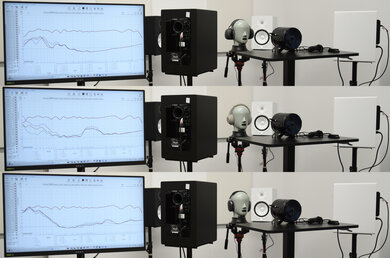
Our How We Test Headphones article takes you behind the scenes in our lab. You'll learn how we choose and purchase products and dive into the details of our review philosophy, from testing and scoring to writing and editing.
You can also discover how we produce recommendations like this one so that you can find the best headphones (or earbuds!) for your needs.
Test Results


for pictures & test results




for pictures & test results
for pictures & test results