Astro A40 TR Headset + MixAmp Pro 2019  Headphones Review

Review updated Apr 15, 2021 at 10:49am
Writing modified Feb 06, 2026 at 03:18pm
Tested using Methodology v2.0 
Astro A40 TR Headset + MixAmp Pro 2019
5.7
Sports And Fitness 
5.2
Travel 
6.1
Office Work 
6.3
Wireless Gaming (In Development) 
8.2
Wired Gaming (In Development) 
7.7
Audio Reproduction Accuracy 
2.6
Noise Isolation 
8.3
Microphone (In Development) 
 3

The Astro A40 TR Headset + MixAmp Pro 2019 is a gaming headset with a great microphone performance. These headphones have a warm sound profile and the same comfortable and sturdy build of the previous-generation Astro A40 TR Headset + MixAmp Pro 2017. The look of the MixAmp has changed, but it offers the same multiple inputs and controls. Because of their open-back design, these headphones don't block out ambient noise. Although we managed to use our Xbox One model on the PS4 using PC mode, this may not work if you try using the PS4 variant on Xbox One, so be sure to get the appropriate console variant for your needs. Unfortunately, there have been user reports of significant issues using the software, and you can read more in the App Support box.

Our Verdict

5.7
Sports And Fitness 

The Astro A40 headset is inadequate for sports and fitness use. These headphones are designed for wired gaming and aren't intended for use during workouts. Even though they're open-back, they trap quite a bit of heat against your ears and may make you sweat more during physical activity. Their wired design may get in the way during exercise, and their bulky shape makes them less convenient to carry. They also don't have the most stable fit and may fall off your head during more intense workouts.

Pros
  • Comfortable and sturdy design.

Cons
  • A bit bulky.

  • No phone call management controls.
  • No IP rating for water resistance.
5.2
Travel 

The Astro A40 headset is poor for commuting and travel. They're gaming headphones and aren't intended for this purpose. While they fit comfortably, they're bulky and don't fold down to a more compact shape. They aren't very stable if you move around too much, either. They don't block out any ambient noise, so they don't reduce the sound of a plane engine or background conversations either. They also leak a lot of audio, so people nearby can hear your music.

Pros
  • Comfortable and sturdy design.

Cons
  • A bit bulky.

  • Poor noise isolation, by design.
  • No phone call management controls.
6.1
Office Work 

The Astro A40 headset is acceptable for office use. Because of their open-back design, these headphones don't block out ambient sound, so they won't isolate you from background conversations or other office-type noise. They also leak a lot of sound, so when you're listening to music, it may be audible to people nearby. On the upside, they come with an impressive mic system that ensures you'll be heard well on conference calls. And as wired passive headphones, they don't have a battery life you need to worry about, but that also means you don’t get the freedom of movement that comes with wireless headphones.

Pros
  • Comfortable and sturdy design.

  • Great microphone performance.
Cons
  • Poor noise isolation, by design.
  • No phone call management controls.
6.3
Wireless Gaming (In Development) 

The Astro A40 headset can only be used wired and isn't suitable for wireless gaming.

8.2
Wired Gaming (In Development) 

The Astro A40 headset is impressive for wired gaming. These headphones offer a comfortable fit for long gaming sessions, and their wired connection ensures very low audio latency. Their microphone delivers great recording quality and easily separates your voice from background noise. The MixAmp offers useful controls, too, like adjusting the volume levels for game and chat audio and selecting different EQ presets. That said, users have encountered issues with the companion software.

Pros
  • Comfortable and sturdy design.

  • Great microphone performance.
  • MixAmp allows you to mix game and chat audio.
Cons
  • Poor noise isolation, by design.
  • No phone call management controls.
7.7
Audio Reproduction Accuracy 

The Astro A40 have good audio reproduction accuracy. They have a generally flat sound profile, with a controlled bass and accurate mid-range. But their treble is inconsistent, with some large dips that make voices sound muffled. Those large dips also mean the relatively balanced mid-treble can feel a touch sharp in contrast, so sibilants can be rendered a touch piercing. Still, these cans have impressively well-matched left and right drivers, so objects are accurately panned in the stereo field. There are also no audible distortion or group delay issues, so you can expect clean, pure, and transparent audio reproduction.

2.6
Noise Isolation 

The Astro A40 have terrible noise isolation on purpose. Their open-back design allows your audio to leak into the room around you, and the noise of your environment to mingle alongside the audio the headphones produce. As a result, these cans block out almost no ambient noise, and anyone seated nearby you will hear your audio.

8.3
Microphone (In Development) 

The Astro A40 have an impressive microphone system. The mic captures your voice accurately, so you sound full, clear, and comprehensible to whoever you're talking to. It also does a great job separating your voice from any noise around you.

7.8
Frequency Response Consistency 

The Astro A40 have very good frequency response consistency. So long as you take the time to achieve a good fit, you can expect consistent and accurate sound with every wear. That said, people who wear glasses may experience a slight drop-off in bass response.

  • 5.7
    Sports And Fitness
  • 5.2
    Travel
  • 6.1
    Office Work
  • 6.3
    Wireless Gaming (In Development)
  • 8.2
    Wired Gaming (In Development)

  • Performance Usages

  • 7.7
    Audio Reproduction Accuracy
  • 2.6
    Noise Isolation
  • 8.3
    Microphone (In Development)
  • 7.8
    Frequency Response Consistency
  • Changelog

    1.  Updated Feb 06, 2026: 

      This review has been updated to Test Bench 2.0, which adds the following tests: Stereo Mismatch, Group Delay, Cumulative Spectral Decay, PRTF, Harmonic Distortion, and Electrical Aspects. We've added new performance usages and updated the text throughout the Sound tests and side-by-sides.

    2.  Updated Dec 23, 2025: We've converted this review to Test Bench 2.0, which updates our sound tests and adds performance usages. You can read more about this in our changelog.
    3.  Updated Jan 20, 2025: 

      Text for the following test groups have been updated following Test Bench 1.7: Noise Isolation - Full Range and Noise Isolation - Common Scenarios, and ANC Wind Handling. Several Sound tests have also been updated following Test Bench 1.8. There have also been text changes made throughout the review, including to usages to match these results.

    4.  Updated Jan 15, 2025: We've converted this review to Test Bench 1.8, which updates our target curve and Sound tests. You can read more about this in our changelog.

    Check Price

    PS4, MixAmp
    SEE PRICE
    Amazon.com
    Xbox One, MixAmp
    SEE PRICE
    Amazon.com

    Differences Between Sizes And Variants

    There are a few different variants of the Astro A40. We tested the variant advertised as compatible with Xbox One and PCs, but Astro also sells a variant advertised as compatible with PlayStation consoles and PCs. We also expect our test results to be valid for that variant, except that it may not work with Xbox consoles. Astro also manufactures the MixAmp M80: a preamp with a smaller form factor that attaches itself directly to a controller. However, it's only compatible with Xbox series consoles and PC. These headphones are available in 'Black' or 'Blue'.

    Popular Headphones Comparisons

    While being almost identical to their previous generation, the Astro A40 set themselves apart with their unique design and great amp. However, they aren't as customizable as some other gaming headphones, like the Logitech G635 or the SteelSeries Arctis Pro GameDAC. A closed-back alternative to the open-back A40 are the Astro A30 Wireless, which still have swappable speaker tags but won't leak as much audio.

    For other options, check out our recommendations for the best gaming headsets, the best headsets for Xbox Series X/S, and the best headsets for PS5.

    Astro A50 Gen 4

    The Astro A50 Gen 4 and the Astro A40 TR Headset + MixAmp Pro 2019 are both great gaming headphones. The A50 are wireless-only, while the A40 are wired-only and have a fully open-back design. So, if you also don't want to be limited by battery life, then the A40 are a better option. However, if you prefer a cable-free experience or walking around with headphones on, the A50 Gen 4 are a better pick.

    Astro A30 Wireless

    The Astro A40 TR Headset + MixAmp Pro 2019 are better wired gaming headphones than the Astro A30 Wireless. The A40 have an in-line amp that lets you configure your connection to your console, cycle between EQ presets, use surround sound and adjust game/chat volume. However, the A40's open-back design won't block out any outside noise, and people around you will hear the game almost as well as you. The A30 are a solid choice if you're looking for wireless gaming headphones with low latency and a closed-back design that doesn't leak much audio.

    Astro A10 Gen 2

    The Astro A40 TR Headset + MixAmp Pro 2019 are better gaming headphones than the Astro A10 Gen 2. They're much more comfortable and sturdy, and their boom mic has a much better performance. They're much more feature-packed and have a MixAmp that puts controls within easy reach. However, the A10 Gen 2 are simple wired headphones that work with most consoles via analog connection, so you might prefer them if you want straightforward headphones for gaming.

    SteelSeries Arctis Nova Pro

    The Astro A40 TR Headset + MixAmp Pro 2019 have a slight edge over the SteelSeries Arctis Nova Pro for gaming. The Astro are open-back headphones that are more comfortable and better built. Their overall microphone performance is better. However, the SteelSeries have a more customizable performance, and their GameDAC makes it easy to adjust controls on the fly.
    Show more 

    Test Results

    perceptual testing image
    Sort:
    RATINGS
    Category:
    All
    Sound
    Sound Profile
    Normalization Frequency
    750 Hz
    Bass Amount
    Slightly Underemphasized (-2 dB)
    Treble Amount
    Underemphasized (-4 dB)
    Sound Signature
    ≈ Flat

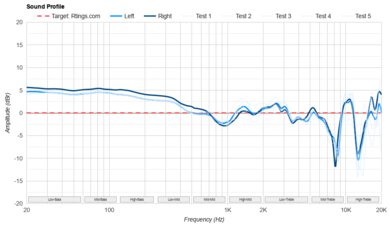
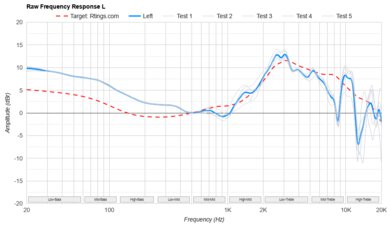
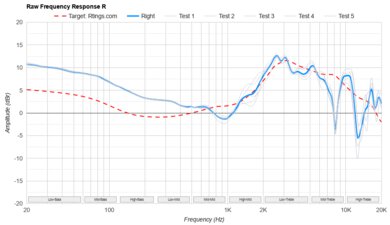
    These headphones have a flat frequency response. It's closer to the SoundGuys.com Studio Curve than our own target, with a controlled bass range that's often favored by analytical listeners. The mid-range is well controlled, but a couple of big dips in the low treble can make voices sound muffled and distant.

    Their companion software offers a graphic equalizer and EQ presets to help you customize their sound considerably if you want more low-end oomph, for instance. However, users have encountered issues with it, and you can read more in the App Support box. We also found that the frequency response is nearly identical whether you connect via USB or using the analog cable to our testing rig.

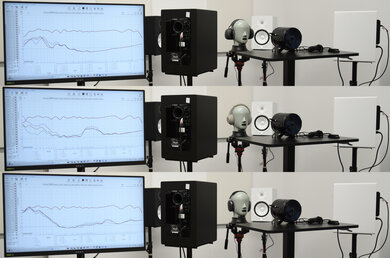
    Some users have reported that, after a firmware update, their headphones' sound profile changed when they're used wired via USB on the Xbox Series X|S. We first ran a frequency response sweep with the new firmware update, but there wasn't much of a change. You can see the comparative results, which are on a previous test bench, so it's meant as a relative comparison only. While we don't run sound testing on consoles, we also did a subjective sweep to compare audio quality between PC via USB and Xbox Series X via USB. We noticed that audio sounded tighter and sharper on the PC, while audio from the Xbox was more bass-heavy. Unfortunately, we don't have a measurement of the Xbox's audio pre-firmware update to compare it to.

    7.8
    Frequency Response Consistency
    Std. Deviation
    0.91 dB

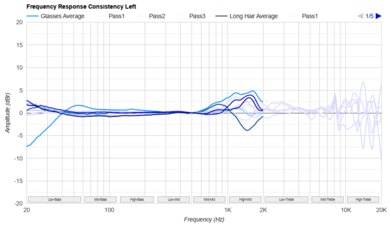
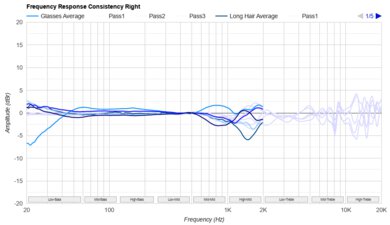
    These headphones have very good frequency response consistency. If you wear glasses, you may experience a touch less bass. But as long as you take the time to achieve a good fit and seal, you can generally expect a consistent sound with each wear. 

    Raw Frequency Response
    8.7
    Bass Profile: Target Compliance
    RMS Deviation From Target
    3.2 dB
    Low-Frequency Extension
    20 Hz
    Low Bass
    -4.44 dB
    Mid Bass
    -0.84 dB
    High Bass
    1.45 dB

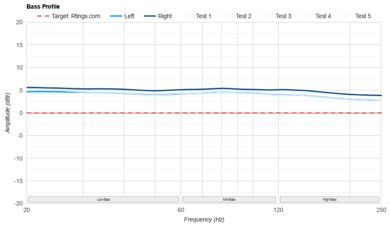
    The headset's bass profile's target compliance is excellent. The high bass is slightly emphasized, resulting in more boom than rumble without overpowering other frequencies. This tuning is more in line with other open-backs like the HiFiMan Edition XS than with one that's sure to please bass heads. However, people who wear glasses or who have thick hair may experience a slight drop in bass.

    8.9
    Mid-Range Profile: Target Compliance
    RMS Deviation From Target
    1.57 dB
    Low Mid
    1.09 dB
    Mid-Mid
    -0.59 dB
    High Mid
    -2.07 dB

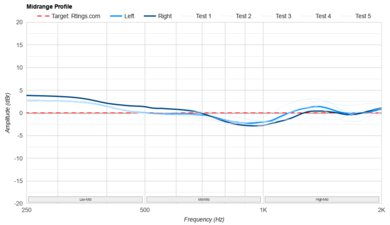
    This headset has amazing mid-range target compliance. Most of the range mirrors our target well, with a hint of emphasis in the low-mids that somewhat tapers off in the high-mids. On the whole, voices and lead instruments sound natural, though.

    5.2
    Treble Profile: Target Compliance
    RMS Deviation From Target
    5.87 dB
    Low Treble
    -6.69 dB
    Mid Treble
    -1.17 dB
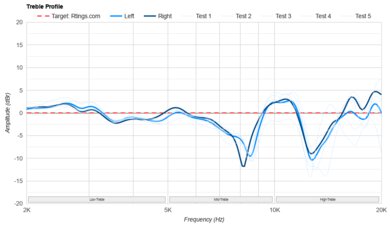
    High Treble
    -10.52 dB

    This headset's treble profile's target compliance is disappointing. A couple of big dips in the low-treble mean that voices can sound distant and lacking in presence. And since the mid-treble is relatively louder, sibilants like cymbals and S and T sounds are overly bright and sharp by comparison.

    7.4
    Peaks/Dips
    Peaks
    1.5 dB
    Dips
    1.83 dB

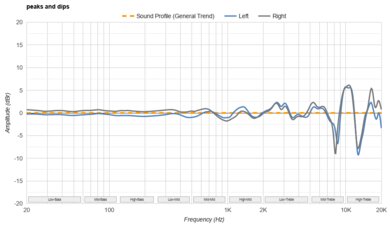
    The peaks and dips performance is satisfactory, indicating it generally adheres to its own flat sound profile. The sound profile is well-controlled through the bass and mid-range, but inconsistencies throughout the low-treble and mid-treble mean sounds like voices can feel alternatively dull or piercing, depending on the pitch of the voice. 

    8.1
    Stereo Mismatch
    Weighted Amplitude Mismatch
    0.16 dB
    Weighted Frequency Response Mismatch
    1.57 dB
    Weighted Phase Mismatch
    1.8°

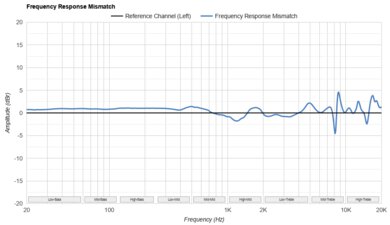
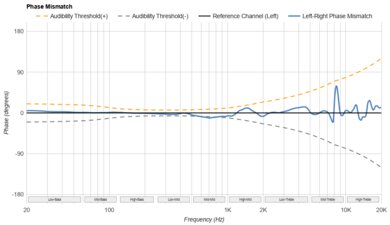
    These headphones have impressively well-matched left and right drivers, both in terms of amplitude and phase. While some very slight inconsistencies in amplitude can make centrally-panned elements like voices feel a touch off-center, this is difficult to notice during regular listening. In general, objects are correctly located in the stereo field.

    7.9
    Group Delay
    Weighted Group Delay
    0.8 ms

    The group delay performance is very good. You can expect tight bass and transparent treble reproduction from these headphones. 

    Cumulative Spectral Decay
    8.4
    PRTF
    PRTF Accuracy (RMS Deviation)
    2.79 dB
    PRTF Size (Avg.)
    4.37 dB
    PRTF Distance
    16.94 dB

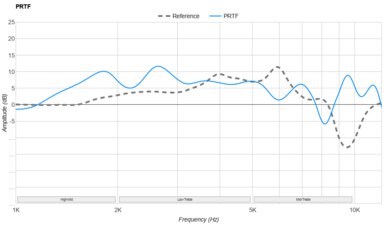
    These PRTF results indicate an impressive amount of interaction between your audio and outer ears. Your audio is reproduced with some of the spaciousness characteristic of two speakers in a room, which adds a sense of immersiveness to your listening experience. 

    If you remove the side-plates, your experience will be similar. With the plates removes, sound is able to activate your outer ear a little more, but the effect is subtle. You can see a comparison between the side-plates on (in blue) and side-plates off (in green) here.

    8.4
    Harmonic Distortion
    WHD @ 94 dB SPL
    0.13%
    WHD @ 104 dB SPL
    0.45%

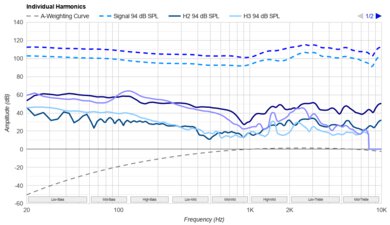
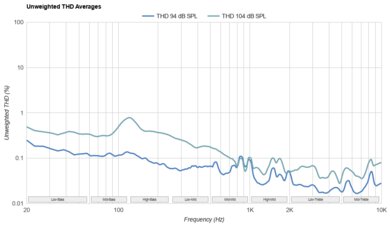
    These headphones have impressively low harmonic distortion, even at loud volumes. You can expect clean and clear audio reproduction. 

    Electrical Aspects
    Sensitivity @1kHz-1V
    110.2 dB SPL
    Bluetooth Max SPL
    N/A

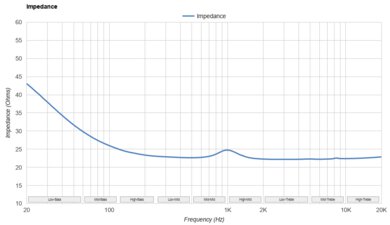
    These headphones come with a dedicated amp, so you don't need to purchase one separately to get the best sound out of t

    2.0
    Virtual Soundstage
    Head Modeling
    No
    Speaker Modeling
    On/Off
    Room Ambience
    No
    Head Tracking
    No
    Virtual Surround
    Dolby 7.1

    These headphones have a Dolby 7.1 virtual surround sound feature, but we don't currently test it.

    Test Settings
    Firmware
    36797
    Power
    USB
    Connection
    USB
    Codec
    PCM, 16-bit, 48kHz
    Test InstrumentAudio Precision APx517B
    EQ
    Natural Bass
    ANC
    No ANC
    Tip/Pad
    Default
    Microphone
    Boom

    These are the settings used to test these headphones. Our results are only valid when the headphones are used in this configuration.

    Design
    Style
    TypeOver-ear
    EnclosureOpen-Back
    WirelessNo
    TransducerDynamic

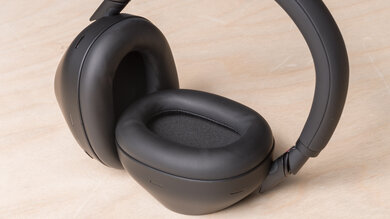
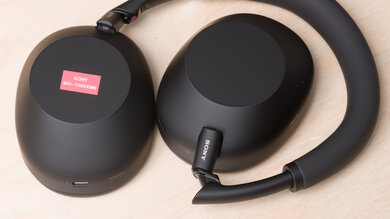
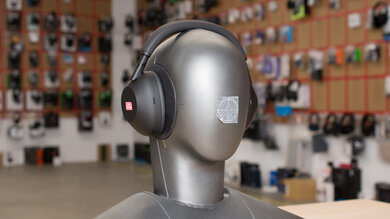
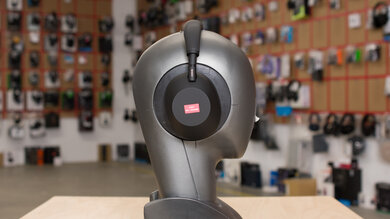
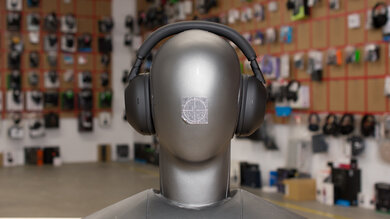
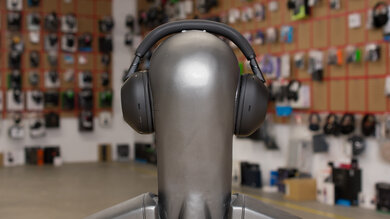
    The style of the Astro A40 headset is practically identical to the previous model but comes in different color schemes. These headphones now have an all-black frame, while the color accent indicates the console variant. The biggest difference in style is the remodeled MixAmp that now sits horizontally and has a more premium finished look. The speaker tags can be swapped out to customize the look of the headphones, and the manufacturer sells them in plenty of different colors. The boom mic is also detachable for a more casual look.

    8.0
    Comfort
    Weight0.82 lbs
    Clamping Force
    0.9 lbs

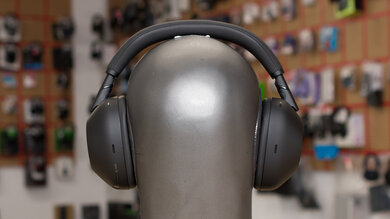
    This headset is very comfortable to wear during long gaming sessions. Similar to the Astro A50 Gen 3 Wireless 2017 and the previous-generation Astro A40 TR Headset + MixAmp Pro 2017, these headphones have soft padding and very large and spacious cups that should fit comfortably on most ears. The headphones are a bit bulky, but the headband does a good job of distributing the weight.

    6.2
    Controls
    OS Compatibility
    Not OS specific
    Ease Of UseGood
    FeedbackGood
    Call/Music ControlNo
    Volume ControlYes
    Microphone ControlMute/Unmute
    Channel Mixing
    Yes
    Noise Cancelling ControlNo
    Talk-Through
    No
    Additional ControlsPresets + Surround Sound

    This headset has mediocre controls. These headphones are designed for gaming and don't include any call or music management controls. They come with an in-line remote that only has a mic-mute button. That said, their audio cable is connected to the MixAmp, which offers additional controls. You get a volume knob and a channel mixing knob, which has a notch in the middle to indicate an equal 50/50 mix between game and chat audio. The MixAmp also has buttons that allow you to cycle through the EQ presets and enable/disable Dolby Surround Sound. There's also a switch at the back to toggle between console and PC mode. The buttons are easy to use and offer good feedback, but the volume knob doesn’t feel as nice as the Turtle Beach Elite Pro 2 SuperAmp.

    5.3
    Portability
    L7.2" (18.3 cm)
    W7.5" (19.1 cm)
    H4.0" (10.2 cm)
    Volume216.00 in³ (3,539.59 cm³)
    Transmitter RequiredNo

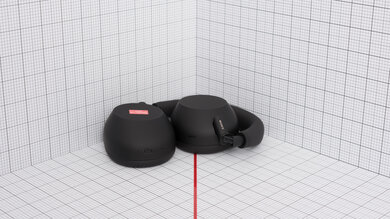
    This headset has disappointing portability. These headphones are quite bulky, like most gaming headphones, and aren't intended for use when you're out and about. The headband doesn't fold into a more compact format, but the earcups swivel to lay flat, and the mic can be detached, which makes it a bit easier to slide the headphones into a bag. Also, unlike the Astro A50 Gen 4 Wireless 2019, you can use them with their 1/8" TRRS cable without the MixAmp.

    0.0
    Case
    TypeNo case
    LN/A
    WN/A
    HN/A
    VolumeN/A
    8.0
    Build Quality

    This headset has an impressive build quality. These headphones are practically identical to the previous model and feel well-built and sturdy. The earcups are dense and should survive a few accidental drops without much damage. However, like the Astro A50 Gen 3 Wireless 2017, the headband is somewhat open and a little hollow with only the plastic midsection resting on the head. It's flexible but doesn't feel as resistant as a regular headband, especially ones with a metal frame. Although we don't currently test for it, they also lack an IP rating for water resistance, which is to be expected for gaming headphones.

    6.0
    Stability

    The Astro A40 headset has acceptable stability. These headphones should stay in place with no issue when you're sitting and gaming. However, they aren't intended for sports use. They don't fit very tightly on your head and have bulky, heavy earcups, so they sway around a lot during any kind of physical activity. Because they're wired, their audio cable could snag on something and pull the headphones off your head, but luckily the cable is detachable.

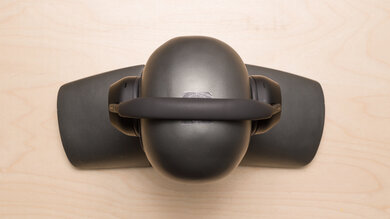
    Headshots 1
    Headshots 2
    Top
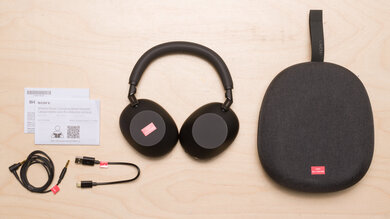
    In The Box

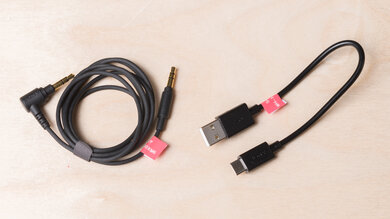
    • Astro A40 TR headphones
    • MixAmp Pro
    • USB to micro-USB cable
    • 1/8" TRRS cable
    • Optical cable
    • Daisy chain cable
    • Manuals
    Isolation
    2.4
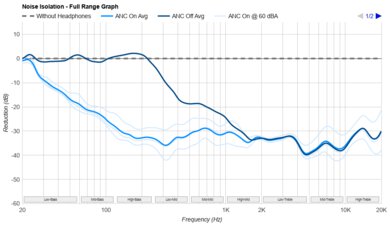
    Noise Isolation - Full Range
    Noise CancellingNo
    Overall Attenuation
    -5.41 dB
    Bass
    0.07 dB
    Mid
    -1.18 dB
    Treble
    -16.70 dB

    This headset has a bad noise isolation performance, which is expected from an open-back design. The cans slightly tame the brightness of transients, but not enough to help you focus and ignore your environment. You'll likely prefer to wear these in a room by yourself without loud distractions. If you want gaming headphones with better noise isolation thanks to their ANC feature, check out the Bang & Olufsen Beoplay Portal.

    2.6
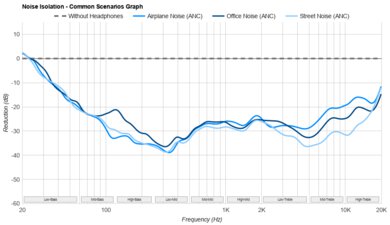
    Noise Isolation - Common Scenarios
    Airplane Noise Attenuation
    -4.64 dB
    Airplane Noise Isolation Audio
    Office Noise Attenuation
    -4.75 dB
    Office Noise Isolation Audio
    Street Noise Attenuation
    -5.11 dB
    Street Noise Isolation Audio

    The headset's noise isolation is terrible in common scenarios. Given the open-back design, this is normal. These headphones isolate you from virtually no ambient sound, including bus noise, ambient airplane cabins, and background conversations.

    Noise Isolation - Voice Handling
    Female Voice 1
    Male Voice 1
    Female Voice 2
    Male Voice 2
    ANC Wind Handling
    ANC Wind Noise
    N/A
    3.4
    Leakage
    Leakage Audio
    Overall Leakage @ 1ft
    56.31 dB

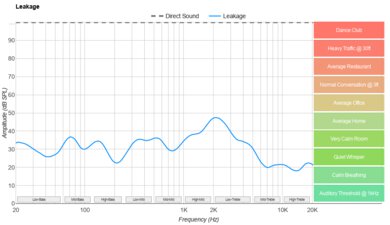
    This headset has a poor leakage performance. Because of their open-back design, these headphones leak a lot of audio from a broad range of frequencies. Someone in the room with you is likely to hear your audio, and it sounds full-bodied compared with the more thin-sounding leakage from in-ears or earbuds.

    Microphone
    Microphone Style
    Integrated
    No
    In-Line
    No
    Boom
    Yes
    Detachable Boom
    Yes
    MicYes
    8.3
    Recording Quality
    Recorded Speech
    LFE
    20 Hz
    FR Std. Dev.
    1.46 dB
    HFE
    3,948.06 Hz
    Weighted THD
    0.238
    Gain
    28.71 dB

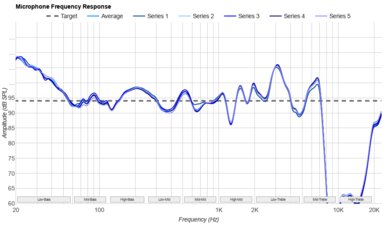
    The Astro A40 headset's boom mic has a great recording quality. Your voice sounds deep and full as well as clear and easy to understand. However, it does lack some airiness, and your voice can sound slightly muffled.

    8.3
    Noise Handling
    SpNR
    41.84 dB
    Noise Gate
    On/Off Toggle
    Speech + Pink Noise Handling
    8.5
    Speech + Pink Noise Audio Sample
    Speech + Subway Noise Handling
    8.0
    Speech + Subway Noise Audio Sample

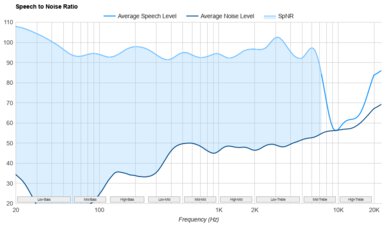
    The Astro A40 headset has an excellent noise handling performance. Even in a loud environment, the mic can effectively separate your voice from background sounds. This microphone uses a noise gate, which you can't disable, but you can choose between a few different sensitivity options.

    We tested the microphone with the noise gate set to 'Night' mode.

    Active Features
    0.0
    Battery
    Battery Type
    No Battery
    Continuous Battery Life
    N/A
    Additional Charges
    N/A
    Total Battery Life
    N/A
    Charge Time
    N/A
    Power-Saving Feature
    No
    Audio While Charging
    No
    Passive Playback
    Passive Headphone
    Charging PortNone
    6.0
    App Support
    App NameAstro Command Center
    iOSNo
    AndroidNo
    macOSYes
    WindowsYes
    Equalizer
    Graphic + Presets
    ANC Control
    No
    Mic ControlAdjustable Level
    Room Effects
    No
    Playback Control
    No
    Button MappingNo
    Surround Support
    No

    These headphones are compatible with Astro Command Center. However, some users have reported severe issues when using the software, which may be due to Astro moving the software download from their site to the Microsoft Store. Users can't update the headphones' firmware, which is necessary if you want to connect them via USB to newer consoles like the PS5. Users are unable to access any of the software's features too. Unfortunately, these issues can be a dealbreaker if you're looking to pick up these headphones.

    When working correctly, the Astro Command Center provides a great graphic EQ that you can assign to the EQ button on the MixAmp so you can cycle between different saved presets. You can also create your own custom EQ presets. The microphone tab gives you control over the mic level and the noise gate. However, the EQ only offers five bands, so these headphones aren't as customizable as the Logitech G635.

    Connectivity
    9.6
    Wired Connection
    Analog Audio
    Yes
    USB Audio
    USB Type A
    Detachable
    Yes
    Length
    6.80 ft (2.07 m)
    Connector
    1/8" TRRS
    Latency - Analog
    0.3 ms
    Latency - USB
    10.6 ms
    Recorded Latency
    Recorded Latency ConnectionUSB

    The Astro A40 headset can be used with or without the MixAmp. These headphones have a typical 1/8” TRRS analog cable that provides audio and microphone support on all consoles when plugged into a controller.

    0.0
    Bluetooth Connection
    Bluetooth Version
    No Bluetooth
    Multi-Device Pairing
    No
    Quick Pair (Android)
    No
    Quick Pair (iOS)
    No
    Line Of Sight Range
    N/A
    Latency - SBC
    N/A
    Latency - aptX
    N/A
    Latency - aptX Adaptive (High Quality)
    N/A
    Latency - aptX Adaptive (Low Latency)
    N/A
    Latency - LDAC
    N/A
    Recorded Latency
    N/A
    Recorded Latency CodecNo Bluetooth Audio
    AAC Support
    No

    The Astro A40 headset has no Bluetooth compatibility. If you want a Bluetooth-capable gaming headset, check out the Turtle Beach Elite 800 Wireless, the HyperX Cloud Mix Wireless, or the SteelSeries Arctis Pro Wireless.

    0.0
    Wireless Connection (Dongle)
    Line Of Sight Range
    N/A
    Latency - Dongle
    N/A
    Recorded Latency
    N/A
    PC Compatibility
    Analog
    Audio + Microphone
    Wired USB
    Audio + Microphone
    Non-BT Wireless
    No
    PlayStation Compatibility
    PS4 Analog
    Audio + Microphone
    PS4 Wired USB
    Audio + Microphone
    PS4 Non-BT Wireless
    No
    PS5 Analog
    Audio + Microphone
    PS5 Wired USB
    Audio + Microphone
    PS5 Non-BT Wireless
    No
    Xbox Compatibility
    Xbox One Analog
    Audio + Microphone
    Xbox One Wired USB
    Audio + Microphone
    Xbox One Non-BT Wireless
    No
    Xbox Series X|S Analog
    Audio + Microphone
    Xbox Series X|S Wired USB
    Audio + Microphone
    Xbox Series X|S Non-BT Wireless
    No

    Update 02/23/2021: Some users have reported that their headphones' sound profile changed when used wired via USB on the Xbox Series X|S after firmware update 36797. While we don't run sound testing on consoles, we did a subjective sweep to compare audio quality when connected to a PC via USB and the Xbox Series X via USB. We noticed that audio sounded tighter and sharper on the PC, while audio from the Xbox was more bass-heavy. Unfortunately, we don't have a measurement of the Xbox's audio pre-firmware update to compare it to.

    The Astro A40 headset is fully compatible with both the Xbox One and Xbox Series X consoles with either the 1/8" TRRS cable plugged into the controller or the MixAmp connected to the console. Since the Xbox Series X doesn't have an optical port, you have to connect it to the MixAmp via USB. You can find more information about that here. Astro also offers an alternative pre-amp, the MixAmp M80, which connects directly to your Xbox Controller and allows you to connect the headset via a 1/8" TRRS jack.

    7.8
    Base/Dock
    Type
    Wired USB dock
    USB Input
    Yes
    Line In
    Yes
    Line Out
    Yes
    Optical Input
    Yes
    RCA Input
    No
    Dock Charging
    No
    Power Supply
    USB

    The Astro A40 headset has a very good USB dock with plenty of inputs and controls. These headphones have a regular line-in audio jack, an optical input, and audio via the USB cable when plugged into your PC or console. The manufacturer advertises them as either Xbox One or PS4 compatible, but we managed to get both audio and microphone support on our Xbox One model for both consoles. Xbox users also have the option to use the MixAmp M80, which plugs directly into your Xbox controller but has fewer controls and inputs. We used the PC Mode of the amp for the PS4 and the console mode for the Xbox One. However, we don't expect you to be able to use the PS4 model variant on the Xbox One. You can also daisy-chain multiple amps together in a tournament setting.