SteelSeries Arctis Pro Wireless  Headphones Review

Review updated Jun 04, 2020 at 02:42pm
Writing modified Jan 12, 2026 at 08:58am
Tested using Methodology v2.0 
SteelSeries Arctis Pro Wireless
7.0
Sports And Fitness 
5.9
Travel 
6.4
Office Work 
7.9
Wireless Gaming (In Development) 
7.6
Wired Gaming (In Development) 
6.6
Audio Reproduction Accuracy 
4.3
Noise Isolation 
8.3
Microphone (In Development) 
 18

The SteelSeries Arctis Pro Wireless are good gaming headphones. They combine the connectivity options of the SteelSeries Arctis 7 Wireless 2017 and the SteelSeries Arctis Pro GameDAC by including a wireless transmitter that doubles as a battery charging station, and they even throw in Bluetooth support for good measure. This results in highly versatile wireless gaming headphones that can mix audio from a console and a mobile device at the same time. On the downside, there have been many user reports of their units' hinges breaking over a short amount of time, and you can read more in our build quality section.

Our Verdict

7.0
Sports And Fitness 

The SteelSeries Arctis Pro Wireless are decent for sports, though they're not designed for this purpose at all. They're bulky but have breathable padding on their ear cups. You can also use them wirelessly with mobile devices, and they're decently stable thanks to their tight yet comfortable fit. However, they won't be the most practical for physical activities since you can get quite warm exercising with them on, and they're prone to slipping off. They also have a mediocre build quality, and their hinges may break over time.

Pros
  • Comfortable design.
Cons
  • Poor noise isolation.
5.9
Travel 

The SteelSeries Arctis Pro Wireless are sub-par for commuting. You can pair them to your mobile devices via Bluetooth or use them passively with the provided audio cable. Although they don't mitigate background noise very well, the microphone is retractable, and they're quite comfortable, so they're an alright option for commuting if you don't mind the over-ear design.

Pros
  • Comfortable design.
Cons
  • Poor noise isolation.
6.4
Office Work 

The SteelSeries Arctis Pro Wireless are mediocre for office use. The SteelSeries Engine provides you with a good amount of customization options, and they're comfortable enough to wear for long hours. Their microphone is great for taking calls and you can use them wirelessly by plugging the wireless transmitter into your work computer as well as by pairing them to your mobile Bluetooth device. They won't block much office chatter, but they also don't leak as much as other gaming headsets. Their battery life can also last a whole workday.

Pros
  • Impressive battery system.
  • Wireless via USB transmitter and Bluetooth.
Cons
  • Poor noise isolation.
  • Bass and treble delivery varies significantly across users.
7.9
Wireless Gaming (In Development) 

The SteelSeries Arctis Pro Wireless are very good for wireless gaming. They can be used with a console and mobile device at the same time, have an excellent mic that filters a lot of noise, and are comfortable. They also have low wireless latency via their wireless transmitter base. Like most gaming headphones, they have poor noise isolation, but it won't be a problem if you game in a quiet room. That said, they have a unique and convenient battery charging system and are likely to keep up with even the most prolonged gaming sessions.

Pros
  • Great microphone performance.

  • Impressive battery system.
Cons
  • No button to adjust microphone volume.
7.6
Wired Gaming (In Development) 

The SteelSeries Arctis Pro Wireless are good for wired gaming. They're comfortable for long gaming sessions, and their boom microphone captures voices clearly, even in more demanding environments. Their wireless transmitter is also nice for tweaking your audio on the fly. Unfortunately, they lack an adjustable mic level control. They also have poor noise isolation, but they'll be more than adequate if you're gaming at home.

Pros
  • Great microphone performance.

  • Wireless via USB transmitter and Bluetooth.
Cons
  • No button to adjust microphone volume.
6.6
Audio Reproduction Accuracy 

The SteelSeries Arctis Pro Wireless are okay for Audio Reproduction Accuracy. Their frequency response mostly follows their warm sound profile, with the exception of the treble range, where some deviations mean sibilants are rendered inconsistently. However, the abundance of bass, enhanced by a combination of poor group delay and phase mismatches, can eclipse other frequency ranges, making for a one-note listening experience. Still, you can always adjust the sound in the companion app to counteract this somewhat. Despite their closed-back design, these headphones are also capable of providing some perception of space in your audio, which makes for a more immersive gaming experience.

4.3
Noise Isolation 

The SteelSeries Arctis Pro Wireless have a poor noise isolation performance. They don't have an ANC system and the passive isolation provided by their closed-back design means there's very little attenuation of bass and mid-range frequencies. While they can tamp down on some higher-frequency sounds, like whirring PC fans, you'll be at the mercy of sounds like distant traffic and background conversations.

8.3
Microphone (In Development) 

The SteelSeries Arctis Pro Wireless have a great microphone performance. The boom mic is capable of rendering your voice with plenty of detail and nuance to the rest of your party and it even does an impressive job of separating your voice from its backdrop.

4.7
Frequency Response Consistency 

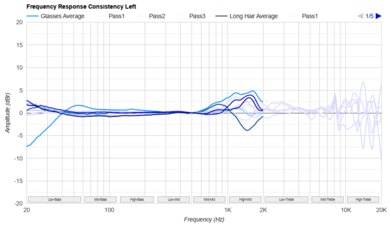
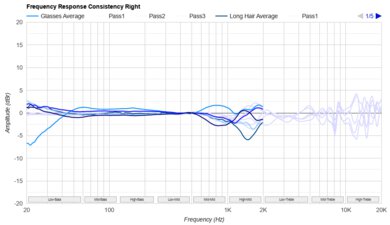
The SteelSeries Arctis Pro Wireless have poor frequency response consistency. The large earcups and limited range of adjustability can result in some inconsistencies in bass-range delivery, due to the challenge of getting a solid seal. This is particularly evident for those who wear glasses, as their arms can disrupt the seal and bring about a drop-off in bass reproduction. However, those with long hair or larger heads can also be impacted, so it's important to take the time to adjust the fit as much as you can.

  • 7.0
    Sports And Fitness
  • 5.9
    Travel
  • 6.4
    Office Work
  • 7.9
    Wireless Gaming (In Development)
  • 7.6
    Wired Gaming (In Development)

  • Performance Usages

  • 6.6
    Audio Reproduction Accuracy
  • 4.3
    Noise Isolation
  • 8.3
    Microphone (In Development)
  • 4.7
    Frequency Response Consistency
  • Changelog

    1.  Updated Jan 12, 2026: 

      This review has been updated to Test Bench 2.0, which adds the following tests: Stereo Mismatch, Group Delay, Cumulative Spectral Decay, PRTF, Harmonic Distortion, and Electrical Aspects. We've added new performance usages and updated the text throughout the Sound tests and side-by-sides.

    2.  Updated Dec 15, 2025: We've converted this review to Test Bench 2.0, which updates our sound tests and adds performance usages. You can read more about this in our changelog.
    3.  Updated Jan 06, 2025: 

      Several Sound tests have been updated following Test Bench 1.8. Text changes have also been made throughout the review, including the Usages and Product Comparisons, to match these results. We want to ensure you see our more recent data, so some outdated text has been removed.

    4.  Updated Dec 16, 2024: We've converted this review to Test Bench 1.8, which updates our target curve and Sound tests. You can read more about this in our changelog.

    Check Price

    Differences Between Sizes And Variants

    The SteelSeries Arctis Pro Wireless come in a 'Black' and 'White' variant. 

    If you come across another variant, let us know in the comments, so we can add it to our review.

    Popular Headphones Comparisons

    The SteelSeries Arctis Pro Wireless combine the wireless support of the SteelSeries Arctis 7 Wireless 2017 with the customizability of the SteelSeries Arctis Pro GameDAC, making them jam-packed with features. What really sets them apart from other gaming headphones, however, is their swappable dual-battery charging system. They also have Bluetooth support so you can channel mix your gaming audio with team chat from your mobile device.

    If you're still looking for gaming headphones, check out our recommendations for the best PS4 gaming headsets or the best PS5 gaming headsets.

    SteelSeries Arctis Nova Pro Wireless [PC, PS, Xbox]

    The SteelSeries Arctis Nova Pro Wireless have an edge over the SteelSeries Arctis Pro Wireless. The Arctis Nova Pro deliver audio more consistently and have ANC to help block out an alright amount of background noise. Their total battery life is longer, and you can even get these headphones in an Xbox or PlayStation variant, which offers different compatibility with either console. However, the original Arctis Pro's mic offers better overall performance in both noise handling and recording quality.

    SteelSeries Arctis Nova Pro

    If versatility is important to you, then the SteelSeries Arctis Pro Wireless have the edge over the SteelSeries Arctis Nova Pro. The Arctis Pro are wireless headphones that you can use wired. They support Bluetooth, which means you can use them more casually. They're also better built and their microphone performance is a bit better. However, the Arctis Nova Pro offer a bit more customizability, thanks to their companion software.

    Astro A50 Gen 4

    The SteelSeries Arctis Pro Wireless are more versatile gaming headphones than the Astro A50 Gen 4, as you can use them wired or wirelessly. Although the SteelSeries are prone to more inconsistencies in their audio delivery, their sound can be tweaked on the fly, thanks to the EQ on their wireless transmitter. You can use their dock to store an extra physical battery while another is in your headphones, so you shouldn't have to worry about running out of power. They support Bluetooth, which is nice if you like to stream audio from your phone while gaming. However, the Astro have the edge when it comes to wireless gaming. They have even lower wireless latency via their base station, a more comfortable fit, and their boom mic offers a slightly better overall performance.

    SteelSeries Arctis 7+ Wireless

    The SteelSeries Arctis Pro Wireless are slightly better gaming headphones than SteelSeries Arctis 7+ Wireless. While both headphones are comfortable, the Arctis Pro come with a wireless dock that offers several connectivity options, as well as features like channel mixing and EQ presets that you can adjust on the fly. They support Bluetooth, and their boom mic offers better overall performance. However, the Arctis 7+ offer a lot more customization features as they're compatible with Sonar, which offers a parametric EQ among other robust customization features.

    Show more 

    Test Results

    perceptual testing image
    Sort:
    RATINGS
    Category:
    All
    Sound
    Sound Profile
    See details on graph tool
    Normalization Frequency
    500 Hz
    Bass Amount
    Emphasized (4 dB)
    Treble Amount
    Slightly Emphasized (1 dB)
    Sound Signature
    Warm

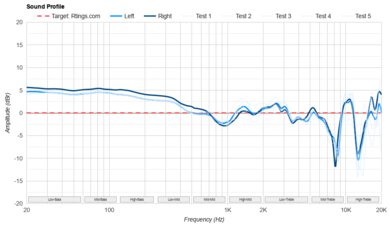
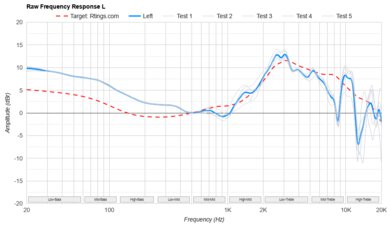
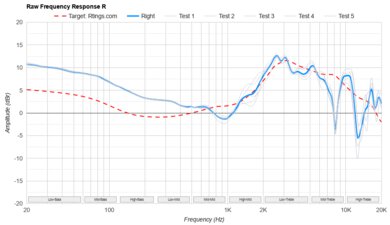
    The SteelSeries Arctis Pro Wireless have a warm sound signature that boost the bass quite significantly compared to our target curve. As with more wireless headphones with multiple connection methods, the frequency response will vary based on your connection type

    4.7
    Frequency Response Consistency
    See details on graph tool
    See details on graph tool
    Std. Deviation
    2.00 dB

    The SteelSeries Arctis Pro Wireless have poor frequency response consistency. The bass delivery varies, and a drop in bass can occur if the ear cups aren't flush to your head, like if you wear glasses or have thick hair. The treble range is also inconsistent. As the overall frequency response depends on fit, seal, and positioning of these headphones, once you achieve a good overall fit, you'll get a more consistent frequency response each time you use them.

    Raw Frequency Response
    See details on graph tool
    See details on graph tool
    7.7
    Bass Profile: Target Compliance
    See details on graph tool
    RMS Deviation From Target
    5.0 dB
    Low-Frequency Extension
    20 Hz
    Low Bass
    0.82 dB
    Mid Bass
    6.48 dB
    High Bass
    6.31 dB

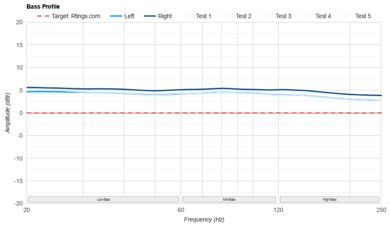
    Their bass range compliance to our target is good. While the low-bass is relatively aligned with our curve, the mid and low-bass is significantly exaggerated, making for a very boomy sound. As a result, basslines and kicks have plenty of rumble but can overshadow instruments from other frequency bands. 

    8.9
    Mid-Range Profile: Target Compliance
    See details on graph tool
    RMS Deviation From Target
    1.52 dB
    Low Mid
    1.4 dB
    Mid-Mid
    1.55 dB
    High Mid
    0.48 dB

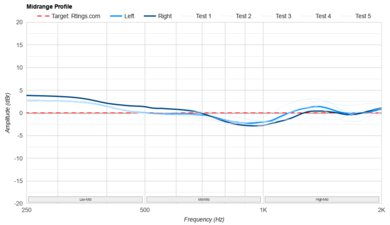
    The mid-range compliance to our target is excellent. The response is virtually flush with our target. There are subtle deviations in the response, but these can be attributed to L/R imbalances. Consequently, dialogue and vocals come through with plenty of detail and realism. 

    7.5
    Treble Profile: Target Compliance
    See details on graph tool
    RMS Deviation From Target
    3.79 dB
    Low Treble
    -0.71 dB
    Mid Treble
    2.14 dB
    High Treble
    -3.02 dB

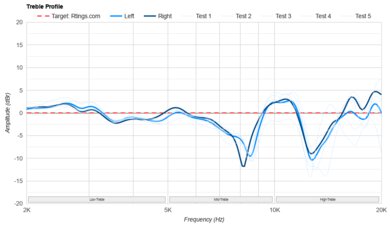
    The treble compliance is good but features more deviations from our target than the other ranges. The low-treble range is relatively even in response, lending plenty of weight to the upper harmonics of vocals. However, a dip at the top of this range is followed by a peak in the mid-treble that can cause sibilants, like S and T sounds, to vary in their timbre. There's also some roll-off around 10k that can take some of the shimmer and air out of breathy vocals. 

    6.7
    Peaks/Dips
    See details on graph tool
    Peaks
    1.88 dB
    Dips
    2.56 dB

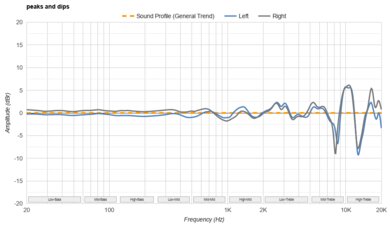
    The peaks and dips performance is okay. The frequency response generally follows the warm sound profile in the bass and mid-range but there are some more significant deviations in the treble range. A peak in the low-treble brings voices and vocal melodies to the forefront. However, a dip at the top of this range is followed by a sharp peak in the mid-treble, meaning sibilant reproduction can be inconsistent. Finally. There's a major dip near the top of most people's hearing range that translates to less air in instruments like cymbals and acoustic guitars. 

    7.6
    Stereo Mismatch
    See details on graph tool
    See details on graph tool
    Weighted Amplitude Mismatch
    0.10 dB
    Weighted Frequency Response Mismatch
    2.09 dB
    Weighted Phase Mismatch
    4.4°

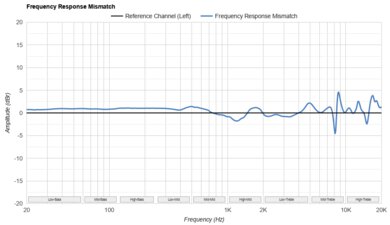
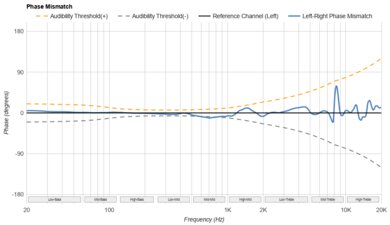
    The stereo mismatch performance is good. The L/R drivers are well-aligned in terms of amplitude but there are some imbalances in certain frequency ranges. Fortunately, they're all relatively minor or fall outside of most people's range of hearing, so they're difficult to hear in everyday content, unless you're listening intently. There's also some phase mismatches present in the bass and mid-range, though these are also quite difficult to detect unless you're listening out from them. Of these, the phase mismatch between 200 and 300Hz is the most perceptible, as it can subtly thin out male voices. 

    1.0
    Group Delay
    See details on graph tool
    Weighted Group Delay
    10.7 ms

    The group delay performance is terrible. During testing sweeps, the bass-range would rattle the drivers quite a bit. Group delay issues were harder to hear in everyday audio content though, the extremely bloated bass range can obfuscate looseness in bass-range transients. Given there's also some phase mismatches present in this range, it's hard to tell how these metrics contribute to the frequency response, though it's clear they both have an impact. 

    8.1
    PRTF
    See details on graph tool
    PRTF Accuracy (RMS Deviation)
    3.43 dB
    PRTF Size (Avg.)
    7.72 dB
    PRTF Distance
    22.05 dB

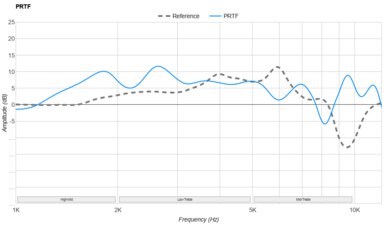
    The SteelSeries Arctis Pro Wireless have a great PRTF performance. While the response doesn't exactly mimic that of an angled loudspeaker, these headphones are able to create a solid impression of space and size with audio. 

    9.0
    Harmonic Distortion
    See details on graph tool
    See details on graph tool
    WHD @ 94 dB SPL
    0.10%
    WHD @ 104 dB SPL
    0.18%

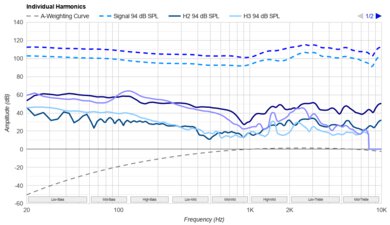
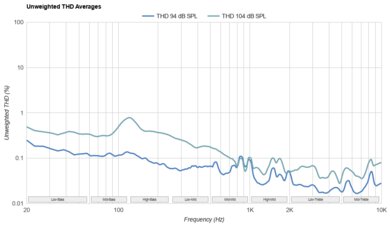
    The harmonic distortion performance is excellent. There's no audible coloration of sound at both regular and elevated listening levels, meaning audio playback is clean and pure. 

    Electrical Aspects
    See details on graph tool
    Sensitivity @1kHz-1V
    113.2 dB SPL
    Bluetooth Max SPL
    107.1 dB

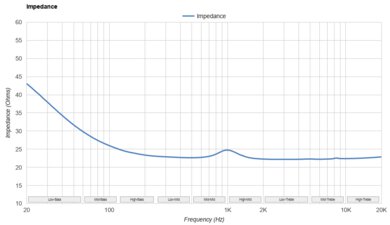
    When using a wired connection, these headphones are capable of reaching high listening levels without needing an amp to drive them as they're battery powered. 

    2.0
    Virtual Soundstage
    Head Modeling
    No
    Speaker Modeling
    On/Off
    Room Ambience
    No
    Head Tracking
    No
    Virtual Surround
    Yes

    These headphones have virtual sound support and a speaker modeling feature.

    Test Settings
    Firmware
    MCU 1.7.0.0
    Power
    On
    Connection
    Wireless (Proprietary)
    Codec
    PCM, 16-bit, 48kHz
    Test InstrumentAudio Precision APx517B
    EQ
    Off
    ANC
    No ANC
    Tip/Pad
    Default
    Microphone
    Boom

    We originally reported that we tested these headphones using PCM, 24-bit, 48kHz codec. However, this was incorrect and thanks to user feedback, we've updated our results with the correct codec settings: PCM, 16-bit, 48kHz.

    The SteelSeries Arctis Pro's results are only valid for these settings.

    Design
    Style
    TypeOver-ear
    EnclosureClosed-Back
    WirelessYes
    TransducerDynamic

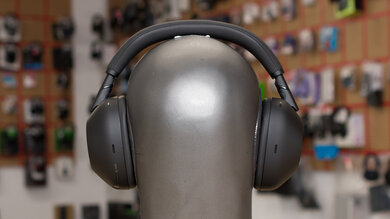
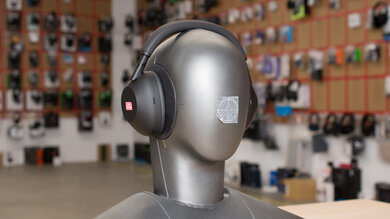
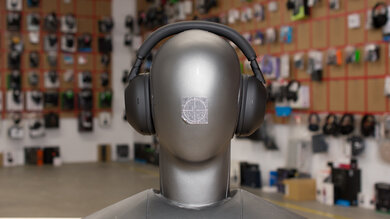
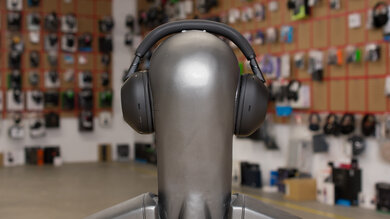
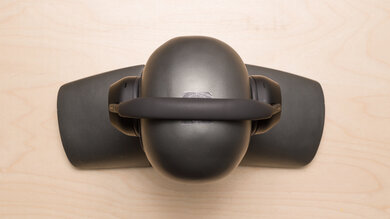
    The SteelSeries Arctis Pro Wireless are very similar in design to the rest of the Arctis lineup. They have a wide metal headband with a pronounced curve wrapped in an elastic strap to adjust the fit, reminiscent of ski goggles, that has a premium, durable feel. They’re a bit bulky, but have a retractable microphone for added versatility. They have a sleek, uniform look that's more understated than gaming headsets with flashier designs like the Astro A50 Gen 4 Wireless 2019, but is more versatile for everyday use. If you want your headphones to stand out more though, you can purchase more colorful headband straps, magnetic ear cup plates, and leather or velour ear cushions directly on the SteelSeries website.

    7.5
    Comfort
    Weight0.8 lbs
    Clamping Force
    1.2 lbs

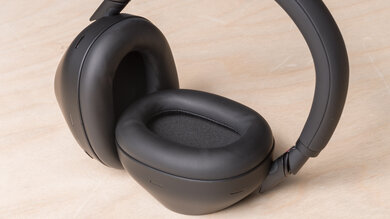
    Like the SteelSeries Arctis 7 2019 Edition Wireless and the SteelSeries Arctis Pro GameDAC, the SteelSeries Arctis Pro Wireless are comfortable gaming headphones. They have a curved metal headband frame with a ski goggle-like elastic that adjusts the fit. The ear cups are large, spacious, and well-padded, and are coated with breathable and soft padding that feels nice on the skin. Unfortunately, the sizing is limited by the length of the elastic strap and the shape of the metal frame, which can’t expand to accommodate all head shapes and sizes. The fit will be fine for most but may feel a little tight for some.

    7.8
    Controls
    OS Compatibility
    Not OS specific
    Ease Of UseGood
    FeedbackGreat
    Call/Music ControlYes
    Volume ControlYes
    Microphone ControlMute/Unmute
    Channel Mixing
    Yes
    Noise Cancelling ControlNo
    Talk-Through
    No
    Additional ControlsBluetooth Sync

    The SteelSeries Arctis Pro Wireless have good controls that are easy to use and provide great feedback. Like the SteelSeries Arctis Pro GameDAC, these headphones have a control dial and a microphone mute switch on the left ear cup. When using Bluetooth, the control dial only adjusts the volume. If you're using the transmitter, you can also adjust the volume by default, but clicking the dial accesses more settings like channel mixing, EQ presets, and audio sources. The right ear cup has a power button and a dedicated Bluetooth Sync button, which controls music and calls when you're using a Bluetooth connection. The power button also curves outwards while the Bluetooth button curves inwards, which helps to distinguish the two.

    5.5
    Portability
    L7.5" (19.1 cm)
    W6.9" (17.5 cm)
    H3.5" (8.9 cm)
    Volume181.00 in³ (2,966.05 cm³)
    Transmitter RequiredNo

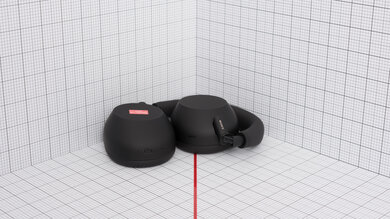
    Like most gaming headphones, the SteelSeries Arctis Pro Wireless aren't very portable. Even though they have practically the same design as the SteelSeries Arctis 7 Wireless 2017 and the SteelSeries Arctis Pro GameDAC, they’re a bit larger too. They have large ear cups, a rigid headband, and they can't fold into a more compact format. Their wireless transmitter is also fairly bulky. However, you don't need to carry it with you when you're on the go as these headphones have Bluetooth support or can be used passively with their audio cable. Still, they're not the easiest to carry around unless you have a bag or backpack to stash them in.

    0.0
    Case
    TypeNo case
    LN/A
    WN/A
    HN/A
    VolumeN/A

    The SteelSeries Arctis Pro Wireless don't come with a case or a pouch. However, you can purchase one directly from SteelSeries.

    6.0
    Build Quality

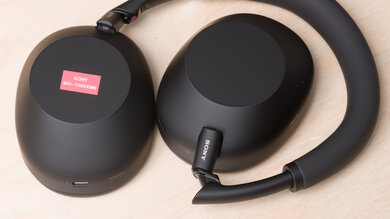
    Despite their high-end price, the SteelSeries Arctis Pro Wireless have a mediocre build quality. They’re nearly identical to the SteelSeries Arctis Pro GameDAC with a mostly plastic frame and a headband that's a mix of metal and silicone-like material. Unfortunately, there have been multiple user reports of the hinges of the headphones breaking over short and long periods. The plastic yoke area can crack and cause the hinge completely break off, which is very frustrating.

    Unlike most other gaming headphones, the right ear cup houses a removable battery, and the headphones come with two swappable batteries. The microphone is flexible and can withstand being bent in different ways without breaking. It also smoothly retracts into the left ear cup when not in use.

    7.5
    Stability

    The SteelSeries Arctis Pro Wireless have similar stability to the SteelSeries Arctis 7 Wireless 2017 and the SteelSeries Arctis 7 2019 Edition Wireless. They have a tight yet comfortable fit that prevents them from moving much once on your head. Since they’re also wireless, there’s no audio cable that can snag on something and yank them off your ears. That said, their fit is tight enough that you can jog with them if you want to, provided you don’t mind your ears getting a little warm.

    Headshots 1
    Headshots 2
    Top
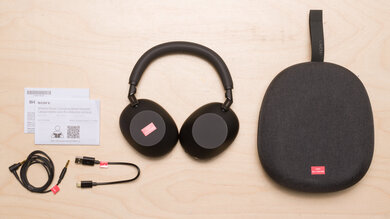
    In The Box

    • Arctis Pro Wireless headset
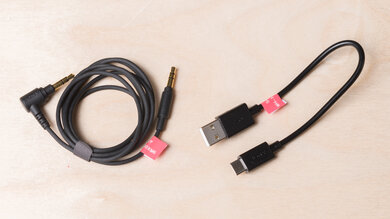
    • Wireless USB transmitter
    • Mini-USB to USB audio cable
    • 8-pin to 1/8" TRRS audio cable
    • Toslink optical cable
    • Micro-USB to USB charging cable
    • DC to USB power cable
    • Microphone windscreen
    • Additional battery
    • Manual
    Isolation
    4.3
    Noise Isolation - Full Range
    See details on graph tool
    Noise CancellingNo
    Overall Attenuation
    -10.15 dB
    Bass
    6.94 dB
    Mid
    -11.44 dB
    Treble
    -29.42 dB

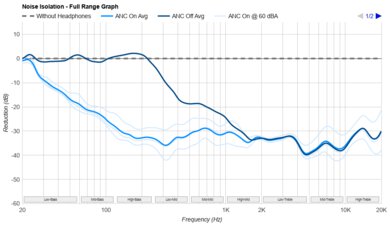
    The SteelSeries Arctis Pro Wireless have poor noise isolation. They don’t isolate sounds in the bass range at all and instead, they can let the rumbles of a subwoofer into your audio. Although they block out slightly more mid-range noise like office chatter, it won't be enough for an office or cafe setting. On the upside, they do a better job of reducing treble range noise like A/C fans. However, if you want gaming headphones with better noise isolation, check out the EPOS Sennheiser GSP 600. The SteelSeries Arctis Nova Pro Wireless are also worth considering as they have an active noise cancelling (ANC) system.

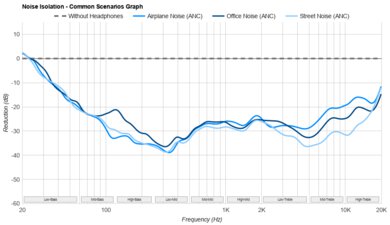
    3.5
    Noise Isolation - Common Scenarios
    See details on graph tool
    Airplane Noise Attenuation
    -7.06 dB
    Airplane Noise Isolation Audio
    Office Noise Attenuation
    -6.85 dB
    Office Noise Isolation Audio
    Street Noise Attenuation
    -8.32 dB
    Street Noise Isolation Audio
    Noise Isolation - Voice Handling
    Female Voice 1
    Male Voice 1
    Female Voice 2
    Male Voice 2
    ANC Wind Handling
    ANC Wind Noise
    N/A
    7.0
    Leakage
    See details on graph tool
    Leakage Audio
    Overall Leakage @ 1ft
    39.37 dB

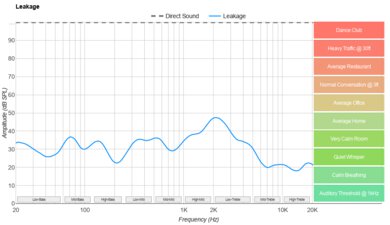
    The leakage performance of the SteelSeries Arctis Pro Wireless is decent, similar to that of the SteelSeries Arctis 7 2019 Edition Wireless. They mostly leak between the low-mid to low-treble and it sounds fuller and speaker-like than leakage coming from in-ear or more tightly closed-back, over-ear headphones. If you're listening to music at a high volume, it may be audible to those around you, even in a moderately noisy environment.

    Microphone
    Microphone Style
    Integrated
    No
    In-Line
    No
    Boom
    Yes
    Detachable Boom
    No
    MicYes

    Update 04/03/2019:A few reports mention a hissing noise that could be a deal-breaker for some users. This issue seems to be related to the mic as setting the sidetone level to 0 and turning volume limiter off slightly helps. However, this seems inconsistent and may vary per unit, as some users don't have this issue. We have a very slight hiss with our unit, but it's barely audible, especially when you have audio playing.

    These headphones have a retractable boom microphone that also comes with an optional windscreen.

    8.4
    Recording Quality
    See details on graph tool
    Recorded Speech
    LFE
    20 Hz
    FR Std. Dev.
    2.56 dB
    HFE
    6,639.82 Hz
    Weighted THD
    0.305
    Gain
    30.11 dB

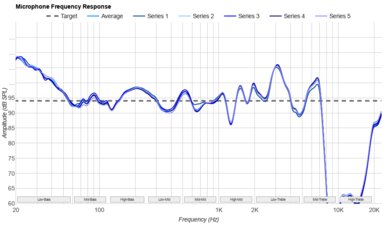
    The SteelSeries Arctis Pro Wireless' microphone has a very good recording quality. Speech recorded sounds full-bodied, clear, and detailed. However, it lacks airiness and brilliance. As the microphone doesn't have volume control, it's always at max volume, which causes the recording to sound distorted in our test PC.

    There have been numerous reports on user forums of the SteelSeries Arctis Pro Wireless' microphone being too quiet on consoles and mobile apps. Resetting the wireless transmitter and updating the firmware seems to resolve this issue for many. You can visit this link to see the discussion surrounding this issue.

    8.3
    Noise Handling
    See details on graph tool
    SpNR
    48.8 dB
    Noise Gate
    Always On
    Speech + Pink Noise Handling
    8.5
    Speech + Pink Noise Audio Sample
    Speech + Subway Noise Handling
    8.0
    Speech + Subway Noise Audio Sample

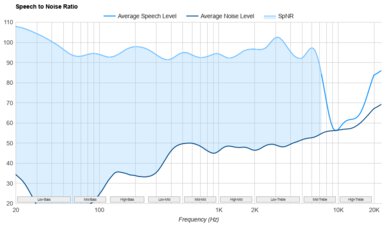
    The microphone of the SteelSeries Arctis Pro Wireless has remarkable noise handling. It can easily separate your voice from demanding or noisy environments like gaming events, so you can be heard clearly.

    Active Features
    8.8
    Battery
    Battery Type
    Rechargable
    Continuous Battery Life
    15.3 hrs
    Additional Charges
    1.0
    Total Battery Life
    30.6 hrs
    Charge Time
    1.3 hrs
    Power-Saving Feature
    Auto-Off Timer
    Audio While Charging
    Yes
    Passive Playback
    Yes
    Charging Portmicro-USB

    Update 10/12/2021: We retested both batteries to see if we could achieve a result closer to the advertised 10 hours of continuous battery life. We were able to measure roughly 13 hours of playback time. However, our unit is over a year old and has seen a lot of use, which could explain the difference between our original measurement of roughly 15 hours and this measurement of 13 hours. We also managed to get more than the advertised 10 hours of battery life after both retests, and even though these headphones have been regularly used for several months. As a result, we haven't changed our results.

    These headphones have an excellent battery system. Two swappable batteries can be inserted into the wireless transmitter for charging when not in use. They use one battery at a time, and they each have over 15 hours of continuous battery life, which means that you don't have to worry about running out of juice during more intense gaming sessions. When you're deep in gameplay, the transmitter can also show the charge level of your headphones as well as the battery that's being charged. There's even an auto-off timer that can be set via their companion software, and if you can't put down the game, you can also use these headphones while charging. You can also use them passively with their included audio cable.

    7.5
    App Support
    App NameSteelSeries Engine
    iOSNo
    AndroidNo
    macOSYes
    WindowsYes
    Equalizer
    Graphic + Presets
    ANC Control
    No
    Mic ControlMute/Unmute
    Room Effects
    No
    Playback Control
    No
    Button MappingNo
    Surround Support
    Yes

    The SteelSeries Arctis Pro Wireless are compatible with the SteelSeries Engine desktop app, which is a good app with lots of customization features for gamers. You won’t get as many features as you do with the SteelSeries Arctis Pro GameDAC, but there’s a graphic equalizer with presets, DTS surround sound, live mic preview, bass boost, and dialogue enhancement, to name a few. The charge level of the battery in the headset and the battery in the transmitter is available on the app, and the app specifies when the charging battery is fully charged.

    Connectivity
    7.0
    Wired Connection
    Analog Audio
    Yes
    USB Audio
    No
    Detachable
    Yes
    Length
    4.10 ft (1.25 m)
    Connector
    Mini B 8-Pin
    Latency - Analog
    26.5 ms
    Latency - USB
    N/A
    Recorded Latency
    Recorded Latency ConnectionAnalog

    The SteelSeries Arctis Pro Wireless come with an uncommon mini B 8-pin connector cable that connects directly to the headphones. However, the other end is a 1/8" TRRS cable that's compatible with most gaming consoles and operating systems. When the headphones are on, they have slight latency via analog, but your audio and visuals are still well-synced. Using them completely passively drops the latency to virtually imperceptible levels, though.

    6.8
    Bluetooth Connection
    Bluetooth Version
    4.1
    Multi-Device Pairing
    Bluetooth + Console/Non-BT Wireless
    Quick Pair (Android)
    No
    Quick Pair (iOS)
    No
    Line Of Sight Range
    187.00 ft (57.00 m)
    Latency - SBC
    256 ms
    Latency - aptX
    N/A
    Latency - aptX Adaptive (High Quality)
    N/A
    Latency - aptX Adaptive (Low Latency)
    N/A
    Latency - LDAC
    N/A
    Recorded Latency
    Recorded Latency CodecSBC
    AAC Support
    No

    The SteelSeries Arctis Pro Wireless have okay Bluetooth connectivity. Although they don't support multi-device with more than one Bluetooth device like the Turtle Beach Elite 800 Wireless, you can still pair them with a Bluetooth device. You can also connect to a PlayStation console and a Bluetooth device simultaneously. With this setup, you can listen to audio from your smartphone while still gaming.

    These headphones only support the basic SBC codec. The latency using this codec is quite high, causing lip-sync issues. Some apps and devices compensate for latency, though. Bluetooth also isn't really the best choice for gaming, so if you're looking for lower wireless latency, you'll want to see how the wireless transmitter base performs.

    8.1
    Wireless Connection (Dongle)
    Line Of Sight Range
    175.00 ft (53.34 m)
    Latency - Dongle
    22 ms
    Recorded Latency

    These headphones have excellent wireless connectivity via their wireless transmitter base. Their audio latency is quite low, ensuring your audio and video stay in sync. They also have a very good line-of-sight range, allowing you to use them further away from their audio source.

    PC Compatibility
    Analog
    Audio + Microphone
    Wired USB
    No
    Non-BT Wireless
    Audio + Microphone
    PlayStation Compatibility
    PS4 Analog
    Audio + Microphone
    PS4 Wired USB
    No
    PS4 Non-BT Wireless
    Audio + Microphone
    PS5 Analog
    Audio + Microphone
    PS5 Wired USB
    No
    PS5 Non-BT Wireless
    Audio + Microphone
    Xbox Compatibility
    Xbox One Analog
    Audio + Microphone
    Xbox One Wired USB
    No
    Xbox One Non-BT Wireless
    Audio Only
    Xbox Series X|S Analog
    Audio + Microphone
    Xbox Series X|S Wired USB
    No
    Xbox Series X|S Non-BT Wireless
    No

    The SteelSeries Arctis Pro Wireless can only receive audio when their wireless transmitter is connected to the Xbox One via an optical connection. If you like to stay in touch with your teammates using your microphone, you can use a Bluetooth connection with a phone or other device that has the Xbox app for chat. However, you have full audio and microphone support when you plug their analog cable directly into the controller.

    9.6
    Base/Dock
    Type
    Wireless Dock
    USB Input
    Yes
    Line In
    Yes
    Line Out
    Yes
    Optical Input
    Yes
    RCA Input
    No
    Dock Charging
    Yes
    Power Supply
    USB

    Update 03/27/2019: The SteelSeries don't have native mic support with the Xbox One. You have to use the Bluetooth connection with a phone or device that has the Xbox app for chat. You can also use a USB connection with your PC. For full instructions on how to set this up, you can read more by following this link. However, since the microphone isn't being routed through the Xbox console, we have adjusted the score to reflect this.

    The SteelSeries Arctis Pro Wireless come with a USB wireless transmitter base. The headset's battery is charged directly in the transmitter and is inserted like a cartridge. You plug the transmitter into a USB port of a PC or console to use the headset wirelessly. Optical audio is required to use these headphones with the Xbox One or to access the surround sound and ChatMix features on PS4. If you're looking for headphones with a base station that supports HDMI passthrough and offers simultaneous connectivity with PC, Xbox and PlayStation family consoles, it's worth checking out the Astro A50 X Wireless instead.