
Our Verdict
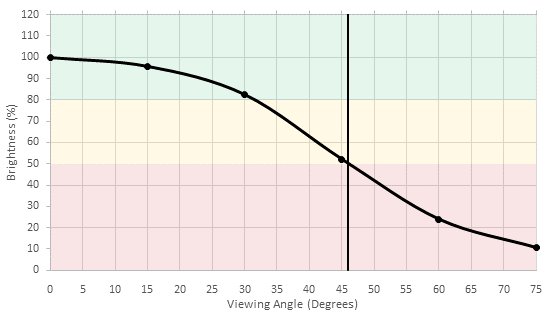
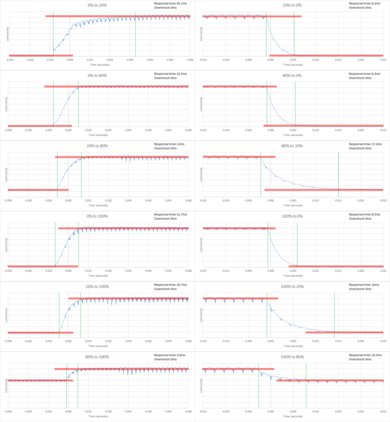
Poor TV for mixed usage. Picture quality is bad due to low native contrast ratio and poor uniformity. Supports up to 1360x768 content. Thankfully it handles motion well with little blur, and the image remains accurate when viewed at an angle.
- Good for sports and video games.
- Picture is good when watched from the side.
- Poor movie experience, especially in a dark room.
- Screen reflections can be harsh.
Bad for movies in a dark room. Low native contrast ratio so blacks appear gray, and uniformity is poor with visible flashlighting.
Poor choice for watching TV shows in a bright room. Picture quality is bad, but remains accurate when viewed at an angle. Okay at handling reflections in an average room but will have issues in a bright room, compounded by the low peak brightness which can't fight glare.
Decent choice for watching sports. Fast motion is handled well with only a short trail of blur, and the image remains accurate when viewed at an angle. Gray uniformity is below average so some dirty screen effect is visible.
Decent for gamers. Picture quality is poor, and limited to a low resolution. Luckily motion is handled well and input lag is always fairly low.
Doesn't support HDR10 or Dolby Vision. Poor picture quality and also can't get very bright or produce saturated highlights.
No support of HDR gaming. Picture quality is poor due to low native contrast ratio and poor uniformity. Can't get very bright or produce vivid highlights.
Bad PC monitor. Resolution is low, and picture quality is poor. The sides of the picture do remain accurate when viewed from up close though, and TV feels responsive due to low input lag and little motion blur.
Check Price
Differences Between Sizes And Variants
The Sony KDL32W600D is available in one size only, 32".
If someone comes across a different type of panel or if their Sony W600D doesn't correspond to our review, let us know and we will update the review.
| Size | Model | UK | LCD Type |
| 32" | KDL-32W600D | KDL-32WD603 | IPS |
Popular TV Comparisons
The Sony W600D is a good TV for watching sports or playing video games but is not ideal when it comes to watching movies. More versatile, and sometime cheaper options are available on the market.

We buy and test dozens of TVs yearly, taking an objective, data-driven approach to deliver results you can trust. Our testing process is complex, with hundreds of individual tests that take over a week to complete. Most of our tests use specially designed test patterns that mimic real content, but we also use the same sources you have at home to ensure our results match the real-world experience. We use two main tools for our testing: a Colorimetry Research CR-100 colorimeter and a CR-250 spectroradiometer.
Test Results
Older Test Bench: We tested this product using an older TV test methodology before a major update. Some of the test results below aren't directly comparable with other TVs. Learn more
for pictures & test results

The Sony KDL32W600D doesn't boast a fancy design like the higher end Sony models. The TV has somewhat large borders and its black frame and stand are bulky. This is not to say it looks particularly bad though, it just won't turn heads.
for pictures & test results

The stand is bulky and the TV feels very sturdy on it.
Footprint of the 32" TV stand: 22" x 7.5"
for pictures & test results

The back of the TV is also bulky and not attractive. Some of the connections will be available if the TV is wall mounted.
for pictures & test results

Borders look larger on a 32" TV. They are made of plastic.
for pictures & test results

The TV is fairly thick and might look a little odd if wall mounted.
for pictures & test results
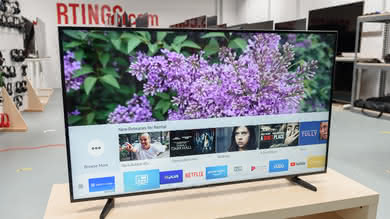
Being small and efficient, the W600D does not produce much heat at all.
for pictures & test results

The blacks on the Sony W600D appear grayish. As such, our contrast measurement is low.
for videos & test results

There is no local dimming feature on this TV.
Low peak brightness values that remain constant for all window sizes. The Sony W600D isn't able to make very bright highlights.
This TV does not support HDR.
for pictures & test results

The corners of the screen are particularly dark but at least there is no obvious banding problems.
for videos & test results
for pictures & test results
for pictures & test results
for pictures & test results
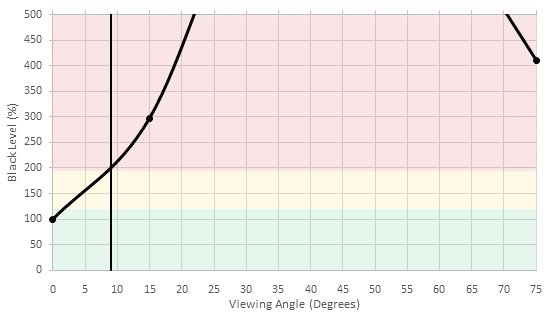
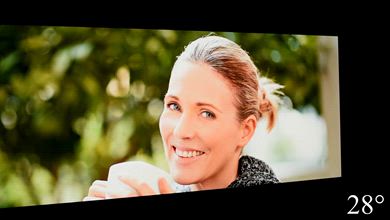
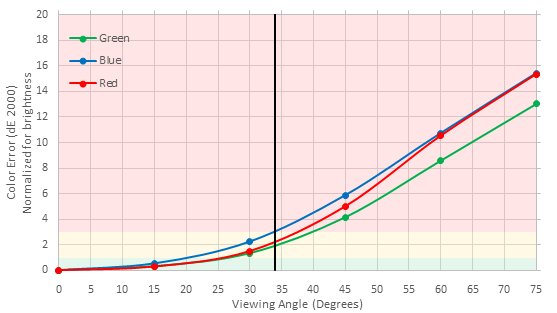
When viewed from the side, the picture quality stays relatively good compared to most LED TVs. This is good for a wide living room.
for pictures & test results

Bad uniformity on a totally black screen. Lots of clouding and big flashlighting at the bottom left of our unit.
for pictures & test results
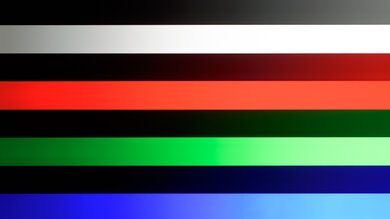
The Sony W600D has an 8 bit panel and processing as can be noticed in our gradient test pattern. The anomalies won't be such an issue in regular content except for some banding that can be seen in some scenes.


for pictures & test results

for pictures & test results

for pictures & test results

The above post-calibration pictures are the same as the pre-calibration ones since there is no adjustment settings available.
Update: After the review was done, we were made aware of the white balance setting in the service menu. To access this menu, while the TV is off, press on the remote in this order: 'Display', '5', 'Volume +' and power on.
for pictures & test results

The native resolution of the Sony W600D is 1360 x 768 which doesn't exactly match standard HD format. But it isn't much of a problem for 480p content and once upscaled it looks okay.
for pictures & test results

The Sony W600D isn't a native 720p TV so content made for that specific resolution isn't matching pixel for pixel resulting in loss of details.
for pictures & test results
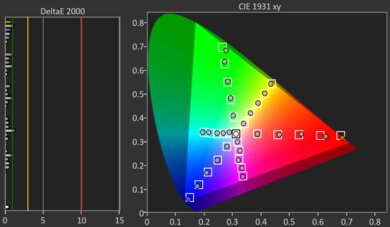
The range of colors the Sony KDL32W600D can display is only good enough for Rec. 709 content.
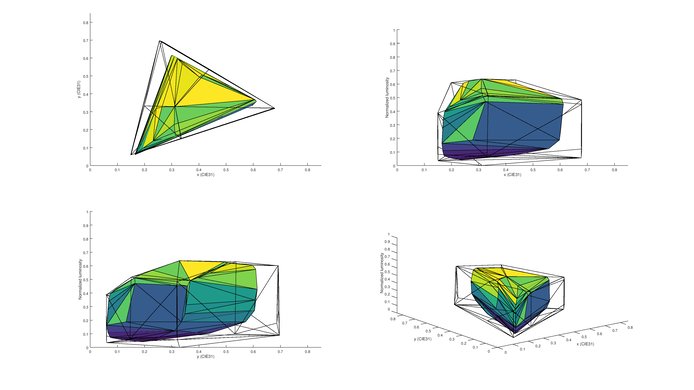
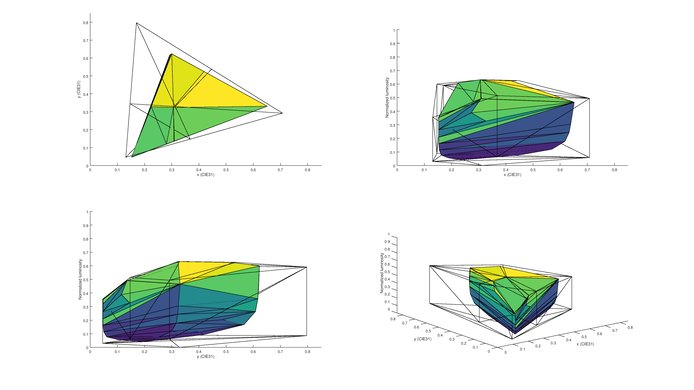
for pictures & test results
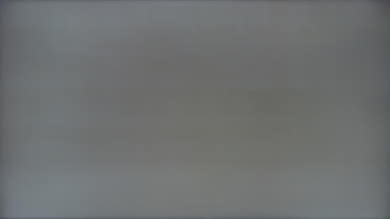
No retention at all could be notice after the 10 minutes burn-in scene on the Sony W600D IPS TV. This is a very good result for IPS a TV, since it is IPS TVs that tend to be more susceptible to image retention.

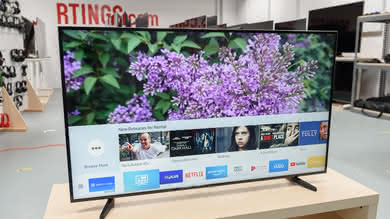



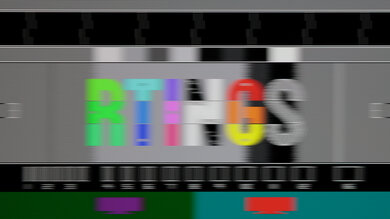
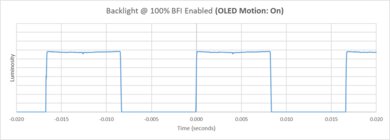
Even 24p sources have little judder. In fact, judder is present on all sources.
There is no motion interpolation option on the Sony W600D.
Nice input lag result. The W600D is well suited for fast action games. No matter the picture mode or 'Scene Select' settings, input lag is always this low.
The native resolution of the Sony W600D is 1360 x 768 and as such, the above resolutions aren't supported. To get as sharp as possible when using that TV as a PC monitor, 1360 x 768 has to be used. Even then, this TV isn't well suited to use as a PC monitor.


for pictures & test results

Average frequency response and maximum loudness. The low-end cutoff of 179Hz however, is quite poor, even for a TV. Also, at higher volumes, there will be noticeable compression and pumping artifact present.
for pictures & test results

Decent distortion performance. The interesting note here is that distortion at 75 is being reported as higher than 85 and Max results. This could be due to the 75dB test being influenced by outside noise. Also, since our scoring system gives more weight to higher frequencies to make it more perceptually relevant, and the W600D doesn't produce a lot of bass, the distortion at 75dB is being reported as higher.
for pictures & test results
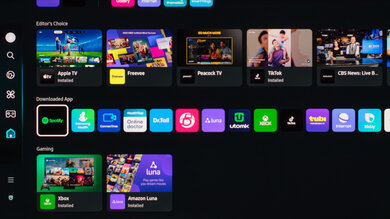
The apps selection is very limited and missing a few big names. Anyone looking for a better smart experience should either look at a different TV or buy an additional device like a Roku.
for pictures & test results

Very limited smart features available on the Sony W600D. It is on the verge of being considered a smart TV but those who doesn't ask more than Netflix will be satisfied. For better smart features, an external device like the Roku would be recommended.
for pictures & test results

Some basic TV controls are located underneath the front of the TV which can be used to power the TV, change inputs and volume. This can be accessed if the TV is wall mounted.
for pictures & test results

The remote is similar to all other Sony remotes. It is basic but functional.
for pictures & test results

- Remote
- Batteries
- VESA spacers
- Ppower brick & cable
- Cable tie
- Component adapter
- Manuals


