
Our Verdict
Excellent performance for a variety of usages. Picture quality is great. Movies perform excellently. TV is bright enough for any room. Displays any resolution of content clearly. Unfortunately the picture quality diminishes when viewed from the side.
- Great TV for movies especially HDR content.
- Can get extremely bright and has very low reflection.
- Great gaming TV with low input lag.
- Loses picture quality at an angle.
Great movie performance. Dark scenes are rich and detailed. Smooth playback from any source. Excellent picture quality.
Great for daytime TV in a bright room. Excellent picture quality when viewed directly in front. Bright enough to compete with reflections, and coating handles reflections well. Unfortunately when viewed from the side the picture quality diminishes.
Great picture for sports. Pretty good motion handling with little motion blur for fast plays. Very good uniformity.
Great for video games. Pretty good motion handling for fast camera movements. Very responsive with low input lag. Great picture quality.
Very good HDR. Has a wide color gamut. Highlights get very bright. Colors pop and blacks are very deep.
Works well as PC monitor. Supports a wide range of resolutions. Feels very responsive. Supports chroma 4:4:4 for clear text.
Check Price
Differences Between Sizes And Variants
We tested the 55" (UN55KS9500) version FA01. For the most part, we expect our review to be valid for the 65" version (UN65KS9500).
If someone comes across a different type of panel or if their Samsung KS9500 doesn't correspond to our review, let us know and we will update the review.
| Size | Model | US | Canada | UK | Warehouse | Warehouse long |
| 55" | UN55KS9500 | UN55KS9500FXZA | UN55KS9500FXZC | UE55KS9000 | N/A | N/A |
| 65" | UN65KS9500 | UN65KS9500FXZA | UN65KS9500FXZC | UE65KS9000 | UN65KS950D | UN65KS950DFXZA |
Popular TV Comparisons
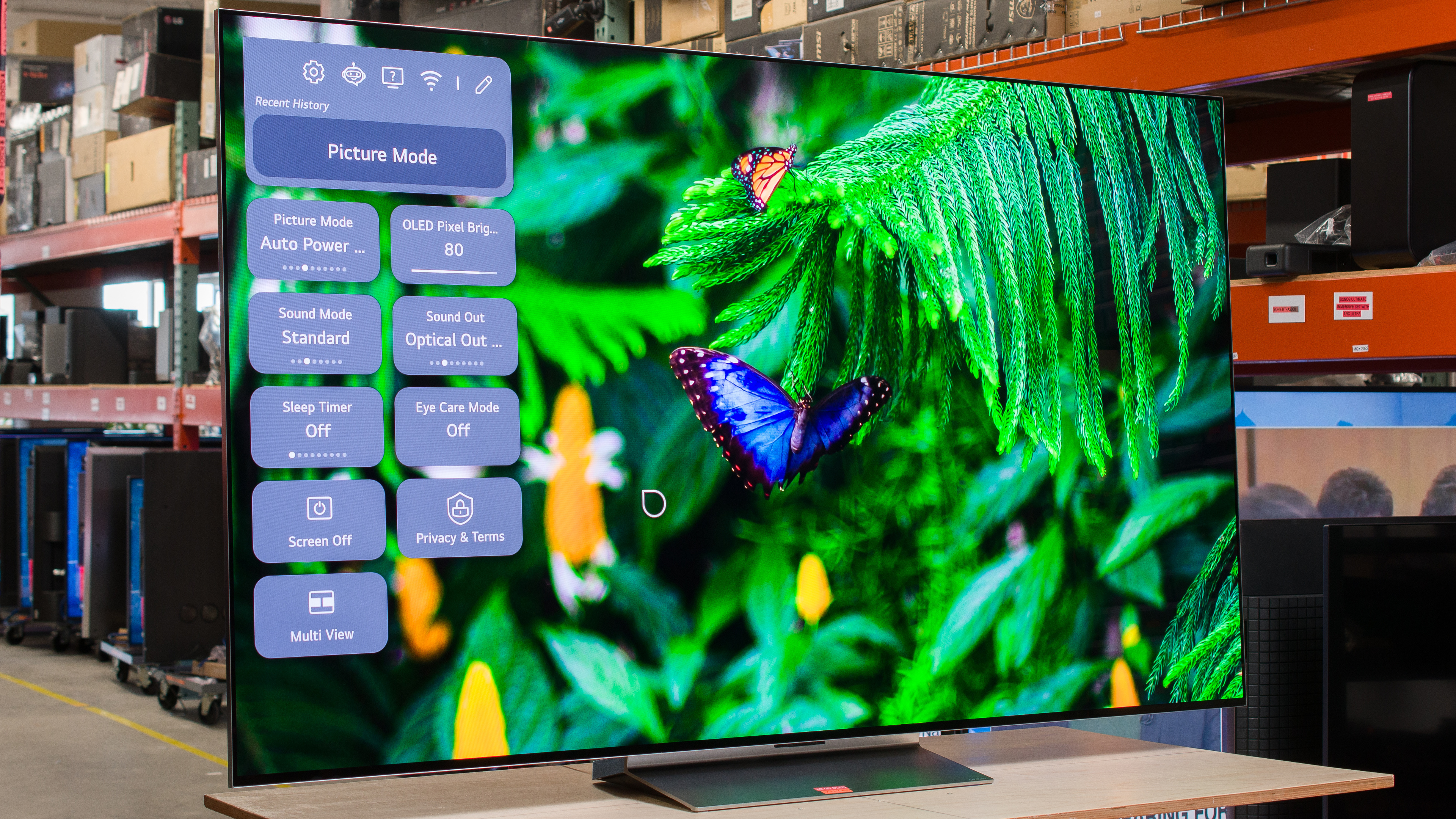
The Samsung KS9500 is the best LED TV we have reviewed so far for a mixed usage but there are cheaper and near as good TVs that are available which explains why we don't really recommend the KS9500

We buy and test dozens of TVs yearly, taking an objective, data-driven approach to deliver results you can trust. Our testing process is complex, with hundreds of individual tests that take over a week to complete. Most of our tests use specially designed test patterns that mimic real content, but we also use the same sources you have at home to ensure our results match the real-world experience. We use two main tools for our testing: a Colorimetry Research CR-100 colorimeter and a CR-250 spectroradiometer.
Test Results
Older Test Bench: We tested this product using an older TV test methodology before a major update. Some of the test results below aren't directly comparable with other TVs. Learn more
for pictures & test results

The Samsung KS9500 has a great look. Its design is very simple, yet very sleek. The TV is really thin, lines are pure, metal parts boast a chrome finish and even its back have a nice textured dark-gray finish. It will definitely look good in any room.
for pictures & test results

The metal stand has a chrome finish. It goes quite deep against the back of the TV.
Footprint of the 55" TV stand: 33.9" x 15"
for pictures & test results

In rare setups where the back of the TV is visible (TV in the middle of a room), the Samsung KS9500 will look great. A cover hides the One Connect box connection.
for pictures & test results

Borders are thin and sports a simple and elegant metal finish.
for pictures & test results

Everything's thin on the Samsung KS9500. Its maximum thickness, when viewed directly from the side, only appears larger because of the curved screen.
for pictures & test results
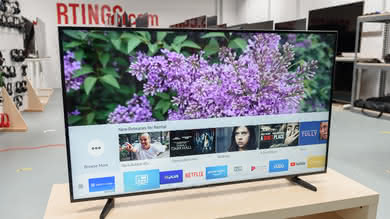
The KS9500 does better than its lower-end cousin, the 8500. The One Connect box doesn't get very warm either at a measly 34C.
for pictures & test results

Extremely deep and impressive blacks for an LED TV. Among the highest native contrast ratio we have ever measured.
for videos & test results

Local dimming isn't that good. Full array backlight TVs can do much better. We used local dimming ('Smart LED') set at 'High' for this test and unfortunately, the dot in our video stayed pretty dimmed. In practice, more blooming can be seen than in our video. The blooming shape is a big vertical band.
The Samsung KS9500 have a good SDR peak brightness. With a minimum of around 500 cd/ and with a peak of more than a 1000 cd/m², this makes this TV one of the brightest TVs tested with SDR content.
The brightest results we have seen so far. In this test, we used the 'High' setting for local dimming ('Smart LED') since it was able to brighten our 2% window the most. It went as high as 1490 cd/m². This mean bright highlights can get very, very bright. Good value for the 50% window too which mean the whole screen can also get pretty bright. Peak brightness works a little differently than on the Sony X930D. On the Samsung KS9500, on all window sizes, peak brightness will diminish after some time, but goes back up when something moves on the screen, like our mouse cursor. On regular materials, this mean brightness is more stable. Big blooming areas can be seen around some bright highlights though.
Update: Updated with sustained brightness.
for pictures & test results

Very good for an LED TV. The edges of the screen are darker but the TV is free from any obvious banding issue. The dirty screen effect (DSE) isn't much of a problem for sports when camera pans over playing fields.
for videos & test results
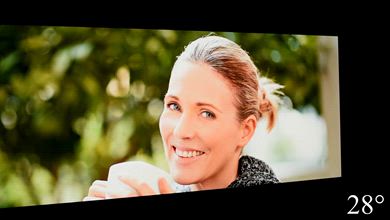
Like all VA LED TVs, the picture quality diminish at an angle. The blacks worsen and the colors shift. There is worse VA TVs than this one though but it is still a notable downside of this TV.
Update: We have changed the methodology of testing. Since this is an old TV which we don't have anymore, we extrapolated the results.
for pictures & test results

There is some faint cloud spots that can be seen on a totally black screen and the top edge of the screen is slightly more lit up than the rest of the screen. Overall though, the black uniformity of the Samsung KS9500 is among the best we have seen.
for pictures & test results
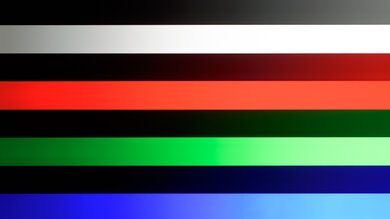
The Samsung KS9500 displayed a very smooth color gradient with no color banding or color gradations to be seen.


for pictures & test results

for pictures & test results

for pictures & test results

As for other Samsung TVs, calibration was a breeze and all issues were resolved. We ended up with very low white balance and color errors which is great.
for pictures & test results

Lower resolution content like DVDs maintain a well defined picture that looks good and not soft at all.
for pictures & test results

Cable TV looks very good once upscaled on the KS9500.

for pictures & test results

4k is really where the Samsung KS9500 shine though. Those who sit close enough to pick up all the little 4k details will enjoy the crisp picture this TV produce.
for pictures & test results
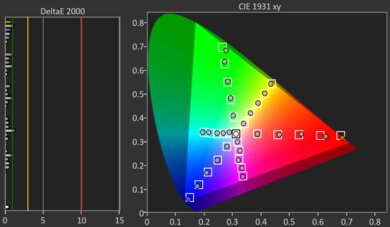
Nice coverage of DCI P3 and Rec 2020. Colors are able to get a good deal more saturated when HDR content is playing compared to traditional Rec 709 content.
for pictures & test results
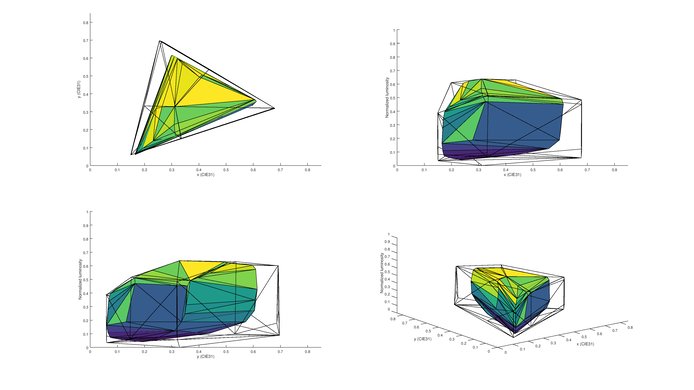
for pictures & test results
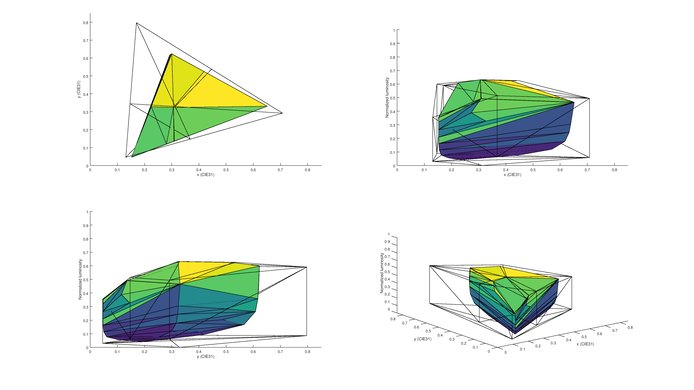
The Samsung KS9500 performs very similarly to the other KS* TVs, and is one of the best color volume performers of the 2016 models. It can produce bright, saturated colors but unfortunately at low luminosity levels the volume is limited.
for pictures & test results

for pictures & test results
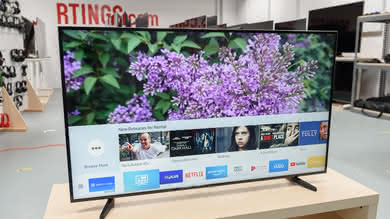
Although the Samsung KS9500 has a glossy screen, its screen doesn't reflect a lot of lights. The curve also stretch the reflections so they appear wider but less harsh. Some little rainbow effects can be observed around bright objects but aren't that noticeable.

for pictures & test results

for pictures & test results
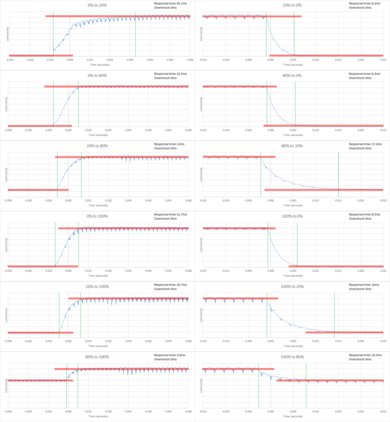
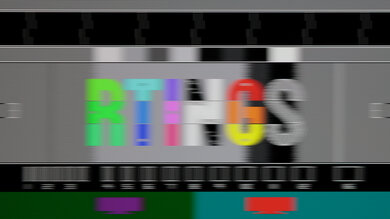
Dark to bright transitions, like the 0% to 100%, take longer. This can be seen on our moving logo test, where the right edge of the logo appears darker. As a whole though, motion is good on the Samsung KS9500.

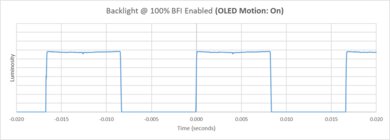
The TV is able to detect and do the reverse 3:2 pulldown on all sources inluding 60i and 60p. For those two, we had to set 'Auto Motion Plus' to 'Custom' with both sliders to 0. This didn't add the soap opera effect.
for pictures & test results

for pictures & test results

Motion interpolation ('Auto Motion Plus') can be enabled on all content. This will smooth out motion, but also add the soap opera effect (SOE). Low 'Custom' values will add smoothness without much of the SOE.
Very fast 1080p input lag. All types of games feel responsive. Competitive gamers will like the benefit they get from that low input lag. 'Game' mode has to be selected from the 'Special viewing modes' under the 'Picture' menu to get the lowest input lag. When sending and HDR signal at 1080p resolution under game mode, the input lag is 22.6ms.
To enable 4k @ 60Hz @ 4:4:4, turn on 'HDMI UHD Color' from the picture menu. For the other resolutions, 4:4:4 can be enabled only by enabling PC mode (on the list of inputs, hover the current input used and press up on the remote, then 'Edit' and select 'PC'). We have measured 37.1 ms of input lag under 'PC' mode. A curved screen is always nice when sitting up close on setups where the TV is used as PC monitor.

for pictures & test results

Inputs are located on the required One Connect box.
The TV supports 5.1 passthrough for Dolby Digital and DTS, but it is necessary to select the correct audio type in the sound settings, since it doesn't change automatically.
for pictures & test results

Very good frequency response and low-end cutoff, especially for a TV. But maximum loudness could be better. The TV also seem to be producing compression and pumping near the maximum loudness.
for pictures & test results

Relatively high distortion. Although this TV doesn't produce audible aliasing, the harmonic distortion could be audible at times.
for pictures & test results
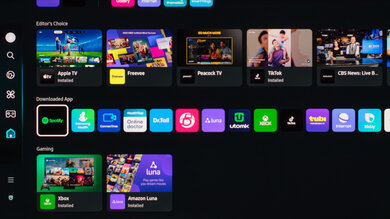
The 2016 Tizen smart platform offer the most popular apps plus more. Navigation between the different apps menus is quick and straightforward. The different menus of the TV also look better than on the 2015 Samsung TVs.
for pictures & test results

The revamped interface of the Tizen smart platform is a welcome improvement. It isn't as pretty as LG's WebOS smart platform but a step in the right direction. It is also very responsive on the Samsung KS9500 and provide the most popular apps. A Mini One Connect box come with this TV and offers enough inputs for most needs. The included remote works well too and can even work as a universal remote for devices connected to the TV.
When a new device is detected (such as when a computer is woken from sleep while plugged into an HDMI port) the TV automatically switches to this device. This may be an annoyance if you are watching other content at the time.
for pictures & test results

A single button is found underneath the Samsung logo at the base of the TV. Simple commands can be performed like changing inputs, volume and turning the TV on and off. This button is easily accessible if the TV is wall-mounted, which is handy.
for pictures & test results

The remote is simple to use and feels good in hand. It can be a little hard to operate in the dark though since not all buttons have tactile feedback. It doesn't work as a pointer like some other Samsung remotes so text input can feel cumbersome at times.
for pictures & test results

- Remote
- Batteries
- Wall mount adapters
- Mini One Connect box with cable
- Cable management accessories
- Manuals


