
Our Verdict
Great for any usage. Excellent picture quality. Handles motion well and suitable for a dark or bright room. Great HDR performance. Unfortunately the picture quality degrades from the side.
- Great TV for watching movies and HDR content.
- Very low input lag which is great for playing video games.
- Very bright and not much reflections.
- Picture quality deteriorates when viewed from the side.
Great for watching movies. Dark scenes appear rich and well defined. Smooth playback from any source.
Great for watching TV in a bright room. Deals with reflections well and displays a range of resolutions clearly. Very bright to deal with ambient light. Unfortunately the great picture quality diminishes when viewed from the side.
Very good for sports. Handles fast motion very well. Uniform screen results in quality playing field.
Excels for video games. Very little input lag which is good. Fast motion remains well defined. Great picture quality.
Impressive HDR performance. Deep blacks and rich colors. Very bright highlights on top of an excellent picture quality.
Great PC monitor. Handles a wide range of resolutions well. Displays text clearly on all backgrounds. Feels very responsive with little motion blur.
Check Price
Differences Between Sizes And Variants
We tested the 55" (UN55KS9000) version FA01. For the most part, we expect our review to be valid for the 65" version (UN65KS9000) and 75" version (UN75KS9000). If someone comes across a different type of panel or if their Samsung KS9000 doesn't correspond to our review, let us know and we will update the review.
| Size | Model | US | Canada | UK | Warehouse | Warehouse long |
| 55" | UN55KS9000 | UN55KS9000FXZA | UN55KS9000FXZC | UE55KS8000 | N/A | N/A |
| 65" | UN65KS9000 | UN65KS9000FXZA | UN65KS9000FXZC | UE65KS8000 | UN65KS900D | UN65KS900DFXZA |
| 75" | UN75KS9000 | UN75KS9000FXZA | UN75KS9000FXZC | UE75KS8000 | N/A | N/A |
Popular TV Comparisons
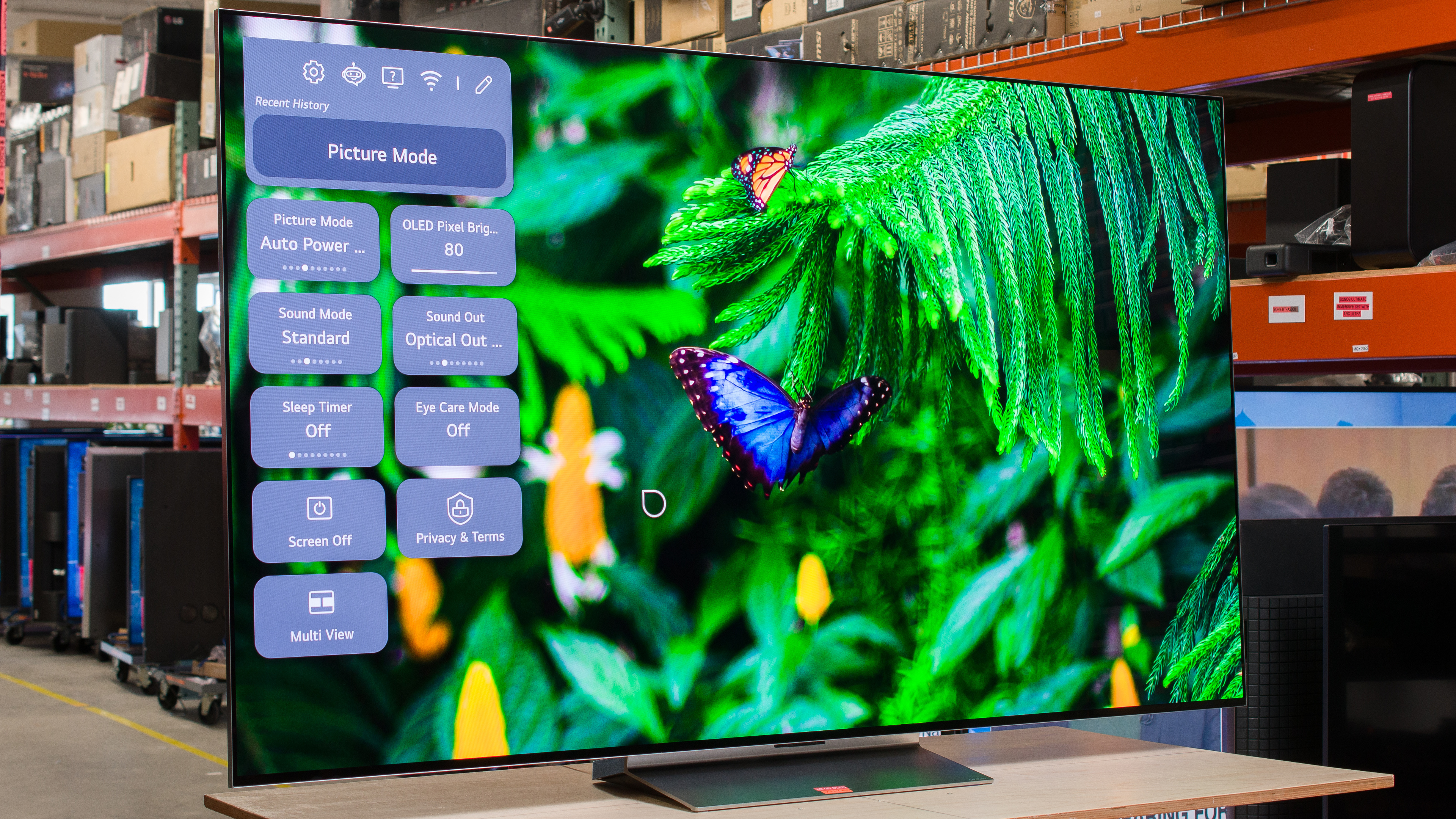
The KS9000 is definitely the best overall LED TV we tested so far for a mixed usage. However, it is priced very high, so we don't really recommend it.

We buy and test dozens of TVs yearly, taking an objective, data-driven approach to deliver results you can trust. Our testing process is complex, with hundreds of individual tests that take over a week to complete. Most of our tests use specially designed test patterns that mimic real content, but we also use the same sources you have at home to ensure our results match the real-world experience. We use two main tools for our testing: a Colorimetry Research CR-100 colorimeter and a CR-250 spectroradiometer.
Test Results
Older Test Bench: We tested this product using an older TV test methodology before a major update. Some of the test results below aren't directly comparable with other TVs. Learn more
for pictures & test results

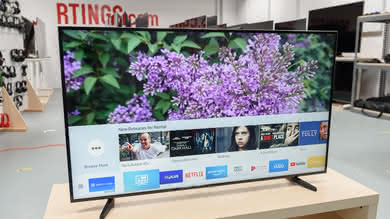
The Samsung KS9000 pleases the eyes with its high end look and thinness. The materials it's made of all seems to be of high quality. From its chrome stand to its thin metal borders and even its textured back, this TV is sure to look great in any room. It has the same overall look as the Samsung KS9500 minus the curved screen.
for pictures & test results

The stand of the TV has a nice chrome finish. It has a fairly large footprint and goes a long way toward the back of the TV. It could not be ideal if you want the TV to lay against a wall.
Footprint of the 55" TV stand: 33.9" x 15"
for pictures & test results

Even the back of the TV is both sleek and attractive with its textured finish. A cover that is included with the TV hides the back inputs that won't be in the way to wall mount the TV.
for pictures & test results

The borders of the TV are thin and have a nice metal polish to them.
It is reported that the 75" variant of this TV has thicker borders.
for pictures & test results

Very thin from a 90 degree angle. The bottom part of the TV is thicker. The maximum thickness measurement include the horizontal metal looking plastic border that goes across the back of the TV.
for pictures & test results

Impressive black level and very high native contrast ratio. This result in a picture that pop in most content, even on dark scenes. Top and bottom black bars in movies nearly doesn't emit light which is good.
for videos & test results

The local dimming feature on the KS9000 doesn't work very well. It does darken the blacks but some small highlights too like the dot in our test video. Although it isn't that much apparent in the video, local dimming sometimes creates big vertical blooming areas on big highlights depending on the scenes. It is more noticeable in person. For this test, we set local dimming ('Smart LED') to 'High'. A TV with a full array backlight can produce much better results.
The KS9000, like the curve KS9500 has a good SDR peak brightness performance and is, whit the rest of the KS Series, one of the brightest TV of 2016. Unlike other TV that is less bright when outside of HDR mode, the KS9000 is almost as bright when watching standard content like TV shows.
Very impressive and similar results to the Samsung KS9500. Highlights can get extremely bright and as a whole the screen can also maintain a high level of brightness. As the KS9500, brightness vary on a static screen but is not a problem on regular content. On the downside, very bright highlights can create big blooming areas. We used local dimming ('Smart LED') set to 'High' to get as high peak brightness.
Update: Updated with sustained brightness.
for pictures & test results

for pictures & test results

The left and right edges are darker and top and bottom brighter. Compared to most LED TVs, the gray uniformity on the Samsung KS9000 isn't a big issue with no obvious banding problem occurring on camera pans over playing fields of uniform color.
for videos & test results
for pictures & test results
for pictures & test results
for pictures & test results
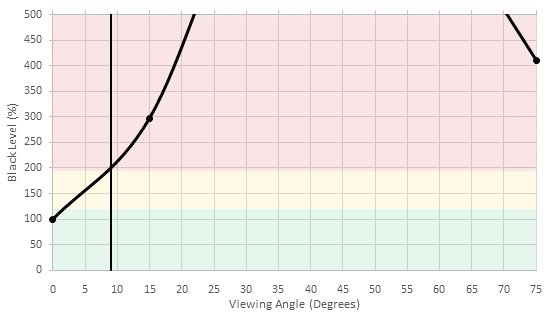
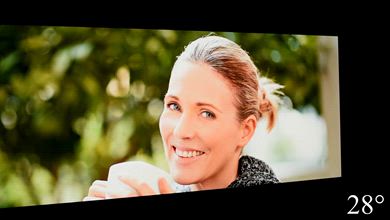
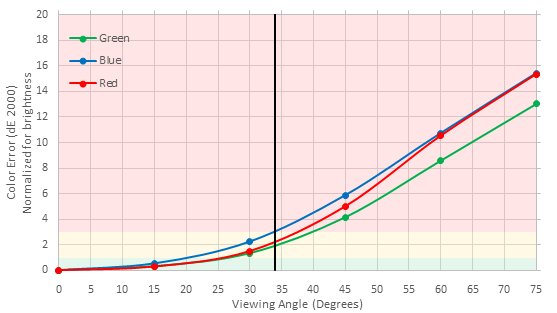
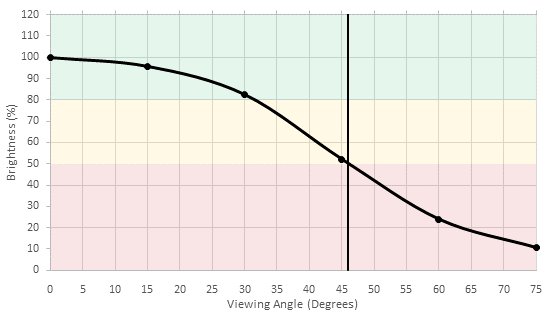
At an angle, colors shift and blacks appear less deep. This is a common issue for LED TVs of this type (VA) but we have seen worse viewing angle.
for pictures & test results

Very faint clouding spots that won't ruin even the darkest scenes. Good black uniformity performance.
for pictures & test results
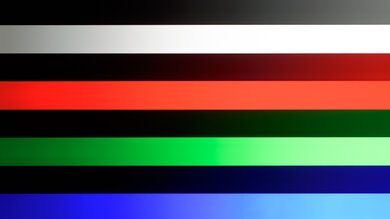
Nearly perfect gradient. Some very minor irregularities in the darker red band but nothing that can be seen in regular content. Fine level of colors overall.


for pictures & test results

The Samsung KS9000 can produces a great picture even with low resolution content like DVDs or SD channels.
for pictures & test results

Cable is also looking very sharps on the KS9000.
for pictures & test results

Blu-rays and other 1080p content looks very good once upscaled. No details is lost and the final image looks very good.
for pictures & test results

4k UHD Blu-rays and streaming content looks gorgeous with all its fine details well displayed.
for pictures & test results
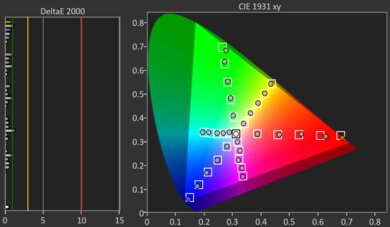
Good coverage of colors in DCI P3 and fair score for the Rec 2020 colorspace. This TV is able to produce very deep colors and HDR content benefit from this.
for pictures & test results
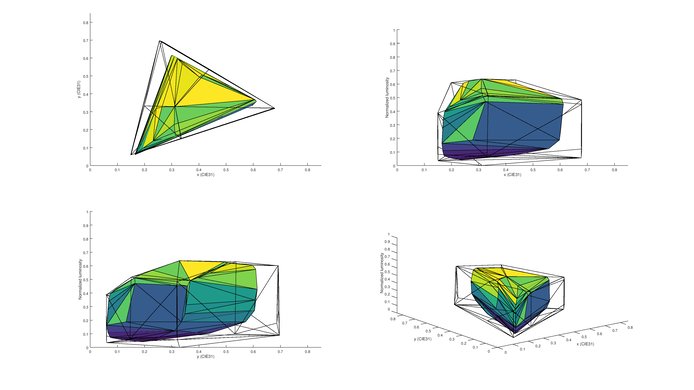
for pictures & test results
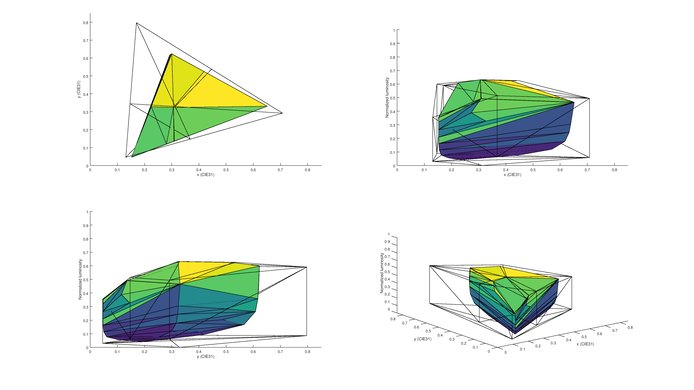
The KS9000 has a similar color volume to Samsung's top 2016 models. It can produce very bright saturated colors but performs worse than some other TVs in dark scenes.


for pictures & test results

for pictures & test results
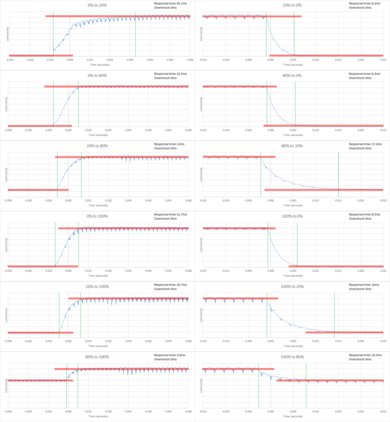
There are TVs with faster response time but there is no big issues with how the KS9000 handles motion. Not much blur can be seen in fast action scenes. In the picture, only a faint trail is following the moving logo.

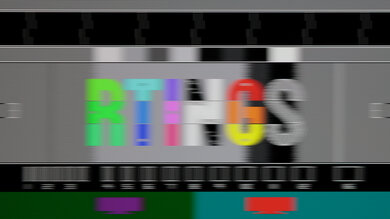
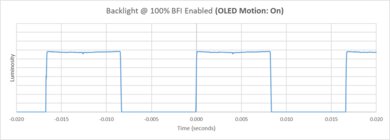
No special settings needed to remove judder from 24p sources although to get the same result on 60i and 60p content, 'Auto Motion Plus' has to be set to 'Custom' with both sliders set to 0. This doesn't add the soap opera effect.


Very low 1080p input lag which is great. The responsiveness you get from controller inputs nearly can't be felt. Players that like first person shooter, racing or combat games will like gaming on the KS9000. Unfortunately, motion interpolation ('Auto Motion Plus') bring the input lag too high to consider using that option. When sending and HDR signal at 1080p resolution under game mode, the input lag is 22.6ms.
Except for 1080p @ 120Hz, the KS9000 doesn't have problems with most PC inputs. To get 4k @ 60Hz @ 4:4:4, 'HDMI UHD Color' has to be turned on. For 4:4:4 in other resolutions, just edit the HDMI input to 'PC' (hover the current HDMI input used from the input list and press up on the remote, then 'Edit' and select 'PC').


The TV supports 5.1 passthrough for Dolby Digital and DTS, but it is necessary to select the correct audio type in the sound settings, since it doesn't change automatically.
for pictures & test results

Good frequency response. The low-end cutoff and maximum loudness are decent, for a TV. However, at higher volumes, there is pumping and compression present.
for pictures & test results

Poor distortion results. Although there is no dramatic rise in distortion as the volume increases, but the overall level of distortion at all levels, is elevated.
for pictures & test results
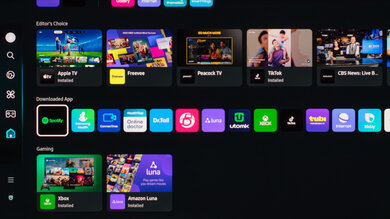
YouTube, Netflix and other popular apps are available and menu navigation is straightforward. As a whole, the smart platform presentation is neat compared to what Samsung had to offer in 2015.
for pictures & test results

Sporting the new Samsung 2016 smart platform, the Samsung KS9000 offer a good experience with most of the popular apps at the disposal. Menu navigation is straightforward although a remote with a pointer would have helped for text input. The KS9000 offers plenty of inputs, more than enough for most home setups.
When a new device is detected (such as when a computer is woken from sleep while plugged into an HDMI port) the TV automatically switches to this device. This may be an annoyance if you are watching other content at the time.
for pictures & test results

A button that offers basic TV controls such as changing inputs, volume and turning the TV on and off, is located underneath the Samsung logo on the front of the TV. It can be accessed when the TV is wall mounted.
for pictures & test results

For the most part, the minimal remote is sufficient but at times can be hard to use in the dark since not all buttons have tactile feedback. It also doesn't work as a pointer which can make text input a little awkward.
for pictures & test results

- Remote
- Batteries
- Wall mount adapters
- One Connect box with cable
- Cable management accessories
- Manuals


