The Hisense U8/U8N is a mid-range TV released in 2024 and replaces the popular Hisense U8/U8K. It's part of Hisense's ULED lineup, sitting above the Hisense U6N and Hisense U7N but below their flagship Hisense UX model. It has a new chipset and promises better brightness and contrast than its predecessor. The TV is packed with features like Dolby Vision, local dimming, HDMI 2.1 bandwidth, up to 4k @ 144Hz, and VRR support. It uses the Google TV interface, which is loaded with apps and has other smart features like voice control, and the TV has a built-in 50W 2.1.2 channel speaker system. We bought and tested the 65-inch model, and it's also available in five different sizes: 55-inch, 65-inch, 75-inch, 85-inch, and a massive 100-inch model. Since the 75-inch model uses a different panel type, we have a separate review for that size.
Our Verdict
The Hisense U8N is great for mixed usage. It looks great with the lights off, thanks to its excellent black levels and vibrant colors. Fortunately, it performs great with the lights on, too, due to its fantastic SDR brightness and because it retains its color vibrancy and deep blacks. However, it only does an okay job of reducing the intensity of direct reflections. Fortunately, HDR content is impactful due to the TV's incredible HDR brightness. It's also a great option for gaming due to its modern gaming features. The TV's viewing angle is pretty narrow, though, so it's best to sit as centered to the TV as possible.
Incredible HDR brightness for very impactful highlights.
Fantastic SDR brightness means it easily overcomes glare from indirect lighting.
Good upscaling and very good low-quality content smoothing.
Colors are vibrant, lifelike, and bright.
Very deep blacks with minimal blooming when local dimming is enabled.
- Image degrades when viewed from the sides.
Direct reflections are a bit distracting.
The Hisense U8N is great for a home theater. It has excellent black levels, so it delivers incredibly deep blacks with very little blooming around subtitles and highlights. You also get highly saturated colors that are mostly accurate in SDR. However, colors lack accuracy in HDR. The TV has incredible HDR brightness, so highlights really pop out. Unfortunately, HDR movies and TV shows are displayed brighter than intended by the filmmaker. If you're stuck watching low-bitrate content, the TV does a very good job removing artifacts. You also get good upscaling, so SD and HD content doesn't look too soft. It removes judder from most sources, and there's no micro judder at all. There's some minor stutter that's most noticeable during slow camera movements.
Incredible HDR brightness for very impactful highlights.
Good upscaling and very good low-quality content smoothing.
Colors are vibrant, lifelike, and bright.
Very deep blacks with minimal blooming when local dimming is enabled.
Removes judder from most sources.
No micro judder.
- Image degrades when viewed from the sides.
Sub-par HDR pre-calibration color accuracy.
HDR content is brighter than the filmmaker intends.
The Hisense U8N is great for a bright room. It's easily bright enough in SDR to overcome glare from indirect light sources, so this TV is usable in most bright rooms. However, it only has okay direct reflection handling, so if you have a lamp or window placed opposite the screen, you will see it reflected on the screen during darker scenes. Fortunately, the TV barely loses color saturation, and blacks stay very deep in a bright room, so you don't have to worry about a washed-out image when you turn on the lights.
Fantastic SDR brightness means it easily overcomes glare from indirect lighting.
Blacks stay deep and colors stay vibrant in a bright room.
Direct reflections are a bit distracting.
The Hisense U8N is great for watching sports. The fantastic SDR brightness means it easily overcomes glare in bright rooms, but you do want to avoid placing the TV directly opposite lamps or windows, since it doesn't do a good enough job reducing the intensity of direct light sources. Colors are well-saturated and accurate in SDR, so you get a vibrant image while watching the game. However, its viewing angle is narrow, so you need to be seated centered to the screen for the best image quality. The TV's gray uniformity is just okay, and you do notice some dirty screen effect during certain sports, but not everyone will be bothered by this. Fortunately, the TV's response time is good enough that you don't have to look at an overly blurry image, but there are some noticeable transition artifacts. You get solid image processing too, so low-bitrate and low-resolution feeds still look pretty good.
Fantastic SDR brightness means it easily overcomes glare from indirect lighting.
Good upscaling and very good low-quality content smoothing.
Colors are vibrant, lifelike, and bright.
- Image degrades when viewed from the sides.
Direct reflections are a bit distracting.
Some noticeable dirty screen effect towards the center of the screen.
Noticeable transition artifacts.
The Hisense U8N is great for gaming. It has great picture quality when gaming with the lights off, thanks to its excellent black levels, vibrant colors, and fantastic HDR brightness. It pairs very well with modern consoles and gaming PCs thanks to its HDMI 2.1 bandwidth, 4k @ 144Hz, and VRR. However, there's a minor response time issue with VRR enabled. It has decent pixel transitions, so there's some noticeable blur when action really ramps up in your favorite game, but it's not so bad that it's distracting. You also get a snappy gaming experience thanks to its low input lag, especially at higher refresh rates.
Incredible HDR brightness for very impactful highlights.
HDMI 2.1 bandwidth, up to 4k @ 144Hz, and VRR support.
Colors are vibrant, lifelike, and bright.
Very deep blacks with minimal blooming when local dimming is enabled.
Minor VRR issues around 100Hz and VRR doesn't work at 240Hz.
The Hisense U8N has outstanding brightness overall. Its SDR brightness is fantastic, and the TV easily overcomes glare in the brightest rooms. It also delivers incredible HDR brightness that makes highlights really pop out, even in rare content mastered at 4000 nits.
Incredible HDR brightness for very impactful highlights.
Fantastic SDR brightness means it easily overcomes glare from indirect lighting.
The Hisense U8N has excellent black levels. Blacks are incredibly deep and very uniform with local dimming enabled. The TV's local dimming feature also does a very good job at keeping blooming to a minimum.
Very deep blacks with minimal blooming when local dimming is enabled.
The Hisense U8N has very good colors overall. It has excellent HDR color volume, and it displays dark and bright colors very well in HDR content. Its SDR color volume is great too, so you can enjoy vibrant colors in both formats. The TV has very good SDR accuracy before calibration. However, its HDR pre-calibration is subpar, so colors don't look the way they should, and the TV requires a proper calibration if you want accurate colors in HDR content.
Colors are vibrant, lifelike, and bright.
Very good SDR pre-calibration color accuracy.
Sub-par HDR pre-calibration color accuracy.
The Hisense U8N has decent motion handling when watching content. It removes judder from nearly all sources, and there's no micro judder at all, ensuring a smooth and even frame pacing. It has a good response time, which results in noticeable stutter in slow panning shots, but its motion interpolation feature does a great job of reducing stutter. Unfortunately, transitions aren't perfect, though, and there are noticeable artifacts around fast-moving objects.
Removes judder from most sources.
Great motion interpolation feature.
No micro judder.
Noticeable transition artifacts.
The Hisense U8N has very good responsiveness in PC/Game Mode. It has good enough input lag at 60Hz that you don't feel a delay, but it's very low at higher refresh rates, so gaming at 120Hz and 144Hz feels very responsive. It has decently fast pixel transitions, but you do see some blur behind fast motion. The TV supports VRR for a nearly tear-free gaming experience. However, there's a minor issue when frame rates hover around 100 fps.
HDMI 2.1 bandwidth, up to 4k @ 144Hz, and VRR support.
Minor VRR issues around 100Hz and VRR doesn't work at 240Hz.
Note: We're in the process of improving our tests related to image processing, but this score should give you a general idea of how a TV performs overall with its image processing capabilities.
The Hisense U8N has decent image processing overall. It does a very good job cleaning up artifacts in low-bitrate content and a good job upscaling low-resolution content, so it's a good option when the quality of your content isn't ideal. There's some banding in bright blue color gradients, but all other gradients have almost no banding at all, which is great. Unfortunately, the TV has poor PQ EOTF tracking, and HDR content is displayed brighter than intended.
Good upscaling and very good low-quality content smoothing.
Very little banding in color gradients.
HDR content is brighter than the filmmaker intends.
Performance Usages
Changelog
- Updated Sep 18, 2026: We converted this review to Test Bench 2.2.1, adding a new Dumb TV test for whether or not the TV can be used offline.
-
Updated Mar 16, 2026:
We added text to our new Cinematic Motion Handling performance usage and our new Transition Artifacts and Stutter Reduction Via Interpolation test sections after converting the review to TV 2.2.
- Updated Mar 10, 2026: This review has been updated to TV 2.2. We've added new sections for Transition Artifacts and Stutter Reduction Via Interpolation, and updated the way we test Stutter. Additionally, we removed the 'Broken' disclaimer from our Motion Handling usage.
- Updated Feb 05, 2026: We added text to the new Micro-Judder section and refreshed the text in the updated Judder and Response Time Stutter sections after converting the review to TV 2.1.
Check Price
Differences Between Sizes And Variants
We tested the 65-inch Hisense U8N, but the results are also valid for the 85-inch and 100-inch models. The 75-inch model uses an ADS Pro panel, so it performs a bit differently than the other sizes, with worse contrast but a better viewing angle. The 55-inch model is advertised as having a peak brightness of 1800 nits, so it's not nearly as bright, and it has much fewer dimming zones. The 55-inch model also uses HDMI 3 as its eARC port, so you do lose a high-bandwidth port on that size if you plug in a soundbar. Our results aren't valid for either the 55-inch or 75-inch models.
In Canada, the TV is known as the Hisense U88N, and it performs the same. There are similarly named international models, like the U8NAU in Australia, but these models perform a bit differently from the North American models, so our results aren't valid for them. Note that the 55-inch and 100-inch models use two feet instead of a central stand.
| Size | US Model | Local Dimming Zones | Panel Type |
|---|---|---|---|
| 55" | Hisense 55U8N | 672 | VA |
| 65" | Hisense 65U8N | 1,600 | VA |
| 75" | Hisense 75U8N | 2,000 | ADS Pro |
| 85" | Hisense 85U8N | 1,296 | VA |
| 100" | Hisense 100U8N | 1,620 | VA |
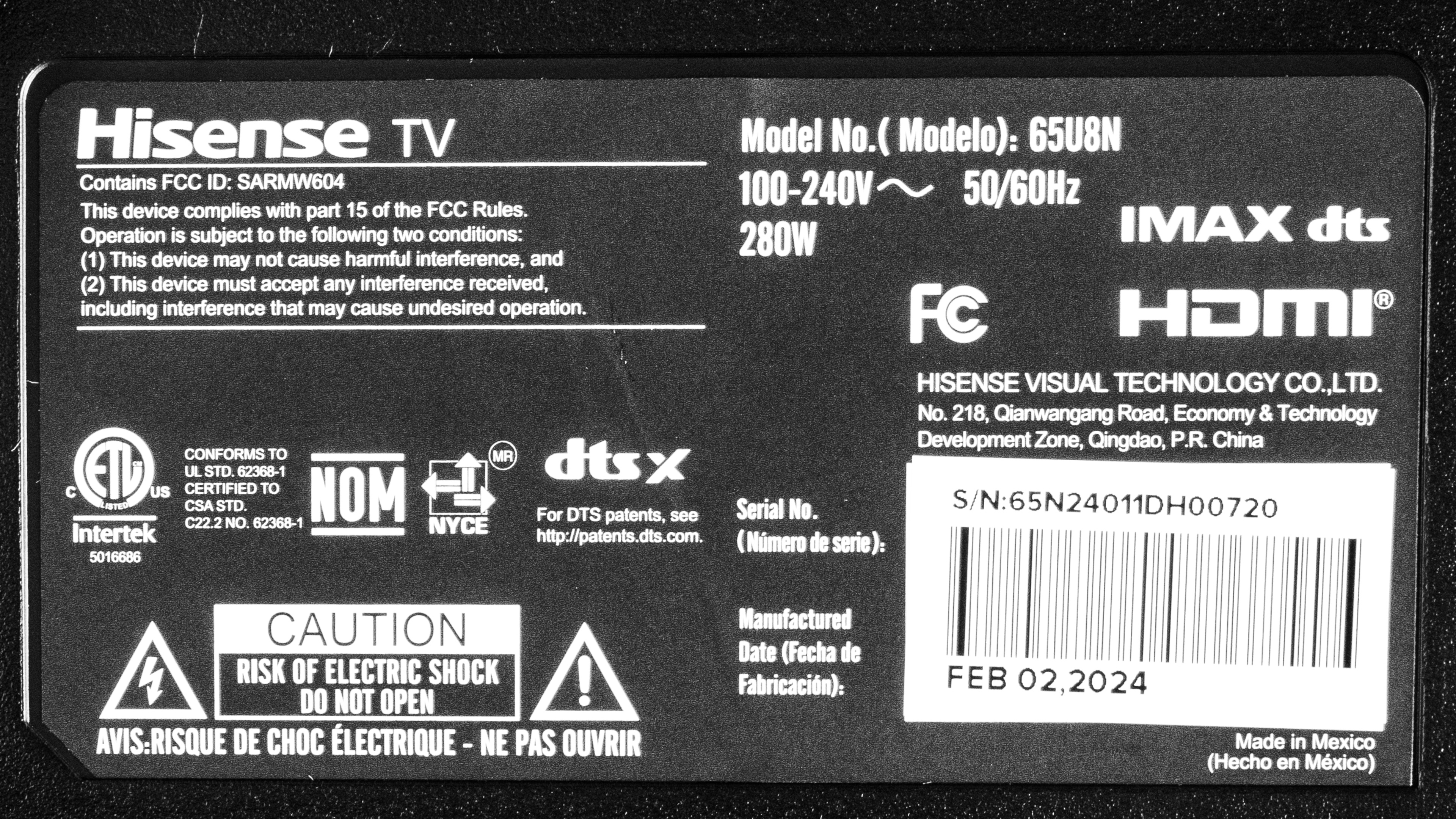
Our unit was manufactured in February 2024.
Popular TV Comparisons
The Hisense U8N is an impressive TV that is loaded with modern features. It's a TV that caters to almost everyone and performs excellently while watching all types of content or playing video games. It's most comparable to the TCL QM8/QM851G QLED, but it has better contrast, reflection handling, and is the more accurate TV. It's also comparable to more expensive models like the Sony BRAVIA 7 QLED and outperforms that TV in many ways, but it doesn't have the same level of image processing. Still, it's an affordable TV for what it does, and there are very few other TVs that deliver such excellent picture quality for a relatively low price. If you're looking for a fully-featured TV but don't want to spend the money for high-end offerings from Samsung, Sony, or LG, it's hard to beat.
For more options, check out our recommendations for the best TVs for bright rooms, the best 65-inch TVs, and the best TVs for gaming.
The Hisense U8N and the Hisense U8QG are very similar overall. The U8QG has better contrast for deeper blacks, does a slightly better job cleaning up low-quality content, and gets brighter in its dedicated gaming mode. The U8QG also supports 4k @ 165Hz and 1080p @ 288Hz, and it has a USB-C alt-display port. However, 288Hz and VRR don't work when using the new port. On the other hand, the U8N has faster pixel transitions for smoother motion. In reality, these differences are minor, and you'd be hard pressed to notice a difference if you had the two TVs side by side.
The Hisense U8N is better than the TCL QM7K. The Hisense delivers noticeably better image quality due to its higher peak brightness and more colorful panel. Its image processing is also generally better than the TCL, with the exception of PQ EOTf tracking; the TCL follows the content creator's intent much more closely than the Hisense. Gamers will also appreciate the TCL's 1080p @ 288Hz support.
The TCL QM8K and the Hisense U8N are extremely similar overall, with just a few minor differences between them. The TCL TV has a slightly better local dimming system, with less haloing around bright highlights and slightly better black uniformity. The Hisense TV has better accuracy out of the box in SDR, but it's less accurate than the TCL TV in HDR. Finally, the TCL has a slightly better viewing angle, and colors don't shift as much when viewed from the sides.
The Hisense U8N is better than the Hisense U7N. The U8N has better contrast for very deep blacks that are approaching OLED territory. The U8N also has better HDR brightness, so highlights in HDR really pop out at you in dark scenes, and very bright specular highlights even stand out in well-lit scenes. On top of that, the U8N has a wider color gamut and better color volume, so colors in HDR content are more vibrant, lifelike, and brighter. When it comes to bright room capabilities, the U8N has better SDR brightness and reflection handling, so it easily overcomes glare in even the brightest of rooms. However, the U7N has better PQ EOTF tracking, so it’s more accurate in HDR.

We buy and test dozens of TVs yearly, taking an objective, data-driven approach to deliver results you can trust. Our testing process is complex, with hundreds of individual tests that take over a week to complete. Most of our tests use specially designed test patterns that mimic real content, but we also use the same sources you have at home to ensure our results match the real-world experience. We use two main tools for our testing: a Colorimetry Research CR-100 colorimeter and a CR-250 spectroradiometer.
Test Results
for pictures & test results

for pictures & test results

for pictures & test results

The Hisense U8N has incredible HDR brightness. Highlights really pop out during darker scenes, and the TV is bright enough that very bright specular highlights even stand out in well-lit scenes. Combined with its exceptional contrast, this TV provides a very impactful HDR viewing experience.
These measurements are after calibrating the HDR white point with the following settings:
- HDR Picture Mode: Filmmaker Mode
- Local Dimming: High
- Peak Brightness: High
- Brightness: 100
- Contrast: 50
- Black Level: 0
- Dark Detail: Off
- Gamma: ST2084
- Active Contrast: Off
- Dynamic Tone Mapping: Off
- Color Temperature: Warm 1
Unfortunately, the TV has an inconsistent bug that greatly lowers its brightness. We don't know what causes it, but if you find the TV much dimmer than it's supposed to be, you can fix it by restarting the TV or switching the input setting from 'Enhanced' to 'Standard' and then back to 'Enhanced.'
for pictures & test results

for pictures & test results

for pictures & test results

The TV is slightly dimmer in PC/Game Mode, but it's barely noticeable. Highlights still pop out during darker moments in games, and it's still bright enough that very bright specular highlights stand out in well-lit scenes. Combined with its exceptional contrast, this TV provides a very impactful HDR gaming experience.
These measurements are after calibrating the HDR white point with the following settings:
- HDR Picture Mode: HDR Game
- Local Dimming: High
- Peak Brightness: High
- Brightness: 100
- Contrast: 50
- Black Level: 0
- Dark Detail: Off
- Gamma: ST2084
- Active Contrast: Off
- Dynamic Tone Mapping: Off
- Color Temperature: Warm 1
Unfortunately, the TV has an inconsistent bug that greatly limits its brightness. You can read about it in the HDR Brightness section.
The Hisense U8N has superb SDR brightness and easily overcomes glare in even the brightest of rooms.
These measurements are after calibration with the following settings:
- Picture Mode: Theater Night
- Local Dimming: High
- Peak Brightness: High
- Brightness: 100
- Gamma: 2.2
- Color Temperature: Warm 1
- Active Contrast: Off
If you need a TV that gets even brighter than this, check out the TCL QM8/QM851G QLED.
for pictures & test results

The Hisense U8N has exceptional contrast. Its native contrast is great, but with local dimming enabled, the TV's contrast approaches OLED territory. Blacks are extremely deep, and they stay that way when bright highlights are also on screen.
It's worth noting that with local dimming and peak brightness on 'High', the minimum brightness of the cave is 277 nits instead of the 200 nits we typically target.
for pictures & test results

The TV has very good lighting zone precision, but there's some noticeable blooming around bright objects and subtitles when displayed against a black background.
for videos & test results

The TV has very good lighting zone transitions, but it does struggle a bit with very fast-moving content. There's minimal haloing, but the leading edge of quick-moving objects is visibly dimmer.


for pictures & test results

for pictures & test results

The TV has excellent black uniformity. With local dimming disabled, blacks are a bit cloudy and blueish. With local dimming enabled, blacks are deep and uniform across the screen, with only a bit of blooming around bright objects on a dark background.
for pictures & test results

for pictures & test results

The Hisense U8N has great SDR color volume. It covers the vast majority of the DCI-P3 color space, and only struggles slightly with some reds and yellows. Its coverage of the wider BT.2020 color space is okay, but it struggles more with most lighter shades.
| Volume ΔE³ | DCI-P3 Coverage |
BT.2020 Coverage |
|---|---|---|
| L10 | 91.16% | 71.03% |
| L20 | 92.63% | 71.36% |
| L30 | 93.10% | 72.03% |
| L40 | 93.09% | 74.29% |
| L50 | 93.08% | 75.10% |
| L60 | 92.78% | 72.86% |
| L70 | 93.18% | 64.01% |
| L80 | 93.44% | 62.32% |
| L90 | 93.78% | 64.52% |
| L100 | 94.85% | 83.81% |
| Total | 93.20% | 69.40% |
for pictures & test results

for pictures & test results

The TV has outstanding HDR color volume. The TV displays a wide range of colors at high luminance levels, and dark saturated colors are displayed well due to its exceptional contrast.
for pictures & test results

for pictures & test results

for pictures & test results

The Hisense U8N has very good pre-calibration SDR accuracy. Gamma is close to our target of 2.2, but most scenes are displayed a bit brighter than intended. The white balance is okay, but there is too much red and blue in brighter shades of gray. Color accuracy is great, but whites, lighter yellows, lighter cyans, and darker blues have minor inaccuracies. Fortunately, the color temperature is essentially perfect.
for pictures & test results

for pictures & test results

for pictures & test results

The Hisense U8N has fantastic SDR accuracy after calibration, but the TV is a bit difficult to calibrate since higher grayscale values don't do much at all. Still, any issues with white balance are gone, color temperature is still essentially perfect, and gamma is even closer to our target of 2.2, with only bright scenes still being a bit too bright. Color accuracy is outstanding, with only minor errors that aren't noticeable to most people.
See our full calibration settings.
for pictures & test results

for pictures & test results

Unfortunately, the TV has subpar HDR color accuracy before calibration. Blues are significantly overrepresented in most shades of gray, making the TV's color temperature drastically too cool. Overall, the TV's color accuracy is mediocre; all colors are off target, and warmer tones are undersaturated.
If you want better color accuracy out of the box, consider the newer Hisense U8QG.
for pictures & test results

for pictures & test results

The TV's color accuracy after calibration is just decent. Its white balance is good now, but its color temperature is still noticeably cooler than 6500K. The accuracy of colors is much better now, especially with greens and blues, but warmer colors still have inaccuracies throughout.
for pictures & test results

The Hisense U8N has poor PQ EOTF tracking. Unfortunately, everything is displayed brighter than intended. With content mastered at 600 and 1000 nits, there's a small roll-off near the TV's maximum brightness, but the roll-off isn't necessary since the TV is more than bright enough to display content mastered at those nit levels. With content mastered at 4000 nits, the roll-off helps to preserve details in incredibly bright highlights.
for pictures & test results

The TV has very good low-quality content smoothing. It does a great job at smoothing out artifacts in low-bitrate content while still preserving details.
for pictures & test results

The Hisense U8N does a good job at upscaling low-resolution content like DVDs or lower-resolution streams. Details are clear enough, but finer details are a bit hard to make out.
Sharpness processing was calibrated with no over-sharpening for low-resolution content, with the following settings:
- Sharpness: 13
- Super Resolution: On
for pictures & test results
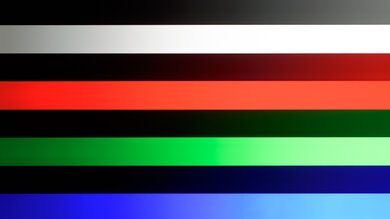
The TV has very good HDR gradient handling. There's noticeable banding in brighter blues, but all other colors have minimal or no banding at all.
This TV has low input lag when set to PC/Game Mode, which ensures a very responsive gaming experience. However, it's higher at 60Hz, so stick with higher refresh rates when possible.
The TV supports all common resolutions up to 4k @ 144Hz on two of its four HDMI ports. Unfortunately, 1080p @ 240Hz only works properly with VRR disabled.
The Hisense U8N Series supports all three VRR formats, so it has great compatibility regardless of the source. Unfortunately, with 1080p @ 240Hz and VRR enabled, the TV's built-in frame counter shows 72Hz, there's bad frame skipping and desaturated colors, and chroma 4:4:4 isn't displayed properly. With VRR disabled, 1080p @ 240Hz works without issues.
Unfortunately, like the Hisense U8/U8K, the TV's response time behaves differently with VRR enabled. It's more aggressive with refresh rates above 100Hz, which leads to a faster response time but with more overshoot errors. When the TV hovers around 100Hz, the rapid changes in behavior when it goes above and below that threshold are distracting. There are no issues when running at a fixed refresh rate. The Hisense U9N doesn't have any of these issues, so check it out if VRR performance is important to you.
for pictures & test results
for pictures & test results

The TV's CAD at its maximum refresh rate of 144Hz is decent. It's slowest when transitioning from blacks to near blacks, which leads to some black smearing. It also overshoots RGB values when exiting a dark state, resulting in some inverse ghosting. Outside of that, motion looks pretty smooth when gaming, especially for an LED model.
for pictures & test results

for pictures & test results

The TV's CAD at 120Hz is satisfactory. It's at its slowest when going from bright states to near blacks. It's also a bit slow when exiting dark states, which leads to some noticeable blur. However, there's very little overshooting, so you don't see inverse ghosting.
for pictures & test results

for pictures & test results

The TV's CAD at 60Hz is unremarkable. Transitions are slow almost entirely across the board, which leads to noticeable blur behind fast motion. Additionally, there's blur due to the nature of a slower 60Hz refresh, so motion isn't clear when gaming at 60 fps.
for pictures & test results

The TV is fully compatible with everything the PS5 offers, like 1440p @ 120Hz and 4k @ 120Hz, as well as HDMI Forum VRR. It also supports Auto Low Latency Mode, so you don't have to worry about manually switching to PC/Game Mode to get the lowest input lag.
for pictures & test results

The TV is fully compatible with everything the Xbox Series X|S offers, including 1440p @ 120Hz, 4k @ 120Hz, HDMI Forum VRR, FreeSync Premium Pro, and Dolby Vision gaming. It also supports Auto Low Latency Mode, so you don't have to worry about manually switching to PC/Game Mode to get the lowest input lag.
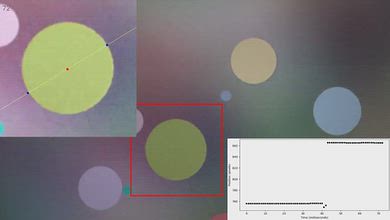

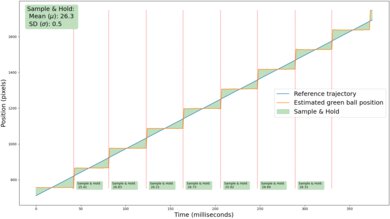
for videos & test results
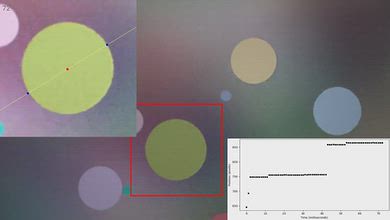
for pictures & test results

for pictures & test results
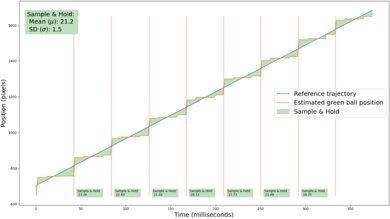
The motion interpolation feature on this TV does a great job of reducing the amount of stutter. Setting it to increase the frame rate of 24p content up to 30p significantly reduces the frame hold time. The feature is very consistent, ensuring a smooth frame cadence.
for pictures & test results
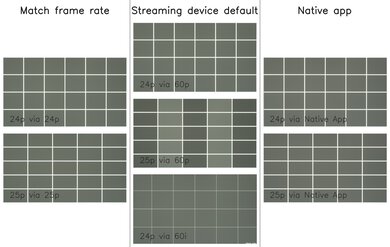
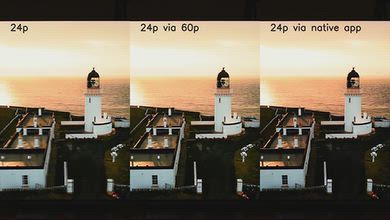
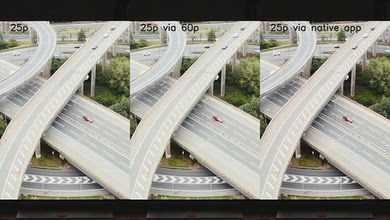
The Hisense U8N removes judder from most sources. The frame timing is off with 25p content sent via a 60p signal, like from an older cable box or streaming device that can't match the content frame rate.
for pictures & test results

for pictures & test results

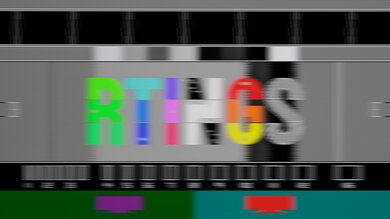
The Hisense U8N has a good response time for minimal blur behind fast-moving objects when watching content, but it's slower when coming out of dark states, so there's some black smearing in dark scene transitions.
for pictures & test results
for pictures & test results
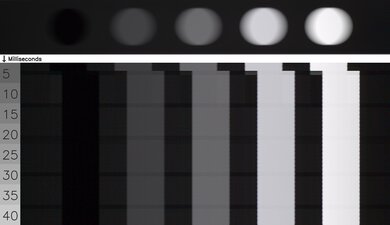
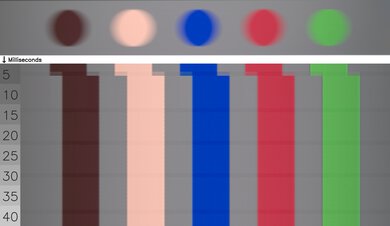
Unfortunately, transitions are mediocre on this TV, and there are noticeable artifacts. As colors move across the screen, there are unwanted intermediate colors, and the edges of moving objects are soft.
for pictures & test results

The Hisense U8N uses pulse width modulation (PWM) to dim its backlight, which introduces flicker that can bother people who are sensitive to it. Fortunately, it flickers at a very fast 7,800Hz in all picture modes and at all brightness levels, so it's not noticeable.
for pictures & test results
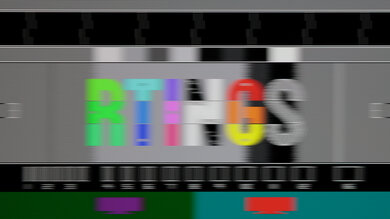
for pictures & test results
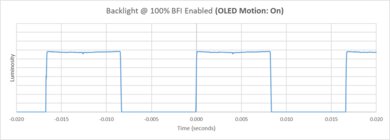
The Hisense U8N TV supports backlight strobing, more commonly known as black frame insertion (BFI). The feature is designed to improve the appearance of motion by strobing its backlight and reducing the amount of persistence blur. Unfortunately, it can only insert black frames at a 120Hz refresh rate, and the image is blurry with some image duplication.
for pictures & test results

for pictures & test results

The TV has adequate direct reflection handling. It lessens the intensity of direct light sources, but your lamp, wall light, or window is still quite visible on the screen.


for pictures & test results

for pictures & test results

The TV does a great job with total reflections. Its glossy screen finish significantly reduces the intensity of indirect reflections, but direct reflections do cause some noticeable light banding.
for pictures & test results

The TV has very good color saturation in ambient lighting. Colors barely lose any saturation in a room with the lights on, so you get vibrant colors regardless of your viewing conditions.
for videos & test results
for pictures & test results

for pictures & test results

for pictures & test results

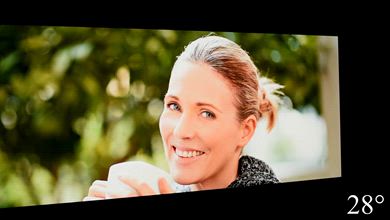
The Hisense U8N has a mediocre viewing angle, so it's not suitable for a wide seating arrangement. As you move off-center, there's significant gamma shifting, color shifting, and brightness loss, and colors look increasingly washed out as you move further away to the sides.
Look at the Hisense 75U8N or the Samsung QN95D if you need a TV with a wider viewing angle.


for pictures & test results

for pictures & test results

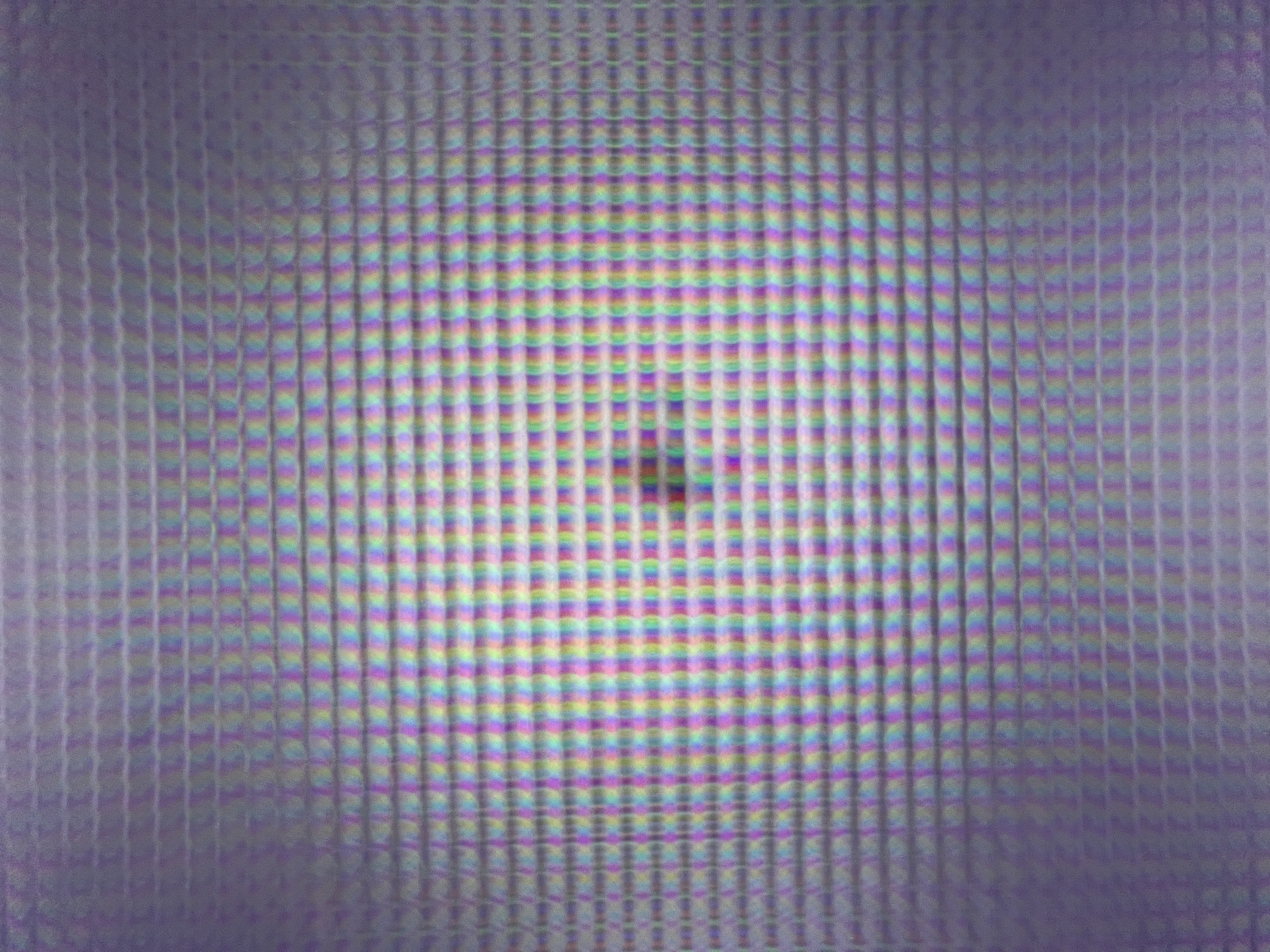
The TV uses a BGR (Blue-Green-Red) subpixel layout instead of the traditional RGB layout. For video or gaming content, this doesn't cause any issues, but for PC monitor use, it can be a problem as it impacts the text clarity, although not everyone will notice this.
The TV uses quantum dots to achieve high color peaks with excellent separation between blues, greens, and reds. This gives the TV great color purity and allows it to display a very wide color gamut.
for pictures & test results

for pictures & test results

The TV has HDMI 2.1 bandwidth on HDMI ports 3 and 4, with both supporting up to 4k @ 144Hz. Fortunately, HDMI 1 is the eARC port, so you don't lose a high-bandwidth port when you plug a soundbar into the TV. The TV supports all HDR formats and has an ATSC 3.0 tuner, so you can watch over-the-air 4k content.
Note that the eARC port on the 55-inch model is HDMI 3, so you do lose a high-bandwidth port on that size if you plug in a soundbar.
The TV supports eARC, which lets you pass high-quality, uncompressed audio to a compatible receiver or soundbar through an HDMI cable. It supports all major audio formats, so you don't have to worry about compatibility with external sources.
for pictures & test results

The Hisense 65U8N has a premium design overall. It has thin bezels on the sides and the top, with a slightly thicker bottom bezel. Unlike the 2023 Hisense U8/U8K, the TV uses a central stand rather than two feet.
for pictures & test results

The TV comes with a metal center-mounted stand that lets you place it on a smaller table. The stand can be adjusted into two different positions. The lower position lifts the TV about 2 inches above the table, bringing the screen very close to your table. The higher position lifts the TV about 3.54 inches, so most soundbars fit underneath without blocking the screen.
Footprint of the 65-inch stand: 15.75" x 11.42".
Note that the 55-inch and 100-inch models use two feet instead of a central stand.
for pictures & test results

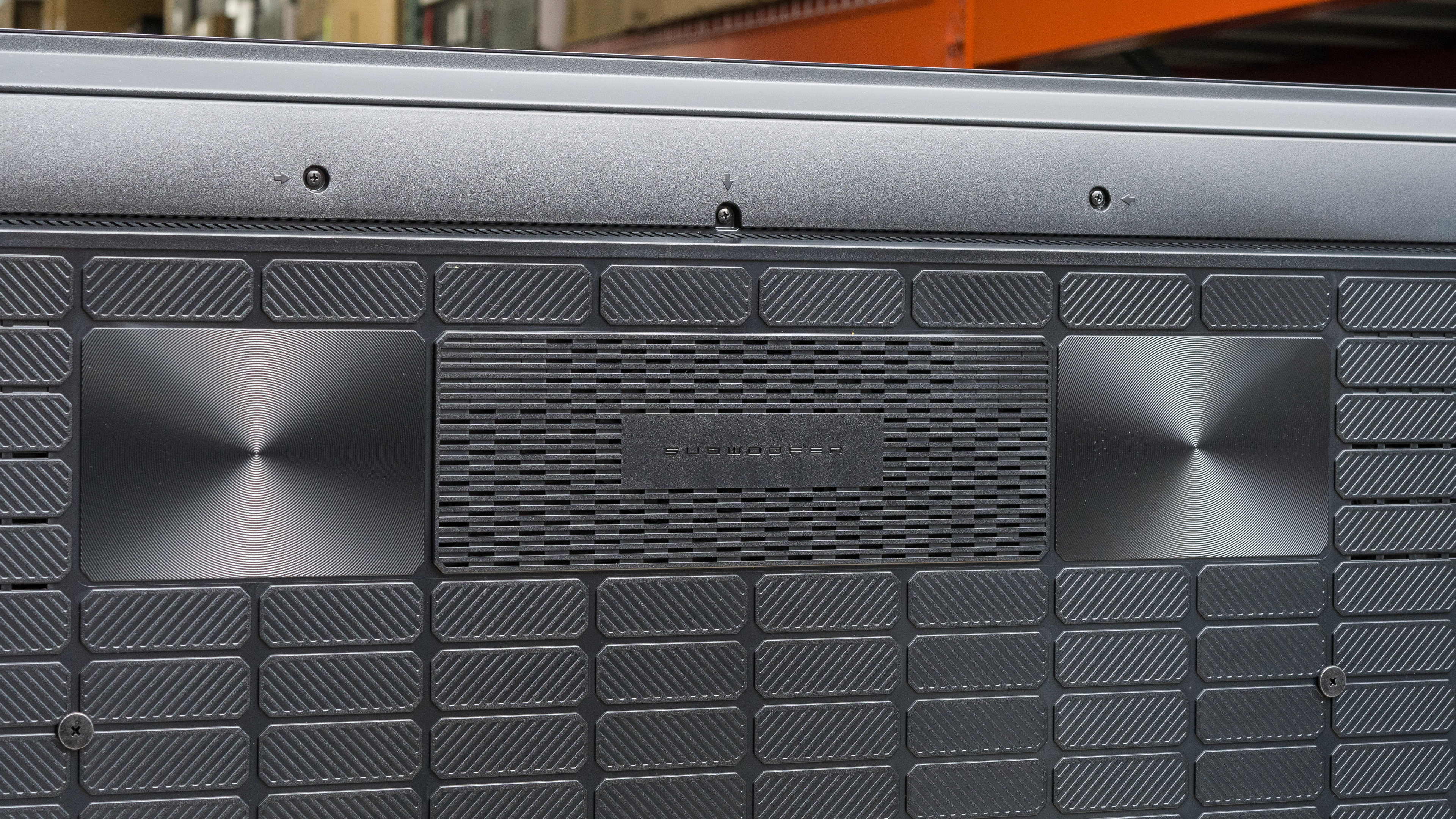
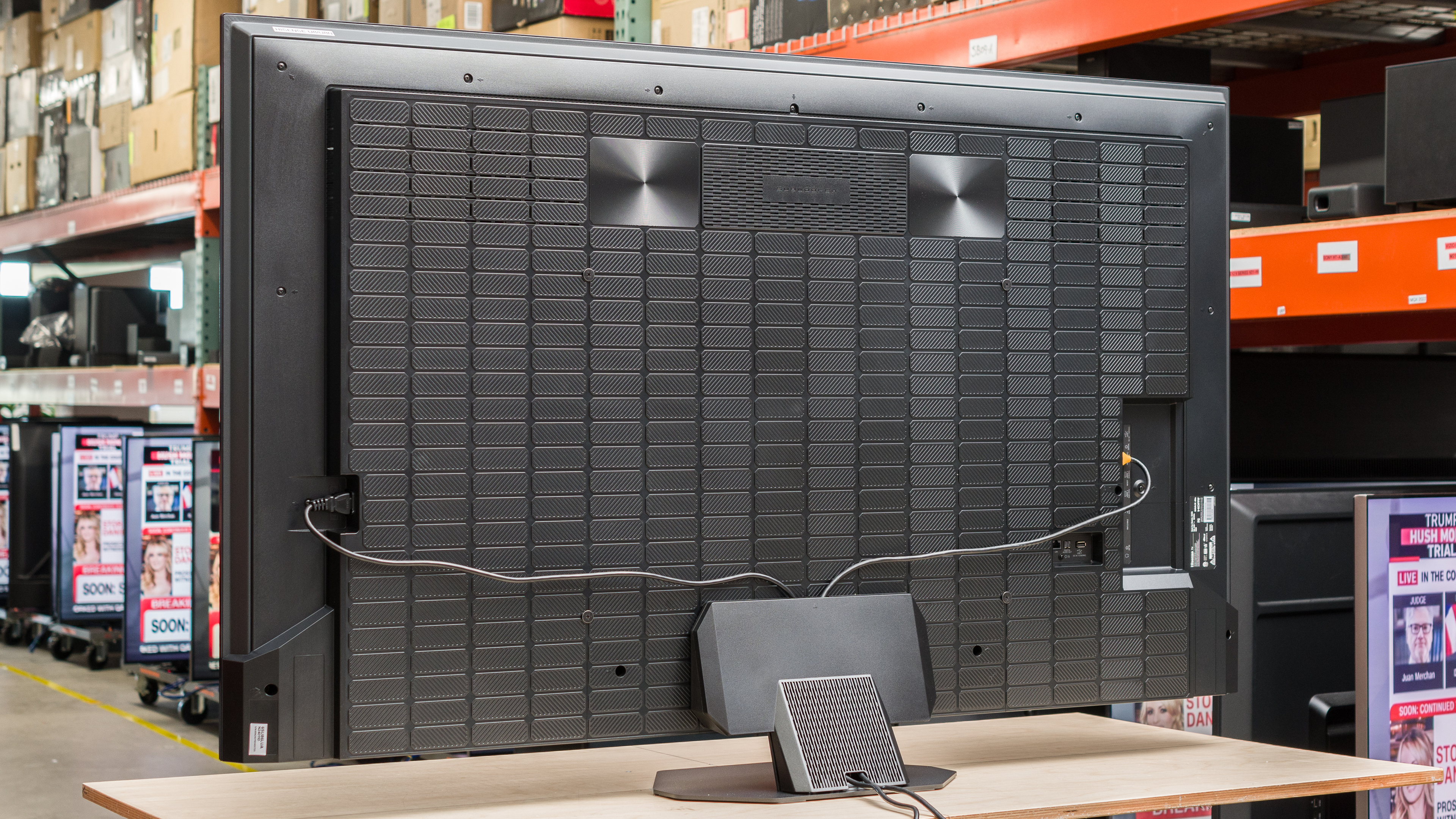
The back is made of plastic and has a grid-like pattern that resembles a lot of Sony TVs. Most of the inputs are side-facing, but they're close enough to the edge of the TV that they are accessible when it's wall-mounted. A USB, Ethernet, and optical port are located in a recessed cutout that faces the back. Unfortunately, these aren't accessible if you have the TV mounted flush to the wall. The TV has a built-in subwoofer near the top, and you can funnel cables through the TV's stand to help with cable management.


for pictures & test results

The TV has great build quality. It's mostly made of plastic, but it's sturdy and well-built overall. The new center-mounted stand provides good stability, and there are no glaring issues with the TV's design. Our unit did have some pixel-level smudges, but these aren't noticeable from a normal viewing distance.
for pictures & test results

The TV comes with Hisense's newly designed backlit remote. It has buttons for popular streaming services, and you can use the built-in microphone to switch inputs, change apps, search within apps, and ask for the weather and time. Unfortunately, you can't change the TV's settings using the voice controls.

for pictures & test results

Unfortunately, like almost all TVs on the market, the smart interface contains ads, and you can't disable them.
for pictures & test results

There's a single button on the bottom center of the TV that can be used to switch inputs and power the TV on/off. There's also a small switch you can use to turn the TV's built-in microphone on or off.
for pictures & test results

- Quick setup guide
- Remote
- 2x AAA batteries
- Power cable
- Extra screws
for pictures & test results

The Hisense U8N has a decent frequency response. Thanks to the built-in subwoofer, the TV produces a bit of bass, but it's still not enough for impactful bass to be felt. The TV gets quite loud, and dialogue is clear and easy to understand at moderate volume levels, but the sound becomes unbalanced near and at its maximum volume. You'll want to stick to moderate volume levels for balanced sound.